Why coffee roasters need a procurement-grade tote checklist
Organic cotton totes for coffee roasters sit in a busy middle ground. They are packaging when they carry a bag of beans, merchandise when they sit at the counter, and brand media when they move through cafes, events, and wholesale accounts. That means a tote has to do more than hold product. It has to look intentional, feel durable, and stay consistent from the first sample to the third reorder. A weak handle or crooked logo can undermine the same brand standards your coffee bags, menus, and retail displays are trying to communicate.
The common sourcing mistake is to treat a tote as a simple line item. An RFQ that only says organic cotton tote with logo print leaves too many variables open. Fabric weight, weave, size, handle construction, print method, color control, packing, and inspection all get filled in by supplier assumptions. Two quotes can look similar on paper while representing very different bags in the hand. One may include heavier fabric and stronger reinforcement. Another may rely on a lighter cloth, looser sewing, and generic packing. Those are not interchangeable products.
A procurement-grade checklist solves that problem by turning the tote into a controlled specification. The buyer defines the product standard, the brand standard, the defect standard, and the shipment standard before price comparison begins. That gives suppliers a real target and gives procurement a basis for comparison that is not distorted by missing details. It also shortens the time needed to approve samples because the team is judging against a written standard instead of debating what the tote was supposed to be.
- Treat the tote as a retail-facing product, not just a promo item.
- Write the specification before requesting price so every supplier quotes the same bag.
- Use the first order as the baseline for reorders, seasonal drops, and multi-location rollouts.
- Keep sample approval, quality inspection, and packing requirements in the same RFQ rather than scattered across email threads.
Define the tote around coffee use, not generic tote language
The strongest specification starts with the actual use case. A tote for a giveaway at a cupping event can be lighter and simpler than a tote sold as premium cafe merchandise. A subscription welcome bag may need to carry a coffee bag, tasting card, grinder brush, and insert without looking stretched or collapsing at the bottom. A retail bag for customers carrying two or three purchases needs stronger handles and better seam control than a thin promotional carrier. Write those uses into the RFQ because they drive the design choices suppliers will make.
For most coffee roaster programs, a practical finished size usually lands in a standard shopper tote range, but the exact dimensions should come from what the tote must carry. Test the approved sample with your actual 250 g, 340 g, 12 oz, 500 g, or 1 kg coffee bags, not with an empty hand feel check. If the tote has a gusset, confirm whether it stands upright enough for shelf or counter display. If it is flatter and narrower, check whether the coffee bag corners distort the print area or push the logo out of sight.
Handle drop needs the same attention. Short handles may be fine for hand carry but awkward over the shoulder. Longer handles can improve comfort but may make the bag hang too low or look sloppy when displayed folded. Procurement should specify both handle length and handle drop, because factories do not always interpret those terms the same way. Use finished dimensions after sewing for acceptance. Cut-panel size is useful for production, but it is not what the customer receives.
- State the carrying load and product mix the tote must support.
- Measure finished width, height, gusset, handle length, handle drop, and handle spacing on the approved sample.
- Check shelf, counter, and shoulder-carry presentation before bulk approval.
- Make the supplier confirm whether dimensions are finished measurements, not flat pattern measurements.
Fabric weight, weave, finish, and organic documentation
Fabric is the first major cost and quality driver. Organic cotton totes are often quoted by ounce class or GSM, but buyers need to know what those numbers mean. A 7 oz to 10 oz cotton canvas or plain-weave cotton is a practical zone for many coffee roaster retail and gift programs because it feels substantial without becoming too heavy for freight or too stiff for everyday use. Lighter fabrics can work for event handouts. Heavier fabrics can create a more premium look, but they also increase raw material cost, sewing effort, carton weight, and shipping cost.
A useful quote does not stop at organic cotton. Ask for target GSM, tolerance, weave type, color, finish, and whether the fabric is natural, bleached, dyed, washed, softened, or otherwise processed. Natural cotton may show small specks, slubs, or shade variation, which can be acceptable if the brand wants a raw, understated look. It should not show oil marks, dirty streaks, mildew, holes, weaving faults, or inconsistent shade between panels on the same bag. Define acceptable variation before production starts, not after the first carton arrives.
Organic claim control is also part of procurement. If the tote will be described publicly as organic cotton, ask what evidence supports that claim for the exact goods being shipped. Depending on your market and claim wording, that may include certification scope, transaction documentation, fabric records, or a supplier declaration tied to the purchase order. Do not assume a product listing or verbal assurance is enough. The documentation should match the shipment and should be available before the bags leave the factory.
- Request target GSM and an acceptable tolerance, such as +/-5%, instead of a vague fabric description.
- Ask whether fabric weight is measured before finishing, after finishing, or on finished goods.
- Separate acceptable natural cotton marks from stains, holes, weaving faults, and contamination.
- Confirm organic documentation before approving brand copy, hangtags, website descriptions, or retail signage.
Set realistic tolerances before sampling
Tolerances are where vague sourcing becomes controlled buying. Cotton changes slightly during cutting, sewing, finishing, folding, and humidity swings, so zero variation is not realistic. The goal is to define a range that protects appearance and function without rejecting normal textile behavior. A solid starting point is to set measurement tolerances in millimeters or inches for finished bag width, height, gusset, handle length, and handle spacing. For simple totes, buyers often use tighter tolerances on logo placement than on overall body size because the logo is what shoppers notice first.
Print placement should be measured from fixed points such as top edge to print, side seam to print edge, or centerline alignment. Avoid instructions like centered logo unless the supplier also has a numeric tolerance. A 5 mm to 10 mm shift may be acceptable for casual artwork, while a more exact brand system may need tighter control. The right tolerance depends on print size, bag size, and how close the artwork sits to seams or handles. The point is to make the decision once, in writing, before production begins.
Construction tolerances matter too. If the handle reinforcement, top hem, or seam appearance affects brand presentation, write it down. The RFQ can require reinforcement to match the approved sample, no open seams, no skipped stitches in stressed areas, and no thread tails longer than a stated limit on visible surfaces. This avoids later arguments where the supplier says the tote is within normal range and the buyer says the bag looks unfinished. Written tolerances make both sides faster and more precise.
- Use finished-goods tolerances, not just production-process tolerances.
- Measure logo placement from fixed edges and define maximum shift in millimeters.
- Put tolerances on the spec sheet, artwork proof, and inspection checklist.
- Keep a sealed approved sample so inspectors can compare against both numeric and visual standards.
Print quality control for coffee brand marks
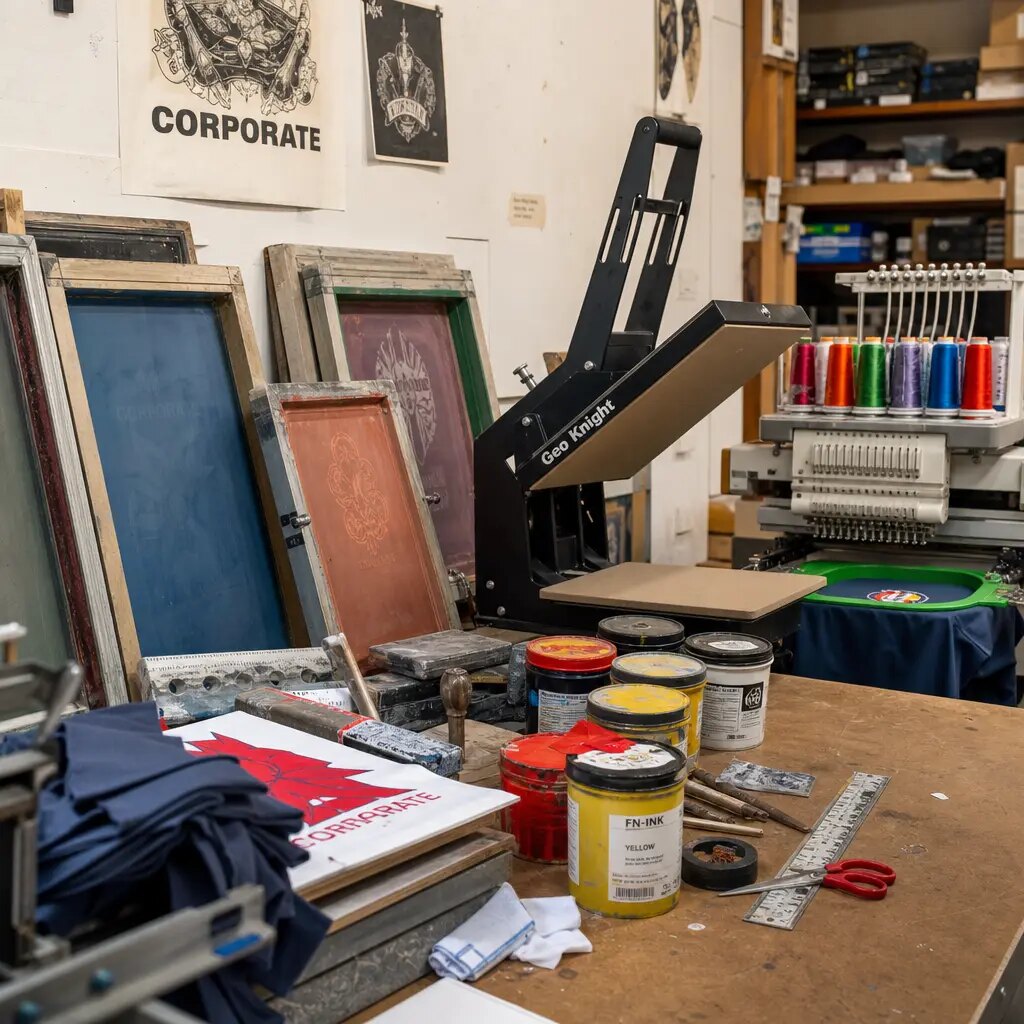
Coffee roaster artwork often looks simple: a wordmark, badge, origin mark, or one-color icon. That simplicity can make defects more visible. A slightly feathered edge, uneven ink density, or logo that sits too high or too low can stand out immediately on plain cotton. Screen print is usually the most practical method for solid one- to three-color artwork at repeat order quantities, but it still needs control over mesh choice, ink coverage, curing, registration, and how the cotton absorbs the ink. Heat transfer, digital print, or other decoration methods can work for complex artwork or short runs, but they should be approved on a physical bag, not only judged from a computer file.
The RFQ should include the final artwork size, print location, number of colors, Pantone or brand color reference, ink or transfer type if specified, and a proof that shows the design on the actual tote dimensions. Ask whether the logo will be printed on cut panels or on finished bags. Panel printing can be efficient, but it must account for sewing shrinkage and post-assembly placement. Finished-bag printing can offer better placement control in some setups, but seams, handles, and platen access can limit what is possible. Do not assume the factory will choose the same method your designer imagined.
Color control on natural cotton needs practical expectations. The base shade of the fabric affects how ink reads, especially for light colors, warm neutrals, and fine linework. If exact color matters, ask for a printed pre-production sample and review it under neutral light. For dark inks, check coverage, opacity, and edge sharpness. For transfers, check hand feel, edge visibility, adhesion, and cracking after bending. Any method should also pass a dry rub check and, if relevant, a damp rub check so the ink does not mark hands, apparel, or light retail packaging.
- Approve print on the actual fabric and finished construction, not only on a PDF mockup.
- Define logo size, placement, color reference, and maximum print shift.
- Check small text, thin lines, registration, opacity, edge sharpness, and print hand feel.
- Ask for curing, rub resistance, and adhesion checks before bulk printing continues.
Handle and seam construction are the load-bearing spec
Handles are one of the highest-risk failure points on tote bags. A sample can look clean on the table and still fail when a customer carries several coffee bags or a bundled gift set. Buyers should define handle material, width, length, drop, attachment position, and reinforcement method. Reinforcement can include bartacks, box-X stitching, extra stitch rows, or another approved construction. The specific method matters less than consistency and strength, but it must be documented and visible on the approved sample so both buyer and factory know what good looks like.
Stitch density and thread quality also affect durability. Too few stitches can weaken the seam. Poor tension can create puckering, skipped stitches, or thread breakage. The inside of the tote should be inspected as carefully as the outside because open seams, raw edges, loose thread chains, and uneven corners often hide there. If the bag has a gusset, the side and bottom seams need enough consistency that the tote folds flat or stands evenly, depending on the intended design. The buyer should define which behavior matters more before production starts.
A practical load test should reflect the actual use case. Instead of asking for a strong handle in general terms, define the load and hold time. For example, the supplier can test a sample with the weight of the intended maximum coffee purchase and hold it for a set period while observing handle attachment and bottom seam movement. The test does not need to be complex, but it should be specific enough to catch weak construction before the full run is sewn and packed.
- Specify handle material, width, length, drop, attachment spacing, and reinforcement method.
- Inspect inside seams, bottom corners, top hem, and handle attachment points.
- Define a practical load test using the weight the tote is expected to carry.
- Reject broken stitches, skipped reinforcement, twisted handles, open seams, and excessive puckering.
Sampling workflow that prevents expensive rework
A strong sampling path separates fabric approval, construction approval, and print approval. Start with a fabric swatch or fabric card so procurement and brand teams can confirm weight, shade, and hand feel. Then approve a blank sewn sample for dimensions, gusset behavior, handle comfort, seam quality, and overall structure. Only after that should the supplier produce a printed pre-production sample. This order matters because a beautiful logo on the wrong fabric or wrong bag shape still gives you the wrong product.
The printed pre-production sample should be treated as a production reference, not a design suggestion. Measure it, photograph it, review it under neutral light, load it with actual coffee products, and check folding and packing behavior. If a change is needed, update the spec sheet and artwork file with a revision date. Do not rely on email comments alone. Tote projects often involve marketing, retail, operations, and procurement, so revision control prevents one team from approving an older version while another team reviews a newer sample.
Before bulk production begins, freeze the approved sample, artwork, color reference, packing instruction, and inspection standard. The supplier should keep a matching reference sample, and the buyer should keep one for goods-in checks. If production changes fabric source, print method, handle material, thread, or packing after approval, require re-approval. That rule is especially important for reorders, where a supplier may assume a near equivalent material is acceptable unless the PO says otherwise.
- Approve fabric swatch, blank sewn sample, and printed pre-production sample in sequence.
- Label every sample with date, revision, fabric, print method, and supplier reference.
- Freeze the approved sample before cutting or printing bulk goods.
- Require written re-approval for material, construction, artwork, or packing changes.
Inspection plan, defect classes, and AQL use
Final inspection is useful only when the defect definitions are clear before production starts. AQL sampling can help manage bulk order risk, but it does not solve vague standards. The buyer and supplier should agree on which defects are critical, major, and minor. Critical defects may include broken handles, sharp foreign objects, mildew, severe contamination, or any safety-related issue. Major defects may include open seams, holes, heavy stains, incorrect print, obvious logo misplacement, wrong size outside tolerance, wrong material, or incorrect quantity. Minor defects may include small thread tails, slight natural slub variation within the approved range, or small appearance issues that do not affect saleability.
Inspection should cover the whole order, not just the bag face. A useful final inspection includes carton count, style and variant verification, packing format, fabric appearance, measurements, seam quality, handle strength, print position, print quality, odor, and carton marks. Inspectors should pull samples randomly across cartons, not from the easiest cartons at the front. If there are multiple logo variants or cafe locations, each variant needs representation in the inspection sample so one version does not slip through with the wrong artwork or carton label.
Inline inspection is also valuable for totes because some defects spread quickly. If the first printed pieces have the wrong placement or poor curing, the whole run can be affected. If the first sewing batch has weak handle reinforcement, rework becomes expensive after packing. Ask for first-article checks at cut panel, first sewn blank, first print, and first packed carton stages. That does not need to slow production if responsibilities are clear. It simply catches systemic errors while they are still cheap to fix.
- Define critical, major, and minor defects before production starts.
- Use AQL or another agreed sampling plan only after the defect standard is written.
- Inspect measurements, sewing, print, odor, packing, carton marks, and quantity together.
- Request inline first-article approval for cut panels, sewn blanks, printed pieces, and packed cartons.
Packing, carton labels, and warehouse receiving
Packing is often treated as an afterthought, but it controls receiving speed and product condition. For coffee roaster programs, flat-packed totes with consistent inner bundle counts are usually easiest to count, store, and allocate. The inner bundle count should be fixed, such as 25 or 50 pieces per bundle, depending on bag size and carton weight. The master carton should show PO number, style code, color or fabric description, print variant, quantity, carton number, gross weight, net weight if needed, and country of origin where applicable.
If bags are going to multiple cafes, wholesale partners, or event locations, carton quantities should match the allocation plan where possible. Otherwise, the buyer pays for avoidable repacking labor. If the tote is sold as retail merchandise, folding direction and print protection matter. The print face should not be rubbed against rough carton surfaces or hard folds that create visible creases through the logo. Moisture protection may be needed for ocean freight or humid storage, but unnecessary individual polybags may conflict with sustainability goals and increase unpacking time.
Mixed cartons should be avoided unless there is a clear receiving reason. If mixed cartons are approved, the inner packs must be labeled so the warehouse can identify variants without opening and recounting every piece. For coffee roasters with seasonal graphics or location-specific marks, poor carton marking can create the same customer-facing problem as poor print quality: the right tote does not arrive at the right place when the campaign starts. This is a logistics issue, not just a packaging preference.
- Specify inner bundle count, master carton quantity, carton dimensions, and maximum carton weight.
- Require carton marks that match PO, style, print variant, and receiving system fields.
- Define folding direction and print-face protection before shipment.
- Avoid mixed cartons unless inner labels and carton labels make counting reliable.
Quote comparison and reorder control
A clean quote should read like a production plan. It should include finished size, fabric weight and tolerance, weave and finish, organic documentation, print method, number of colors, artwork setup, handle construction, packing, sample terms, inspection terms, lead time, MOQ, and payment or shipment assumptions. If one supplier includes reinforced handles, printed pre-production sampling, and labeled inner bundles while another quotes a light bag with generic packing, the lower price is not necessarily a better buy. It is a different product.
Procurement teams should compare landed cost and risk, not only ex-factory unit price. A slightly higher unit price can be justified if it reduces sample rounds, prevents print rework, improves warehouse receiving, or keeps repeat orders consistent. For a coffee roaster, the cost of a failed tote order may show up as delayed cafe merchandising, missed event dates, poor retail sell-through, or extra labor to sort cartons. Those costs are harder to see than unit price, but they are real in a campaign calendar and they tend to surface late.
Reorder control should be built into the first PO. Keep the approved spec sheet, artwork, print color reference, sample photos, retained physical sample, packing standard, and inspection results. Ask the supplier which elements can change between batches and require notice before substitution. Fabric mill, yarn lot, natural cotton shade, handle material, thread, ink, print line, and carton size can all affect the finished order. The best reorder is not just the same product name. It is the same controlled specification produced against the same approved reference.
- Compare quotes only after every supplier prices the same specification.
- Separate sample charges, print setup, packing, inspection, and freight assumptions in the quote.
- Keep a retained sample and revision-controlled spec for reorders.
- Require supplier notice and buyer approval before any material, construction, print, or packing substitution.
Specification comparison for buyers
| Spec decision | Recommended option | When it fits | Buyer risk to check |
|---|---|---|---|
| Supplier route | Factory or integrated supplier that can identify fabric source, sewing line, print process, inspection, and packing responsibility | Best for repeat coffee roaster merch, retail bags, subscription add-ons, and multi-location programs | Confirm whether cutting, sewing, printing, and final packing are in-house or subcontracted; require written disclosure if the producer changes for reorders |
| Fabric weight | 7 oz to 10 oz cotton canvas or plain-weave cotton for most retail-grade coffee totes; lighter only for low-cost giveaway use | Works for 250 g to 1 kg coffee bags, retail counters, events, and gift-with-purchase programs | Require target GSM and tolerance, such as +/-5% after conditioning, and confirm whether the quoted weight is fabric weight before or after finishing |
| Finished size | Quote finished dimensions after sewing, not only cut panel size; include width, height, gusset, handle length, and handle drop | Needed when the tote must hold coffee bags, brewing accessories, inserts, or boxed gift sets | Set tolerances in millimeters or inches; unchecked shrinkage and sewing variance can make a bag look smaller than the approved sample |
| Print method | Screen print for solid one- to three-color marks; heat transfer or digital methods only after physical approval for detailed artwork | Best when the logo will be repeated over multiple POs and brand color consistency matters | Ask for ink type, curing process, print placement tolerance, color reference, rub test method, and whether the print is done before or after sewing |
| Handle construction | Self-fabric or cotton webbing handles with box-X, bartack, or reinforced stitching at attachment points | Needed when customers carry multiple coffee bags or the tote is sold as durable merch | Check stitch density, reinforcement size, handle spacing, load test result, and whether handle fabric matches body fabric shade and weight |
| Organic claim | Use documented organic cotton scope, certification reference, transaction documentation, or supplier declaration appropriate to your sales claim | Fits brands that market the tote as organic cotton rather than simply natural cotton | Do not rely on a verbal organic claim; confirm what documentation will be provided with the shipment and what wording your legal or brand team can use |
| Sample approval path | Approve fabric swatch, blank sewn sample, printed pre-production sample, then sealed production reference | Best for custom logo programs where size, hand feel, placement, and shelf presentation all matter | A flat proof cannot confirm fabric behavior, seam position, print absorption, or handle balance; keep a signed reference sample for inspection |
| Packing format | Flat-packed, counted inner bundles, moisture-protected cartons, and PO-matched carton marks | Useful for import checks, cafe allocation, distributor receiving, and quick store replenishment | Loose mixed cartons create count disputes; specify carton quantity, inner pack count, label fields, and whether polybags are allowed or avoided |
| Inspection route | Inline first-article check plus final random inspection using AQL or a buyer-approved sampling plan | Best for bulk orders where print or sewing defects can affect the whole campaign | Define critical, major, and minor defects before cutting; AQL is only useful when inspectors know exactly what fails |
Buyer checklist before sampling
- Define finished tote width, height, gusset depth, handle length, handle drop, seam allowance assumptions, and acceptable measurement tolerance before requesting price.
- Specify target fabric weight by GSM or ounce class, weave type, color, finish, and acceptable variation; ask whether the quoted value is before washing, after finishing, or at finished-goods stage.
- State the intended load, such as one 12 oz coffee bag, two 250 g bags, a 1 kg bag, or a gift set, and require the supplier to test the sample against that load.
- Require organic cotton documentation that matches your marketing claim, including certification scope or transaction evidence when needed.
- Approve a fabric swatch and blank sewn sample before approving print, especially when hand feel, shrinkage, gusset shape, or handle comfort affects retail value.
- Give the supplier production artwork with exact print size, Pantone or brand color reference, placement measurements from fixed edges, and maximum logo shift tolerance.
- Confirm print method, ink type, number of colors, curing method, color-matching standard, rub resistance check, and whether small text or fine lines are manufacturable at the approved size.
- Classify defects before production: critical defects such as broken handles or holes, major defects such as visible stains or off-placement logos, and minor defects such as small trimmed thread ends.
- Set measurement tolerances for body width, body height, gusset, handle length, handle spacing, and print placement; do not leave these to visual judgment.
- Request first-article photos or video showing cut panels, sewn blank bags, first printed pieces, handle reinforcement, and carton packing before the full run continues.
Factory quote questions to send
- What exact finished size are you quoting, including width, height, gusset, handle length, handle drop, and handle spacing, and what tolerance applies after sewing?
- What fabric weight, weave, yarn construction if available, finish, color, and shrinkage expectation are included in the price?
- Is the cotton certified organic under a recognized scope, and what documentation will be provided with the shipment to support our claim?
- Is the quoted fabric weight measured before cutting, after finishing, or on the completed tote, and what is the acceptable lot-to-lot GSM tolerance?
- Who performs cutting, sewing, printing, inspection, and packing, and which steps are in-house versus subcontracted?
- What print method are you quoting, what ink or transfer system is used, and what curing or fixation process controls durability?
- What is your print placement tolerance in millimeters from the top edge, side seam, or centerline, and what is your registration tolerance for multi-color artwork?
- Can you reproduce small text, thin lines, halftones, or detailed coffee brand marks at our requested size, and will you flag any artwork risk before sampling?
- How many sample rounds are included, what is the cost and timing for each round, and what changes trigger a new sample charge?
- What MOQ applies by fabric color, bag size, handle style, print color count, and packing format?
Quality-control points to confirm
- Fabric weight should match the approved specification within the written tolerance, commonly checked by GSM cutter or agreed lab method after conditioning.
- Finished measurements must be checked on the completed bag, not only on cut panels; include width, height, gusset, handle length, handle drop, and handle spacing.
- Organic cotton documentation should match the purchase order and the exact goods shipped, with style, quantity, supplier name, and claim wording traceable where required.
- Fabric appearance should match the approved swatch for shade, texture, slub level, weave consistency, and finish; separate natural cotton variation from unacceptable stains or contamination.
- Shrinkage expectations should be confirmed if the tote is washed, softened, or likely to be cleaned by end users; excessive shrinkage can move the tote outside finished-size tolerance.
- Handles must be straight, symmetrical, and firmly attached with the approved reinforcement method; reject broken stitches, skipped bartacks, weak box-X stitching, or twisted handles.
- Seams should be secure, aligned, and free from open seams, needle damage, excessive puckering, raw-edge fraying beyond the approved construction, and untrimmed thread clusters.
- Print position must be measured from fixed reference points, with maximum shift defined; visual centering alone is not sufficient for bulk acceptance.
- Print quality should be checked for color match, coverage, opacity, edge sharpness, pinholes, smearing, ghosting, registration error, cracking, and transfer edge marks.
- Rub resistance or crocking should be checked using an agreed dry and, if relevant, damp rub method so dark ink does not mark hands, apparel, or light packaging.