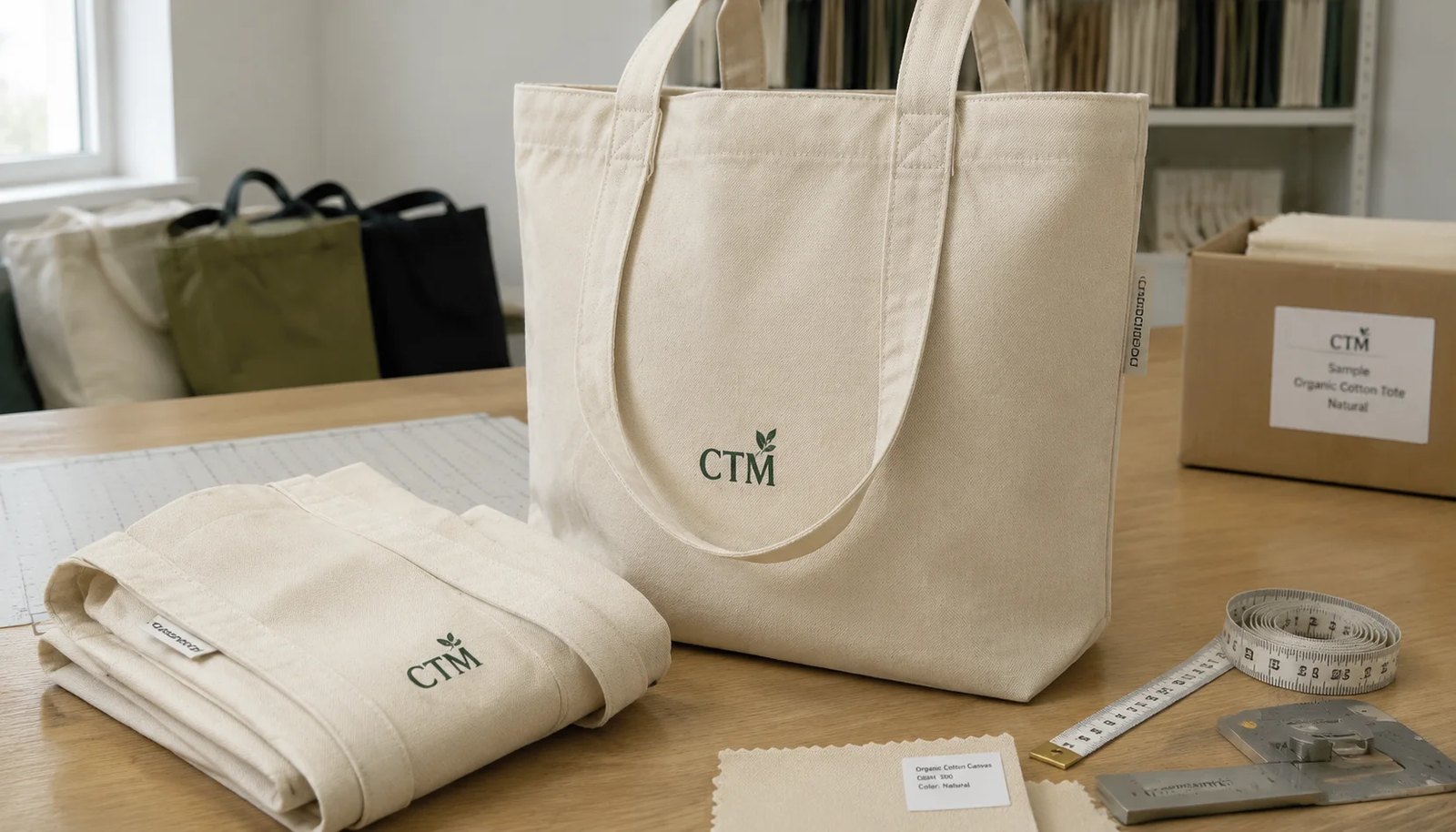
The buying problem: a tote that looks natural but fails under real grocery weight
Natural grocers usually want an organic cotton tote that supports a clean-brand story, but the real complaint after launch is rarely the logo or the color. It is handle failure, corner distortion, seam opening, or a bag that becomes limp after a few shopping trips. Many RFQs still describe the bag as simply organic cotton with dimensions and print. That is not enough to secure a durable result because the factory can meet that description with very different fabric constructions and stitch standards.
The practical issue is that grocery use creates a harsher loading pattern than trade show or bookstore totes. Glass bottles, jars, boxed foods, and produce concentrate stress on the bottom corners and handle roots. If the bag is expected to replace single-use shopping bags week after week, the durability target has to be written into the buying brief. Once that is done, the quote comparison becomes more meaningful, because a lower unit price often reflects a lower GSM, weaker handle attachment, or no allowance for a realistic pre-production load test.
- Common complaint pattern: handles detach before the main body fabric tears
- Most under-specified point in RFQs: handle reinforcement and actual load expectation
- Most misleading quote line: organic cotton tote without finished GSM tolerance
- Best starting question: what weekly shopping weight should one bag survive repeatedly?
Choose the right fabric weight and construction before discussing print
For natural grocers, the safest starting range is usually 10 oz to 12 oz organic cotton canvas, roughly 280 to 340 GSM, because it gives enough body for repeat grocery use while still folding and stacking efficiently. A lighter 5 oz to 6 oz sheeting can be made from organic cotton too, but it behaves more like a promotion bag than a real carry bag. Buyers often receive attractive prices on light sheeting because the material cost is much lower, yet the bag’s service life may not match customer expectations.
Fabric construction matters as much as nominal weight. A denser canvas weave usually resists distortion better than loose sheeting at a similar stated GSM. If the program needs a soft hand feel and low fabric cost, one compromise is a midweight canvas with gussets and stronger handle reinforcement rather than trying to force a very light body fabric into a heavy-load retail role. If the bag needs to stand better on shelf or during checkout, specify a gusseted canvas body rather than adding expensive unsupported features later.
- Recommended range for weekly grocery use: 280 to 340 GSM finished fabric
- Thin sheeting is acceptable only for light loads or promotional events
- State finished GSM tolerance in the RFQ, for example plus or minus 5 percent if your sourcing policy allows it
- Request fabric swatches from the actual mill lot when the order is large enough to justify it
- If shrinkage matters, define whether dimensions are measured before or after wash testing
Durability comes from seam design and handle engineering, not just thicker cloth
Buyers often solve durability problems by requesting a heavier fabric, but many failures start at the stitch points. A 12 oz tote with weak handle attachment can fail sooner than a 10 oz tote with proper reinforcement. For grocery programs, handle width of around 2.5 cm to 3 cm is more comfortable and stable than narrow tape, especially when the bag carries bottles. The attachment should be box stitch or cross stitch reinforcement, and the sewing thread must be suitable for cotton canvas tension without causing puckering.
Bag geometry affects stress distribution. A gusseted bag reduces point loading at the corners compared with a flat panel overloaded beyond its natural capacity. Side and bottom gussets of 10 cm to 15 cm are common for grocery totes because they allow cartons, produce packs, and jars to sit more evenly. If the design requires an inside pocket or closure, those details should not interrupt the main seam line at the top edge where handle stress is highest.
- Specify reinforcement at handle roots in writing, not just in artwork comments
- Request stitch density standard if the supplier can provide it consistently
- Bottom gusset improves carrying volume and lowers corner strain
- Avoid decorative top constructions that reduce structural seam allowance
- If webbing handles are proposed, confirm whether they are organic-compatible and whether colorfastness matches the body fabric
A practical durability test plan for procurement teams
A durable tote program needs a test plan that reflects store use, not laboratory theater. Start with a simple repeated load trial using representative grocery contents. For example, bottles, pantry items, and produce should be placed in the bag up to the intended working load, then the bag should be lifted repeatedly from both handles, carried over a short distance, and rested on a hard surface. This type of trial identifies handle root stress, corner seam strain, and print cracking from panel flex. It is more useful than a one-time static photo with weights hidden inside the bag.
Procurement teams should separate pass criteria into visual defects and structural defects. A slight softening of the body after repeated use may be acceptable; detached stitching, severe seam slippage, or notable panel tearing is not. If your company also requires third-party physical tests, use them as a supplement rather than a substitute for use-condition trials. A factory that can explain its own internal load procedure usually understands the product better than one that only says the bag can be tested on request.
- Use a working load target in kilograms per bag based on actual shopping behavior
- Run repeated lift and carry cycles instead of a single static hang test only
- Inspect after testing: handle stitch opening, side seam strain, gusset distortion, print cracking
- Photograph pass and fail examples during sample review for future replenishment consistency
- Include one drop or set-down simulation if bottles or jars are commonly carried
Print method can reduce durability if the artwork coverage is wrong
Organic cotton buyers often focus on water-based screen print because it aligns better with a natural product story and generally gives a softer hand feel than heavy plastisol-style coverage. For simple logos, this is usually the best route. Problems begin when artwork covers too much of the panel. Large solid blocks of ink can stiffen the front panel, increase fold memory during transit, and create surface cracking where the bag creases repeatedly.
Digital printing has advantages for small full-color runs or artwork variation, but it does not automatically mean better durability. The result depends on the pretreatment, fabric surface, and curing consistency. When comparing quotes, do not just compare screen print versus digital on setup cost. Compare expected rubbing performance, panel flexibility, color migration risk on natural ecru bases, and the supplier’s experience printing on the exact GSM you selected.
- Best for simple grocery branding: water-based screen print on natural canvas
- Large ink coverage can reduce foldability and increase cracking risk
- Request a print strike-off on the actual fabric weight, not on a different sample cloth
- For dark bags or dyed fabric, ask how print opacity and curing are controlled
- If side labels are used, confirm placement tolerance and seam insertion method
MOQ logic and quote structure: how to compare prices without missing hidden cost drivers
MOQ on organic cotton totes is rarely just one number. The fabric mill may have its own minimum, the printer has setup economics, and the sewing line prefers production efficiency from shared bag bodies. Buyers can often improve cost by keeping one base bag size and construction across several artworks or store programs. That allows fabric and cutting efficiency while splitting only the print stage. If every variation changes dimension, handle color, and label position, the quote rises for reasons that are not obvious from unit price alone.
To compare supplier quotes properly, separate the cost stack. Material cost rises with GSM, gusset size, and trim additions. Printing cost rises with color count, coverage, and setup repetition. Packing cost changes with individual packaging, inserts, retail ticketing, and carton drop-test standards. A supplier with a slightly higher ex-factory price may still be the lower landed-cost choice if the bag packs flatter, has fewer cartons per thousand units, and reduces quality claims after delivery.
- Consolidate MOQ by sharing one base body across multiple store artworks
- Request separate price effects for GSM increase, gusset addition, inside pocket, and custom label
- Compare quote lines for sample charges and whether they are refundable against bulk order
- Do not combine freight assumptions into ex-factory comparison unless all suppliers use the same packing plan
- Ask whether quoted prices assume natural fabric stock or a fresh fabric weaving run
Sample approval should prove construction, not just appearance
A good approval path for this product has three stages. First, approve the fabric swatch for weight, color tone, and hand feel. Second, approve the print strike-off or artwork placement on the actual fabric type. Third, review a sewn pre-production sample using the final construction and run a practical load trial. Too many projects stop after approving a display sample that looks clean on a table but has not been built using the final stitch sequence or actual bulk material lot.
Sample review should be documented with measurable tolerances. Procurement teams should record body dimensions, gusset width, handle length, and print placement from the top seam and side seam. For natural ecru fabric, also note acceptable neps and color variation, because organic cotton often has a more natural appearance than bleached conventional fabric. If those points are not written down, the factory and buyer can both believe they approved the same sample while interpreting quality very differently during bulk inspection.
- Approve swatch, print strike-off, and pre-production sample as separate gates
- Use the actual final fabric weight for sample sewing whenever possible
- Record tolerances for size, handle drop, print position, and shade variation
- Load-test the pre-production sample with representative grocery items
- Keep approved sample photos with close-ups of handle stitching and gusset seams
Packing decisions affect retail condition, freight cost, and warehouse handling
Packing is not just a logistics note. It changes the delivered condition of the bag and can influence claim rates. Organic cotton totes for natural grocers are usually shipped flat packed in master cartons. The key issue is how tightly they are folded and whether the printed panel sits on a hard fold line. If the logo area is heavily printed, overly compressed packing can leave visible crease stress by the time the cartons reach a distributor warehouse, especially in humid transit conditions.
Carton planning should also consider warehouse ergonomics and carton gross weight. A supplier may reduce freight by increasing pieces per carton, but if the master carton becomes too heavy or too large, it slows receiving and raises carton damage risk. For long sea transit or tropical routes, a moisture barrier liner or at least dry-condition packing practice can be justified, especially for natural ecru bags that show staining more easily than dark colors.
- State pieces per carton and target carton gross weight in the RFQ
- Define fold direction if the front print must avoid hard center creases
- Use clean inner packing methods when natural fabric shade is sensitive to dust and moisture
- Do not over-compress gusseted bags just to reduce carton count
- Confirm shipping marks, barcode labels, and assortment breakdown before bulk packing starts
Lead time risk is usually in fabric booking and approvals, not only sewing
Buyers often hear a simple lead time number and assume the factory controls all of it. For organic cotton totes, the timing risk often sits earlier in the chain: fabric availability, dye or finish booking, and sample approval lag. If the supplier does not already hold the right organic canvas in stock, weaving and finishing may add meaningful time before cutting can begin. This is especially relevant for seasonal grocery programs where launch dates are tied to campaigns rather than flexible replenishment windows.
Approval behavior also affects the schedule more than most teams expect. If artwork, label details, or handle length are still moving during sample review, the line booking becomes unstable. A realistic production plan should split the schedule into fabric reservation, strike-off approval, pre-production sample approval, bulk sewing, inspection, and packing readiness. That structure makes it easier to identify whether a quote is realistic or simply optimistic.
- Ask suppliers to break lead time into sourcing, sampling, production, and packing stages
- Organic fabric reservation should happen early if the order window is tight
- Final artwork changes after pre-production approval often create avoidable delays
- A shorter quoted lead time is not useful if the fabric source is still unconfirmed
- Build extra days for third-party inspection booking if your company uses one
Common mistakes that create false savings on natural grocer tote programs
The first false saving is buying too light a fabric because the bag looks acceptable when empty. The cost gap between a promotional sheeting tote and a proper grocery-use canvas tote can look significant on the spreadsheet, but failure rates, shopper dissatisfaction, and replacement cost erase that advantage quickly. The second false saving is deleting gussets or reinforcement stitches to hit a target price. Those are usually small cost items compared with the commercial damage of a poor in-store program.
Another frequent mistake is approving a print-first design without considering how the bag will be folded, packed, and carried. Large front coverage may win internal branding approval but perform poorly in warehouse handling and daily reuse. Finally, many buyers compare quotes without aligning assumptions on carton packing, sample scope, and organic fabric source. A clean quote comparison must standardize those variables before the unit price tells you anything useful.
- Do not use empty-sample appearance as the main durability indicator
- Reinforcement and gussets usually cost less than post-launch complaints
- Heavy print coverage can undermine foldability and surface wear
- Standardize quote assumptions before choosing the lowest supplier price
- Write the expected use case into the RFQ: weekly grocery reuse, not general tote use
Specification comparison for buyers
| Spec decision | Recommended option | When it fits | Buyer risk to check |
|---|---|---|---|
| Fabric weight for daily grocery load | 10 oz to 12 oz organic cotton canvas, about 280 to 340 GSM | Best balance for natural grocers needing reusability without making the bag too heavy or costly | Factories may quote lower GSM sheeting that looks similar in photos but loses shape and seam strength after repeated loading |
| Entry-level promo tote versus true carry bag | Avoid 5 oz to 6 oz sheeting for grocery programs unless bag use is light and short term | Suitable only for events, brochures, or low-weight produce purchases | Thin fabric stretches at handle roots and corners, causing returns when buyers expected a weekly shopping tote |
| Handle attachment | Box stitch or cross stitch reinforcement with 2.5 cm to 3 cm handle width | Needed for hand-carry and shoulder-carry grocery use with bottles, jars, and produce | Simple straight stitch handles can pass visual inspection but fail after a few heavy shopping trips |
| Bottom construction | Gusseted bottom and side gussets, 10 cm to 15 cm depending on basket fill target | Fits natural grocery shoppers buying produce boxes, dairy, and pantry items | Flat totes look cheaper on quote sheets but overload at corners and reduce real carrying volume |
| Print method for organic retail image | Water-based screen print for solid logos; digital print only for small full-color runs | Best for low odor, good hand feel, and acceptable wash performance on natural fabric | Large ink coverage can stiffen the panel and cause cracking if the fabric is folded tightly in transit |
| MOQ strategy | Use one base bag body across colorways and prints to consolidate MOQ | Useful when a grocer wants store programs, seasonal prints, or region-specific logos | Low-quantity split orders across many artworks can push unit cost up sharply due to setup and separate packing runs |
| Sample approval route | Approve fabric swatch, print strike-off, then pre-production sample with weighted load trial | Reduces risk on color, shrinkage, and seam construction before bulk cutting begins | Skipping the pre-production sample often leads to disputes over handle drop, panel size, or print placement tolerance |
| Packing format | Flat packed in master cartons with moisture barrier if sea freight transit is long or humid | Good for distributor programs and warehouse receiving efficiency | Compressed packing saves freight but can distort heavy print areas and leave fold marks that retail teams reject |
| Lead time planning | Allow more time for certified organic fabric booking and custom-dyed trims if used | Important for spring promo launches and private label grocery rollouts | Some suppliers quote standard cotton timing, then extend after deposit because organic greige stock was not actually reserved |
Buyer checklist before sampling
- Define the real load target in kilograms per bag, not only bag size and fabric type
- State fabric construction clearly: organic cotton sheeting or canvas, target GSM, and acceptable tolerance
- Specify bag dimensions with gusset width and handle drop, because grocery usability depends on these more than front panel size
- Match print method to order volume and artwork coverage before requesting quotes
- Request seam reinforcement details at handle roots, side seams, and gusset joins
- Approve a pre-production sample loaded with typical grocery items before bulk cutting
- Set acceptance criteria for fabric shade, print position, stitching density, and carton count accuracy
- Confirm folding method if printed panels must arrive without hard crease lines on the logo area
- Separate ex-factory price from testing cost, inland freight, and export carton changes when comparing quotes
- Reserve time for fabric sourcing if the program requires organic transaction records or third-party testing
Factory quote questions to send
- What exact fabric construction are you quoting: plain weave sheeting or canvas, and what is the finished GSM tolerance?
- Is the organic cotton fabric stock already available, or will it be woven after order confirmation?
- What stitch type and stitches per inch will you use at handle attachment points and side seams?
- Can you provide the handle pull test method you normally use and the pass or fail threshold?
- What bag load in kilograms do you recommend for this spec based on previous production experience?
- Is the print water-based screen print, pigment print, or digital print, and what artwork coverage limit do you advise?
- How many pieces per carton, what carton dimensions, and what estimated gross weight per master carton?
- What sample stages are included in the quote: swatch, print strike-off, sewn sample, and pre-production sample?
- What changes to price occur if we increase GSM, add a bottom gusset, or require individual polybags or paper belly bands?
- What is the lead time split between fabric booking, sample approval, bulk production, and final inspection readiness?
Quality-control points to confirm
- Fabric GSM should stay within the agreed tolerance and be tested on conditioned fabric, not only greige cloth
- Measure finished bag width, height, gusset, and handle drop against approved tolerance before packing
- Verify handle reinforcement stitching pattern and thread tension on a statistically meaningful sample size
- Check print adhesion, cracking, and rubbing performance after folding and light wash or damp-rub tests if required
- Inspect seam slippage and puckering at side gussets under a weighted load trial
- Confirm needle damage, oil stains, and shade variation are within acceptable retail standards for natural fabric
- Review carton count, assortment accuracy, and barcode or shipping mark placement before container loading
- Run a bulk loading simulation with typical grocery items such as bottles, jars, and produce weight to identify corner stress