Where MOQ Negotiation Usually Goes Wrong
For university bookstore organic cotton totes, MOQ is rarely a single clean number. A factory may quote one minimum for fabric purchasing, another for cutting and sewing efficiency, another for screen printing, and another for export packing. If the RFQ only says “organic cotton tote with logo, quote 500 or 1,000 pcs,” the supplier will protect itself with a conservative MOQ or a higher unit price.
The useful negotiation starts by separating the bag body from the decoration. A bookstore might need 2,000 totes total, but split into four college logos at 500 pieces each. The sewing line sees one body if the size, fabric, handle, and construction are identical. The print shop sees four jobs. This distinction can reduce the factory’s resistance and makes the quote easier to compare.
- Negotiate total body MOQ separately from per-design print MOQ.
- Keep fabric, size, and sewing construction common across campus departments where possible.
- Expect higher cost for many small designs even if the total quantity is healthy.
- Do not compare MOQ without also comparing screen charges, setup waste, and packing labor.
Choose the Tote Spec Before You Push the MOQ
A bookstore retail tote has a different job from an event giveaway bag. The retail tote must carry books, water bottles, apparel, and impulse purchases while still looking good on a shelf. For most campus bookstore programs, 10 oz organic cotton canvas, roughly 280-300 GSM, is the safe middle ground. It is strong enough to feel like merchandise but not so heavy that freight and sewing cost become painful.
If the project is for orientation or a one-day campus event, 7-8 oz organic cotton can work. The tradeoff is less structure, more wrinkling, and lower perceived value. For alumni, graduation, or department fundraising totes, 12 oz canvas can justify a higher retail price, but it will usually raise MOQ pressure because heavier fabric is more expensive to purchase and slower to sew.
- Common retail size: about 38 x 42 cm with no gusset for flat shelf display.
- Book-carrying size: about 38 x 35 x 10 cm with gusset for more useful capacity.
- Typical shoulder handle length: 55-65 cm total, depending on bag height.
- Handle width: 2.5-3 cm for comfort and durability.
- Reinforcement: cross-stitch or box-stitch at handle joints, not only single bar tacks.
Organic Cotton Claims Need Evidence, Not Just Wording
The word organic is a cost driver. It changes fabric sourcing, documentation, and sometimes audit requirements. A low quote may be based on conventional cotton while the supplier assumes the buyer only needs a natural-looking cotton tote. For a university bookstore, this is risky because sustainability claims may be reviewed by the institution, licensing office, or retail compliance team.
Before discussing a lower MOQ, define what level of organic evidence is required. Some buyers only need the factory to use organic cotton fabric from a declared supplier. Others need a scope certificate or transaction certificate linked to the shipment. Stronger documentation can limit supplier options and may increase minimums because the factory must buy certified fabric through approved channels.
- State whether organic certification evidence must be shipment-specific.
- Clarify whether recycled or conventional cotton blends are rejected.
- Specify if the tote label may say “organic cotton” or only the hangtag may carry the claim.
- Keep certification fees and document handling separate in the quote if they apply.
How Factories Build the MOQ Behind the Quote
A factory MOQ usually comes from material purchasing, machine setup, labor scheduling, printing setup, and packing efficiency. Organic cotton canvas may be purchased by roll, and a small tote order may not consume full rolls neatly. If the buyer wants a custom dyed fabric, the fabric mill MOQ becomes the real constraint, not the tote factory’s sewing capacity.
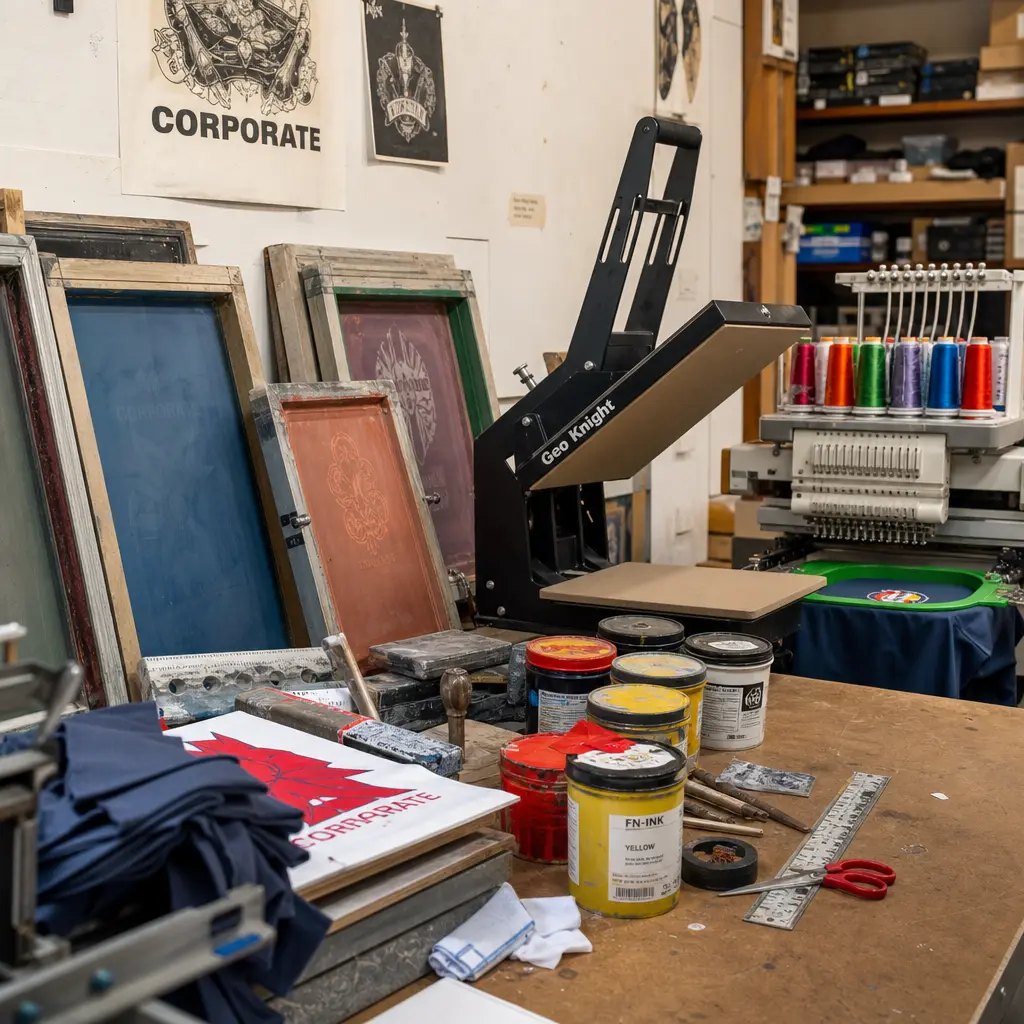
Printing is another hidden MOQ layer. Screen printing works well for university logos, but each color requires a screen, setup time, ink preparation, registration, and cleaning. A single-color campus crest at 1,000 pieces is straightforward. Six different department designs at 150 pieces each may be unattractive unless the buyer accepts setup charges and a slightly higher unit cost.
- Fabric MOQ: affected by organic cotton availability, width, color, and weight.
- Sewing MOQ: affected by size changes, handle changes, gusset construction, and reinforcement.
- Print MOQ: affected by color count, number of designs, print size, and curing method.
- Packing MOQ: affected by individual packing, SKU separation, carton labels, and barcode application.
Print Method Decisions That Affect Minimums
For most bookstore organic cotton totes, water-based screen printing is the practical choice. It gives a soft hand feel, works well on natural cotton, and keeps cost efficient at moderate quantities. The buyer should provide vector artwork, Pantone references, print size, and placement from the top edge and side seam. Without placement details, the factory will estimate, and later corrections may delay approval.
Digital print or DTF can help when the bookstore wants many small designs or full-color artwork, but it should not be treated as automatically better. On cotton canvas, digital methods can vary in color brightness and wash durability. DTF may give sharper graphics but can feel less natural on an organic cotton bag. If the tote is sold as a sustainability-forward item, print hand feel matters.
- Use screen print for 1-3 solid colors and repeat campus logos.
- Use digital options only after approving hand feel, rub resistance, and color appearance.
- Avoid very fine reverse lines on rough canvas unless the factory confirms print capability.
- Request a print strike-off when school color matching is commercially important.
Negotiation Levers That Do Not Damage Quality
The best way to reduce MOQ pressure is not to ask for the same product at a lower minimum without changing anything. Better levers include using a stock organic cotton fabric, keeping one common tote body, limiting custom dyeing, and grouping designs into one production window. These changes improve the factory’s efficiency without forcing shortcuts in fabric weight or stitching.
Another workable approach is a tiered order plan. The buyer can approve one common body and place an initial run across a few priority designs, then repeat with additional artwork after sell-through data is available. The factory may agree if it sees repeat potential, but only when the body spec is stable and the buyer does not restart sampling each time.
- Combine department versions on one bag body and one fabric purchase.
- Accept natural unbleached organic cotton instead of custom dyed fabric for lower MOQ.
- Limit artwork color count to reduce screen charges.
- Group purchase orders so the factory can cut and sew in one run.
- Offer forecast quantities, but keep the first purchase order legally clear and realistic.
Sample Approval Must Close the Spec Gaps
A sample is not only for appearance. It is the physical contract for fabric hand feel, bag size, handle length, print placement, stitching density, and packing style. For a bookstore program, the sample should be reviewed by merchandising, licensing, and receiving if the order has strict shelf or event requirements. A beautiful logo sample is not enough if the carton packing later creates receiving problems.
Pre-production samples become especially important when the buyer negotiates a lower MOQ. Small orders leave less room for rework, and factories may want to move quickly through production. The approval record should include photos, measurements, fabric weight, print comments, and any accepted tolerances. If a change is made after sample approval, the buyer should expect cost or lead time impact.
- Measure the sample flat and record width, height, gusset, and handle drop.
- Weigh fabric or request a fabric test report if GSM is critical.
- Approve print strike-off under consistent lighting, not only from a phone photo.
- Keep one sealed sample with signature or approval label.
- Record whether shrinkage after steam or light wash is acceptable.
Packing and Bookstore Receiving Details
Packing is often ignored until after the unit price is agreed. For university bookstores, this can create practical trouble. A receiving team may need totes separated by SKU, department, design, or selling location. If all designs are mixed in bulk cartons, the campus staff spends time sorting, and discrepancies become harder to trace.
The lowest-cost packing is usually bulk folded into export cartons, sometimes with inner bundles of 25 or 50 pieces. Individual polybags add material, labor, and sometimes sustainability objections. A good compromise is folded bulk packing by SKU with inner paper bands or clearly labeled inner bags. The RFQ should state carton weight limits because heavy canvas totes can create cartons that are awkward for bookstore storage.
- Define pieces per inner bundle and pieces per master carton.
- Use SKU, design name, quantity, PO number, and carton number on carton marks.
- Limit carton weight to a range the receiving team can handle safely.
- State whether plastic polybags are allowed, restricted, or prohibited.
- Request separate cartons for each design unless mixed cartons are intentionally approved.
Lead Time Risks Around Campus Calendars
University bookstore orders are often tied to immovable dates: orientation, move-in week, homecoming, graduation, or a licensed merchandise launch. MOQ negotiation should include schedule reality. A supplier may accept a lower quantity but place it behind larger production runs, especially if the order requires special organic fabric sourcing or multiple print setups.
A realistic schedule separates artwork approval, sample making, sample shipping, revision time, fabric booking, bulk production, inspection, export packing, and transit. If the buyer compresses approval time, the factory may still meet the ship date but with higher defect risk. The safest negotiation is to make decisions early and reduce variables, not to demand rush production after artwork changes.
- Allow time for artwork licensing approval before sample production.
- Confirm whether lead time starts after deposit, sample approval, artwork approval, or fabric arrival.
- Build extra days for multiple print designs and carton labeling requirements.
- Avoid custom dyed fabric for urgent bookstore deadlines unless fabric is already available.
- Schedule inspection before the cargo must leave the factory.
Quote Data Needed for a Fair Landed-Cost Comparison
The lowest tote unit price is not always the lowest landed cost. A 12 oz tote may look only slightly more expensive per piece than a 10 oz tote, but the carton volume and weight can increase freight cost. Individual packing can also change carton count. For importers and distributors supplying bookstores, these differences matter when the resale margin is tight.
A useful quote should show product unit price, setup charges, sample charges, certification document cost if applicable, packing cost, carton dimensions, gross weight, net weight, pieces per carton, production lead time, and trade term. Without carton data, freight comparison is guesswork. Without setup charges, small multi-design orders can look cheaper than they really are.
- Compare unit price plus screen charges divided by order quantity.
- Add sample, testing, documentation, and packing upgrades before judging supplier cost.
- Use carton CBM and gross weight to estimate freight impact.
- Check whether quote term is EXW, FOB, CIF, DDP, or another basis.
- For distributors, calculate margin by SKU after design-specific setup charges.
Specification comparison for buyers
| Spec decision | Recommended option | When it fits | Buyer risk to check |
|---|---|---|---|
| Fabric weight for bookstore retail tote | 10 oz / about 280-300 GSM organic cotton canvas | Good balance for textbook, hoodie, and gift purchases without feeling too stiff | Low quotes may use 8 oz fabric or loose weave that looks similar in photos but stretches under load |
| Budget orientation item | 7-8 oz / about 220-260 GSM organic cotton sheeting or light canvas | Freshman orientation, campus event giveaways, or bundled purchase promotions | Expect lower perceived value and more show-through on natural fabric; specify load test expectations |
| Premium alumni or department tote | 12 oz / about 340-360 GSM organic cotton canvas with reinforced stress points | Higher retail price points, alumni stores, limited editions, or gift sets | MOQ rises because heavier fabric, slower sewing, and carton cube increase cost |
| Print method for bookstore logos | Water-based screen print for 1-3 solid colors | Most university marks, department logos, and campus bookstore branding | Color shift on natural cotton; Pantone matching needs approved strike-off, not only digital artwork |
| Print method for small mixed designs | DTF or digital print only after wash and rub testing | Many department designs below factory screen-print MOQ or short-run pilot programs | Hand feel, edge durability, and compliance expectations must be agreed before bulk |
| Handle construction | Self-fabric 2.5-3 cm width, 55-65 cm total length, cross-stitch reinforced | Retail shoppers who carry books over shoulder or by hand | Too-short handles cause complaints; thin webbing lowers cost but may not match organic cotton positioning |
| MOQ negotiation lever | Combine same bag body with multiple print designs using shared fabric and sewing run | Bookstore wants college, athletics, and department versions without separate large quantities | Factory may still require per-design print minimums and extra setup charges |
| Packing for campus receiving | Individually folded or 25 pcs inner polybag, export carton with SKU label | Bookstore receiving teams need quick count, SKU separation, and shelf replenishment | Overpacking raises labor and plastic cost; underlabeling creates warehouse sorting delays |
Buyer checklist before sampling
- Define whether the tote is a retail product, giveaway, orientation kit item, or donor gift before discussing MOQ.
- Specify organic cotton standard required by your organization or customer, and state whether transaction certificate evidence is needed.
- Lock fabric weight in oz and approximate GSM, not only the word canvas.
- Provide finished bag size, gusset requirement, handle length, handle width, seam type, and reinforcement method.
- Separate total order quantity from per-design quantity when requesting multiple campus logos.
- Send vector artwork with Pantone references and print placement dimensions.
- State whether natural unbleached cotton, bleached white, dyed fabric, or custom color fabric is required.
- Define packing by SKU, carton label format, carton weight limit, and whether polybags are acceptable.
- Request a pre-production sample or print strike-off before bulk cutting when artwork color matters.
- Include target ship window, campus event date, and latest delivery date in the first RFQ.
Factory quote questions to send
- What is your MOQ for the same organic cotton tote body if we split the order into several print designs?
- What is the minimum per print design for screen printing, and how many screen setup charges apply?
- Which organic cotton evidence can be provided with the shipment: fabric supplier document, scope certificate, transaction certificate, or internal declaration?
- What fabric weight will be used in oz and GSM, and what is the acceptable tolerance?
- Is the quoted fabric greige, natural washed, bleached, or dyed, and does the price change by color?
- What are the finished size tolerances for bag width, height, gusset, and handle length?
- How many days are needed for sample, sample revision, bulk production, final inspection, and export packing?
- What packing method is included in the quote, and what is the added cost for individual polybag or SKU carton separation?
- What is the maximum carton weight and carton size for this tote specification?
- Which cost items are excluded from the unit price, such as screen charges, sample fees, testing, transaction certificate fees, inland freight, or bank charges?
Quality-control points to confirm
- Verify fabric weight by cutting and weighing a known area or using an agreed GSM test method.
- Measure finished tote size at top width, bottom width, height, gusset, and handle drop against approved sample.
- Perform handle pull test suitable for intended load; bookstore retail totes should survive more than normal grocery-style handling.
- Inspect reinforcement stitching at handle joints, side seams, bottom corners, and gusset transitions.
- Compare print color, print position, opacity, and edge sharpness against approved strike-off under consistent lighting.
- Rub test the print dry and slightly damp to identify weak curing or ink transfer.
- Check odor, fabric contamination, oil marks, needle holes, and loose threads before packing.
- Confirm SKU separation, carton count, carton labels, and packing list match the purchase order.
- Review random carton weights to avoid over-heavy cartons that campus receiving teams may reject or rework.
- Keep one signed production sample and one sealed pre-shipment sample for dispute reference.