The Real MOQ Problem
For trade show exhibitors, the MOQ problem is rarely just about buying fewer bags. The real issue is matching a fixed event quantity with a factory process built around fabric rolls, cutting layers, print setup, sewing line efficiency, and carton packing. A buyer may need 650 organic cotton totes for booth visitors, press kits, staff use, and a small buffer. The factory may quote 1,000 pieces because that is the lowest quantity that runs efficiently without wasting fabric and print setup time.
A useful negotiation starts by identifying which part of the MOQ is fixed and which part is flexible. Fabric preparation and print setup are usually less flexible than sewing time. If the factory already has suitable organic cotton fabric in stock, a lower MOQ may be possible. If the fabric must be dyed, bleached, finished, or certified against a specific batch document, the minimum will be harder to move. The buyer's job is to reduce uncertainty for the factory without accepting vague quality compromises.
- Treat MOQ as a production batch question, not a sales discount question.
- Expect different MOQs for natural, dyed, and custom-color organic cotton.
- Clarify whether the MOQ applies to total pieces, each artwork, each fabric color, or each print version.
- Use the trade show distribution plan to set the target quantity plus a realistic damage and late-registration buffer.
Define The Tote Before Negotiating
Factories cannot negotiate accurately from the phrase organic cotton tote bag. A 38 x 42 cm flat tote in 180 GSM organic cotton is a very different production item from a 40 x 35 x 12 cm gusseted tote in 340 GSM fabric with long webbing handles. The heavier bag consumes more yarn, takes more carton space, needs stronger stitching, and may require slower sewing. Those differences directly affect MOQ flexibility.
For exhibitors, the safest starting point is to describe the bag by finished size and use case. If the tote will carry brochures, product samples, water bottles, or boxed gifts, the handle and seam strength matter more than shaving a few grams from the fabric. If it is mainly a lightweight handout for catalogs and flyers, a flatter 180-220 GSM tote may be enough. The specification should be tight enough for comparable quotes but not so rigid that it blocks available fabric options.
- Finished size: width x height x gusset, with tolerance.
- Fabric: organic cotton, natural or dyed, target GSM range, weave if required.
- Handles: material, width, length, handle drop, and reinforcement stitch type.
- Construction: flat tote, bottom gusset, side gusset, or boxed bottom.
- Branding: print method, print size, placement, number of colors, and artwork file format.
Fabric Weight And Organic Cotton Evidence
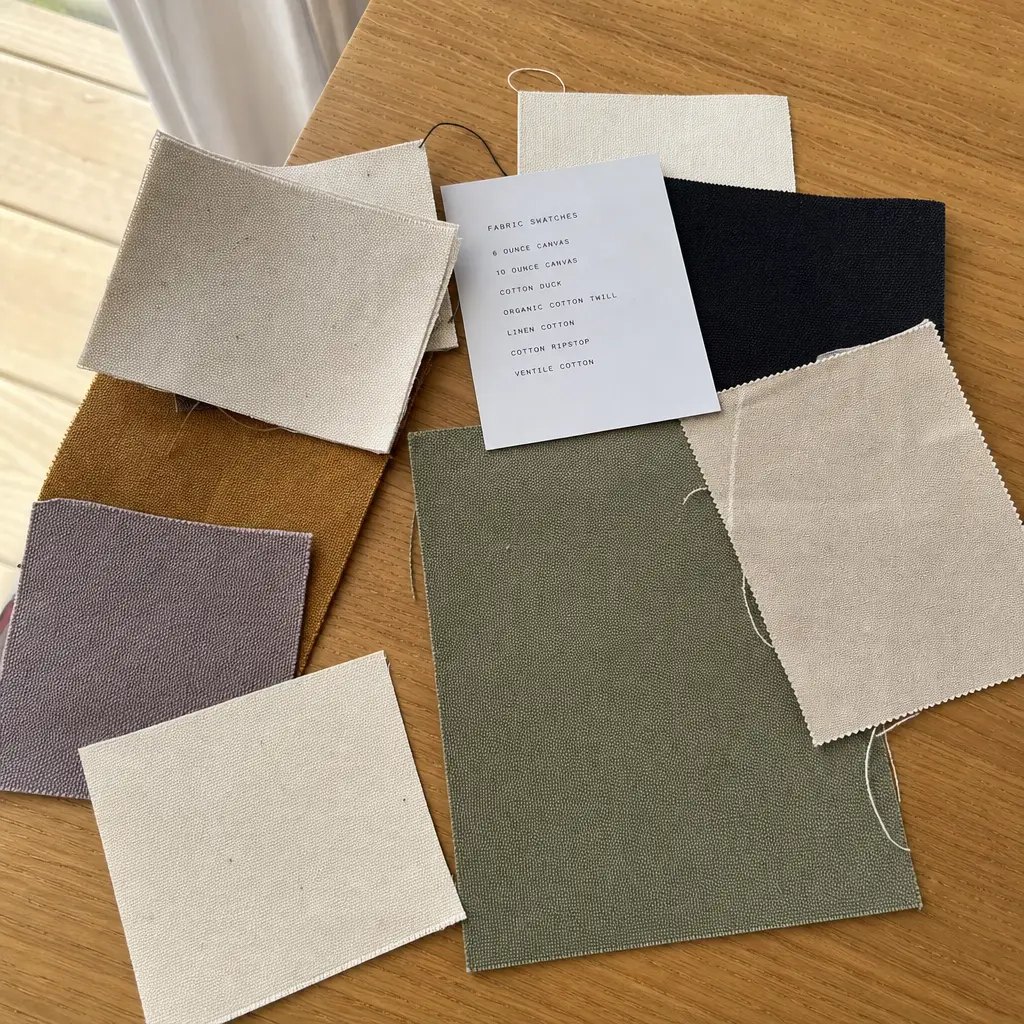
Organic cotton totes for trade shows usually sit between two commercial needs: enough perceived value for the brand and low enough cost for bulk distribution. A 180 GSM natural organic cotton tote can work well for a simple giveaway, but it may look too light if the booth is positioning a premium product. A 280 GSM or 340 GSM tote feels stronger and more retail-like, but it increases material cost, carton weight, freight volume, and sometimes MOQ.
The organic claim also needs to be handled carefully. Some buyers require certified organic cotton with supporting documents for the fabric or finished product. Others only require organic cotton material for internal brand standards. These are not the same requirement. If certification matters for compliance, retail labeling, or marketing claims, include the required document type in the RFQ and do not leave it for final shipment. A low MOQ order using leftover organic fabric may not come with the documentation your legal or sustainability team expects.
- 180-220 GSM: practical for large event giveaways, lighter freight, easier folding.
- 240-280 GSM: better hand feel for mid-range exhibitor bags and conference kits.
- 300-340 GSM: stronger retail impression, higher freight and material cost.
- Natural cotton shade may vary by batch; white or dyed fabric needs additional processing and lead time.
- Certification documents should be requested before order approval if they affect packaging claims or importer records.
How MOQ Is Built
A factory's MOQ is usually a combination of fabric minimum, cutting efficiency, print setup, sewing line changeover, packing labor, and export handling. Fabric is often the largest driver. If one roll yields close to 800 bags for a certain size, the factory may be more open to 800 pieces than 600 pieces because the roll usage is cleaner. If a custom-dyed organic cotton fabric has a dyeing minimum, the tote MOQ may be much higher than the sewing line actually needs.
Print setup can also make low quantities expensive. A one-color screen print has setup labor, screen cost, ink mixing, registration, and cleaning time. At 2,000 pieces, that cost is spread thin. At 300 pieces, it becomes visible in the unit price. When the buyer demands a lower MOQ but also wants multiple artwork versions for different booth teams or regions, the factory may treat each version as a separate small production run.
- Fabric roll yield: lower MOQ is easier when the tote size uses fabric efficiently.
- Print setup: one design is cheaper than several small artwork splits.
- Color changes: each ink color and fabric color can create a separate minimum.
- Sewing setup: unusual gussets, pockets, or labels reduce flexibility.
- Packing: individual polybags or inserts add labor and can create a minimum charge.
Negotiation Moves That Work
The strongest MOQ negotiation gives the factory something useful in exchange for a smaller run. That may be a flexible GSM within an approved range, acceptance of stock natural organic fabric, one artwork instead of three, a standard carton pack, or a willingness to pay a clear small-order surcharge. This is more effective than pushing for the same unit price at half the factory's normal MOQ.
For trade show exhibitors, one practical method is to quote quantity breaks around the target. Instead of asking only for 700 pieces, request 500, 800, 1,000, and 1,500 pieces with the same specification. The price curve will show where fixed costs are being absorbed. If 800 pieces is only slightly higher per piece than 1,000, the factory may have a workable batch. If 500 pieces jumps sharply, the MOQ is probably driven by setup and fabric waste rather than sales policy.
- Offer one print design and one fabric color to protect the lower MOQ.
- Allow a fabric GSM range such as 260-280 GSM instead of an exact number if brand standards allow it.
- Accept standard export carton packing if presentation packing is not essential.
- Separate sample charge from bulk unit price so the factory does not hide development cost.
- Use a surcharge openly when the lower MOQ is still commercially sensible.
Print Method Choices
Most organic cotton tote orders for exhibitors use screen printing because it is reliable, cost-effective, and clean for solid brand marks. Water-based ink gives a softer hand and fits the natural material story, but ink absorption on cotton can make colors look less sharp than on coated paper or synthetic fabric. For exact brand colors, the factory should test print on the actual cotton fabric, not on a substitute panel.
Heat transfer, digital print, and embroidery each have a place, but they change the MOQ logic. Heat transfer can help with small quantities, gradients, or complex artwork, yet it may feel less natural and can crack or shine depending on film quality. Embroidery looks premium but adds stitch cost, backing, slower production, and possible fabric puckering. For most trade show tote programs, a simple one or two-color screen print keeps the MOQ easier to negotiate and the inspection standard clearer.
- Screen print: best for solid logos, slogans, simple line art, and larger quantities.
- Water-based ink: softer feel, good for natural cotton, needs fabric-specific color approval.
- Plastisol or thicker ink: stronger opacity, heavier hand feel, may not match the organic positioning.
- Heat transfer: useful for small detailed artwork, but test folding marks and wash/rub performance.
- Embroidery: premium look, higher cost, slower production, and less suitable for very thin fabric.
Sample Approval Standards
For a trade show order, the sample is not a souvenir; it is the production control document. A useful pre-production sample should represent the actual bulk fabric weight, actual tote dimensions, actual handle construction, actual print method, and intended packing fold. If the sample uses a substitute fabric or a different print process, it may still help with artwork placement, but it should not be treated as full production approval.
Sample checking should be physical where possible. Measure the bag flat, weigh or verify GSM, pull the handles by hand, inspect seam ends, rub the print lightly with a clean cloth, and fold the bag the same way it will be packed. Organic cotton fabric can show slubs and natural shade variation, which may be acceptable, but oil marks, mildew odor, uneven panels, and distorted logo placement are not acceptable for booth distribution.
- Measure finished width, height, gusset, handle length, and handle drop.
- Compare print size and placement against the artwork proof with fixed edge references.
- Review stitching density, skipped stitches, loose threads, and handle reinforcement.
- Fold the sample according to the packing plan and check whether the print creases badly.
- Approve shade range with a physical sample if natural cotton color variation matters.
Packing And Booth Distribution
Packing can decide whether the bags look ready for a brand event or arrive as a wrinkled bulk commodity. Flat packing costs more carton volume but gives the best presentation. Folded packing lowers freight cost and warehouse space, but it can create creases through the logo. Individual polybags protect each tote but add plastic, labor, unpacking time, and waste at the booth or fulfillment center.
The RFQ should state how the bags will be distributed. If staff will hand them out at the booth, cartons should be sized so one person can lift and replenish them easily. If the totes go into pre-packed attendee kits, exact count per carton and clear carton labels matter. For distributors shipping to multiple show locations, inner bundles by 25 or 50 pieces can reduce counting errors and make allocation easier.
- Flat pack: best appearance, higher CBM, suitable for premium exhibitor programs.
- Folded pack: lower freight volume, must be tested for print creasing.
- Inner bundles: useful for kit packing, regional allocation, and booth stock control.
- Carton labels: should show PO, item, quantity, carton number, destination, and any event code.
- Avoid over-heavy cartons; trade show handling often involves fast manual movement.
Lead Time And Schedule Risk
Trade show schedules are unforgiving because delivery often needs to happen before the event, not on the event date. Advance warehouses, booth builders, distributors, and hotel receiving desks may all have earlier cutoffs. A tote order that is technically ready two days before the show may still be a failed order if it misses the warehouse receiving window or arrives after kit packing is complete.
MOQ negotiation can affect schedule. A lower MOQ may be inserted into the factory's production plan between larger orders, which is acceptable only if the ex-factory date is clearly committed. Organic cotton fabric availability, print proofing, sample courier time, and carton mark approval should be included in the timeline. Buyers should avoid approving bulk production from artwork alone when the event date is already tight, because one wrong print placement can make the whole order unusable.
- Build the timeline from the required delivery-to-warehouse date.
- Reserve time for sample making, sample courier, buyer review, and any resample.
- Confirm whether fabric is in stock before counting production days.
- Lock artwork and print position before fabric cutting if panel placement matters.
- Add buffer for customs, destination trucking, venue receiving limits, and rework risk.
Quote Data For Comparison
A quote that only shows unit price is not enough for MOQ negotiation. Buyers need to see what is included, what is excluded, and how the unit price changes at each quantity. Without carton size, gross weight, packing method, sample charge, print setup charge, and delivery term, a low unit price can become expensive after freight and handling are calculated.
For organic cotton totes, landed cost comparison should include both product cost and the event cost of failure. A cheaper bag that arrives late, smells damp, has weak handles, or shows a crooked logo is not a saving. The best quote is usually the one that gives enough production detail for the buyer to compare risk, not only the lowest FOB number.
- Request the same Incoterm from all suppliers, such as EXW, FOB, CIF, or DDP, for fair comparison.
- Collect carton dimensions, pieces per carton, gross weight, net weight, and total CBM.
- Separate tooling, screen, sample, certification, label, and packing charges.
- Compare unit prices at several quantity breaks using the same specification.
- Record payment terms, production lead time, inspection access, and validity period of the quote.
Specification comparison for buyers
| Spec decision | Recommended option | When it fits | Buyer risk to check |
|---|---|---|---|
| Fabric weight | 180-220 GSM organic cotton for budget event totes; 280-340 GSM for retail-style giveaway bags | Use lighter fabric for high-volume badge-bag inserts and heavier fabric when the bag must carry catalogs, samples, or resale merchandise | Very low MOQ offers may be based on stock greige fabric that shrinks, twists, or feels thinner than the approved sample |
| Cotton construction | Plain weave organic cotton with stable shrinkage data before cutting | Best for screen printing and simple trade show branding where flat panels matter | Uncontrolled shrinkage can distort logos and reduce finished bag size after washing or pressing |
| MOQ negotiation method | Negotiate by fabric roll usage, print setup, and carton plan instead of only asking for a lower number | Useful when the target order is close to the factory's normal cutting batch, such as 800 pieces against a 1,000-piece MOQ | A factory may accept a lower MOQ but recover cost through higher unit price, weaker packing, or fewer inspection steps |
| Print method | Water-based screen print for one to three solid colors; heat transfer only for detailed artwork or small color runs | Screen print fits most exhibitor logos and gives a cleaner bulk cost when artwork is simple | Low MOQ orders can carry high setup cost per piece, and dark fabric may need an underbase that changes hand feel |
| Handle style | Same-fabric self handles or 2.5-3.0 cm cotton webbing handles with reinforced cross stitch | Self handles look retail-ready; webbing handles are practical for heavier brochures and repeated carrying | Handle length and stitch strength are common quote shortcuts when suppliers compete only on unit price |
| Sample approval | Pre-production sample in actual fabric weight, actual print method, actual handle, and intended packing fold | Needed before show orders because defects are usually discovered only when bags are unpacked at the booth | A photo sample or substitute fabric sample cannot confirm shrinkage, color absorption, carton fit, or real handle strength |
| Packing format | Flat packed in export cartons for premium presentation; folded and banded when freight volume is the main cost issue | Flat packing reduces creases for on-booth distribution; folded packing lowers CBM for high-volume giveaways | Aggressive folding can mark prints, create permanent creases, or make the bag look cheap at handout |
| Lead time buffer | Book fabric and print approval before final booth logistics date, with a separate deadline for delivery to the advance warehouse | Trade show exhibitors often need goods earlier than the show opening date because venue receiving windows close early | A low MOQ order can be delayed if it is inserted between larger production batches without a fixed ex-factory date |
Buyer checklist before sampling
- Define the finished tote size, not only the cut panel size; include width, height, gusset if any, handle length, and handle drop.
- State the organic cotton requirement clearly: certified organic cotton, organic cotton fabric only, or buyer-supplied certification requirement.
- Choose the target GSM range before requesting MOQ reduction, because fabric roll availability often controls the factory's real minimum.
- Send artwork with Pantone references, print size, placement from top edge, and whether the print must survive folding without visible cracking.
- Separate the requested order quantity from the acceptable overrun or underrun tolerance, especially for trade show kits packed by exact count.
- Request sample cost, sample lead time, and whether sample cost is refundable after bulk order confirmation.
- Require the quotation to show packing method, pieces per carton, carton size, gross weight, net weight, and estimated CBM.
- Set acceptance criteria for fabric shade, print registration, stitch density, handle strength, stains, odor, and carton labeling.
- Confirm whether the MOQ is per design, per fabric color, per print color, per shipping mark, or per total order.
- Build a logistics deadline from the advance warehouse or distributor delivery date, not from the show opening date.
Factory quote questions to send
- What is your normal MOQ for this tote based on actual organic cotton fabric stock, and what lower quantity can you accept with a surcharge?
- Is the MOQ per artwork, per fabric color, per print color, or per total purchase order?
- Which organic cotton fabric weights are currently available for sampling and bulk production: 180 GSM, 220 GSM, 280 GSM, 340 GSM, or other?
- Can the quotation show the cost difference between 500, 800, 1,000, 1,500, and 2,000 pieces using the same specification?
- What print method are you quoting, and are screen setup, film, plate, Pantone matching, and underbase charges included or separate?
- Will the pre-production sample use the same fabric roll type, handle material, stitching method, print ink, and packing fold as bulk?
- What is the expected shrinkage range after fabric finishing, and how do you control finished tote size tolerance?
- How many pieces are packed per carton, what is the carton size, and what is the estimated CBM for the quoted quantity?
- What is the production lead time after sample approval, artwork approval, and deposit, and what date can you commit for ex-factory release?
- What inspection standard do you use for stains, broken stitches, print defects, incorrect labels, and short quantity?
Quality-control points to confirm
- Finished size tolerance should normally be agreed before production, for example plus or minus 1 cm on main dimensions unless the buyer requires tighter control.
- Fabric weight should be verified by GSM cutting or supplier test report against the approved specification, not judged only by hand feel.
- Handle attachment should use reinforced box or cross stitching, with no skipped stitches, loose threads, or weak bartack substitutes.
- Print position should be measured from fixed bag edges, with a practical tolerance such as plus or minus 5 mm for standard screen printing.
- Color approval should use Pantone or approved physical sample under neutral light, especially for natural cotton fabric where ink absorbs differently than on white fabric.
- Bulk bags should be free from oil stains, mildew odor, heavy creasing, needle holes outside seam lines, and visible dirt from cutting tables.
- Cartons should be export-grade, dry, correctly labeled, and packed to avoid crushing the printed panel or deforming handles.
- Random inspection should include quantity count, carton mark review, fabric shade comparison, print rub check, seam strength pull, and packing appearance.