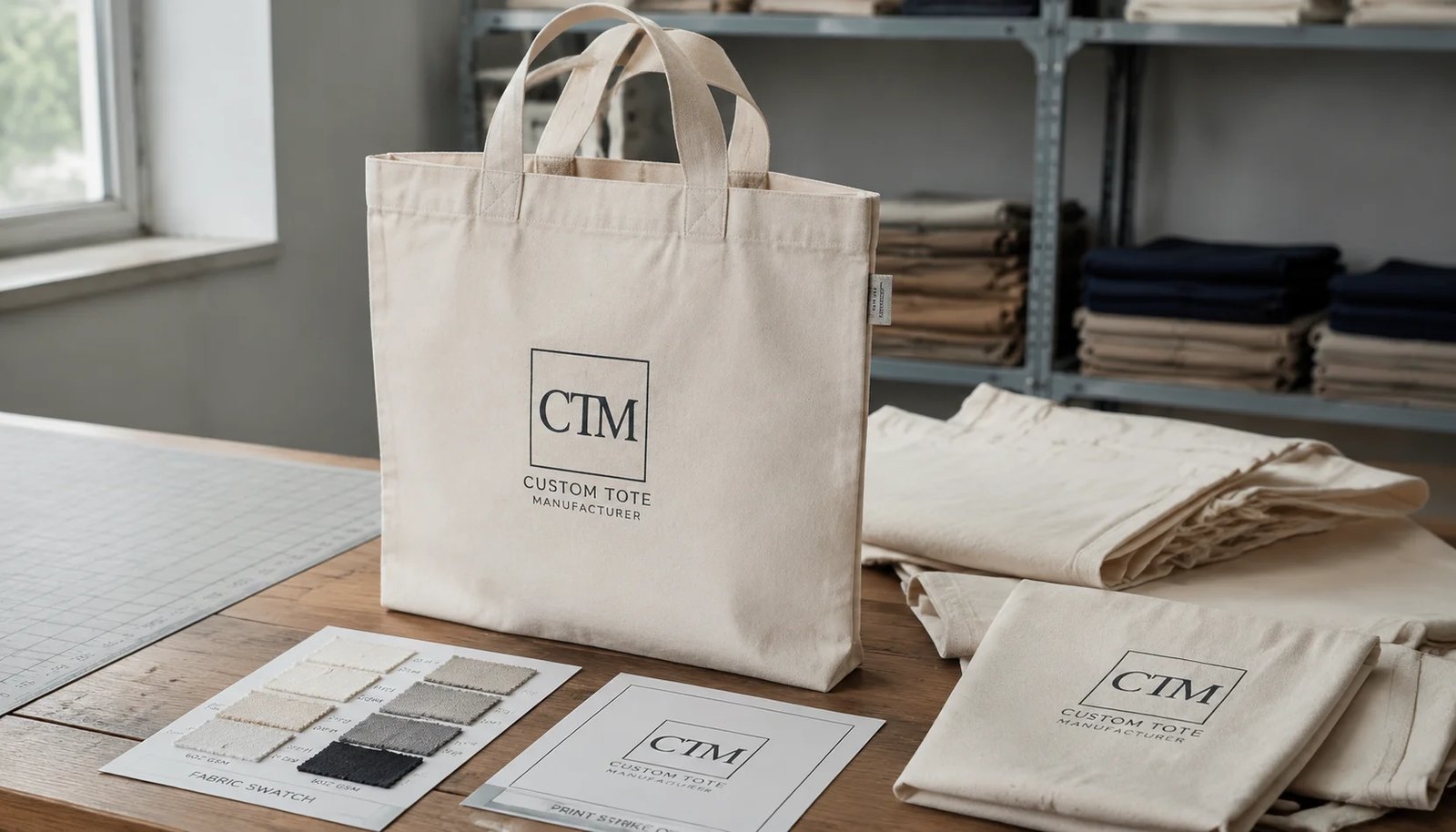
Why MOQ becomes a problem on organic cotton totes for liquor retail
MOQ friction usually starts when the retail team wants a small test order, but the bag spec behaves like a custom production run. Organic cotton totes for liquor stores are rarely just blank bags with a quick logo. Buyers often want a heavier canvas feel, a natural fabric look that supports the organic claim, one or two seasonal graphics, and enough strength to carry heavy bottles. Each of those choices adds production constraints that the supplier has to absorb somewhere, and MOQ is where that cost is protected.
For liquor retail, the issue is sharper than in general gift retail because the end use is weight sensitive. A bag that fails with a bottle inside creates immediate store complaints and wasted branding. That means the factory cannot simply use leftover light fabric or low-density handle stitching to meet a low trial MOQ. If your team understands which parts of the quote are fixed and which are variable, you can negotiate MOQ intelligently without pushing the factory into a price that later reappears as quality risk.
- Fixed-cost drivers: artwork setup, screen making, sampling, cutting planning, carton labels, export documentation
- Variable-cost drivers: fabric consumption, print ink usage, labor minutes, packing materials, freight volume
- Risk-sensitive specs for liquor retail: heavier GSM, handle strength, print rub resistance, shape retention under bottle weight
Start negotiation with the use case, not with the lowest quantity target
A better MOQ conversation begins with retail use. If the bag is for one standard 750 ml bottle plus a small add-on item, the construction can stay relatively simple. If the same tote needs to carry two wine bottles, a gift box, or mixed spirits merchandise, the fabric and seam requirements change. When buyers skip this step and simply ask for the minimum MOQ, the supplier has to quote a safe version or a vague version. Neither helps comparison.
Write the RFQ around load, store usage, and expected feel at checkout. Procurement teams that define the use case usually get more flexible MOQ offers because the factory can standardize the right construction. For example, a flat tote in 280 GSM natural organic cotton with self-fabric handles and one-color print is easier to combine across logos than a series of different gusset sizes and mixed trims.
- State expected load: one bottle, two bottles, or mixed items by estimated total kilograms
- State retail role: paid reusable bag, free gift-with-purchase, winery event bag, or premium branded takeaway
- State reusability expectation: one-off promotional use or repeated use over months
- State brand requirement: natural unbleached look, dyed body color, minimalist logo, or seasonal artwork
The spec choices that move MOQ and cost the most
Fabric weight is one of the strongest quote variables because it affects both cost and availability. Many factories can source organic cotton in common constructions, but not every GSM is stocked. If you insist on an uncommon weight such as 300 GSM instead of 280 GSM or 310 GSM, the MOQ may jump because the mill minimum rises or because the fabric must be woven to order. For liquor retail, 280 to 340 GSM is usually the practical zone when the bag needs a sturdier handfeel and better support for glass products.
Print method is the next major lever. One-color screen printing keeps setup and running costs lower at scale and allows MOQ to be shared more easily across similar SKUs. Full-color heat transfer or digital printing may look attractive for seasonal retail graphics, but it often shifts the economics: lower setup in some cases, higher unit cost, and more visible quality arguments around edge feel, cracking, or shade variance. If MOQ is the main problem, simplify art before you pressure the factory on quantity.
- Common practical fabric bands: 220 to 250 GSM for lighter promo use; 280 to 340 GSM for sturdier retail use
- Natural fabric is usually easier to source than custom-dyed organic canvas at small to mid volumes
- Front-only, one-color screen print is normally the most MOQ-friendly branding route
- Gussets, inside pockets, contrast handles, woven labels, and bottom boards each add complexity and can push MOQ upward
How factories actually calculate MOQ on custom organic cotton totes
MOQ is not one number inside the factory. It is a stack of operational thresholds. The bag maker has a cutting efficiency threshold, the printer has a setup threshold, the fabric supplier has a mill minimum, and the packing team has a practical line change threshold. Buyers negotiate better when they break the quote into these layers instead of treating MOQ as a mysterious rule. A factory is more likely to compromise on bag sewing MOQ if the print setup is shared and the fabric is standard.
This is why combined MOQ across variants is often more effective than pushing for a very small MOQ per SKU. If your chain wants three regional logos, keep the body size, fabric weight, handle length, and print placement identical. The factory can then run one material plan and change only the screen. That is a real efficiency, so the MOQ reduction is more credible. If every SKU changes size, fabric, and artwork position, the supplier has no production gain to trade against your lower volume.
- Mill minimums matter more when using dyed organic fabric or uncommon GSM
- Screen cost is easier to absorb than a fabric change; use this in negotiation
- Shared body size across multiple logos is one of the simplest MOQ reducers
- A combined annual forecast can help even when first shipment volume is modest
Negotiation methods that reduce MOQ without creating quality shortcuts
The safest negotiation method is standardization. Keep one body size, one natural fabric color, one handle construction, and one print method, then spread the total order across a few artworks or delivery dates if the factory allows it. This protects production efficiency while giving your team room to test stores or regions. Another workable method is agreeing to a slightly higher unit price for the first order while locking a lower repeat price once annual volume is proven. That is often healthier than forcing a low first price that leads to hidden material downgrades.
Avoid negotiating by removing controls that matter to liquor retail performance. Reducing seam reinforcement, accepting very light GSM, or skipping pre-production sampling can make the initial MOQ easier but creates failures after launch. A better tradeoff is to remove decorative complexity, not structural integrity. In other words, take out the inside pocket or the extra print side before you compromise on handle security.
- Use combined MOQ across 2 to 4 logos with one common bag specification
- Offer annual volume visibility, even if the first release is smaller
- Accept a realistic first-order setup charge instead of pushing all cost into the unit price
- Trade non-essential features away first: extra panel print, woven label, custom dyed handle, inside pocket
- Do not trade away core performance: fabric strength, stitch quality, print adhesion, carton integrity
What a usable quote comparison should include
Many bag quotes look comparable until you line up what is actually included. One supplier prices 280 GSM natural organic cotton with self-fabric handles and one-color screen print. Another uses 240 GSM fabric, counts handle length differently, excludes sample cost, and packs 100 pieces per carton without inner protection. The cheaper quote may not be lower on a landed and approved basis. Procurement teams should normalize the inputs before making a decision.
Request side-by-side quote options using the same bag size and artwork with at least three fabric weights. That single exercise often reveals whether the supplier is transparent. A factory that can explain the cost jump from 220 GSM to 280 GSM and again to 340 GSM is usually giving you a more usable basis for negotiation than a supplier who only sends one all-in number.
- Compare unit price, sample cost, print setup, packing detail, and carton count separately
- Get quote breaks at multiple volumes, not just one MOQ line
- Ask whether prices are based on natural fabric, dyed fabric, or specific Pantone matching
- Note if testing, barcode labeling, or store pack sorting is extra
- Normalize the incoterm before deciding which quote is cheaper
Sample approval rules that prevent expensive misunderstandings
For organic cotton totes, the development sample is useful for shape and rough visual review, but it should not be the final approval standard if it uses substitute stock. Procurement teams should approve a pre-production sample made from bulk-like fabric, with the actual print method and intended packing method. This matters because natural organic fabrics can vary in specking, softness, and shade, and these differences change how the final print looks on the bag panel.
The sample approval should also define what is acceptable, not just what looks good in general. If the logo must sit 70 mm from the top edge, say so with a tolerance. If the bag must fit a specific store gift box, verify the internal opening and handle drop, not only the flat external dimensions. Buyers who turn sample comments into measurable acceptance criteria get fewer arguments at final inspection.
- Approve on bulk-like fabric with actual print method and actual handle construction
- Record finished width, height, gusset if any, and handle total length or handle drop
- Record print size, panel position, and print color reference
- Review seam neatness, stitch density, loose threads, and corner shape
- Approve folded packing format and carton count before bulk starts
QC thresholds that matter specifically for liquor retail tote programs
The highest-risk defects on liquor retail totes are usually not cosmetic first. Handle attachment failure, seam opening under load, and distorted panel shape are more damaging than a small natural fabric speck. Your QC plan should reflect this. If the bag will carry glass, define a practical load test method before production starts. The test does not need to be theatrical; it just needs to be repeatable and tied to your expected use condition.
Cosmetic standards still matter, especially for premium retail brands, but they should be ranked intelligently. On natural organic cotton, slight seed specks or small shade variation may be commercially acceptable if disclosed and approved. Off-center printing, inconsistent stitch lines on visible handles, or severe fabric bowing are harder to defend in-store. Align your defect list with how the product is actually sold and used.
- Major defects for most programs: broken or skipped handle stitching, open seams, major print misplacement, wrong fabric weight band, wrong carton count
- Minor defects often acceptable within agreed limits: small natural specks, limited thread tails trimmed before packing, slight fold mark from carton packing
- Useful production checks: in-line print registration, seam strength spot checks, shade segregation, carton drop resistance
- If the bag is for premium gifting, add a stricter standard for panel cleanliness and print edge sharpness
Packing decisions that change freight, store handling, and damage rates
Packing is often treated as an afterthought on tote bag RFQs, but it affects cost, scuff risk, warehouse handling, and store replenishment. A low quote with oversized carton counts can look attractive until the cartons exceed your warehouse weight limit or the bags arrive with print abrasion from over-compression. For liquor retail distribution, flat packing in moderate carton quantities is usually safer than pushing maximum carton fill.
If the bags are being distributed to multiple stores, consider whether the supplier can pack by inner bundle count that matches your replenishment logic. This may add a small labor charge, but it can save repacking costs after arrival. Also define whether polybags are required or whether a plain paper band or direct flat pack is acceptable under your sustainability policy.
- Typical practical range: 25 to 50 pcs per inner, then export carton by weight cap and cube efficiency
- Avoid carton weights that strain manual handling rules in your destination warehouse
- Use interleaving or controlled fold direction if fresh print scuffing is a concern
- Request carton marks with SKU, color, quantity, PO number, and country of origin
- If store packs matter, include exact inner quantity in the original quote request
Lead time planning when MOQ is still under negotiation
MOQ discussion often delays approvals, and delays create more cost than many buyers expect. Organic fabric availability, screen prep, and sample circulation can consume more of the calendar than sewing itself. If your retail launch is linked to a holiday promotion or a chain-wide gift campaign, start by backing out the sample and booking timeline from the store delivery date. A cheap quote with uncertain fabric readiness is not actually lower risk than a slightly higher quote from a supplier with stable fabric sourcing.
Ask the supplier to separate sample lead time from bulk lead time and to state what event starts the production clock. Some factories count lead time from deposit receipt, others from artwork approval, and others from pre-production sample sign-off. If those triggers are not aligned, your internal schedule can drift by one or two weeks without anyone noticing until booking becomes urgent.
- Break schedule into development sample, pre-production sample, material readiness, bulk sewing, final inspection, and booking
- Confirm what happens if artwork changes after sample approval
- Hold some buffer if using custom-dyed fabric or non-standard GSM
- If launch timing is fixed, consider approving one standard tote now and seasonal graphics later
Specification comparison for buyers
| Spec decision | Recommended option | When it fits | Buyer risk to check |
|---|---|---|---|
| Fabric weight for wine and spirits takeaway use | 10 oz to 12 oz organic cotton canvas, about 280 to 340 GSM | Best for single-bottle add-on sales, gift packs, and repeat reuse where the bag must feel sturdy at point of sale | Below about 240 GSM can feel too soft for heavier glass loads; confirm drop test expectation and seam reinforcement |
| Lighter promotional bag option | 8 oz organic cotton, about 220 to 250 GSM | Fits event giveaways, lightweight retail merchandise, and price-sensitive programs where the bag is not carrying multiple bottles | If the same art is later used for liquor gift packs, returns can rise from shape collapse or handle stress |
| Organic material proof route | Factory with transaction certificate support and batch traceability for the fabric lot | Useful when your retail team must support organic claims in marketing or supplier onboarding documents | Some suppliers quote 'organic cotton' but cannot match invoice, mill record, and finished bag lot documentation |
| Print method for simple logo | 1-color water-based screen print | Best value for medium to large runs with bold retail branding and stable logo placement | Tiny text, fine serif detail, or dark bags on light ink may need artwork adjustment and strike-off approval |
| Print method for multicolor artwork | Heat transfer or digital print only when order value supports it | Works for seasonal gift promotions with full-color art or short retail campaigns | Lower MOQ may be possible, but unit cost rises sharply and wash or rub resistance must be approved against actual use |
| MOQ structure | Negotiate by total order value across 2 to 4 colorways using one bag size and one fabric | Most practical for liquor chains testing regional designs while keeping production efficient | Too many mixed sizes, mixed prints, and mixed handle colors can push the factory back to a higher MOQ per SKU |
| Handle construction | Self-fabric handles with box stitch or cross stitch, 60 to 70 cm total length | Good for shoulder carry and standard retail checkout use | Short handles may not fit winter coats; weak stitch density causes the most common failure on bottle-weight bags |
| Packing format | Flat packed, 25 to 50 pcs per polybag, export carton by count and weight cap | Reduces freight waste and works for importers sending bags to multiple stores or co-packers | Loose carton packing can create print scuffing; overpacked cartons increase handling damage and warehouse complaints |
| Sampling route before bulk | Pre-production sample from bulk-like fabric plus print strike-off and packing photo set | Best for private label and chain retail where multiple departments approve quality | Approval on a handmade development sample alone often leads to shade, size, or print position disputes in bulk |
Buyer checklist before sampling
- Define the actual retail use case: single bottle, double bottle, mixed gift items, or general merchandise carryout
- State target fabric weight in GSM and fabric type, for example organic cotton canvas 280 GSM natural
- Fix one bag body size before negotiating MOQ; size changes disrupt marker planning and carton efficiency
- Limit early programs to 1 fabric, 1 handle construction, and 1 print method to unlock lower combined MOQ
- Specify logo size, print colors, and print side count; front-only and one-color screen print usually gives the cleanest first quote
- Request unit price breaks by 500, 1000, 3000, and 5000 pieces with tooling or setup charges shown separately
- Require sample approval on bulk-like fabric, not only a development sample from substitute stock
- Set acceptable size tolerance, handle length tolerance, print position tolerance, and carton count tolerance in the PO
- Confirm carton dimensions, gross weight per carton, and whether inner polybags are recycled or plain
- Match incoterm and delivery target to your warehouse calendar before accepting a lower quote with longer lead time
Factory quote questions to send
- What is your MOQ by bag size, fabric color, and print color count, and what can be combined across SKUs?
- What organic fabric documents can you provide at fabric lot level, and are they linked to the finished production batch?
- Which fabric weights do you stock regularly, and which weights require fresh weaving or dyeing lead time?
- What is included in the quoted price: bag body, handles, print, inner packing, export carton, testing, and sample cost?
- For this artwork, which print method do you recommend and why, and what detail limits should we respect?
- What are your standard tolerances for finished size, GSM variation, handle placement, print placement, and print color shade?
- Can you quote separate options for 220 GSM, 280 GSM, and 340 GSM using the same bag size for side-by-side cost comparison?
- What is the lead time for development sample, pre-production sample, bulk production, and booking after artwork approval?
- How many pieces fit per carton, what is the carton size and gross weight, and can you pack by store pack if needed?
- What in-line and final QC checkpoints do you use for seam strength, print adhesion, needle detection if applicable, and carton labeling?
Quality-control points to confirm
- Fabric weight should be checked against approved target GSM with reasonable commercial tolerance agreed before production
- Finished bag width, height, gusset if any, and handle length should be measured on a defined sample size from each lot
- Print position should stay within the approved placement tolerance and remain centered relative to the panel seam lines
- Ink coverage should be even with no pinholes, ghosting, excessive spread, or visible registration shift
- Handle stitching should meet the approved pattern and stitch density, especially on bottle-weight carrying bags
- Side seams and bottom seams should be clean, locked, and free from skipped stitches or raw seam exposure
- Fabric shade should match the approved standard for natural or dyed goods; mixed shade cartons should be blocked
- Carton count, carton marks, barcode labels, and store pack configuration should match the packing list and PO exactly
- Random load testing on filled bags should be done before final packing when the bag is intended for glass bottle carryout
- Pre-shipment photos should include bag front, inside seam, handle attachment, print close-up, folded pack, and carton marks