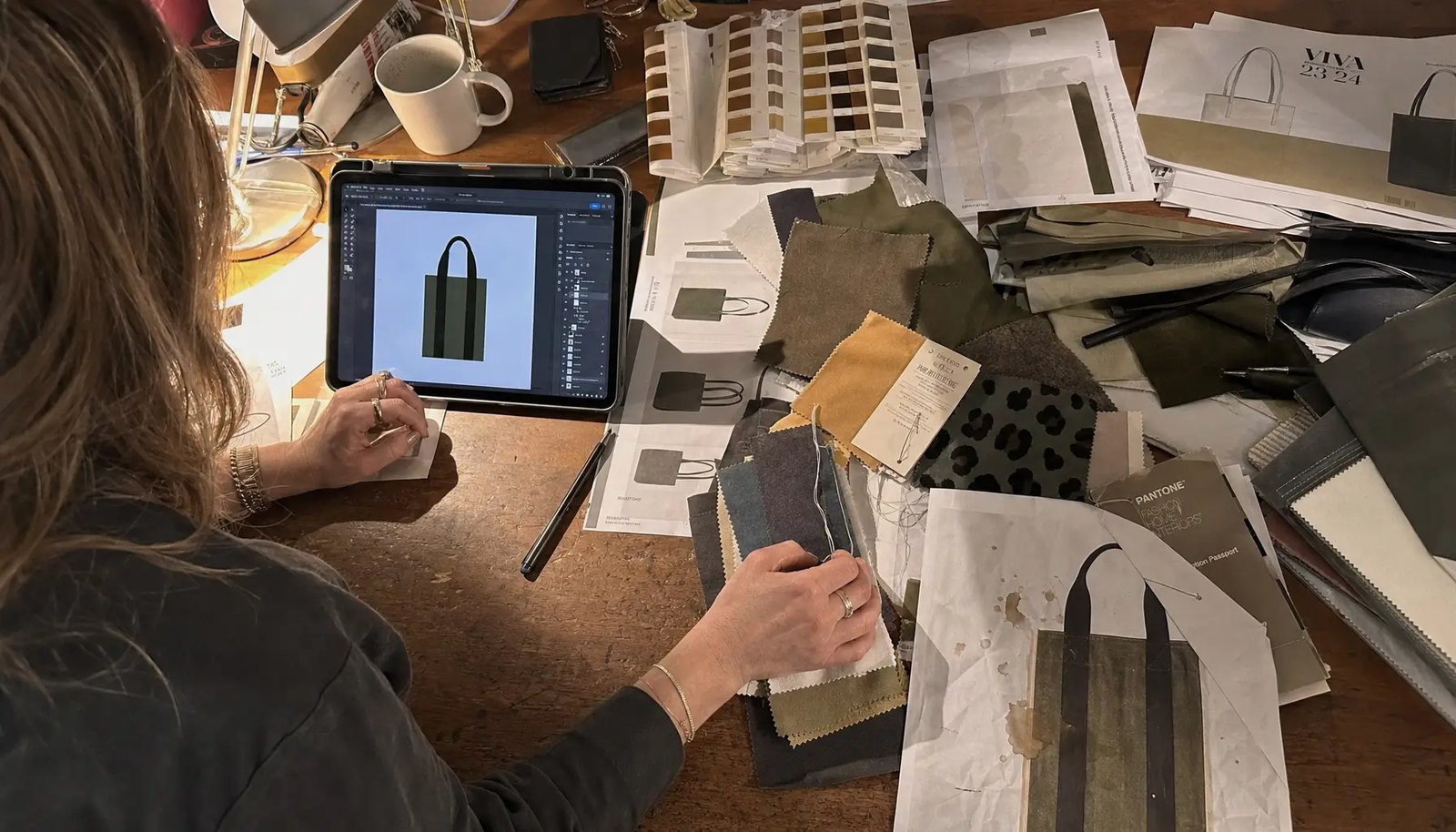
Start with the load, not the logo
For tech startups, organic cotton totes often begin as a brand item: launch swag, developer conference handout, employee onboarding bag, investor event gift, or retail merchandise. The material decision should start with what the bag must carry. A tote for stickers and a T-shirt can use a lighter fabric than a tote carrying a water bottle, notebook, charger, and packaging insert. If procurement starts with only 'organic cotton tote with logo', suppliers will quote different fabrics and constructions, making unit prices difficult to compare.
A practical RFQ should describe the loading scenario in plain terms. For example: 'Bag must hold one hoodie, one notebook, one 600 ml bottle, and small accessories for event distribution.' That tells the factory whether flat construction is enough or whether a bottom gusset, heavier canvas, and stronger handle reinforcement are needed. The buyer avoids paying for unnecessary heavy fabric while still preventing complaints about weak handles or bags that feel too thin.
- Light event handout: 5 oz to 8 oz cotton, usually flat tote, lower perceived value but lower freight weight.
- Reusable brand tote: 10 oz to 12 oz organic cotton canvas, stronger hand feel, good for conference and employee kits.
- Retail or premium gift tote: 12 oz to 16 oz canvas, reinforced seams, better structure, higher material and freight cost.
- Accessory bundle tote: consider a gusset and handle bar-tacks before simply increasing GSM.
Translate fabric weight into buyer language
Organic cotton tote fabric is quoted in oz, GSM, or sometimes both. Buyers should not treat these terms as decoration. A 6 oz cotton bag may be acceptable for a budget giveaway, but it will not communicate the same value as a 12 oz canvas tote. GSM is useful for technical comparison, while oz is commonly used in bag factories and merchandising conversations. The exact conversion depends on fabric width and trade convention, so the safest RFQ method is to write both the target oz and approximate GSM range.
For most startup procurement programs where the tote is expected to be reused, 10 oz to 12 oz organic cotton canvas is the practical middle point. It has enough body for a clean print and retail-like feel, while still folding efficiently into cartons. Moving to 14 oz or 16 oz improves firmness but can make the bag bulkier, increase sewing needle requirements, reduce carton quantity, and raise ocean or air freight cost. Heavier is not automatically better if the bag is used for one event and then stored.
- Write '10 oz organic cotton canvas, approx. 280 to 340 GSM, tolerance to be confirmed by supplier' rather than 'thick cotton'.
- For natural cotton, approve the fabric hand feel and shade before bulk cutting.
- Do not compare quotes unless the fabric weight, weave, bag size, and handle spec are aligned.
- If the supplier offers stock fabric, request the actual measured GSM from the current lot.
Natural, bleached, or dyed organic cotton
Natural unbleached organic cotton is usually the first choice for sustainability-led startup branding. It has a warmer shade, visible cotton specks, and a lower-processing look that many buyers want. However, natural cotton is not pure white. The shade can vary between lots, and small seed specks or uneven natural tone are part of the material character unless the buyer defines stricter appearance limits. This matters when the logo uses light colors or when multiple shipments must match closely.
Bleached or dyed organic cotton can make the brand presentation more controlled, especially for retail programs or when a startup has strict brand color rules. The tradeoff is longer setup, lab dip approval, possible higher MOQ, and more chance of shade rejection. Dark dyed fabrics also affect print choice. A white logo on black organic cotton generally needs stronger ink coverage or underbase printing, while a black logo on natural cotton is simpler and more stable.
- Natural base: lower visual processing, good for black or dark single-color logos, shade variation must be accepted within a range.
- Bleached base: cleaner background for bright artwork, but may conflict with some sustainability messaging if not explained correctly.
- Dyed base: stronger brand matching, requires lab dip approval and extra lead time.
- Dark fabric: plan for ink opacity, curing quality, and possible hand-feel change from heavier ink deposit.
Weave, finish, and shrinkage affect the final bag
The same GSM can perform differently depending on weave density, yarn thickness, and finishing. A loose canvas may feel soft but stretch more during sewing and lose shape when loaded. A tight canvas prints more sharply and holds structure, but may feel stiff when new. Startup buyers often want a clean premium tote, so the factory should clarify whether the fabric is plain cotton canvas, twill, brushed cotton, or washed canvas. These are not interchangeable materials.
Finishing also changes dimensions. Washed or enzyme-treated fabric may feel better, but it can shrink and create a more casual, wrinkled look. If the bag will be sold in a retail channel, dimension consistency and neat folding may matter more than softness. If the bag is for an employee welcome kit, a softer finish may improve the unboxing experience. The buyer should decide which quality is more important instead of leaving the finish to the supplier.
- Plain canvas: stable, cost-efficient, good for screen printing and standard tote production.
- Twill cotton: softer drape and diagonal texture, usually less crisp for simple tech logo placement.
- Washed canvas: softer and more casual, but dimensions and shade can vary more.
- Brushed finish: pleasant hand feel, but print edge sharpness can be less clean on fuzzy surfaces.
Print method should match artwork and fabric texture
Most tech startup totes use minimal artwork: a wordmark, icon, short line, or event name. For this type of design, water-based screen printing is normally the most reliable and economical method at wholesale quantities. It gives a softer hand feel than thick plastisol-style prints and matches the natural cotton story better. The key is to provide vector artwork, Pantone references, print size, placement, and acceptable color tolerance.
Digital printing can be useful for gradients, many colors, photo artwork, or low-quantity versioning, but it is not always the best option for textured organic canvas. Colors may appear less bright on natural cotton, and pretreatment can change the hand feel. Heat transfer can give clean small details but may look less integrated with the fabric and can raise durability concerns if the tote will be folded tightly. Embroidery is possible for premium runs, but it adds cost, weight, and puckering risk on lighter fabrics.
- One-color logo on natural canvas: water-based screen print is usually the cleanest cost-to-quality choice.
- Small text below 2 mm stroke width: test on actual canvas before approving bulk printing.
- Large solid print area: review hand feel, curing, cracking, and ink coverage on folded areas.
- Multi-location print: specify each print size and position because every location affects setup and handling cost.
Construction choices that change both cost and usability
A tote bag quote is not only fabric plus logo. Sewing construction can move the price and the failure rate. A flat tote is simple, folds compactly, and works well for event literature, T-shirts, and light items. A bottom gusset or boxed bottom makes the bag more useful for bulkier kits, but it increases cutting, sewing, and packing volume. For tech buyers shipping kits to employees or distributing welcome bundles, the gusset often adds more practical value than upgrading from 12 oz to 16 oz fabric.
Handles deserve more attention than they usually receive in RFQs. Buyers should define handle width, loop length, and reinforcement method. A shoulder-carry tote commonly uses about 55 cm to 65 cm handle length, depending on bag height and market preference. Narrow handles can feel cheap and uncomfortable when carrying bottles or notebooks. Handle insertion should be reinforced by cross-stitching, box stitching, or bar-tacks according to the intended load.
- Flat tote: best for low freight volume, handouts, documents, and folded apparel.
- Bottom gusset: better for onboarding kits, bottles, retail bundles, and items with depth.
- Side gusset: increases capacity but can make folding and print positioning less straightforward.
- Reinforced handle: necessary when the bag is expected to carry more than light promotional items.
MOQ logic for startups that need flexibility
Startups often want several artwork versions, department names, event dates, investor logos, or market-specific colors. That flexibility can break factory efficiency. MOQ is usually driven by fabric sourcing, dyeing, cutting setup, print screen setup, and packing labor. A 1,000-piece order split into five colors and five print designs is not the same as a 1,000-piece order in one fabric and one logo. The second order is easier to price and control.
A better first run is often one size, one fabric color, and one main print design, with variable paper hangtags or stickers used for event-specific messaging. If the brand needs different departments or sponsor versions, keep the bag unchanged and vary the insert. This protects unit cost, reduces print mistakes, and improves reorder consistency. When negotiating MOQ, buyers should discuss the real cost drivers instead of only pushing for a lower number.
- Lowest-risk startup launch spec: one natural fabric, one black logo, one standard size, bulk pack.
- Higher-complexity spec: dyed fabric, two-sided print, custom label, individual retail packing.
- MOQ usually increases when fabric must be custom dyed or when the mill requires minimum greige fabric booking.
- Below-MOQ orders may carry setup charges that are more transparent than inflated unit prices.
What belongs in a comparable factory quote
Many tote quotes look cheap because the specification is incomplete. One supplier may quote 8 oz cotton with a small one-color print and bulk packing, while another quotes 12 oz organic canvas with a gusset, custom label, and individual polybag. Procurement cannot compare those numbers. A useful quote sheet must show material, construction, print, packing, carton data, lead time, and commercial terms in one place.
For importers and distributors, carton data is not a minor detail. Organic cotton canvas is bulky compared with small plastic promotional goods. If a supplier does not provide pieces per carton, carton dimensions, gross weight, and CBM, the buyer cannot estimate freight or warehouse handling. A lower FOB price may lose its advantage if the bag is oversized, packed inefficiently, or requires air freight because the production schedule was underestimated.
- Material line: organic cotton type, weight in oz and GSM, color, weave, and stock or custom sourcing status.
- Bag line: finished size, gusset, handle width and length, seam construction, label, and reinforcement.
- Decoration line: print method, number of colors, print size, print locations, setup charges, and artwork file requirement.
- Packing line: individual packing or bulk packing, pieces per carton, carton dimensions, gross weight, net weight, and total CBM.
- Commercial line: MOQ, sample cost, sample lead time, production lead time, payment terms, Incoterm, and quote validity.
Sample approval should be stricter than a photo review
A photo can show general appearance, but it cannot confirm fabric weight, handle comfort, stiffness, print hand feel, or actual capacity. For a startup buying totes for an important launch, the approval sample should be physically reviewed by procurement, brand, and whoever will pack the final kit. The sample should use the closest available bulk fabric. If it is made from substitute fabric, that must be written clearly so nobody treats it as final production approval.
Sample review should produce measurable comments, not vague feedback. Instead of 'make it nicer', write 'increase handle width from 2.5 cm to 3.2 cm', 'move logo down 3 cm from top edge', or 'improve white ink opacity on black fabric'. Once the pre-production sample is approved, changes should stop unless the buyer accepts schedule and cost impact. Late artwork changes are one of the most common reasons tote orders miss event deadlines.
- Measure the sample flat and record the allowed tolerance for bulk production.
- Load the sample with the real event or kit contents and carry it for several minutes.
- Rub the printed area with a white cloth to screen for poor curing or ink transfer.
- Fold the bag as it will be packed and check whether the print cracks or sticks.
- Review the sample under daylight and office lighting because natural cotton and ink colors shift visually.
Packing choices influence cost, freight, and sustainability claims
Packing should match the distribution channel. For a conference giveaway, bulk packing 50 to 100 pieces per export carton can be efficient and avoids unnecessary plastic. For retail sale, distributor resale, or employee kit assembly, individual packing may be needed for cleanliness, barcode control, and pick-and-pack handling. The wrong packing method either wastes money or creates warehouse problems.
Organic cotton buyers should also be careful with sustainability messaging. If the product is promoted as organic and low-waste but every bag is packed in a thick plastic polybag without a retail reason, the presentation may conflict with the campaign. Alternatives include bulk pack with inner liner, paper belly band, recycled polybag where accepted, or individual paper wrap. Each option has cost, moisture protection, and warehouse handling tradeoffs.
- Bulk pack: best for event distribution, lower labor, lower packaging material, but less individual protection.
- Individual polybag: useful for retail and kitting, cleaner handling, but adds plastic and labor.
- Paper band or paper wrap: better brand presentation, but less moisture protection during long transit.
- Carton markings: include item code, quantity, gross weight, net weight, carton number, destination, and any barcode requirement.
Specification comparison for buyers
| Spec decision | Recommended option | When it fits | Buyer risk to check |
|---|---|---|---|
| Fabric weight | 10 oz to 12 oz organic cotton canvas for most startup merchandise totes | Good balance for onboarding kits, conference giveaways with real reuse, and light retail use | Below 8 oz may feel promotional; above 14 oz increases cost, carton weight, and shipping volume without always improving perceived value |
| Weave and hand feel | Plain canvas with moderate yarn density and enzyme or soft wash only if needed | Works for clean tech branding where the bag must hold shape but still fold for packing | Over-soft washing can reduce structure and change dimensions; untreated fabric may feel stiff but prints more predictably |
| Color base | Natural unbleached organic cotton for sustainability-led positioning; dyed canvas only when brand color is essential | Natural bags reduce dye processing and suit eco campaigns, recruiting events, and partner gifts | Natural shade varies by cotton lot; dyed colors require lab dip approval and usually higher MOQ |
| Print method | Water-based screen print for 1 to 3 solid logo colors; digital print only for gradients or small batch artwork | Screen print gives cleaner cost control at 500+ pcs and better repeatability on cotton canvas | Fine text can fill in on textured canvas; digital print on natural cotton may look muted without pretreatment |
| Construction | Boxed bottom or bottom gusset only when the bag must carry laptop accessories or kits; flat tote for event handouts | Gusset improves usable volume for swag packs, retail bundles, or distributor samples | Gussets raise sewing time and carton volume; weak bottom corner bar-tacks lead to returns when bags are loaded |
| Handle specification | 2.5 cm to 3.8 cm cotton webbing, 55 cm to 65 cm loop length depending on shoulder carry | Suitable for event attendees carrying notebooks, bottles, and light devices | Too-narrow handles cut into the shoulder; very long handles make small totes drag and look oversized |
| MOQ logic | One fabric color, one size, one print placement for the first production run | Best for startups validating demand, launch events, or investor/community campaigns | Splitting colors or artwork versions can push each variant below factory-efficient MOQ and raise unit cost sharply |
| Packing method | Individual polybag only for retail or kitting; bulk pack 50 to 100 pcs per carton for giveaways | Bulk packing lowers material use and labor for conference or office distribution | Organic positioning can conflict with plastic packing; carton compression may crease heavy printed areas if bags are not interleaved |
Buyer checklist before sampling
- Define the real use case before selecting GSM: event giveaway, employee kit, retail sale, reseller program, or device accessory bundle.
- Specify organic cotton standard required by your compliance team, but do not write unsupported certification claims on the bag unless documentation is available.
- Choose one target fabric weight in oz and GSM; include an acceptable tolerance range instead of only writing 'heavy cotton'.
- State finished bag dimensions, gusset depth, handle width, handle drop, seam type, and whether the tote must stand when lightly filled.
- Send vector artwork with Pantone references, print size in centimeters, position from top edge, and maximum number of colors.
- Decide whether natural cotton shade variation is acceptable or whether a pre-production fabric swatch must be approved.
- Set sample approval criteria for fabric feel, print opacity, logo registration, handle strength, seam cleanliness, shrinkage, and packing.
- Separate retail packing requirements from bulk event packing requirements so suppliers do not quote unnecessary labor and packaging.
- Request carton dimensions, gross weight, net weight, pieces per carton, and estimated CBM with the quotation.
- Reserve schedule time for fabric booking, lab dips if dyed, strike-off print approval, pre-production sample approval, production, inspection, and export packing.
Factory quote questions to send
- What organic cotton fabric options are available for this tote: weight in oz and GSM, weave, width, natural or dyed, and current stock status?
- Is the quoted fabric made from certified organic cotton, and what transaction certificate or scope certificate can be supplied for buyer review?
- What is the MOQ by fabric color, bag size, print design, and packing method, and what surcharge applies below the normal production MOQ?
- Which print method is included in the quote, what is the maximum print size, and are screen setup charges or digital pretreatment charges included?
- What shrinkage tolerance should we allow after washing or finishing, and will the pre-production sample use the same fabric batch as bulk production?
- What seam construction, stitch density, bar-tack position, and handle reinforcement method are included?
- What are the carton pack quantity, carton dimensions, gross weight, and total CBM for the quoted order quantity?
- What are the lead times for material sourcing, sample making, sample revision, bulk production, inspection, and packing after deposit and artwork approval?
- What quality tolerances will the factory use for dimensions, print placement, color deviation, stains, broken stitches, and loose threads?
- Can the factory provide photos or videos of fabric inspection, cutting, printing, sewing, and final packing for this order before shipment?
Quality-control points to confirm
- Fabric weight verified by cutting and weighing a measured sample; acceptable tolerance usually needs to be agreed before order, not argued after production.
- Finished dimensions measured flat at top width, body height, bottom width if gusseted, gusset depth, handle width, and handle drop.
- Print checked for logo position, color match, registration, edge sharpness, opacity, cracking, ink stains, and transfer to folded areas.
- Seams checked for skipped stitches, open seams, uneven top hem, twisted handles, loose threads, and consistent stitch density.
- Handle strength tested by loading the bag above intended use weight for a defined period; bar-tacks and handle insertion points must not tear.
- Natural cotton inspected for unacceptable dark specks, oil marks, weaving defects, and shade mixing between panels.
- Packing checked for correct count per carton, carton strength, moisture protection, barcode or carton mark accuracy, and carton weight suitable for warehouse handling.
- AQL inspection level, defect classification, and rework process agreed before production begins.