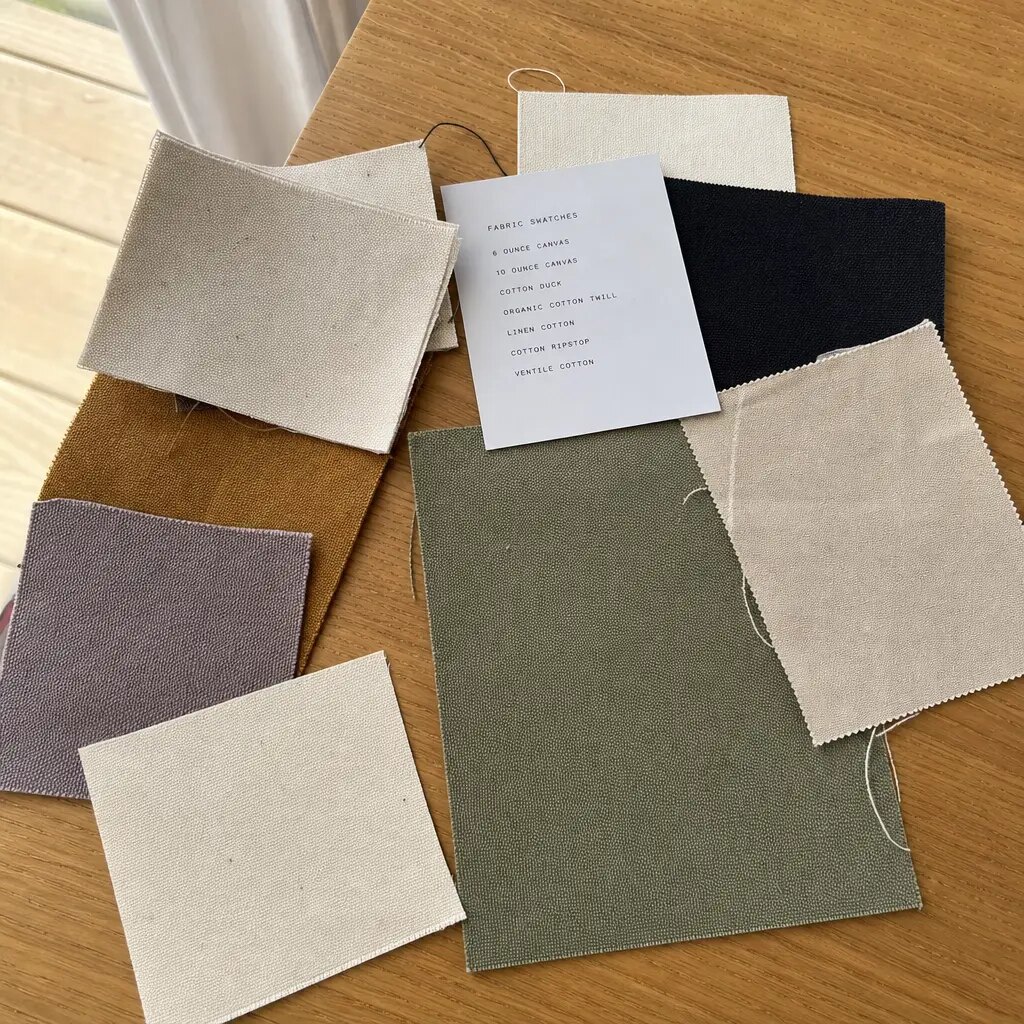
Start With the Hotel Retail Use Case
Organic cotton totes can be a paid retail item, a welcome amenity, a conference bag, a beach bag, or a co-branded merchandise piece. These uses should not share the same default specification. A hotel shop tote that sells at the front desk or spa needs better body, cleaner seams, and a more controlled print surface than a one-night event giveaway. The material choice should start with the selling environment, not with a generic tote photo.
For hotel retail, the most common mistake is buying the lightest organic cotton tote that looks acceptable in a digital mockup. Once the bag is filled with towels, bottled water, slippers, or boutique purchases, thin fabric stretches, wrinkles, and loses its shape. Procurement teams should define the expected load, retail price position, and shelf presentation before comparing supplier quotes.
- For paid hotel retail, start at 10 oz canvas when the bag must stand up better and feel saleable.
- For guest amenity kits, 6 oz to 8 oz can work if the load is light and the print is simple.
- For beach or resort use, prioritize gusset depth, handle comfort, and resistance to visible distortion.
- For boutique gift shops, a woven side label or cotton patch can raise perceived value without using plastic trim.
Choose Fabric Weight by Function, Not Habit
Fabric weight is usually quoted in ounces per square yard or GSM. A 5 oz cotton tote may be enough for a brochure pack, but it will feel weak in a hotel retail setting. A 10 oz to 12 oz organic cotton canvas, roughly 340-407 GSM, gives better hand feel, better shape retention, and stronger print support. Above 14 oz, cost rises quickly and folding becomes bulkier, so heavy canvas should be reserved for premium retail or structured designs.
Buyers should also clarify whether the supplier is quoting greige fabric weight, finished fabric weight, or washed fabric weight. Dyeing, bleaching, washing, and finishing can change weight and feel. If one supplier quotes 10 oz greige and another quotes 10 oz finished, the bags may not be equivalent. The RFQ should request fabric weight basis, tolerance, and sample swatches from the same mill planned for production.
- 5 oz to 6 oz: low-cost giveaway, limited load, more visible wrinkling.
- 7 oz to 8 oz: practical amenity tote, moderate print quality, reasonable carton efficiency.
- 10 oz to 12 oz: strong hotel retail range with better shelf presence.
- 14 oz and above: premium but higher unit cost, higher freight volume, and slower sewing output.
Organic Cotton Claims Need Document Control
The word organic is not only a material description; it can become a compliance statement on hangtags, websites, invoices, and hotel ESG reports. If the hotel or distributor intends to market the tote as organic cotton, the buying file should define the required proof before the quote is accepted. Some projects only need organic cotton fabric as a preference, while others require certification evidence and traceability documents.
Factories may have access to organic cotton fabric but not hold every certification scope needed for a labeled claim. That distinction matters. A supplier might source certified fabric but be unable to issue transaction support under the buyer's required chain-of-custody system. To avoid relabeling or shipment delays, align the claim language, label wording, purchase order description, and document requirements during sampling.
- Use clear wording such as certified organic cotton fabric if documentation is required.
- State whether the certification must cover fabric only or the finished bag manufacturing process.
- Do not approve hangtags that overstate claims the supplier cannot document.
- Keep fabric invoices, material certificates, and sample approval records in the compliance file.
Weave, Color, and Finish Affect Print Results
Organic cotton totes often use natural unbleached canvas, but natural does not mean uncontrolled. Yarn slubs, seed specks, and shade variation are normal to a degree, yet hotel retail buyers should set a visual tolerance. A boutique shelf display with ten bags in different tones can look inconsistent, especially under warm hotel lighting. If a clean luxury look is required, choose tighter plain weave fabric and approve a shade band before bulk cutting.
Dyed organic cotton adds another layer of risk. Dark colors increase dye cost and may need stronger print opacity. Reactive dyeing usually gives better color performance than cheaper surface treatments, but the buyer should confirm colorfastness expectations if the tote may be exposed to beach towels, spa oils, or humidity. For natural bags, washing can improve hand feel but may increase shrinkage and make dimensions harder to control.
- Natural canvas works well for eco-positioned hotel shops but needs approved seed-speck tolerance.
- Bleached cotton gives a cleaner print background but may not match a low-impact material story.
- Dyed canvas needs color approval under standard light, not only phone photos.
- Washed fabric feels softer but requires dimension tolerance after shrinkage.
Match Print Method to Fabric and Retail Position
Water-based screen printing is usually the best starting point for organic cotton totes with simple hotel logos. It gives a softer hand than thick plastisol-style prints and fits the natural material story. For one to three solid colors, screen printing is efficient once the screen setup is approved. However, the factory needs final vector artwork, Pantone references, print size, and location before giving a reliable quote.
For premium hotel retail, buyers can consider embroidery, woven labels, cotton patches, or inside printed branding. Each option changes both cost and production risk. Embroidery on light fabric can pucker. Woven labels require placement tolerance and color approval. Large prints on loose canvas can show broken edges. Digital printing may help for complex artwork, but it is not always the best choice for heavy cotton canvas or strict color matching.
- Use water-based screen print for clean logos, soft feel, and stable repeat production.
- Use embroidery only on fabric strong enough to resist puckering.
- Use woven side labels when the front panel must stay minimal and premium.
- Approve a strike-off on actual production fabric, not on substitute cotton.
Construction Details Decide Whether the Tote Feels Retail-Ready
Two totes with the same fabric weight can feel very different after sewing. Handle width, stitch density, seam allowance, gusset shape, and reinforcement pattern all affect the finished product. For hotel retail, a self-fabric handle around 2.5-3 cm wide usually feels more comfortable and stronger than a narrow strip. A boxed bottom improves load distribution and helps the tote carry towels, books, bottles, or retail purchases without twisting.
The RFQ should not rely on a picture alone. Specify finished size, gusset, handle drop, handle width, seam type, and reinforcement. Cross-stitch handle reinforcement is common for cotton totes, while bartack reinforcement can be added for higher load points. If the bag will hold wine, spa products, or beach items, run a practical load test on the approved sample and record the result as an acceptance criterion.
- Specify finished dimensions, not only cutting dimensions.
- Use boxed corners or a gusset when the tote must carry bulky hotel retail items.
- Set handle drop based on hand carry or shoulder carry; 25-30 cm drop is common for shoulder use.
- Include load test expectations in the purchase order, especially for resort and gift shop use.
Understand MOQ Logic Before Comparing Quotes
MOQ for organic cotton totes is driven less by sewing and more by material booking, dyeing, printing setup, and packing complexity. Natural fabric in a standard weight may support a lower MOQ than custom-dyed organic cotton. A small order with four fabric colors and multiple print versions can be more difficult than a larger order with one fabric and one logo. Buyers should separate total order quantity from MOQ per color, per size, and per artwork.
Importers and distributors often request one quote for many hotel properties, each with a slightly different logo. The most cost-efficient route is to standardize fabric, size, handle, and packing, then change only the print screen or label where needed. If each hotel property changes fabric color, tote size, and label style, the order loses scale and the unit price rises. A good RFQ should show expected repeat volume as well as first-order volume.
- Ask for MOQ per fabric color, not only total order MOQ.
- Separate base bag cost from logo setup and per-color print charges.
- Group hotel properties under one standard construction to protect price.
- For trial orders, accept fewer customization options rather than forcing a supplier into unstable small-batch production.
Sample Approval Should Test Materials, Not Just Appearance
A photo sample is not enough for organic cotton hotel retail totes. The approval process should include fabric swatch, logo strike-off, and full pre-production sample. The swatch confirms hand feel, shade, weave, and weight. The strike-off confirms print opacity, edge quality, ink hand feel, and color matching. The pre-production sample confirms sewing, dimensions, handle comfort, packing fold, and label placement.
Buyers should measure the sample and write down approved tolerances before bulk production begins. If the sample is 38 x 42 x 10 cm with a 28 cm handle drop, those values should become the reference. If the approved sample is only described as same as sample, disputes become subjective. A physical sealed sample or signed sample sheet is especially useful when the order moves through an importer, distributor, hotel group, and factory.
- Weigh a measured fabric piece or finished tote to verify quoted GSM directionally.
- Rub the printed logo with a dry white cloth to spot weak curing or heavy transfer.
- Load the sample with expected hotel retail contents and hang it for a practical stress check.
- Photograph and record the approved fold, label placement, barcode location, and carton mark.
Packing Choices Change Shelf Presentation and Freight Cost
Organic cotton totes wrinkle and compress more visibly than synthetic bags. Packing should be chosen based on the selling channel. Hotel boutiques may need a neat fold, barcode sticker, hangtag, and individual polybag or paper band. Amenity programs may prefer bulk packing to reduce plastic and cost. Both approaches are valid, but the quote must state the packing method because it changes labor, carton quantity, CBM, and inspection time.
Carton planning matters for landed cost. A 12 oz tote with gusset and individual packing occupies more space than a flat 6 oz giveaway tote. If the buyer compares FOB unit prices only, a heavier bag may look acceptable until ocean freight, warehouse handling, and hotel distribution are added. Request pieces per carton, carton dimensions, gross weight, net weight, and estimated CBM per 1,000 pieces at the quote stage.
- Use bulk packing for lower plastic use and better carton efficiency when retail scanning is not required.
- Use individual packing when hygiene, barcode control, or gift presentation is important.
- Add silica gel or moisture control only when justified by route, season, and carton exposure.
- Avoid over-compressed cartons because deep creases reduce shelf appeal.
Build a Realistic Production Schedule
Lead time for organic cotton totes is affected by fabric availability first. If the fabric is in stock, sampling and production can move faster. If the order needs certified organic fabric in a specific GSM, custom dyeing, special washing, or custom labels, material booking adds time. The schedule should include artwork confirmation, sample making, sample freight, buyer review, bulk material preparation, printing, sewing, inspection, and export packing.
Hotel retail programs often have fixed opening dates, seasonal launches, or conference deadlines. A common mistake is approving the sample late while keeping the original ship date unchanged. That compresses printing and sewing time, which increases defect risk. A safer purchase order includes a decision deadline: if artwork or sample approval is delayed beyond a stated date, the ship date moves or air freight becomes a buyer-side decision.
- Reserve time for certification document review if the organic claim will appear on retail labels.
- Do not release bulk fabric cutting before print strike-off approval for logo-sensitive orders.
- Plan extra time before peak holiday, summer resort, and trade show seasons.
- Confirm whether the supplier's lead time starts from deposit, artwork approval, sample approval, or material receipt.
Specification comparison for buyers
| Spec decision | Recommended option | When it fits | Buyer risk to check |
|---|---|---|---|
| Fabric weight for hotel shop resale | 10 oz to 12 oz organic cotton canvas, about 340-407 GSM | Best for paid retail items, resort boutiques, spa shops, and reusable guest bags where the tote must feel substantial | Confirm finished bag weight after washing or finishing; some quotes list greige fabric GSM before processing, which can mislead cost comparison |
| Fabric weight for amenity or event giveaway | 6 oz to 8 oz organic cotton, about 203-270 GSM | Works for welcome kits, conference bags, lightweight room drops, and lower retail price points | Handle strength and opacity may be weak if the bag carries bottles, towels, books, or heavy minibar products |
| Weave and surface | Plain weave canvas with tight yarn count and controlled slubs | Fits clean hotel branding, one-color logos, and premium natural material positioning | Large slubs and loose weave cause uneven print edges, shade variation, and a cheaper shelf appearance |
| Material claim | Certified organic cotton fabric supplied with transaction evidence where required | Needed when the retail hangtag, hotel ESG policy, or distributor compliance file mentions organic cotton | Do not rely on verbal organic claims; align certification scope, invoice wording, and label language before production |
| Print method | Water-based screen print for simple hotel logos on natural or dyed canvas | Good for 1-3 solid colors, soft hand feel, and repeat orders with stable artwork | Ink absorption varies by fabric finish; approve strike-off for edge sharpness, opacity, and rub resistance |
| Premium logo application | Woven label, cotton patch, or embroidery on heavier canvas | Fits boutique hotels, gift shops, loyalty merchandise, and co-branded retail programs | Embroidery can pucker lighter fabrics; woven labels need exact placement tolerance and approved label material |
| Bag construction | Boxed bottom, reinforced cross-stitch handles, 2.5-3 cm handle width | Recommended when guests carry towels, wine, retail purchases, or beach items | Flat totes cost less but deform under load; specify seam allowance and reinforcement pattern in the RFQ |
| Packing method | Individual polybag only when retail hygiene or barcode control requires it; otherwise bulk pack with interleaving | Bulk pack reduces plastic and carton volume; individual packing helps hotel retail inventory and gifting | Natural cotton creases easily; carton compression, moisture control, and folding method affect shelf presentation |
Buyer checklist before sampling
- Define whether the tote is for paid retail, guest amenity, event giveaway, or staff merchandise before selecting GSM.
- State required fabric weight in oz and GSM, and clarify whether the value is greige, finished, washed, or dyed fabric.
- Decide if the organic claim must be certified through documentation or only used as an internal material preference.
- Provide target finished bag size, gusset depth, handle drop, handle width, and expected load weight.
- Send vector artwork with Pantone references and specify print location, maximum print area, and acceptable logo tolerance.
- Request a fabric swatch, print strike-off, and full pre-production sample before mass cutting for hotel retail programs.
- Compare quotes using the same fabric weight, construction, print coverage, packing method, carton quantity, and incoterm.
- Set acceptance criteria for fabric shade, print rub resistance, seam strength, handle attachment, carton moisture, and folding.
- Confirm barcode, hangtag, care label, country of origin label, and retail packaging requirements before sampling.
- Reserve lead time for material booking, sample approval, bulk fabric inspection, printing, sewing, packing, and pre-shipment inspection.
Factory quote questions to send
- Is the quoted organic cotton fabric certified, and can the supplier provide scope certificate or transaction certificate support if required?
- Is the GSM quoted before or after dyeing, washing, or finishing, and what tolerance will be used in bulk inspection?
- What fabric width, yarn count, and weave are being used, and will the same mill supply both sample and bulk fabric?
- What is the minimum order quantity by fabric color, bag size, and print color count?
- Which print method is included in the quote, and are screen setup, Pantone matching, and strike-off costs included or separate?
- What handle construction is quoted: self-fabric handles, webbing handles, cross-stitch reinforcement, or bartack reinforcement?
- What is the standard packing method, pieces per carton, carton size, gross weight, and estimated CBM per 1,000 pieces?
- What sample lead time, bulk lead time, and material booking time apply after artwork and deposit approval?
- What quality standard will be used for seam strength, print adhesion, color tolerance, stains, needle holes, and loose threads?
- Which incoterm, currency, payment term, and validity period apply to the quotation?
Quality-control points to confirm
- Finished fabric GSM should match the approved tolerance, commonly within plus or minus 5 percent unless a tighter range is agreed.
- Bag dimensions should be measured after pressing and packing, with tolerance stated for width, height, gusset, and handle drop.
- Print should pass dry rub and light scratch checks without visible flaking, heavy smearing, or unacceptable color transfer.
- Handle attachment should withstand the agreed load test without seam tearing, stitch breakage, or fabric distortion.
- Seams should have consistent stitch density, locked ends, clean trimming, and no open seams at gusset corners.
- Natural cotton shade variation should stay within the approved swatch range; yellowing, oil marks, mildew, and dark contamination are reject risks.
- Metal accessories, snaps, or zippers, if added, should be checked for rust, sharp edges, and color consistency.
- Cartons should be dry, correctly marked, export grade, and packed to avoid severe creasing or crushing during ocean shipment.