Start with the tote's commercial job
An organic cotton tote for an eco apparel brand is rarely just a plain cotton bag with artwork. It may be a retail accessory, a gift-with-purchase, an ecommerce insert, a launch kit component, a trade show handout, or a reusable package that leaves the store with folded garments inside. Those jobs do not need the same material or construction. A tote placed inside an online order can be lighter and flatter. A tote sold at retail needs a cleaner hand feel, more consistent sewing, better handle comfort, and decoration that still looks intentional after the customer has paid for it.
This is where many sourcing projects get muddy. A buyer asks three suppliers for organic cotton totes, and the replies look comparable at first glance. One factory may price a 140 GSM flat bag with basic self-fabric handles and bulk packing. Another may quote a 200 GSM gusseted tote with reinforced handles, a woven side label, and individual packing. Both suppliers are technically quoting a tote, but procurement is not comparing the same product.
Before price, define how the tote will be judged after delivery. Merchandising may care about resale feel. Operations may care about carton cube and packing efficiency. Sustainability, legal, or retailer compliance teams may care about claim wording and documentation. A useful material selection guide is therefore not only a GSM chart. It connects performance, brand image, compliance risk, and landed cost in one buying decision.
- Retail resale: prioritize structure, handle comfort, stitching appearance, decoration consistency, and clean packing.
- Gift-with-purchase: balance brand presentation with unit cost, launch timing, and simple fulfillment.
- Ecommerce insert: control folded size, carton cube, print rub risk, and warehouse handling.
- Event giveaway: simplify decoration and packing, but still define minimum handle strength and print quality.
- Apparel packaging support: specify whether the tote must carry folded garments, shoe boxes, catalogs, or only lightweight accessories.
Write the specification before the RFQ
A quote-ready tote specification keeps suppliers from filling in blanks with their own standards. The essential fields are finished width, finished height, gusset depth, handle drop, handle width, fabric weight, weave, color, decoration, label, packing, and inspection requirements. Finished size matters because fabric consumption comes from cut panels, seam allowances, hems, gussets, and handle length. Even a small change in bag height or handle drop can shift material use across a large order.
Use finished measurements as the buying standard. Cut measurements belong in the factory's production file, but the buyer approves what the customer sees. Woven cotton can move during cutting, sewing, pressing, folding, and resting, so tolerances should be practical and written. For many cotton tote programs, buyers discuss several millimeters of tolerance rather than expecting exact uniformity. If your retail fixture, product page, or warehouse process needs tighter control, tell the supplier before sampling begins.
The RFQ should also prevent hidden assumptions. State whether the tote is flat or gusseted, whether handles are self-fabric or webbing, whether artwork prints on one side or two, whether there is a woven side label, and whether each bag is bulk packed or individually packed. The goal is not a longer document for the sake of paperwork. The goal is simple: every supplier should price the same object.
- Minimum spec fields: finished size, gusset, handle drop, handle width, GSM, weave, color, decoration, label, packing, MOQ, and inspection level.
- Useful tolerances to discuss: finished size, print placement, handle position, GSM range, shade range, and carton count.
- Do not accept a quote that only says organic cotton tote without construction, decoration, documentation, and packing details.
- Ask suppliers to identify any substitutions used in pricing, such as standard fabric width, standard handle tape, stock label size, or an alternate print method.
Use GSM as a lever, not a shortcut
GSM is one of the first numbers buyers compare, but it is not a full quality score. A 160 GSM tote in a tight plain weave can feel cleaner and print better than a heavier tote made from a loose, open construction. Still, GSM matters. It affects hand feel, fabric consumption, sewing behavior, carton weight, freight, and how substantial the tote feels in the customer's hand.
For eco apparel brands, 140-160 GSM often works for lightweight inserts, short-term events, and lower-cost giveaways. A 160-180 GSM range is a practical middle ground for reusable retail-style totes. A 180-220 GSM range gives more body and a stronger premium impression, but the buyer should check sewing bulk, handle comfort, carton weight, and landed cost. Higher weight can be useful, but it is not automatically better.
Ask how the supplier defines and measures GSM. Some quotes use nominal fabric weight, while bulk fabric may vary within an agreed tolerance. If the supplier uses a tolerance such as +/-5%, confirm whether it applies to greige fabric, finished fabric, or completed bags. Shrinkage belongs in the same conversation. Cotton can shrink differently in warp and weft, which can affect finished size, print placement, and label alignment. Retail-facing reusable totes deserve a clearer shrinkage expectation than a one-day event handout.
- 140-160 GSM: lighter weight, easier folding, useful for inserts and short-term promotional programs.
- 160-180 GSM: balanced feel for many apparel brand retail and ecommerce programs.
- 180-220 GSM: more structure for premium positioning, heavier contents, or resale totes.
- Above 220 GSM: possible for special projects, but check sewing bulk, handle comfort, carton weight, and landed cost.
- Always pair GSM with weave, shrinkage expectation, handle construction, and finished-size tolerance.
Control weave, yarn character, and shade
Most apparel tote programs use plain weave cotton because it gives a stable surface for cutting, stitching, and printing. The fabric should have reasonably even yarn formation, limited slubs unless that texture is part of the approved look, and a weave tight enough to avoid excessive transparency. A loose weave can make the bag look cheaper than the GSM suggests. It can also soften print edges because ink follows the yarn texture and the spaces between yarns.
Color is both a brand decision and a procurement control. Natural undyed organic cotton is common because it gives a lower-processed visual language, but it is not a fixed color like a Pantone chip. Natural lots can range from cream to beige depending on fiber, processing, and finishing. That variation may be completely acceptable for an eco brand, but it should be approved with a physical reference or shade band before cutting. Bleached white can improve print contrast and make brand colors look cleaner, though buyers should confirm that the processing matches their sustainability and retailer requirements.
Dyed fabric needs a more formal approval path. Ask for lab dips before bulk dyeing, then approve a bulk shade standard. If the tote may rub against light garments, colorfastness to rubbing can matter. If the bag may be washed, colorfastness to washing may be relevant too. Testing should match the channel and risk; it should not be added only to make the file look impressive. The important thing is to decide before production, because shade disputes after cutting are expensive and hard to unwind.
- Natural undyed: approve a physical reference and define acceptable shade variation for bulk and repeat orders.
- Bleached white: useful for high-contrast print, but confirm processing expectations and claim language.
- Piece dyed: require lab dip, bulk shade approval, and colorfastness checks if the tote touches light apparel.
- Yarn character: approve whether slubs, seed flecks, or irregular yarns are acceptable or should be treated as defects.
- Repeat orders: ask how the factory will control shade when the fabric lot changes.
Specify construction where totes actually fail
A tote often fails at the handle attachment, top hem, side seam, or gusset corner before the main body fabric gives out. That is why material selection has to include construction. A flat tote is simple, efficient, and easy to pack. A gusseted tote carries more and feels more substantial, but it has more sewing points to control. If the gusset is too narrow, it may add cost and sewing time without giving the customer much usable capacity.
Handles deserve more attention than they usually get. Narrow handles can feel sharp on the shoulder when the bag carries folded apparel, catalogs, or a small shoebox. Wider self-fabric handles, commonly in the 2.5-4 cm range depending on the style, tend to feel better and look more premium. Webbing handles can improve consistency and strength, but they change the look and may introduce a trim MOQ, a separate color standard, or a different hand feel.
Ask for handle drop as a finished measurement. A short drop may work for hand carry. Shoulder carry usually needs more length. The spec should also identify the reinforcement method: box stitch, cross stitch, bar tack, or an approved factory standard. Stitch density, seam allowance, and top hem construction do not need to be over-designed, but they should be visible in the approved sample and repeatable in bulk. If load performance matters, define the load test before the sample is signed off.
- Flat body: lower sewing complexity, lower packed cube, good for inserts and simple brand merchandise.
- Bottom gusset: better standing capacity and folded apparel fit, but confirm finished gusset measurement.
- Side gusset: more capacity and retail presence, with more seam points to inspect.
- Self-fabric handles: cohesive natural look, but check folding, edge finishing, and stitch consistency.
- Webbing handles: stronger trim option for some programs, but control color, width, hand feel, MOQ, and attachment method.
Match decoration to fabric and inspection limits
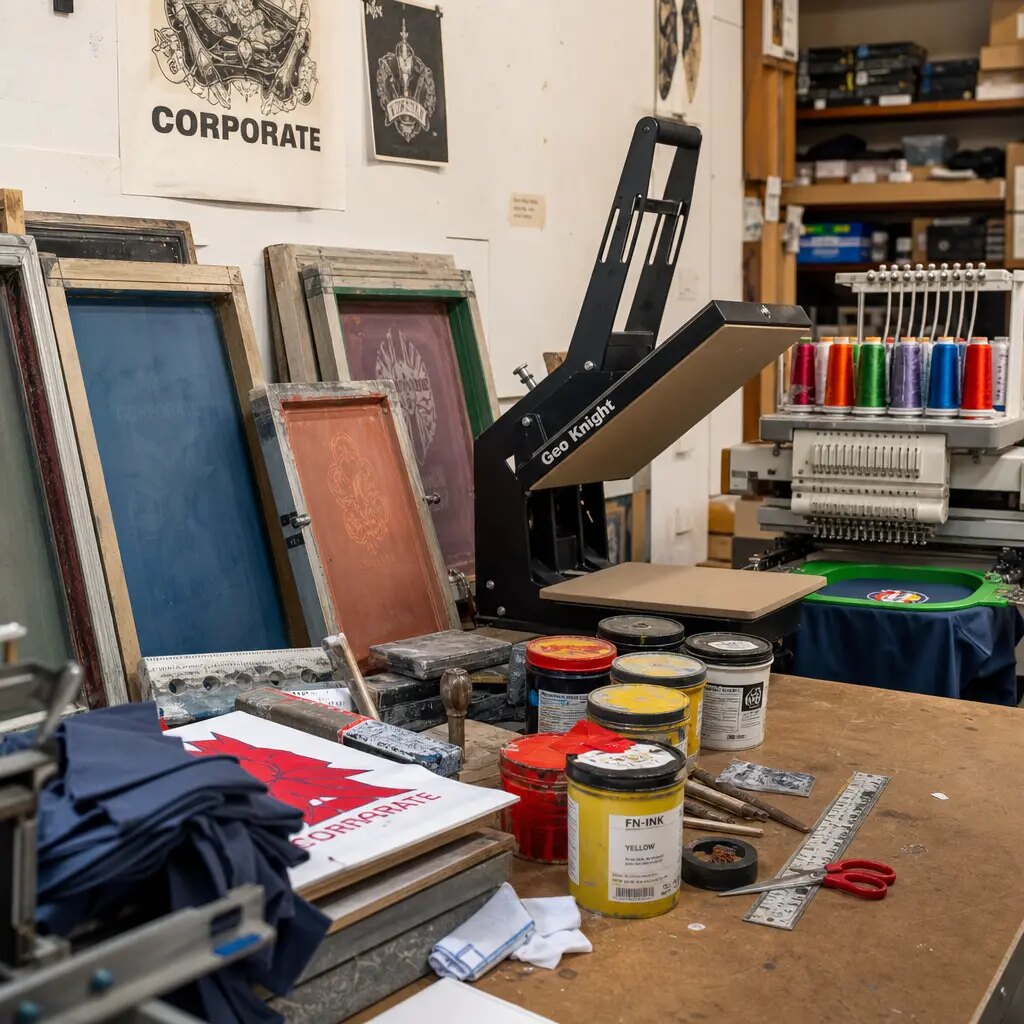
Decoration is where many tote projects stop being comparable. Water-based screen print is a common choice for organic cotton totes because it suits simple logos, solid graphics, and controlled cost at volume. It can produce a clean, soft hand, but the result depends on fabric texture, ink coverage, artwork detail, and curing control. Small text, thin lines, and large solid print areas should be checked with a strike-off before bulk. A digital mockup does not prove opacity, edge sharpness, or color behavior on real cotton.
Premium branding options include woven side labels, sewn patches, embroidery, and hangtags. These can make a tote feel more like apparel merchandise and less like disposable packaging, but they add setup work, sewing time, alignment checks, and sometimes MOQ. Embroidery on lighter fabrics can pucker if stitch density is too high or backing is unsuitable. Patches can curl or fray if the edge finish is weak. Woven labels may require simplified artwork because very small details do not always reproduce cleanly.
A good artwork sheet removes guesswork. Provide vector artwork, color reference, print size, print side, distance from top edge, distance from side seam, and placement tolerance. A common print placement discussion for totes is around +/-5 mm, but the right tolerance depends on artwork size and visibility. A centered front logo needs tighter visual control than a casual oversized graphic. For multi-color artwork, ask about registration tolerance and whether the factory recommends screen print, transfer, or another method. The best decoration method is the one that can be reproduced consistently under inspection.
- Screen print: strong choice for simple one- to three-color artwork, especially at repeatable volume.
- Woven label: useful for subtle brand presence, side seam branding, or premium resale programs.
- Sewn patch: good for a bolder apparel-like finish, but inspect edge quality and alignment.
- Embroidery: premium look, but test puckering, reverse-side finish, and distortion on lighter GSM fabric.
- Heat transfer: consider for detailed artwork only after adhesion, cracking, folding, and hand-feel checks.
Treat organic cotton claims as a compliance item
For B2B procurement, organic cotton is not only a material description. It may become a public claim on a product page, hangtag, invoice, retailer listing, packaging file, or sustainability report. That means the buyer should ask what documentation supports the claim and whether the finished tote can carry the exact wording the brand wants to use. A supplier email that says organic cotton may not satisfy retailer compliance review.
The required proof depends on the program. Some buyers need supplier certificates, scope certificates, transaction certificates, or chain-of-custody documentation. Others may need internal sourcing records only, especially for non-retail promotional use. Decide before the RFQ closes. If certification paperwork is mandatory, ask whether the quoted factory and material source can provide it for finished goods or only for fabric. Also ask whether transaction paperwork, certification handling, and labeling review are included in the price or billed separately.
Be precise with blended materials and trims. The tote body may be organic cotton while thread, label, ink, or webbing is not. That does not automatically make the tote unsuitable, but it can affect claim wording. If the brand intends to print sustainability language directly on the tote, approve that text before screens are made. Fixing a claim after printing starts is a costly way to learn a compliance lesson.
- Ask which certification or transaction documents support the organic cotton claim.
- Confirm whether documentation applies to fabric only or to finished goods.
- Control claim wording on printed artwork, hangtags, product pages, invoices, and retailer data sheets.
- Check whether thread, labels, ink, or webbing affect the claim language.
- Keep documentation linked to purchase order, lot number, supplier, shipment, and repeat-order records.
Normalize supplier quotes before comparing price
Factory direct sourcing usually gives the strongest control when the tote is private-label, repeatable, and connected to an apparel launch. It lets the buyer define fabric, construction, print, packing, and inspection standards in detail. A trading company may be useful when the order combines several product types, the buyer needs coordination support, or the volume is too small for a preferred factory. Stock blanks can solve a speed problem, but they rarely satisfy strict brand, certification, and construction requirements without compromise.
Unit price alone can hide the real differences. One quote may include screen setup, woven label setup, export cartons, and packing. Another may exclude them. One supplier may quote finished 180 GSM fabric; another may quote a nominal fabric weight with wider variation. Normalize the quote by separating recurring unit cost from one-time charges such as screens, label setup, sampling, testing, and artwork conversion. Then ask for price breaks at MOQ, expected order quantity, and annual replenishment volume.
MOQ should be understood by constraint, not as one vague number. A supplier may accept a low total order if the fabric is stock natural cotton and the print is one color. The same supplier may require more quantity for custom dyeing, multiple artwork versions, special labels, or individual retail packing. Ask for MOQ by fabric color, print design, label design, trim, and packing method. This prevents a common surprise: the buyer reaches the total MOQ but misses the MOQ for a dye lot, trim item, or print setup.
- Compare recurring unit price separately from one-time setup charges.
- Ask for MOQ by color, artwork, label, trim, and packing method.
- Require the same finished size, GSM, handle construction, documentation requirement, and carton pack in every quote.
- Confirm trade term, port or delivery address, and excluded costs before landed cost comparison.
- Ask what changes on repeat orders: fabric price, screen fees, label setup, lead time, sample approval, and inspection process.
Use sampling to prove production, not just appearance
A sales sample helps the team understand general shape and hand feel, but it is not enough for a private-label approval. The pre-production sample should use final fabric, final decoration, final thread, final label, final trim, and the intended packing method. If the supplier changes fabric lot, print process, or trim after approval, the buyer should require re-approval or written confirmation with photos, measurements, and risk notes. This matters with organic cotton totes because shade, yarn texture, and shrinkage can vary between lots.
The sample review should mimic real handling. Measure finished width, height, gusset, handle drop, handle width, and handle position. Check print placement against the artwork sheet. Fold the tote the way the warehouse will fold it and see whether the print cracks, transfers, or creases poorly. Load the bag with a realistic weight if it is meant for reuse. After the load check, inspect the top hem and handle attachment again. The sample should answer whether the tote works as a product, not only whether it photographs well.
Keep physical reference samples. One approved sample should stay with the buyer or quality team, and one should remain with the factory. If a third-party inspector is used, provide photos, measurement sheets, and defect criteria. A golden sample does not replace written tolerances, but it gives everyone a shared visual standard for shade, hand feel, print coverage, and workmanship. For repeat orders, confirm whether the old sample remains the standard or whether a new fabric lot requires a new approval.
- Approve pre-production samples only when final material, final decoration, final trims, final thread, and intended packing are used.
- Measure after unpacking and again after the bag rests flat if cotton relaxation affects dimensions.
- Review print strike-off under normal light and, when relevant, compare it with Pantone or another approved color target.
- Keep approved reference samples with the buying team, factory, and inspector if an inspection service is used.
- Document every approved deviation so bulk inspection is based on records, not memory.
Set QC criteria before bulk starts
Quality control for cotton totes should focus on consistency and function. Common issues include crooked handles, uneven handle drop, loose threads, skipped stitches, print smudges, weak coverage, oil marks, stains, odor, mixed lots, and dimension drift. These problems may look small in isolation, but they change how an apparel brand's packaging or merchandise feels to the customer. The goal is not impossible perfection from a sewn cotton item. The goal is to define which defects matter commercially and how many are acceptable.
If the buyer uses AQL inspection, classify defects before inspection. Critical defects might include broken needle contamination, unsafe sharp objects, severe mold, or the wrong product. Major defects might include incorrect size beyond tolerance, broken seams, failed handle load test, obvious print defects, wrong artwork, wrong label, heavy stains, or mixed colors. Minor defects might include small loose threads, slight print variation within approval, or minor creasing that can recover after pressing or hanging. These categories should match the channel and risk level.
Reusable totes benefit from a defined load test. A practical standard should state the weight, duration, number of samples, and pass criteria: no handle tearing, no seam opening, and no stitch failure after hanging or carrying for the agreed time. The exact weight should reflect the intended use. A tote designed for two folded garments does not need the same requirement as a market-style carry bag. Print checks can be equally practical: rub resistance, adhesion after folding, and visual review after normal handling. Set the test before a problem appears, not after the shipment is waiting to leave.
- Measurement checks: finished width, height, gusset depth, handle drop, handle width, print placement, and label position.
- Workmanship checks: stitch density, seam allowance, top hem, corner finish, skipped stitches, thread trimming, and handle reinforcement.
- Appearance checks: fabric shade, slubs beyond approval, stains, odor, print opacity, registration, smudging, and decoration alignment.
- Functional checks: handle load, seam slippage, print rub, shrinkage if washing is expected, and packing recovery after folding.
- Packing checks: carton count, carton marks, barcode labels, lot separation, carton strength, moisture damage, and gross weight.
Specification comparison for buyers
| Spec decision | Recommended buying range | When it fits | QC or quote risk to control |
|---|---|---|---|
| Fabric weight | 140-160 GSM for lightweight inserts and giveaways; 160-180 GSM for balanced retail programs; 180-220 GSM for premium structure | Eco apparel launches, ecommerce inserts, gift-with-purchase, retail resale, event merchandising, and staff kits | Ask for GSM tolerance, often discussed around +/-5% unless agreed otherwise; confirm whether the measurement is taken before finishing, after finishing, or on bulk fabric before cutting |
| Fabric construction | Plain weave organic cotton with even yarn formation, stable hand feel, and controlled shrinkage | Clean screen printing, predictable cutting, stable sewing, and a natural brand presentation | Loose or open weave can distort print edges, show contents, fray at seams, and make two bags from the same order feel different |
| Color and finish | Natural undyed for a lower-processed look; bleached white for cleaner print contrast; dyed fabric only with an approved color standard | Brands balancing eco positioning, artwork clarity, retail display, and seasonal color direction | Natural shade variation needs an approved reference range; dyed goods need lab dip, bulk shade approval, and colorfastness checks when the tote may touch light garments |
| Bag body | Flat tote for low cube and simple packing; bottom or side gusset for better capacity and retail feel | Folded apparel, catalogs, accessories, gifting sets, resale totes, and event merchandise | Gusset depth must be measured as a finished dimension; a narrow gusset can add cost without adding useful carrying capacity |
| Handle construction | Self-fabric handles 2.5-4 cm wide for most programs; webbing or reinforced self-fabric for heavier carry | Shoulder carry, retail sale, repeated customer use, premium gifting, and staff merchandise | Define handle drop, handle width, attachment method, stitch density, reinforcement pattern, and load-test criteria before sampling |
| Decoration method | Water-based screen print for simple artwork; woven label, patch, or embroidery for premium branding; transfer only after adhesion testing | Logo totes, capsule drops, resale bags, launch kits, and private-label merchandise | Confirm artwork size, color target, placement tolerance such as +/-5 mm, and which print defects count as major defects |
| Certification and claims | Confirm organic cotton claim documentation, transaction certificate or chain-of-custody evidence where applicable, and approved wording | Brands making public sustainability claims or selling through retailers with compliance review | Do not rely on the word organic in a quote; ask which document supports the claim and whether the finished bag can carry the intended wording |
| MOQ and pricing | Quote MOQ by fabric color, print design, label type, trim, and packing style; request price breaks at MOQ, planned order, and annual volume | Direct factory sourcing, repeat replenishment, private-label programs, and multi-style apparel launches | Low MOQ may exclude custom dyeing, woven labels, special folding, testing, retail barcodes, or export carton requirements |
| Sample approval | Sales sample for concept only; pre-production sample must use final fabric, final decoration, final trim, final thread, and intended packing | Private-label, retail-facing, compliance-sensitive, or launch-critical tote orders | A lookalike sample cannot validate shrinkage, print adhesion, handle strength, shade consistency, or packing recovery |
Buyer checklist before sampling
- Define the tote's commercial role: retail resale, gift-with-purchase, ecommerce insert, event giveaway, staff kit, launch kit, or apparel packaging support.
- Write the finished specification before RFQ: width, height, gusset depth, handle drop, handle width, seam allowance target, fabric GSM, weave, color, decoration, label, and packing.
- State whether the fabric must be certified organic and what proof is required, such as supplier certificate, transaction certificate, chain-of-custody record, or retailer-specific compliance file.
- Use finished-size tolerances only if your brand can accept them, such as +/-5 mm for smaller dimensions and +/-10 mm for larger panels.
- Ask suppliers to quote the same GSM range and weave, and require them to state whether GSM is measured before washing, after finishing, or on bulk fabric before cutting.
- Define shrinkage expectations before bulk if the tote may be washed, pressed, garment dyed, or repeatedly reused; ask for warp and weft shrinkage results when relevant.
- Specify handle strength requirements with a test method: load weight, duration, number of samples, and pass criteria for seam failure, tearing, and stitch breakage.
- Provide vector artwork, print size, print side, print position, color target, and placement tolerance in millimeters; require a strike-off for screen print or transfer work.
- Request a quote that separates fabric, cutting, sewing, printing, labels, trims, testing, sampling, packing, export cartons, and one-time setup charges.
- Confirm MOQ by color, artwork, label, trim, and packing configuration, not just total order quantity.
Factory quote questions to send
- What finished width, height, gusset depth, handle drop, handle width, and handle attachment method are included in the quoted unit price?
- What exact fabric are you pricing: certified organic cotton or organic cotton blend, GSM range, weave type, yarn appearance, and shrinkage allowance?
- What GSM tolerance do you apply in bulk, and is GSM measured on greige fabric, finished fabric, or completed bags?
- Is the fabric natural, bleached, piece dyed, yarn dyed, garment dyed, or garment washed, and what shade standard will be used for approval and repeat orders?
- Which certification or transaction documents can you provide to support the organic cotton claim, and are those documents included in the quoted price?
- Does the quote include screen setup, print strike-off, woven label setup, trims, hangtags, testing, samples, export cartons, carton marks, and barcode labels?
- What is the MOQ by fabric color, print design, label design, trim, and packing method, and what changes if we add a second artwork or second print color?
- Will the pre-production sample use the same fabric lot, print process, thread, label, trim, and packing method intended for bulk production?
- What seam type, stitch density, seam allowance, top hem construction, and handle reinforcement are standard for this tote?
- Can you perform or arrange a load test, shrinkage test, colorfastness test, needle detection, or other inspection checks if our retailer requires them?
Quality-control points to confirm
- Fabric GSM should be checked against the approved range and written tolerance; many buyers use +/-5% as a starting point, but the agreed tolerance should be stated on the spec sheet.
- Fabric shade should be compared with the approved reference under consistent lighting; natural undyed cotton may vary, so the acceptable shade range should be approved before cutting.
- Finished dimensions should be measured after sewing and after the bag has rested flat; cotton fabric can relax after pressing, folding, or packing.
- Handle drop, handle width, and handle placement should be measured on both sides of the bag, with symmetry checked against the approved sample.
- Handle attachment should show consistent reinforcement, no skipped stitches, no loose thread bundles, no seam cracking, and no tearing under agreed load-test conditions.
- Seam allowance, stitch density, top hem width, and corner finishing should match the approved construction, especially on gusseted bags.
- Print color, opacity, edge sharpness, registration, and placement should be checked against the strike-off and artwork sheet; pinholes, smudges, weak coverage, and cracking should be classified before inspection.
- For embroidery, patches, and woven labels, check alignment, puckering, frayed edges, thread trimming, backing irritation, and whether the decoration distorts lighter fabric.
- If washing or repeated reuse is expected, test shrinkage in warp and weft and confirm that print, seams, and labels remain acceptable after the agreed wash condition.
- Check for odor, oil marks, rust marks, stains, broken needle contamination, loose fibers, and foreign material before packing.