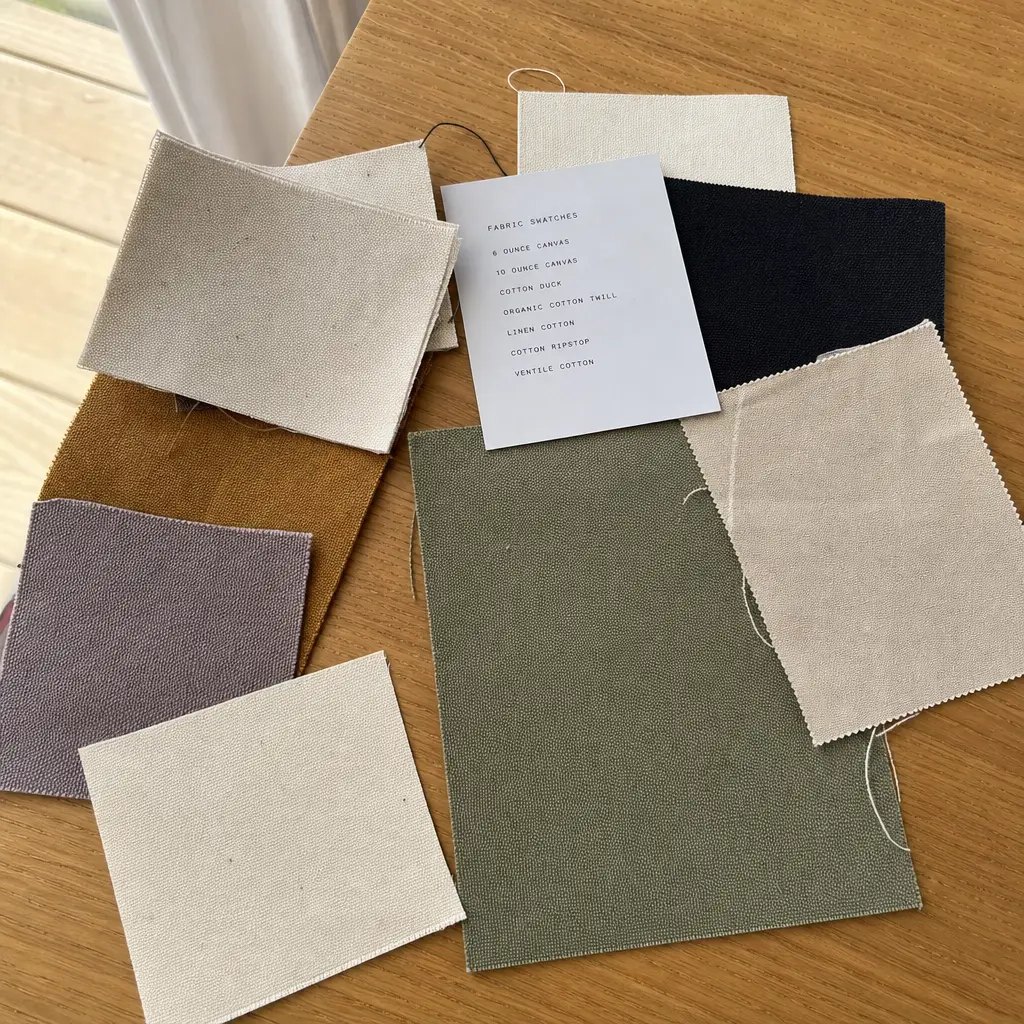
Start With the Bakery Carry Load
A tote for an artisan bakery is part retail package, part brand item, and part workhorse. It may hold a warm sourdough loaf in the morning, two pastry cartons at lunch, and a holiday bundle with coffee, jam, and bottled drinks in December. Those uses do not stress the bag in the same way. Box corners push into side seams. Glass jars concentrate weight at the base. Flour dust and oil marks show quickly on some colors. Warm bread may introduce light moisture.
Before requesting prices, translate the real customer behavior into a measurable load and a product mix. A counter tote for one baguette can be lighter and simpler. A paid merchandise tote should feel more substantial and look clean on a display wall. A gift bundle tote needs a steadier base and better handle reinforcement. For online bakery kits or distributor programs, folding, barcode control, carton labeling, and protection during shipping become just as important as the bag itself.
Many bakery tote programs work around a normal customer load of roughly 4-7 kg, but do not treat that as a universal rule. If your tote may carry jars, coffee bags, bottled drinks, flour bags, or grocery add-ons, state the heavier load and ask for a test. If the bag is only light promotional packaging, avoid overbuilding it with heavy canvas that raises freight and slows counter handling without adding much value.
- List the heaviest realistic combination, such as two loaves, one pastry box, one coffee bag, and one jar, then convert it to a target load.
- Separate promotional counter bags from paid retail merchandise because finish level, strength, and cost tolerance differ.
- Use a bottom gusset when boxes or gift packs must sit flat instead of leaning against side seams.
- Consider staff handling: stiff 14 oz canvas may look premium but can be slow to fold and bulky behind a small counter.
- For multi-location bakeries, prioritize repeatability of size, shade, logo placement, carton count, and reorder specification.
Specify Fabric Weight Without Guesswork
Fabric weight drives cost, handfeel, structure, print result, and carton volume. It is also one of the easiest details to blur in a quote. One supplier may call 8 oz cotton a heavy tote fabric, while another reserves that term for 12 oz canvas. Ask for the number in GSM and oz per square yard, plus the tolerance. A common cotton canvas tolerance is around +/-5%, but it belongs in the purchase order because even a small shift can change appearance and price comparison.
For bakery retail, 8 oz to 12 oz is the practical working range for many programs. An 8 oz fabric can suit light promotional totes or single-loaf use, but it may sag under rigid pastry boxes. A 10 oz to 12 oz organic cotton canvas is often the safest starting point for paid bakery merchandise, reusable checkout bags, coffee-and-bread bundles, and small gift sets. It gives better body, a more reliable print surface, and stronger-looking seams. A 12 oz to 14 oz fabric can feel premium, but it adds fold bulk, sewing effort, carton volume, and freight cost.
Do not buy by weight alone. A compact 10 oz plain-weave canvas may perform better than a loose fabric sold as heavier. Ask about weave type, yarn description, fabric skew, finishing, and whether shrinkage has been tested. Also confirm the basis of measurement: greige fabric, finished fabric, washed fabric, or finished production fabric. Quotes only compare cleanly when every supplier is using the same basis.
- 6-7 oz: low-cost promotional use only; usually too limp for paid bakery totes or boxed goods.
- 8-10 oz: acceptable for basic reusable totes with moderate loads and simple artwork.
- 10-12 oz: strong default range for artisan bakery retail totes, checkout bags, and merchandise.
- 12-14 oz: premium handfeel for gift programs, but check fold bulk, stitch quality, and freight impact.
- 14 oz and above: substantial and durable-looking, but often stiffer, more expensive to sew, and bulkier to ship.
- Require the quote to state whether weight is measured on greige fabric, finished fabric, or finished bag production fabric.
Select the Weave and Finish
A bakery tote needs enough structure to stand neatly when filled and enough surface stability for a clean logo. Plain-weave canvas and duck canvas are common because they offer a firm, familiar handfeel. The better question is not only which weave is named, but how tightly the yarns are packed and how stable the fabric remains after finishing. Loose fabric can stretch at seams, distort during cutting, and make print edges look fuzzy.
Finishing deserves attention. Pre-shrunk or shrinkage-tested fabric reduces surprises, especially if the tote may be washed by consumers. For retail carry packaging, the more immediate issue may be whether finished dimensions remain consistent after sewing and pressing. A bag that shrinks or skews after production can throw off logo placement, gusset shape, and carton packing. If the buyer expects the tote to be washable, request shrinkage data or run a sample wash test before bulk approval.
Natural cotton has character: slubs, seed flecks, and small shade variation are common. That can suit artisan bakery branding, but the acceptable range should be physical, not verbal. Approve a reference sample under consistent lighting and exclude oil marks, mildew odor, dark stains, or severe fabric faults. Dyed cotton adds another layer: lab dips, shade tolerance, colorfastness, and lot-to-lot control should be approved before production fabric is cut.
- Choose compact canvas when the tote needs stable shape, cleaner printing, and better seam performance.
- Ask for controlled skew so panels do not twist and logos do not lean after sewing.
- Use a physical shade standard for natural cotton because crop, yarn, and finishing can shift the tone.
- Approve lab dips before dyed production and define the accepted shade range.
- Confirm shrinkage expectations if the tote is marketed as washable or likely to be laundered by customers.
- Exclude stains, oil marks, mildew smell, and severe fabric faults even when normal cotton slubs are accepted.
Control the Organic Cotton Claim
Natural-colored cotton and certified organic cotton can look almost identical in a photo. They do not support the same selling claim. A conventional cotton tote in a natural shade may still be a useful bakery bag, but it should not be described as organic unless the required evidence is in place. The same care applies to 100% organic cotton, organic cotton blend, recycled-organic blend, and made with organic cotton. Those are different claims, and buyers should approve the wording before labels or hangtags are printed.
Start with the sales channel. A small bakery may need supplier declarations and fiber content confirmation. A retailer, distributor, or compliance portal may ask for certified organic fabric documents, scope evidence, transaction certificates, chain-of-custody records, or approved finished-goods documentation. The factory's sewing ability is separate from its ability to support a claim on invoices, carton marks, hangtags, product pages, or retail packaging.
Late claim changes are expensive. If organic evidence is requested after sampling, the supplier may need to change fabric source, revise cost, update label copy, or restart approvals. Put the allowed claim, document names, responsibility for approval, and label wording in the RFQ. Treat organic as a compliance requirement, not a decorative adjective.
- State the exact allowed claim for labels, hangtags, invoices, cartons, and online listings.
- Confirm whether the documentation covers fabric only or the finished product handling process.
- Separate organic fiber evidence from social compliance audits; they answer different procurement questions.
- Define fiber content, country of origin, care wording, and retailer-specific label language before artwork approval.
- Avoid changing certification requirements after sample approval because fabric sourcing and cost may need to restart.
Build the Pattern Around Bakery Packaging
The pattern should begin with the packaging footprint, not with a generic tote template. Measure the largest pastry box, cake-slice carton, bread sleeve, coffee bag, and gift set that customers commonly carry together. Then decide how much clearance is needed for easy loading. A tote that is too narrow crushes corners. A tote that is too wide makes a small order slide around and look untidy. A tote that is too tall can hide the logo once the bag is filled.
A bottom gusset is often worth the added construction for bakery use. Flat totes fold neatly and cost less, but rigid boxes tilt inside them and pressure moves to the side seams. An 8-12 cm bottom gusset is a practical starting range for many medium bakery totes, often paired with a finished body around 38 x 40 cm. The exact size should follow the bakery's boxes, not a catalog default. Also specify whether the gusset is bottom-only or side-and-bottom, because the shape and cutting pattern are different.
Write finished dimensions into the PO. Cutting dimensions are not enough because seam allowance, cotton shrinkage, pressing, and folding affect the final bag. State finished width, finished height, gusset depth, handle drop, and tolerances after sewing and pressing. A common finished width and height tolerance is around +/-1 cm, but tighter tolerances may be needed for retail fixtures, kraft sleeves, barcode bands, or shelf-ready display.
- Measure the largest frequent pastry or cake box and allow loading clearance without excessive empty space.
- Use an 8-12 cm bottom gusset for boxes, gift packs, jars, or coffee bundles that need base stability.
- Define whether the gusset is bottom-only or side-and-bottom because it changes shape and cutting pattern.
- Set finished width, height, gusset depth, and tolerance after sewing and pressing, not from flat cutting panels.
- Photograph the approved sample loaded with representative bakery packaging for future inspection reference.
Engineer Handles Before Artwork
Handles fail more often than the fabric body, and customers notice handle discomfort immediately. Bakery customers may carry a tote in one hand while holding coffee, walking through a market, or managing a stroller. Narrow straps dig into the hand when the bag contains jars, bottled drinks, or heavy coffee bags. For paid bakery retail totes, self-fabric handles around 2.5-3.0 cm wide usually give a better balance of comfort, appearance, and durability than very narrow tape.
Handle drop controls the carrying style. A short drop works for counter hand-carry and compact storage. Shoulder carry requires longer handles and enough opening clearance for coats. Avoid vague terms such as long handle or short handle. Request total handle length and finished handle drop, and make sure the measurement is taken on the sewn bag. A 55-65 cm total handle length often suits hand or forearm carry, while shoulder use may need more.
Attachment details should be engineered before artwork placement is finalized. A box-X stitch, reinforced rectangle, or dense bartack spreads stress better than a single line of stitching. Top hem depth, thread type, stitch density, and reinforcement position all affect performance. If the expected customer load is 5 kg, ask whether the factory can test samples at 7.5-10 kg static load for a defined duration. Passing the test should mean no seam opening, thread breakage, top hem tearing, or visible handle distortion.
- Use 2.5-3.0 cm handle width for better comfort under typical bakery retail loads.
- State handle drop separately from total handle length because they are not the same measurement.
- Specify box-X, rectangle reinforcement, or bartack density at handle joints.
- Set stitch density expectations, such as even stitches with no skipped stitches, loose threads, or open bartacks.
- Request static load testing at 1.5 to 2 times expected load when the tote carries jars, bottles, or heavy bundles.
- Inspect handle attachment after the test, not only whether the bag survived the weight.
Choose Print and Branding With Production Limits in Mind
Water-based screen printing is usually the practical choice for simple artisan bakery logos on organic cotton canvas. It works well for one- to three-color wordmarks, icons, store names, and short brand lines. It can also keep a softer handfeel than heavy ink deposits when the artwork is moderate in size. The limit is the fabric surface. Cotton canvas has texture, slubs, and weave ridges that can break up tiny details.
Do not approve print from a digital proof alone. Request a strike-off on the actual fabric and shade being used for the order. It should show ink color, print size, placement, line clarity, curing, and registration. Fine reversed text, small serifs, tight line spacing, and large ink coverage deserve extra review. Large ink blocks may stiffen the panel, crease during packing, or make fabric unevenness more obvious.
Branding can be layered, but each layer adds control points. A woven side label gives a subtle retail feel, yet it may be too quiet for promotional use. Embroidery can look premium, but it can pucker lighter canvas and increase cost. Hangtags, barcodes, kraft sleeves, and paper bands help with retail presentation and SKU management, but they bring setup charges, artwork approvals, labor, MOQ, and packing checks. Match the method to the sales model: counter packaging, paid merchandise, gift bundle, distributor SKU, or online fulfillment.
- Provide vector artwork, Pantone or approved color standard, print dimensions, and placement from fixed reference points.
- Set print placement tolerance in millimeters, including acceptable skew and distance from top edge or centerline.
- Avoid placing logos directly on heavy fold lines when bags will be packed flat for long storage.
- Approve ink color on the actual cotton shade, not only on a digital proof.
- Confirm whether the same artwork is printed on natural and dyed fabric because ink opacity can change.
- Define woven label size, fold type, placement, and stitch method if using subtle side branding.
Compare Supplier Quotes on the Same Specification
Organic cotton tote quotes can look similar while hiding very different assumptions. One supplier may price 8 oz cotton, no gusset, simple handles, bulk packing, and no documentation. Another may include 12 oz certified organic canvas, bottom gusset, reinforced handles, screen print, hangtag, barcode sticker, carton marks, and inspection support. The unit price means little until the specification is normalized.
Build a quote matrix before negotiating. Separate fabric, construction, print, accessories, documents, packing, sampling, inspection support, and freight assumptions. Ask what is included and what is extra. Screen charges, lab dips, sample costs, courier fees, label setup, barcode application, hangtag stringing, and inspection cooperation can all change landed cost. Also ask for price breaks only at realistic quantities; a low unit price at an unusable MOQ can distort the decision.
MOQ needs more detail than one number. Organic fabric, custom dyeing, cutting, sewing, print colors, woven labels, hangtags, barcode stickers, and retail sleeves may each carry separate minimums. Natural unbleached cotton often has lower sourcing risk than custom dyed cotton, while dyeing adds lab dips, shade approval, and colorfastness expectations. Treat missing details as risk, not savings.
- Use one shared spec sheet for all suppliers: finished size, gusset, fabric weight, handles, print, labels, packing, and documents.
- Ask suppliers to quote the same quantities, such as 500, 1,000, 3,000, and 5,000 units if those volumes are realistic.
- Separate one-time setup charges from recurring unit costs so reorders can be compared accurately.
- Confirm whether organic documentation, inspection cooperation, and carton labeling are included in the quote.
- Compare carton quantity and volume because heavier canvas can increase freight cost even when unit price looks attractive.
- Treat missing specifications as commercial risk, not as savings.
Approve Samples With Measurable Criteria
Sampling works best when construction and print are approved separately. The construction sample confirms fabric weight, handfeel, shade, finished size, gusset shape, handle drop, reinforcement, seam finish, and fold method. The print strike-off confirms ink color, registration, line sharpness, print handfeel, curing, and placement. Combining both into one rushed approval can hide problems until bulk fabric is already cut or printed.
Measure the sample like an inspector would. Record finished width, height, gusset depth, handle drop, handle width, top hem depth, logo position, and label placement. Load the tote with real bakery items or equivalent weights for several minutes. Rub the print with a dry white cloth and a slightly damp cloth to screen for obvious transfer. Fold the bag the way it will be packed, then check whether creases run through the logo or damage the retail look.
The approved sample becomes the production standard. Keep one signed or sealed sample with the buyer and one with the factory. If fabric source, handle length, print size, ink, label copy, or packing method changes after approval, revise the quote and timeline instead of treating it as a small note. Most disputes are easier to resolve when the physical standard and written tolerances say the same thing.
- Approve fabric handfeel and shade against a physical sample, not only a photo.
- Record measurements with photos showing a ruler for size, gusset, handle drop, and print placement.
- Approve construction sample, print strike-off, label proof, hangtag proof, barcode proof, carton mark, and packing fold.
- Do not authorize bulk cutting until fabric, pattern, handles, print, labels, and packing are frozen.
- Keep signed samples for final inspection and reorder matching.
- Require revised approval if the supplier changes fabric source, dye lot, print ink, or label vendor.
Set QC Tolerances and Defect Rules
Quality control should focus on what affects customer use and bakery brand presentation. For organic cotton bakery totes, that means fabric weight, shade, shrinkage where relevant, seam strength, handle attachment, print adhesion, logo placement, label accuracy, stains, odor, and packing. Natural cotton can include normal slubs and seed flecks. Oil marks, mildew smell, open seams, wrong labels, severe misplacement, and damaged cartons are different issues and should be clearly excluded.
AQL inspection can organize the process, but AQL does not replace a product specification. Define critical, major, and minor defects in the PO or inspection checklist. Handle detachment, open side seams, wrong material, broken needle contamination, false organic claim labeling, and mold odor should be treated as serious defects. A few trim threads may be minor, while widespread thread trimming can become major for retail merchandise.
Functional checks need exact methods. Finished width and height may be controlled around +/-1 cm unless a tighter retail fixture requirement applies. Logo placement may need +/-5 mm or +/-10 mm depending on artwork. Handle pull testing should state weight, duration, sample quantity, and pass/fail criteria. Print rub checks should define dry and light wet methods. Carton inspection should verify quantity, SKU separation, dryness, labels, sealing, and shipping marks before goods leave the factory.
- Classify wrong material, false organic labeling, mold odor, heavy stains, handle failure, and open seams as serious defects.
- Measure finished size after sewing and pressing, not from cutting panels.
- Check gusset depth at several points because uneven folding affects how boxes sit.
- Measure logo placement from top edge, side seam, or centerline instead of judging by eye.
- Inspect stitch density, skipped stitches, loose bartacks, seam slippage, and top hem distortion.
- Verify labels, care text, barcodes, hangtags, SKU codes, and carton marks before cartons are sealed.
Specification comparison for buyers
| Spec decision | Recommended option | When it fits | Buyer risk to check |
|---|---|---|---|
| Fabric weight | 10 oz to 12 oz organic cotton canvas, approximately 280-340 GSM depending on weave and finishing, with a stated tolerance such as +/-5% | Paid bakery merchandise, reusable checkout totes, coffee-and-bread bundles, pastry boxes, and small gift sets | Quotes under 8 oz may look cheaper but sag under boxes; weights above 14 oz increase folded thickness, sewing difficulty, carton volume, and freight cost |
| Fabric structure | Plain-weave canvas or duck canvas with compact yarns, controlled skew, and pre-shrunk or shrinkage-tested finishing | Programs needing stable shape, repeatable logo placement, and clean screen printing on natural cotton | Loose weave can cause seam slippage, print bleeding, panel distortion, and more visible shrinkage after washing |
| Finished size and gusset | Finished width and height based on bakery packaging, often around 38 x 40 cm with an 8-12 cm bottom gusset for medium retail totes | Pastry boxes, cake-slice cartons, bread-and-coffee combinations, and holiday bakery bundles that need a flat base | Flat totes can tilt or crush boxes; oversized totes can swallow the logo and feel untidy when lightly filled |
| Handle construction | Self-fabric handles 2.5-3.0 cm wide, 55-65 cm total length for hand/forearm carry or longer for shoulder carry, with box-X stitch or dense bartack reinforcement | Reusable bakery totes expected to carry roughly 4-7 kg in normal customer use | Handle attachment usually fails before fabric tears; narrow straps reduce comfort with jars, coffee bags, or bottled drinks |
| Print method | Water-based screen print for one- to three-color logos, with strike-off approval for line weight, ink color, curing, and rub resistance | Natural or dyed cotton totes with bakery wordmarks, icons, location names, or simple illustrations | Fine reversed text, small serifs, and large ink coverage can lose clarity or stiffen the panel without pre-production testing |
| Organic claim control | Certified organic cotton fabric or finished-goods documentation as required by the selling claim, with document names agreed before PO | Bakeries, distributors, and retail buyers using sustainability claims, hangtags, website claims, or retailer compliance programs | Natural color does not mean organic; a verbal supplier claim is not a traceability document |
| Color direction | Natural unbleached cotton for lower processing complexity; dyed cotton only after lab dip, shade tolerance, and colorfastness expectations are approved | Natural bakery aesthetics, farmers markets, cafe retail walls, and lower-risk replenishment orders | Dyed lots can shift between batches; natural cotton also varies by crop, yarn, and finishing, so approve a physical shade standard |
| Brand placement | Measured front print placement from top edge, side seams, and centerline; optional woven side label for subtle retail branding | Totes displayed folded, hung near checkout, used in photos, or sold as bakery merchandise | Unspecified placement causes inconsistent bulk production; logos can sit too low once the bag is filled |
| Retail accessories | Care label, fiber label, hangtag, barcode sticker, kraft sleeve, or paper band only when required by channel or SKU control | Multi-location bakeries, wholesale distributors, gift sets, online fulfillment, and retail programs | Accessories add approvals, setup charges, labor, MOQ, and packing complexity; missing barcode data can delay shipment |
Buyer checklist before sampling
- Define the real carry load in kilograms and product mix: sourdough loaves, baguette sleeves, pastry cartons, coffee bags, jars, bottles, flour bags, or mixed gift sets.
- Measure the largest common bakery box and choose finished width, height, and gusset depth so the box loads easily and sits flat without crushing corners.
- Specify fabric weight by GSM or oz per square yard, weave type, color, finishing, and acceptable tolerance instead of using vague terms such as premium canvas.
- Ask whether fabric weight is measured before washing, after finishing, or on finished production fabric, and keep the same basis across all supplier quotes.
- Set handle width, handle drop, handle material, top hem depth, stitch type, stitch density, and reinforcement method in the RFQ.
- State target load testing, such as a static hang test at 1.5 to 2 times expected customer load for a defined duration, with no seam opening or handle distortion.
- Send final vector artwork with Pantone or agreed color standard, print size in centimeters, placement measurements, line-weight concerns, and acceptable registration tolerance.
- Request separate approval of construction sample, print strike-off, label artwork, hangtag, barcode sticker, carton mark, and packing fold before bulk production.
- Define organic cotton documentation requirements before pricing, including whether the claim applies to fabric, finished goods, labels, invoices, or retail copy.
- Set QC tolerances for finished dimensions, gusset depth, handle drop, print placement, shade range, seam defects, stains, odor, and carton quantity.
Factory quote questions to send
- What is the exact fabric weight in GSM and oz per square yard, and what tolerance applies to bulk fabric before cutting and finished bags after sewing?
- Is the material 100% certified organic cotton, an organic cotton blend, recycled-organic blend, or conventional cotton in a natural color?
- Which certification, scope, transaction, supplier declaration, or chain-of-custody documents can be provided, and are document costs included?
- What are the finished bag width, height, gusset depth, handle width, handle drop, top hem depth, and tolerance after sewing and pressing?
- What weave, yarn count or yarn description, fabric shrinkage expectation, and shade tolerance will be used for the quoted fabric?
- What stitch type, stitch density, thread type, and reinforcement method will be used at handles, top hem, side seams, and bottom gusset?
- What load test can the factory perform: static hanging weight, duration, sample quantity, pass/fail criteria, and whether it is done before or after washing?
- Which print method is quoted, how many colors are included, what is the maximum print area, and what registration and placement tolerance can be held?
- Are screen charges, sample charges, lab dips, courier fees, label setup, barcode application, hangtag stringing, and inspection support included or separate?
- What MOQ applies separately to organic fabric, dyeing, cutting, sewing, print color, woven label, hangtag, barcode sticker, and retail packing?
Quality-control points to confirm
- Finished fabric weight should stay within the agreed tolerance, commonly +/-5% unless the purchase order states a different limit and measurement method.
- Finished bag dimensions should be measured after sewing and pressing, with typical tolerance around +/-1 cm for width and height unless a tighter retail fixture requirement applies.
- Gusset depth should be checked at both sides and center because uneven folding can make bakery boxes sit at an angle.
- Handle drop and handle width should be measured on finished bags; handle attachment should show no loose bartacks, skipped stitches, or top hem tearing.
- Handle pull or static load testing should match the expected retail load, often 1.5 to 2 times the stated customer load for a defined duration, with no thread break or fabric tearing.
- Print adhesion should pass agreed dry rub and light wet rub checks, especially on dyed cotton or large ink areas where curing issues are more visible.
- Logo placement should be measured from fixed reference points such as top edge, side seam, centerline, or bottom fold, not judged visually only.
- Seams should have even stitch density with no open seams, skipped stitches, seam slippage, needle holes, loose threads, or uneven top hemming.
- Natural cotton shade, slub, and seed flecks should be compared against the approved sample under consistent lighting, with unacceptable stains and oil marks clearly excluded.
- Labels, hangtags, barcodes, care instructions, country-of-origin text, and SKU codes should match the approved copy before carton sealing.