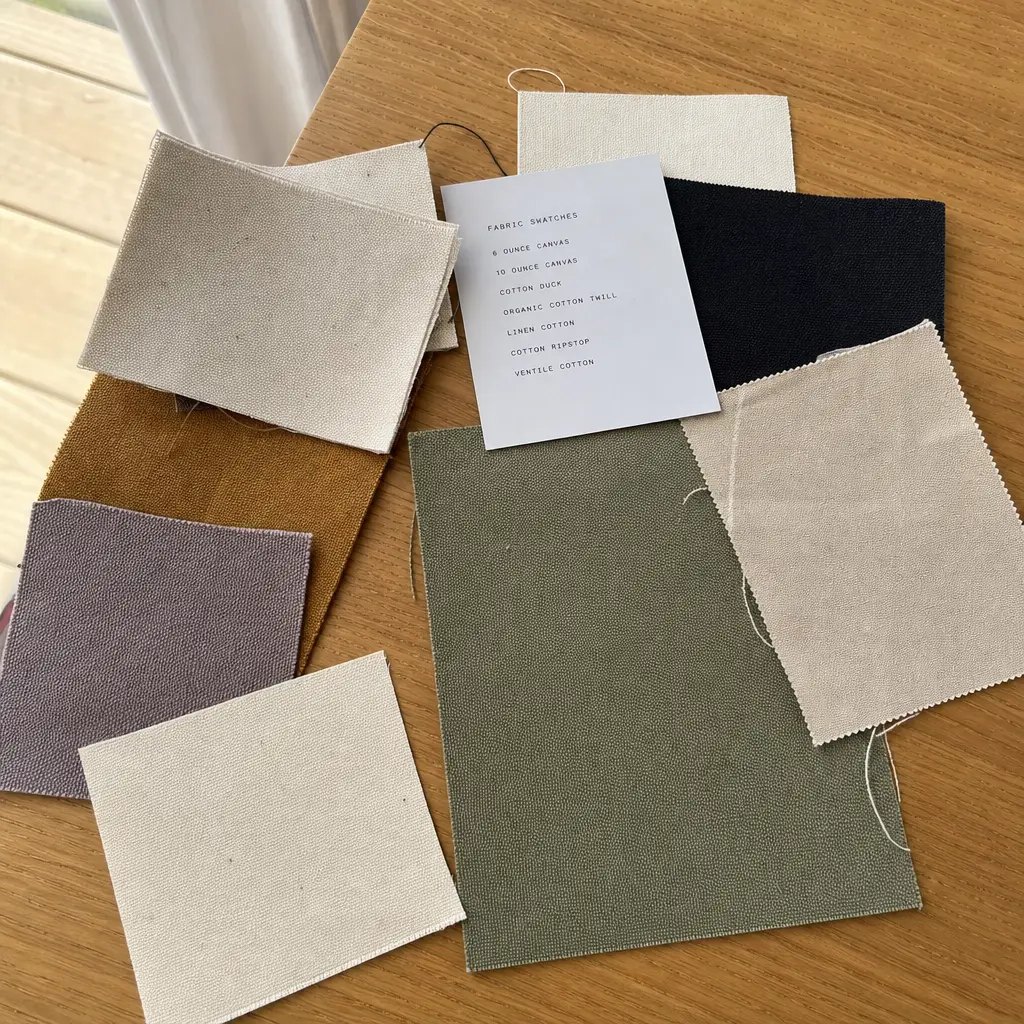
Start with the tote’s commercial role
A strong logo placement decision starts with how the wellness studio will use the tote. A bag sold at reception needs a cleaner retail finish than a one-day retreat handout. A new-member kit may need consistent folding and presentation. A multi-location studio program may need branch sorting, barcode control, and repeatable placement across several logos.
Before approving artwork, review the sample in the same situations customers will see it: flat on a table, hanging from a hook, filled with a towel and bottle, folded in packaging, and stacked on a shelf. Handles can fall over upper-front artwork. Soft cotton can collapse around small marks. A low logo can disappear when the bottom panel bulges. These checks are more useful than judging a flat digital mockup.
The buyer should also decide how visible the brand should be. Some wellness brands want a calm retail object with a small mark. Others need a bold logo for retreat photos or sponsor visibility. Both can work, but each requires a different placement tolerance, artwork size, print method, and QC reference.
- Classify the order as retail, welcome kit, retreat, staff, ecommerce, distributor, or giveaway before approving placement.
- Photograph the approved sample flat, hanging, filled, folded, and packed for stakeholder sign-off.
- Use front-center placement when production control and inspection simplicity matter most.
- Use corner marks, side labels, or inside labels only when subtle visibility is intentional.
- Avoid the handle shadow zone unless reduced logo visibility is acceptable.
- Plan branch, SKU, and destination sorting before labels and carton marks are finalized.
Choose fabric by construction, not marketing name
Fabric weight affects structure, print result, sewing speed, freight, and final presentation. Buyers often compare tote fabrics by ounce labels, but ounce-to-GSM relationships vary with yarn, weave, finishing, and measurement method. Ask the supplier for finished weight, weave type, and finish route rather than relying on a generic phrase such as natural canvas.
Light organic cotton fabric can work for retreat or giveaway totes where the load is modest and budget matters. It will usually feel softer and less structured, so large logos may wrinkle or distort when the bag is filled. Midweight canvas is a common retail direction because it supports a stable print area while remaining manageable for folding and shipping. Heavier canvas can feel premium, but it increases carton weight, folded bulk, freight cost, and sewing requirements.
Natural unbleached cotton fits many wellness brands, but it brings seed specks, slubs, and shade movement that must be judged against an approved standard. Bleached or dyed cotton may improve contrast or brand color matching, but finishing can change shrinkage and hand feel. If the tote is washed or garment dyed after sewing, approve placement and final size after the same process planned for bulk.
- Specify finished fabric weight, weave, color, and finish route in the purchase specification.
- Ask whether quoted weight is measured before or after washing, dyeing, softening, or pressing.
- Approve acceptable seed specks and slubs against a physical swatch, not a photo.
- Use lighter fabric for low-load campaigns only when wrinkles and softness are acceptable.
- Use heavier fabric only after checking freight, folding, handle reinforcement, and needle suitability.
- Keep the same finishing route between sample and bulk production.
Turn logo placement into a drawing
A reliable placement guide uses millimeters, reference points, and tolerances. Words such as centered, clean, slightly higher, or premium are not enough for a purchase order. The drawing should show the finished top edge, side seams, bottom seam, gusset fold if present, handle stitch box, front-panel centerline, logo width, logo height, and maximum print area.
For a standard front-center logo, measure vertical placement from the finished top edge to the top of the artwork. Measure horizontal placement from the front-panel centerline or by equal distance from both side seams. For a round mark, specify the diameter and center point. For a lower-corner mark, specify the distance from the nearest side seam and bottom seam. If the tote has a gusset, make clear whether the reference is the visible front panel or the full flattened width.
Tolerance should match the product grade and production method. A jigs-based print line on consistent sewn bodies can usually hold a tighter result than manual placement on soft, washed, or asymmetrical bags. Instead of copying a generic tolerance, ask the supplier what their line can hold and require a measured pre-production sample to prove it.
- Show top clearance, logo size, horizontal centerline, safe print area, and seam clearances.
- Use finished bag edges as references, not cut-panel edges.
- Add ruler photos of the approved sample to the QC file.
- State tolerance separately for front-center, corner, side-label, and seam-adjacent placements.
- Restart approval if tote size, handle drop, fabric finish, print method, or logo scale changes.
- Tell inspectors exactly which logo point and bag edge to measure.
Size artwork for real visibility
Logo size should be chosen on the real tote, not only in design software. A wide yoga wordmark, stacked Pilates logo, spa seal, botanical icon, and retreat illustration occupy space differently. The same width can look quiet on one mark and crowded on another.
For many studio retail totes, a moderate front-center logo gives the best balance of visibility and clean presentation. Smaller logos can look refined, but they make placement drift easier to notice and may be lost on wrinkled natural cotton. Larger artwork can work for events or seasonal campaigns if there is enough seam clearance and the print method can hold the detail.
Fine artwork needs special attention. Thin mandala lines, small branch names, pale tone-on-tone colors, QR codes, and tiny serif fonts may fail on textured cotton even when the file is clean. Ask the printer for minimum line thickness and smallest readable text size for the selected process. Put legal copy, barcodes, care details, and branch-specific information on labels, hangtags, belly bands, or carton labels when they would clutter the main logo.
- Print artwork at actual size on paper before approving a physical strike-off.
- Ask the printer to flag fine lines, small text, gradients, and low-contrast colors before setup.
- Keep dense compliance copy and barcodes off the front print when they reduce brand clarity.
- Check visibility with the tote filled, hanging, folded, and stacked.
- Use smaller marks only when the buyer accepts quieter visibility and tighter QC.
- Confirm logo scale separately for each tote size and artwork version.
Match decoration to artwork and order structure
Water-based screen printing is often the first option to review for simple wellness logos on organic cotton canvas. It suits clean wordmarks, icons, and limited-color artwork when the quantity supports screen setup. The buyer still needs a strike-off because cotton absorbency, yarn texture, natural shade, and seed specks can affect color strength and edge definition.
Digital pigment, DTF, and heat-transfer methods can support multicolor artwork, gradients, illustrations, and smaller versioned runs. They also introduce different risks. Digital pigment may look softer on textured fabric. Transfers can create a film edge or stiffer hand. DTF should be checked for cracking, fold marks, surface feel, and how it behaves after packing.
Embroidery, woven labels, patches, and side labels are useful for understated branding. Embroidery works best on smaller marks and fabric stable enough to resist puckering. Woven labels and patches can protect a minimalist front panel, but they add their own MOQ, color approval, sewing tolerance, and sampling steps.
- Use screen printing for simple one- to three-color artwork and repeatable production.
- Use digital, DTF, or transfer printing only after hand-feel, rub, flex, fold, and packing checks.
- Use embroidery for small premium marks on fabric that can support stitching without puckering.
- Use woven labels or patches when subtle branding is more important than large front visibility.
- Confirm whether decoration happens before or after sewing and finishing.
- Record ink type, curing method, color standard, and approved strike-off version.
Evaluate suppliers beyond unit price
Supplier selection should test control, not only cost. A low unit price is not useful if the factory cannot document organic cotton claims, hold placement, manage multiple logo versions, or pack by destination. Ask how the supplier controls fabric lots, print setup, sample approvals, in-line checks, and final inspection.
For organic cotton, confirm what claim the buyer intends to make. If the tote, hangtag, or listing says organic, the documentation must support that claim for the shipped goods. Depending on the certification route, this may involve scope certificates, transaction certificates, product labeling approval, or other lot-level records. If the supplier can provide organic cotton fabric but not certification documentation for the finished claim, adjust the wording before production.
Market requirements also matter. Fiber content and country-of-origin labeling are commonly expected in many markets. EU and UK programs may need attention to chemical restrictions, product safety obligations, packaging responsibility, and claim substantiation. US programs may need state-level packaging or chemical-warning review depending on materials and destination. Buyers should confirm these obligations with their compliance team, but the supplier must be able to provide material, ink, and packaging information.
- Ask for recent examples of similar tote construction, print placement, and packing complexity.
- Confirm organic documentation before approving any certification wording or hangtag claim.
- Check whether supplier certification covers only fabric supply or the finished product process.
- Request material, ink, label, and packaging declarations needed for your destination market.
- Prefer suppliers that explain limits early instead of accepting every artwork request unchanged.
- Separate compliance responsibility from design approval in the purchase file.
Control MOQ by version and variable
MOQ is driven by more than total order quantity. Fabric procurement, fabric color, cutting efficiency, print setup, color changes, label ordering, packing format, and carton sorting can each create a separate minimum. A 2,000-piece order with one logo is easier than ten 200-piece versions, even when the total quantity is the same.
Wellness chains can reduce complexity by standardizing the blank tote. Keep the same fabric, size, handle construction, print area, and placement rule across branches. Use hangtags, belly bands, stickers, inserts, or carton labels for variable branch names, retreat dates, barcodes, or campaign copy when the main logo does not need to change.
Quote comparison should show version-level economics. Ask suppliers to separate unit price, setup fees, sample fees, label setup, packing charges, small-batch surcharges, and overrun or underrun rules. Clarify whether overrun applies to the total PO or each logo version.
- Request MOQ by tote body, fabric color, artwork, print color count, label, hangtag, barcode, and packing method.
- Ask whether multiple studio logos can share one blank tote production run.
- Confirm strike-off and pre-production sample charges per logo version.
- Use variable packaging or labels instead of changing the main print when possible.
- Clarify overrun and underrun allowances by design and destination.
- Require carton labels to identify design, SKU, PO, quantity, destination, and carton number.
Use sampling as a production gate
Sampling should move from material to decoration to finished product. Start with a fabric swatch to approve weight, weave, surface, color, and finish. Then approve a print strike-off on the actual fabric. Next approve a sewn pre-production sample with the correct placement, handle construction, labels, and stitching. If presentation matters, approve a packing sample with fold direction, unit protection, barcode position, and carton label.
Do not release bulk production from a digital mockup alone. Physical samples reveal problems that mockups hide: pale ink disappears on natural cotton, fine text fills in, handles cover the logo, the print sits too low once filled, or the fold line crosses a fresh transfer. These issues are cheaper to fix before screens, cutting, or bulk printing.
Approval records should be treated as technical documents. Keep one approved sample with the factory and one with the buyer, agent, or inspector when possible. Mark each sample with date, version number, artwork file, fabric reference, and approval status. If fabric, finish, logo scale, placement, or decoration method changes, repeat the affected approval stage.
- Approve fabric first, print second, sewn sample third, and packing last.
- Use actual bulk fabric for strike-offs whenever available.
- Mark approved samples with date, version, artwork file, fabric reference, and sign-off.
- Photograph logo size, top clearance, center alignment, labels, and fold method with a ruler.
- Do not approve bulk printing until color, opacity, edge quality, placement, and hand feel are accepted.
- Repeat sampling when a production variable changes.
Write QC criteria inspectors can measure
Quality control should separate natural cotton character from defects. Seed specks and moderate slub variation may be acceptable if they match the approved sample. Oil stains, mildew odor, heavy contamination, dirty handles, severe yarn defects near the logo, unsafe objects, and print transfer should be classified as defects before inspection begins.
Measurement checks should be simple and repeatable. Inspectors need the finished tote width, height, gusset, handle length, handle width, logo width, logo height, distance from top edge to logo, and left-right alignment. Tolerances should be realistic for the chosen fabric and production method. If an AQL inspection is used, defect classes and measurement rules must be agreed before the inspection date.
Print QC should compare bulk goods to the approved physical strike-off under consistent lighting. Checks should cover dry rub, edge bleeding, pinholes, cracking, ghosting, double image, misregistration, smearing, color registration, and stray ink. Sewing QC should cover handle symmetry, bar-tacks or cross-stitching, seam strength, skipped stitches, loose threads, bottom corners, and needle damage. Packing QC should verify version sorting, carton counts, barcode readability, shipping marks, carton condition, and fold protection.
- Classify critical defects such as wrong logo, wrong material, unsafe object, severe contamination, mildew odor, or unsupported certification claim.
- Classify major defects such as crooked logo, wrong label, weak handle stitching, print smear, unacceptable stain, or wrong carton allocation.
- Classify minor defects such as trim thread, removable crease, or approved fabric character away from the logo.
- Use approved swatch, strike-off, pre-production sample, and packing sample as inspection references.
- Require inspectors to measure from the same edges shown in the drawing.
- Add rub, wash, or flex checks when the selling claim or print method requires them.
Plan packing and landed cost early
Packing affects presentation, freight, warehouse labor, and damage risk. Bulk packing can work for events or local repacking, but pale cotton can pick up dust, carton odor, or handling marks if cartons are opened repeatedly. Retail, ecommerce, and subscription programs may need individual protection, a paper band, belly band, tissue wrap, or another format aligned with the brand’s sustainability position.
Fold direction should protect the logo. Avoid sharp folds through fresh or heavy prints, especially with film-based transfers. Confirm curing before packing and prevent printed faces from rubbing against rough carton surfaces or other prints. For light-colored natural totes, ask how the supplier controls clean handling from sewing through final packing.
Landed cost should be compared before the PO is issued. A heavier tote, individual packaging, or complex destination sort may look small in unit price but change carton CBM, gross weight, warehouse receiving time, and freight. Ask for pieces per carton, carton dimensions, gross weight, net weight, total CBM, and trade term with every quote revision.
- Use bulk packing when low packaging cost and fast event distribution matter most.
- Use individual protection for retail resale, ecommerce handling, light cotton, or long storage.
- Approve fold direction so the logo is not sharply creased or rubbed.
- Request carton quantity, dimensions, gross weight, net weight, and CBM before freight comparison.
- Define mixed-carton rules, inner sorting, barcode position, and shipping marks.
- Compare unit price with setup fees, sample fees, packing charges, inspection, freight, and receiving labor.
Specification comparison for buyers
| Buying decision | Useful specification detail | Best-fit wellness use | Risk to confirm before PO |
|---|---|---|---|
| Light event tote | Organic cotton sheeting or light canvas; supplier should state finished weight, weave, and finish route | Retreat check-in bags, open-house giveaways, low-load welcome packs | Large prints can wrinkle or distort; approve a strike-off and check loaded-bag visibility |
| Retail studio tote | Midweight organic cotton canvas with enough body for a stable front panel; confirm finished GSM rather than relying on ounce label alone | Yoga, Pilates, spa, fitness, skincare, and boutique wellness retail | Ask whether weight is measured before or after washing, dyeing, softening, or pressing |
| Heavy premium tote | Heavier canvas with reinforced handles and sewing method matched to expected load | Premium retail, spa gift sets, heavier daily-carry positioning | Higher fabric weight changes freight, carton CBM, needle choice, folding bulk, and lead time |
| Front-center logo | Measured placement from finished top edge and centerline; logo size approved on the real tote | Clean display on reception shelves, wall hooks, handout tables, and social photos | Handles, top hem, and bottom bulge can hide artwork if placement is judged only on a flat mockup |
| Quiet branding | Small upper-front, lower-corner, side-label, inside-label, patch, or woven label placement | Luxury spa, minimalist wellness, private-label, and understated retail programs | Small or asymmetrical marks expose sewing skew; require reference points and a physical sample |
| Water-based screen print | Best reviewed for simple solid-color artwork on approved fabric with a physical strike-off | Wordmarks, icons, studio names, retreat marks, and repeat orders | Control opacity, edge sharpness, curing, dry rub, and color shift on natural cotton |
| Digital, DTF, or transfer print | Useful for complex color artwork after hand-feel, rub, fold, and flex checks | Seasonal artwork, illustration, gradients, and smaller versioned runs | Check film edge, stiffness, cracking, fold marks, and color accuracy on textured fabric |
| Labels and retail packing | Side label, care label, hangtag, barcode, belly band, unit wrap, carton mark, and destination sort defined separately | Multi-location chains, ecommerce, subscription boxes, distributor stock | Every version can affect MOQ, setup, sampling, inspection, and warehouse receiving |
| Sampling route | Fabric swatch, print strike-off, sewn pre-production sample, and packing sample when presentation matters | Orders where fabric, print, placement, labels, or retail condition affect acceptance | Skipping strike-offs hides color, bleed, scale, opacity, and handle-interference problems until bulk |
Buyer checklist before sampling
- Define the tote’s role first: retail resale, new-member kit, retreat gift, instructor accessory, ecommerce insert, distributor stock, or promotional giveaway.
- Specify finished dimensions, gusset, handle length, handle width, top hem, seam construction, and intended carry contents instead of using only a style name.
- State organic cotton documentation needed for your claim, such as supplier scope certificate and transaction certificate when applicable to the certification route.
- Request finished fabric weight, weave, color, finishing process, shrinkage expectation, and whether printing happens before or after washing or pressing.
- Provide vector artwork with outlined fonts, color references, minimum line weight, smallest text size, and maximum approved print area.
- Convert placement into a drawing with millimeter distances from finished top edge, centerline, side seams, bottom seam, handle stitch box, and gusset fold where relevant.
- Agree measurable tolerances by placement type and fabric construction; do not rely on words such as centered, balanced, or premium.
- Approve a print strike-off on the actual fabric before full pre-production sampling and before bulk printing.
- Define side labels, inside labels, care wording, fiber-content wording, hangtags, barcodes, paper bands, unit protection, carton marks, and destination sorting.
- Compare quote revisions using the same version split, trade term, packing method, carton data, sample route, and inspection requirement.
Factory quote questions to send
- Which organic cotton fabrics are available for this tote, and can you state finished weight, weave, fabric width, finish route, and current stock or production status?
- Which certification documents can support an organic claim for this order, and are transaction certificates or equivalent lot documents available if required?
- Is the fabric natural, bleached, dyed, garment dyed, washed, softened, or pressed, and what shade and shrinkage variation should be allowed?
- What MOQ applies separately to the tote body, fabric color, print artwork, print color count, label version, hangtag, barcode, packing format, and carton sort?
- Which print method do you recommend for this artwork, and what are the limits for fine lines, small text, gradients, ink opacity, and hand feel?
- What safe print area do you recommend for this tote size, including clearance from top hem, handle stitch box, seams, gusset folds, and bottom seam?
- For the proposed logo placement, what tolerance can your line hold in bulk, and do you use jigs, templates, print boards, alignment marks, or ruler checks?
- Can you make a strike-off on the approved fabric before the sewn pre-production sample, and how many color or scale correction rounds are included?
- What in-line and final checks cover fabric stains, odor, print curing, dry rub, wet rub if relevant, flex cracking, handle pull, skipped stitches, seam strength, and packing accuracy?
- What documents and labeling support the destination market, including fiber content, country of origin, care information, packaging rules, and chemical compliance declarations where required?
Quality-control points to confirm
- Fabric should be checked against the approved swatch for weight, weave, color, finish, surface character, odor, stains, and contamination.
- Organic cotton claims should match the approved documentation route; do not print or label certification claims that the supplier cannot document for the shipped lot.
- Finished dimensions should be measured after sewing, finishing, pressing, and cooling because cotton relaxation and seam allowance affect final size.
- Logo placement should be measured from the same finished edges shown in the approved drawing, not estimated from photos or from the cut panel.
- Retail front-center placement can often be controlled tightly when jigs are used, but the accepted tolerance must be agreed by supplier, buyer, and inspector before bulk.
- Print color should be checked against the approved physical strike-off under consistent light; natural cotton shade can change perceived color.
- Print defects should include unacceptable bleeding, pinholes, cracking, ghosting, double image, misregistration, smears, transfer marks, and stray ink outside the approved area.
- Print durability should include dry rub and handling checks; add wet rub, wash, or flex testing when the sales claim or print method requires it.
- Handles should be symmetrical, correctly positioned, securely stitched as specified, and free from loose threads, skipped stitches, needle damage, and weak bar-tacks.
- Packing inspection should verify fold method, unit protection, barcode readability, version sorting, carton quantity, shipping marks, carton strength, and moisture condition.