Start With Use, Not Artwork
For a wellness studio, an organic cotton tote is rarely just a blank bag with a logo on it. It may sit on a reception shelf as paid merchandise, hold a new member kit, carry retreat materials, support a supplement bundle, or leave with a client after a spa treatment. Each use changes how visible the logo should be, how strong the bag needs to feel, and how much packing pressure the print will face before it reaches the studio.
A clean digital mockup can be misleading. On screen, the mark may look centered and calm. In production, the handle can fall across the upper panel, the gusset can pull a lower logo into a crease, or a seam can make the whole front look tilted. The buyer’s job is to turn the look into a measurable instruction that cutting, printing, sewing, packing, and inspection teams can all follow.
That means separating design intent from production control. Words such as minimalist, centered, premium, or lower front are useful for style direction, but they are not enough for a purchase order. A factory needs finished dimensions, handle drop, fabric weight, logo size, placement references, print method, ink color, packing fold, and tolerance. When those details are stated early, quotes are easier to compare and samples are easier to judge.
- State the end use before selecting logo size: retail, member kit, retreat, event, spa aftercare, staff use, or wholesale add-on.
- Define finished tote size as width x height x gusset in millimeters, not small, medium, or standard.
- Confirm handle total length and handle drop because they affect how much of the front panel remains visible.
- Ask for logo placement from fixed points such as top opening, side seams, bottom seam, and gusset fold.
- State whether the tote will be folded through the logo or away from the logo during export packing.
- Keep the placement guide in the RFQ and tech pack rather than in a separate email thread.
Lock the Tote Body First
Logo placement cannot be finished until the bag body is fixed. A flat tote gives the simplest front panel and is usually easier to print consistently. It works well for apparel, towels, notebooks, brochures, lightweight retail items, and high-volume studio events. A bottom-gusset or full-gusset tote carries candles, bottles, boxed sets, robes, jars, and supplements more neatly, but it also reduces the safe print area near the lower panel and side folds.
Fabric weight changes the way the tote feels and the way the logo prints. For many wellness studio programs, 280-340 GSM organic cotton canvas is a practical middle range: structured enough for reusable retail or member-kit use, yet not so heavy that carton weight, sewing bulk, and freight cost become difficult. Lighter 180-240 GSM cotton can suit budget events and light inserts, though it wrinkles more and may feel promotional. Heavier 360-420 GSM canvas can support a premium retail tote, but it adds cost, needle marks, seam bulk, folding resistance, and shipping weight.
Handles deserve attention before the logo is positioned. Shoulder-length self-fabric handles make the tote more useful for clients carrying yoga apparel, bottles, books, and studio purchases. Still, a short handle drop can cross the upper front panel and hide an upper logo when the tote is carried. Reinforcement matters too. A welcome kit with a candle, bottle, book, or jar should not rely on a weak handle attachment just to lower unit price.
- Use 180-240 GSM for light inserts, budget events, and high-volume programs where pack efficiency matters.
- Use 280-340 GSM for member kits, studio merchandise, wellness retail bags, and everyday reusable totes.
- Use 360-420 GSM for premium retail totes when higher sewing bulk, carton weight, and freight are acceptable.
- Choose flat construction for the simplest print surface and lower production complexity.
- Choose gusseted construction for bottles, candles, boxed sets, robes, supplements, or heavier contents.
- Keep large artwork away from gusset folds, bottom seams, side seams, and handle stitching zones.
Translate Placement Into Millimeters
The safe print zone is smaller than the visible front panel. The printer needs clearance from the top hem, side seams, bottom seam, gusset fold, handle attachment, and thick seam intersections. On a common tote around 380 x 420 mm, a centered logo 160-220 mm wide with the artwork top edge 90-120 mm below the top opening is often a workable starting point. It is only a starting point. A small boutique tote may need an 80-140 mm mark, while a taller tote may need a lower center point to avoid looking top-heavy.
Choose one measurement method and keep it consistent. You can define the artwork top edge from the top opening, or you can define the artwork center point from the top opening and side seams. Do not mix a visual mockup, a center measurement, and a top-edge measurement across different files. If the logo includes a tagline, icon, registration mark, or thin linework, the supplier should test it on actual cotton because fabric texture and ink absorption can reduce clarity.
A placement drawing does more than make the sample look tidy. It protects the order. The drawing should show the finished front panel, handle stitch positions, gusset fold if any, logo box, center line, measurement arrows, and clearance zones. For multi-location studio groups, it should also define a maximum artwork box so city names, retreat names, or co-branded marks can change without shifting the whole production setup.
- Set the logo center line using millimeter measurements from the top opening and side seams.
- Keep 25-35 mm minimum side clearance for many finished-bag screen prints unless the supplier proves otherwise.
- Keep 40-60 mm clearance from bottom folds or gusset seams to reduce distortion and creasing.
- Avoid taglines below about 4-5 mm letter height unless a strike-off proves clean readability.
- State acceptable placement tolerance before sampling, not after the first bulk inspection.
- Request flat, hanging, filled, and carried sample photos before approving final placement.
Choose the Decoration Method Carefully
Water-based screen printing is often the most practical option for organic cotton totes with simple wellness branding. It suits one to three solid colors, muted palettes, and repeat production. The hand feel is usually softer than many transfer methods, which supports a natural cotton product story. Even so, the same ink can look different on unbleached natural cotton, optic white cotton, cream cotton, and dyed cotton. Sage, clay, charcoal, beige, and off-white shades are especially sensitive to fabric undertone.
Digital printing can help when artwork has gradients, full-color detail, or many versions at lower quantities. It still needs careful checking for opacity, pretreatment feel, edge definition, curing, and rub performance. Heat transfer can deliver sharp edges and consistent color, but film feel or edge visibility may not fit a premium wellness look. Embroidery works well for small marks, monograms, and subtle premium details, yet it can pucker lighter cotton and is usually not the best answer for large front branding.
Side labels are useful when the front panel should stay clean. A woven cotton label, printed cotton label, or folded organic cotton tab can feel more retail than promotional. The trade-off is that labels often have their own MOQ, artwork approval, color tolerance, folding style, cut edge, fray risk, and lead time. Treat the label as a separate component, not a small afterthought added after the tote quote is approved.
- Choose water-based screen print for solid logos, muted colors, and repeatable bulk orders on natural or light cotton.
- Use digital print only after checking opacity, pretreatment feel, edge sharpness, curing, and rub performance.
- Use embroidery for small premium marks rather than large front artwork on lighter organic cotton.
- Use woven or printed side labels for subtle branding and a logo-free front panel.
- Approve a print strike-off before the full sample when color, opacity, or fine detail matters.
- Confirm setup charges per artwork, print size, print color, colorway, and reorder.
Match Logo Size to Brand Intent
A wellness tote can look premium or promotional depending on scale. Paid retail totes usually benefit from restrained branding. A member welcome kit may need a visible mark without feeling like an advertisement. A retreat, sponsorship, or corporate wellness event may require stronger logo presence because the tote functions partly as event identification. The right size depends on bag width, artwork shape, negative space, print method, and whether the buyer wants quiet retail value or maximum recognition.
For many standard totes, a front logo width of 140-220 mm creates a balanced studio merchandise look. A smaller 80-130 mm wordmark or icon can suit boutique retail, pilates studios, yoga brands with softer identity systems, or co-branded gift sets. Larger artwork above about 240 mm wide can work on bigger totes, but it increases ink coverage, print area cost, screen handling, and the visibility of small placement differences.
Tiny secondary text often causes trouble. A tagline that looks refined in a PDF may fill in once printed on textured cotton. Registered marks, fine rules, and small icons can soften after curing and folding. If the mark needs to feel premium, it is often better to simplify the tote artwork than to force every detail from the master brand file onto the bag.
- Use an 80-130 mm mark for premium retail totes where material, shape, and negative space should lead.
- Use a 140-220 mm centered logo for member kits, studio merchandise, and everyday client carry.
- Use larger artwork only for promotional or event-driven totes with enough panel area.
- Standardize a maximum print box for different locations, instructors, retreats, or sponsors.
- Remove, enlarge, or simplify tiny taglines if they cannot print cleanly on textured cotton.
- Check the logo on a filled tote because fabric tension changes apparent angle and scale.
Quote the Complete Specification
A tote quote is only comparable when the construction and decoration assumptions match. The main cost drivers include fabric weight, finished size, gusset construction, handle length, reinforcement stitching, decoration method, number of print colors, print area, ink coverage, labels, hangtags, packing, inspection, and freight volume. A low price may reflect lighter fabric, shorter handles, a smaller print, fewer stitches, no carton liner, or bulk packing that is not retail-ready.
MOQ can apply by component. The tote body may have one MOQ, custom-dyed fabric another, screen printing another, labels another, and printed cartons another. Natural undyed organic cotton is often easier to source flexibly than a custom-dyed organic cotton shade, but availability still depends on GSM, weave, mill stock, and certification requirements. If several studio locations need different logos, the same bag body may be shared while screens or print files change.
Look at landed cost, not just unit cost. Heavier GSM may be correct for a tote sold at reception, but it raises carton weight and freight. Individual packing improves presentation but adds labor, material, carton volume, and unpacking time. Paper bands may fit wellness branding better than plastic sleeves, yet they still need dimensions, barcode placement, paper weight, and humidity protection. Ask for carton quantity, carton dimensions, gross weight, net weight, and CBM for each quote version.
- Compare unit price only after matching GSM, dimensions, gusset, handles, print size, print colors, and packing.
- Separate tote unit cost from screen charges, embroidery charges, label charges, samples, cartons, and inspection.
- Keep the same tote body across multiple studio locations when practical to reduce material complexity.
- Avoid oversized logos when the goal is premium, quiet, and natural rather than promotional visibility.
- Include carton dimensions, gross weight, net weight, and CBM in landed-cost comparisons.
- Do not remove reinforced handle stitching for totes carrying bottles, books, candles, jars, or boxed products.
Use Sampling to Catch Real Problems
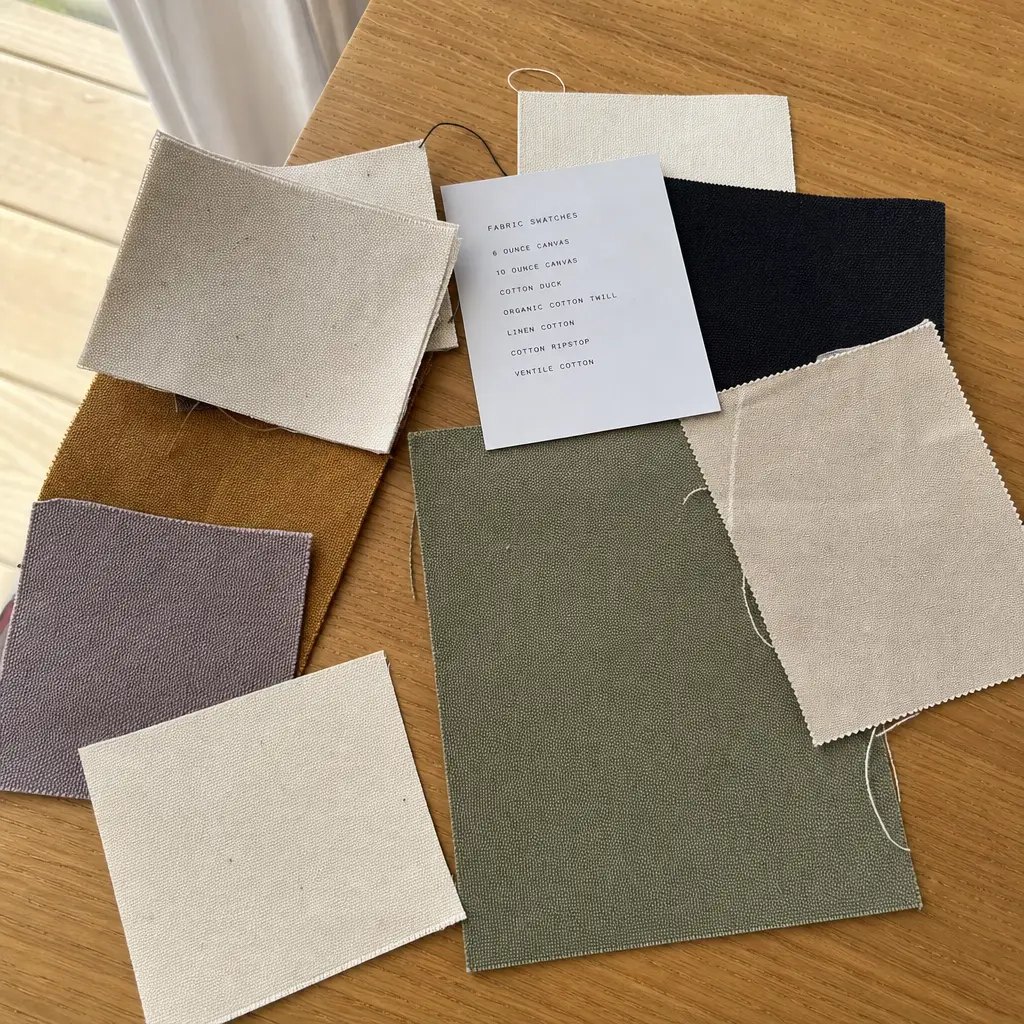
Sampling should happen in clear stages. A fabric swatch confirms material weight, weave, color, hand feel, and shade. A print strike-off tests ink color, opacity, edge quality, hand feel, and curing on actual fabric. A layout sample may check placement, but it can be misleading if the material or construction is not final. A pre-production sample should use the final fabric, tote construction, handle length, logo placement, decoration method, and packing fold. A sealed approval sample becomes the reference for production and inspection.
Review the sample as clients will use it. Lay it flat and measure the logo. Hang it from the handles and see whether the upper panel collapses over the artwork. Fill it with realistic contents such as leggings, a towel, notebook, candle, bottle, supplement box, or skincare set. Carry it on the shoulder and check visibility from the front and side. Fold it exactly as planned for export packing and look for pressure marks, creases, or ink transfer.
Approval notes should be precise. Photos should include a ruler, full front view, side or gusset view, print close-up, handle reinforcement, interior seam, and packed view. Written approval should reference the sample date, fabric, GSM, tote dimensions, handle drop, print method, ink reference, logo size, placement measurements, packing method, and any corrections. If changes are requested, ask whether a new screen, new strike-off, or revised pre-production sample is needed before bulk production.
- Measure print location and record top, side, bottom, and center-line reference points.
- Photograph the tote flat, hanging, filled, carried, folded, and packed before approval.
- Compare ink color against the approved strike-off on actual cotton, not only a digital proof.
- Rub the printed area after curing to identify powdery ink, poor adhesion, smudging, or transfer risk.
- Check handle comfort and reinforcement with realistic contents, not only an empty bag.
- Seal one approved sample at the factory and keep one with the buyer, importer, or inspector.
Write QC Tolerances Before Bulk Production
Inspection should not depend on comments like the logo looks a little high. Use measurable tolerances and defect definitions. Many tote programs can use ±5 mm placement tolerance when printing on cut panels and construction is stable. Finished-bag printing, gusseted bags, or heavier canvas may need about ±8 mm. If the buyer needs tighter control, it should be stated before quotation because it affects handling, setup, inspection time, and rejection risk.
Print QC should cover registration, edge sharpness, opacity, color consistency, smudging, pinholes, ink buildup, cracking, curing, and rub resistance. Sewing QC should cover handle position, reinforcement, seam straightness, loose threads, skipped stitches, panel twisting, stains, and finished size. These areas connect. A centered print can look wrong if the side seams are wavy. A correct screen can look tilted if the front panel twists after sewing.
Defect classification keeps decisions consistent. Critical defects may include broken needles, contamination, or safety hazards. Major defects may include wrong artwork, logo placement beyond tolerance, uncured ink transfer, broken handle stitching, severe stains, incorrect fabric weight, wrong carton marks, or missing barcodes. Minor defects may include small loose threads, slight natural slub variation, or very small shade variation if the swatch standard allows it.
- Logo placement: define vertical tolerance, horizontal tolerance, and acceptable visual tilt in millimeters.
- Print color: approve acceptable variation against fabric shade, lighting condition, and strike-off reference.
- Print surface: reject smears, ghosting, blocked details, major pinholes, cracking, and uncured ink transfer.
- Sewing: verify handle reinforcement, seam allowance, skipped stitches, loose threads, and panel twisting.
- Finished size: measure after sewing, pressing, and relaxation, not only on cut fabric panels.
- Packing: inspect fold direction, carton lining, carton marks, barcode accuracy, carton weight, and moisture protection.
Plan Packing Around the Print
Natural and off-white organic cotton can mark during handling and shipment. Packing should protect the fabric and print without creating a waste profile that clashes with wellness positioning. Common formats include bulk folded totes in a lined master carton, inner cartons by SKU, paper bands for retail presentation, hangtags, barcode stickers, and individual protective sleeves where needed. The best choice depends on whether goods ship to one studio, multiple franchise locations, a distributor warehouse, a 3PL, or a retail shelf.
Fold direction is a production detail, not a final packing choice made at the line. A sharp fold across a fresh logo can create a crease, pressure mark, or ink transfer, especially with large solid prints. The factory should confirm curing time before folding and whether printed surfaces touch each other inside the carton. For gusseted totes, careless folding can deform the bottom and make the bag look uneven when unpacked.
Carton planning affects cost and quality at the same time. Overpacked cartons can crush handles, distort gussets, and abrade cotton. Underpacked cartons waste freight space. Carton weight should fit warehouse handling rules and any retailer limits. Shipping marks should include PO number, SKU, colorway, quantity, carton sequence, gross weight, net weight, and destination details where required. On humid routes or long storage periods, moisture protection matters because light cotton can yellow, spot, or absorb odor.
- Approve the fold line on the pre-production sample when artwork is large, low, or heavily inked.
- Use carton liners, inner bags, or moisture protection for light cotton on humid routes.
- Avoid overpacked cartons that crush handles, deform gussets, abrade fabric, or transfer ink.
- Specify carton weight limits based on warehouse handling, retailer rules, and destination requirements.
- Confirm SKU labels, barcodes, PO numbers, carton sequence, and colorway marks before packing.
- Allow adequate curing time before folding and packing water-based prints on absorbent cotton.
Control Lead Time and Reorders
A realistic schedule starts with material availability. Natural organic cotton may be faster than custom-dyed organic cotton, but the exact GSM, weave, width, shade, and certification claim still need confirmation. Print screens, labels, hangtags, paper bands, barcodes, and printed cartons add separate lead times. Sampling can also stretch if the buyer changes logo size or placement after the first sample because a new screen, revised artwork, or new strike-off may be required.
Break the schedule into stages: swatch review, artwork confirmation, strike-off, pre-production sample, buyer approval, material booking, cutting, printing, sewing, curing, packing, final inspection, export documents, and handover. The most avoidable delays come from incomplete vector files, unclear placement drawings, late barcode files, late label approvals, and carton mark changes after production starts. Studio openings, retreats, holiday wellness sets, and seasonal retail launches need buffer time rather than a best-case factory estimate.
Reorders deserve the same discipline as first orders. Keep the approved sample, artwork files, placement drawing, ink references, fabric swatch, QC standard, and carton specification unchanged when performance is good. Ask the supplier whether screens are stored and for how long. If the mill, cotton shade, GSM, or ink system changes, request a new swatch and print check. A reorder is only faster when the technical standard stays stable.
- Lock bag size, GSM, gusset, and handle length before finalizing logo size and screen setup.
- Approve artwork, color references, and placement drawings before sample making begins.
- Reserve time for side labels, hangtags, paper bands, barcodes, printed cartons, and documentation.
- Schedule inspection after printing, curing, sewing, and packing so goods are checked shipment-ready.
- Treat peak capacity, local holidays, and freight cut-offs as quote variables, not afterthoughts.
- For reorders, confirm fabric, ink, screens, labels, packing materials, and carton marks match the approved order.
Specification comparison for buyers
| Spec decision | Recommended option | When it fits | Buyer risk to check |
|---|---|---|---|
| Primary front logo position | Centered horizontally; for many 380-420 mm high totes, set the artwork top edge 90-120 mm below the top opening or define an exact center point | Member welcome packs, reception retail, retreat kits, yoga studio merchandise, wellness conferences, and franchise studio programs | Handle drop can hide upper artwork; require a placement drawing measured from top opening, side seams, bottom seam or gusset fold, and artwork center line |
| Lower front logo position | Centered horizontally; keep artwork bottom edge typically 60-90 mm above the bottom seam or gusset fold, adjusted to bag height and print size | Minimalist wellness branding, spa retail bags, premium natural cotton looks, and subtle boutique merchandise | Print can wrinkle near boxed bottoms or gusset folds; approve a filled sample and keep the artwork clear of seam bulk |
| Small premium mark | 80-130 mm wide wordmark or icon placed upper center, upper left, or low center with consistent negative space | Paid retail totes, boutique studios, pilates and yoga brands with quiet identity systems, and co-branded gift sets | Fine text may fill in on cotton texture; confirm minimum letter height, line weight, and ink spread on actual fabric |
| Side label branding | Woven cotton label, printed cotton label, or folded organic cotton tab inserted into side seam | Logo-free front panels, premium studio shops, retreat merchandise, and co-branded retail bundles | Label MOQ, color matching, fold type, cut edge, fray risk, and seam orientation may differ from tote MOQ; approve label separately |
| Print method | Water-based screen print for one to three solid colors on natural, white, or light-dyed organic cotton | Most wellness studio logos using sage, clay, charcoal, cream, beige, or muted single-color artwork | Natural cotton absorbs ink unevenly; approve strike-off for opacity, edge sharpness, color, hand feel, curing, and rub resistance |
| Fabric weight | 280-340 GSM organic cotton canvas for most reusable retail and member-kit totes | Yoga studios, spas, clinics, retreat centers, wellness retailers, and chains needing everyday reusable bags | Lower GSM may feel promotional and collapse under contents; higher GSM increases unit cost, sewing bulk, needle marks, carton weight, and freight |
| Handle layout | Self-fabric shoulder handles with 600-700 mm total length or an agreed handle drop, reinforced with cross-stitch or box-stitch | Comfortable shoulder carry for apparel, towels, notebooks, bottles, supplements, and small wellness retail products | Short handle drop can cover the logo; uneven handle placement makes the logo look off-center even when the print is correct |
| Bag construction | Flat tote for simple print control; bottom-gusset or full-gusset tote for retail kits and heavier contents | Flat totes suit apparel, notebooks, and handouts; gussets suit candles, jars, boxed sets, bottles, robes, and supplements | Gusset panels reduce safe print zones; confirm whether printing is on cut panels before sewing or on finished bags |
| Packing format | Bulk folded master carton with liner; optional paper band, hangtag, barcode, inner carton, or individual protective sleeve | Balances clean presentation, export efficiency, retail readiness, and multi-location distribution | Folding across fresh ink can crease or transfer artwork; require curing time, fold direction, carton pressure, and moisture protection approval |
Buyer checklist before sampling
- Define the commercial use first: paid retail tote, member welcome kit, event giveaway, retreat bag, wholesale add-on, spa aftercare bag, or staff accessory.
- Confirm finished tote dimensions as width x height x gusset in millimeters, plus handle total length and handle drop; do not approve logo size before the bag body is fixed.
- Specify organic cotton fabric weight in GSM or oz/yd², weave, color, and finish; request a swatch from the quoted fabric, not a generic canvas sample.
- Clarify the material claim: certified organic cotton, organic cotton blend, recycled blend, or conventional cotton in natural shade, and state which documentation must ship with the goods.
- Send vector artwork with Pantone, TCX, or agreed color references, and state maximum logo width, height, and whether small taglines may be simplified.
- Provide a placement drawing with fixed references: top opening, side seams, bottom seam, gusset fold, handle stitching, logo center line, and allowed tolerance.
- Confirm whether the supplier prints on cut panels before sewing or on finished bags; this affects safe print area, tolerance, setup, and inspection method.
- Set a safe print zone with clearance from top hem, side seams, bottom fold, gusset crease, and handle stitching; avoid approving a visual mockup only.
- Ask for a physical pre-production sample using actual fabric, actual handle length, actual print method, final logo size, final placement, and planned packing fold.
- Review the sample flat, hanging, filled with typical contents, carried on the shoulder, folded as packed, and measured after normal fabric relaxation.
Factory quote questions to send
- What organic cotton GSM, yarn count or fabric reference, weave, color, finish, and shrinkage expectation are included in the quote, and can you send a swatch before sampling?
- Is the quoted fabric certified organic cotton, an organic cotton blend, or conventional natural cotton, and what transaction certificate, scope certificate, or mill documentation can be supplied if required?
- What finished-size tolerance can you hold for width, height, gusset, handle length, and handle drop after sewing, pressing, and packing?
- Will the logo be printed on cut panels before sewing or on finished bags, and what vertical, horizontal, and tilt tolerance can your production line hold for this construction?
- Which decoration method do you recommend for our artwork, fabric color, order quantity, and target hand feel: water-based screen print, pigment print, digital print, embroidery, heat transfer, or side label?
- What maximum print area is included in the quoted unit price, and how does pricing change if logo width, logo height, ink coverage, or print position changes?
- How many print colors are included, what is the screen or setup charge, and does the charge repeat for reorders, new colorways, location names, or changed logo sizes?
- What is the MOQ for the tote body, each artwork, each print colorway, custom-dyed fabric, side labels, hangtags, paper bands, barcodes, and printed cartons?
- Can you make a pre-production sample using actual organic cotton fabric, final handle length, final logo placement, final decoration method, and final packing fold?
- What sample stages do you recommend: fabric swatch, print strike-off, layout sample, pre-production sample, sealed approval sample, and packed carton sample?
Quality-control points to confirm
- Logo placement tolerance should be defined separately for vertical position, horizontal centering, and visual tilt; many tote programs use ±5 mm for cut-panel printing and ±8 mm for finished-bag printing, but the factory must confirm before order placement.
- Print size tolerance should be checked against the approved vector file and physical strike-off, not against a phone photo, unscaled PDF preview, or digital mockup.
- Water-based screen print should show even ink coverage, clean edges, no obvious pinholes in solid logo areas, no ghosting, no smudging, no powdery surface, and no heavy ink buildup that cracks when folded.
- Ink color should be reviewed on the actual cotton shade under agreed lighting because natural cotton, bleaching level, optical brightener differences, and fabric texture can shift muted wellness colors.
- Fine text, registration marks, small icons, and thin linework should be checked after curing and folding, not only immediately after printing while the tote is flat.
- Handle attachment should include reinforced stitching and pass an agreed pull or load test suitable for the intended contents, especially for retail kits with bottles, candles, books, jars, or apparel.
- Side seams and bottom seams should be straight enough that the front print does not appear tilted when the bag is laid flat, hung by handles, or lightly filled.
- Finished dimensions should be measured after sewing, pressing, and normal relaxation because cotton panels can shift from cut size to finished size.
- Organic cotton fabric should be checked for shade variation, slubs, stains, oil marks, weaving defects, holes, odor, excessive lint, and inconsistent shrinkage against the approved swatch.
- Packed cartons should protect light natural cotton from moisture, dust, abrasion, crushed handles, barcode damage, carton rub, and transfer marks from printed surfaces.