Start From the Campus Date, Not the Factory Date
The most common mistake in wholesale organic cotton totes for university bookstores lead time planning is using the supplier production time as the full schedule. A factory may say bulk production takes 25 to 35 days, but that does not include artwork approval, print strike-off, pre-production sample, inspection booking, export carton preparation, customs documents, vessel cut-off, port time, domestic trucking, receiving, and store allocation. For bookstore programs tied to move-in week, orientation, homecoming, or holiday gift sets, the usable deadline is the date goods must be on campus and counted, not the date they leave the sewing line.
A safer planning method is to work backward. If the totes must be available in the bookstore by August 10, leave time for receiving and internal distribution first. Then add domestic delivery, customs clearance, international freight, final inspection, packing, production, sample approval, and quote negotiation. This usually makes the purchase order deadline much earlier than a buyer expects, especially when organic cotton documentation or multiple department logos are involved.
- Retail launch date: the date totes must be priced, counted, and ready to sell or distribute.
- Required delivery date: the date cartons must arrive at the bookstore, warehouse, or distributor.
- Required ship date: the date goods must leave the factory or forwarder.
- Production release date: the date all samples, artwork, fabric, labels, and payment terms are approved.
- RFQ issue date: the date buyers should already have final size, GSM, artwork, quantity, and packing needs.
Choose Fabric Weight by Use Case
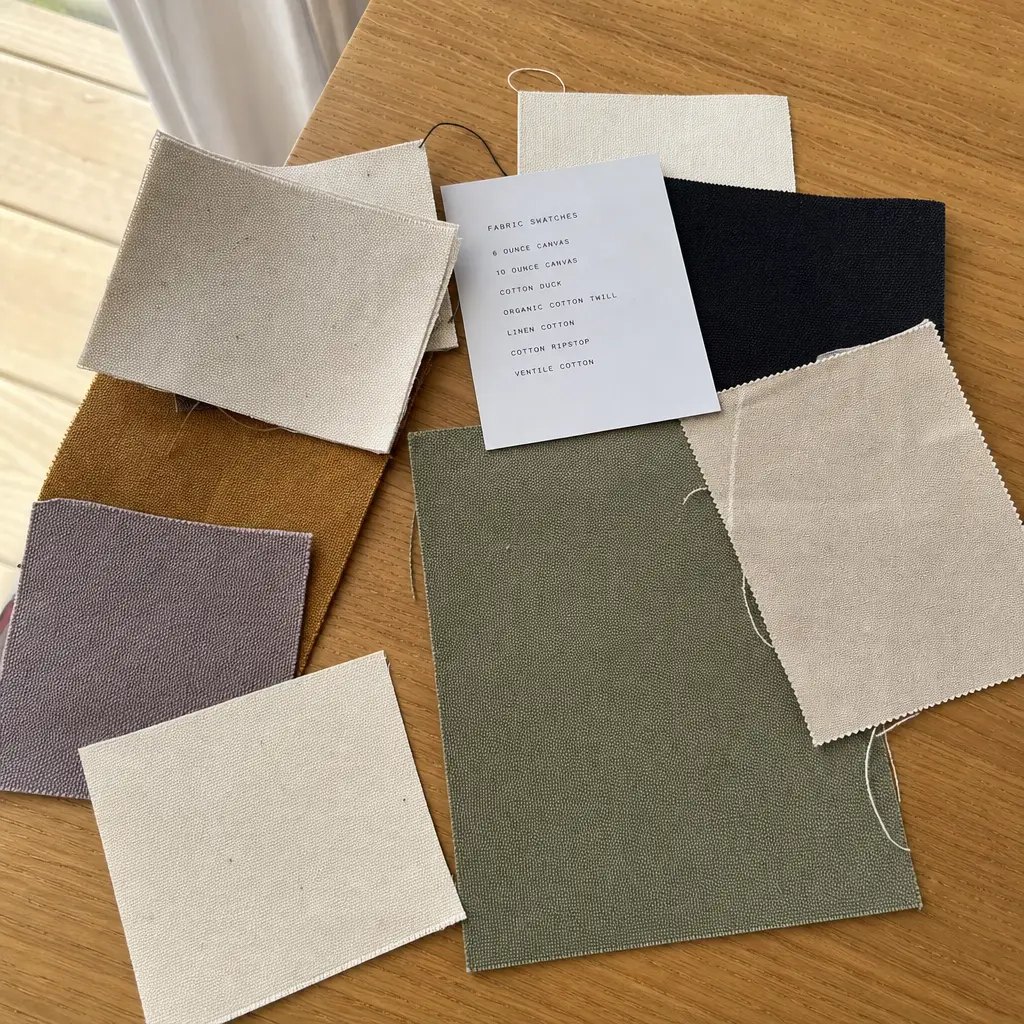
Organic cotton totes for university bookstores are not one product. A low-cost event tote, a paid retail tote, and a premium alumni merchandise tote need different fabric weights. A 6 oz or 8 oz tote may be acceptable for brochures, small apparel, or a welcome kit. A bookstore tote expected to carry textbooks, water bottles, notebooks, and sweatshirts usually needs 10 oz to 12 oz canvas, roughly 280 to 340 GSM, with better handle reinforcement and stronger seam control.
When comparing quotes, do not accept vague descriptions such as organic cotton bag, heavy cotton, or canvas tote. Ask for fabric weight in oz and GSM, weave type, natural or dyed shade, and whether the quoted weight is before or after washing or finishing. Two suppliers can quote the same size tote at very different prices because one is using 180 GSM plain cotton and the other is using 320 GSM canvas. The cheaper quote may not be wrong, but it may belong to a different product category.
- 6 oz to 8 oz: suitable for light giveaways, brochures, or single-event use.
- 10 oz: good balance for bookstore retail when cost control still matters.
- 12 oz: stronger hand-feel for premium retail, alumni gifts, and heavier loads.
- 14 oz and above: useful for structured premium bags but increases cost, sewing difficulty, and freight weight.
- Natural unbleached cotton: common for organic positioning but has shade variation and visible cotton specks.
Specify Construction Before Comparing Unit Prices
A tote quote is only comparable when construction is locked. Small construction changes can shift cost and production risk: boxed bottom versus flat tote, inside seam binding versus overlock, long shoulder handles versus short hand-carry handles, reinforced X-box stitching versus simple backtack, and added inner pocket or label. For bookstores, handle length and reinforcement deserve special attention because bags are often loaded quickly at checkout and carried across campus.
A practical bookstore tote specification should include finished width and height, gusset size if any, handle length and width, handle material, seam type, stitch density, reinforcement method, and label or hangtag position. If the tote is a paid retail item, also define how it should sit on a shelf or hang on a rack. A bag that looks acceptable flat in a supplier photo may not merchandise well if the fabric is too soft, the handles twist, or the bottom collapses.
- Flat tote: lower cost, easier packing, suitable for light retail and events.
- Bottom gusset: better capacity for books and apparel, slightly higher sewing cost.
- Side and bottom gusset: more retail-friendly shape, higher labor and measurement control needs.
- Self-fabric handles: cleaner premium look and easier organic cotton story.
- Cotton webbing handles: strong and stable but may require separate material confirmation.
Plan Printing Around Artwork and Fabric Color
Most university bookstore tote programs use screen printing because it is reliable, cost-effective, and suitable for campus logos. Water-based or pigment inks can work well on natural organic cotton, but color appearance changes with the fabric base. A Pantone color printed on unbleached cotton will not look the same as the same Pantone on white coated paper. If brand color is strict, a print strike-off on the actual fabric is not optional.
Complex artwork changes the plan. Fine serif type, small department seals, multi-color athletic marks, gradients, and sponsor logos may require higher mesh screens, tighter registration, or digital/transfer methods. These choices affect cost, approval time, and QC standards. For a bookstore buyer, the right question is not only which print method is cheapest, but which method gives acceptable logo clarity after handling, folding, and normal use.
- Screen print: best for solid logos, one to three colors, medium and large runs.
- Water-based ink: softer hand-feel but may look less opaque on darker dyed cotton.
- Pigment ink: practical for many cotton totes and standard retail artwork.
- DTF or transfer: useful for short runs or gradients but requires adhesion and feel approval.
- Embroidery: premium look, slower production, not ideal for very large front-panel graphics.
Understand MOQ Logic Before Splitting Designs
University bookstore orders often involve several stakeholders: bookstore retail, admissions, alumni relations, graduate programs, athletics, and conference teams. Each group may want its own logo, but the factory sees the order through production lots. MOQ may apply to fabric purchase, cutting, sewing, printing setup, dyeing, labels, or packing. A supplier that accepts 300 pieces per logo may still need 1,000 pieces per bag construction to run efficiently.
The best way to reduce MOQ friction is to standardize the tote body and vary only the print. For example, one 12 oz natural organic cotton tote with the same size, handles, and label can support multiple department artworks. The factory can cut and sew one batch, then print in separated lots. This is easier than mixing different GSM, sizes, handle colors, and packing requirements. However, buyers must require clear carton separation so bookstore receiving does not spend hours sorting mixed designs.
- Lowest MOQ usually comes from natural fabric, standard size, standard handles, and one-color print.
- Dyed fabric often creates higher MOQ because fabric dye lots need minimum yardage.
- Multiple logos can be efficient if the tote construction stays identical.
- Private labels, barcode stickers, and hangtags may create separate MOQ or setup fees.
- Very low quantity orders may be better sampled domestically or air-shipped only if deadlines justify the cost.
Build a Realistic Lead Time Map
A workable lead time map separates decisions from production. Quoting may take two to four working days if the RFQ is complete, but longer if the buyer has not provided artwork size, fabric weight, or packing rules. Sampling can take seven to fifteen days depending on whether existing fabric is available and whether printing requires screens. Bulk production commonly runs 25 to 40 days after final approval, but peak season, organic fabric availability, and multi-logo printing can extend this.
Freight must be included in the calendar from the beginning. Ocean freight can be economical for bulk bookstore programs, but it needs room for vessel booking, port handling, customs, and inland delivery. Air freight can rescue a late program, but organic cotton totes are bulky and freight cost can become a major part of landed cost. A split shipment sometimes works: air ship a small launch quantity for orientation, then ocean ship the balance for retail replenishment.
- RFQ clarification: 2-5 working days when specifications are complete.
- Artwork proof and print setup: 3-7 working days depending on color count.
- Pre-production sample: 7-15 days for standard fabric and construction.
- Bulk cutting, sewing, and printing: 25-40 days after sample approval.
- Final inspection and packing: 2-5 days depending on quantity and carton requirements.
- International freight: schedule separately and confirm with the forwarder before PO release.
Approve Samples With Measurable Acceptance Criteria
A sample approval should not be a simple yes based on appearance. For organic cotton bookstore totes, the pre-production sample is the control document for fabric weight, shade, dimensions, print position, handle strength, stitching, labels, and packing. If the buyer approves a sample without noting tolerances, the factory may treat minor differences as acceptable during bulk production. That creates arguments during inspection when the launch date is already close.
Sample comments should be written like production instructions. Instead of saying make the logo higher, state the logo center should sit a specific distance from the top edge, with a defined tolerance. Instead of saying handles should be strong, define stitch pattern and load expectation. Keep one signed sample at the factory and one with the buyer or inspection team. Photos are useful, but a physical approved sample is still better for fabric hand-feel and shade comparison.
- Finished size tolerance: commonly plus or minus 1 cm for main body dimensions.
- Print placement tolerance: define top and side reference points before bulk printing.
- Handle strength: test with a realistic load based on books and retail use.
- Fabric shade: approve natural cotton variation range, not only one perfect sample.
- Label placement: define side, inside seam, top edge distance, and orientation.
- Packing sample: approve fold method if creasing or shelf presentation matters.
Control Packing for Bookstore Receiving
Packing is often treated as a final detail, but it affects freight cost, receiving labor, shelf condition, and chargeback risk. Bookstores and distributors may need cartons marked by SKU, department, event, purchase order, or delivery location. If several campus departments share one production order, inner bundle labels are important. Without them, the warehouse may open every carton to identify which design belongs to which team.
For organic cotton totes, flat packing is usually safer than aggressive compression. Vacuum packing can reduce carton volume, but heavy canvas may keep sharp creases, especially if goods sit compressed during long ocean transit. Individual polybags protect against dirt and moisture but may conflict with sustainability goals or retail packaging rules. A practical compromise is carton liner protection, paper bands or inner bundles, and clean carton marks unless individual retail packaging is required.
- Pieces per carton should balance freight efficiency with safe lifting weight.
- Carton gross weight should be acceptable for warehouse handling, often below 15-18 kg when possible.
- Inner bundles should separate artwork, size, or department when cartons contain multiple SKUs.
- Carton marks should include PO, SKU, color, quantity, destination, and carton number.
- Moisture protection should be discussed for ocean shipments and humid storage conditions.
Compare Quotes by Landed Cost, Not Only FOB Price
A low FOB unit price can become expensive when fabric weight, carton volume, inspection failure, sample freight, or urgent air shipment is added. For organic cotton totes, landed cost comparison should include product cost, print setup, label and hangtag cost, sample cost, testing or certification document fees, export packing, inland transport, international freight, duty, customs brokerage, domestic delivery, and receiving labor. This is especially important for bulky canvas totes because carton volume can move freight cost quickly.
Quote data should be organized so the buyer can see which supplier is cheaper because of efficiency and which is cheaper because of missing requirements. A reliable quote will state fabric GSM, size, print method, MOQ, sample timing, bulk lead time, packing, carton dimensions, and exclusions. If one supplier omits carton size or gross weight, the landed cost is not complete. If another includes inspection support, barcode labels, and separated inner bundles, the higher unit price may still be the lower operational cost.
- Compare unit price at the same GSM, same size, same print, and same packing method.
- Add setup charges and sample freight before judging small quantity orders.
- Estimate freight using carton dimensions and gross weight, not only piece count.
- Include inspection cost if the order is tied to a fixed campus launch date.
- Treat missing quote details as cost risk, not as savings.
Reduce Schedule Risk Before the Purchase Order
The cheapest way to protect a bookstore tote program is to remove uncertainty before issuing the PO. Final artwork, Pantone references, logo size, organic cotton documentation requirement, packing rules, and delivery split should be settled during RFQ. If these decisions remain open, the supplier cannot reserve the correct production capacity or print schedule. Late changes after sample approval can restart the clock, especially when artwork size changes require new screens.
Schedule risk also increases during campus peak seasons. Many university programs target the same windows: back-to-school, orientation, homecoming, graduation, and holiday retail. These overlap with general promotional product demand. A buyer does not need to overcomplicate the order, but should lock the basic tote construction early and leave optional decisions, such as hangtags or special bundle labels, only if they do not affect production release.
- Freeze tote size, GSM, handle length, and print size before sample making.
- Approve fabric shade and print strike-off before bulk fabric cutting when possible.
- Use one construction for multiple logos to protect sewing schedule.
- Book inspection before the goods are fully packed if the launch date is fixed.
- Keep a small buffer for rework, carton relabeling, or missed vessel cut-off.
- Avoid changing packing after cartons are ordered because carton dimensions affect freight booking.
Specification comparison for buyers
| Spec decision | Recommended option | When it fits | Buyer risk to check |
|---|---|---|---|
| Fabric weight for bookstore retail totes | 10 oz to 12 oz organic cotton canvas, roughly 280-340 GSM | Best for paid retail totes, orientation kits, and merchandise with books or apparel inside | Lower GSM quotes may look similar in photos but sag, wrinkle, or fail handle pull tests |
| Fabric weight for low-cost event giveaways | 6 oz to 8 oz organic cotton, roughly 180-240 GSM | Works for welcome fairs, department giveaways, and light brochures | Do not compare unit price against 12 oz canvas without separating fabric weight and size |
| Print method for bookstore logos | Screen print with water-based or pigment ink | Best for one to three color campus marks on natural or dyed cotton | Pantone match can shift on unbleached fabric; approve a strike-off under real lighting |
| Print method for complex artwork | DTF heat transfer or digital print on suitable fabric surface | Useful for short runs, gradients, alumni artwork, or event graphics | Transfers add hand-feel and need wash and rub tests before bulk approval |
| MOQ planning for multiple departments | Consolidate same tote construction with different print artworks | Helps bookstore, admissions, alumni, and athletics share one production slot | Too many artwork changes can increase setup time, printing loss, and carton sorting errors |
| Handle construction | Self-fabric handles with reinforced cross stitch or X-box stitch | Needed for books, bottles, laptops, and heavier bookstore purchases | Thin tape handles reduce cost but can damage premium positioning and fail load tests |
| Packing method | Flat pack in export cartons with artwork-separated inner bundles | Best for easy receiving, store allocation, and campus department distribution | Vacuum packing may reduce freight volume but can create hard creases on heavier canvas |
| Lead time buffer | Approve final sample at least 45-60 days before required ship date | Suitable for fall rush, orientation, move-in week, and semester campaigns | Late artwork approval compresses printing, QC, packing, and vessel booking more than sewing |
Buyer checklist before sampling
- Define the required in-store date, not only the preferred ship date, and work backward from receiving, customs, domestic trucking, ocean or air freight, final inspection, packing, printing, sewing, fabric preparation, and sample approval.
- List each tote size, fabric weight, handle length, gusset, print position, ink color, label, hangtag, polybag or no-polybag rule, carton mark, and delivery split before requesting quotes.
- Separate paid retail totes from free giveaway totes because the correct GSM, stitching, packing, and acceptable defect level are different.
- Confirm whether the organic cotton claim needs transaction certificates, scope certificates, fabric mill documents, or only supplier declaration for internal purchasing records.
- Request a pre-production sample using the actual fabric weight, actual print method, actual logo size, actual handle construction, and actual label placement.
- Set approval limits for fabric shade, print registration, print hand-feel, tote measurements, handle pull strength, seam allowance, loose threads, stains, odor, and carton packing.
- Reserve time for artwork cleanup, Pantone conversion, print screen making, strike-off approval, and re-sampling if the logo has fine text or multiple campus colors.
- Require the quote to state MOQ by construction and MOQ by artwork so buyers can compare true flexibility across suppliers.
- Confirm packing dimensions and carton gross weight early because freight cost can change the landed cost more than small unit price differences.
- Build a contingency plan for late purchase orders, peak-season sewing capacity, delayed fabric delivery, and missed vessel cut-off dates.
Factory quote questions to send
- What organic cotton fabric options can you quote for this tote size, including oz, GSM, weave, shrinkage expectation, and available natural or dyed shades?
- Is your MOQ based on total bag quantity, fabric dye lot, cutting lot, print artwork, or each SKU, and how does price change at 500, 1,000, 3,000, and 5,000 pieces?
- Which print method do you recommend for our artwork and fabric color, and what are the setup charges, color limits, print size limits, and expected tolerance for placement?
- How many days are needed for digital proof, fabric swatch, print strike-off, pre-production sample, bulk production, final inspection, and export packing after each approval?
- Can you produce one shared tote construction with multiple department logos, and how will you prevent mixed cartons or incorrect inner bundle labels?
- What handle reinforcement do you include as standard, and what load test can you support for bookstore use with books and bottles?
- What certifications, transaction documents, or supplier declarations can be provided for organic cotton, and what documents are excluded from the quoted price?
- What packing method is included in the unit price, including pieces per carton, carton size, gross weight, inner bundle method, carton marks, and moisture protection?
- What are your inspection standards for stains, broken stitches, print defects, measurement tolerance, fabric defects, odor, metal contamination, and carton damage?
- Which items are not included in the quoted price, such as sample freight, mold or screen fees, hangtags, barcode stickers, individual polybags, testing, inspection, or inland transport?
Quality-control points to confirm
- Fabric weight should be verified by cutting and weighing a measured fabric area, not estimated from supplier description or old sample records.
- Finished tote dimensions should be checked after sewing and pressing, with a clear tolerance such as plus or minus 1 cm for width and height and plus or minus 0.5 cm for handle width.
- Print placement should be measured from the top edge and side seam, with an agreed tolerance before bulk printing begins.
- Print adhesion, dry rub, wet rub, and basic wash resistance should match the intended retail use and care label claim.
- Handle attachment should use reinforced stitching, with no skipped stitches, weak backtacking, or broken thread at stress points.
- Seams should be inspected for straightness, seam allowance, raw edge control, loose threads, and needle damage.
- Natural organic cotton shade variation should be controlled by batch approval because unbleached fabric can vary between lots.
- Finished goods should be free of oil marks, mildew odor, dirty handling marks, obvious slubs on logo areas, and packaging moisture.
- Cartons should pass reasonable export packing checks for carton strength, correct marks, correct SKU separation, and scannable receiving labels if required.
- A final random inspection should include quantity count, appearance, measurements, print quality, stitching, packing, and carton drop or compression concerns when freight handling is rough.