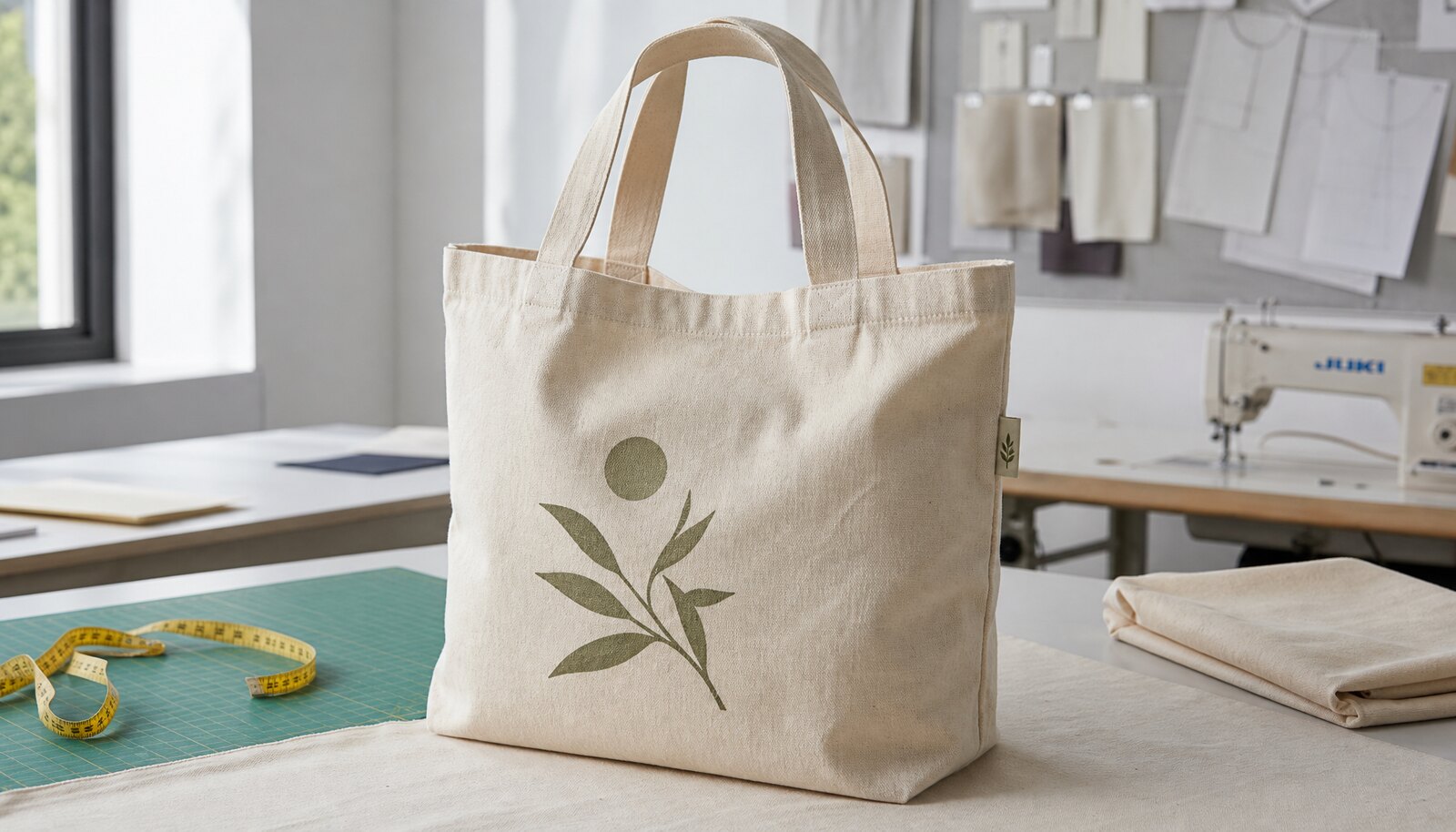
Why gift shop tote schedules slip even when the product looks simple
Organic cotton totes are easy to underestimate because the finished item looks straightforward. Procurement risk usually sits in the handoff points: material availability, artwork approval, sample approval, print setup, sewing capacity, packing, and booking. A gift shop order only moves quickly when each step is clear enough for the supplier to commit resources without guessing. If one step is vague, the calendar shifts even when the bag itself is uncomplicated.
The most common planning mistake is treating lead time as a single promise. A supplier may quote a ship date, but that date may assume the fabric is already available, the artwork will not change, and the buyer will approve the sample immediately. In practice, tote lead time is the sum of several short timelines. Buyers should ask for each stage separately so they can see where the order can stall and where buffer time is needed.
This matters for gift shops because tote purchases are usually tied to retail timing: a seasonal display, museum opening, tourist traffic, a new store launch, or a campaign launch date. Missing the selling window can hurt more than a small unit-cost difference. For that reason, procurement planning should prioritize certainty, not just unit price. The useful question is not only how much the tote costs, but how much calendar risk is built into the quote.
It also helps to separate product complexity from order complexity. A simple natural tote with one print location can still be slow if the supplier is waiting on a material lot, a label spec, or an approval response. On the other hand, a more customized bag can sometimes move predictably if the supplier runs that format often and the buyer stays disciplined on sign-off. The schedule depends less on “custom versus standard” than on how many variables are still unresolved when quoting starts.
- Plan around stages, not a single ship date.
- For gift shops, the retail window is part of the cost equation.
- Quote accuracy improves when the supplier can see the full spec early.
Build the spec first so the quote reflects the real schedule
The fastest tote program is usually the one with the fewest unknowns. Before asking for price, define the finished bag size, handle length, gusset depth, intended use, fabric target, decoration method, and packing format. If the product is for light gift items, the spec can be simpler. If it must hold books, boxed gifts, or heavier retail items, say so explicitly so the supplier can judge whether reinforcement or a different cloth weight is needed.
Do not let the spec drift between aesthetic choices and production choices. A wide bag with long handles may look better on a shelf, but it can change carton efficiency and sewing time. A dense or heavier cloth can improve the retail feel, but it may slow stitching and increase needle wear. The buyer does not need to guess the factory process, but it is useful to know that each design choice can affect how quickly the order moves from sample to bulk.
For organic cotton gift shop totes, keep the first order as lean as possible if the launch date is fixed. A standard body shape, one print area, one color, and basic bulk packing is much easier to schedule than a program with multiple labels, inserts, and packaging layers. If branding matters, choose the least disruptive branding elements first: a woven side label, a single print placement, or a simple hangtag. Those choices often preserve retail identity without turning the order into a custom packaging project.
The useful result of a strong spec is not just lower cost. It is fewer quote revisions, fewer sample changes, and a cleaner approval trail. A supplier can only reserve the right material and book the right line if the buyer has already settled the details that drive material, labor, and packing time.
- Lock the finished size and intended use before asking for a unit price.
- Keep the first order simple if the retail date is fixed.
- Every added label, insert, or print location can affect schedule and carton planning.
Lead-time planning by stage: what usually happens before shipment
A useful planning sheet should show each stage separately. For a tote order, that usually means: RFQ review, artwork and placement confirmation, sample making, sample review, material reservation, decoration setup, cutting, sewing, in-line inspection, final inspection, packing, and shipping booking. If the supplier cannot explain these steps, the quote is too thin for procurement use.
A practical schedule for a straightforward stock-body tote often starts with 1 to 3 days for artwork and placement confirmation, 5 to 7 days for a sewn sample, 7 to 12 days for bulk production, 1 to 2 days for final inspection, and 1 to 3 days for packing and booking after approval. These are planning ranges, not guarantees. The point is to show that a “two-week lead time” is usually a combination of short, dependent steps rather than one continuous production block.
For more customized orders, the longest items are usually material sourcing and approval delay. If fabric has to be reserved from a mill, if color matching is needed, or if labels and packaging require separate sourcing, the schedule expands quickly. A buyer who wants a fixed retail date should not leave approvals open-ended. The order may be ready on paper, but not on the line, if the sample sits in review for several days.
The best schedule is a backward schedule. Start with the receiving date, then subtract transit time, customs or booking time, final inspection, bulk production, sample approval, and artwork turnaround. That exercise shows whether the retail date is realistic before any money is committed. If the calendar is tight, the buyer can still make the order work by simplifying the spec or choosing a faster route, but that decision should be made early, not after production starts.
- Ask for a stage-by-stage calendar, not just one ship date.
- Sample approval should be planned as a real timeline item.
- Back-plan from the retail receiving date to see if the order is feasible.
How to compare quotes without comparing the wrong thing
A tote quote is only meaningful when the assumptions are visible. Two suppliers can give very different numbers because one is quoting sewing only, while the other includes print setup, labels, cartons, and packing labor. A procurement buyer should compare the same spec, the same route, and the same inclusions before deciding which offer is better. Otherwise, the lowest quote can become the highest landed cost once missing items are added back in.
The first comparison point is the production route. Is the bag made from stock fabric, or does the factory need to reserve new cloth? Is the decoration already part of a standard workflow, or does the supplier need new screens, plates, or a first-run setup? Are cartons and labeling included, or are those handled separately? These questions are not administrative details; they determine whether the quoted lead time can actually hold.
The second comparison point is the quality promise. If one supplier is vague about defect standards, tolerance bands, or inspection method, the buyer is taking more risk even if the unit price is lower. Good quote comparison should include enough detail to understand who is paying for setup, who is paying for sampling, and what happens if the first sample does not match the spec. The clearest supplier is usually easier to manage, even when the price is not the lowest.
For gift shop buyers, route clarity matters as much as price. A stock-program supplier can be a good fit for a fast replenishment order, while a direct factory may be better for a repeatable branded line. A trading company can be helpful when documentation support is needed, but the buyer should still know who makes the bag and who controls the schedule. The best quote is the one that lets procurement forecast the real delivery date with the least uncertainty.
- Compare identical specs and identical inclusions.
- Ask who pays for sample, setup, labels, cartons, and packing.
- Lower unit price is not a win if the schedule or scope is unclear.
Route comparison for procurement: what each sourcing path is actually good at
A stock-program supplier is usually the fastest path for gift shop replenishment. The body spec, fabric base, and decoration workflow are already established, so the order is mostly a matter of confirming artwork, quantity, packing, and shipment. This route works well when the design is simple and the buyer values speed over exact customization. The main tradeoff is that the product may have less room for spec changes than a fully custom order.
A direct factory order gives more control over sewing details, fabric choice, and packing format. It is often the better fit for repeat seasonal programs or private-label gift shop lines. The buyer gets more visibility into the actual process, which helps with reorders and quality consistency. The tradeoff is that the buyer must manage approvals more actively, because the schedule depends on factory capacity, material reservation, and sample sign-off.
A trading company or sourcing agent can simplify communication when the buyer is managing multiple SKUs or does not have internal procurement bandwidth. The useful benefit is coordination; the risk is opacity. If the factory is not named and the material path is unclear, it becomes harder to judge whether the quoted schedule is realistic. Buyers should ask for the actual producer, who holds the production records, and who handles inspection if a defect appears.
A custom development program is justified when the tote needs a specific retail identity that cannot be achieved with a stock body. That may include a custom color, special label, bespoke packaging, or a distinct print layout. The route gives the buyer the most control, but every extra decision adds time. For a launch with a fixed opening date, the question is whether custom is necessary or whether a simpler route delivers the same commercial result with less risk.
- Stock program: fastest and simplest.
- Direct factory: better repeatability and QC visibility.
- Trading company: useful if coordination matters more than factory transparency.
- Custom development: best when brand identity justifies the added time.
RFQ contents that reduce back-and-forth and keep the supplier honest
A good RFQ does not need to be long, but it must be specific. Include the finished bag dimensions, handle drop, gusset, fabric target, print location, print size, number of colors, folding method, carton pack ratio, and required delivery date. If the tote has a known retail role, mention it. A bag that will hold books, bottles, or heavier gifts needs a different construction expectation than a bag used for light merchandise.
Artwork should be provided in a way the factory can use without interpretation. Vector file, print area, safe zone, color count, and reference colors are the minimum. If the logo must stay centered relative to the seam or top edge, say so in writing. If the design is sensitive to placement, provide a measurement drawing. This prevents avoidable sample revisions and makes it much easier to see whether the bulk run matches the approved sample.
Packing is part of the RFQ, not an add-on. Tell the factory whether the bags are bulk folded, retail folded, bagged individually, or packed with labels, inserts, or barcodes. A supplier may quote one lead time for simple bulk packing and a longer one for shelf-ready packing, even when the tote itself is unchanged. If the gift shop has receiving rules or retail presentation standards, those should be in the first quotation request.
The best RFQs also define what the supplier should not do. If no substitutions are allowed for fabric, decoration method, or carton format, say that. If alternate materials are acceptable only with written approval, state that. This protects the buyer from being offered a cheaper but noncompliant version after the order is already in motion.
- Give the supplier the production facts, not just the artwork.
- Include packing and carton rules in the first request.
- State what substitutions require approval before quoting.
Sampling and sign-off: the approval step that should not be rushed
A digital proof is useful, but it does not replace a sewn sample. The sewn sample shows how the bag actually hangs, folds, and carries. For a gift shop tote, that matters because shelf appearance is part of the product value. The handles may look fine in artwork, yet sit unevenly when sewn. The print may look centered on screen, yet drift once it meets the seam and panel construction.
The sample review should be tied to the approved spec sheet. Check finished dimensions, handle drop, gusset depth, print position, and fold presentation. If the product is meant to be displayed folded with a label visible, inspect it in that exact state. If the sample is slightly off but still acceptable, note the exact adjustment before bulk starts. Vague comments such as “make it better” create more delay than they save.
Buyers should also define one internal sign-off owner. If three teams need to approve artwork, packaging, and quality, the sample stage can stretch unnecessarily. The supplier cannot book a reliable bulk slot until the approval chain is complete. One owner does not eliminate review, but it does keep the schedule moving. If the approval window is likely to be slow, the buyer should price that delay into the lead time forecast rather than assuming the factory will absorb it.
This is also the stage where packaging should be checked for real, not imagined, shelf fit. Barcode placement, SKU label size, fold direction, and any inserted card should all be verified with the sample in hand. If the receiving store or warehouse has a standard, use it now. It is much cheaper to change a fold or label position on a sample than after several thousand units are packed.
- Approve a sewn sample, not only a flat proof.
- Check size, handle balance, fold, and label presentation on the sample.
- Assign one final approver to prevent approval delays.
MOQ planning: how customization changes both order size and timing
MOQ is usually a reflection of setup effort, not a random number. Standard fabric, a single size, one print location, and simple packing usually keep MOQ lower. Add custom labels, special inserts, extra print colors, or custom packaging and the factory has more work to schedule around. Buyers who need a lower MOQ should simplify the product before pushing for a lower minimum.
For gift shops, the right MOQ should match demand risk. A seasonal launch or event-driven purchase often deserves a smaller test quantity, even if the unit price is less attractive. A permanent retail program may justify a larger initial order if reorders are likely and the supplier can keep the spec stable. The procurement decision should be based on sell-through confidence and replenishment strategy, not only on the lowest unit price.
MOQ and lead time are linked. A factory may agree to a smaller quantity only if the fabric is stock, the decoration is simple, and the packing is basic. If any of those move toward custom, the schedule usually expands. Buyers should ask the supplier to identify which part of the order is driving the minimum: fabric reservation, print setup, sewing line efficiency, or packing labor. That answer is more useful than the number alone because it shows where flexibility exists.
If the order is intended as a test, it can be smarter to lower the scope rather than fight the MOQ. Use a simpler body spec, standard natural fabric, one print, and bulk packing. Then evaluate sell-through and reorder from a proven format. This approach usually gives the buyer more control over cash flow and less exposure to unsold inventory.
- Lower MOQ usually comes from fewer custom variables.
- Ask what is driving the minimum before negotiating.
- Test orders should optimize for inventory risk, not only unit cost.
QC thresholds and defect rules that make inspections useful
Buyer-side quality control should be measurable. Start with the fabric. If the order is based on a finished GSM target, write the target and tolerance into the purchase order or spec sheet. Confirm that the factory uses the approved fabric lot or a documented equivalent. If the organic cotton is natural or undyed, check shade variation between panels and against the approved sample so a batch issue is caught before packing.
For construction, measure body width, body height, gusset, and handle drop on the sample and define your tolerance bands before bulk production. Do not accept a vague commercial tolerance if the tote must sit neatly on a shelf or fit a specific retail presentation. Handle attachments deserve special attention because they are common failure points in use. Inspect for skipped stitches, loose threads, twisted handles, weak bar-tacks, seam puckering, and uneven seam allowance. If you need a simple line rule, ask the factory to reject any unit with broken stitches, open seams, or handle attachments that visibly distort under a manual pull test.
For print, define both appearance and placement requirements. Good acceptance criteria should include color density, edge sharpness, alignment to the agreed artwork drawing, and the absence of obvious smearing or strike-through. The print should look intentional from normal shelf distance. Reject prints that are visibly off-center, blurred, cracked, or shifted enough to make the retail front look uneven. If the artwork is simple, the tolerance should also be simple: the print should sit within the agreed placement window and match the approved reference sample as closely as the process allows.
It is also worth using a clear defect classification before the pre-shipment inspection. Minor defects may include small thread ends or slight fold variation. Major defects may include incorrect size, visible print drift, severe seam puckering, or a stain. Critical defects would include holes, open seams, wrong artwork, missing labels when labels are required, or a material substitution that violates the order. If you use AQL, align the sampling plan to the order risk and spell out the reject trigger in the PO. If you do not use AQL, define an equivalent sample-and-reject rule in writing. The goal is to avoid arguing after the bags are packed.
- Write GSM, size, and placement tolerances before bulk starts.
- Reject open seams, broken stitches, wrong artwork, and visible print drift.
- Use AQL or an equivalent written sampling plan with clear reject triggers.
Organic claim verification and traceability: what buyers should ask for, and what to reject
Organic cotton claims need document discipline. It is not enough for a supplier to say the tote is organic. Buyers should ask what proof exists for the specific lot being quoted. That usually means identifying the actual factory, the fabric source, and the traceability path from material to finished tote. If the claim matters for your sales channel, do not accept a generic reassurance in place of documentation.
Ask the supplier to identify the mill or fabric source, the batch or lot reference if available, and the document set that supports the claim. Depending on the supply chain and channel requirement, that may include certification references, transaction documents, or chain-of-custody records. The key point is not the exact form of every certificate; it is whether the supplier can connect the finished bag to the right material source without gaps. If the supplier cannot explain the path clearly, the risk is higher than the quote suggests.
Buyers should also reject vague substitutions. If a quote refers to organic cotton but the supplier later offers an unverified fabric replacement, the buyer should treat that as a nonconforming change until proof is provided. The same applies if the material source changes after sample approval. For channel-sensitive retail programs, the approved sample and the bulk run should be linked to the same verified material path wherever possible.
The practical sourcing rule is simple: request the document set early, before the lead time is locked. If the documents are not available or the supplier is reluctant to share them, that is useful information. It may still be possible to proceed, but the buyer should then decide knowingly whether the claim risk is acceptable for the store, customer base, or retailer requirements.
- Ask for the actual factory, fabric source, and lot path for the quoted order.
- Require proof that connects the finished bag to the claimed material source.
- Reject undocumented substitutions after sample approval unless the buyer approves the change in writing.
Specification comparison for buyers
| Buying route | Typical use case | Lead-time profile | Main procurement advantage | Main procurement risk |
|---|---|---|---|---|
| Stock program supplier | Basic gift shop replenishment, simple artwork, short deadlines | Fastest route because the body spec and production method already exist; schedule is mainly picking, printing, packing, and booking | Lowest development effort and quickest approval cycle | Limited control over fabric lot, shade, label format, and packaging |
| Direct factory order | Repeat programs, branded retail, tighter QC visibility | Moderate lead time because fabric reservation, sample approval, and line booking may still be needed | Better control over spec, inspection, and repeat consistency | Schedule depends on the factory's real capacity and the buyer's approval speed |
| Trading company / sourcing agent | Buyers needing coordination support or multi-item sourcing | Variable lead time because coordination may add a handoff between buyer and factory | Simplifies communication and documentation | The true production bottleneck can be hidden if the factory is not disclosed |
| Custom development program | Private-label, museum store, or seasonal branded launch | Longest route because fabric, labels, packaging, and artwork may all need approval | Highest flexibility on brand identity and presentation | Each added variable increases sample rounds and risk of delay |
| Mixed route: stock body + custom print/label | Buyers who want branding without full custom development | Usually faster than full custom because the body stays standard | Good balance between speed and brand identity | Extra labels, inserts, or tag changes still affect schedule and receiving |
| Material | organic cotton canvas, batch documentation where available, undyed or low-impact dyed fabric, and shrinkage control | Before price comparison | Different cloth weights, backing, or certification claims make quotes hard to compare | |
| Construction | seam allowance, handle reinforcement, label attachment, fabric pre-shrink note, and batch shade control | Before sampling | Weak stress points create returns and failed inspections | |
| Decoration | water-based print, embroidery, woven organic label, or low-impact transfer checked against certification claims | Before artwork approval | The wrong method can crack, bleed, pucker, or fail on the chosen fabric |
Buyer checklist before sampling
- Lock finished bag size, gusset, handle drop, and intended retail use before requesting quotes.
- Specify fabric type, finished GSM target, shrinkage expectation, and any required organic documentation.
- Send vector artwork, print area dimensions, color count, and Pantone or reference color targets.
- Ask for a sewn pre-production sample, not only a flat mockup or digital proof.
- Confirm packing format, carton marks, barcode placement, and whether shelf-ready presentation is required.
- Request a stage-by-stage production schedule with material, sample, print, sewing, inspection, packing, and booking dates.
- Define acceptable defect levels for stitching, stains, print registration, and measurement tolerance before bulk approval.
- Verify the supplier's factory capability, inspection workflow, and traceability before committing to the lead time.
Factory quote questions to send
- What fabric is available now, and is the quoted GSM based on finished cloth or greige fabric before finishing?
- Please break the schedule into material reservation, print or dyeing, sewing, inspection, packing, and booking time.
- What is the MOQ if we keep the same fabric and size, and how does it change with extra print colors, labels, or retail packaging?
- Does the quote include one sewn pre-production sample, and how long after artwork approval will that sample be ready?
- What carton size, carton count, and gross weight are assumed in the quotation, and are export cartons included in the unit price?
- Are print screens, plates, color matching, woven labels, hangtags, barcode stickers, and packing labor included or charged separately?
- What defect standard do you use for seam skips, stain allowance, print misalignment, and measurement tolerance?
- Which part of this order is the longest-risk item on your schedule, and what is your backup plan if fabric or print approval is delayed?
- Can you identify the actual factory, and can you share recent factory audit or capability documentation if requested?
- What traceability or certification documents can you provide for the organic cotton fabric used in this order?
Quality-control points to confirm
- Agree the finished GSM target and an allowed tolerance band before bulk production begins, and confirm the fabric lot used for the order matches the approved sample or lab dip.
- Measure the finished bag against the approved spec sheet for body width, body height, gusset, and handle drop. Set tolerance limits in writing so the factory does not rely on a vague commercial tolerance.
- Print registration should be checked against the approved placement drawing. For simple logos, require the artwork to stay centered and within the agreed distance from top edge and side seam; reject obvious drift that makes the retail front look uneven.
- Handle stitching should be inspected at stress points, not only visually. Ask the factory to confirm stitch density and reinforcement style, and look for loose thread ends, skipped stitches, twisting, or uneven bar-tacks around the handle attachment.
- Use a practical pull test on sample units to confirm that handles, seams, and attachment points do not open or distort under normal shopping use. Specify a simple acceptance threshold in the spec if you need a repeatable in-line test.
- Check stitch quality on a defined sampling basis during production. Look for puckering, seam waviness, broken threads, needle damage, and uneven seam allowance, especially with heavier canvas or denser weaves.
- Compare color under consistent light against the approved reference sample, not only against a screen image. If the order is natural cotton, also check for obvious shade variation between panels and across batches.
- Packing inspection should confirm folded size, SKU label placement, carton marks, and quantity per carton. A carton that is packed loosely or inconsistently can create receiving problems even if the bags themselves are acceptable.
- Pre-shipment inspection should verify the agreed sampling plan or AQL, carton count, carton condition, print quality, measurements, and obvious defects such as stains, holes, frayed edges, or missing labels before the goods leave the factory.