Start with the date the totes must be usable
Organic cotton totes look simple on a line sheet. In real procurement, they become schedule-sensitive products as soon as the order needs a specific cloth, logo, label, fold, carton mark, barcode, or customer compliance file. A buyer may begin by asking for a natural cotton tote price, then add a two-color print, woven side label, hangtag, barcode sticker, retail fold, inner pack, and destination-specific carton marks. Each detail changes the route through the factory. Screens may need to be made. Labels may need production. Packing workers may need a new folding instruction. QC has more points to check before the shipment can be released.
Lead time planning should begin with the date the totes must be physically usable, not the date the purchase order is issued. For an eco apparel brand, the true deadline may be warehouse receipt, store set, ecommerce launch, wholesale ship window, photoshoot, event pack-out, or the day garments are packed with a gift-with-purchase tote. Work backward from that date through receiving, domestic transport, customs if importing, international freight, final inspection, packing, decoration, sewing, cutting, fabric preparation, and approvals.
A useful organic cotton totes for eco apparel brands lead time planning guide treats the order as several clocks running at once. Fabric availability is one clock. Artwork approval is another. Decoration setup is a third. Packing and inspection often become a fourth. Sewing may be the step everyone pictures, but it is rarely the only bottleneck. Ask suppliers for a dated schedule with gates, not a single promise such as 30 days after deposit.
- Start from required warehouse receipt, store set, launch, event, or pack-out date.
- Map approval, fabric, production, packing, inspection, freight, customs, and receiving as separate schedule lines.
- Ask what event starts lead time: deposit, PO, artwork approval, fabric arrival, trim arrival, or pre-production sample approval.
- Put buffer before high-risk approvals as well as before final delivery.
Write an RFQ that makes quotes comparable
A vague RFQ produces quotes that look cheap but cannot be compared. One supplier may quote 140 GSM natural cotton with a one-side print and bulk packing. Another may quote 10 oz canvas, a gusset, reinforced handles, paper bands, barcodes, and export cartons. Both may call the product an organic cotton tote. They are not quoting the same bag, the same labor, or the same risk.
A stronger RFQ describes the tote as a finished product. Include finished dimensions, gusset, handle drop, handle width, fabric weight range, color, construction, decoration, label, packing, documentation, inspection level, and shipping term. If any detail is not final, mark it as an option and ask the supplier to price it separately. This keeps procurement from choosing a low unit price that later becomes a change order.
Quote sheets should separate unit price from setup charges, sample fees, artwork charges, screen charges, label costs, packing material, inspection costs, and freight assumptions. For launch planning, request lead time by stage. A supplier that can break out swatch, strike-off, pre-production sample, fabric booking, bulk sewing, decoration, packing, and final inspection is usually easier to manage than one that only gives a total number of days.
- Include finished size, fabric, construction, decoration, labels, packing, documentation, QC, and Incoterms in the RFQ.
- Ask suppliers to state assumptions, exclusions, setup charges, and optional costs separately.
- Request a stage-by-stage calendar, not only total production days.
- Require written tolerances before selecting a supplier, especially for retail programs.
Lock the fabric before you judge decoration
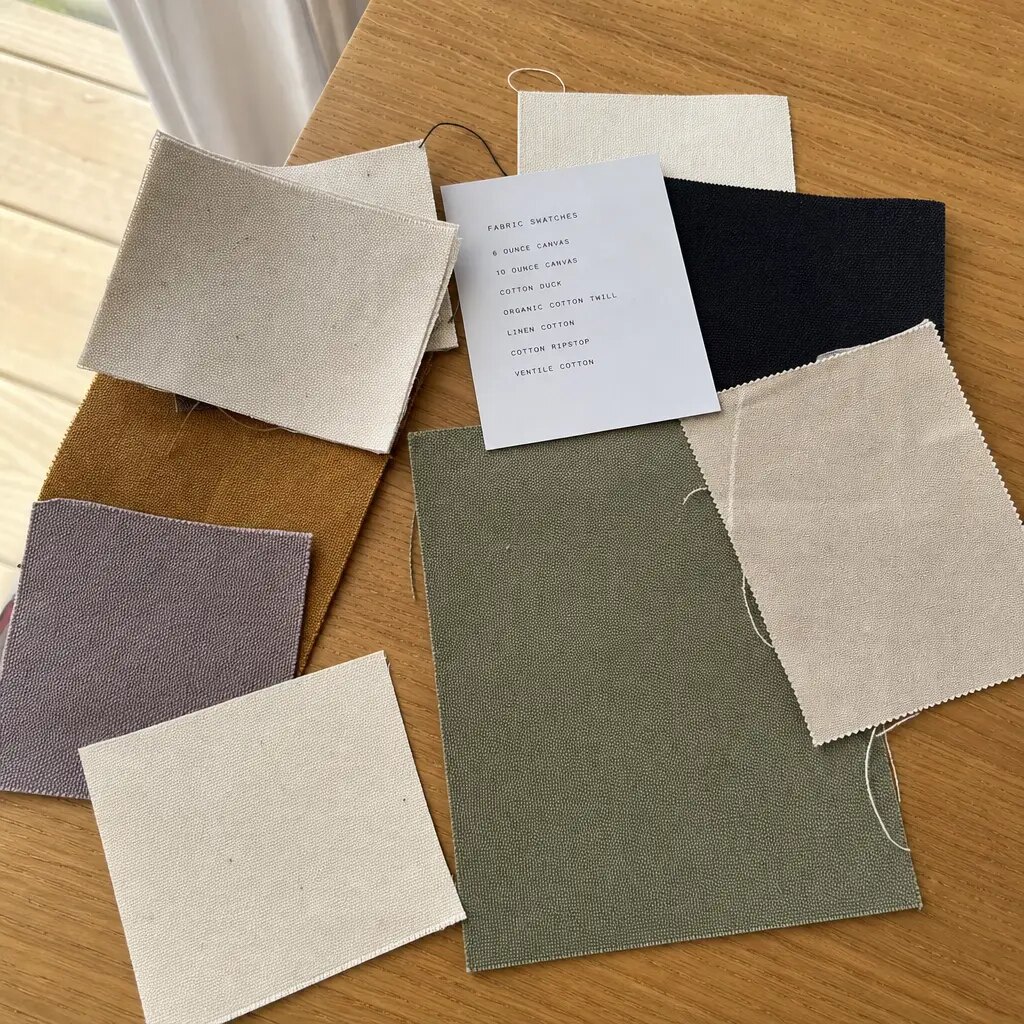
Fabric is the first technical decision because it affects cost, strength, appearance, print performance, folding, carton volume, and lead time. Lightweight organic cotton around 140-150 GSM can work for low-load promotional use, mailers, or short event programs, but it often feels too soft for a sellable apparel accessory. A 180-220 GSM fabric usually gives more body and stronger perceived value. Heavier canvas can look premium and support stronger handles, but it increases material cost, freight weight, cutting resistance, sewing time, and sometimes MOQ.
Do not ask only for an organic cotton tote. State the intended use and the target fabric range. Natural unbleached cotton may show seed specks, nep, and tonal variation. That texture can suit an eco brand aesthetic, but it can also reduce logo contrast. Bleached fabric gives a cleaner print ground but changes the look and may involve additional processing. Dyed fabric adds lab dip approval, shade tolerance, and dye-lot risk. Washed fabric may improve hand feel while changing dimensions and shrinkage expectations.
Documentation belongs in the fabric conversation, not after bulk production. Some buyers only need a supplier declaration for organic cotton content. Others need certification scope documents, transaction evidence, or customer-specific compliance files. A supplier cannot price or schedule correctly if the documentation requirement appears after cutting starts. If the tote will carry an organic claim in retail, align the claim language, documentation, and chain-of-custody expectation before deposit.
- Use 140-150 GSM only when lightweight hand feel and lower load capacity are acceptable.
- Consider 180-220 GSM for retail-ready totes needing body, durability, and cleaner print coverage.
- Confirm whether the fabric is natural, bleached, dyed, washed, unwashed, or custom finished.
- State the exact organic cotton documentation needed before quote approval.
Specify construction in measurable terms
Construction decides whether a tote feels like a low-cost giveaway or a retail-capable accessory. Finished width, height, gusset depth, handle width, handle drop, seam allowance, stitch density, thread type, and reinforcement all affect usability. A tote may look fine flat but sit poorly on the shoulder if the handle drop is too short. It may carry a folded tee but struggle with denim, catalogs, or sample kits if the handle attachment is weak.
The RFQ should state intended load and use case. A light event handout, apparel purchase bag, wholesale sample tote, and sellable accessory do not need the same construction. Ask the factory to recommend reinforcement for the use case, then require the method in writing. Options may include box stitching, cross stitching, bar tacks, folded handle ends, wider seam allowance, stronger thread, or heavier fabric. The best choice depends on the factory setup and the buyer's target cost.
Measurement method matters more than buyers expect. Finished dimensions should be measured flat after sewing and pressing, not from cut panels. Handle drop should be measured from the top edge of the bag to the inside top of the handle when laid flat. If gussets are included, define whether width is measured with the bag flattened or opened. For repeat orders, keep a gold-seal sample and a signed measurement sheet so the next lot is judged by an agreed standard rather than memory.
- Define width, height, gusset, handle width, handle drop, seam allowance, stitch density, and reinforcement.
- State the expected use: giveaway, apparel purchase bag, event kit, wholesale sample carrier, or retail accessory.
- Agree on measurement method and tolerances before cutting starts.
- Keep a physical approved sample for reorders and inspections.
Choose decoration by risk, not habit
Decoration often becomes the critical path because it touches artwork, material compatibility, setup, curing, inspection, and rework. Screen print is efficient for simple one- or two-color logos and repeatable bulk runs. Water-based printing can keep a softer hand on cotton, but the supplier must control ink deposit, drying, curing, opacity, and rub performance. Embroidery can feel premium on heavier cloth, yet it can pucker lightweight panels and slow output. Heat transfer may suit short runs, but it should be checked for adhesion, cracking, edge lift, hand feel, and performance on textured cotton.
The right decoration depends on the tote's commercial role. A giveaway bag may accept wider print tolerance and a simpler finish. A sellable accessory photographed with an apparel collection needs cleaner edges, stronger opacity, consistent placement, and better folding behavior. If the logo sits near a gusset, crosses a seam, uses fine lines, or depends on precise brand color, the supplier should confirm feasibility before issuing a final quote.
Artwork files should remove guesswork. Provide editable vector art where possible, final print size, placement from fixed reference points, number of colors, side count, Pantone or approved physical color target, and any acceptable variation. Placement should not be described only as centered. For repeat orders, measure from top edge, side seam, gusset edge, or center line and include the tolerance in millimeters or centimeters.
- Use screen print for stable bulk logos with limited color count and clear placement.
- Use embroidery mainly for smaller logos, heavier cloth, or premium programs with enough time for sampling.
- Test heat transfer, specialty ink, and fine-line artwork before retail approval.
- Require print strike-offs for sensitive colors, textured cloth, tight registration, or new suppliers.
Read MOQ as a clue, not just a barrier
MOQ is not only a finished bag quantity. It can be driven by fabric minimums, dye-lot minimums, cutting efficiency, print setup, embroidery setup, label production, packing materials, carton handling, or export documentation. A standard natural tote with one print color may support a low MOQ because the factory can use familiar fabric and fixtures. A custom-dyed gusseted tote with woven labels, two-sided print, paper bands, barcodes, and inner cartons may require a higher quantity to run efficiently.
Ask the supplier what drives the MOQ. If fabric is the constraint, changing the bag size may not help much, but accepting a stocked fabric might. If woven labels are the constraint, a printed label or no label may reduce time. If print setup is the constraint, reducing colors or locations may matter more than reducing bag dimensions. This conversation turns MOQ from a wall into a sourcing decision.
Low MOQ can be a smart way for emerging eco apparel brands to test a tote before scaling. The buyer should still protect retail-critical details. Do not relax print placement, handle strength, dimensions, or packing presentation if the tote will be sold, photographed, or used as part of a customer-facing launch. A first order often becomes the standard for replenishment, so weak controls at small volume create confusion later.
- Ask whether MOQ is driven by fabric, dyeing, cutting, print setup, labels, packing, or cartons.
- Compare unit price with setup fees, sample fees, packing cost, inspection cost, and landed freight.
- Remove optional custom features before compromising quality requirements.
- Set acceptable shipped quantity variance, including underage and overage rules, before production.
Build approval gates that prove bulk production
A sample should prove the production method, not only the design idea. Many tote problems begin when a buyer approves a handmade sample made from available cloth, then bulk production uses a different fabric lot, different sewing operators, different decoration setup, or different packing method. The sample may look good, but it has not tested the real risk.
A reliable approval flow may include fabric swatch, lab dip for dyed fabric, artwork proof, print strike-off, construction sample, packing mockup, and pre-production sample. Not every order needs every stage. A repeat bulk order with a known factory may be simple. A new supplier, new fabric, new print method, retail launch, or tight deadline should use more gates. The pre-production sample should be made with intended bulk fabric, trims, decoration method, and packing format whenever possible.
Approval records should be measurable. Write accepted dimensions, handle drop, GSM range, shade range, print size, print placement, label position, stitch details, folding method, and carton pack on the approval. Photos are useful, but they should support written tolerances. If the tote is retail-facing, also check how it folds, whether the print marks or cracks on fold lines, and whether barcode or hangtag data remains readable after packing.
- Approve fabric, construction, decoration, labels, and packing separately when risk is high.
- Use a pre-production sample from the actual bulk setup for new or retail-facing programs.
- Record tolerances and measurement points on the approval sheet.
- Re-sample when GSM, shade, print method, handle construction, labels, or packing changes.
Plan QC before defects appear
Quality control for organic cotton totes should be planned before bulk cutting, not negotiated after defects appear. The inspection plan should cover incoming fabric, cutting accuracy, seam quality, handle attachment, decoration, labels, packing, and carton marks. A practical approach includes incoming fabric inspection, first-piece review after sewing setup, inline checks during production, decoration checks after curing, packing review, and final random inspection before shipment release.
Tolerances should be written in buyer-friendly terms. For example, the approved spec might allow limited variance on width, height, gusset, and handle drop, while requiring print placement within a tighter range from fixed points. GSM should be controlled as a range, not a single number, because normal fabric production has variation. Shade should be judged against a physical swatch or lab dip under consistent light, not against a screen image.
Handle strength deserves special attention. The buyer should define the intended load or ask the supplier to propose a load check, then approve it in writing. A simple pull or hanging test can reveal weak back-tacks, thread breaks, seam slippage, or tearing around the handle base. For decoration, inspect opacity, edge definition, registration, rub resistance, curing, embroidery puckering, loose threads, and backing visibility. For packing, verify counts, barcodes, carton marks, and mixed-SKU rules before cartons leave the factory.
- Set incoming, inline, decoration, packing, and final inspection checkpoints.
- Use physical approved samples and written tolerances as the inspection standard.
- Check handle strength against intended use, not only visual stitching.
- Define rework, sorting, remake, discount, and shipment hold rules before production.
Do not leave packing until the end
Packing affects cost, labor, carton volume, sustainability positioning, warehouse receiving, and lead time. Bulk packing is efficient and uses less material, but totes may arrive wrinkled and need handling at destination. Individual polybags protect presentation but add plastic, labor, volume, and disposal concerns. Paper bands, hangtags, insert cards, and barcode stickers can support retail presentation, but they require final artwork, SKU data, and placement approval early enough for production.
Specify how the tote will move through the business. A distribution center may need fixed units per carton, inner packs, scannable barcode placement, carton dimensions, gross weight, net weight, carton marks, and advance shipment data. Boutique retail may need a clean fold, visible hangtag, and minimal creasing. A tote packed with apparel may need a fold size that fits a gift box, mailer, or warehouse kit. If these details are missing, the supplier will quote a standard pack that may not fit the buyer's operation.
Carton density is a real QC issue. Overpacked cartons can crush folds, create hard creases, distort handles, or cause ink transfer if curing is not stable. Underpacked cartons can shift during transit and cause mixed counts or damaged corners. Ask the supplier to confirm carton dimensions, units per carton, gross weight, net weight, and pallet pattern if needed. Carton mark accuracy should be part of final inspection because perfect totes in mislabeled cartons still delay receiving.
- Specify folding, bulk pack, individual pack, paper band, hangtag, barcode, inner pack, master carton, and carton marks in the RFQ.
- Ask for carton dimensions, units per carton, gross weight, net weight, and pallet requirements.
- Check packing materials against both sustainability goals and retail presentation needs.
- Include barcode scan, carton count, SKU, PO, and destination checks in final QC.
Protect the schedule after PO release
After the purchase order is released, procurement work shifts from sourcing to schedule control. The supplier should provide milestone dates for fabric readiness, trim arrival, sample approval, cutting, sewing, decoration, packing, final inspection, and shipment handover. Ask for updates at the points where the schedule can still be corrected, not only when the goods are finished.
Late buyer inputs are one of the easiest ways to lose time. Artwork revisions after screen setup, barcode files after packing begins, carton mark changes after cartons are printed, or label copy changes after labels are produced can all create rework. Set written cutoffs for artwork, size, color, trim, packing, and shipping instructions. If a change is unavoidable, ask the supplier to quote both cost and calendar impact before approving it.
For launch-critical orders, final inspection should happen with enough time for sorting or rework. A shipment inspected the day before vessel closing has almost no recovery room. If freight timing is tight, decide in advance who can approve shipment, who can authorize partial shipment, and whether any shortfall can be filled by air or later replenishment. The point is not to plan for failure. It is to protect the launch while there is still time to act.
- Request milestone updates tied to fabric, trims, samples, cutting, sewing, decoration, packing, inspection, and handover.
- Set written cutoffs for artwork, labels, barcodes, carton marks, packing, and shipping instructions.
- Schedule inspection early enough to allow sorting or rework before shipment.
- Agree on escalation rules for partial shipment, remake, air freight, or launch quantity prioritization.
Specification comparison for buyers
| Sourcing route | Typical lead-time strength | Best procurement fit | Buyer risk to check |
|---|---|---|---|
| Direct factory order | Strongest control when cutting, sewing, decoration, packing, and inspection sit with one accountable production site. | Retail tote programs, gift-with-purchase launches, and repeat seasonal orders where GSM, handle drop, print placement, carton packing, and QC records must stay consistent. | Confirm which processes are truly in-house. If printing, embroidery, label production, or packing is subcontracted, require written responsibility for defects, rework days, inspection release, and schedule recovery. |
| Factory using nominated fabric mill | Better repeatability when the buyer needs a specific organic cotton fabric, shade, weave, finish, or documentation package. | Brands with customer compliance requirements, replenishment programs, or multi-market launches using the same cloth specification. | Mill booking can add days or weeks. Ask whether greige fabric is reserved, when dyeing or finishing is scheduled, and what tolerance applies to GSM, shade, shrinkage, and lot-to-lot variation. |
| Trading company bundle | Can simplify communication across fabric, sewing, printing, export paperwork, and logistics when the buyer has limited sourcing bandwidth. | Lean procurement teams buying totes as one part of a larger apparel, trim, packaging, or merchandise program. | Ask for the actual production sites, inspection authority, sample approval chain, and who pays for sorting, remaking, discounting, or air freight if a subcontracted step fails. |
| Domestic decorator on imported blanks | Fast when suitable blank inventory is already available and decoration capacity is open. | Small runs, event programs, internal campaigns, staff kits, or promotional drops where standard size and construction are acceptable. | Blank lots may vary. Confirm inventory hold, dimensions, handle length, fabric weight tolerance, shade, shrinkage, print compatibility, and reorder availability before approval. |
| Nearshore cut-and-sew supplier | Reduces transit exposure and may improve response time for late artwork, packing changes, or replenishment demand. | Urgent launches, smaller retail tests, regional programs, and brands prioritizing schedule certainty over lowest unit price. | Verify organic cotton supply depth, local finishing capacity, certification documentation, and whether repeat orders can use the same cloth without substitution. |
| Split route: blank tote plus local print shop | Allows sewing to begin before final artwork is locked, which can help when design approval is the slowest item. | Buyers able to manage two vendors and separate construction approval from decoration approval without losing ownership of the schedule. | Coordinate carton quantities, spoilage allowance, delivery appointments, inspection responsibility, print curing, and whether the decorator can handle seams, gussets, and textured cotton. |
| Stock tote from distributor | Shortest route when the buyer accepts available size, color, construction, and documentation. | Giveaways, last-minute marketing needs, internal packaging trials, and non-retail programs. | Stock can sell through before approval. Confirm lot reservation, organic cotton claim support, reorder continuity, carton count, and whether the approved sample matches the reserved lot. |
| Fully custom low-MOQ factory | Allows custom size, gusset, handles, print, labels, and packing at smaller quantities, but with tighter tradeoffs. | Emerging eco apparel brands testing a sellable accessory before scaling into replenishment. | Low MOQ may mean higher unit cost, limited fabric choices, manual handling, extra sample rounds, and wider production variance. Confirm tolerances before treating it as retail-ready. |
| Sourcing agent with factory network | Useful when totes must coordinate with apparel, trims, packaging, cartons, and export documents across multiple suppliers. | Complex launch calendars where the buyer wants one coordinator but still needs factory-level detail. | Require factory names, inspection rights, documentation flow, production responsibility, and written rules for chargebacks, remakes, and schedule recovery. |
Buyer checklist before sampling
- Define finished width, height, gusset depth, handle width, handle drop, seam allowance, stitch type, reinforcement, and fabric GSM range before requesting quotes.
- State whether the organic cotton claim applies to fiber content only, the fabric, the finished tote, or a documented chain-of-custody package required by your customer.
- Specify fabric construction in buyer language: plain weave, canvas, drill, twill, natural, bleached, dyed, washed, unwashed, preshrunk, or unfinished where relevant.
- Choose decoration early: screen print, water-based print, pigment print, embroidery, woven label, heat transfer, digital print, or combined print plus label.
- Provide artwork with final print size, placement from fixed reference points, Pantone or approved color target, number of colors, side count, and editable vector files when possible.
- Separate sample timing into material swatch, lab dip or shade approval if dyed, artwork proof, print strike-off, construction sample, packing mockup, and pre-production sample.
- Ask when the quoted lead time starts: after deposit, purchase order, fabric booking, artwork approval, label approval, packing approval, or pre-production sample approval.
- Request written tolerances for finished dimensions, handle drop, GSM, fabric shade, print placement, print registration, stitch density, carton quantity, and barcode placement.
- Confirm whether the supplier has finished organic cotton fabric in stock or must purchase greige fabric, bleach, dye, finish, relax, inspect, and cut it for your order.
- Specify packing in the RFQ: folding method, bulk pack, individual bag, paper band, hangtag, insert card, barcode sticker, inner carton, master carton, carton marks, and pallet requirements.
Factory quote questions to send
- What exact fabric are you quoting: organic cotton content, certification basis, GSM range, weave, yarn count if available, finish, color, shrinkage expectation, and whether it is greige, natural, bleached, dyed, washed, or unwashed?
- Is the fabric in stock and reserved for our order, or does the lead time include greige purchase, knitting or weaving if applicable, bleaching, dyeing, finishing, relaxation, and fabric inspection?
- What finished measurement tolerances are included for tote width, height, gusset, handle width, handle drop, pocket size if any, and print or label placement?
- Which steps are completed in your own facility and which are subcontracted: cutting, sewing, screen making, printing, embroidery, woven label production, trimming, pressing, packing, carton marking, inspection, and export paperwork?
- What is the MOQ for the finished bag, and which component drives it: fabric, dye lot, cutting table, print setup, embroidery setup, label production, paper packaging, or carton packing?
- What decoration method are you quoting, what setup charge applies per color and location, and what artwork format do you need to avoid prepress delays?
- How many calendar days are required for swatch approval, lab dip if dyed, print strike-off, construction sample, pre-production sample, bulk cutting, sewing, decoration, packing, final inspection, and shipment handover?
- What exact event starts bulk lead time: deposit received, PO confirmed, fabric booked, artwork approved, labels approved, all trims in-house, pre-production sample approved, or inspection standard signed off?
- What QC standard will you use for dimensions, fabric defects, skipped stitches, loose threads, handle strength, print curing, rub resistance, embroidery puckering, barcode readability, and carton count?
- How do you control print opacity, curing temperature or time, wash or rub performance where required, edge definition, registration, and ink hand feel on natural organic cotton with seed specks or uneven texture?
Quality-control points to confirm
- Fabric GSM should be checked by lot against an agreed tolerance, such as a stated range rather than a single nominal value, because hand feel, drape, strength, print opacity, and carton weight change quickly on lighter cotton cloth.
- Fabric shade should be compared under consistent lighting against an approved physical swatch or lab dip. Natural cotton may show seed specks and tonal variation, but the buyer should still define what is commercially acceptable and what becomes a defect.
- Finished dimensions should be measured flat after sewing, pressing, and relaxation. Width, height, gusset, handle width, and handle drop can differ from cut-panel measurements because cotton moves during sewing and finishing.
- Common tolerances should be agreed before production. Many buyers use approximately plus or minus 0.5 cm to 1 cm for small dimensions and plus or minus 1 cm to 2 cm for larger tote dimensions, but the correct range depends on construction and factory capability.
- Seam allowance, stitch density, thread trimming, and back-tack security should be inspected at side seams, bottom corners, handle attachment points, pocket edges, label attachment, and gusset stress points.
- Handle attachment should pass a load check suitable for the intended use, with no skipped stitches, broken threads, loose back-tacks, seam slippage, or tearing around the handle base. The agreed test weight and hold time should be written into the QC plan.
- Bottom gusset symmetry should be checked so the tote folds, stands, and packs evenly. Twisted bottoms and uneven corners create poor retail presentation even when the bag technically holds weight.
- Print placement should be measured from fixed reference points such as top edge, side seam, gusset edge, or center line. Visual approval alone is not reliable enough for repeat retail orders.
- Print registration, edge definition, ink coverage, rub resistance, curing, and hand feel should be inspected on the actual bulk cloth color, especially for water-based ink on natural, textured, or undyed organic cotton.
- Embroidery should be checked for puckering, backing visibility, loose threads, thread shade, stitch density, distortion of the tote panel, and whether the finished panel still folds cleanly for packing.