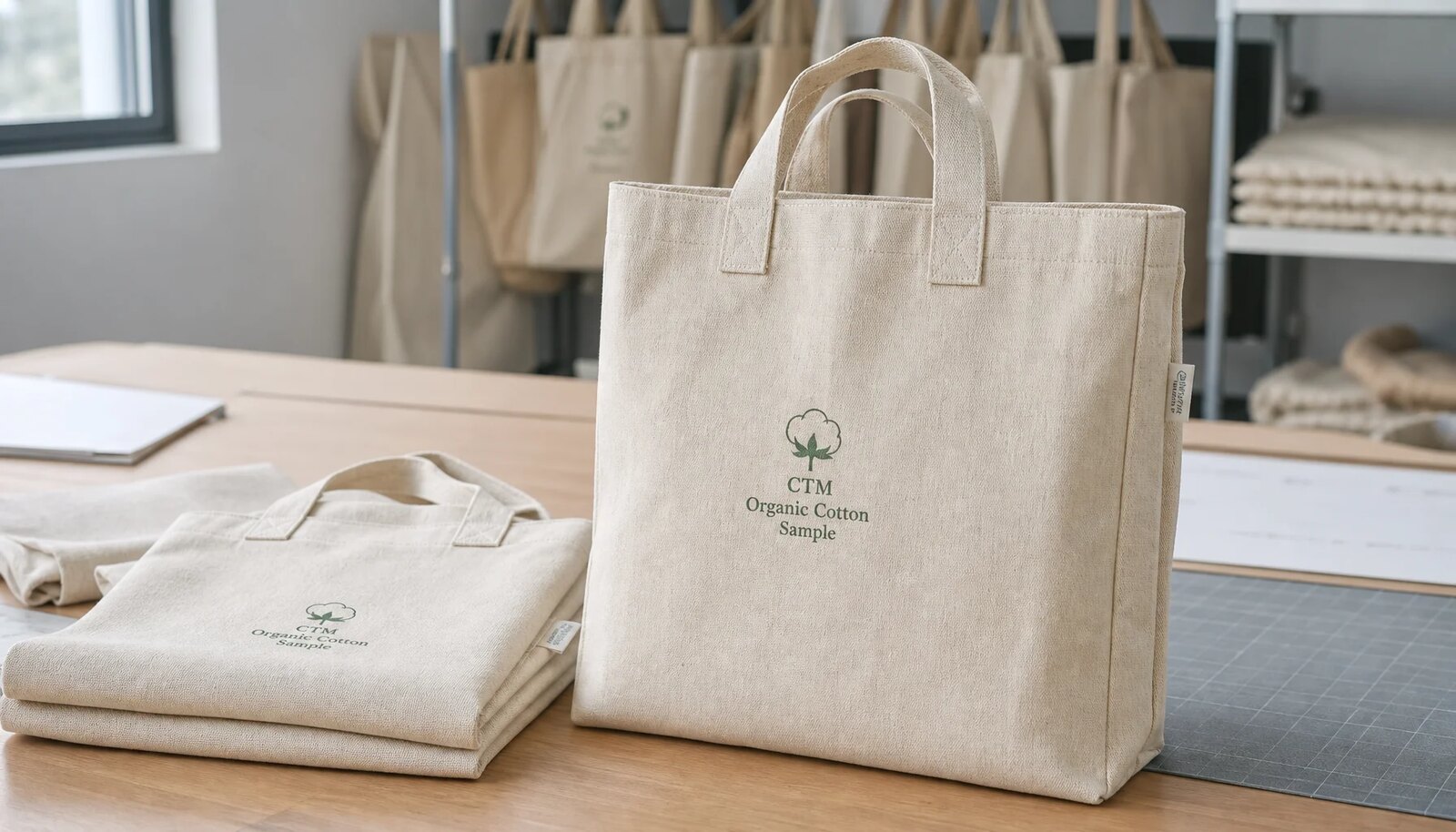
Start With the Hotel Retail Use Case
Organic cotton totes for hotel retail are not one universal product. A spa tote sold beside robes, a boutique hotel gift shop bag, a room amenity tote, a conference welcome bag, and a distributor resale SKU can all look similar in a catalog. In production, they need different fabric weights, handle drops, gussets, decoration methods, labels, and packing. If the RFQ only says organic cotton tote with logo, suppliers will usually price the easiest available construction, not the one that fits the hotel’s actual use.
Start with the selling environment and the contents. A gift shop tote may need a barcode, neat folding, a hangtag, and a front panel that looks good on a shelf. A spa bundle may need a wider bottom gusset for boxed skincare, slippers, towels, or bottled amenities. A resort welcome tote may need stronger handles because guests carry beach items, books, water bottles, and damp towels. An event tote may need low carton volume and a firm delivery date more than a premium handfeel.
A strong internal brief keeps quotes comparable. Include whether the bag is sold, gifted, bundled, or used as packaging. Add the expected retail price position, the items it must carry, the way it will be displayed, and whether receiving is handled by one property, several hotels, or a distributor warehouse. This use note should travel with the technical spec, artwork, quantity breaks, and documentation requirements.
For wholesale buying, the main question is not simply whether the bag uses organic cotton. The buyer must define the level of retail finish. A low-cost amenity bag can tolerate simpler packing and a softer structure. A paid retail tote must survive normal guest handling, look presentable when unpacked, scan correctly at checkout, and support the brand’s sustainability language without making claims the documentation cannot back up.
- Gift shop resale: prioritize handfeel, clean stitching, barcode accuracy, hangtag quality, and low-crease packing.
- Room amenity: prioritize compact cartons, simple branding, predictable replenishment, and controlled unit cost.
- Spa or resort bundle: prioritize gusset depth, handle comfort, reinforcement, and capacity for heavier contents.
- Event or conference use: prioritize sample speed, logo placement, carton sorting, and deadline reliability.
- Distributor program: prioritize SKU control, carton labeling, repeatable fabric, and reorder reference consistency.
Specify Fabric Weight and Construction Precisely
For many hotel retail programs, 180-220 GSM finished organic cotton is the practical starting range. It feels more substantial than thin promotional cotton, folds without excessive bulk, and usually accepts screen printing cleanly. A 140-160 GSM tote may work for lightweight amenity use, but it can look transparent under retail lighting and may not support a premium resort, spa, or boutique hotel position. A 240-280 GSM tote gives more structure, but it increases fabric consumption, carton weight, shipping volume, drying time after printing, and sometimes sewing difficulty.
Do not rely on catalog phrases such as heavy cotton, cotton canvas, or premium tote. Ask for finished GSM. Greige GSM is measured before finishing. Finished GSM is measured after washing, dyeing, calendaring, softening, or other treatment. Two factories can both quote 200 GSM and deliver different handfeel, shrinkage, and finished weight. A good RFQ asks for finished GSM, fabric construction, finishing process, and a sample swatch before bulk cutting.
Construction changes the look and the quote. Plain-weave cotton is common for natural totes and prints cleanly. Cotton canvas or duck-style constructions feel more structured, but they can cost more and create bulkier cartons. Washed cotton gives a softer casual look, though it can shift dimensions and shade. Twill may suit certain premium programs, but it changes texture, print edge behavior, and cost. Use these terms carefully and ask the supplier to name the weave in the quote.
Natural organic cotton has visible character. Seed flecks, small slubs, and cream-to-beige shade movement may support a natural brand story. They can also become defects if the hotel expects a clean, uniform background. A buyer sourcing for a luxury room, retail website photography, or white-linen spa setting should approve shade range and fleck tolerance before production. For dyed cotton, add lab dip approval, dyeing MOQ, shade banding checks, and colorfastness expectations that fit the intended use.
- 140-160 GSM: lower cost and lighter cartons, suitable for light amenity or event use, not ideal for premium paid retail.
- 180-220 GSM: balanced range for hotel gift shops, spa retail, resort boutiques, and repeat wholesale orders.
- 240-280 GSM: more structured and premium, but higher landed cost, higher CBM, and more crease-management risk.
- Natural cotton: approve shade, flecks, slubs, and stains separately because natural variation is not the same as poor quality.
- Dyed cotton: require lab dip, bulk shade approval, and colorfastness expectations before committing to delivery dates.
Define Dimensions, Handles, and Load Expectations
The lowest tote quote often hides construction savings: narrower handles, shorter handle drop, smaller seam allowance, lighter thread, fewer stitches, no reinforcement, or a top hem that looks clean but lacks strength. In hotel retail, these shortcuts show up quickly because guests use the bag beyond the purchase moment. The first failure point is usually the handle attachment, side seam, or gusset corner rather than the middle of the cotton panel.
A proper specification should list finished width, finished height, gusset depth, top hem width, handle width, handle drop, reinforcement method, seam type, thread color, and tolerance. If the bag must sit comfortably on the shoulder, handle drop matters more than total handle length. A handle drop around 25-30 cm is often used for shoulder-carry totes, while shorter drops work better for hand-carry gift bags. The right choice depends on bag size, expected contents, and brand style.
Gussets should be chosen by what the bag must hold. A flat tote is efficient for documents, books, and light retail purchases. A bottom-gusset tote works better for boxed spa products, folded textiles, food items, and guest bundles. Side-and-bottom gussets add capacity and structure but require more fabric and sewing time. If the tote will carry bottles, towels, or boxed gifts, ask the supplier to load a pre-production sample with equivalent weight and volume before approval.
Define the measurement method. Gusseted bags can be measured flat, expanded, or by panel dimensions, and each method can produce a different result. The purchase order should state finished measurements after sewing and after any finishing process. For retail consistency, include tolerances. A useful starting point is plus or minus 0.5 cm for width and height, plus or minus 0.7 cm for gusset depth, and plus or minus 1.0 cm for handle drop. Structured packaging or tight shelf display may need tighter limits.
- Flat tote: lower cost, efficient packing, best for light retail, documents, and simple guest amenities.
- Bottom gusset: better capacity and presentation for spa products, folded textiles, bottled items, and gift sets.
- Side and bottom gusset: stronger capacity and structure, but more fabric, more sewing, and larger cartons.
- Handle width: 2.5-3.5 cm is a useful starting range for comfort, subject to design and fabric weight.
- Reinforcement: box stitch, cross stitch, or bar tack should be specified for hotel retail loads.
Match Decoration to Fabric, Artwork, and Brand Position
Water-based screen printing is usually the safest decoration route for organic cotton totes when the artwork uses one to three solid colors. It suits minimalist hotel branding, has a softer handfeel than heavier print effects, and can be economical for repeat orders after screen setup. On natural cotton, dark green, navy, charcoal, black, chocolate, rust, and similar colors often read clearly. Pale inks, white ink, metallic effects, very fine lines, and small reversed text need closer testing because cotton texture and natural flecks reduce opacity and edge sharpness.
Digital printing can work for full-color illustrations, gradients, or small mixed-artwork programs, but it needs a strike-off on the actual cotton surface. Pretreatment can affect shade, handfeel, and wash behavior. Embroidery can look premium for a small logo or initials, but it may pucker lighter fabric and is rarely ideal for large front-panel graphics. Heat transfer can reproduce detail, but buyers should test handfeel, edge lifting, cracking, and whether the finish still fits an organic cotton brand position.
Print quotes should be specific enough to compare. Ask the factory to price each print location, artwork size, number of colors, setup charge, screen charge, color-matching charge, strike-off charge, and pretreatment if needed. A front logo at 20 cm wide is not the same cost as a full-panel print. A one-color logo on one side is not comparable to a two-sided print with a woven label and hangtag. Separate decoration cost so assumptions do not disappear inside a vague unit price.
Approval should include position tolerances and simple performance checks. For front-panel graphics, plus or minus 3 mm from the approved position is a common starting point when the bag is laid flat, though seams and gussets may require looser tolerance. Review the strike-off for ink color, opacity, edge sharpness, registration, handfeel, tackiness, rub resistance, and transfer risk when bags are packed face-to-face.
- Screen print: best for solid logos, repeat orders, controlled cost, and natural hotel branding.
- Digital print: useful for full-color designs, but confirm pretreatment, handfeel, color accuracy, and curing.
- Embroidery: premium for small logos, not ideal for large artwork on lighter cotton panels.
- Woven label: useful for subtle branding, private label programs, and clean front-panel design.
- Heat transfer: test edge lifting, cracking, handfeel, and compatibility with the intended sustainability message.
Separate Stock Decoration From Custom Production
MOQ is not only a sales preference. It comes from fabric availability, cutting efficiency, print setup, sewing line changeover, label production, packing labor, inspection support, and documentation effort. A supplier may offer 100 pieces by decorating stock bags, but that is not the same as fully custom organic cotton production. If the buyer needs a selected GSM, custom size, special handle, woven label, barcode sticker, paper band, property sorting, and specific organic documentation, 500-1000 pieces per size or artwork is often a more realistic starting point.
Stock decoration can be the right route for a pilot order, urgent hotel opening, or small event. It can reduce lead time and sample complexity. The tradeoff is weaker control over GSM, shade, dimensions, handle length, seam strength, organic evidence, and repeat consistency. Custom production is better for multi-property programs, paid retail SKUs, and replenishment because the buyer can lock the fabric, construction, label positions, packing method, and carton marks.
Request price breaks that match the buying plan instead of asking only for the lowest MOQ. If 500, 1000, 3000, and 5000 pieces are realistic volumes, ask every supplier to quote those quantities using the same specification. Also ask what changes at each break: fabric purchase efficiency, print setup absorption, sewing line efficiency, packing labor, or freight carton optimization. MOQ then becomes a planning tool, not just a negotiation point.
Multiple hotel locations and artwork versions can change the economics. A 3000-piece order split into six property logos may behave like six smaller print lots. Separate labels, hangtags, barcodes, and carton marks create additional setup and inspection points. Provide the SKU matrix early so suppliers can price the actual complexity of the program rather than correcting assumptions after purchase order approval.
- Stock bag plus print: lower MOQ and faster lead time, but weaker control over GSM, shade, size, handle, and proof.
- Custom fabric and sewing: stronger repeat control, more specification freedom, but higher MOQ and longer lead time.
- Multiple logos: separate screens, setup fees, packing checks, and barcode verification may apply.
- Multi-property orders: carton sorting and destination marks can change packing labor and lead time.
- Reorders: keep an approved reference sample, fabric record, and artwork file to reduce drift between lots.
Control Organic Cotton Claims and Documentation
Organic cotton language needs careful handling in B2B procurement. A supplier description, a fabric document, a certification copy, and a transaction certificate do not provide the same level of evidence. Some hotel buyers only need a supplier declaration for internal sourcing files. Others need documentation that supports retail labeling, distributor compliance, or sustainability reporting. State the required proof before quoting because it can affect fabric route, MOQ, lead time, and cost.
Ask who controls the documentation: fabric mill, bag factory, trading company, stock-bag supplier, or decorator. Stock-bag decoration may support a general product claim but not transaction-level evidence for the specific order. Custom production through a controlled mill route may provide stronger documentation potential, but it may require higher fabric MOQ and longer preparation. Documentation questions should be answered before the order is placed, not after bulk goods are packed.
Organic claims should match product labeling. If the tote, hangtag, website, or retail description says organic cotton, the wording should align with the proof actually available. Avoid inflated copy that the supplier cannot support. If recycled paper bands, plastic-free packing, or low-impact inks are part of the story, document those claims separately. Organic cotton fabric does not automatically verify every sustainability statement around the finished tote.
For procurement files, attach a documentation checklist to the purchase order. Record the type of evidence required, the supplier responsible for providing it, the deadline, the name on the document, and whether it must match the invoice quantity. This is especially useful for distributor resale programs, where receiving or compliance teams may request documents after goods have already shipped.
- Supplier declaration: easier to obtain, but weaker than transaction-level evidence.
- Fabric document: useful for sourcing records, but confirm whether it applies to the order quantity.
- Certification copy: check scope, company name, validity period, and whether it covers the relevant activity.
- Transaction certificate: stronger order-specific evidence when applicable, but may affect route, MOQ, and timing.
- Retail claim wording: match hangtags, web copy, and sales language to the proof actually available.
Build Comparable Supplier Quotes
A useful wholesale tote quote should show more than one unit price. Organic cotton tote costs change when GSM, construction, finished size, gusset, handle drop, reinforcement, print color count, label type, packing method, carton quantity, documentation, and inspection support change. If one supplier includes barcode stickers and paper bands while another quotes loose bulk packing, the lower unit price may become more expensive after receiving, repacking, and store labor.
Use a structured quote sheet that separates fabric, sewing, decoration, trims, packing, sample fees, setup charges, documentation, and logistics assumptions. Even when a supplier does not disclose internal cost breakdowns, they should state what is included and excluded. Ask for carton count, carton dimensions, gross weight, net weight, and CBM so the freight forwarder can estimate landed cost. Fabric weight and packing compression can materially change freight cost for totes.
The quote should also define commercial assumptions. Include target Incoterm, delivery market, payment terms, inspection requirement, artwork approval date, sample approval date, and target shipment date. Ask suppliers to state lead time by stage: fabric preparation, lab dip if dyed, cutting, sewing, printing, drying or curing, labeling, packing, inspection, and export handover. A staged timeline is easier to manage than a short line saying 30 days after deposit.
Require written exclusions. Common exclusions include screen charges, repeat setup fees, Pantone matching, strike-offs, courier samples, hangtags, barcode stickers, inner bundles, plastic-free packing, carton sorting, documentation fees, inspection waiting time, and rework after buyer artwork changes. Stating exclusions early prevents disputes when the project moves from quote to purchase order.
- Quantity basis: quote 500, 1000, 3000, and 5000 pcs when relevant, with MOQ per design and colorway.
- Fabric basis: confirm finished GSM, construction, organic proof, shade, finishing, and shrinkage allowance.
- Decoration basis: state print method, print size, side count, color count, setup fees, and strike-off fees.
- Packing basis: compare loose bulk, bundles, paper bands, individual bags, hangtags, barcode stickers, and carton sorting.
- Logistics basis: request Incoterm, carton dimensions, gross weight, net weight, CBM, lead time, and document inclusions.
Use Sampling as a Specification Lock
Sampling is not just a logo check. It is where procurement locks finished size, fabric weight, shade, handle comfort, stitch quality, print handfeel, label position, barcode placement, and packing presentation. For hotel retail, the sample should be reviewed by procurement, brand, retail operations, and any distributor or property team responsible for receiving. A technically acceptable bag may still feel too promotional, too wrinkled, or too light for a paid retail item.
The strongest sequence is fabric swatch, lab dip if dyed, print strike-off, pre-production sample, and packing sample. If timing is tight, a supplier may combine steps, but the buyer should understand the added risk. The pre-production sample should use the same fabric batch planned for bulk whenever possible. If substitute fabric is used, the supplier should provide a written difference list covering GSM, shade, shrinkage, handfeel, and print behavior.
Sample approval should create an inspection reference, not just an email saying approved. Record finished measurements, handle drop, handle width, GSM, print size, print position, label placement, thread color, packing fold, and accepted shade variation. Photograph the approved sample from the front, back, inside seam, handle joint, bottom gusset, label area, and packed condition. Send this reference to the supplier’s QC team before production starts.
A basic fit-for-use test is worth doing. Load the tote with the expected retail contents or an equivalent weight and volume, then carry it by hand and shoulder if shoulder carry is intended. Check whether the handles twist, the print distorts, the gusset holds shape, and the seams show stress. This does not replace laboratory testing, but it catches many retail-use mismatches before bulk production.
- Fabric swatch: approve GSM, shade, texture, fleck level, slubs, and handfeel.
- Lab dip: approve dyed color before bulk fabric dyeing and define acceptable shade range.
- Print strike-off: approve ink color, edge sharpness, opacity, handfeel, curing, and transfer risk.
- Pre-production sample: approve finished dimensions, handle build, stitching, labels, and retail appearance.
- Packing sample: approve folding, banding, bagging, barcode position, carton marks, and crease risk.
Set Inspection Criteria Before Cutting
Quality control is much easier when acceptance criteria are agreed before fabric is cut. Cotton totes commonly create disputes over size tolerance, shade variation, crooked print, skipped stitches, stains, loose threads, label errors, barcode mistakes, and carton packing. These risks are predictable. Put the rules in the RFQ and purchase order so the factory, inspection team, and buyer judge the same details.
For paid hotel retail, appearance defects matter. A stain, off-center logo, wrinkled front panel, crooked label, or unreadable barcode can make a bag unsellable even if it still carries weight. Bulk inspection should include random measurements, fabric shade comparison, handle attachment review, seam and stitch checks, print rub or flex checks, label verification, packing count, carton marks, and carton condition. Match the inspection depth to order value, launch risk, and brand visibility.
Many buyers use general inspection principles such as AQL-based random sampling, but the important part is defining defect classes and acceptance rules. Critical defects may include unsafe contamination, wrong branding, or incorrect product identity. Major defects may include broken seams, torn fabric, severe stains, wrong labels, unreadable barcode, size outside tolerance, or print defects visible at normal viewing distance. Minor defects may include a small loose thread or slight crease if it does not affect saleability.
Suppliers should also know what rework is expected. Loose threads, incorrect folding, missing stickers, or minor packing errors may be fixable before shipment. Wrong fabric weight, wrong artwork, poor curing, severe shade mismatch, or weak handles after printing are harder to recover and can delay shipment. Build a realistic inspection and rework window into the schedule before vessel or air booking.
- Critical defects: unsafe contamination, wrong brand, wrong product, or non-compliant claim that prevents use.
- Major defects: broken seam, torn fabric, severe stain, wrong logo, wrong barcode, missing label, or size outside tolerance.
- Minor defects: small loose thread, slight crease, or minor shade variation within the approved range.
- Measurement checks: verify width, height, gusset, top hem, handle width, handle drop, and label position.
- Print checks: reject tacky ink, smudging, cracking, heavy registration errors, poor opacity, or visible transfer.
Plan Retail-Ready Packing and Receiving
Packing decisions affect landed cost, retail presentation, and store labor. Loose bulk packing is economical and uses less material, but hotel teams may need to fold, steam, label, or repack each unit before sale. Individual bags protect against dust and moisture, but they may conflict with plastic-reduction goals. Paper bands, recycled sleeves, or controlled bundles can work well if the print is fully dry, the fold is approved, and cartons are not overcompressed.
Carton size is a procurement decision, not only a warehouse detail. Organic cotton totes can crease sharply at the printed panel, handle fold, or gusset edge if cartons are overfilled. Overcompressed cartons may reduce freight volume but create poor retail presentation and extra destination labor. The packing specification should state pieces per inner bundle, pieces per carton, carton dimensions, gross weight limit, carton marks, SKU labels, and whether cartons are sorted by property, purchase order, or retail SKU.
Confirm receiving requirements before production starts. Some hotel groups or distributors require barcode stickers, country-of-origin labels, care labels, hangtags, master carton labels, pallet marks, carton numbering, or delivery splits by property. If these details arrive after bulk packing, the supplier may need to reopen cartons, relabel goods, and repack under time pressure. That creates delay and increases the risk of count errors.
Moisture control should not be overlooked. Cotton can absorb moisture during production, storage, or transit. Cartons should be dry and clean, and goods should not be packed while fabric, ink, or finishing is still damp. If the shipment route involves long ocean transit or humid conditions, ask the supplier how they manage carton dryness, container loading timing, and basic moisture-risk prevention. Look for practical controls, not broad promises.
- Flat bulk pack: lowest packing cost and efficient cartons, suitable when destination teams handle final presentation.
- Paper band: good plastic-reduction option for retail display, but approve band size, strength, artwork, and position.
- Individual bag: better dust and moisture protection, but confirm recycled, compostable, or plastic-free requirements.
- Carton marking: include PO, SKU, color, size, quantity, gross weight, net weight, carton number, and destination.
- Retail receiving: verify barcode readability, hangtag position, country-of-origin marking, count accuracy, and carton sorting.
Specification comparison for buyers
| Buying decision | Procurement specification to request | Best-fit hotel retail use | QC or quote risk to control |
|---|---|---|---|
| Fabric weight | 180-220 GSM finished organic cotton for most retail totes; state finished GSM, not only greige GSM | Gift shops, spa retail, resort boutiques, amenity sales, and distributor resale SKUs | Below 160 GSM can feel promotional; above 240 GSM adds fabric cost, carton weight, and CBM without automatically improving sell-through |
| Fabric construction | Plain-weave organic cotton, canvas, twill, or washed cotton as specified, with approved shade range and fleck tolerance | Natural-brand hotels, wellness properties, eco-positioned resorts, and spa programs | Natural cotton can vary from cream to beige; uncontrolled shrinkage can shift finished size, handle drop, and print placement |
| Finished dimensions | Finished width, height, gusset depth, top hem, handle width, and handle drop with tolerances | Any custom tote where capacity, shelf presentation, or shoulder carry matters | Quoting only W x H hides reduced capacity, short handles, narrow seams, or gussets that do not fit boxed retail items |
| Handle construction | Self-fabric handles, typically 2.5-3.5 cm wide, with box stitch, cross stitch, or bar tack reinforcement | Guests carrying towels, books, bottles, boxed amenities, or resort purchases | Thin handles and light reinforcement lower unit price but can create seam failure, discomfort, or retail complaints |
| Print method | Water-based screen print for 1-3 solid brand colors; approve a strike-off on the actual fabric | Minimalist hotel logos, resort graphics, spa branding, and repeat reorder programs | Digital print, white ink, metallic ink, and fine-line artwork need testing for opacity, handfeel, curing, and edge clarity |
| Organic documentation | Define proof before quoting: supplier declaration, fabric document, certification copy, scope certificate, or transaction certificate if applicable | ESG procurement files, private label resale, distributor compliance, and branded sustainability claims | Stock-bag decoration may not support transaction-level documentation even when the base bag is marketed as organic |
| MOQ route | Separate stock decoration from custom fabric, cutting, and sewing; request price breaks at 500, 1000, 3000, and 5000 pcs when relevant | Pilot hotel programs, multi-property retail rollouts, and replenishment planning | Very low MOQ usually means limited GSM, shade, handle, label, packing, and documentation control |
| Inspection level | Use an agreed random inspection plan, often based on general inspection principles such as AQL sampling, with buyer-defined defect classes | Paid retail totes, branded guest amenities, distributor orders, and high-visibility launches | If defect classes are not defined, stains, shade variation, crooked prints, skipped stitches, and packing creases become subjective disputes |
| Packing method | Flat packed in controlled bundles, paper-banded, individually bagged, or retail-tagged as specified by SKU | Gift shop shelves, spa counters, hotel-opening kits, and distributor receiving | Overcompressed cartons can crease panels, mark prints, crush handles, transfer ink, and create destination repacking cost |
Buyer checklist before sampling
- Define the tote’s commercial role first: gift shop resale, spa package, room amenity, conference welcome bag, loyalty gift, hotel-opening kit, or distributor resale SKU.
- List the exact contents the tote must hold, including boxed spa products, bottled amenities, towels, books, slippers, robes, paperwork, or retail purchases.
- Specify finished measurements in centimeters: width, height, gusset depth, top hem width, handle width, handle drop, seam allowance, and whether the bag must fold flat or stand when filled.
- State dimensional tolerances before quoting; useful starting points are plus or minus 0.5 cm for width and height, plus or minus 0.7 cm for gusset, and plus or minus 1.0 cm for handle drop unless the design needs tighter control.
- Identify the required organic cotton proof: supplier declaration, fabric mill document, certification copy, scope certificate, or transaction certificate if the program requires chain-of-custody evidence.
- Choose target finished GSM based on retail feel, expected load, print method, and freight budget; ask whether the quoted GSM is greige or finished after washing, dyeing, calendaring, or other finishing.
- Define fabric shade as natural, bleached, dyed, washed, or custom dyed; approve shade range, seed fleck level, slubs, and acceptable natural-cotton variation before bulk cutting.
- Provide artwork as vector files with Pantone, CMYK, or agreed color references, print dimensions, placement from edges, print side, and notes on soft hand, opacity, washed look, or premium finish.
- Specify handle construction: material, width, drop, reinforcement type, stitch density target, thread color, and expected carrying load for internal fit-for-use checks.
- List all retail components: woven label, care label, hangtag, barcode sticker, price sticker area, country-of-origin marking, paper band, individual bag, and property-specific carton mark.
Factory quote questions to send
- What exact finished fabric weight in GSM are you quoting, and how does it differ from greige weight before washing, dyeing, or finishing?
- Is the organic cotton fabric from stock material or newly produced for this order, and what document can support the organic cotton claim for the ordered quantity?
- What are the MOQ and price breaks per bag size, fabric color, print design, print colorway, label setup, and packing method at 500, 1000, 3000, and 5000 pcs?
- Which fabric construction are you quoting: plain weave, twill, canvas, washed canvas, or another construction, and what shrinkage allowance is used before cutting?
- What finished-size tolerances, stitch density, seam allowance, top hem width, handle reinforcement, and print placement tolerance will your QC team apply?
- Which print method do you recommend for our artwork on natural organic cotton, and what are the screen, setup, pretreatment, color-matching, or strike-off charges?
- Can the pre-production sample be made from the same fabric batch planned for bulk, and if not, what differences in GSM, shade, shrinkage, or handfeel should we expect?
- How will you control natural cotton shade variation, seed flecks, stains, slubs, fabric skew, loose threads, and shrinkage between sample approval and bulk production?
- What internal checks do you perform for handle strength, seam strength, print adhesion, print curing, barcode readability, packing count, and carton condition?
- How many cartons will the order produce, what are the carton dimensions, gross weight, net weight, and CBM, and how are bags protected from moisture, hard creasing, and ink transfer?
Quality-control points to confirm
- Finished size should be measured after sewing, finishing, pressing, and packing preparation; set tolerances before production, commonly plus or minus 0.5 cm for width and height and plus or minus 0.7 cm for gusset unless otherwise agreed.
- Fabric GSM should be verified by cutting and weighing a measured specimen from bulk fabric or finished goods, not judged only by handfeel, supplier description, or catalog name.
- Fabric shade should be compared against the approved swatch under consistent lighting, because natural organic cotton can range from cream to beige and may show seed flecks or slubs.
- Shrinkage risk should be controlled when totes are washed, dyed, steamed, pressed, or expected to be laundered; confirm whether finished dimensions are before or after any wash process.
- Handle attachment must match the approved reinforcement method and show no skipped stitches, loose threads, broken needle marks, seam slippage, fabric tearing, or weak bar tacks at the stress point.
- Stitch density, seam allowance, top hem width, corner finishing, and gusset alignment should match the approved sample, especially where capacity and load strength depend on clean construction.
- Print placement should remain within the agreed tolerance; for simple front-panel graphics, plus or minus 3 mm from the approved position is a common starting point when the bag is laid flat.
- Ink coverage should be even, with no pinholes, smears, tackiness, heavy hand patches, dye migration, cracking after flexing, or ink transfer caused by insufficient drying or curing.
- Print adhesion should be checked with a buyer-approved method such as rub, tape, flex, or wash-related checks where appropriate for the intended retail use.
- Labels, hangtags, barcode stickers, country-of-origin marks, care labels, and carton labels should match the purchase order, artwork file, SKU list, and destination receiving rules.