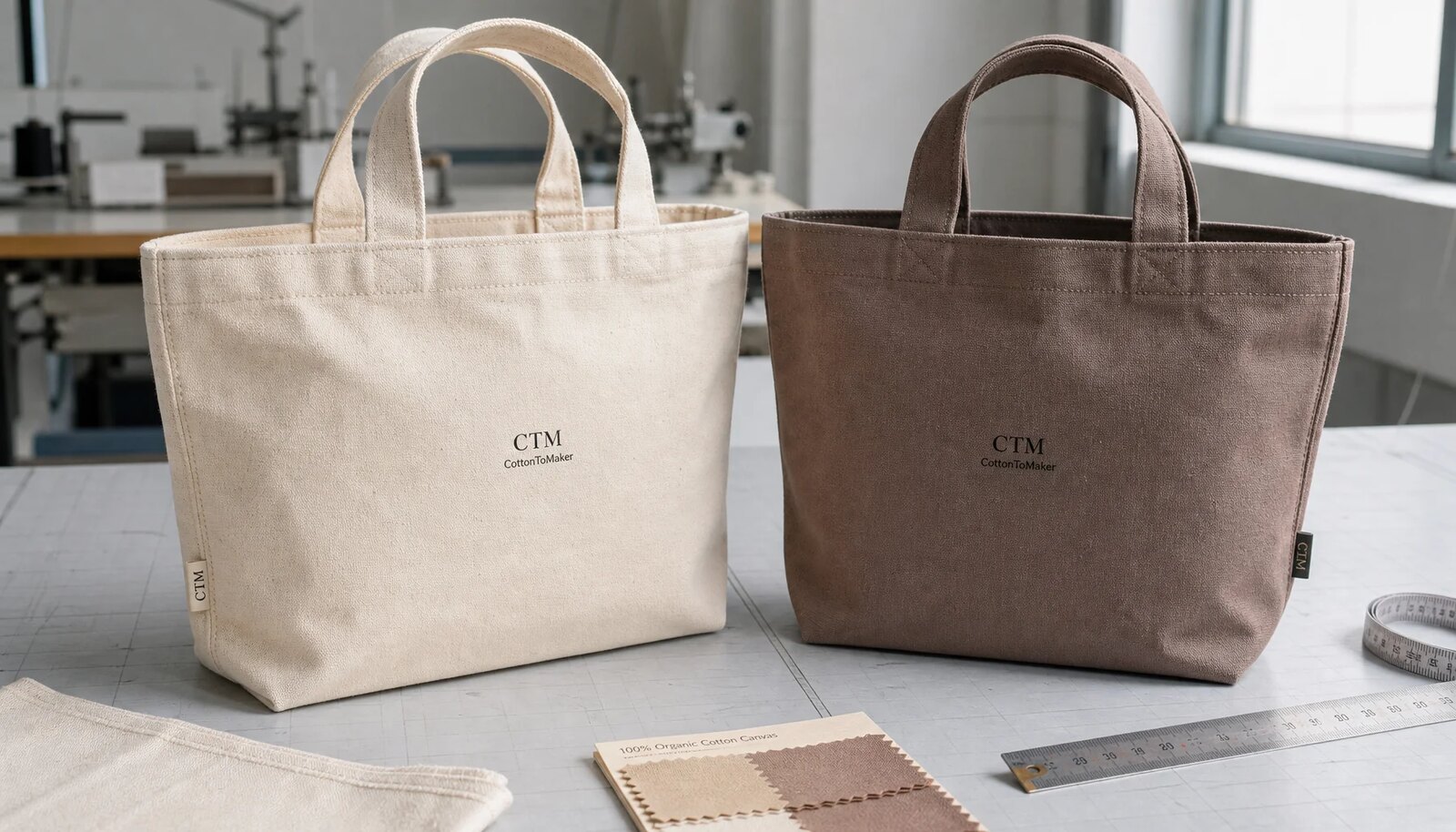
Start With the Retail Use, Not the Fabric Name
For hotel retail, an organic cotton tote is visible merchandise. It may sit beside linen apparel, spa products, resort gifts, destination souvenirs, books, bottled drinks, or premium welcome items. Guests will touch it, open it, carry it, and judge whether the price feels fair. That means the right material depends on more than a cotton description. It depends on selling environment, expected load, display method, target retail price, storage conditions, and how the bag will support the hotel’s brand position.
Many RFQs are too thin at the start. A request that says only "organic cotton tote bag with logo" leaves too much room for supplier interpretation. One factory may quote 8 oz cotton with basic overlocked seams. Another may quote 12 oz canvas with bound inner seams and individual packing. A third may include hangtags, barcodes, and export carton segregation. Those unit prices are not competing on the same product.
Before asking for price, procurement should lock the core specification: fabric weight, weave, color, bag dimensions, gusset, handle drop, print method, seam finish, label set, packing method, carton quantity, delivery term, and certification evidence. For hotel groups, the cleanest approach is often one standard tote body across properties, then controlled artwork, barcode, or hangtag variations by location.
- Gift shop resale usually needs 10-12 oz canvas, clean seams, reinforced handles, and retail-safe packing.
- Room amenity use can use lighter fabric if the tote carries only slippers, welcome cards, or small guest items.
- Spa and wellness retail often favors natural unbleached cotton, softer handfeel, and understated branding.
- Resort boutique totes should be tested with real merchandise such as apparel, sunscreen, books, or bottles.
- Distributor resale programs need stricter SKU, barcode, carton mark, and replenishment controls than one-time hotel events.
Choose Fabric Weight by Feel, Load, and Freight Impact
Fabric weight is the first spec most buyers notice because it changes the way the tote feels in hand. It also changes sewing cost, carton weight, cubic volume, and landed cost. For organic cotton totes for hotel retail, 10 oz to 12 oz canvas, roughly 280-340 GSM after finishing, is a practical default range. It feels substantial enough for paid retail, gives a stable surface for screen printing, and still packs more efficiently than very heavy canvas.
Lighter 6 oz to 8 oz cotton has a place. It can work for event handouts, low-cost amenity packaging, or light guest use where the bag is not positioned as premium merchandise. On a retail shelf, though, it may collapse, crease quickly, or feel closer to a promotional giveaway. Heavier 14 oz canvas can look and feel premium, but the tradeoffs are real: more fabric consumption, heavier cartons, higher CBM, slower sewing, stronger needles, and higher freight exposure.
A quote should state both oz and GSM when possible. It should also clarify whether the quoted weight is finished fabric weight, not greige or pre-finish weight. Dyeing, washing, softening, and calendaring can change the surface and the measured result. Ask for the tolerance in writing. A common commercial fabric-weight tolerance is about +/-5%, but if your retail program needs tighter control, confirm that the mill and sewing factory can hold it before issuing the PO.
- 6-8 oz: suitable for light amenity or event use, not ideal for paid premium retail.
- 10 oz: balanced entry retail option for hotel gift shops and wellness programs.
- 12 oz: stronger structure for resort boutiques, travel retail, and premium welcome packages.
- 14 oz and above: premium feel but higher material, sewing, carton, and freight exposure.
- Quote control: compare all suppliers using the same finished GSM, not only the same bag dimensions.
Control Natural, Bleached, Dyed, and Washed Cotton
Natural unbleached organic cotton is popular in hotel retail because it looks warm, simple, and lower-processing. It works especially well for resorts, spas, eco-led properties, and boutique hotels that want the bag to feel calm rather than glossy. Still, natural cotton is not an exact color standard. One production lot may look cream, another warmer, greyer, or more flecked. Approve a physical swatch and define the acceptable range before bulk cutting.
Bleached cotton gives a cleaner white ground and can make printed logos appear brighter. It also shows dust, fingerprints, carton rub, and handling marks more easily. If a hotel boutique wants a crisp white tote, packing cannot be an afterthought. Folded bulk packing may be too exposed if the bags will sit in storage, move through a humid route, or be handled by several distribution points before sale.
Dyed organic cotton gives stronger brand control for seasonal assortments, property colors, and darker retail stories. It also adds approval work. Buyers should request lab dip approval before sampling, bulk shade approval before cutting, and shade-lot segregation during production. For dark dyed canvas, light logos may need an underbase, extra print pass, higher-opacity ink, or a different decoration method.
Washed or softened finishes can make the tote feel better against the body, which matters for spa and resort programs. They also change dimensions, texture, and shade. If washing happens after sewing, tolerances must be based on the finished bag, not the cut panel. A washed tote can look relaxed and lifestyle-oriented; unwashed canvas usually looks sharper and more structured.
- Natural cotton: approve lot variation physically; do not describe it as exact white or exact cream.
- Bleached cotton: control dust, carton rub, and visible handling marks more tightly.
- Dyed cotton: require lab dip, bulk shade approval, crocking review, and shade lot control.
- Washed cotton: approve final dimensions and surface texture after washing, not before.
- Dark fabric: budget for opacity testing because the logo may need an underbase or extra ink layer.
Verify Organic Cotton Claims Before Label Approval
Material language matters in B2B procurement. "Natural cotton," "eco cotton," "recycled-looking cotton," and "organic style" do not mean certified organic cotton. If the hotel plans to market the tote as organic cotton in a gift shop, on a hangtag, in a room amenity description, or in a sustainability statement, the documentation needs to support that claim.
State the required evidence in the RFQ, not after the price is agreed. Depending on the buyer’s internal policy, acceptable documents may include a supplier scope certificate, transaction certificate, material declaration, invoice statement, or other chain-of-custody evidence. Ask which documents are included in the quotation and which require extra coordination, cost, or lead time.
Certification control also affects packaging copy. If a hangtag, care label, web listing, or invoice says organic cotton, the wording should match the documentation available and the buyer’s compliance rules. Do not approve a stronger claim than the paperwork supports. This is especially important for hotel groups and distributors selling through several properties or retail partners.
- Ask for the exact document type required by purchasing, legal, or sustainability teams.
- Confirm whether documentation covers fabric, finished bag production, or only a supplier facility scope.
- Make invoice, packing list, hangtag, and website wording consistent with the supported claim.
- Do not accept vague substitutes such as eco cotton when certified organic cotton is required.
- Keep documentation with the approved sample record for repeat orders and audits.
Specify Weave, Handfeel, and Surface Grade
GSM alone does not tell the whole story. Canvas, twill, plain weave, muslin, and sheeting can all be cotton, but they do not behave the same in a tote. Canvas is the usual default for hotel retail because it has body, holds shape, and gives a stable printing surface. Twill can feel softer and more refined, but its diagonal texture may change print sharpness and drape.
Handfeel is both a technical issue and a brand issue. A stiff canvas stands well on a retail table, yet it can feel rough on bare skin. A softened fabric feels more comfortable in a spa setting, but it may look less structured when displayed. Buyers should approve a physical swatch and final sample rather than relying on the fabric name. Two 320 GSM fabrics can feel quite different if yarn count, weave density, and finishing are different.
Surface quality should be written into the spec. Organic cotton canvas may show natural flecks or small slubs, and those details can be acceptable when they match the product concept. Large slubs, holes, oil stains, loom lines, dark contamination, needle damage, and mildew odor should be listed as rejectable defects. If the hotel wants a clean premium retail look, the approved sample should show the expected surface grade.
- Canvas: best default for structured retail totes and clear screen printing.
- Twill: useful for softer drape, but approve print edge quality on physical sample.
- Light plain cotton: better for amenity packaging than paid hotel retail.
- Surface grade: define acceptable flecks separately from holes, stains, oil marks, or heavy slubs.
- Handfeel approval: keep a signed swatch or sealed sample as the bulk production reference.
Engineer Construction for Real Guest Use
Two totes made from the same organic cotton fabric can perform very differently after sewing. Construction determines how the bag sits on a display shelf, how it carries hotel merchandise, and how it looks after repeated use. The purchase order should specify width, height, gusset, bottom style, top hem, inner seam finish, thread color, handle material, handle drop, and reinforcement method.
A flat tote is economical and packs efficiently. It can suit amenities, events, and lower-price retail. A side gusset or boxed bottom makes the bag more useful for folded apparel, boxed spa products, books, bottles, and local food gifts. Gussets add cutting and sewing time, but they often improve real guest usability more than a small increase in fabric weight.
Inside seam finishing affects perceived value as soon as the shopper opens the bag. Basic overlock may be acceptable for cost-sensitive programs. Bound seams or cleaner interior finishing give a more retail-ready impression and reduce the loose, raw look that can make a tote feel unfinished. Top hem width matters too because handles are attached through this area. A narrow or weak top hem can stretch, distort, or tear under load.
Handle length should match the intended carry style. A handle drop around 25-30 cm is usually practical for shoulder carry. Shorter handles create a hand-carry bag, which may be fine for small amenities but less useful for shopping. Reinforcement should be visible and consistent: box-x stitching, bar tacks, or another approved method should be measured and inspected.
- Common retail size: approximately 38 x 42 cm for a simple shopping tote, adjusted by use.
- Useful gusset: 8-12 cm for apparel, bottles, spa goods, books, or boxed gifts.
- Dimension tolerance: commonly around +/-1 cm for width and height when agreed in advance.
- Handle drop tolerance: commonly around +/-0.5-1 cm, measured after sewing and pressing.
- Reinforcement: box-x or bar tack stitching should be aligned, dense, and securely trimmed.
- Interior finish: bound seams improve presentation; overlock may suit lower-cost amenity programs.
Match Print Method to Fabric and Artwork
Branding decides whether the tote feels like hotel merchandise or a generic reusable bag. Water-based screen printing is usually the safest starting point for organic cotton totes with one to three solid colors. It gives a softer handfeel than many heavy ink systems and works well for hotel logos, destination line art, spa marks, and resort graphics.
Artwork details should be settled before suppliers quote. The RFQ should include vector artwork, print size, print side, print position, number of colors, Pantone references, and maximum acceptable deviation. Natural cotton can mute ink color. Textured canvas can soften edge sharpness. Dark dyed fabric can weaken opacity. These are sample-stage issues, not final-inspection surprises.
Transfers, digital print, and embroidery can be good choices for specific programs. Transfers can reproduce gradients and fine detail, but they need adhesion, edge-lifting, and fold-cracking tests. Digital print can support complex artwork or shorter runs, although shade control on natural fabric may be less predictable. Embroidery feels premium for small marks, but it can pucker lighter canvas or become costly for large filled artwork.
For hotel retail, print durability should reflect actual use. Unless the buyer specifies laundering, the tote may not need industrial wash performance. It should, however, resist normal rubbing, folding, handling, and shelf display. Review print opacity under realistic retail lighting, because factory photos can hide weak coverage and small placement drift.
- Screen print: best for solid logos, controlled cost, and medium to large runs.
- Transfer: useful for detail; test cracking, adhesion, and edge lifting after folding.
- Digital print: useful for complex art or shorter runs, with tighter sample approval needed.
- Embroidery: premium for small marks; avoid large dense fills on lighter fabric unless tested.
- Placement tolerance: set a measurable standard, often +/-3-5 mm for retail-facing print positions.
- Approval tests: include rub check, fold check, opacity review, registration check, and color comparison.
Build the RFQ Around MOQ, Splits, and Cost Drivers
MOQ for organic cotton totes is not only a factory preference. It is shaped by fabric availability, dyeing minimums, cutting efficiency, printing setup, sewing-line planning, packing material minimums, barcode versions, and carton-label segregation. A 1,200-piece order may be efficient with one artwork. The same quantity can become inefficient if it is split across twelve properties with different prints, hangtags, and destination cartons.
Separate fixed costs from variable costs. Fabric, cutting, and sewing usually scale with quantity. Screen charges, lab dips, strike-offs, sample fees, hangtag setup, barcode setup, and carton-mark changes may not. One supplier may bury those items in the unit price while another lists them separately. A quote template forces the assumptions into the open.
For hotel groups, a strong structure is one standardized bag body with controlled artwork splits. The same 12 oz natural canvas tote can support several properties, while each property receives its own logo, barcode, or hangtag. This protects fabric purchasing and sewing efficiency without removing brand variation. Ask for the minimum practical quantity per artwork and the charge for each additional screen or packing version.
Price breaks should be requested on the same product. If a lower price tier quietly changes from 12 oz to 10 oz, removes inner binding, shortens the handles, or switches individual packing to bulk packing, it is not a true price comparison. Cost-down options are useful, but they should be listed as alternatives to the base specification.
- Fabric MOQ: affected by organic cotton availability, weight, weave, color, and finishing.
- Dye MOQ: often separate from bag MOQ and may require lab dip and bulk shade approval.
- Print MOQ: affected by color count, print positions, screen setup, and artwork changes.
- Packing MOQ: affected by hangtags, paper bands, barcodes, individual bags, and carton marks.
- Price breaks: request 500, 1,000, 3,000, 5,000, and 10,000 pieces on the same spec.
- Quote comparison: list setup, sample, document, packing, inspection, and freight assumptions separately.
Approve Samples That Lock the Real Product
A hotel retail tote should not move to mass production from a digital mockup alone. The sample stage should confirm fabric handfeel, finished GSM, shrinkage behavior, print opacity, seam finish, handle comfort, label placement, odor, folding method, and retail presentation. Handle the sample like a guest would. Put it on the shoulder, place real merchandise inside, fold it, unfold it, inspect the inside seams, and view the print under normal store lighting.
Not all samples carry the same approval value. A salesman sample may show approximate construction using stock fabric. A strike-off shows artwork and ink behavior on the intended fabric. A pre-production sample should show the final product using bulk-intended fabric, final sewing, final print method, final labels, and final packing. Procurement should name which sample is being approved and what remains open.
The approval record should be measurable. Record width, height, gusset, top hem, handle length, handle drop, finished GSM, print size, print position, print color reference, seam finish, stitch type, label position, folding method, pieces per carton, and carton-mark format. A signed physical sample or sealed reference sample gives the factory QC team and the buyer’s receiving team the same benchmark.
Sampling should also test practical retail use. If the tote will be sold with a paper band, check whether the fold line crosses the logo. If it will hang on a fixture, check handle drop and hangtag position. If it will be packed into a welcome kit, check bulk, creasing, and whether the tote marks other items.
- Measure sample GSM and compare it with the quoted finished fabric specification.
- Load test handles using realistic retail contents such as books, bottles, apparel, or spa products.
- Check print after folding to identify cracking, pressure marks, and front-panel distortion.
- Approve hangtag, barcode, care label, side label, paper band, and carton label together.
- Keep one approved sample with the buyer, one with the factory, and one for final inspection when possible.
- Record open points clearly if fabric, artwork, labels, or packing are not final at first sample review.
Set Tolerances and QC Standards Before Bulk Production
Quality control for organic cotton hotel retail totes must be measurable. Instructions such as "good quality" or "same as sample" are too loose unless they are supported by tolerance tables, defect definitions, inspection photos, and a sealed reference sample. The PO should state what must be measured, what is acceptable, and which defects are critical.
Dimensional tolerances should reflect fabric behavior and sewing reality. For many cotton tote programs, width and height tolerance around +/-1 cm is commercially workable, while handle drop and print placement may need tighter control. If the tote is part of a premium retail line, the buyer can request stricter tolerances, but the factory must confirm feasibility before price and lead time are finalized.
QC should cover fabric, sewing, printing, labeling, packing, and carton checks. Inspectors should verify finished GSM, shade-lot separation, stains, oil marks, mildew odor, seam strength, stitch defects, handle reinforcement, print opacity, curing, rub resistance, folding, barcode accuracy, carton marks, and piece count. For mixed-property hotel orders, packing accuracy is a major quality issue because one wrong barcode or carton mark can create receiving and inventory problems.
Buyers may use AQL inspection or their own acceptance standard. Either way, the critical defect list should be clear. Mold, wet cartons, unapproved fabric substitution, wrong artwork, wrong barcode, major stains, weak handle attachment, and materially incorrect dimensions should normally be treated more seriously than minor thread trimming issues.
- Fabric checks: finished GSM, shade, slubs, stains, odor, moisture, and lot separation.
- Sewing checks: dimensions, seam finish, stitch density, skipped stitches, loose threads, and handle reinforcement.
- Print checks: opacity, placement, registration, curing, rubbing, folding marks, and color reference.
- Packing checks: folding method, individual packing, hangtag, barcode, carton count, carton mark, and SKU segregation.
- Critical defects: wrong material, wrong artwork, mold, wet cartons, major stains, weak handles, and mixed-property packing.
- Recordkeeping: retain measurements, photos, defect samples, carton photos, and sealed reference sample.
Specification comparison for buyers
| Spec decision | Procurement-ready recommendation | Typical tolerance or control point | Buyer risk to check |
|---|---|---|---|
| Main fabric weight | 10 oz to 12 oz organic cotton canvas, approximately 280-340 GSM finished weight | Write GSM tolerance in PO, commonly +/-5% unless stricter control is agreed | Too light feels promotional; too heavy raises sewing difficulty, carton weight, CBM, and landed cost |
| Fabric color and finish | Natural unbleached cotton for wellness/resort positioning; dyed cotton only with lab dip and bulk shade approval | Approve physical swatch; for dyed fabric check crocking, shrinkage, and shade lot separation | Natural shade varies by lot; dyed fabric can fail opacity, rubbing, or colorfastness expectations |
| Weave and handfeel | Plain canvas for structure; twill only when softer drape is approved by sample | Approve swatch with weave, yarn count, finish, and handfeel noted on sample sheet | Same GSM can feel different because weave density, yarn, and finishing change structure |
| Bag construction | Flat tote with side gusset or boxed bottom, folded top hem, and bound or clean overlocked inner seams | Set width/height tolerance around +/-1 cm; gusset and handle drop tolerance around +/-0.5-1 cm | Raw seams, narrow hems, or weak gussets reduce retail presentation and repeat-use durability |
| Handle specification | Self-fabric or cotton webbing handles, 55-65 cm total length or 25-30 cm drop, reinforced with box-x or bar tack stitching | Define handle drop, stitch density, thread color, reinforcement size, and acceptable load test method | Short handles limit shoulder carry; poor reinforcement is a common failure when guests carry bottles or books |
| Print method | Water-based screen print for 1-3 solid colors; transfer, digital, or embroidery only after strike-off testing | Set print placement tolerance, often +/-3-5 mm for retail programs, and approve opacity on actual fabric | Low-opacity ink disappears on natural/dark cotton; heavy ink can crack on canvas folds |
| MOQ structure | Standardize fabric, bag size, handle, seam finish, and packing first; split artwork only above an agreed minimum per design | Ask MOQ for fabric, dye lot, cut/sew, print design, hangtag, barcode, and packing version separately | Many small logo splits increase setup charges, shade risk, line changeovers, and packing errors |
| Retail packing | Choose bulk pack, paper band, individual recyclable polybag, hangtag, barcode label, or inner carton by sales channel | Confirm folding method, pieces/carton, carton dimensions, gross weight, carton marks, liner/desiccant if needed | Over-packing increases cost and volume; under-packing risks dust, moisture, creases, and barcode rework |
| Certification evidence | State whether certified organic cotton documentation is required before PO release | Request scope certificate, transaction certificate, material declaration, or buyer-required chain-of-custody proof | Vague terms like eco cotton or natural cotton are not equivalent to certified organic cotton |
Buyer checklist before sampling
- Define the retail channel first: gift shop sale, spa package, room amenity, resort event retail, loyalty gift, minibar bundle, employee store, or distributor resale.
- Set the target fabric weight in oz and finished GSM, and state whether the organic cotton claim requires scope certificate, transaction certificate, or other chain-of-custody documentation.
- Specify bag width, height, gusset depth, bottom construction, top hem width, handle length, handle drop, handle material, thread color, and reinforcement method.
- Decide whether natural cotton lot variation is acceptable or whether dyed fabric needs lab dip approval, bulk shade approval, crocking review, shrinkage test, and colorfastness control.
- Provide vector artwork, Pantone references, print size, print position, number of colors, print side, maximum color deviation, and whether an underbase is required on dark fabric.
- Ask every supplier to quote the same seam finish, binding, labels, hangtags, barcode labels, folding method, pieces per carton, carton marks, and delivery term.
- Request a physical pre-production sample using bulk-intended fabric, final construction, final print process, final labels, and final packing before mass production.
- Define measurable tolerances for fabric GSM, bag dimensions, gusset, handle drop, print placement, print color, stains, stitch defects, loose threads, odor, carton count, and packing accuracy.
- Specify packing by retail use: loose bulk pack, paper band, individual recyclable polybag, SKU label, hangtag, carton liner, desiccant, inner carton, or property-specific carton segregation.
- Compare quotes using the same Incoterm, MOQ split, fabric weight, construction, print method, certification documentation, sample charge, setup charge, inspection standard, and packing method.
Factory quote questions to send
- What is the actual finished GSM or oz weight of the organic cotton fabric, and what production tolerance will apply to bulk fabric?
- Is the quoted fabric natural, bleached, dyed, washed, softened, or calendared, and does the price include lab dip, strike-off, and bulk shade approval where required?
- Which organic cotton documentation can you provide: scope certificate, transaction certificate, material declaration, invoice statement, or other buyer-required proof?
- What weave, yarn count, fabric width, finishing process, shrinkage expectation, and handfeel are included in the quote?
- Can you quote 10 oz, 12 oz, and any available stock organic cotton canvas separately using the same bag construction and packing?
- Which print method is included, how many colors and print positions are covered, and are screens, setup charges, strike-offs, and artwork revisions listed separately?
- What is the MOQ for fabric, dyed fabric, cutting, sewing, each printed design, each hangtag, each barcode, each packing version, and each carton mark?
- How does the unit price change at 500, 1,000, 3,000, 5,000, and 10,000 pieces without changing fabric, seam finish, print method, or packing?
- Can you provide a pre-production sample using bulk-intended fabric, final handle reinforcement, final print method, final labels, and final packing before cutting bulk fabric?
- What dimensional tolerances apply to bag width, height, gusset, top hem, handle length, handle drop, and print placement after sewing and pressing?
Quality-control points to confirm
- Measure finished fabric GSM from bulk fabric and compare it with the approved sample, purchase order, and agreed tolerance rather than relying on the quotation description.
- Check bulk fabric shade against the approved swatch or lab dip under consistent lighting, and separate visible shade lots before cutting or printing.
- Measure bag width, height, gusset depth, top hem width, handle length, and handle drop after sewing and pressing using the approved measurement method.
- Inspect seam finish, inner binding or overlock quality, stitch density, skipped stitches, broken threads, loose threads, thread color, and seam allowance consistency.
- Inspect handle reinforcement for box-x or bar tack alignment, stitch density, thread trimming, attachment symmetry, and resistance under the agreed loaded-use test.
- Review print opacity, edge sharpness, registration, curing, rub resistance, fold cracking, ink bleeding, and placement against the signed pre-production sample.
- Reject visible oil marks, stains, dirt, needle damage, wet cartons, mildew odor, unapproved slubs, mixed shade lots, and unapproved fabric substitutions.
- Check woven labels, care labels, hangtags, barcode stickers, paper bands, size labels, and property-specific artwork to prevent mixed packing across hotel locations.
- Open export cartons during final inspection to verify folding method, individual packing, carton marks, piece count, SKU segregation, moisture protection, and carton gross weight.
- Retain inspection photos, measurement records, defect samples, shade records, carton photos, and one sealed reference sample for repeat orders and dispute resolution.