Buying Problem: A Hotel Retail Tote Must Survive More Than a Sample Photo
Hotel retail buyers often approve organic cotton totes from a clean sample photo, then discover during production or receiving that the bags stretch, tear at the handle, crease badly in cartons, or show cracked print after a short period on the shop floor. The problem is usually not the idea of organic cotton. The problem is an RFQ that describes the visual style of the tote but not the load, seam construction, fabric behavior, print durability, packing, and inspection conditions the tote must survive.
For Organic Cotton Bags sold in hotel shops, durability expectations are higher than for a one-day conference giveaway. A guest may use the bag for beach towels, spa products, books, bottled beverages, robes, children’s items, or airport travel after checkout. Hotel staff may also handle the tote repeatedly during receiving, shelf display, inventory counts, replenishment, and returns. If the tote is sold as a premium destination item, failure reflects on the hotel brand as much as on the supplier.
A stronger procurement process treats the tote as a reusable retail product with defined acceptance criteria. This does not mean every order needs expensive laboratory testing, but it does mean the buyer should define practical checks before comparing supplier prices. If one supplier quotes 10 oz canvas with box-X handles and another quotes lighter cotton with single-line stitching, the two prices are not comparable even if both descriptions say “organic cotton tote bag.”
- Treat the tote as a reusable retail product, not a disposable promotion item.
- Use the same durability checklist for supplier quoting, sample review, production control, and final inspection.
- Reject incomplete quotes that do not identify fabric weight, weave, handle construction, seam type, print method, and packing method.
- Keep the approved pre-production sample as a production control tool, not only as a design reference.
- Link every quality requirement to a use case: retail sale, amenity packaging, spa merchandise, beach shop, event gift, or resort souvenir.
Define the Load Profile Before Discussing Logo Size
The first specification should be the intended carrying load. A small boutique tote used for postcards, sunglasses, and cosmetics does not need the same construction as a resort tote expected to carry towels, slippers, robes, books, sunscreen, candles, and bottled products. When the load profile is not written into the RFQ, suppliers may quote a lighter construction that looks similar in a photo but fails under normal retail use.
A practical RFQ should state both expected contents and a target working load. For example, a buyer can specify that the finished tote must hold a defined kilogram load for a defined duration without handle detachment, seam tearing, fabric rupture, or unacceptable distortion. The exact load should match the tote size and retail purpose. A deep gusset tote for a spa shop needs a different threshold than a slim city guide tote, but both need a written test method.
Procurement teams should also consider load distribution. Rigid rectangular products, bottles, and boxed gifts stress bottom corners differently than soft towels. Long handles create more leverage at the attachment points when the tote is worn over the shoulder. A wide gusset increases capacity, but it also increases stress at the side seams and bottom fold. These are construction issues that should be solved before the artwork is finalized.
- List expected contents such as towels, bottles, books, candles, robes, boxed gifts, snacks, or mixed souvenirs.
- Set a target working load and duration, then require the test on a complete finished tote rather than on fabric strips only.
- Inspect all four handle attachment points after the test, including thread breakage, fabric tearing, and stitch distortion.
- Review bottom corners and gusset seams because rigid hotel retail products often concentrate stress there.
- If staff need to avoid overloading the tote, define a maximum recommended retail load for internal guidance or product labeling.
Choose Organic Cotton Fabric by Weight, Weave, Finish, and Retail Shelf Expectation
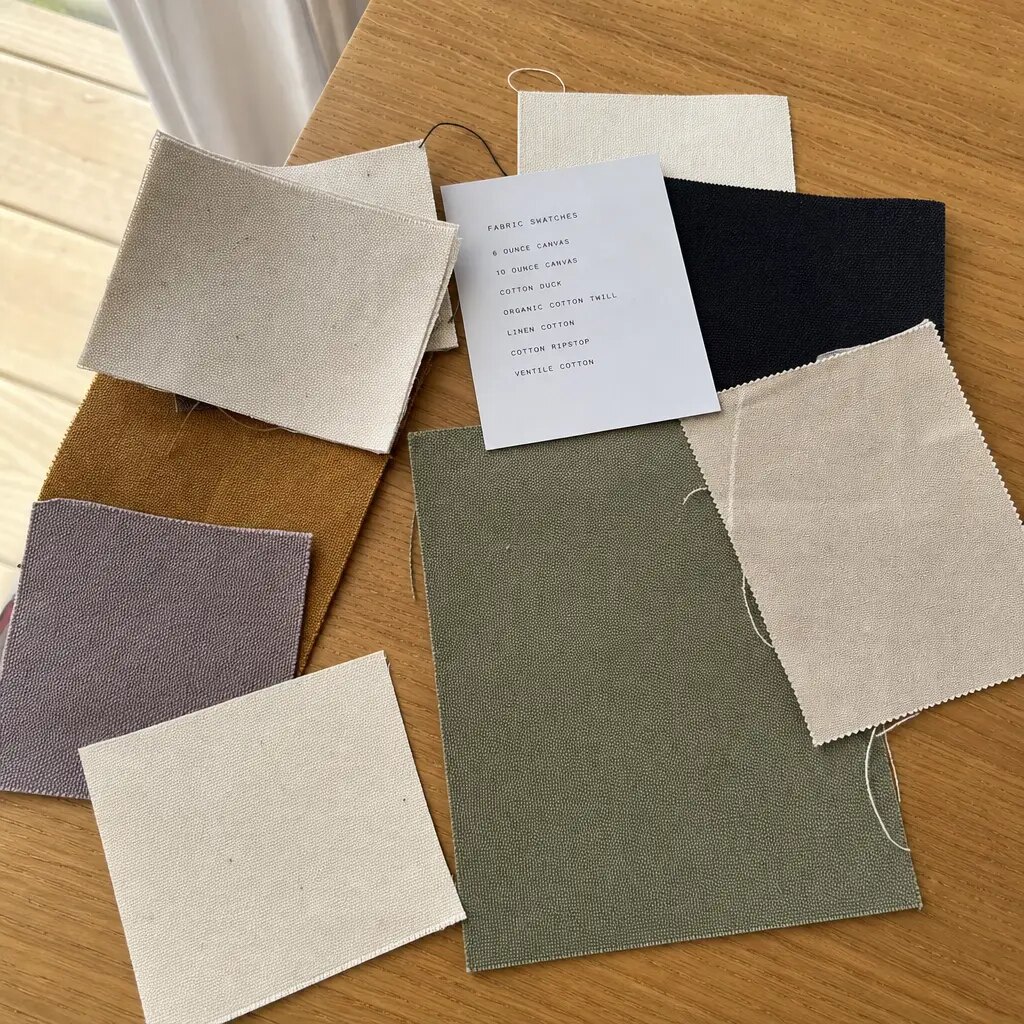
For many hotel retail organic cotton totes, 10 oz to 12 oz canvas, roughly 280 to 340 GSM, is a practical starting range. It usually provides a stronger hand feel, better shelf presence, and enough surface body for screen printing. Lightweight 6 oz to 8 oz cotton can still work for amenity pouches, low-price add-on bags, or short-use welcome gifts, but buyers should not position it as a premium heavy-use retail tote without reinforcing the construction and setting realistic load expectations.
Fabric weight alone does not guarantee durability. A tightly woven 10 oz canvas can perform better than a loosely woven heavier fabric. Twill may feel softer and more premium, but it can stretch or distort more during cutting and sewing. Washed cotton may have a relaxed hand feel that suits boutique retail, but it may also introduce shade variation, shrinkage, and a less crisp print surface. Natural cotton can vary by crop and lot, so the buyer should approve a shade range instead of assuming every natural tote will match a previous order.
Organic cotton claims also need careful handling in B2B procurement. Organic cotton describes the fiber sourcing method, not the strength of the finished bag. Buyers should ask what documentation is included in the quote and whether certification scope covers the supplier, fabric, or transaction. If the finished product includes non-organic components such as polyester thread, synthetic ink, metal snaps, paper labels, or plastic packaging, those components should be declared clearly in the product specification.
- 6 oz to 8 oz cotton: suitable for lightweight guest amenities, simple packaging, or low-price promotional uses.
- 10 oz to 12 oz canvas: common starting point for reusable hotel retail totes with structured shelf presentation.
- 14 oz canvas and above: useful for premium structured bags but increases cost, sewing difficulty, needle marking risk, and carton weight.
- Plain canvas: reliable structure and common for destination logos; twill canvas: softer hand feel but requires size and skew control.
- Natural, bleached, dyed, and washed finishes should each have separate shade, shrinkage, and print approval steps.
Specify Seam, Top Hem, Gusset, and Handle Construction Before Comparing Prices
Two suppliers can quote the same tote size and fabric GSM but deliver very different durability. The difference is often hidden in the handle attachment, top hem, side seam, bottom seam, gusset construction, thread quality, and stitch density. A low quote may use single-line handle stitching, narrow seam allowance, and minimal trimming. A stronger quote may include box-X reinforcement, double-fold top hem, cleaner inside seam finishing, and more consistent stitch control.
Hotel retail totes should usually use self-fabric handles or heavy cotton webbing handles with reinforcement at every stress point. Box-X or cross-stitch reinforcement spreads load better than a single row of stitching. Handle length should be chosen according to use: short handles for hand-carry retail packaging, longer handle drop for shoulder carry, and wider handles for comfort when carrying heavier merchandise. If handle drop is not controlled, production can vary enough to affect both usability and retail appearance.
The bottom and gusset deserve the same attention as the handles. A boxed bottom or deep side gusset increases capacity but creates stress at the corner where seams intersect. Rigid products like bottles, boxed candles, and books can push directly into those points. Buyers should define seam allowance, inside finishing, reinforcement, and stitch density in the RFQ rather than relying on “strong stitching” as a subjective term.
- State handle length, handle drop, handle width, material, and tolerance after sewing.
- Require reinforcement style at each handle end, such as box-X, cross-stitch, or bar tack if suitable for the fabric.
- Define side seam, bottom seam, gusset seam, and inside seam finish, including whether overlock, lockstitch, French seam, or enclosed seam is required.
- Set minimum expectations for stitch density, backtracking, loose thread trimming, skipped stitches, and seam allowance.
- Review the top hem because weak hems can ripple, distort, or tear around handle ends after load testing.
Match Print Method to Canvas Texture, Brand Standard, and Durability Risk
Hotel logos and destination graphics are often printed on textured cotton canvas, which behaves differently from smooth jersey or coated synthetic fabric. Water-based screen print is a common option for one to three spot colors because it gives a softer hand feel and can perform well when properly cured. Pigment printing, plastisol, discharge printing, embroidery, woven labels, and heat transfer can also be considered, but each method has its own cost, appearance, and durability profile.
The buyer should test the print on the actual quoted fabric. A logo that looks sharp on a smooth sample cloth may lose edge definition on coarse canvas. A heavy ink deposit may crack when the tote is folded or compressed inside cartons. A heat transfer may help with complex artwork, gradients, or small details, but the film can feel less integrated with the cotton surface and must be checked for lifting, cracking, and temperature sensitivity. Embroidery can look premium but may pucker lighter fabrics or add cost when the logo has large filled areas.
Print approval should include both visual and mechanical checks. Visual approval covers Pantone match, print size, placement, registration, edge clarity, and consistency across panels. Mechanical checks cover dry rub, wet rub where relevant, fold resistance, curing, and wash behavior if guests may clean the tote. For hotel retail, print failure is highly visible because the bag often functions as a walking advertisement for the property.
- Provide vector artwork, Pantone references, print dimensions, placement from top edge and side seam, and logo orientation.
- Set acceptable placement tolerance and require measurement on finished bags, not only on flat panels before sewing.
- Test dry rub, fold resistance, and print cracking on finished totes made with the actual fabric and final ink.
- For heat transfers, check film edge lifting, hand feel, temperature sensitivity, and cracking after folded packing.
- For multi-color screen prints, confirm registration tolerance, screen charges, setup time, and approval process for strike-offs.
Use Sample Approval as a Durability Gate, Not Just a Design Review
A common sourcing mistake is approving a beautiful sample made from available fabric, then discovering that the bulk fabric behaves differently. For hotel retail organic cotton totes, the pre-production sample should use the intended bulk fabric, final handle material, final thread color, final seam construction, final label, final print method, and intended packing components. If the factory cannot make that sample yet, the first sample should be labeled as a design sample only, not as a durability approval.
Sample review should be hands-on and documented. The procurement team should measure the tote, weigh or confirm the fabric, check handle drop, count stitch density where needed, inspect inside seams, load the tote, hang it, fold it, rub the print, and photograph stress points after testing. If the tote includes retail packaging, barcode labels, hangtags, or property-specific carton marks, those items should be reviewed at the same time because they affect receiving accuracy and display labor at the hotel property.
A signed sample should become the reference for production and final inspection. One retained sample should stay with the buyer, and one should stay with the factory. If changes are made after approval, such as a new fabric lot, different ink, altered handle length, substitute label, or changed folding method, the buyer should decide whether a revised sample is required. Without this discipline, the final inspection has no reliable benchmark.
- Separate concept sample, design sample, salesman sample, and pre-production sample approvals in writing.
- Record measured GSM, finished width and height, gusset depth, handle drop, handle width, stitch density, seam finish, and print position.
- Keep one signed approval sample with the buyer and one with the factory for production-line comparison.
- Do not approve mass production from a sample that uses substitute fabric unless the risk is accepted in writing.
- Review retail packaging during sample approval, including fold position, barcode readability, hangtag placement, and SKU identification.
Build a Durability Testing Checklist With Clear Pass and Fail Criteria
An organic cotton totes for hotel retail durability testing checklist is only useful when it includes observable pass or fail criteria. Vague wording such as “strong handle,” “good print,” or “premium stitching” gives each supplier room to interpret the requirement differently. A better checklist names the test area, method, sample quantity, duration, and defect that causes rejection. The test does not need to be laboratory-perfect for every order, but it must be consistent enough for quote comparison, sample review, and final inspection.
A practical checklist covers fabric, seams, handles, print, shrinkage, and packing. For example, a static load test can check whether the tote holds a defined weight without seam opening. A handle pull review can focus on all four attachment points. A fold test can show whether the print cracks along the folding line. A carton handling or drop review can identify crushed corners, print abrasion, or mixed-SKU packing problems before goods reach the hotel warehouse.
For large rollouts, high retail price points, or strict brand compliance programs, third-party testing may be justified. For smaller or lower-risk orders, documented factory tests with dated photos, videos, and retained tested samples may be enough. The key is to write the method in advance and make sure the supplier quotes the construction that will be tested.
- Fabric test: verify GSM, shade, stains, weaving defects, holes, odor, skewing, and shrinkage if washing is relevant.
- Static load test: fill finished tote with agreed weight for agreed duration and inspect handles, seams, gussets, and fabric distortion.
- Handle pull test: review all four attachment points for tearing, thread breakage, skipped stitches, and deformation after load.
- Seam review: inspect bottom corners, gusset stress points, side seams, top hem, loose threads, and seam allowance.
- Print test: check dry rub, wet rub where relevant, fold cracking, ink bleeding, curing, and placement tolerance.
- Packing test: review fold consistency, print abrasion, carton compression, carton count, barcode readability, and mixed-SKU separation.
Plan MOQ and Cost Drivers Without Weakening Durability
MOQ for organic cotton totes is not only about total quantity. It can change by fabric color, fabric weight, bag size, handle material, print design, ink color count, label type, retail packing, certification document requirement, and shipment split. A hotel group ordering 3,000 pieces across six properties may not receive the same unit price as a single 3,000-piece design because the factory must manage more screens, labels, packing separation, carton marks, and production changeovers.
Buyers can reduce cost without weakening durability by consolidating construction. Keep one fabric weight, one tote size, one handle construction, one seam method, and one packing format, then vary artwork by property if the supplier can group production efficiently. This approach protects the durability standard while allowing hotel-specific branding. If each property requests a different fabric color, size, handle drop, label, and packaging style, the program becomes harder to control and more expensive to inspect.
A quote should separate major cost drivers instead of hiding them in a single unit price. Fabric, sewing, printing, labels, hangtags, screens, packaging, testing, inland freight, and export cartons should be visible where practical. This helps buyers compare suppliers fairly. A cheaper unit price may not include the same fabric GSM, print durability, packing method, or QC documentation.
- Fabric weight, fabric width, cutting layout, and gusset depth affect consumption and cutting waste.
- Dyed organic cotton adds dye lot MOQ, lab dip time, shade control risk, and possible shrinkage variation.
- Multi-color screen printing adds screens, setup time, print registration checks, and higher defect risk.
- Retail packing, barcode labels, hangtags, paper bands, and SKU sorting add labor cost but reduce hotel receiving work.
- Split shipments by property or destination can increase carton marking, documentation, storage, and logistics complexity.
- Ask suppliers to quote alternates only when the durability standard remains comparable, such as 10 oz versus 12 oz with the same seam specification.
Packing Controls Protect Retail Presentation, Receiving Accuracy, and Bag Durability
Packing is part of durability because a tote can be damaged before it reaches the hotel shop. Hard compression can create deep creases across the logo. Loose bulk cartons can cause abrasion on printed panels. Mixed SKUs can create receiving errors at the distributor warehouse or hotel property. Heavy cartons can be dropped or dragged, damaging corners and increasing staff handling risk. A retail buyer should control folding, individual packaging, inner packs, master cartons, carton marks, barcode placement, and gross weight.
For hotel retail, the best packing method depends on how the product is sold. A tote displayed folded on a shelf may need a paper band, belly band, hangtag, or barcode sticker. A tote hung on a peg may need a reinforced hangtag or display-ready fold. A tote used as packaging for a spa bundle may need less individual retail packaging but stronger carton separation by bundle SKU. Buyers should specify the desired presentation so the factory does not choose the cheapest fold by default.
Sustainability preferences also need practical detail. Some hotel brands prefer paper bands or plastic-free packing, while others require individual polybags to protect natural cotton from moisture during ocean freight or warehouse storage. The buyer should balance sustainability goals with stain risk, humidity exposure, and receiving conditions. If plastic-free packing is required, carton lining, moisture control, and clean handling become more important.
- Define the folding method so the logo is not creased through the center when avoidable.
- Set pieces per inner pack and master carton by SKU, artwork, property code, and purchase order.
- Require carton marks that match PO number, SKU, property code, design name, quantity, gross weight, net weight, and carton sequence.
- Limit carton gross weight to reduce handling damage and staff safety issues, especially with 12 oz or 14 oz canvas.
- Request packing photos before shipment when multiple hotel properties, designs, barcodes, or carton marks are involved.
- Check barcode scan readability after packing, not only on the label artwork file.
Control Lead Time Risks From Fabric, Artwork, Testing, and Approval Loops
A realistic lead time is built from several steps: fabric booking, fabric inspection, lab dip approval if dyed, cutting, printing, curing, sewing, trimming, pressing, packing, final inspection, and export preparation. Organic cotton fabric may require more planning than conventional stock cotton if the buyer needs specific documents, special shade, uncommon GSM, or a certified supply chain. The lead time should start from the final approval point, not from the day the first inquiry is sent.
Many avoidable delays are created by artwork changes, late barcode files, unclear carton marks, missing hangtag details, or sample approval loops. A buyer can protect the schedule by issuing a complete RFQ package at the beginning and separating fixed deadlines from preferred deadlines. If a hotel opening date, resort season, conference, or holiday retail launch is fixed, the procurement team should decide early whether to simplify artwork, reduce SKU count, approve stock natural fabric, or split shipment instead of rushing production quality.
Inspection timing is also part of schedule control. Final inspection should happen when goods are fully packed but still available for rework. If cartons are already booked for container loading or courier pickup, the buyer has less leverage and less time to correct defects. For multi-property orders, buyers should also allow time to verify SKU separation and carton marks before the shipment leaves the factory.
- Confirm whether lead time starts after deposit, fabric booking, lab dip approval, artwork approval, packing file approval, or signed pre-production sample approval.
- Reserve extra time for dyed fabric, special organic cotton documentation, complex print registration, new labels, hangtags, or barcode setup.
- Avoid changing print placement after screens are made unless the schedule can absorb screen remake and sample re-approval.
- Plan final inspection before vessel cut-off or courier booking, not after cartons are already staged for loading.
- For fixed hotel launch dates, consider simplified construction, fewer artwork versions, or partial priority shipment rather than reducing durability checks.
Specification comparison for buyers
| Spec decision | Recommended option | When it fits | Buyer risk to check |
|---|---|---|---|
| Fabric weight for hotel retail totes | 10 oz to 12 oz organic cotton canvas, about 280-340 GSM, confirmed from bulk fabric | Gift shop retail, spa merchandise, destination retail, amenity upsell, and repeated guest use | Lower GSM can pass a photo review but fail handle pull, corner abrasion, or shelf presentation after normal shopping loads |
| Fabric construction | Plain canvas for reliable structure and value; twill canvas when a softer premium hand feel is needed | Plain canvas suits most logo totes; twill works for boutique hotel retail with higher shelf price | Twill may stretch more during cutting and sewing, so require finished size tolerance, panel squareness, and shrinkage checks |
| Handle structure | Self-fabric or heavy cotton webbing handles with box-X or cross-stitch reinforcement at four attachment points | Reusable retail totes expected to carry robes, books, towels, bottled products, snacks, or packaged gifts | Single-line handle stitching can tear at the top fold even when the fabric weight looks acceptable |
| Bottom and side seams | Inside overlock plus lockstitch reinforcement, enclosed seam, or French seam for cleaner retail finish | Hotel shops where the inside finish is visible to customers and staff, or where rigid products stress the gusset | Unreinforced side seams often fail before the fabric; inspect stitch density, seam allowance, and loose thread trimming, not only outer appearance |
| Top hem and opening | Double-fold top hem with consistent stitch line and handle ends captured securely under the hem where suitable | Retail totes handled repeatedly by shoppers and staff, especially open-top tote designs | A weak top hem can distort, ripple, or tear around handle ends after load testing |
| Print method | Water-based screen print for 1-3 spot colors; embroidery or woven label for premium detail; heat transfer only with controlled fold, rub, and wash testing | Most hotel logos, destination graphics, branded retail messages, and limited seasonal designs | Heavy ink or transfer film can crack on textured canvas; require rub, fold, and curing checks on the actual production fabric |
| Sample approval stage | Pre-production sample made with bulk fabric, bulk handles, final thread, final print ink, final labels, and intended packing | Orders where retail display quality, durability, and warehouse receiving accuracy all matter | A sales sample from substitute fabric is not a durability sample; approval must match the production bill of materials |
| MOQ logic | Consolidate size, fabric, handle construction, and packing; vary print artwork by property only if grouped production is feasible | Hotel groups, distributors, resort collections, and regional retail rollouts | Too many fabric colors, sizes, labels, or construction variants break MOQ efficiency and create mixed-quality risk across locations |
| Packing method | Individual folded polybag, recycled paper band, belly band, or hangtag by SKU; inner carton by design and master carton by PO | Hotel gift shops, fulfillment centers, and distribution teams that count stock by property, SKU, or design | Loose bulk packing saves cost but increases creasing, print abrasion, counting errors, barcode relabeling, and receiving disputes |
Buyer checklist before sampling
- Define the tote use case clearly: paid retail sale, guest amenity, welcome gift, event giveaway, spa product bundle, in-room merchandise packaging, or destination souvenir.
- List expected contents and target working load, such as towels, bottles, robes, books, boxed gifts, or mixed resort merchandise, so the supplier can size the construction appropriately.
- State finished size, gusset depth, handle drop, handle width, panel orientation, and size tolerance instead of only sending a reference photo or mood board.
- Specify organic cotton fabric weight in both oz and GSM, and identify whether plain canvas, twill canvas, brushed canvas, washed canvas, or lightweight muslin is acceptable.
- Confirm whether fabric should be natural, bleached, dyed, or washed, and request shade tolerance, lab dip approval, or bulk fabric swatch approval when color matters.
- Require reinforcement details for handle attachment, top hem, bottom corners, side seams, gusset seams, and any stress points created by pockets, snaps, or labels.
- Set a working load target and test duration, such as holding a defined kilogram load for a defined time without seam tearing, handle detachment, fabric rupture, or unacceptable distortion.
- Define sample quantity for durability review, including at least one retained buyer sample and one retained factory production control sample.
- Provide artwork files with Pantone references, print dimensions, placement from top and side edges, logo orientation, and acceptable print tolerance.
- Identify the print method to be quoted and require print tests on the actual tote fabric, not on a smoother substitute fabric panel.
Factory quote questions to send
- What organic cotton fabric weight are you quoting in oz and GSM, and will it be cut from current stock, booked greige fabric, or a newly dyed lot?
- What is the exact fabric construction, yarn count if available, weave type, shrinkage expectation, and dyeing, bleaching, washing, or finishing process?
- Can you provide a bulk fabric swatch before the pre-production sample, and how will shade variation between sample and bulk be controlled?
- Which seam construction will be used on the sides, bottom, gusset corners, top hem, inner finish, and handle attachment points?
- What thread type, thread count, and stitch density are included in the quote, and what is your normal tolerance for skipped stitches, loose threads, and seam allowance?
- What handle material, handle width, handle drop, and reinforcement pattern are quoted, and can you provide a close-up photo or stitch diagram before sampling?
- What load test can your factory perform in-house, what load and duration do you recommend for this tote size, and can you provide dated photo or video evidence?
- Which print method is quoted, what ink or transfer material is used, and how will curing, folding, rubbing, humidity, and washing affect print durability?
- Is the sample charge based on substitute fabric or final bulk fabric, and how long is the pre-production sample lead time after artwork, fabric, and packing approval?
- What MOQ applies by fabric color, fabric weight, artwork, size, label, hangtag, barcode, packing method, and carton sorting requirement?
Quality-control points to confirm
- Finished size tolerance should be agreed before sampling, commonly plus or minus 0.5 cm to 1 cm depending on tote size, gusset depth, fabric behavior, and washing or finishing process.
- Fabric GSM should be checked from bulk fabric before cutting and from finished bags when relevant, because washing, finishing, and coating can change hand feel and measured weight.
- Fabric inspection should include shade consistency, stains, oil marks, slubs, weaving defects, holes, odor, skewing, and visible contamination that would reduce retail acceptability.
- Handle pull testing should cover all four attachment points and show no tearing, thread breakage, seam opening, or fabric distortion beyond the agreed limit after the defined load and duration.
- Seam strength should be reviewed at bottom corners, side gussets, top hem, and handle ends where retail loads concentrate, especially for totes with deep gussets or boxed bottoms.
- Stitch density should be consistent across handles, top hem, sides, and bottom; loose stitches, skipped stitches, backtracking gaps, and uneven tension reduce durability even with heavy fabric.
- Print adhesion should be tested by dry rub, wet rub where relevant, fold stress, tape pull if appropriate for the ink system, and light wash testing if the tote may be cleaned by guests.
- Print color and placement should be measured against an approved sample and artwork specification, not judged by carton-level photos only.
- Labels, hangtags, barcode stickers, and paper bands should be checked for correct SKU, property code, retail price if printed, scan readability, attachment strength, and placement.
- Metal accessories, zippers, snaps, rivets, eyelets, or magnetic closures should be pull-tested and checked for sharp edges, staining risk, corrosion, and compatibility with hotel brand requirements if added to the tote.