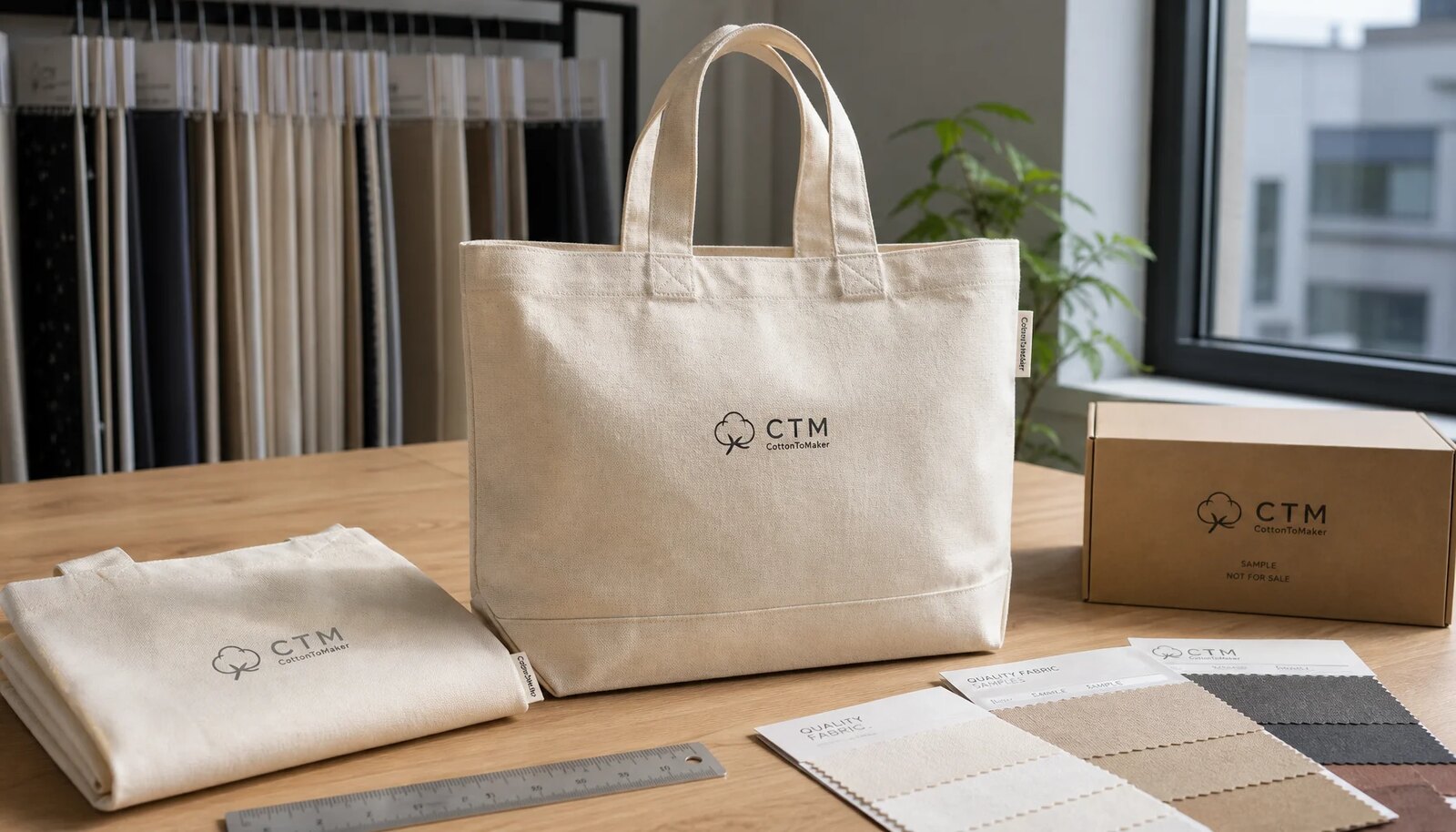
Define The Retail Job Before Sourcing
Organic cotton totes for hotel retail should be treated as sellable merchandise, not generic giveaway bags. A tote displayed beside robes, candles, drinkware, spa products, resort apparel, books, or local food has to look intentional when it is folded, handled, scanned, and carried out by a guest. Procurement needs a bulk pricing plan that protects that retail moment while keeping landed cost predictable.
Start with the job the bag must do. A paid boutique tote usually needs heavier canvas, cleaner sewing, reinforced shoulder handles, and tighter print approval because guests compare it with other store products. A guest amenity may work with lighter construction if it only carries welcome literature or pool items. A gift-with-purchase sits in the middle: useful and branded, but still tied to a promotional budget.
The use case also changes replenishment planning. A single boutique may test 500-1,000 pcs before committing to seasonal stock. A hotel group may need 5,000-20,000 pcs across several properties, with shared fabric, property-specific artwork, staggered shipments, and repeat pricing. Buyers who define the retail job first can choose fabric, gusset, packing, and inspection criteria with purpose instead of chasing the lowest unit price.
- Paid retail tote: usually 10-12 oz organic cotton canvas, reinforced shoulder handles, hangtag or belly band, and tighter print control.
- Guest amenity tote: often 8-10 oz cotton canvas, one-color print, simple bulk packing, and lower retail presentation cost.
- Spa or resort package tote: should have gusseted capacity and handles suitable for towels, bottles, robes, slippers, or boxed gift sets.
- Boutique souvenir tote: needs a clean front panel, controlled natural shade, sharp print edges, and a fold that shows the artwork.
- Multi-property program: requires SKU matrix, artwork codes, carton marks, replenishment MOQ, and repeat-order price validity.
Lock The Specification Before Comparing Prices
The weakest RFQ is a short request for an organic cotton tote with a logo. That phrase lets each supplier quote a different product: 8 oz versus 12 oz fabric, flat body versus gusset, short hand-carry handles versus shoulder handles, stock blanks versus custom sewing, and loose bulk packing versus retail-ready presentation. The cheapest quote may not be cheaper. It may simply be a different bag.
A practical base size for hotel retail is often around 38 x 42 cm with an 8-10 cm bottom gusset, or around 35 x 40 cm for a smaller boutique tote. Those numbers are useful starting points, not rules. A spa package needs volume and handle comfort. A bookshop-style destination tote may need a flat front panel for artwork. A poolside retail tote may need a wider gusset and stronger handle attachment.
Specify handles in finished measurements. Words like short, long, premium, and strong mean different things to different factories. A 55-60 cm finished handle length usually supports shoulder carry for many adults, while shorter handles can look tidy but reduce everyday use. Handle width, material, seam finish, and reinforcement all affect cost and guest perception.
Build one quote sheet and require every supplier to answer it. Include finished size, fabric weight, composition, construction, print method, artwork size, packing method, carton rules, incoterm, sample process, inspection requirements, payment terms, and documentation requirements. Comparable pricing starts with comparable specifications.
- Dimensions: state finished width, height, gusset depth, boxed-corner requirement, seam allowance expectation, and measurement tolerance.
- Fabric: specify organic cotton canvas, natural or dyed color, GSM or oz/yd2, weave, shrinkage estimate, and finish.
- Handles: define width, finished length or drop, material, attachment position, stitch pattern, bartacks, and target load.
- Artwork: provide vector file, Pantone references, print dimensions, placement from edges, color count, and print method.
- Packing: lock retail fold, hangtag or belly band, barcode, pieces per carton, carton marks, inner protection, and gross weight limit.
Choose Fabric Weight With Cost Awareness
Fabric weight is one of the clearest cost and quality signals in organic cotton totes for hotel retail. Cotton canvas described as 6 oz, 8 oz, 10 oz, or 12 oz can all be called tote fabric, but the handfeel, drape, structure, load perception, cutting loss, and carton weight are not the same. Ask suppliers to state GSM as well as ounces per square yard where possible, and clarify whether the weight is greige, finished, washed, or dyed.
For most paid hotel retail totes, 10 oz or 12 oz is a strong starting range. A 10 oz canvas, commonly around 300-340 GSM, gives a credible retail handfeel without becoming too heavy to fold and ship. A 12 oz canvas, commonly around 380-400 GSM, feels more structured and premium, but it also increases fabric consumption, needle resistance, sewing time, carton weight, and freight cost.
An 8 oz canvas, commonly around 260-280 GSM, can work for amenity bags, low-load souvenir totes, or entry retail programs. It will drape more, wrinkle more easily, and feel less structured than heavier canvas. A 6 oz tote is usually better for very light collateral or promotional use than for paid hotel boutique retail.
Natural unbleached organic cotton supports a clean sustainability story, but it is not a perfectly uniform white base. Seed specks, mild slubs, and lot-to-lot shade movement can be normal. Dyed organic cotton gives stronger brand color control, but it adds lab dip approval, colorfastness review, longer lead time, and sometimes higher MOQ. The RFQ should define the acceptable shade range and whether a raw natural look is part of the design.
- 6 oz/about 200 GSM: low-cost light cotton for very light use; usually weak for paid hotel retail.
- 8 oz/about 260-280 GSM: acceptable for amenity or entry retail when load and structure expectations are modest.
- 10 oz/about 300-340 GSM: strong default for hotel boutiques, spa shops, resort retail, and destination merchandise.
- 12 oz/about 380-400 GSM: premium structure and handfeel, with higher fabric, sewing, and freight cost.
- Dyed fabric: requires lab dip or swatch approval, shade tolerance, colorfastness check, and clear dye-lot control.
Plan MOQ, Tier Pricing, And Breaks
MOQ is not only a supplier preference. It is shaped by fabric purchasing, cutting efficiency, screen setup, sewing line scheduling, packing labor, documentation, and inspection overhead. A factory may accept 500 pcs for a pilot, but the per-unit cost will carry more setup and sampling burden than a larger run.
Ask for prices at 500, 1,000, 3,000, 5,000, and 10,000 pcs using the exact same specification. Keep the same fabric weight, size, handle construction, print method, packing, carton rule, documentation level, and incoterm. If a supplier changes the spec to hit a price point, require that change to be labeled as a separate value-engineering option.
Multi-property orders need careful math. A 5,000 pc group order split into five property artworks is not always as efficient as one 5,000 pc artwork run. Each artwork can require separate screens, strike-offs, barcode labels, carton marks, production sorting, and inspection sampling. Ask for both combined-volume pricing and per-artwork minimums.
For repeat hotel retail programs, negotiate beyond the first order. Ask whether the factory can hold screens, cutting templates, approved patterns, unused woven labels, and fabric references. A useful bulk pricing plan includes replenishment MOQ, repeat setup charges, price validity, and lead time for reorder quantities.
- 500 pcs: useful for pilot retail, hotel opening, seasonal test, or event support; expect high setup cost per unit.
- 1,000 pcs: common starting point for custom screen print and better cutting efficiency.
- 3,000 pcs: often improves fabric usage, line planning, and packing labor efficiency.
- 5,000 pcs: better for resort groups, distributors, and multi-property retail programs with stable artwork.
- 10,000 pcs and above: negotiate fabric reservation, staggered shipment, carton optimization, and longer price validity.
Separate Unit Price From Landed Cost
A unit price is not a bulk pricing plan. Procurement needs to know what is included and what sits outside the quote. Organic cotton fabric, cutting loss, sewing complexity, print setup, print coverage, strike-offs, hangtags, belly bands, carton strength, documentation, testing, inland freight, export handling, inspection support, duty, and destination fees can all change the landed cost per sellable bag.
Fabric cost rises with GSM, certified sourcing evidence, dyeing, shrinkage control, and fabric width limitations. Sewing cost rises with gussets, boxed corners, inner binding, pockets, zippers, lining, reinforced handles, and tighter tolerances. Print cost rises with color count, large coverage, Pantone matching, special inks, curing requirements, and reject risk. Packing cost rises with individual folding, hangtags, barcodes, paper bands, paper wrap, and stronger cartons.
The number that matters is landed cost per sellable tote that arrives in acceptable retail condition. A low FOB quote can become expensive if cartons crush the front panel, shade variation forces sorting, hangtags bend, print rejects run high, or late production triggers emergency air freight. Request itemized costs even if the final purchase order uses one unit price.
Incoterms matter. EXW, FOB, FCA, CIF, DDP, and delivered warehouse pricing are not directly comparable. For international hotel procurement, specify the incoterm, named port or place, currency, quote validity, payment schedule, inspection hold point, and whether export cartons and shipping marks are included.
- Ask for line items: sample, unit price, setup, screens, fabric surcharge, label, hangtag, belly band, carton, documentation, testing, and inspection support.
- Keep assumptions visible: fabric in stock or made to order, one artwork or multiple artworks, no polybag or individual packing, and one destination or split shipment.
- Compare incoterms: do not compare EXW to FOB or DDP without adding inland, export, freight, duty, and destination costs.
- Watch carton economics: heavier fabric and larger gussets can increase carton volume and freight cost even when unit price looks acceptable.
- Model defects: estimate sellable yield, rework time, and replacement schedule when deciding whether to pay for stronger QC.
Control Organic Cotton Documentation And Claims
The word organic needs precise handling in procurement, retail labeling, and marketing copy. Some hotel buyers only require tote fabric made from organic cotton for internal sustainability positioning. Others need claim support for hangtags, e-commerce listings, corporate reporting, or retail signage. Those are different requirements, and they can change supplier eligibility, MOQ, cost, and lead time.
Do not assume a sewing factory can provide shipment-specific organic documentation. The factory may buy fabric from a mill, stockholder, or trader, and the documentation chain depends on that source. If the hotel plans to make a formal organic claim, align procurement, legal, compliance, marketing, and the supplier before production starts. State whether a fabric certificate copy is enough or whether a transaction certificate or equivalent shipment-specific documentation is required.
The claim must match the physical product. If the tote has polyester sewing thread, a conventional cotton label, metal zipper, non-organic lining, recycled paper band, or synthetic care label, the claim should not imply every component is organic unless that is verified. A safer claim may refer to the organic cotton fabric only.
Certification logos and certification names should not be printed on products or hangtags unless the buyer has confirmed the right to use them. Misuse can create compliance risk and force rework of otherwise sellable goods. Keep documentation requests in the RFQ and keep approved claim language in the artwork file.
- Composition: specify 100 percent organic cotton fabric unless trims, blends, recycled cotton, or conventional components are approved.
- Evidence: request scope certificate, fabric supplier details, transaction certificate if needed, test report, or supplier declaration as applicable.
- Claim wording: approve product and hangtag language before printing, especially if only the cotton fabric is organic.
- Logo use: do not use certification marks unless the brand has confirmed permission and labeling rules.
- Lot control: approve physical shade range and fabric handfeel because natural organic cotton varies between lots.
Match Print Method To Artwork And Margin
Hotel retail artwork often uses property logos, resort marks, destination line art, local landmarks, minimalist typography, or seasonal graphics. The print method should follow the artwork, order size, target margin, and repeat plan. For one to three solid colors, water-based screen print is usually the most dependable commercial choice on organic cotton canvas.
Screen printing still needs disciplined approval. Natural cotton is not a bright white paper base, so Pantone colors may appear warmer, duller, or more textured. Large ink areas can change handfeel and show curing problems if production is rushed. A print strike-off on actual fabric is much more useful than a PDF proof because it shows ink penetration, edge sharpness, opacity, and color shift.
Digital print can suit full-color illustrations, boutique drops, and artwork with gradients, but buyers should test saturation, wash behavior, edge definition, and cost at the intended volume. Heat transfer can handle gradients and small complex artwork, but the surface feel, border edge, adhesion, and folding marks need approval. Embroidery can look premium for small crests or monograms but may pucker the panel or become costly when the design is large.
A woven side label can add a premium retail cue while keeping the front panel clean. Define label dimensions, fold type, placement, colorfastness, and label MOQ. If label MOQ exceeds tote quantity, decide whether unused labels are stored for replenishment or charged separately.
- Screen print: best for simple logos, one to three solid colors, repeat orders, and soft retail handfeel.
- Digital print: useful for detailed local artwork; verify saturation, wash performance, and cost at bulk volume.
- Heat transfer: suitable for gradients and small complex graphics; test adhesion, edge feel, and fold durability.
- Embroidery: premium for small logos; avoid large filled areas unless panel puckering and cost are acceptable.
- Woven label: confirm label MOQ, placement, fold style, colorfastness, and storage for reorders.
Approve Samples As Contract References
A pre-production sample is more than a design preview. It becomes the physical contract reference for fabric, construction, logo placement, print quality, packing, barcode, and carton proposal. Hotel retail buyers should review it the way a guest and store team will handle it: unfold it, hang it, load it, place it on a shelf, and inspect the front panel from normal viewing distance.
The sample should use actual bulk fabric whenever possible. If the first sample uses available substitute fabric, it must be clearly labeled and supported by a separate approved bulk fabric swatch. Many disputes start when artwork is approved on one canvas, while bulk production uses another shade, stiffness, weave, or shrinkage behavior.
Measure the sample against the written spec. Check finished width, height, gusset, handle length, handle width, print placement, seam position, and fold position. Load the tote with realistic retail contents such as a towel, bottle, slippers, sunscreen, robe, book, or boxed gift set. Look for handle comfort, seam distortion, panel sagging, and whether the tote still looks sellable after handling.
Keep sample control simple. One signed sample should stay with the buyer or buying office, and one should stay with the factory. If changes are made, issue a revision note with version number, date, and exact change. Final inspection should compare bulk goods to the approved sample and written specification, not to email images or memory.
- Measure: width, height, gusset, handle length, handle width, seam position, print size, and logo placement.
- Load: test with likely hotel retail contents and note distortion, handle comfort, and seam strain.
- Rub: check cured print with a dry white cloth for transfer, tackiness, loose ink dust, cracking, and bleeding.
- Fold: confirm retail presentation, logo visibility, handle position, belly band fit, and hangtag placement.
- Record: sign the sample, keep revision notes, and share approved tolerances with the inspector.
Set QC Tolerances Before Cutting
Quality control should be written before fabric is cut. If the purchase order says only good quality, the factory, buyer, and inspector may apply different standards. For hotel retail totes, QC must cover measurement, fabric appearance, stitching, handle strength, print quality, odor, shade, packing presentation, and carton condition.
Use AQL inspection language where it fits the order. Many consumer soft goods inspections use general inspection level II with AQL 2.5 for major defects and 4.0 for minor defects, but the buyer can choose stricter or looser limits depending on risk, price point, and brand standard. Critical defects should usually have zero tolerance. Examples include mold odor, unsafe contamination, wrong artwork, wrong material, or a certification claim printed without approval.
Inline inspection at 20-30% output is valuable on first orders, new factories, new artwork, heavier fabric, dyed fabric, certified organic claims, or retail packing. It can catch problems before the full order is printed, sewn, or packed. Final inspection alone may identify defects too late for practical rework.
Define rework rules before the deposit is paid. State whether the supplier must sort, repair, replace, or remake defective goods; who pays reinspection cost; what happens to the shipment date; and whether balance payment is held until the corrective action is accepted. This is where procurement protects both retail quality and delivery reliability.
- Measurement: width and height often +/- 1 cm, gusset +/- 0.5 cm, print placement commonly +/- 3-5 mm unless otherwise approved.
- Stitching: check 7-9 stitches per inch if specified, secure handle bartacks, no open seams, no skipped stitches, and no loose thread nests.
- Handle strength: test an agreed sample quantity under static load, such as 8-12 kg for light retail or higher if the buyer requires.
- Print: inspect color against approved strike-off, curing, dry rub, edge sharpness, cracking, bleeding, pinholes, and placement.
- Defect classes: define critical, major, and minor defects with AQL limits before production begins.
Design Packing For Warehouses And Stores
Packing must work for both retail presentation and hotel operations. A good tote can arrive unsellable if the logo is creased, the hangtag is bent, the cotton is dusty, cartons are damp, or property-specific artworks are mixed. Packing specifications should be approved before bulk production, not improvised at the packing table.
For many hotel retail programs, a practical solution is an approved retail fold with recycled paper belly band or hangtag, then controlled bulk packing inside a dry inner liner and export carton. Individual polybags can reduce dust and moisture, but they may conflict with the sustainability message. If plastic-free packing is required, carton strength, inner wrap, and moisture-control planning become more important.
Carton size affects freight cost, warehouse handling, and retail condition. Very large cartons can reduce handling count but increase crushing, storage problems, and manual handling risk. Many hotel operations prefer gross carton weight under about 15-18 kg unless their warehouse approves heavier units. Ask suppliers for proposed carton dimensions early so logistics can estimate freight volume and receiving teams can confirm handling.
SKU control is critical for multi-property programs. Carton marks should show PO number, SKU, artwork code, quantity, carton sequence, destination, gross weight, and any approved mixed-carton rule. Avoid mixed cartons unless the hotel receiving team has approved the exact assortment and label format.
- Retail fold: approve front logo visibility, handle position, band location, hangtag orientation, and whether folds cross the print.
- Inner protection: use paper wrap, master liner, or approved moisture barrier to reduce dust and dampness during export handling.
- Carton rule: state pieces per carton, dimensions, gross weight target, board strength if required, and sealing method.
- Barcode control: define UPC, EAN, SKU, property code, price label, and carton label position before printing labels.
- Mixed SKUs: avoid mixing artworks unless carton labels, packing list, and receiving procedure are approved.
Specification comparison for buyers
| Spec or sourcing decision | Procurement recommendation | Typical commercial impact | Quote or QC risk to control |
|---|---|---|---|
| Direct factory sourcing | Best for 1,000-20,000 pcs when the hotel buyer can approve fabric, artwork, packing, inspection, and payment terms directly | Can lower unit cost and keep repeat specifications tighter, but the buyer must manage more details | Confirm the actual factory name, organic cotton evidence, subcontracting policy, inline inspection access, and written rework responsibility |
| Trading company or consolidator | Use when totes ship together with robes, slippers, amenities, apparel, packaging, or several hotel retail SKUs | Simplifies vendor management and consolidation, though factory visibility and cost transparency may be reduced | Require mill fabric data, production factory disclosure, inspection permission, itemized costs, and no fabric substitution without written approval |
| Local decorator on imported blanks | Use for under 300-500 pcs, urgent events, influencer kits, or early retail tests before custom production | Fast and flexible, but usually higher unit cost and limited control over blank tote construction | Check blank GSM, shade variation, shrinkage, handle strength, stock continuity, and whether print setup cost reduces retail margin |
| Fabric weight | Quote 10 oz/300-340 GSM for most paid hotel retail; 12 oz/380-400 GSM for premium structure; 8 oz/260-280 GSM for light amenity use | Higher GSM increases fabric cost, sewing resistance, carton weight, and freight; lower GSM may reduce perceived retail value | Require weight basis, weave, finished size, shrinkage, dye status, and whether the quoted weight is greige, finished, washed, or coated |
| Construction | Use bottom-gusset or boxed-bottom totes with reinforced shoulder handles for paid retail, spa sets, and resort boutiques | Adds sewing cost but improves capacity, display shape, and useful load | Specify gusset depth, seam allowance, inner seam finish, handle width, handle length, bartacks, stitch pattern, and target load |
| Print method | Use water-based screen print for 1-3 solid colors; use digital print or transfer for gradients, photos, or full-color artwork | Screen setup favors repeat orders; digital and transfer can suit art-driven drops but may cost more at volume | Approve a strike-off on actual fabric and set Pantone tolerance, placement tolerance, curing standard, rub check, and repeat-order screen rules |
| MOQ and tier pricing | Request 500, 1,000, 3,000, 5,000, and 10,000 pcs using the same specification and incoterm | Shows where setup, cutting, printing, packing, and documentation costs spread efficiently | Do not allow changes in GSM, handle reinforcement, packing, incoterm, or certification evidence between tiers unless priced as a separate option |
| Retail packing | Use an approved retail fold with recycled paper belly band or hangtag, then bulk pack in export cartons with inner protection | Improves shelf presentation but adds labor, carton volume, barcode control, and possible freight cost | Approve fold direction, front logo visibility, band artwork, hangtag hole position, barcode placement, carton compression protection, and mixed-SKU rules |
| Organic cotton claim | Define whether the requirement is organic cotton fabric, certified organic material, or shipment-specific claim support | Documentation depth can affect MOQ, supplier eligibility, lead time, and price | Confirm scope certificate, transaction certificate if needed, fiber composition, trim exclusions, claim wording, and the right to use any certification logo |
Buyer checklist before sampling
- Define the tote role: paid retail item, guest amenity, gift-with-purchase, spa package component, staff sale product, opening gift, or multi-property retail SKU.
- Lock finished size, gusset depth, handle length, handle width, seam type, reinforcement pattern, target load, retail fold, and packed presentation before collecting prices.
- State fiber requirement precisely: 100 percent organic cotton, organic-in-conversion cotton, recycled cotton blend, or conventional trims only if approved in writing.
- Request fabric weight in both oz/yd2 and GSM where possible, plus weave type, fabric width, natural or dyed shade, shrinkage estimate, and weight basis after finishing.
- Ask suppliers to quote the same specification at 500, 1,000, 3,000, 5,000, and 10,000 pcs with the same incoterm and packing method.
- Send vector artwork with Pantone references, print dimensions, placement from top and side edges, color count, print method preference, and tolerance for placement and color shift.
- Require an itemized quote showing unit price, sample fee, screen or setup charge, artwork charge, hangtag or belly band cost, carton cost, documentation cost, testing, inland freight, export handling, and inspection support.
- Approve a physical pre-production sample using actual bulk fabric or a clearly labeled substitute fabric with approved bulk swatch attached.
- Set carton requirements: pieces per carton, fold direction, carton dimensions, gross weight limit, shipping marks, barcode grouping, inner protection, desiccant or moisture-control rule, and mixed-SKU restrictions.
- Define QC before production: size tolerance, handle pull check, stitch density, seam security, print adhesion, dry rub result, stains, odor, shade range, carton condition, and retail packing presentation.
Factory quote questions to send
- What organic cotton fabric options can you quote for this exact tote: GSM, oz/yd2, weave, fabric width, finished or greige weight basis, shrinkage range, natural shade options, dyed colors, and minimum fabric purchase?
- Is the quoted material 100 percent certified organic cotton, organic-in-conversion cotton, recycled cotton blend, or conventional cotton? Which documents can be provided before production and with shipment?
- Can you provide scope certificate, mill or fabric supplier details, transaction certificate if required, and a written statement showing which components are covered by the organic claim?
- What is your MOQ for this size and construction, and what changes in cost or production method occur at 500, 1,000, 3,000, 5,000, and 10,000 pcs?
- Are handles self-fabric, cotton webbing, or folded canvas? Please confirm handle width, finished drop or total length, stitch pattern, bartack count, thread type, and recommended static load test.
- Which print methods do you recommend for our artwork on natural cotton? Please list setup charges, maximum print size, color limits, Pantone limitations, curing requirements, strike-off cost, and repeat-order screen rules.
- Can you make a pre-production sample with actual bulk fabric, final print, final handles, woven label if used, hangtag or belly band, barcode position, and proposed export carton? How many working days after artwork approval?
- What finished size tolerance, print placement tolerance, shade tolerance, stitch density, seam allowance, handle-strength check, and AQL level do you normally apply to retail tote orders?
- How many pieces per export carton do you propose? Please provide carton size, gross weight, net weight, folded orientation, inner protection, carton board grade if available, and pallet recommendation if used.
- Can you provide production photos at fabric inspection, cutting, printing, curing, sewing, thread trimming, packing, and carton sealing stages?
Quality-control points to confirm
- Finished tote size should normally be controlled within +/- 1 cm for width and height and +/- 0.5 cm for gusset on standard hotel retail totes, unless the approved sample and PO set a tighter rule.
- Handle length should normally stay within +/- 1 cm per bag and left/right handles should match visually, with no twisting, uneven attachment, skipped stitches, loose thread nests, or missing bartacks.
- Stitch density for canvas totes should commonly be 7-9 stitches per inch, or another agreed standard, with secure back-tacking or bartacks at handle joints and side-seam stress points.
- Seam allowance and edge finishing should be consistent enough to prevent fraying, open seams, exposed raw edges beyond the approved construction, or weak corners after light loading.
- Handle pull strength should be checked on a defined sample quantity using a realistic static load, such as 8-12 kg for light retail or a buyer-approved higher load for towel, bottle, robe, or gift-set use.
- Print placement should stay within the approved tolerance, commonly +/- 3 mm to +/- 5 mm from the approved position depending on print size, fabric handling, and panel construction.
- Screen print should pass a basic dry rub check after curing, with no heavy cracking, tackiness, visible bleeding, loose ink dust, pinholes outside the agreed limit, or transfer onto packing materials.
- Pantone color should be judged against the approved strike-off on actual fabric, not against a PDF proof, because unbleached cotton can warm, dull, or texture the apparent color.
- Natural cotton fabric should be free from severe slubs, oil marks, mildew odor, needle holes, tears, dirty creases, obvious shade panels, and foreign fibers that affect retail appearance.
- Retail packing should match the approved fold, band, hangtag, barcode, SKU grouping, and carton assortment, with no crushed presentation faces, hidden logos, torn bands, or bent hangtags.