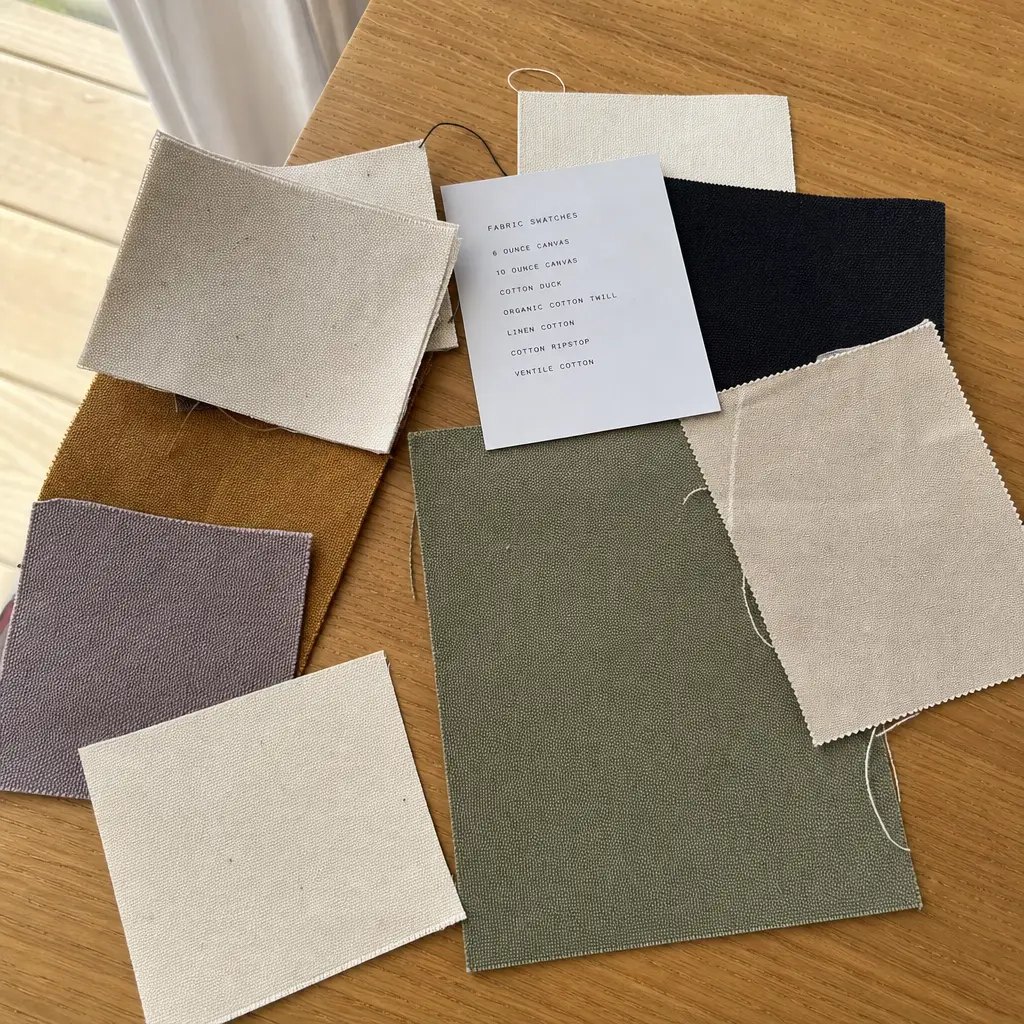
Why MOQ Negotiation Matters for Organic Cotton Totes
For tech startups, an organic cotton tote sits in an awkward but useful middle ground. It is not just a giveaway, and it is not quite a standard retail product either. Procurement has to balance cash discipline, launch timing, brand presentation, and warehouse reality at the same time. That is why MOQ negotiation matters so much. If the first conversation starts with unit price alone, the supplier often solves the wrong problem. The tote may come in cheaper, but it can also come back thinner, less structured, harder to pack, or awkward to reorder.
The better way to approach the order is to understand what the MOQ is covering on the factory side. The minimum is usually tied to fabric booking, cutting efficiency, sewing line time, print setup, inspection labor, and packing requirements. None of those are arbitrary. They are real production constraints. Once a buyer asks for a custom size, a specific GSM, branded labels, multiple print locations, and retail-ready folding, the effective minimum rises quickly. That is normal. The useful question is not, "Can you make it lower?" It is, "Which variables can we simplify without hurting the brief?"
This matters especially for startups because tote orders are often tied to a launch date, a conference, or onboarding kits that cannot slip. A low MOQ is only helpful if the bag arrives in the right condition, on time, and in a format the warehouse can actually receive. For that reason, procurement should treat the tote as a small production program, not as a one-line commodity buy. A program mindset makes the risks visible earlier: fabric availability, print method, tolerance control, and carton planning.
The negotiation also goes better when the buyer knows what to lock first. Product architecture comes before pricing. If you simplify the build by removing one print color, dropping a second label, or standardizing the packing method, the supplier often has more room to lower MOQ than to cut unit price. That is because the factory is responding to setup burden, not just material cost. A cleaner specification usually creates the biggest practical savings.
The goal, then, is not to win the smallest number on the page. It is to secure the lowest feasible MOQ for a tote that still works for the launch, the team, and the receiving process. Buyers who keep that perspective tend to get better quotes, fewer surprises, and a product that can be repeated instead of redesigned after the first order.
- Treat MOQ as a production constraint, not a sales number.
- Use the first order to validate one stable tote spec before expanding variants.
- Negotiate fewer variables first; negotiate price second.
Define the Tote Use Case Before You Compare Quotes
"Organic cotton tote" is too broad to negotiate well. A conference giveaway tote, an employee onboarding tote, a retail merch bag, and a partner gift bag can all share the same material family but need very different specs. A startup that is carrying a 13-inch laptop, charger, notebook, and water bottle needs a sturdier bag than a team handout tote holding a T-shirt and brochure. If procurement does not define the use case, the factory will fill in the blanks with its own assumptions, and that usually means more margin, a higher MOQ, or a bag that misses the mark.
Start by writing the use case in plain language. Who will carry it, what will be inside it, how often will it be used, and how visible will it be? From there, translate the brief into measurements: width, height, gusset depth, handle drop, fabric weight, print size, and packing format. That sounds basic, but it is where many RFQs fall apart. Suppliers can only quote a meaningful minimum when they can see the physical requirement. A vague request almost always gets padded.
Use case also affects acceptable variation. A one-day event bag can tolerate a little more softness in the fabric and a small shift in print placement. A premium merch item cannot. If the tote is going to be photographed, shipped to customers, or handed out at a launch event, the buyer should define the acceptable visual standard early. That means spelling out what has to look consistent: logo centering, seam finish, color tone, and the way the tote folds.
It also helps to decide whether the tote is a one-time campaign item or a repeatable platform. If the startup expects to reorder the same bag for future launches, the first spec should be written with reordering in mind. Keep the artwork file stable. Keep the style code stable. Keep the approval record clean. That small amount of discipline saves time later, because the next order can move through quoting and sampling without a fresh round of interpretation.
A good internal brief can be as simple as one sentence: "Tote for employees carrying a laptop, notebook, charger, and water bottle, used for onboarding and events." That sentence is often more useful to a factory than a polished but vague request for a "premium branded tote."
- Map the tote to a real use case: event, onboarding, merch, retail, or partner gifting.
- Convert the use case into measurable dimensions and load requirements.
- Decide early whether the bag is a one-off campaign item or a repeatable product line.
Choose the Right Fabric Weight and Construction
Organic cotton is a material description, not a finished product spec. Two totes can both be made from organic cotton and still perform very differently depending on GSM, weave tightness, finishing, and stitching. That is why buyers should not stop at the phrase "organic cotton." For a promotional campaign, 180–200 GSM may be enough. For a more premium startup merch drop, 220–280 GSM is usually a better target because it gives the tote more body, cleaner print appearance, and a more substantial hand feel.
Fabric weight should always be tied to load expectations. If the bag needs to carry a laptop sleeve, power bank, notebook, and bottle, a heavier body fabric and stronger reinforcement make sense. If it will only hold light inserts, the tote can be lighter without creating a quality problem. Buyers should avoid asking for "premium" as a free-floating idea. It helps more to define the load, the desired structure, and the acceptable amount of stretch or sag when the bag is partially filled.
Construction details matter just as much as GSM. Ask whether the tote uses a plain weave or a canvas-style weave. Ask whether the handles are self-fabric, folded, or webbing. Ask how the handle is reinforced: simple top stitch, cross stitch, or box-X stitching. Ask for the shrinkage allowance and whether the cut size already accounts for fabric movement after finishing. Those points affect both production stability and final appearance, especially when the order is meant for a visible launch or retail setting.
If the tote has a gusset, define it clearly. Gusseted bags are usually more useful and more retail-friendly, but they also add sewing steps and alignment risk. That can raise MOQ and make consistency harder to hold across a short run. In some cases, the smarter tradeoff is to simplify the bag slightly so the factory can produce it with less variation and less waste. A cleaner build often beats a more elaborate one when the schedule is tight.
Procurement buyers should also ask for the finished size and tolerance in the same line. A useful spec looks like this: `38 x 42 x 10 cm finished, ±1 cm tolerance`. That gives warehouse, QA, and marketing teams something concrete to check. It also keeps the approval conversation focused on measurable outcomes instead of subjective descriptions like "roughly the right size."
- 180–200 GSM: light promotional bags and budget campaigns.
- 220–280 GSM: premium merch, device carry, and better structure.
- Specify weave, handle style, reinforcement, shrinkage allowance, and finished-size tolerance, not just cotton content.
Understand the MOQ Drivers Before Negotiating Down
MOQ is not usually a random number. It reflects the amount of setup the factory needs to make your tote efficiently. Fabric booking is one driver. If the tote needs a specific width, finish, or organic-certification path, the mill or fabric house may need a minimum run. Sewing line efficiency is another. Changing dimensions, seam construction, gusset depth, or handle style slows production, and that pushes the practical minimum upward. Printing adds another layer because screens, curing, and color control all require preparation before the first sellable bag leaves the line.
The most reliable way to lower MOQ is to lower variation. Keep one bag size, one fabric color, one print location, and one packing method. Every added variable creates more sorting, more setup time, and more opportunity for error. Buyers sometimes assume that a small visual change is cheap because the tote itself is simple. In production terms, though, even a small change can turn into a new setup, new trim handling, and a new quality check path.
Packing requirements can move the minimum too, and they are often missed in the first round of quoting. Bulk-packed totes are easier to run than retail-ready totes that need exact folding, barcode stickers, hangtags, or individual polybags. If the bags are going into event kits, bulk packing may be the right commercial choice. If they need to arrive ready for stores or fulfillment centers, the added labor may be worth it. The point is to negotiate MOQ on the actual version you plan to receive, not on a simplified version that exists only in the quote.
It also helps to ask whether the supplier is quoting from stock fabric or newly booked fabric. Stock fabric can support a lower MOQ and shorter lead time. Newly booked or specially finished fabric usually raises the floor. If the supplier offers a surprisingly low minimum but cannot explain the material plan, that quote is incomplete. Ask whether the fabric roll width matches the cutting plan as well. Off-width fabric can create waste, and waste is one of the hidden reasons a minimum goes up.
A strong question to ask is simple: "What exactly is driving the minimum in this quote?" A good factory can answer with fabric, cutting, print screen, or packing logic. A vague answer usually means the buyer has not yet seen the real constraint.
- More variation equals more setup, sorting, and waste risk.
- Packing style can change the effective MOQ as much as the print method.
- Ask whether the quote is based on stock fabric or newly booked fabric.
Build an RFQ That Suppliers Can Quote Cleanly
A strong RFQ is one of the best ways to negotiate a better MOQ without wasting time. It reduces assumptions, makes quotes comparable, and forces the supplier to surface constraints early. For organic cotton totes, the RFQ should state the final dimensions, the fabric weight range, the weave or finish expectation, handle length and construction, print artwork, packing format, carton requirements, and target delivery date. If some of those items are not final, say so explicitly. That lets the supplier quote a range instead of hiding a guess inside a fixed number.
The commercial instructions matter just as much as the physical spec. State whether you need ex-factory pricing only or pricing that includes labels, polybags, carton marking, and inspection. State whether the order is a one-time campaign or a repeat program. Ask for sample fees separately from production pricing. Request quantity breakpoints, because MOQ becomes easier to negotiate when you can see how the price changes at 500, 1,000, 3,000, or 5,000 units. That information makes tradeoffs visible instead of forcing the buyer to guess at them.
Another common mistake is sending a logo file and asking for a tote price. That rarely produces a usable quote. The supplier still has to infer bag dimensions, packing, fabric weight, and print method, which means the answer will either be padded or incomplete. The same problem appears when a quote says "printing included" without stating how many colors, which side, or what setup fee applies. Summary pricing can look clean, but it is hard to compare and even harder to enforce later. Line-item quotes are safer.
If the tote has brand or compliance requirements, include them from the start. If there is a required barcode format, carton mark, woven label position, or care label instruction, write that into the RFQ. Procurement teams usually save time by tightening the request at the beginning rather than trying to negotiate corrections after sample approval. If the supplier asks clarifying questions, answer in writing so the commercial record stays traceable.
A simple spec sheet is often enough. It does not need to be fancy. A clear drawing, one reference image, artwork placement notes, and packing instructions can reduce guesswork dramatically. The more the factory can quote from written facts instead of assumption, the more reliable the MOQ and lead time will be.
- Include size, GSM, weave, handles, artwork, packing, carton needs, and delivery timing.
- Ask for price tiers so MOQ tradeoffs are visible.
- Require quotes to state exactly what is included and excluded.
Compare Supplier Routes, Not Just Supplier Prices
Two suppliers can quote the same tote very differently because they may be controlling different parts of the job. A direct factory with in-house sewing, printing, inspection, and packing usually has stronger control over MOQ and quality because fewer handoffs are involved. A trading company or broker can still be useful, especially when a buyer needs flexibility across product categories, but the procurement team should understand where the real production control sits. Without that clarity, it is easy to compare two numbers that are not built on the same operating model.
Accountability matters when the tote is tied to a launch date. If printing is outsourced, sample timing may stretch and bulk color consistency may drift. If packing is handled elsewhere, barcode placement or carton count can become uneven. If fabric sourcing is off-site, the quote may not reflect true availability. Each added handoff creates more chance for delay, more margin protection in the price, and more room for a breakdown that shows up late in the process.
That is why buyers should ask the route questions directly. Does the supplier source fabric or only sew the bag? Is cutting done in-house? Is printing done on-site or by a nearby printer? Who handles final inspection? Who applies labels and packs cartons? The supplier that can answer these questions clearly is often the better choice for a procurement team, even if it is not the absolute cheapest. Predictability is part of value.
For tech startups, this becomes critical when a tote supports a conference, product launch, or investor event. A lower quote that arrives late or changes repeatedly can cost more than a slightly higher quote from a supplier with tighter process control. Ask for the production flow in order: fabric receipt, cutting, sewing, print, trim, inspection, packing, carton audit. That sequence makes weak spots visible quickly.
If the supplier cannot explain which step creates the MOQ, treat that as a warning sign. A good factory usually knows whether sewing line efficiency, screen setup, or packing labor is the real constraint. If it does not, the quote may not be ready for a clean award.
- Prefer suppliers that can explain every handoff from fabric to carton.
- If printing or packing is outsourced, ask how that affects MOQ and lead time.
- Choose predictability and accountability when launch timing is critical.
Negotiate the Print Method Around Complexity and Risk
Printing is one of the easiest places to make the quote look simple while the production risk gets more complicated. For most organic cotton totes used by tech startups, 1-color screen print is the most dependable default. It usually gives the best balance of unit cost, repeatability, and production control. Once the screens are made, the method is stable for reorders and works well for onboarding programs, events, and merch drops that may be repeated later.
If the artwork is more complex, a supplier may suggest heat transfer or direct-to-garment methods. Those options can be appropriate for short runs, multi-color artwork, or fine detail, but they introduce tradeoffs. Some finishes feel different on fabric, some are more sensitive to curing temperature, and some can crack or fade faster. The buyer should not approve a print method just because the sample looks good on day one. The better test is whether the finish will stay stable across the whole lot and the expected use life of the tote.
Print placement should be defined with measurement-level clarity. Do not stop at "center front." Say how far the logo should sit from the top seam, how wide it should be, whether it should print on one side or both, and whether a side label must remain visible. If the tote includes a woven tag or care label, specify where that tag is allowed to sit so it does not crowd the logo. The more precise the placement brief, the lower the chance of rework and the easier it is for the factory to quote an accurate MOQ.
It is also worth asking about durability checks. For a tote that will be folded, rubbed, and handled often, the buyer may want basic rub-resistance or adhesion checks. The factory should be able to explain whether the selected print method has been tested for the intended use. If the answer is vague, the bulk lot carries more risk than it should. Negotiation is easier when both sides know what the method can and cannot do.
A practical rule: the more the design depends on gradients, tiny text, or photographic detail, the more you should challenge whether the tote is the right medium. Simplifying the logo often improves quality and lowers MOQ pressure at the same time. A single ink color and a larger logo are frequently more reliable than forcing the artwork to do too much.
Ask the supplier to confirm the print tolerance as well. Even a simple logo should have a stated maximum shift allowance, such as a few millimeters from the specified centerline. That turns approval from a subjective discussion into a measurable standard.
- Screen print is the default for simple, repeatable logos.
- Complex artwork can push the order toward higher-cost or higher-risk print methods.
- Specify measurement-level print placement and ask about durability testing.
Use Samples to Lock the Real Spec, Not Just the Look
Sampling is where a lot of tote problems are either prevented or ignored. A sample is not just a preview. It is the working agreement on fabric, size, handle length, color tone, logo placement, seam finish, and packing behavior. If the supplier and buyer do not treat the sample as the production reference, the bulk order can still look acceptable on paper while missing the intended result in hand. For a startup brand, that matters because the bag may be photographed, handed out publicly, or shipped inside a customer-facing kit.
The best order of operations is usually a pre-production sample after fabric and print method are confirmed. That gives the buyer a realistic version of the final tote before bulk fabric is cut. The sample should be checked on a flat surface, measured with a ruler or tape, and compared directly against the RFQ. Measure width, height, gusset depth, handle drop, seam allowance, and print position. If the tote includes a woven label, side label, or care label, check attachment quality and placement consistency at the same time.
Do not approve from photos alone when the tote is highly visible. Lighting, lens distortion, and screen color can hide real differences. A photo may make the logo look centered while the actual item is off by several millimeters. Keep one signed and annotated sample so there is no later argument about what was approved. If the supplier wants to change anything after sign-off, that change should be written down and revalidated before bulk continues.
Sampling is also the time to find out what the supplier considers a reasonable tolerance. If the bag shifts after pressing or folding, or if the fabric has a noticeable shrinkage pattern, it should be visible before bulk production begins. A sample round plus one correction round often saves more than it costs. That is especially true when the tote order is in the thousands and the bags will be used as part of a brand moment.
The sign-off note should be short but complete. It should name the approved fabric, print method, dimensions, and packing style. That gives procurement, operations, and the factory one shared reference. If the supplier cannot produce a matching annotated record, ask for one before authorizing production. Keep the approved sample in a labeled bag or box so it can be used as the fastest comparison point if a carton needs to be checked later.
In practice, the sample is not an extra step. It is the control point that keeps the whole order honest.
- Use a pre-production sample as the legal and operational reference.
- Measure the sample physically; do not approve by images alone.
- Keep one signed, annotated sample tied to the bulk order.
Packing, Cartons, and Warehouse Fit Matter More Than Buyers Expect
Packing is one of the most underestimated cost drivers in tote sourcing. A bulk-packed tote is cheaper and faster to produce, but it pushes work to the receiving warehouse. An individually folded tote with a barcode sticker, hangtag, or polybag costs more in the factory, yet it can save time once the goods arrive at a retail partner or fulfillment center. The right choice depends on what happens after the shipment leaves the factory, not just on what looks efficient inside the production quote.
The RFQ should spell out folding style, packing unit, and carton marks before the quote is finalized. Ask how many pieces go into each carton, how the bags are separated, whether the cartons are lined, and whether the packing sequence protects the print. Ask for carton size and gross weight because those numbers affect freight planning and warehouse handling. If the shipment is crossing borders, carton efficiency can materially change landed cost. A few centimeters of carton difference can affect palletization and shipping rates.
Barcode and SKU management should be written into the order if the receiving team depends on it. A factory may think a simple label sticker is enough, while the warehouse may require a specific SKU format or carton-level mark. Clarifying that early prevents receiving delays and manual relabeling. The same logic applies to master carton labeling and outer carton strength. Weak cartons or inconsistent marks create avoidable work after arrival.
If the startup plans to distribute bags through more than one channel, ask the supplier whether mixed packing instructions are supported. Some orders need one-piece retail bagging for stores and 10-piece master cartons for events. That is possible, but it should be quoted clearly because it changes labor and can affect MOQ. Packing is not an afterthought. It is part of the product spec.
It also helps to say whether the tote should be folded to a final size before bagging or bulk-folded for efficiency. That small instruction changes how consistent the first opening experience feels. If the bag is going straight into a branded box or mailer, consistency matters more than it does in a generic event pack.
If you are unsure, ask for two quote options side by side: bulk packed and retail packed. That makes the labor and material difference visible instead of hidden inside one blended price.
- Decide whether the tote is for bulk distribution or retail/warehouse handling.
- Specify carton count, folding method, barcode needs, and carton marks in the RFQ.
- Treat carton dimensions as a freight and warehouse planning variable, not an afterthought.
Build a Landed-Cost View Before You Accept the Quote
For B2B procurement, the real decision is not the cheapest ex-factory bag. It is the lowest-risk landed unit that still meets the brief. A low unit price can be misleading if the quote excludes samples, packing, cartons, label application, inspection, or inland freight to the export point. A tote that looks inexpensive in the email thread can become costly once the missing pieces are added. That is why the order should be evaluated on total landed cost per sellable tote, not just sewing price.
A practical landed-cost model includes unit price, print setup, sample fees, packing materials, carton charges, local transport, inspection if used, and freight allocation. Freight is especially sensitive to carton size and gross weight. If two factories quote similar unit prices but one can pack more efficiently, that supplier may be cheaper after shipping. That is also why carton dimensions should be requested early. Oversized cartons can hurt both ocean and air freight economics.
When comparing suppliers across countries or across routes, normalize the numbers. Put every quote on the same basis: same size, same GSM, same print method, same packing, same quantity, same incoterm. Otherwise the comparison is not real. Procurement teams often save more by cleaning up the comparison method than by squeezing the last cent out of the unit price. That is especially true for a tote, where small changes in spec can materially shift cost and handling.
The best quote is the one the buyer can defend internally. Finance wants predictability. Operations wants clean receiving. Marketing wants the right appearance. Procurement wants a repeatable supplier relationship. A landed-cost view helps reconcile those priorities without pretending the bag is a commodity with only one true price.
A simple quote matrix helps a lot. Add columns for fabric, sewing, print, packing, sampling, carton data, lead time, and payment terms. Once the data is lined up, it becomes much easier to spot who is hiding assumptions and who is quoting the order on the same basis as everyone else.
If a quote looks unusually low, ask whether it assumes stock material, simplified packing, or a looser tolerance. A low number is useful only if the factory can actually deliver it at the stated spec.
- Compare total landed cost per sellable tote, not just ex-factory price.
- Use carton size and gross weight to estimate freight impact early.
- Normalize all quotes to the same spec before comparing vendors.
Specification comparison for buyers
| Spec decision | Recommended option | When it fits | Buyer risk to check |
|---|---|---|---|
| Supplier route | Direct factory with in-house sewing, printing, inspection, and packing control | You need tighter MOQ control, fewer handoffs, and clearer responsibility for print, sewing, labeling, and final carton packing | Confirm whether the factory truly controls each step or is outsourcing printing, labels, or packing to third parties |
| Organic cotton fabric weight | 220–280 GSM for premium retail or device-carry use; 180–200 GSM for promotional budgets | Choose heavier fabric when the tote carries notebooks, laptops, chargers, or higher-value gifting; choose lighter fabric for event kits and large distribution campaigns | Ask for the actual measured GSM tolerance, because a quoted 240 GSM fabric can arrive materially lighter if the factory does not control roll variation |
| Weave and finish | Tight plain weave or canvas-style construction with stable finishing | You want a cleaner retail look, less distortion after sewing, and better print registration | If the weave is loose or finish is inconsistent, the tote may twist, shrink unevenly, or print poorly |
| Print method | 1-color screen print for low setup cost and repeatability; heat transfer or DTG only for short runs with complex artwork | Use screen print when the logo is simple and the order may repeat across campaigns | Multi-color methods can look good on samples but raise unit cost, curing risk, and reprint loss |
| MOQ structure | One base fabric + one print + one handle spec per style/color | You want the lowest feasible MOQ without mixing too many variables | Every extra color, size, label type, or print position usually raises setup and sorting cost |
| Handle construction | Self-fabric handles with reinforced cross stitching or box-X stitching | You want a clean retail look and moderate-to-heavy carry weight | Thin handles or weak stitch points can fail when buyers load notebooks, chargers, or water bottles |
| Sample approval route | Pre-production sample after fabric and print confirmation | You need one locked reference before bulk cutting and sewing | Skipping sample approval often leads to logo size disputes, color drift, wrong proportions, and packing mismatches |
| Packing method | Bulk packed by inner polybag and master carton, or folded with barcode sticker per piece | Use retail-ready packing when goods go direct to stores, warehouses, or fulfillment centers | Loose packing without carton count control causes shortages, creases, labeling errors, and warehouse rework |
| Lead time structure | 15–25 days after sample approval for standard build; longer if dyeing, special print, labels, or custom packing is added | Suitable for scheduled launches with confirmed artwork, payment timing, and no late changes | Quoted lead time can be optimistic if fabric booking, print screens, carton sourcing, or sampling are not included |
Buyer checklist before sampling
- Confirm tote size, seam allowance, handle length, gusset depth, and target load weight before requesting a quote.
- Lock fabric weight in GSM and ask for the actual weave type, finish, and shrinkage allowance, not only the words "organic cotton."
- Specify logo size, print position, Pantone target, and whether the print must pass rub resistance or wash resistance.
- Decide whether the order needs retail packing, barcode stickers, hangtags, care labels, or master carton marks.
- Request one pre-production sample and keep it as the bulk reference for size, color, print placement, and stitching.
- Compare quotes on the same basis: fabric, printing, packing, QC, lead time, and any setup or sampling fees.
- Ask the factory to confirm who owns each process step: fabric sourcing, sewing, printing, inspection, and final packing.
- Request carton dimensions, units per carton, gross weight, and carton mark details before approving freight or warehouse planning.
Factory quote questions to send
- What fabric weight, width, weave type, and shrinkage allowance are you quoting for the tote?
- What is the measured GSM tolerance on the incoming fabric, and how do you verify it?
- Is the MOQ based on one design, one color, one size, one print position, or one carton spec?
- Which print method is included, and what setup charges apply for extra colors, extra sides, or extra artwork placements?
- Can you share the sample approval flow, sample fee, and what changes are still allowed after sample sign-off?
- What is included in packing: folding method, polybag, barcode sticker, carton size, carton count, and carton markings?
- What lead time applies after artwork approval, sample sign-off, and deposit receipt?
- Do you quote ex-factory only, or also inland trucking, export carton, label insertion, and inspection fees?
- What QC standard do you use for stitch strength, logo placement, fabric tolerance, and finished size tolerance?
- Can you confirm whether the fabric is organic-certified material or simply organic cotton blend wording on the product page?
Quality-control points to confirm
- Fabric GSM should match the quoted spec within an agreed tolerance, especially on promotional versus retail-weight bags.
- Logos should be checked for placement within an agreed centerline and distance-from-top tolerance so bulk packs look uniform.
- Handle stitch density, bartack length, and reinforcement should be checked on both sides, not just one sample corner.
- Seam straightness, bottom gusset symmetry, and skipped stitches should be inspected before packing starts.
- Print color should be approved against the sample under natural light, not only on a backlit screen.
- Carton count, piece count, and barcode readability should be verified before final shipment release.
- Finished tote size should be measured after pressing and folding, because cotton bags can vary after sewing and packing.
- Check for needle damage, loose threads, fabric stains, broken threads, and print pinholes before goods move to final packing.
- Confirm that inner folding does not crack the print or distort the handle alignment.
- Verify that any woven label, side label, or care label is sewn securely and positioned consistently across the whole order.