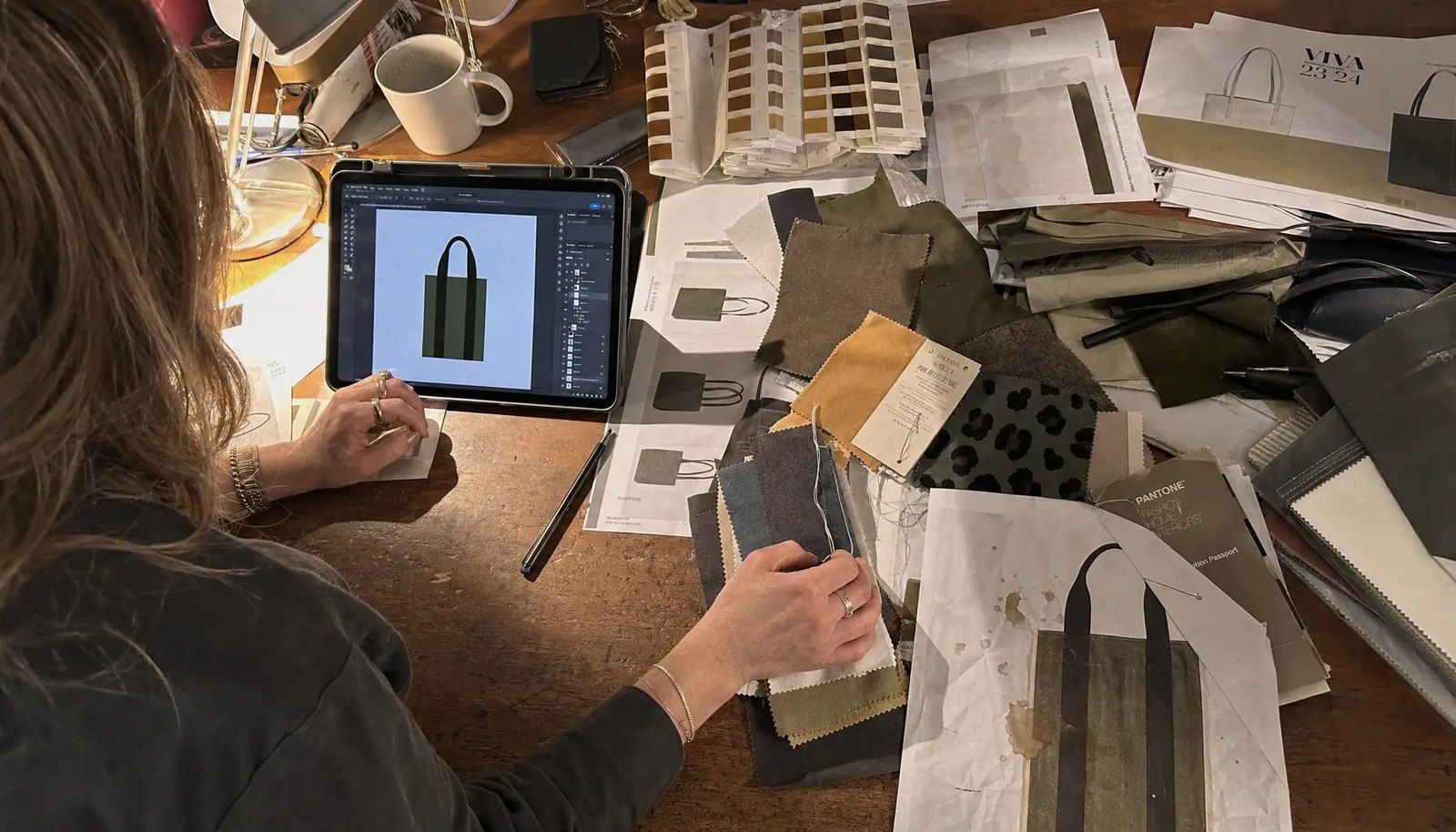
Why this tote needs a pricing plan, not a loose unit quote
For skincare brands, an organic cotton tote is usually not a stand-alone accessory. It sits inside a launch kit, a gift-with-purchase program, a PR box, or a retail bundle, which means the bag has to hit a price target while still looking clean next to the product it carries. A supplier can quote a low unit price and still miss the real budget if the spec is underdefined, the packing is inefficient, or the print method is chosen too late.
The practical way to buy this item is to treat it as a controlled package: fabric, sewing, print, label, packing, and freight assumptions. If you do that, the pricing conversation becomes useful. If you do not, you get quotes that cannot be compared, especially when one factory is pricing a 140 GSM flat tote and another is assuming a 180 GSM gusseted version with reinforcement stitching.
- One unclear spec can move cost more than a small supplier margin difference.
- For skincare use, presentation matters, but so does carton efficiency and repeatability.
- A good pricing plan helps procurement compare real landed cost, not just ex-factory numbers.
Start with the spec that drives cost the most
The biggest price driver is fabric weight and construction. For organic cotton totes in skincare programs, 140-180 GSM is the practical range. Below that, the bag often feels weak and wrinkles badly in retail use. Above that, the fabric becomes more durable and premium, but sewing cost rises and freight gets heavier. Most buyers land in the middle unless the bag will carry several glass jars or be reused as a daily shopper.
Size and shape matter almost as much. A flat tote is easier to sew and cheaper to produce. A gusseted tote or boxed bottom costs more because the factory adds extra panels and more sewing operations. Handle construction also changes cost sharply. Self-fabric handles are usually cheaper; webbing handles, reinforcement strips, or extra bartacks add labor but reduce failure risk.
- Use 140-160 GSM for light retail gifting or brochure-style use.
- Use 160-180 GSM when the tote must hold skincare sets, bottles, or mailer inserts.
- Add reinforcement only where the load actually sits: handle joins and side seams.
How print method changes the bulk price
For skincare brands, the print usually does the selling work, so the process has to match the artwork. Screen print is the most common route for bulk orders because it is stable, cost-effective, and easy to repeat. It works well for one-color or two-color logos, simple launch marks, and retail program graphics. Water-based printing can feel softer and more premium, but the factory needs better control over ink, curing, and fabric absorbency.
DTG or complex full-color decoration is usually the wrong route for a bulk tote unless the design truly needs photographic detail. It is slower, less predictable on textured cotton, and harder to compare across suppliers. If the artwork has small text, ask for a production-size proof. A logo that looks fine on screen can lose legibility once it is printed on woven cotton.
- One screen-print setup can be economical across a large run.
- Each extra color usually adds setup cost and may slow production.
- Ask the factory to confirm print area, mesh count, and curing method in the quote.
Use this supplier comparison before you accept a quote
The right sourcing route depends on your risk profile. A direct factory is usually the best choice when you want control over fabric, sewing, print, and packing. A trading company can be useful if you need a wider sourcing basket, but it may hide where the bag is actually made. For a skincare brand, that matters because consistency and sample accuracy are usually more important than squeezing the last cent out of unit price.
Use the table below to compare what each route really gives you. Do not compare only the headline unit price. Compare whether the supplier can prove the fabric spec, whether they can repeat the same bag in a second run, and whether they understand carton loading and export marks.
- Direct factory: better for spec control and repeat orders.
- Trading route: useful when you need combined sourcing, but inspect the real production source.
- Low quote with vague packing data is not a full quote.
Compare sourcing routes on the details that affect the invoice
A useful quote comparison is built on the same assumptions. Ask every supplier to quote the same size, same GSM, same print colors, same handle type, and same packing. If one supplier leaves out polybags and another includes them, the unit price is not comparable. The same is true for carton counts and gross weight. A tote that fits more units per carton can reduce freight cost even if the ex-factory price is slightly higher.
For procurement teams, the best comparison is not a simple three-column spreadsheet. It is a controlled sourcing matrix that separates product cost from packaging cost, from logistics cost, from supplier risk. That is the only way to decide whether a cheap quote is actually cheap once it lands.
- Compare by landed-cost logic, not by factory price alone.
- Standardize quote assumptions before the first pricing round.
- Make sure every supplier is quoting the same artwork complexity and packing method.
Sample approval is where most tote orders go wrong
The sample needs to be a real production sample, not a loose mockup. That means the actual fabric, thread, label, print method, and seam construction should be used. A paper proof or digital render will not tell you whether the print sits correctly on the fabric or whether the handle stitching distorts the top edge. For a skincare brand, where the tote often sits beside premium product packaging, visual consistency is part of the commercial spec.
Check the sample against measurements, not just appearance. Measure finished width, height, gusset, and handle length. Rub the print lightly after curing. Inspect the inside seams for loose thread and skipped stitching. If the tote has a side label or woven CTM sample mark, confirm the placement is straight and does not pull the fabric. Once the sample is approved, lock the spec in writing so the bulk order cannot drift.
- Measure the sample before approval.
- Confirm print alignment and color under the lighting you use for receiving.
- Approve the same fabric lot and label build that will be used in bulk.
Packing and carton data can change the real cost
Packing affects labor, appearance, and freight. Organic cotton totes are often bulk folded, then packed in polybags or inner packs, and finally loaded into export cartons. If the tote is intended for premium retail or PR distribution, you may need a cleaner fold and individual bagging. If the tote is going straight into a distribution center, bulk folding may be enough. The right answer depends on your downstream handling cost, not just the factory's default method.
For landed-cost planning, ask for carton size, carton quantity, net weight, and gross weight. Those numbers tell you whether the bag ships efficiently. A tote with a slightly higher unit price can still land cheaper if the carton is tighter and the pack count is better. This is one of the easiest places for a quote to look attractive on paper and disappoint in freight.
- Confirm whether each tote is polybagged, tissue-wrapped, or bulk folded.
- Ask for outer carton marks and pallet assumptions if you need warehouse receipt control.
- Use real carton dimensions when estimating ocean or air freight.
MOQ logic: how to keep the order commercially sane
MOQ should be read as a setup economics question, not a factory trick. A tote with one fabric, one size, and one print color is easy to run in bulk. The moment you split the order into multiple colors, multiple handle lengths, or several artwork versions, the factory has to spread setup and quality control across more SKUs. That drives the unit cost up quickly. Procurement teams should decide early whether variety is worth the added inventory complexity.
For skincare brands, the better approach is often one core tote spec with small visual variations through print, not through structure. Keep the fabric, handles, and construction fixed, then vary the artwork by campaign. That keeps MOQ sensible and makes repeat orders easier to compare. If you need multiple sizes, get them priced as separate SKUs so the margin impact is visible.
- One structure plus one print version is the cleanest MOQ path.
- More SKUs usually mean more setup, more sampling, and more leftover risk.
- Ask the factory to separate one-off tooling cost from recurring unit price.
Lead time risk: what actually slows an organic cotton tote order
Lead time is usually blocked by fabric, not sewing. If the factory needs to source organic cotton fabric in the right GSM and shade, that can take longer than the sewing line itself. Artwork approval is the other common delay. If you are changing print placement, logo size, or label type after the sample, the schedule slips fast. Buyers who plan a launch should treat approval timing as part of the production schedule, not an administrative afterthought.
The practical way to manage schedule risk is to split the order into milestones: sample approval, fabric lock, bulk sewing, packing, and shipment booking. A factory that can explain each step clearly is usually easier to manage than one that gives a single optimistic date. That does not guarantee speed, but it gives procurement a way to see where the delay will come from before it hits the launch calendar.
- Fabric approval is often the longest hidden step.
- Artwork changes after sample approval are a common source of delay.
- Ask the supplier for stage-based lead time, not just one delivery date.
A buyer checklist for the RFQ and quote review
The safest RFQ is short, specific, and hard to misread. If you give the supplier a clear spec sheet, the comparison gets much easier. The main goal is to force every quote onto the same basis so hidden cost does not creep in through wording. Procurement teams should also collect the evidence that proves the supplier can make the bag repeatably, not just once.
Use the checklist below before you send the enquiry and again when quotes return. It will save time in the second round and reduce the chance that a low quote turns into a sample correction cycle.
- Final size and structure are fixed.
- Fabric GSM and weave type are fixed.
- Print method, number of colors, and print position are fixed.
- Packing method and carton count are fixed.
- Sample approval criteria are written down.
- Lead time is split into sample and bulk stages.
Specification comparison for buyers
| Spec decision | Recommended option | When it fits | Buyer risk to check |
|---|---|---|---|
| Fabric weight | 140-180 GSM organic cotton canvas | Most skincare retail programs, gifting, and trade show use where the tote needs to feel substantial | Thin fabric can collapse under product samples; too heavy raises cost and carton weight |
| Printing method | 1-2 color screen print or water-based print | Brand logos, launch campaigns, and repeat bulk orders with controlled artwork | Fine gradients and tiny type may blur; confirm mesh count and curing method |
| Handle construction | Self-fabric handles or reinforced webbing handles | Retail packaging, daily use, and heavier in-bag loads | Unreinforced handles fail first; ask for stitch count and bartack placement |
| Bag style | Flat tote with gusset or small boxed bottom | Skincare kits, sample sets, and gift-with-purchase programs | Deep gusset adds sewing cost; confirm finished depth before pricing |
| MOQ route | Standard bulk run with one fabric, one print, one size | Brands that want the lowest unit price and stable repeat supply | Multiple variants multiply setup charges and leftover stock risk |
| Sample approval | Pre-production sample with real fabric, print, and label | Any order with a launch date, retailer approval, or compliance review | Paper proofs hide defects; do not approve without actual sewn sample |
| Packing method | Bulk packed with size-standard carton counts and carton marks | Importers and distributors focused on freight efficiency | Loose folding creates creases and print rub; confirm polybag or tissue needs |
| Supplier route | Direct factory with bag experience, not a trading-only quote | When you need better cost visibility and consistent production control | Trading quotes can hide lead time and subcontract risk |
| Landed cost approach | Quote on product + packing + inland + export carton data | When comparing China, India, or other sourcing routes fairly | Low unit price can be offset by weak carton efficiency or higher defect allowance |
Buyer checklist before sampling
- Define tote size, target GSM, handle length, and whether you need a gusset or boxed bottom.
- Lock the print method, number of colors, and artwork placement before requesting quotes.
- Request one pre-production sample using the actual fabric, thread, label, and print process.
- Ask for packing data: fold method, polybag requirement, carton size, carton quantity, and gross weight.
- Compare quotes on the same basis: ex-factory, packing included or excluded, and estimated carton loading.
- Set acceptance limits for size tolerance, print registration, seam strength, and needle damage.
- Ask for production lead time by stage: sample, bulk fabric approval, sewing, packing, and shipment booking.
Factory quote questions to send
- What exact fabric construction and GSM are you quoting, and is the cotton certified organic for the full fabric or only the yarn claim?
- Is the print price based on one side or both sides, and how many colors are included in the quoted setup?
- What is your MOQ per size, color, and print design, and what changes trigger a new setup charge?
- Can you quote with real carton dimensions, carton count, and gross weight for landed-cost comparison?
- Will the pre-production sample use the same fabric lot, thread, label, and print method as bulk production?
- What are your tolerance ranges for bag width, height, handle length, seam allowance, and shrinkage after washing if applicable?
- How do you control print cure, stitch strength, and final inspection before packing?
- What is the production lead time after sample approval, and what part of that time is fabric-dependent?
Quality-control points to confirm
- Fabric GSM matches the agreed spec within a practical production tolerance, with no obvious thin spots or shade inconsistency.
- Seams are straight, even, and fully closed at stress points, especially where handles join the body.
- Bartacks or reinforcement stitching appear at handle anchors if the tote is intended to carry sample jars or gift sets.
- Print placement stays within the approved artwork window, with no obvious misregistration, pinholes, or under-cure cracking.
- Finished size stays within the allowed tolerance for width, height, and gusset depth.
- Labels, side tabs, or sewn marks are fixed in the approved position and do not distort the fabric.
- Cartons are packed to the agreed count, with consistent folding, no excessive wrinkling, and clear shipping marks.
- Random carton inspection confirms no odor, oil stains, broken needles, loose threads, or fabric contamination.