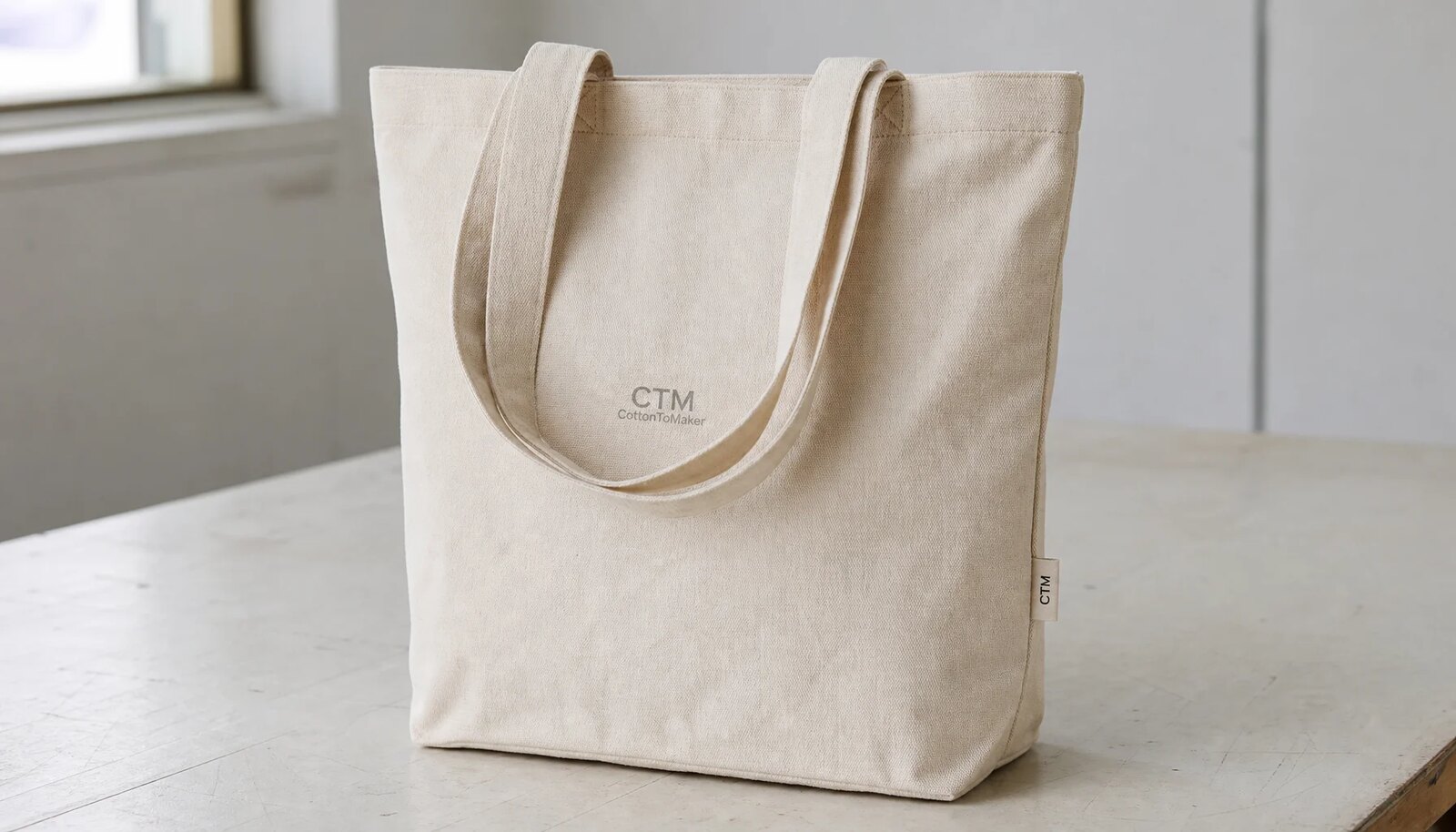
Start With the Carry Job
Farmers market totes are not handled like ordinary promotional bags. A shopper may start with leafy greens, add bread and coffee, then place jars, flowers, or bottles in the same bag. Vendors also use totes differently: some sell them as merchandise, some include them in CSA pickup programs, and some use them as paid carry bags at checkout. The material decision should start with that use case, not with logo size.
For procurement, the first question is load profile. A light tote can be soft and flat if it mainly carries bread, herbs, print material, or apparel. A standard market tote needs enough body to hold mixed goods without collapsing. A heavier reusable tote needs stronger fabric, reinforced handles, and tighter inspection because jars and bottles concentrate stress at the top hem and lower corners.
Separate giveaway programs from resale programs early. A giveaway bag may prioritize unit cost and simple printing. A paid retail tote must look and feel like a product. That changes acceptance standards for creasing, shade variation, thread trimming, print sharpness, label placement, packing, and carton handling.
- Light carry: herbs, bakery items, printed collateral, apparel, and low-weight merchandise.
- Medium carry: mixed produce, coffee bags, candles, soap, flowers, jars, and ordinary market shopping.
- Heavy carry: bottles, multiple jars, dense produce, boxed gift sets, or bundled purchases from several vendors.
- Retail resale: tighter standards for folding, shade, stitching, trim, label placement, and visible defects.
- Buyer action: name a target loaded weight before requesting fabric quotes.
Compare Fabric Weight
Fabric gsm is one of the main cost drivers in organic cotton totes for farmers market vendors. A lighter 180-220 gsm canvas may work for event giveaways or low-load shopping, but it can sag under mixed goods and show more wrinkling. A 240-260 gsm canvas is usually the practical starting range because it balances hand feel, carry strength, print clarity, carton weight, and unit cost.
Heavier canvas around 280-340 gsm can be appropriate for paid retail totes, bottle programs, premium co-op merchandise, or frequent reuse. The tradeoff is not limited to fabric cost. Heavier bags increase carton gross weight, may reduce pieces per carton, can feel stiff when folded, and can make freight less efficient. If the order ships before a seasonal market launch, carton weight and delivery handling matter almost as much as unit price.
Do not judge gsm alone. A tight 240 gsm plain weave can perform better than a loose 260 gsm fabric with poor stability. Ask for the weave description, finish, shrinkage expectation, and a swatch from the proposed material. Natural organic cotton can show seed flecks and slub; these are manageable if the buyer approves the look before bulk cutting.
- 180-220 gsm: economical for low-load promotional use and simple carry bags.
- 240-260 gsm: balanced default for most market totes carrying mixed goods.
- 280-340 gsm: stronger retail feel for heavier use, bottles, jars, and premium programs.
- Ask whether the fabric is natural, bleached, dyed, washed, unwashed, or pre-shrunk.
- Set a fabric weight tolerance, commonly +/-5%, and confirm how it will be checked.
Specify Weave and Finish
Organic cotton is a fiber claim, not a complete material specification. A quote that says organic cotton tote may still leave open the weave, fabric weight, finish, dye route, shrinkage, and document trail. Buyers should write the material in manufacturing language: gsm, weave type, color state, finish, shrinkage, and acceptable surface character.
Plain weave cotton canvas is common because it is durable, printable, and familiar to cut-and-sew factories. Twill can feel softer and show a diagonal texture, but it may behave differently under printing and folding. Natural unbleached canvas gives a farm-market look many vendors like, while bleached or dyed fabric gives cleaner logo contrast but requires shade control.
Shrinkage matters if the tote may be washed or if retail dimensions are important. If the bag is not promoted as washable, say so internally and avoid implying wash performance in sales copy. If washability matters, request a wash test result or define an acceptable shrinkage range after one wash cycle.
- Request fabric swatches from the proposed production fabric, not only a generic sample tote.
- Define acceptable slub, seed flecks, shade variation, and surface irregularities before bulk cutting.
- For reorder programs, keep a fabric reference and record the shade or lot information used.
- Ask whether the supplier controls fabric sourcing directly or buys finished fabric from another mill.
- Confirm whether the tote is cut from greige, finished, washed, dyed, or pre-shrunk fabric.
Document Organic Claims
Organic claim control should be handled before artwork, labels, or product pages are approved. The right document depends on the claim being made and the supply chain behind it. A low-risk internal description may need a supplier declaration and purchase record. A stronger product claim may require a scope certificate, transaction certificate, and linkage from fabric lot to finished goods shipment. Retailers and distributors may have their own document standards.
Buyers should ask what each document actually covers. Some certificates cover a supplier's certified scope but do not prove that a specific fabric lot was used for a specific tote order. A transaction certificate or equivalent traceability record may be needed when the claim must connect to a purchase order, fabric lot, and shipment. If documentation is incomplete, adjust the claim language rather than stretching it.
Keep claim wording consistent across the RFQ, PO, label, hangtag, invoice, packing list, carton marks, website copy, and vendor-facing materials. Quality control is not only about stitching; it also includes making sure the finished product does not claim more than the available documents support.
- Ask for scope certificate when you need to verify a supplier's certified activity.
- Ask for transaction certificate or equivalent lot-level proof when the order claim must be traceable.
- Request fabric lot linkage showing how the material connects to the finished tote shipment.
- Use a supplier declaration only when that claim level is acceptable to your compliance team.
- Approve label and hangtag wording after documentation review, not before.
Choose Shape and Capacity
The cheapest tote is usually a flat rectangular body, and that shape works for light retail items, bakery goods, apparel, printed material, and small merchandise. Farmers market loads are often bulkier. Tomatoes, jars, coffee bags, bottles, flowers, and boxed goods push against the lower corners and side seams. If the expected load is round, dense, or mixed, a gusset is often worth the extra fabric and sewing.
A bottom gusset adds volume without making the pattern too complex. A side gusset makes the bag easier to open at checkout and more flexible for irregular goods. A box gusset gives better standing shape and retail presence, but it can increase carton volume and sewing complexity. The right option depends on whether the tote is mainly a carry bag, a retail item, or a branded packaging tool for prepared bundles.
Write dimensions as width, height, and gusset depth. Clarify whether measurements are taken flat or open, and define tolerance. A common starting tolerance is +/-1.0 cm for width and height and +/-0.5 cm for gusset depth, but the buyer should adjust for product size, display needs, and inspection method.
- Flat tote: lower cost and efficient packing for light or flat goods.
- Bottom gusset: useful for produce, bread, jars, and general market shopping.
- Side gusset: easier loading and more capacity for mixed purchases.
- Box gusset: better retail structure for premium merchandise or prepared bundles.
- Spec tip: measure the actual goods before approving custom proportions.
Engineer Handles and Seams
Handles are usually the first stress point because the load is concentrated in four attachment areas. Buyers should specify total handle length, handle drop, handle width, handle material, insertion depth, and reinforcement method. A handle that passes a quick showroom pull may still fail when a shopper carries jars, bottles, or dense produce across a market.
Self-fabric handles create a consistent look and can use the same cloth as the body. Cotton webbing handles may provide a cleaner edge, stronger hand feel, and more consistent width. Either can work if the attachment is built correctly. Bar-tacks are efficient for load points. Box-X stitching spreads stress across a wider area. For heavier market totes, buyers may require both a secure top hem and reinforced handle ends.
Seam construction should be measurable. Ask for stitch type, stitch density, seam allowance, raw-edge finish, and top hem construction. A practical lockstitch range for many cotton totes is about 8-10 stitches per inch, but the supplier should confirm what fits the fabric and seam type. Loose internal raw edges, skipped stitches, and shallow handle insertion can cause early failure even when the outside looks clean.
- Specify handle drop for hand carry or shoulder carry; do not rely on total length alone.
- Confirm handle width, material, insertion depth, and reinforcement pattern.
- Use bar-tack, box-X, or combined reinforcement at each handle load point.
- Set stitch density, seam allowance, and raw-edge finish in the tech pack or PO.
- Require a loaded sample check before approving bulk production.
Match Branding to Fabric
Branding should be selected after the fabric is fixed because cotton surface affects print behavior. A tight canvas supports cleaner edges. A loose natural weave can soften small text, thin lines, and QR codes. Heavy ink coverage may feel stiff on a reusable tote. For most farmers market vendor programs, one-color or two-color water-based screen print gives the best balance of hand feel, repeatability, and cost.
Screen printing still needs controls. Specify print size, position, artwork file format, color reference, and placement tolerance. A typical print placement tolerance may be +/-0.5 cm to +/-1.0 cm depending on bag construction and factory process. If the artwork has fine detail, small text, dense fills, or multiple colors, request a print test on the actual fabric before bulk production.
Transfers, embroidery, woven labels, and hangtags can be useful, but each has a tradeoff. Transfers help with short runs and complex artwork but should be checked for edge lift, cracking, and hand feel. Embroidery can look premium but costs more and may distort lighter fabric. Woven labels or side tabs are useful when a subtle brand detail is better than a large front print.
- Screen print: best default for simple logos, seasonal programs, and repeat orders.
- Transfer print: useful for shorter runs and multicolor graphics; test cracking and edge lift.
- Embroidery: premium for small marks, but higher cost and more stress on lighter fabrics.
- Woven label: subtle branding, useful for resale, but claim wording must be controlled.
- Approve the print on the selected bulk fabric, not on a different sample bag.
Build a Comparable RFQ
Confusing tote quotes usually come from incomplete specifications. One supplier may quote 220 gsm fabric, another 260 gsm, another may include screen charges, and another may exclude packing. The prices look comparable, but the scope is different. A strong RFQ makes every supplier price the same product and state what is excluded.
Include finished size, gusset depth, fabric gsm range, weave, finish, color, handle spec, reinforcement, print method, artwork size, print colors, packing format, carton requirements, sample route, order quantity, delivery terms, and destination. If the team is still choosing fabric weight, ask each supplier to quote the same tote in two or three controlled options, such as 220 gsm, 260 gsm, and 300 gsm.
Ask suppliers to break out costs where practical: blank tote, print setup, screens, labels, hangtags, retail packing, master cartons, inspection, inland freight, and export handling. This helps procurement see whether a cheaper unit price is truly cheaper or simply missing required work.
- Attach artwork with print dimensions and placement measured from bag edges or seams.
- Ask for blank, printed, and retail-packed pricing as separate lines when relevant.
- Require the supplier to state MOQ by fabric weight, print method, and version count.
- Use the same incoterm, destination, packing method, and delivery assumptions for each quote.
- Confirm what starts bulk lead time: deposit, PO, artwork approval, fabric approval, or sealed sample approval.
Inspect, Pack, and Ship
A useful QC plan turns subjective quality into measurable checks. Inspect dimensions, fabric weight, handle drop, stitch density, seam allowance, reinforcement, print placement, rub resistance, shade, odor, labels, and carton condition. For body dimensions, a common tolerance is +/-1.0 cm; for print placement and gusset depth, +/-0.5 cm to +/-1.0 cm may be appropriate. Tolerances should be written into the PO, not negotiated after production.
Loaded performance should be tested on samples and checked during inspection. For a general market tote, buyers may require a 10 kg suspended handle load for 60 seconds with no handle pull-out, seam opening, or top hem tear. Higher-risk programs can set a higher test weight after sample validation. For print, a simple dry rub check using clean white cotton cloth for 10 back-and-forth rubs can reveal obvious transfer or weak curing; fold checks can catch cracking on dense ink areas.
Packing should match distribution. Flat-fold bulk packing is usually best for B2B market programs, warehouses, co-ops, and distributor shipments. Individual polybags, inserts, hangtags, or belly bands are useful when each tote is sold as a retail unit, but they add labor, waste, carton volume, and cost. Set pieces per carton, carton dimensions, carton marks, barcode needs, and carton gross weight limit. Many buyers keep manual-handling cartons around 15-18 kg gross weight, but your receiving rules should decide the final limit.
Landed cost belongs in the same review as quality. A low FOB price can become expensive if it excludes screens, cartons, labels, inland freight, duties, inspection, or final delivery. Compare suppliers only after the fabric, construction, print, packing, incoterm, freight mode, and destination are aligned.
- Measure width, height, gusset, handle drop, and print placement against written tolerances.
- Check stitch density, skipped stitches, exposed raw edges, loose threads, stains, odor, and shade.
- Use a handle load test with agreed weight and time, such as 10 kg for 60 seconds for general market carry.
- Check print rub resistance, fold behavior, registration, filled-in details, and ink transfer.
- Reject cartons with moisture, wrong marks, wrong count, SKU mixing, crushing that affects goods, or gross weight above the agreed limit.
Specification comparison for buyers
| Option | Typical spec range | Best fit | Cost and performance tradeoff |
|---|---|---|---|
| Light canvas tote | 180-220 gsm plain weave cotton, usually flat body, simple 1-color print | Low-load giveaways, bakery bags, herbs, leaflets, apparel, or event use | Lowest material and freight weight, but more sag, lower structure, more wrinkling, and weaker perceived retail value |
| Standard market tote | 240-260 gsm tight plain weave or medium canvas, flat or bottom gusseted, reinforced handles | Most farmers market vendor programs carrying produce, bread, coffee, soap, flowers, jars, or mixed purchases | Balanced cost, print clarity, carry strength, foldability, and carton efficiency; usually the safest first specification |
| Heavy retail tote | 280-340 gsm canvas, gusseted body, stronger handle insertion, optional label or hangtag | Paid merchandise, premium co-op programs, bottles, dense produce, and frequent reuse | Better hand feel and structure, but higher fabric cost, higher carton gross weight, stiffer folding, and less efficient freight |
| Flat body construction | No gusset, rectangular panels, lower sewing complexity | Light retail items, printed material, small merchandise, and low-cost vendor programs | Efficient and economical, but bulky produce and jars push against side seams and make loading less stable |
| Bottom or side gusset | Approx. 8-12 cm gusset for general market use; deeper only when contents justify it | Produce, jars, boxed goods, coffee bags, flowers, and checkout tables where the bag must open wider | More useful capacity and better customer experience, but adds fabric, sewing time, and carton volume |
| Water-based screen print | 1-2 spot colors, tested on actual bulk fabric, placement tolerance stated | Most logo programs, repeat orders, seasonal market bags, and distributor replenishment | Good unit economics and natural hand feel, but fine lines, dense ink areas, and curing must be checked |
| Transfer print | Heat-applied design, useful for multicolor or shorter runs | Small batches, personalization, complex graphics, or low MOQ tests | Flexible artwork route, but may feel less natural and should be checked for cracking, edge lift, and wash or fold behavior |
| Embroidery or woven label | Small stitched mark, side label, hem label, or hangtag instead of large front print | Premium retail tote, subtle branding, or brands avoiding large ink coverage | Higher perceived finish, but embroidery adds cost and can distort lighter fabrics; labels require accurate claim wording |
Buyer checklist before sampling
- Define the tote use case before art review: produce, bottles, bread, flowers, coffee, soap, paid retail, co-op giveaway, CSA pickup, or vendor merchandise.
- Set a target loaded weight, such as 5 kg for general market carry or a higher buyer-approved value for jars and bottles, before choosing fabric and handle reinforcement.
- Specify finished width, height, gusset depth, handle drop, handle width, and whether dimensions are measured flat or open.
- Choose a fabric gsm range and state weave type, color state, finish, shrinkage expectation, visible slub tolerance, and whether the fabric must be pre-shrunk or washed.
- Confirm whether the body is flat, bottom-gusseted, side-gusseted, or box-gusseted because this changes usability, sewing cost, carton size, and inspection points.
- Define handle material, total length, handle drop, insertion depth, seam allowance, and reinforcement pattern such as bar-tack, box-X, or bar-tack plus box-X.
- State the branding method, print size, number of colors, artwork format, color reference, print position, and placement tolerance from a fixed seam or edge.
- For organic claims, request documents appropriate to the claim level, such as scope certificate, transaction certificate, fabric lot linkage, purchase records, or supplier declaration.
- Require measurable QC thresholds for dimensions, stitch density, handle load test, print rub resistance, print placement, carton condition, and carton gross weight.
- Define packing style, pieces per carton, carton dimensions, carton gross weight limit, carton marks, barcode needs, hangtags, inserts, and whether individual polybags are allowed.
Factory quote questions to send
- What exact organic cotton fabric gsm, weave construction, yarn count if available, finish, color state, and shrinkage expectation are you quoting?
- Is the fabric natural, dyed, bleached, washed, or unwashed, and what shade tolerance should we expect between fabric lots and reorder lots?
- Which organic claim documents can you provide: scope certificate, transaction certificate, fabric lot linkage record, purchase invoice trail, or supplier declaration?
- Does the available documentation apply to fiber, fabric, finished bag production, or only supplier sourcing?
- Is your price based on blank bags, printed bags, printed and packed bags, or retail-ready individual units?
- What is included in the unit price: fabric, cutting, sewing, screens, setup, sampling, trim, labels, hangtags, inner packing, master cartons, and carton marks?
- What MOQ applies to this fabric weight, body shape, handle spec, and print method, and what changes if we add a second print color or second artwork?
- What finished size tolerance will you hold for width, height, gusset, handle drop, handle placement, and print placement?
- What stitch density, seam allowance, handle insertion depth, and reinforcement pattern will you use in bulk production?
- How will you control screen print curing, ink rub resistance, registration, ink penetration, and hand feel on natural organic cotton canvas?
Quality-control points to confirm
- Finished body dimensions match the approved spec within typical buyer tolerance, such as +/-1.0 cm for width and height and +/-0.5 cm for gusset and handle drop unless another tolerance is agreed.
- Fabric weight is within the agreed gsm range, for example +/-5% of the nominated weight, and hand feel, weave density, slub level, and shade match the sealed reference sample.
- Body panels are cut on grain with no obvious twisting, skewing, uneven gusset folding, distorted side seams, or mismatched panel alignment.
- Seams are straight with consistent seam allowance, no exposed raw edges unless approved, and stitch density meets the written range, such as 8-10 stitches per inch for common lockstitch construction.
- There are no loose threads longer than the agreed limit, skipped stitches, broken stitches, untrimmed thread clusters, oil stains, dirt marks, mildew, packing odor, or unacceptable fabric defects.
- Handle attachment uses the approved bar-tack, box-X, or combined reinforcement and passes the agreed loaded check, such as 10 kg suspended for 60 seconds with no seam opening, handle pull-out, or top hem tearing.
- Handles match approved length, width, material, insertion depth, and placement, with no twisting, fraying, shade mismatch, or weak stitching at stress points.
- Print placement is within the agreed tolerance, such as +/-0.5 cm to +/-1.0 cm from the approved position, and the artwork remains readable without excessive pinholes, bleeding, or off-register color alignment.
- Print passes a dry rub check, such as 10 back-and-forth rubs with clean white cotton cloth showing no obvious transfer, and a fold check showing no cracking or flaking on normal folds.
- Labels, hangtags, care notes, carton marks, and claim wording match approved artwork and do not overstate organic certification beyond the available documentation.