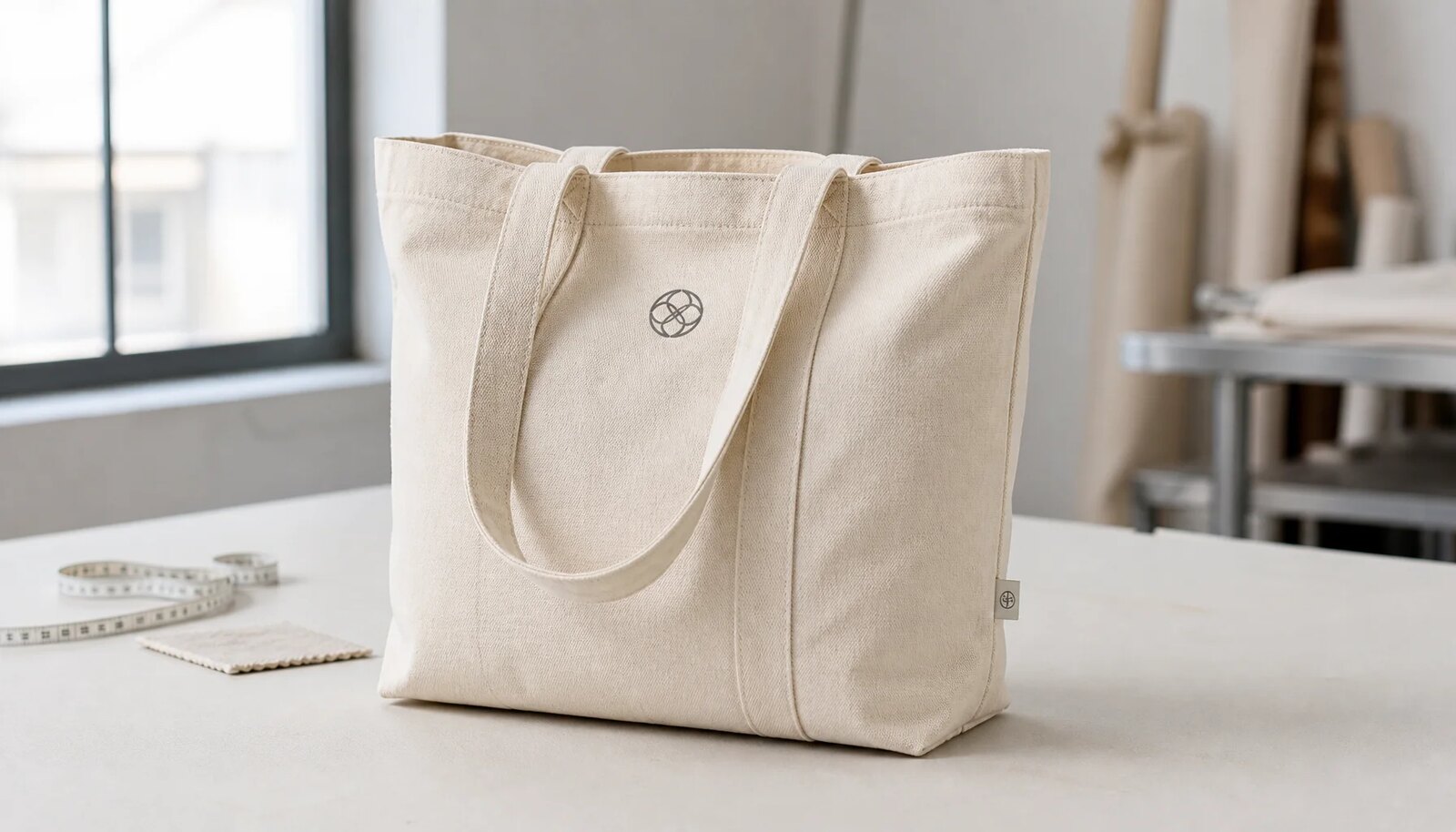
Start With the Event Use Case
Organic cotton totes look simple until procurement has to compare quotes, approve artwork, support an organic claim, and hit a fixed event date. A supplier can quote from a logo and quantity, but that quote is usually built on assumptions about fabric, size, handles, packing, documentation, and delivery terms. Those assumptions are where cost gaps and late corrections appear.
A stronger RFQ starts with how the bag will be used. A registration tote carrying a notebook, badge insert, agenda, and pen may not need the same construction as a VIP welcome bag holding a bottle, boxed sample, and apparel item. A staff operations tote used for several days may need stronger handle reinforcement than a sponsor giveaway handed out empty. These practical differences affect GSM, gusset, stitching, carton count, and freight.
For B2B buyers, the purpose of an organic cotton totes for event planners RFQ template guide is not to make the inquiry longer. It is to make every supplier quote the same product, on the same basis, with the same risks visible before award.
- Describe event type, attendee count, distribution point, and in-hand date.
- State whether the tote is a giveaway, kit bag, VIP gift, retail item, or staff bag.
- List expected contents and approximate loaded weight.
- Use the same spec, packing instruction, documentation requirement, and delivery term for every supplier.
Copy-Ready RFQ Block
Use this block as the controlled part of the inquiry. Adjust the bracketed fields, attach artwork, and send the same version to each shortlisted supplier. The goal is a quote that procurement can compare without guessing what is included.
RFQ block: Product: organic cotton tote bag for [event name] on [event date]. Quantity: [number] pieces, with price breaks at [qty 1], [qty 2], and [qty 3]. Use case: [registration kit / sponsor giveaway / VIP welcome bag / retail sale / staff bag]. Expected contents: [items] with loaded weight of about [kg or lb]. Bag size: width [mm/in], height [mm/in], gusset [mm/in], handle drop [mm/in], handle width [mm/in]. Construction: [flat tote / side gusset / bottom gusset / boxed bottom], top hem [single fold / double fold], seams [overlock / bound / French seam if required], handle reinforcement [cross stitch / bartack / other]. Fabric: organic cotton, [natural / bleached / dyed], [5 oz 170 GSM / 6 oz 200 GSM / 8 oz 270 GSM / custom], acceptable GSM range [range], shrinkage expectation [if applicable]. Decoration: [screen print / embroidery / woven label / patch], location [front / back / both], print size [mm/in], colors [number], Pantone references [codes], artwork file attached [AI/PDF/SVG]. Packing: [flat bulk / folded / individual polybag / paper band / inner packs], [pcs] per carton target, carton marks [yes/no], palletization [yes/no]. Documentation: organic cotton evidence required [list], export documents required [list]. Quality: sample approval before bulk, measurement tolerance [x], print placement tolerance [x], load test [x kg/lb for x minutes], final inspection before shipment [yes/no]. Quote terms: itemize bag, decoration, setup, sample, packing, testing, documentation, inland freight, export charges, and delivery term [EXW/FOB/DDP]. Lead time: provide sample lead time, bulk production lead time after sample approval, inspection date, shipment ready date, and transit estimate.
Add event-specific instructions instead of creating side conversations. If cartons need venue labels, put that here. If sponsor artwork has small text, request a strike-off here. If the sustainability statement is already approved by marketing or legal, name the documents needed here.
- Attach final or near-final artwork with the first RFQ.
- Require itemized quote lines instead of one bundled price.
- Include sample, QC, packing, and document requirements in the first inquiry.
- Ask suppliers to identify exclusions clearly.
Specify Construction, Not Just Size
Body dimensions alone do not define a tote. A flat tote is usually the simplest and most economical option for brochures, folders, notebooks, and light giveaways. A side-gusset or bottom-gusset tote gives more capacity and looks better when filled with boxed samples, apparel, or drinkware. A boxed-bottom style may sit more neatly on a registration table, but it adds material and sewing labor.
Handle drop and reinforcement should be quoted as production details, not left to catalog defaults. A short handle can work for hand carry at a small meeting. Shoulder carry is more useful for conferences and trade shows where attendees walk for hours. For many event totes, a handle drop around 250 mm to 300 mm is common, but a physical sample is still the best way to confirm comfort and appearance.
Ask how handles are attached: stitched into the top hem, cross-stitched, bartacked, or reinforced another way. For heavier kits, handle width and bottom seam strength matter as much as fabric weight. If the quote does not describe these areas, procurement is comparing a loose product idea rather than a controlled spec.
- Flat tote: economical for light paper inserts and simple giveaways.
- Gusseted tote: better for boxed samples, apparel, bottles, and fuller kits.
- Wider handles: more comfortable for heavier loads and longer carry time.
- Reinforced handle attachments: important for VIP, retail, reusable, or heavier event bags.
Choose a Practical Fabric Weight
Fabric weight drives cost, handfeel, print behavior, durability, carton volume, and freight. A 5 oz tote, about 170 GSM, can work for light inserts and budget-sensitive programs. A 6 oz tote, about 200 GSM, is often a practical middle option for conference and trade show bags because it feels reusable without becoming too heavy. An 8 oz tote, about 270 GSM, gives a firmer premium feel and better load confidence, but it increases material cost and shipping volume.
Ask for the actual GSM range and weave, not only a marketing weight. Also ask whether the fabric is natural, bleached, or dyed, and whether it is pre-shrunk. Natural unbleached cotton may show specks and shade variation. That can be acceptable, even desirable, if the event team expects it. It becomes a problem when artwork or sponsor guidelines assume a cleaner, whiter ground.
Do not choose weight only by unit price. A low-GSM bag may save money but print less opaquely or feel too light for the event contents. A heavy tote may look better but consume budget that would be more useful in better packing, inspection, or on-time freight. Quote at least two fabric weights when the use case is not settled.
- 5 oz / about 170 GSM: light handouts, low insert weight, cost-sensitive events.
- 6 oz / about 200 GSM: useful benchmark for many reusable event totes.
- 8 oz / about 270 GSM: stronger feel for premium kits, retail use, or heavier contents.
- Ask for GSM tolerance and how it will be verified during inspection.
Verify Organic Cotton Evidence
Organic cotton sourcing needs more than a catalog phrase. Procurement should separate the supplier's marketing declaration from documents that show facility certification, transaction coverage, and chain-of-custody evidence. The right document set depends on the claim your company wants to make, the sales market, and the certification framework involved.
A supplier declaration is a statement from the seller. It can be useful but is usually the weakest evidence on its own. A scope certificate generally shows that a company or facility is certified for certain processes or product categories during a defined period; it does not automatically prove that your specific shipment is certified organic cotton. A transaction certificate, when applicable, is stronger shipment-level evidence because it connects certified material to a specific transaction. Invoice traceability, packing lists, purchase references, and chain-of-custody records help connect the tote order to the documented material flow.
Ask for sample documents before awarding the PO and confirm what names, facility addresses, order numbers, material descriptions, and quantities will appear. If your event team plans to print a sustainability claim, align the wording with the evidence available. Avoid broad terms such as eco, sustainable, or organic unless the supplier can support the exact claim.
- Supplier declaration: useful context, but not enough for a strong organic claim by itself.
- Scope certificate: shows certified capability or scope, not necessarily your shipment.
- Transaction certificate: may support a specific certified transaction when applicable.
- Chain-of-custody evidence: connects material, production steps, invoice, shipment, and buyer records.
- Request document samples before PO award, then final documents before shipment release.
Control Artwork and Decoration
Decoration is often where event tote orders drift. Screen print is practical for many simple logos and larger runs, but buyers still need to approve opacity, cure, color appearance, and placement on the actual fabric. Natural cotton can mute light colors. Small sponsor text can fill in. Large ink areas can feel stiff if the method is not chosen carefully.
Multi-color artwork needs specific quoting. Each color can add setup cost, screen charges, registration work, approval time, and reject risk. If the bag includes a sponsor logo group, ask whether screen print, heat transfer, digital print, embroidery, woven label, or patch is the right method. The answer should include durability, handfeel, minimum quantity, lead time, and artwork limitations.
For high-visibility orders, approve a strike-off or decoration sample before bulk printing. Record the approved artwork file name, version date, Pantone references, print size, placement, and acceptable color standard. This makes later inspection much easier because the factory, buyer, and inspector are checking against the same target.
- State print size and placement in millimeters or inches.
- Name the color standard: Pantone match, visual match, or acceptable brand approximation.
- Separate screen charges, setup fees, and repeat-order charges.
- Request a strike-off for detailed, multi-color, sponsor-heavy, or executive-facing artwork.
- Confirm whether labels, patches, hangtags, or care labels change MOQ and lead time.
Compare MOQ and Quote Lines
MOQ usually reflects fabric availability, cutting efficiency, print setup, sewing line planning, and packing labor. A stock blank with one-color decoration may have a low minimum. A custom organic cotton tote with gusset, label, two-sided print, individual packing, and venue-specific carton labels will usually need a higher MOQ or a higher unit price.
Ask for price breaks that match real event decisions. A buyer may need 2,000 pieces for confirmed attendees, 2,500 with sponsor extras, and 3,000 with staff and contingency stock. Those breaks are more useful than random quantities. If several events can use the same body spec, ask whether one fabric and cutting run can be split into separate artwork versions.
A usable supplier quote should show the cost components. Bag body, decoration, setup, screens, sample, courier, labels, packing, carton marks, palletization, testing, organic documentation, inland freight, export handling, and delivery term should be visible. Compare EXW, FOB, and delivered pricing only after included and excluded costs are clear.
- Request MOQ by construction, fabric weight, print method, color count, and artwork version.
- Ask for practical price breaks based on attendee count and overage needs.
- Separate one-time charges from repeat-order charges.
- Ask how overruns, underruns, reprints, and rejected pieces are billed.
- Do not compare suppliers until packing, delivery term, and document requirements match.
Use Samples as Approval Tools
A sample is not a courtesy photo; it is a production control tool. The pre-production sample should use the intended bulk fabric, GSM, handle construction, print method, and packing style whenever possible. A look-alike sample can help early discussion, but it should not release bulk production.
Review the sample like the event team will use it. Fill the tote with the actual contents or a close weight match. Carry it by hand and over the shoulder. Check whether the bottom distorts, whether the logo is visible when filled, whether handles feel comfortable, and whether the bag folds cleanly into the planned carton format. If pre-packed bags will sit on registration tables, check whether the tote stands, collapses, or wrinkles in a way that matters.
Put approval milestones in writing. Artwork approval, sample approval, material approval, packing approval, final inspection, shipment release, and delivery handoff should all have dates. A promise of thirty days is not enough unless it separates sample time, production time, inspection time, shipping time, and receiving buffer.
- Approve one pre-production sample before bulk release.
- Review the sample against the written spec, not only appearance.
- Record approved dimensions, fabric, print placement, color target, handle construction, and packing.
- Run a load check using expected event contents.
- Close all sample comments in writing before production starts.
Write QC Rules Into the PO
Quality control works best when reject rules are agreed before fabric is cut. The purchase order should define measurement tolerance, print placement tolerance, stitch expectations, load-test method, inspection timing, and what happens if goods fail inspection. For many tote orders, plus or minus 1 cm for main dimensions and plus or minus 5 mm to 10 mm for print placement can be practical, but the final tolerance should match the design and factory capability.
If your company uses AQL, state the inspection level and defect limits in the PO. Many buyers use general inspection level II as a starting point, then agree major and minor defect limits with the supplier or third-party inspector. If you do not use AQL, define the sampling method plainly: number of cartons, number of pieces, reject conditions, rework rights, and reinspection responsibility.
Functional checks should reflect event use. A load test can be written as: load the tote with [target weight] for [duration], hang or carry by both handles, then inspect handle attachments, seams, fabric tearing, and distortion. Print checks should include rubbing, ink transfer, cure, registration, edge sharpness, and color consistency. Packing checks should verify counts and labels because a good tote in the wrong carton can still disrupt a multi-venue event.
- Major defects: open seams, broken handles, severe print defects, stains, odor, wrong artwork, wrong size, wrong packing.
- Minor defects: loose thread, small slub, slight shade variation, small cosmetic mark within agreed limits.
- QC checkpoints: incoming fabric, first print or sewing output, inline production, final random inspection.
- Reject conditions: wrong material claim, wrong artwork, unsafe handle failure, visible attendee-facing defects, or carton labels that do not match the PO.
- State rework, replacement, discount, and reinspection expectations before shipment.
Plan Packing, Logistics, and Landed Cost
Packing affects landed cost, carton volume, receiving labor, and the way totes look at registration. Flat bulk packing is efficient for import and warehouse handling. Folded packing can save space but may create creases on printed areas. Individual polybags keep bags clean but add cost, waste, and unpacking labor. Paper bands or inner packs can help count control without full individual packaging.
Ask for the carton plan in the RFQ: pieces per carton, carton dimensions, gross weight, net weight, carton material, inner pack count, and carton mark layout. Event teams may need labels by event name, SKU, artwork version, venue, kit type, or sponsor group. Missing labels can create hours of receiving and sorting work after arrival.
Build the schedule backward from the in-hand event date. Include venue delivery, warehouse receiving, kitting, customs, transit, export handoff, final inspection, packing, printing, sewing, cutting, material preparation, sample approval, artwork adjustment, and courier time. Landed cost should include setup, screens, samples, packing, carton marks, palletization, inspection, documentation, freight, insurance, duties, taxes, destination delivery, and warehouse labor where relevant.
- Confirm shipment ready date and transit estimate separately.
- Ask whether cartons can be labeled by venue, artwork version, or kit type.
- State maximum carton weight, pallet rules, barcode needs, and delivery appointment requirements.
- Compare EXW, FOB, and delivered quotes only after exclusions are clear.
- Keep buffer for customs, warehouse receiving, event kitting, and late attendee changes.
Specification comparison for buyers
| Sourcing scenario | Best fit | What to compare in the quote | Main risk to control |
|---|---|---|---|
| Custom cut-and-sew organic cotton tote, direct factory | Conference welcome kits, sponsor bags, retail-style event merchandise, repeat programs using the same body spec | Fabric GSM and weave, body size, gusset, handle drop, stitch construction, print method, packing, MOQ, sample timing, FOB or EXW terms | Low base price may exclude print setup, document fees, carton marks, inner packing, palletizing, or organic documentation |
| Stock blank organic cotton tote with decoration | Rush events, smaller meetings, simple one-color logos, programs that can accept standard sizes | Confirmed stock quantity, lot consistency, actual dimensions, decoration area, organic claim support, replacement policy for misprints | Stock may not be traceable, may vary by lot, or may sell out before artwork approval |
| Midweight 6 oz / about 200 GSM screen-printed tote | Most event planner RFQs carrying brochures, notebook, badge sheet, pen, and light sponsor items | Actual GSM range, shrinkage status, print opacity, handle reinforcement, carton count, ink cure time | Similar-looking quotes can differ in handfeel, opacity, seam strength, and print coverage |
| Heavy 8 oz / about 270 GSM tote with gusset | Premium registration kits, retail resale, heavier inserts, VIP gifting, programs where reuse matters | Freight impact, carton dimensions, load-test requirement, sewing method, handle width, bottom seam strength, sample cost | Higher unit and freight cost is only justified if added strength is specified and inspected |
| Multi-color print or detailed sponsor artwork | Sponsor-heavy events, branded merchandise, small text, color blocks, or multiple logos | Number of print colors, screen charges, registration tolerance, Pantone targets, strike-off timing, reject handling | Low-cost quotes may reduce print size, simplify artwork, or accept color drift procurement did not approve |
| Individual packing or venue-sorted cartons | Multi-city events, warehouse kitting, direct-to-venue shipments, retail or VIP distribution | Polybag or paper banding, inner pack quantity, carton label format, venue code, SKU label, barcode, pallet requirement | Extra packing labor is often omitted unless requested, causing late charges or destination sorting work |
| FOB import order managed by buyer forwarder | Procurement teams with freight control, consolidated shipments, or existing import process | FOB port, export carton dimensions, gross weight, ready date, document set, inspection window, handoff terms | Unit price is clearer, but buyer must manage freight, customs, duties, destination handling, and event delivery buffer |
| Delivered or DDP-style quote from supplier | Smaller teams that need one landed price and less import administration | Delivery address, duty and tax treatment, transit mode, insurance, customs responsibility, delivery appointment, receiving rules | Convenient price can hide weak production visibility, vague delivery timing, or limited recourse if routing slips |
Buyer checklist before sampling
- Define the event use case: registration giveaway, sponsor kit, VIP gift, retail sale, staff bag, or multi-site activation.
- State expected contents and approximate loaded weight, such as brochures only, notebook plus bottle, boxed samples, or a full welcome kit.
- Give final bag width, height, gusset depth, handle drop, handle width, pocket or closure needs, and whether the tote must stand upright when filled.
- Specify fabric weight in oz and GSM, acceptable GSM range, weave or finish, color, shrinkage expectation, and whether fabric is natural, bleached, or dyed.
- State the organic cotton claim your team intends to make and the documents needed to support it before purchase approval.
- Separate supplier declaration, scope certificate, transaction certificate, invoice traceability, and chain-of-custody evidence instead of treating all documents as equal.
- Define decoration method, print location, print size, number of colors, artwork file format, Pantone references, and acceptable color-matching standard.
- Ask for MOQ by option, including one-color print, two-color print, heavy fabric, gusset, pocket, label, and multiple artwork versions.
- Request a pre-production sample made with the same fabric weight, print method, handle construction, and packing method planned for bulk production.
- Ask for unit price, print setup, screen charges, sample fee, documentation fee, testing fee, packing cost, carton mark cost, pallet cost, and inland freight as separate quote lines.
Factory quote questions to send
- Can you quote the same tote in 5 oz / about 170 GSM, 6 oz / about 200 GSM, and 8 oz / about 270 GSM, using the same dimensions, handles, print, and packing?
- What exact fabric will be used: organic cotton status, weave, finish, color, GSM range, shrinkage status, and whether the fabric is from current stock or made to order?
- Which organic cotton documents can you provide before production and with shipment: supplier declaration, scope certificate, transaction certificate, invoice traceability, or chain-of-custody records?
- What does each document prove, and which company name, facility, material, product category, order number, and shipment quantity will appear on it?
- Is cutting, sewing, printing, inspection, and packing handled in your own facility, or is any step subcontracted? If subcontracted, which step and who controls QC?
- What is your MOQ for the base tote, each print color count, gusseted construction, custom labels, and multiple artwork versions under one purchase order?
- What are the one-time and repeat charges for screens, print setup, artwork adjustment, labels, sample making, courier, testing, carton marks, individual packing, palletizing, and export documents?
- Can you make a pre-production sample from the intended bulk fabric and intended print method, and what is the sample lead time after artwork approval?
- What tolerances do you hold for body width, body height, gusset, handle drop, handle alignment, print placement, GSM, and shade variation?
- What AQL level or inspection standard do you normally use for totes, and can you support a buyer-appointed pre-shipment inspection before final payment or release?
Quality-control points to confirm
- Use a written inspection plan before production starts. For larger orders, request pre-production sample approval, inline checks during sewing or printing, and a final random inspection before shipment release.
- Set a practical AQL level if your company uses AQL, such as general inspection level II with major and minor defect limits agreed in the purchase order. If you do not use AQL, state sampling quantity and reject rules plainly.
- Measure body width, body height, gusset depth, handle drop, and handle width against the approved spec. Common event tote tolerance language is plus or minus 1 cm for main dimensions and plus or minus 0.5 cm for handle placement unless the design requires tighter control.
- Check fabric weight against the approved GSM range, not only the supplier catalog description. Pull samples from different cartons so a light roll or mixed lot is easier to catch.
- Inspect side seams, bottom seam, top hem, handle attachments, bartacks, stitch density, skipped stitches, loose thread, and seam opening under light pulling pressure.
- Use a load test tied to the event contents. Load the tote with the expected kit weight plus a reasonable buffer, hang it by the handles for a defined period, then check for handle stretch, seam opening, fabric tearing, or distortion.
- Check print placement with a ruler or template. State an acceptable placement tolerance, such as plus or minus 5 mm to 10 mm from the approved position, depending on artwork size and visibility.
- Inspect print opacity, registration, cure, edge sharpness, cracking, smudging, ink transfer, and color consistency on natural cotton. Check first cartons, middle cartons, and last cartons, not only the top of one carton.
- Reject visible stains, oil marks, odor, mold, broken threads, crooked handles, obvious shade mismatch, print damage from packing pressure, crushed corners, and defects that make the tote unsuitable for attendee-facing distribution.
- Verify carton count, inner count, carton marks, barcode or SKU labels, venue labels, gross weight, and packing format against the purchase order before goods leave the factory.