Why craft-fair tote procurement needs more control than a basic promo order
Organic cotton totes for craft fairs sit in an awkward but important category. They are part reusable packaging, part branded merchandise, part event supply, and sometimes part paid retail product. The same bag may need to look good on a booth table, carry real purchases, support sustainability copy, and arrive at several venues before fixed event dates. That is more pressure than a simple giveaway tote usually carries.
The biggest sourcing problem is not the bag itself. It is specification drift. If an RFQ says only “organic cotton tote bag,” suppliers can quote very different products while using the same broad description. One factory may price a 140 gsm flat tote with short handles and one-side print. Another may quote a 240 gsm gusseted canvas tote with reinforced handles and a different carton pack. Both quotes may be honest, but they are not comparable.
A wholesale buying checklist keeps the discussion practical. It forces every supplier to price the same fabric, size, handle, print, documentation package, packing method, and inspection standard. It also helps internal teams understand why the lowest unit price may not be the lowest-risk choice. A tote that fails at the handle, misses the event window, or cannot support the intended organic claim can become expensive quickly.
- Treat craft-fair totes as visible, retail-facing soft goods rather than disposable commodity bags.
- Define size, GSM, handles, decoration, organic documents, packing, and inspection before comparing prices.
- Use the checklist to compare landed cost, event risk, and claim risk—not only ex-factory unit price.
Start with what the tote must carry
A good tote specification starts with the products, not the price sheet. Paper prints, postcards, fabric accessories, jewelry boxes, and light apparel do not need the same structure as candles, books, ceramics, boxed kits, or packaged food. A larger thin tote is not automatically more useful. It can stretch, collapse at the mouth, distort the print, and make the brand feel cheaper than intended.
For many craft-fair programs, 140–180 gsm organic cotton is a practical starting range. It keeps the bag foldable and cost-conscious while giving enough presence for a branded event tote. At the lower end, carton weight and volume are easier to manage. At the upper end, the fabric feels more substantial and usually presents better on a booth table. For heavier merchandise or a tote that will be sold, 200–280 gsm canvas can make sense, but the buyer should calculate the added unit cost, carton weight, and freight volume before approving it.
Finished dimensions matter. A common flat tote starting point is about 38 x 42 cm. If the tote needs to hold boxes, jars, candles, or several purchases, a 6–10 cm side-and-bottom gusset may do more for usability than extra height. Handles need the same attention. A 60–70 cm total handle length usually supports shoulder carry, but the sample should confirm actual handle drop and comfort. Total handle length on paper and shoulder feel in use are not identical.
- Match GSM and construction to the expected contents, not to the cheapest available fabric.
- Specify finished width, height, gusset type, gusset depth, handle length, handle drop, and handle width.
- Review a filled sample when the bag must carry boxes, books, candles, jars, ceramics, or multiple purchases.
Lock organic cotton terminology before the supplier quotes
Organic cotton is a material and documentation requirement. It is not the same as natural, unbleached, undyed, beige, eco, or environmentally friendly cotton. Those words may describe appearance or marketing tone, but they do not replace a written organic cotton specification. If the buyer intends to make an organic claim, casual language creates avoidable compliance risk.
The documentation route depends on the claim language, sales channel, and internal compliance requirements. Some buyers only need composition support for vendor files. Others need a certified product claim supported by scope documents, transaction certificates, labeling approval, invoice wording, and chain-of-custody records under standards such as GOTS or OCS. Not every sewing supplier can support that level of claim, even if it can make a good cotton tote. Ask before sampling, not after production is complete.
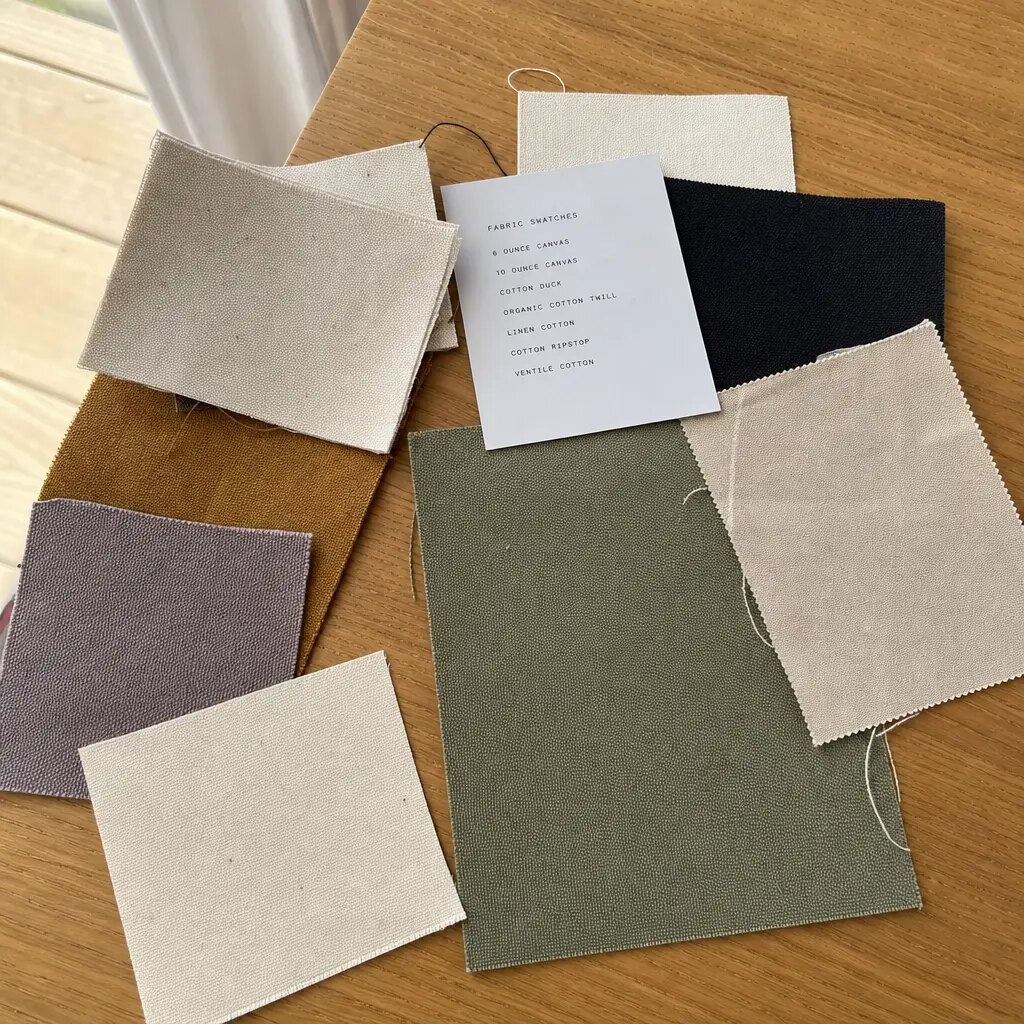
Natural organic cotton also has a visible character. Small seed flecks, mild shade variation, and modest slubs may be acceptable when they match the approved swatch. Stains, oil marks, mildew odor, water marks, large weaving faults, holes, heavy shade mismatch, and dirt are defects. The PO should separate acceptable natural-fiber character from unacceptable contamination or fabric damage.
- Do not accept natural, unbleached, eco, or sustainable as substitutes for organic cotton.
- Confirm whether the program needs composition documents, certified-claim support, or both.
- Approve a fabric swatch and define which natural cotton characteristics are acceptable.
Put tolerances in the RFQ, not in an argument after sampling
Totes are sewn products, so small variation is normal. That does not mean variation should be undefined. A buyer may expect a 38 x 42 cm finished bag. A supplier may assume a centimeter or two of sewing variation is acceptable. Neither side is being unreasonable until the purchase order is silent. Then the disagreement becomes subjective.
For wholesale craft-fair totes, state the measurement points and tolerances before production begins. Practical working targets often include body width and height ±1 cm, gusset depth ±1 cm, handle length ±1 cm, and print placement ±5–10 mm. Placement tolerance should be tighter for small centered logos and more realistic for large artwork on a flexible sewn panel. The proof should show where measurements start and end.
GSM also needs a tolerance. “Medium-weight cotton” is too vague for procurement. A target of 160 gsm with ±5% tolerance is easier to inspect. If the supplier can only commit to a range, such as 150–165 gsm, write that range into the quotation and PO. Do not quietly accept a lower GSM because a sample feels acceptable in hand. Lower fabric weight can change print absorption, drape, load performance, opacity, and perceived value.
Handle strength should reflect real use. For a light booth giveaway, a modest load requirement may be enough. For a craft-fair tote that may carry books, jars, candles, or several purchases, define a simple static load check, such as holding 5–8 kg for a buyer-defined time without seam failure, or use the buyer’s existing soft-goods test method. The key is to make handle failure measurable before the event, not anecdotal afterward.
- Write size, GSM, handle, and print-placement tolerances into the RFQ and PO.
- Use target GSM plus tolerance instead of vague terms such as light, medium, premium, or sturdy.
- Define a handle load check that reflects the tote’s expected contents and customer use.
Compare quotes by line item, not by one blended unit price
A single unit price can hide the differences that matter. Buyers should ask suppliers to separate the base sewn bag, fabric specification, print method, number of colors, screens or setup, labels, hangtags, inner packing, master cartons, samples, inspection support, and export documentation. Without line items, two quotes that look close may actually include different responsibilities and different levels of risk.
Quantity breaks should be based on the same specification. Ask for 1,000, 3,000, 5,000, and 10,000 pieces per artwork or colorway where those volumes are relevant. This reveals where setup charges, cutting efficiency, fabric procurement, print labor, and packing labor are being absorbed. A low MOQ can be useful for a test event, but it may carry higher per-bag setup cost, fewer fabric options, or outsourced printing.
Landed cost is the number that matters to procurement. A heavier tote raises material cost and freight weight. A larger gusset can increase carton CBM. Loose packing may protect the print but inflate air freight or LCL cost. Weak carton labeling can slow warehouse receiving. Cheap printing can create reject sorting, rework, or customer complaints. The right quote is not always the cheapest quote; it is the quote that meets the written spec and reaches the event on time.
- Require itemized pricing for sewn bag, print, labels, hangtags, packing, samples, and documents.
- Compare identical specs at multiple volume breaks to understand true MOQ economics.
- Review carton CBM, freight, receiving labor, inspection needs, and defect risk before choosing a supplier.
Choose decoration based on artwork, volume, and durability
Most organic cotton totes for craft fairs do not need complicated decoration. A one- or two-color screen print is often the most reliable option for logos, event names, line drawings, and bold typography at wholesale quantities. It is still important to confirm screen charges, ink type, print size, curing process, Pantone or approved color target, and whether the price includes one side or two sides.
Complex artwork needs more testing. Gradients, photographs, small type, fine lines, metallic effects, and many colors may push the supplier toward digital printing, DTG, heat transfer, or another process. Those methods can be appropriate, especially for shorter runs or seasonal artwork, but they should be approved on the actual organic cotton fabric. Check hand feel, edge definition, opacity, film outline, cracking risk, rub resistance, wash behavior if relevant, and color consistency across the run.
Placement should never be left at “centered on front.” The proof should state print width, print height, distance from top hem, distance from side seams, distance from bottom fold, and clearance from gusset folds or handle bases. If the bag will be folded with printed faces touching, confirm that the ink is cured and that packing will not cause offset. If the tote uses a woven side label, hangtag, care card, or insert, specify position, orientation, text version, and attachment method.
- Use screen print for simple artwork at scale, but confirm color count, setup charges, print area, and side count.
- Approve complex decoration only after checking print feel, edge quality, rub resistance, cracking risk, and folding behavior.
- Provide measured artwork placement and no-print zones instead of relying on visual centering.
Use sampling as a control process, not a courtesy step
An existing sample is useful, but it only shows general capability. It does not prove that the supplier can make your tote. A blank custom sample checks finished size, gusset, handle length, fabric feel, seam quality, and construction. A print strike-off or printed panel checks ink color and artwork detail. A pre-production sample made with final fabric, final print, labels, folding, and packing becomes the production standard.
Review samples with a ruler, scale, and the intended contents. Measure body width, body height, gusset depth, handle length, handle drop, handle width, print size, and print position. Verify GSM by the agreed method when fabric weight is important. Load the tote with representative products and observe whether the handles twist, the mouth collapses, the gusset folds badly, or the print distorts. Problems visible in sampling rarely disappear in bulk unless the correction is written and re-sampled.
Keep approval records clean. Photograph the front, back, inside seams, handles, gusset, bottom, label, print close-up, fold method, and carton mockup if applicable. For important programs, keep a signed physical pre-production sample marked with supplier name, PO, sample date, artwork version, fabric GSM, and approval status. If changes are needed, write them plainly: move print 20 mm lower, increase handle to 65 cm, reject darker fabric shade, change carton pack to 100 pcs per carton.
- Use reference samples for capability review only; approve a true pre-production sample for production.
- Measure every sample against the tech sheet and record deviations before bulk approval.
- Keep a signed sample and photo record tied to the PO, artwork version, fabric version, and packing method.
Plan packing and cartons before freight is booked
Totes are soft goods, but packing is not a small detail. Procurement should request pieces per inner pack, pieces per master carton, carton dimensions, gross weight, net weight, estimated CBM, carton count, and pallet plan before the PO is released. These details affect air freight, LCL, trucking, warehouse receiving, and distribution to individual event locations.
Packing has to balance presentation, print protection, and freight efficiency. Over-compression can create sharp creases, ink transfer, cracked transfer graphics, or crushed hangtags. Loose packing protects the product but increases CBM. A common wholesale approach is 25 or 50 pieces per inner polybag or paper band, then a consistent number of inner packs in each master carton. If plastic reduction is part of the buyer’s policy, discuss paper bands, bulk packing, or alternative moisture protection early because each option changes handling and cost.
Carton labels should be written for receiving teams, not only for the factory. Include PO number, item or style code, colorway, artwork version, quantity per carton, carton number, gross weight, net weight, and destination or event code when needed. If one production run supports multiple craft fairs, stores, or accounts, ask whether the supplier can pack by lot, destination, or release date. That extra planning can reduce re-sorting and last-minute carton opening.
- Confirm carton quantity, dimensions, weight, CBM, and pallet plan before shipment booking.
- Approve fold method and inner packing so print protection does not create unnecessary freight volume.
- Use carton labels that support receiving, counting, event allocation, and inventory control.
Write the QC plan before fabric is cut
Quality control should not begin when finished cartons are already waiting at the factory door. The buyer and supplier should define critical, major, and minor defects in advance. Critical defects may include wrong material claim, wrong artwork, unsafe contamination, severe handle failure, or large quantity mismatch. Major defects may include GSM outside tolerance, broken seams, print misplacement, heavy stains, wrong handle length, wrong carton pack, or mixed artwork versions. Minor defects may include small trim threads or slight natural cotton variation within the approved standard.
A practical QC plan can include fabric inspection, first cut panel review, first sewn sample review, first-off print approval, in-line sewing checks, and final packed-goods inspection. For high-value or event-critical orders, a buyer or third party may use an AQL approach, such as general inspection level II with acceptance levels agreed by the buyer. If formal AQL is not used, the PO should still state sample size, random carton selection, defect limits, and who pays for reinspection if the lot fails.
Final inspection should use random cartons, not samples selected from the factory office. Inspectors should count pieces, measure finished bags, check handle reinforcement, review print placement and adhesion, inspect fabric cleanliness, verify labels and hangtags, confirm carton labels, and compare the packing list with actual cartons. Shipment release should depend on the inspection result. If the lot fails, corrective action must be specific: trim threads, relabel cartons, replace damaged pieces, sort stains, reprint if possible, or remake failed goods.
- Classify critical, major, and minor defects before production and inspection begin.
- Inspect random packed cartons, not only loose samples chosen by the supplier.
- Tie corrective action, reinspection cost, and shipment release to written QC results.
Build the calendar backward from the craft-fair date
Craft-fair deadlines are fixed. A tote that arrives after the event has little value, even if the unit price looked excellent. Build the schedule backward from the required in-hand date. Include RFQ clarification, artwork approval, sample production, sample shipping, sample review, revisions, fabric preparation, cutting, sewing, printing, curing, packing, inspection, inland transport, export or domestic freight, customs if applicable, warehouse receiving, and event distribution.
The common mistake is approving bulk before the pre-production sample is right, then compressing inspection after shipment is already booked. Every milestone should have an owner and a date: artwork release, quote lock, document confirmation, sample approval, carton approval, production start, first-off print approval, final inspection booking, shipment release, and delivery to the event warehouse. If artwork or documentation is late, the schedule should be revised openly rather than absorbed through production shortcuts.
For multi-event programs, staged delivery may reduce risk. A buyer can release an initial lot for the first fair, inspect early production, and continue later lots after confirming sewing, print, and packing quality. This adds logistics work, but it can prevent a full-order problem. For urgent small quantities, stocked organic cotton blanks with local printing may be safer than a fully custom overseas run, provided the organic documentation and print durability still meet the buyer’s requirements.
- Plan backward from the event-ready date, including receiving and distribution time.
- Do not authorize bulk production until artwork, samples, carton plan, and documentation requirements are approved.
- Use staged delivery or local conversion when schedule certainty matters more than the lowest unit cost.
Specification comparison for buyers
| Spec decision | Recommended B2B default | When it fits | Procurement risk to control |
|---|---|---|---|
| Fabric weight | 140–180 gsm organic cotton plain weave for general craft-fair totes; 200–280 gsm canvas only when heavier merchandise or retail positioning justifies the extra cost and freight | Most event, maker-market, exhibitor, and brand-booth programs carrying paper goods, small boxes, candles, accessories, packaged food, and light merchandise | If the RFQ only says cotton tote, suppliers may quote anything from thin 110 gsm fabric to heavy canvas. State target GSM and tolerance, commonly ±5% or an agreed range. |
| Fabric construction | Plain weave for foldable, lower-bulk bags; tighter canvas or twill-style construction when the tote needs more body and higher load confidence | Flat event bags, exhibitor kits, retail add-ons, reusable shopping totes, and branded packaging used at booths | Loose weave can make print edges feather, panels stretch, and handle areas distort. Ask for weave description and approve a swatch before bulk. |
| Finished size | 38 x 42 cm flat body as a common starting point; add 6–10 cm side/bottom gusset for bulkier products | Art prints, books, stationery, boxed craft kits, packaged food, candles, small gifts, and general booth purchases | Cutting size is not finished size. Set finished-dimension tolerances, typically ±1 cm for body and gusset unless the program needs tighter control. |
| Handle specification | 60–70 cm total handle length, 2.5–3.5 cm handle width, shoulder drop confirmed on sample, reinforced with box-X, cross-stitch, bar-tack, or another approved method | Shoppers carrying multiple purchases while walking through a fair or leaving an event | Short handles reduce reuse. Weak handle tacks are a major defect. Define a pull/load test based on expected use, such as 5–8 kg static load for a light retail tote. |
| Seam and stitch standard | Clean lockstitch, even top hem, no raw edges, secure back-tacking, and typical 8–12 stitches per inch where appropriate for fabric weight | Retail-facing totes displayed on booth tables, sold as merchandise, or used as branded packaging | Uneven seams make a bag look like a cheap giveaway. Include seam appearance, skipped stitches, thread trimming, and reinforcement checks in inspection. |
| Print method | 1–2 color screen print for simple artwork at scale; digital, heat transfer, or DTG only when artwork complexity requires it and durability is approved on actual fabric | Logo-led craft-fair totes, event graphics, maker-market merchandise, distributor programs, and reorderable brand bags | Quotes may exclude screens, setup, PMS matching, ink changes, or second-side print. Confirm color count, print area, curing, and adhesion tests. |
| Artwork placement | Measured placement proof with print size and distances from top hem, side seams, bottom fold, gusset fold, and handle bases | Any tote that will be photographed, sold, displayed, or distributed across multiple booth locations | Factory visual centering varies. Set placement tolerance, commonly ±5 mm to ±10 mm depending on print size and sewing variability. |
| Organic claim route | Organic cotton composition supported by documentation; certified product claims only when supplier scope, transaction documents, and labeling rules support them | Buyers selling the tote, using sustainability copy, supplying compliance files, or supporting retailer/vendor requirements | Natural, unbleached, eco, and environmentally friendly are not substitutes for organic. Ask for GOTS/OCS scope and transaction documents when certified claims are required. |
| MOQ and price breaks | Quote identical specs at 1,000, 3,000, 5,000, and 10,000 pcs per artwork/colorway when relevant | Annual event calendars, distributor stocking, marketplace programs, retail packaging, and reorderable booth supplies | Low MOQ may hide high setup cost, limited fabric choices, less efficient cutting, or outsourced printing. Compare total landed cost, not only headline unit price. |
Buyer checklist before sampling
- Define the tote’s use case first: giveaway, retail merchandise, purchase bag, exhibitor kit, or branded packaging. That decision drives GSM, handle strength, print quality, packing, and acceptable defect level.
- Write finished dimensions in the RFQ: body width, body height, gusset type, gusset depth, handle length, handle drop, handle width, top hem width, and whether measurements are taken flat or opened.
- Specify material clearly: organic cotton, target GSM, agreed GSM tolerance, weave or canvas construction, natural or dyed shade, fabric shade standard, and whether shrinkage or wash behavior matters for the end user.
- State the required claim language and documentation before quoting. If the buyer needs a certified organic product claim, ask for the supplier’s applicable certification scope, transaction documentation process, and labeling approval requirements.
- Provide artwork as vector files where possible. Include print size, number of colors, Pantone or approved color references, side of print, placement dimensions, and no-print zones near seams, handles, gussets, and bottom folds.
- Ask the supplier to itemize one-side print, second-side print, screen charges, color setup, artwork adjustment, label sewing, hangtag attachment, inner packing, master carton, sample cost, inspection support, and export document cost.
- Set sample sequence and approval gates: existing reference sample if useful, blank custom sample, pre-production sample using final fabric and final print, and packed-carton mockup when freight or presentation is important.
- Define measurable tolerances before bulk starts: common working targets include GSM ±5%, body size ±1 cm, handle length ±1 cm, print placement ±5–10 mm, and print color within approved visual or lab-dip standard.
- Request price breaks on the identical specification at 1,000, 3,000, 5,000, and 10,000 pieces per artwork/colorway so setup economics and MOQ trade-offs are visible.
- Confirm carton data before PO release: pieces per inner pack, pieces per master carton, carton dimensions, gross weight, net weight, estimated CBM, carton labels, pallet height limits, and destination packing requirements.
Factory quote questions to send
- What exact fabric are you quoting: organic cotton type, GSM target, GSM tolerance, weave or canvas construction, yarn/fabric description if available, natural or dyed shade, and whether fabric is pre-shrunk or not?
- What documentation can you provide for the organic cotton claim: supplier scope certificate if applicable, transaction certificate process if applicable, composition declaration, country of origin, invoice wording, and timing for each document?
- Is the quote based on finished bag dimensions or cutting dimensions, and what are your normal production tolerances for body width, height, gusset depth, handle length, and handle placement?
- What handle reinforcement is included: box-X stitch, cross-stitch, bar-tack, double row, or another method? What load test do you recommend for this tote, and what result can you commit to?
- What print method are you quoting, how many colors are included, what is the maximum print area, and are screens, setup, ink mixing, PMS matching, and artwork adjustment included or charged separately?
- What risks do you see in our artwork on natural organic cotton: fine lines, small type, low-contrast ink, gradients, ink opacity, edge sharpness, registration, transfer outline, cracking, rub resistance, or wash resistance?
- What is your MOQ by fabric color, bag construction, print method, artwork version, and label version? Can you price 1,000, 3,000, 5,000, and 10,000 pieces on the same specification?
- Can you quote two construction options side by side, such as flat tote versus 8 cm gusset, and two handle options, such as 60 cm and 70 cm, with carton CBM shown for each?
- Can you separate the quotation into base sewn bag, printing, labels, hangtags, inner packing, master cartons, sample cost, inspection support, and export documentation instead of giving only one bundled unit price?
- What sample types can you provide before bulk production: existing reference sample, blank custom sample, strike-off or print swatch, pre-production sample with final fabric and print, and packed-carton mockup?
Quality-control points to confirm
- Fabric GSM should be checked against the PO tolerance using a defined method, not estimated by hand feel. A common commercial tolerance is ±5%, but the PO should state the exact acceptable range.
- Fabric appearance should be inspected for stains, oil marks, mildew odor, moisture marks, large slubs, weaving lines, holes, shade variation beyond the approved swatch, and contamination visible on natural cotton.
- Finished measurements should be taken flat on random samples: body width, body height, gusset depth, handle total length, handle drop, handle width, top hem width, mouth opening, and print location.
- Handle reinforcement must be secure and symmetrical. Check box-X, cross-stitch, or bar-tack placement, skipped stitches, loose thread nests, broken stitches, back-tacking, and handle ends caught at the wrong angle.
- Seams and hems should lie flat without puckering, twisting, raw edges, seam slippage, open seams, uneven top hems, needle damage, or excessive loose threads that reduce retail appearance.
- Print placement must match the approved proof. Measure distance from top hem, side seam, bottom fold, gusset fold, and handle base; do not accept supplier-selected visual centering as a control method.
- Print quality should be inspected for opacity, pinholes, bleeding, poor registration, smudges, banding, ghosting, scorching, transfer-film outline, ink offset, uneven curing, and color mismatch against the approved sample.
- Print adhesion or cure should be verified by the agreed test method, such as rub check, tape check, fold check, or buyer-defined wash/rub requirement when the tote will be sold as merchandise.
- Labels, hangtags, care cards, and inserts must match the PO version and be attached in the approved position with correct orientation, no sharp edges, no loose stitching, and no mixed artwork versions.
- Packing inspection should verify pieces per inner pack, pieces per carton, carton label information, carton number sequence, gross/net weight, carton condition, moisture protection, and actual count against the packing list.