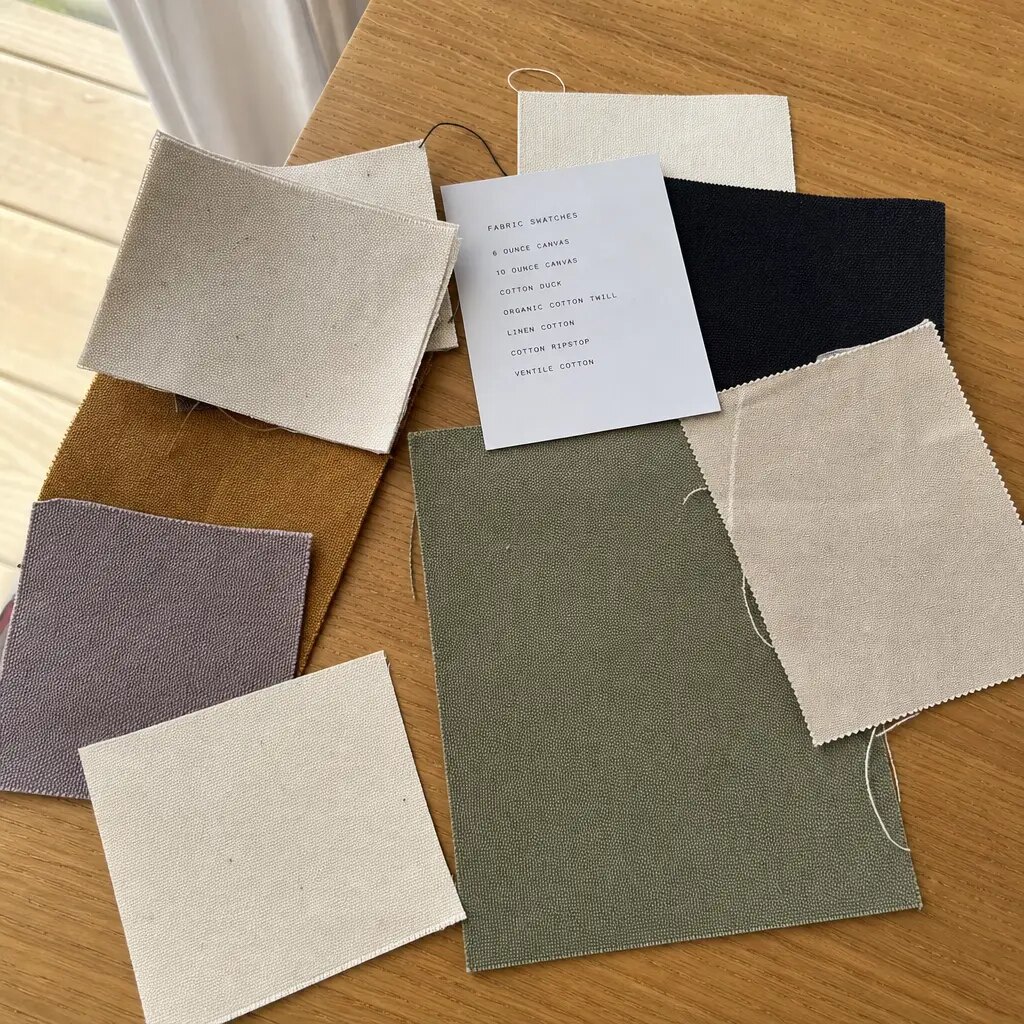
Why print proofing matters more on organic cotton totes than buyers expect
Organic cotton totes for coffee roasters usually look straightforward: one natural fabric body, one logo, maybe a short message on the back. That simplicity is exactly why buyers get caught out. The artwork can look clean on a screen proof and still fail on the actual tote because the fabric absorbs ink differently, the weave opens at the seams, or the print sits too close to a fold line. Once you move from a digital mockup to bulk production, small proofing errors turn into full-order rework.
For coffee roasters, the tote often carries more than a logo. It may be used for retail merchandising, roast club gifts, trade show bundles, or point-of-sale add-ons. That means the buyer has to think about how customers will handle the bag, how the print survives folding and friction, and whether the bag still looks premium after packing. The job is not to make the artwork bigger; it is to make the spec stable enough that the print holds up across the whole lot.
- Natural cotton shows ink density and edge detail more clearly than coated fabrics.
- Coffee brand artwork often includes small type, roast notes, or thin line graphics that need tighter print control.
- A tote that feels soft in hand can still fail if the handle stitch or seam load is not specified.
Start with the bag spec before you review the artwork
The first mistake in tote sourcing is letting artwork drive the bag spec. Buyers should define the physical tote before the designer finalizes placement. For most organic cotton retail programs, a 5–6 oz fabric at about 170–200 GSM is the practical starting point. It prints well, keeps unit cost controlled, and gives enough body for everyday carrying. If the tote is meant to carry heavier coffee bags, sample kits, or bottles, move up in weight and reinforce the handle and side seams rather than relying on print to make the bag feel premium.
Finished dimensions matter because they control the usable print zone. A common standard flat tote may work for a clean front logo, but if the brand wants a wrap print, front and back artwork, or a vertical tagline, the buyer needs a real panel layout from the supplier. Ask for exact cut size, seam allowance, handle drop, and the printable area after stitching. That is the only way to compare quotes fairly.
- Typical buyer-friendly starting spec: 170–200 GSM organic cotton, flat tote construction, reinforced handle stitch points.
- Confirm whether the supplier quotes finished size before or after seam allowance.
- Ask for the printable area in millimeters, not just the tote size on paper.
Choose the print method around artwork complexity, not habit
For coffee roaster totes, screen print is still the most practical method for simple brand marks and one- or two-color artwork. It gives strong opacity on natural cotton and generally holds up better for wholesale runs than methods that depend on perfect fabric flattening. If the artwork has fine lines, small type, or multiple registration points, the buyer should still inspect whether the supplier uses the right mesh count and ink density. On porous cotton, a cheap print setup can blur edges fast.
Digital print and heat transfer can solve some design limitations, but they do not automatically reduce risk. Digital can be useful for multi-color artwork or small test runs, yet buyers should compare hand feel, wash resistance, and cost at scale. Heat transfer can be acceptable for short runs or variable data, but it may not age well on a tote that will be folded and carried repeatedly. The right choice depends on the print area, run size, and how the tote will be sold.
- Screen print: best for simple, opaque logos and repeat wholesale production.
- Digital print: better for full-color art or limited runs, but proof for color stability on natural cotton.
- Heat transfer: useful for short-term campaigns, but inspect cracking and peel risk under folding.
How to read MOQ logic without getting trapped by a low quote
MOQ on organic cotton totes is not just a number; it is a formula. One supplier may quote a low minimum because they already have the fabric in stock, while another requires fresh fabric weaving, dyeing, cutting, and printing from scratch. For procurement teams, the issue is whether the MOQ matches the actual cost structure or simply hides higher setup fees. A lower unit price can still be expensive if it comes with extra color charges, duplicate sampling fees, or a packaging surcharge that appears later.
Buyers should separate the MOQ for blank body, print setup, and packaging version. A common trap is assuming that a lower MOQ applies to all three. If the supplier must switch screens, change labels, or rerun a new carton mark, the quote may reset. For distributor and retail buyers, the safest comparison is the total landed cost per sellable tote at the planned launch quantity, not the first-page unit price.
- Ask whether MOQ is based on fabric lot, printed design, or finished SKU.
- Confirm if one logo change, label change, or color change triggers a new minimum.
- Compare the quote at your real buying level, not the supplier’s preferred batch size.
Use supplier type to compare quality control, not only price
When buyers source organic cotton totes for coffee roasters, supplier route matters. A factory with in-house cutting, printing, stitching, and packing can control the sample-to-bulk transition more tightly than a trading layer that outsources each step. That does not mean every factory is better, but it does mean the buyer has fewer handoffs to manage. For a program where the print has to match a brand guide and the ship date is tied to a launch, fewer handoffs usually means fewer surprises.
A trading company can still be useful if it manages multiple factories well, especially for mixed product programs. But buyers should ask who approves the strike-off, who owns the print screen, who inspects the first production run, and who is responsible if the label position or carton count drifts. If the answer is unclear, the quote is not comparable. The following table is a practical way to sort sourcing routes before you commit.
- In-house factory route: better traceability and easier corrective action after sample approval.
- Trading route: useful for mixed-category sourcing, but responsibility boundaries must be written into the PO.
- Ask who signs off the first-off print sheet and who rechecks the packing list before carton sealing.
Supplier comparison table for organic cotton tote sourcing
The table below compares common sourcing routes buyers use for organic cotton tote programs. It is not about who is cheapest on paper; it is about which route gives you the least risk for the artwork, schedule, and packing requirements you actually need.
Use the table after you have fixed your bag size, print method, and target quantity. If those basics are still open, every quote will look different for a reason, and you will not be comparing like with like.
- Write decisions in measurable language, not only descriptive wording.
- Ask for sample photos plus one physical approval sample for important orders.
- Keep quotation, sample approval, and inspection notes tied to the same spec version.
What a useful pre-production sample should prove
A useful sample is not a generic tote with a logo slapped on it. It should prove the actual fabric hand feel, ink coverage, logo position, and label placement that will go into bulk. The best sample also shows whether the tote opens and folds properly, whether the handles sit evenly, and whether the print falls too close to a seam or stitch line. If the sample looks good only because it was hand-finished, it is not a good approval reference.
For coffee roaster buyers, the sample should also prove real-life shelf behavior. Fold the tote once or twice, hold it by the handle, and compare the print after creasing. If the design includes small text, inspect it under normal reading distance. If there is a woven side label or printed care label, make sure it does not crowd the logo or distort the retail look. The sample should answer bulk-production questions, not just photography questions.
- Approve actual fabric, actual ink, and actual label method.
- Check print centering, line sharpness, and corner coverage after folding.
- Keep one signed sample as the production reference and one as a receiving reference.
Quality thresholds that prevent avoidable rejections
A good QC plan uses measurable tolerances. On organic cotton totes, the most common rejection points are print misalignment, weak handle stitching, and inconsistent fabric appearance. Buyers should define tolerances before bulk starts. If the tote is intended for retail shelves, even a few millimeters of off-center print can matter. If it is a trade-show giveaway, the tolerance may be looser, but the handle strength still cannot be. A tote that tears after light use is a product complaint waiting to happen.
Set acceptance criteria around the points that affect customer perception and functional use. That means checking the stitch quality at the handle anchors, the density of the print, the panel symmetry, and the final count per carton. If you only inspect artwork and ignore sewing and packing, you may approve a visually correct sample that fails in bulk.
- Print position tolerance should be written on the approval sheet.
- Handle stitch and bartack quality should be checked under tension, not only by eye.
- Carton count should reconcile with the packing list before shipment release.
Packing details that affect landed cost and receiving accuracy
Packing is where small errors become warehouse problems. Organic cotton totes are light, but they still need a defined packing method so the buyer receives the correct SKU count in saleable condition. Bulk polybagging by count, followed by export cartons with clear marks, is usually the cleanest option for wholesale programs. If the supplier sends loose bags or mixed counts, the receiving team has to sort and recount, which adds cost and introduces dispute risk.
Carton strength also matters if the shipment moves across multiple legs or sits in humid storage. Natural cotton can pick up moisture and lose its clean hand feel if cartons are thin or poorly sealed. Buyers should request carton dimensions, gross weight, net weight, and packing count per carton. If retail distribution is involved, ask for barcodes or SKU marks on the outer carton and make sure the format matches the warehouse receiving system.
- Confirm inner polybag count, outer carton count, and whether cartons are master-packed by color or by design.
- Ask for carton marks that identify SKU, size, print version, and lot number.
- If the totes are for retail, make sure packing protects the front print from scuffing.
Lead time risk usually starts before production, not during sewing
Most schedule delays on tote orders happen before the first bag is sewn. The common weak point is artwork approval, screen preparation, or fabric allocation. If the supplier cannot confirm fabric reserve and print capacity before the PO, the quoted lead time is only an estimate. That matters when the bags support a coffee launch, a seasonal subscription, or a show date. Procurement teams should treat sample approval as a milestone with dates, not a casual email thread.
A realistic schedule should include time for sample making, buyer review, corrections, bulk production, packing, and export documentation. If the artwork has to be adjusted for the print zone or if the brand wants a Pantone match, build in extra proofing time. A supplier who gives a very short lead time without asking about artwork complexity is often quoting from a generic production calendar rather than your actual order.
- Separate sample lead time from bulk lead time in the quote.
- Ask whether print screens, woven labels, or special cartons are already in stock.
- Treat artwork signoff as the start of the production clock.
Specification comparison for buyers
| Spec decision | Recommended option | When it fits | Buyer risk to check |
|---|---|---|---|
| Fabric weight | 5–6 oz / 170–200 GSM organic cotton | Most coffee roaster retail totes and merch bundles | Too light can show through on dark prints; too heavy raises cost and slows sewing |
| Print method | 1–2 color screen print | Simple brand marks, roast dates, or tasting slogans | Fine lines and gradients can fill in if the mesh count and ink deposit are not controlled |
| Bag construction | Flat tote with reinforced stress points | Low-cost retail giveaway or insert bag | Unreinforced handles can fail when customers carry beans, mugs, or sample kits |
| MOQ route | Blank fabric or stock body with one print setup | Small-to-mid programs needing faster approvals | Low MOQ may hide higher unit cost or limited color control |
| Sampling route | Pre-production sample with actual fabric, ink, and label | Any first order or artwork revision | Digital mockups alone do not prove print sharpness or handle placement |
| Supplier type | Factory with in-house cutting, printing, and packing | When the buyer needs fewer handoffs and better traceability | Trading layers can blur responsibility for shade, print alignment, and carton count |
| Packing standard | Bulk polybagged by count, then export cartons with carton marks | Wholesale and distributor shipments | Loose packing increases scuffing, moisture risk, and counting errors |
| Lead time plan | Confirm fabric reserve, print slot, and sewing capacity before PO | Seasonal coffee launches and trade show deadlines | A short quote without capacity confirmation can slip after artwork approval |
| Ink/color control | Pantone target with approved strike-off | Brand-sensitive print programs | Without a signed sample, reprints can drift in shade across batches |
Buyer checklist before sampling
- Define the tote use case: retail merch, coffee subscription add-on, trade-show giveaway, or bundle carrier, because the spec changes with loading weight and print detail.
- Lock the fabric weight in GSM and the finished bag dimensions before artwork is laid out, so print placement is not guessed around a moving target.
- Approve a real strike-off or pre-production sample using the same fabric, ink, and label method that will be used in bulk.
- State acceptable print tolerances for registration, edge sharpness, and color shift on the approval sheet, not only in email.
- Confirm handle length, stitch count, seam reinforcement, and bottom construction if customers will carry coffee bags or glass items.
- Compare quotes on the same basis: fabric GSM, print colors, sample charge, packing method, carton count, and lead time from approval.
- Ask for carton packing details, including polybag count, outer carton strength, net/gross weight, and carton mark format.
- Verify whether the supplier owns the print process or outsources it, because that affects quality control and schedule risk.
Factory quote questions to send
- What fabric GSM, yarn count, and shrinkage allowance are you quoting for the organic cotton tote?
- Is the quoted print price based on screen print, heat transfer, or digital print, and how many colors are included?
- Can you provide a pre-production sample made with the actual fabric, ink, stitch, and label method before bulk approval?
- What is the exact MOQ by color and by print version, and does a one-color change trigger a new setup charge?
- How are handles reinforced, and what stitch pattern or bartack specification is included in the quotation?
- What is the packing method per inner polybag and per export carton, and are carton marks included?
- How many days are needed for sampling, bulk production, and export packing after artwork approval and deposit?
- If the artwork has fine lines, overprint, or small text, what print screen or proofing adjustment do you recommend?
Quality-control points to confirm
- Fabric matches the approved GSM and feels consistent across the lot, with no obvious thin panels or weaving defects.
- Print location is within the agreed tolerance, and the artwork is centered relative to the bag body and handles.
- Ink coverage is even, with no pinholes, bleeding, cracking on flex, or visible ghosting at the edges.
- Handles are stitched symmetrically, bartacks are secure, and seam stress points do not pucker under hand pull.
- Side label, woven label, or embossed mark is in the approved position and does not interfere with the print area.
- Finished dimensions stay within the allowed tolerance for width, height, and handle drop.
- Polybag and carton count match the packing list, with no mix of versions, sizes, or print variants.
- Cartons are dry, clean, and properly marked for SKU, quantity, and lot tracking.