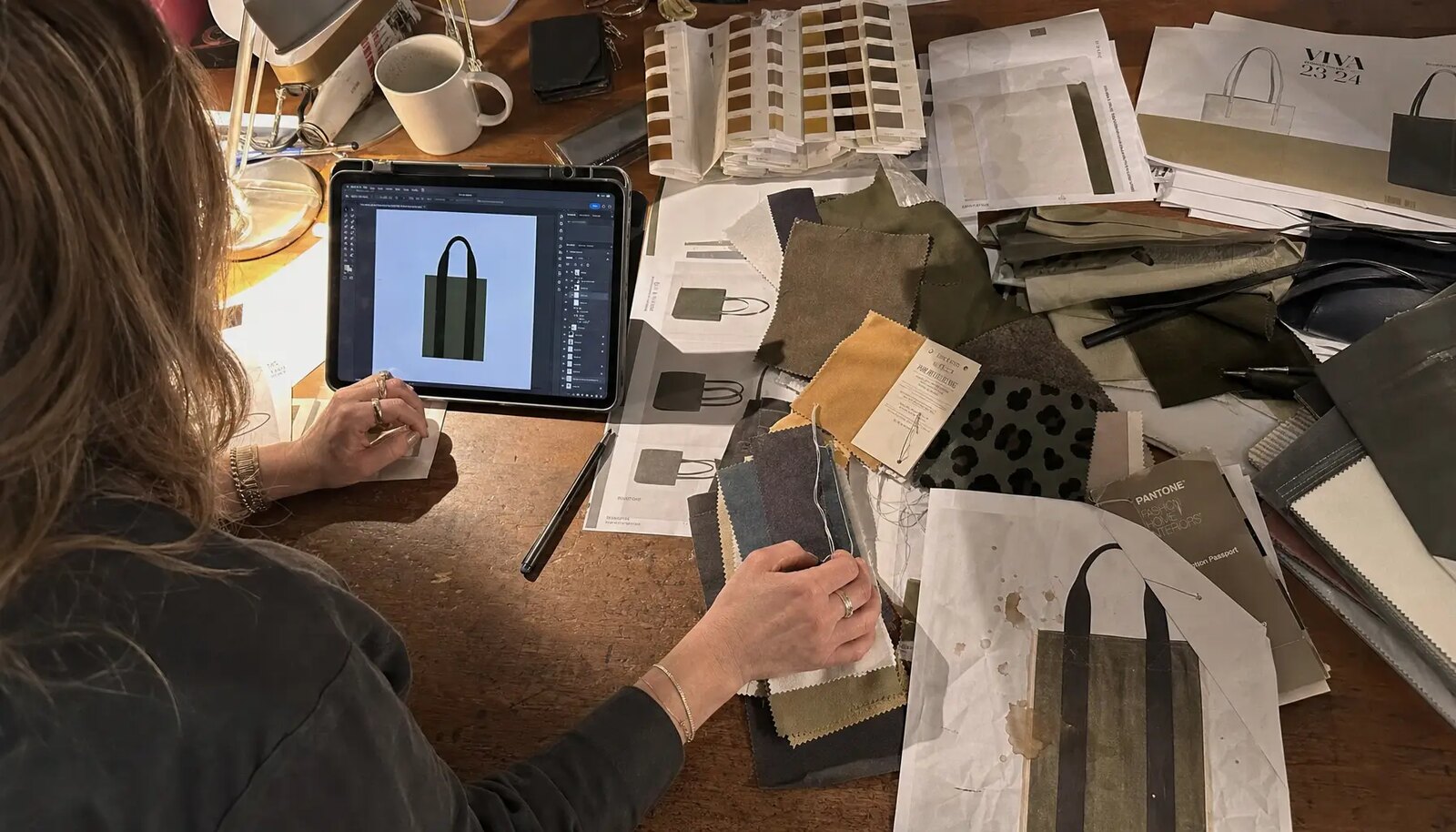
Why fabric weight drives the whole tote specification
For a coffee roaster, an organic cotton tote is rarely just a bag. It may be a paid merchandise item, a gift set package, a subscription welcome piece, a wholesale account gift, or a brand touchpoint that leaves the cafe in a customer’s hand. Fabric weight affects how that tote feels, how it prints, how it folds, how much space it takes in cartons, and how confidently it carries dense coffee products.
The common mistake is to treat GSM as a straight quality ladder. It is not that simple. A 150 GSM plain-weave tote can be exactly right for an opening-day giveaway with one 250 g coffee bag and a postcard. Put the same tote beside a retail display with a mug, two 340 g coffee packs, and a boxed dripper, and it may feel underbuilt. A 320 GSM canvas tote can feel premium, but it can also raise sewing cost, create thick seam intersections, crease more deeply in cartons, and take up more warehouse space.
Good procurement work starts by specifying the fabric weight together with the use case, dimensions, gusset, handle construction, print method, documentation, and packing. Without those details, quotes are not comparable. One supplier may price a flat 180 GSM plain-weave bag. Another may quote a 240 GSM canvas tote with a bottom gusset. A third may include reinforced handles, side labels, and individual packing. All three might be described casually as organic cotton coffee totes, but they are different products with different landed costs and risks.
- Use GSM as a performance specification, not only as a price lever.
- Specify finished fabric weight, not just catalog language such as light canvas or heavy cotton.
- Tell the factory what the tote must carry before asking for a recommended construction.
- Compare quotes only after size, gusset, handles, print, labels, packing, and documentation are aligned.
- Approve a pre-production sample made with actual or approved production fabric before bulk production.
GSM, ounces, weave, and tolerances buyers should define early
GSM means grams per square meter, and it is usually the clearest fabric-weight language for international sourcing. Some suppliers also quote cotton canvas in ounces, usually ounces per square yard. A common conversion is 1 oz/yd² equals about 33.9 GSM. On that basis, 6 oz is about 203 GSM and 10 oz is about 339 GSM. Still, the ounce description alone is not enough. In some markets, ounce language is used as shorthand for a fabric category rather than as a tested finished weight.
Weave is just as important as weight. A 200 GSM plain weave can feel softer and less structured than a tight 200 GSM canvas. Twill drapes differently and may show a diagonal texture under print. Duck canvas is usually denser and stiffer than lightweight canvas, which can suit premium grocery-style totes but may be unnecessary for low-cost cafe promotions. If buyers compare only GSM, they may miss differences in hand feel, print edge definition, fabric movement, and seam bulk.
Tolerances need to be written into the RFQ and purchase order. For many cotton tote programs, a finished GSM tolerance around ±5% is a practical discussion point, but the right number depends on the fabric source, finishing process, and inspection method. Dimensions also need tolerances because cotton can shift during cutting, sewing, pressing, folding, and packing. A typical negotiation might use ±1 cm for body width, height, and gusset depth; ±0.5-1 cm for handle drop; and ±0.5-1 cm for print placement, depending on the design and bag size. These figures should be agreed, not assumed.
- Ask whether GSM is measured before finishing, after finishing, or from the finished bag material.
- Require any ounce value to be identified as oz/yd² and converted to GSM.
- Record the weave type: plain weave, twill, canvas, duck canvas, or another construction.
- Use swatches and pre-production samples because two fabrics with the same GSM can feel very different.
- Agree tolerances for GSM, finished dimensions, handle drop, handle width, and print placement before production starts.
Recommended fabric weight bands for coffee roaster tote programs
Most organic cotton totes for coffee roasters fall into four useful weight bands. The 140-170 GSM range works best for cost-sensitive promotions, trade shows, cafe opening handouts, and loyalty gifts. It is light, flexible, and efficient to pack in large quantities. The compromise is structure. The front panel may wrinkle around coffee bags, large prints may look less solid, and the bag may not feel credible as paid merchandise.
The 180-220 GSM range is a practical step up for subscription welcome packs, entry-level cafe merchandise, or simple retail totes. It gives the bag more body while still keeping cost and carton volume under control. In this range, weave and finishing matter a lot. A tight 200 GSM light canvas may print cleaner and feel more retail-ready than a looser fabric quoted at the same weight.
For many roasters, 200-240 GSM organic cotton canvas is the safest starting point for a core branded tote. It usually balances retail hand feel, print stability, everyday durability, folding, and freight efficiency. With properly specified handles and seams, it can carry two or three coffee packs plus small accessories. If a procurement team wants one sample direction before building a wider tote line, this is the range to test first.
The 270-340 GSM range fits premium merchandise, holiday gift sets, grocery-style use, and larger totes that need a stronger shelf presence. It is not automatically the best choice for every brand. Heavy canvas creates bulk at the top hem and handle attachment, may require tighter sewing control, and can show defects more clearly at thick seam intersections. It also increases carton volume and landed cost.
- 140-170 GSM: giveaway and light contents; check print show-through and handle reinforcement.
- 180-220 GSM: entry retail or subscription; confirm weave, stiffness, and shrinkage expectation.
- 200-240 GSM: core coffee retail tote; often the best balance for branded cafe programs.
- 270-340 GSM: premium gift or grocery-style tote; expect higher cost, bulk, and freight impact.
- Above 340 GSM: usually unnecessary unless the tote is oversized, structured, or intentionally heavy-duty.
Match the construction to the coffee contents, not just the outside size
Coffee products are dense for their size. A tote carrying two flexible coffee bags behaves differently from one carrying a mug, boxed dripper, filters, or retail literature. Flexible bags push into the lower corners and can make a flat tote bulge. Boxes create sharper pressure points and can distort a light front panel. A ceramic mug adds concentrated weight and impact risk. If the factory receives only outside dimensions, it cannot judge whether the GSM, gusset, and handles are appropriate.
For one coffee bag and event material, a flat lightweight tote may be acceptable. For two to three coffee packs, a midweight canvas with reinforced handles is usually a better baseline. For a mug plus beans or a holiday set, a bottom gusset often improves function more than simply adding more GSM. A 10-12 cm bottom gusset helps the tote carry rectangular products, improves standing ability, and reduces stress on the front panel. Side gussets add more volume, but they also complicate sewing and print placement.
Handle drop should be chosen according to how customers will carry the bag. A shorter handle can look neat for hand carry. A longer drop supports shoulder use. Shoulder-carry totes need comfortable handle width and reliable reinforcement because the filled bag swings and loads the attachment points differently. For retail coffee merchandise, self-fabric handles around 2.5-3.2 cm finished width are common, but the final choice should match bag size and expected load.
- Test fit with actual coffee packs, boxes, mugs, filters, and inserts instead of generic filler.
- Use a bottom gusset when the tote must carry several retail items or stand better for display.
- Specify handle drop and handle width as finished measurements.
- Evaluate the tote while loaded to see logo distortion, bulging, and corner pressure.
- Do not try to solve poor gusset or handle design by increasing GSM alone.
Handle, seam, and gusset details that prevent avoidable failures
Fabric weight does not determine tote strength by itself. A 240 GSM tote with weak single-stitch handle attachment can fail faster than a 200 GSM tote with better reinforcement. Coffee products put stress on the handle attachments, top hem, bottom corners, and gusset seams. These areas should be named in the RFQ and checked during inspection.
Handle reinforcement should be described by method, not left to factory habit. Common options include double-stitch attachment, cross stitch, box-X, and bartack reinforcement. The reinforcement must actually catch the handle and the top hem securely. A decorative X stitch that misses the handle edge does not add much strength. Buyers should also ask about typical stitch density, thread choice if relevant, and whether the factory can run a simple loaded hang or pull check.
Seam finishing affects both performance and retail perception. Uneven top hems, raw edges where a clean finish was expected, thread nests, skipped stitches, twisted handles, puckered gussets, and inconsistent corners are visible on natural cotton. Minimal coffee branding often leaves large blank fabric areas, so construction defects stand out. Clean sewing can make a midweight tote feel premium. Poor sewing can make heavy canvas look cheap.
Gusset construction deserves careful attention. A bottom gusset should open evenly and maintain the agreed depth. If it is crooked, the tote may lean when filled or display poorly on a shelf. Side-and-bottom gussets increase capacity, but print placement must account for fabric wrapping around the sides. Buyers should confirm whether the front print is centered on the flat panel or visually centered when the bag is filled.
- Specify the reinforcement shape: cross stitch, box-X, bartack, or another agreed construction.
- Define handle width, handle drop, fabric layers, top hem construction, and stitch density expectation.
- Inspect the top hem and handle attachment as load-critical areas.
- Check gusset depth at several points, not only at one corner.
- Include loose threads, skipped stitches, broken stitches, twisted handles, and weak reinforcement as QC defects.
Choose the print method around artwork, weave, and finished GSM
Coffee roaster artwork often uses simple wordmarks, small typography, origin illustrations, earthy colors, and natural textures. For one to three spot colors, water-based or pigment screen printing on 200-240 GSM canvas is often a strong starting point. The fabric usually has enough body to hold the print area steady while still giving a natural hand feel.
Lightweight 140-170 GSM fabric can be screen printed, but buyers should expect more fabric movement and more visible weave texture. Large solid logos may show pinholes or reduced opacity, especially on natural cotton. Fine text such as cafe addresses, origin names, roast notes, or certification statements should be tested at the final print size. A paper proof or digital mockup will not show how ink behaves on woven cotton.
Heavier 270-340 GSM canvas gives a stable print surface, but it introduces other risks. Thick seams and folds can affect print placement. Heavy folded stacks can crease large ink areas. If the logo is folded under pressure in cartons, buyers should check for blocking, transfer marks, and permanent crease lines. Packing simulation should be part of sample approval when the tote will be sold as merchandise.
Digital print, DTG, DTF, and transfer methods can be useful for full-color seasonal artwork, gradients, low-quantity drops, or designs with many colors. They should not be chosen only because they look good on screen. Transfers can change hand feel and may crack or lift if folded, rubbed, or under-cured. Buyers should request adhesion, rub, fold, and damp-wipe checks before approving bulk production.
- Use screen print for simple logos, spot colors, and a natural hand feel.
- Approve a strike-off on actual tote fabric, not only on a paper proof or digital mockup.
- Define print size, color standard, line width, text readability, coverage area, and placement tolerance.
- Check curing, rub resistance, print tackiness, color consistency, and fold performance.
- Review the printed sample after the proposed packing fold and carton compression.
Organic cotton documentation and claim control
Organic cotton sourcing requires precise language. Natural cotton, unbleached cotton, recycled cotton, conventional cotton, and organic cotton are not interchangeable. A natural off-white tote does not automatically qualify as organic. If the tote, hangtag, invoice, website listing, or retail signage makes an organic claim, the buyer should confirm what proof is required by the retailer, customer, or internal sustainability policy.
Documentation expectations vary by program. Some buyers accept a supplier declaration. Others need chain-of-custody records, a scope certificate, a transaction certificate, or documentation linked to the shipment lot. These requirements can affect factory selection, material availability, MOQ, cost, and lead time. They should be discussed before sample development, not after bulk goods are packed.
Claim wording should match the available documentation. If a sewn label says organic cotton or a hangtag makes a certification-related claim, the procurement team should confirm that the claim is supported and approved. Overstated claims can delay retailer approval and create compliance issues. If the tote is made from organic cotton but is not sold with a certification logo, label wording may need to be more conservative.
Base shade is also part of material control. Organic cotton totes are often produced in natural greige or off-white shades, and those shades can vary by lot. If a roaster plans to display totes across several cafes or replenish the same SKU over time, an approved shade swatch or shade range should be maintained. For dyed organic cotton, buyers should expect additional MOQ, lab dip approval, shade tolerance, and possible lead-time risk.
- Write organic cotton clearly in the specification; avoid vague terms such as eco cotton.
- Confirm what proof is required before quoting: declaration, certificate, transaction document, or other records.
- Ask whether organic documentation fees and handling time are included in the quote.
- Approve label, hangtag, invoice, and printed claim wording before production.
- Maintain a shade standard for natural cotton and a lab dip process for dyed fabric.
MOQ planning for multiple cafes, roast designs, and seasonal drops
Coffee roasters often want several tote versions: a flagship cafe design, a seasonal blend design, a wholesale partner gift, and a holiday set. MOQ becomes easier to manage when the buyer separates the standard bag body from the artwork. The most efficient structure is usually one size, one GSM, one base fabric color, one gusset, one handle construction, and multiple print versions.
Every construction change can create a separate production lot. A different fabric color may require separate dyeing. A different GSM may require separate fabric sourcing. A different gusset changes cutting and sewing. A different label needs separate purchasing and inventory control. What looks like one tote program can turn into several small custom orders with higher unit costs and longer coordination time.
Standardizing the body also helps receiving and replenishment. Cartons can be labeled by artwork code, warehouse teams can count consistent folded units, and cafe staff can display the same size across locations. If visual variety is needed, it is often simpler to vary front artwork, hangtags, or side labels before changing the fabric and construction.
Packing rules should be set before production. Single-SKU cartons reduce receiving errors. Mixed cartons can work for cafe replenishment kits, but only if carton labels and packing lists show exact quantities by SKU and artwork version. For procurement buyers, MOQ is not only the factory minimum. It is the practical minimum that can be produced, inspected, packed, shipped, received, and replenished without confusion.
- Best MOQ efficiency usually comes from one body specification with multiple print artworks.
- Natural cotton often supports smaller programs more easily than custom dyed fabric.
- Changing GSM, color, size, gusset, or handle construction can create a separate lot.
- Use SKU codes and artwork codes on cartons and packing lists.
- Confirm screen charges, setup costs, and MOQ by print version.
Sample approval workflow before bulk production
A blank sample is useful, but it is not enough for production approval. It can confirm approximate size, shape, handle drop, gusset, and fabric hand feel. It does not confirm print curing, ink opacity, placement tolerance, bulk fabric shade, label accuracy, carton creasing, or sewing consistency at scale. Coffee roaster tote programs should move from a blank prototype to a printed pre-production sample before bulk production.
The printed pre-production sample should use approved or actual bulk fabric, final artwork size, final print method, final handle reinforcement, final gusset, final label, and the proposed packing fold. The buyer should load it with real products: coffee packs, boxes, mugs, inserts, filters, or accessories. Check whether the tote bulges, whether the logo distorts, whether the handles feel comfortable, and whether the gusset supports the contents.
Print review should be measured, not judged only by eye. Record the distance from the top hem, side seams, and gusset reference points. Check text readability, line quality, color, opacity, and registration under consistent light. If the tote uses a natural cotton base, remember that fabric shade affects perceived ink color. Keep one signed or sealed sample as the final inspection reference.
Packing simulation is easy to overlook. Fold the sample in the proposed production method, stack it under light carton-like pressure, and reopen it after at least one day. Look for creases across the logo, print transfer, blocking, edge lifting, or permanent fold memory. This simple check helps prevent technically acceptable goods from arriving in a condition that looks poor for cafe retail display.
- Approve blank samples for construction only, not for final production release.
- Approve printed pre-production samples before bulk cutting or printing.
- Use real coffee products for load, fit, bulge, and handle-comfort testing.
- Measure print placement and dimensions against agreed tolerances.
- Retain an approved sample, fabric swatch, print strike-off, and shade standard for QC.
How to compare factory quotes line by line
Organic cotton tote quotes often look similar while hiding very different assumptions. One supplier may include 240 GSM canvas, a bottom gusset, box-X handles, and carton labels. Another may quote 200 GSM plain weave, flat construction, basic handle stitching, and bulk packing. If the buyer compares only unit price, the cheaper quote may not be cheaper after rework, freight, documentation, and retail presentation issues.
A strong comparison sheet separates material, construction, decoration, labels, packing, carton data, samples, setup costs, documentation, and lead time. Material should include finished GSM, tolerance, weave, base shade, organic documentation level, and swatch approval. Construction should include dimensions, gusset, handle width, handle drop, seam finish, reinforcement, and load expectation. Decoration should include print method, number of colors, print size, placement, color standard, and artwork limitations.
Packing and logistics deserve the same attention as fabric and print. Heavier fabric and deeper gussets increase carton volume and gross weight. Overcompressed cartons may save freight but create logo creases or distorted folded presentation. If totes are sold in cafes, labor to unfold, steam, sort, relabel, or correct mixed cartons can become a hidden cost. Ask for estimated carton dimensions, units per carton, gross weight, and packing method at quote stage.
Buyers should also ask what is excluded. Screen charges, digital setup, label development, barcode stickers, hangtags, organic documentation, sample courier, inspection support, special export cartons, and retail packing can change the final landed cost. The goal is not to force the lowest possible number. It is to make each quote comparable, complete, and ready for production.
- Compare finished GSM and weave, not only the word canvas.
- Separate unit price from setup charges, labels, packing, certificates, samples, and courier.
- Request carton dimensions, units per carton, gross weight, and carton marks.
- Confirm whether the quote includes hangtags, labels, barcodes, and individual packing.
- Ask which changes affect price: GSM, gusset, handle length, color count, print coverage, and documentation.
Specification comparison for buyers
| Spec decision | Recommended option | When it fits | Buyer risk to check |
|---|---|---|---|
| Fabric weight for low-cost giveaway totes | 140-170 GSM plain weave organic cotton, typically comparable to about 4-5 oz per square yard if the supplier uses oz/yd² | Cafe openings, trade shows, loyalty handouts, one light coffee bag, postcards, or event literature | Too light for mugs, boxed gift sets, or paid retail; check weave openness, print show-through, handle reinforcement, and whether the quoted GSM is finished fabric weight |
| Fabric weight for entry retail or subscription totes | 180-220 GSM organic cotton twill, sheeting, or light canvas | Subscription welcome packs, lower-price cafe merchandise, one to two coffee bags, simple retail display | Suppliers may describe different weaves as canvas; require finished GSM tolerance, actual weave construction, shrinkage expectation, and a production-fabric sample |
| Fabric weight for core coffee retail tote | 200-240 GSM organic cotton canvas, often the practical starting range for branded cafe merchandise | Two to three 250-500 g coffee packs, small accessories, retail wall display, counter replenishment, wholesale account gifts | Some quotes reduce cost through lower actual GSM, narrow handles, or basic handle stitching; define GSM tolerance, handle width, stitch type, and load test |
| Fabric weight for premium grocery or gift tote | 270-340 GSM organic cotton canvas or duck canvas with bottom gusset | Paid merchandise, holiday gift sets, mug plus beans, grocery-style reuse, stronger shelf presence | Higher landed cost, slower sewing, bulkier seams, deeper packing creases, larger carton volume, and higher defect visibility at thick seam intersections |
| GSM and oz terminology | State GSM as the primary buying spec and ask any oz value to be identified as oz/yd², not linear yard weight | International RFQs where different suppliers quote in GSM, oz canvas, or local fabric terms | A 10 oz canvas description is not enough without conversion basis, weave, width, finishing, and actual finished fabric test result |
| Finished dimensions | Define width, height, bottom gusset, side gusset if any, handle drop, handle width, and seam allowance expectation | All custom tote programs, especially multi-SKU coffee roaster programs | Factory patterns may be measured flat before finishing; set finished-bag tolerances such as ±1 cm for body dimensions and ±0.5 cm for handle width/drop where practical |
| Handle construction | Self-fabric handles, 2.5-3.2 cm finished width, double stitch plus cross stitch, box-X, or bartack reinforcement for retail loads | Coffee bags, mugs, accessories, gift sets, and shoulder-carry retail totes | Handle failures start at stitch corners and top hem stress points; define stitch density, reinforcement pattern, and a simple loaded hang or pull check |
| Gusset decision | 10-12 cm bottom gusset for most retail coffee totes; flat tote only for lightweight promotions; side gusset when extra volume is required | Coffee packs, boxed sets, mugs, and totes expected to stand better on shelf | Flat bags bulge with dense coffee packs; side gussets affect print placement and require tighter sewing control |
| Printing method for simple logo | Water-based or pigment screen print on approved production fabric with physical strike-off approval | One to three spot colors, simple logo marks, cafe names, natural brand look, medium and large runs | Ink opacity, registration, edge sharpness, curing, and hand feel vary by weave and GSM; approve on actual fabric, not only on paper proof |
Buyer checklist before sampling
- Define the commercial use before choosing GSM: promotional giveaway, paid retail merchandise, subscription insert, wholesale gift, grocery-style carry, or boxed gift set packaging.
- List the real contents the tote must carry, including coffee bag size and weight, mug dimensions, box dimensions, inserts, tissue paper, and target maximum load.
- State finished bag dimensions in the RFQ: width, height, bottom gusset depth, side gusset if any, handle drop, handle finished width, top hem, seam type, and reinforcement pattern.
- Use GSM as the main fabric-weight spec and require suppliers to identify any ounce value as oz per square yard; do not compare vague terms such as 8 oz canvas without conversion basis.
- Specify finished fabric weight after normal finishing, with an agreed tolerance. For many tote programs, ±5% GSM is a realistic discussion point, but the buyer and factory must agree before production.
- Identify the weave: plain weave, twill, canvas, duck canvas, or other construction. Two fabrics with the same GSM can feel and print differently.
- State organic cotton requirements precisely: whether supplier declaration is enough or whether scope certificate, transaction certificate, chain-of-custody documentation, or specific claim wording is required.
- Confirm base fabric shade: natural greige/off-white, bleached white, dyed color, or custom color. Natural shade should be approved against a swatch or acceptable shade range.
- Match print method to artwork details: number of colors, Pantone or physical color standard, print size, minimum line width, fine text, solid coverage, registration tolerance, and expected hand feel.
- Require a printed pre-production sample made with the approved fabric, final print method, final handle construction, final gusset, final label, and planned packing fold.
Factory quote questions to send
- What is the exact finished fabric GSM, what tolerance is included, and will GSM be checked after weaving, after washing/finishing, or on the finished bag fabric?
- If you quote in ounces, is the value oz per square yard? Please provide the GSM equivalent and the method used for conversion.
- What is the weave construction: plain weave, twill, canvas, duck canvas, or another fabric? Can you provide a swatch from the proposed fabric lot or the nearest available bulk fabric?
- Is the fabric natural greige/off-white organic cotton, bleached cotton, dyed cotton, or custom dyed cotton? What shade approval process and tolerance will apply?
- What organic cotton documentation can you provide for this order: supplier declaration, fabric certificate, scope certificate, transaction certificate, or other chain-of-custody document? Are document fees included?
- Is the quoted price based on certified organic cotton throughout the order quantity, and can certification documentation be linked to the shipment lot if required?
- What is the MOQ by fabric, body size, fabric color, print artwork, label, packing style, and shipment colorway?
- Can one standard bag body be used across multiple artwork versions, and how would that affect MOQ, screen charges, setup charges, and production lead time?
- What are the finished bag dimensions in your pattern, and what production tolerance do you propose for width, height, gusset, handle drop, handle width, and print placement?
- What handle attachment method is included: single stitch, double stitch, cross stitch, box-X, bartack, or another reinforcement? What stitch density is typical for this construction?
Quality-control points to confirm
- Finished fabric weight should be checked against the approved GSM and tolerance, with the measurement basis recorded. QC should not rely only on supplier descriptions such as medium canvas or heavy cotton.
- Finished dimensions should be measured after sewing and finishing: width, height, gusset depth, top opening, handle drop, handle width, and label placement. Record actual measurements against agreed tolerances.
- Print placement should be measured from fixed points such as top hem, side seam, bottom seam, or gusset edge. Visual centering alone is not reliable for retail tote programs.
- Screen print should show even ink coverage, acceptable opacity, no major pinholes in solid areas, no significant offset or ghosting, no blurred small text, no print transfer marks, and no under-cured tackiness.
- Digital or transfer print should be checked for adhesion, edge lifting, cracking at fold lines, surface tack, rub resistance, and color consistency across different cartons.
- Handle stitching must have no skipped stitches, broken thread, loose thread nests, weak corners, twisted handles, or reinforcement that misses the handle edge or top hem.
- Side seams, top hems, and bottom gussets should have consistent seam allowance, secure backstitching, clean corners, and no raw-edge exposure where a clean internal finish is specified.
- A practical load check should be performed on a defined sample size when the tote is intended for retail contents. Use agreed weight or actual coffee products and inspect handle stress, seam distortion, and comfort.
- Fabric must be free from oil marks, visible dirt, holes, tears, heavy slubs on the front print panel, mildew odor, and obvious shade variation outside the approved range.
- Natural cotton shade should be judged against an approved swatch or acceptable shade band, especially if multiple cartons will be displayed together or replenished across cafes.