Start With the Use Case, Not the Tote Name
Most tote RFQs fail because the buyer says organic cotton tote and stops there. A factory can quote that, but the quote will be built on assumptions that may not match a farmers market program. A bag for produce sampling, bottled goods, and folded shelf merchandising are not the same product. The first step is to state what the end user will actually put inside the bag, how often it will be reused, and whether the tote is meant to survive daily customer traffic or act as a low-cost giveaway.
For farmers market vendors, the usage pattern usually determines the best construction. A tote that carries greens and loaf packs can stay in the 170-200 gsm range with a clean plain weave. If the bag is expected to hold jars, bread, or heavier branded products, move toward a heavier canvas and stronger handle reinforcement. Put the use case directly into the RFQ so suppliers do not quote a light promo bag when you need a better retail-grade build.
- State the target load in practical terms, such as produce, mixed groceries, or bottled items.
- Specify whether the bag is for customer resale, event giveaway, or internal vendor packaging.
- Include any size preference for shelf display, shoulder carry, or hand carry.
Choose Fabric Weight That Matches Real Carrying Pressure
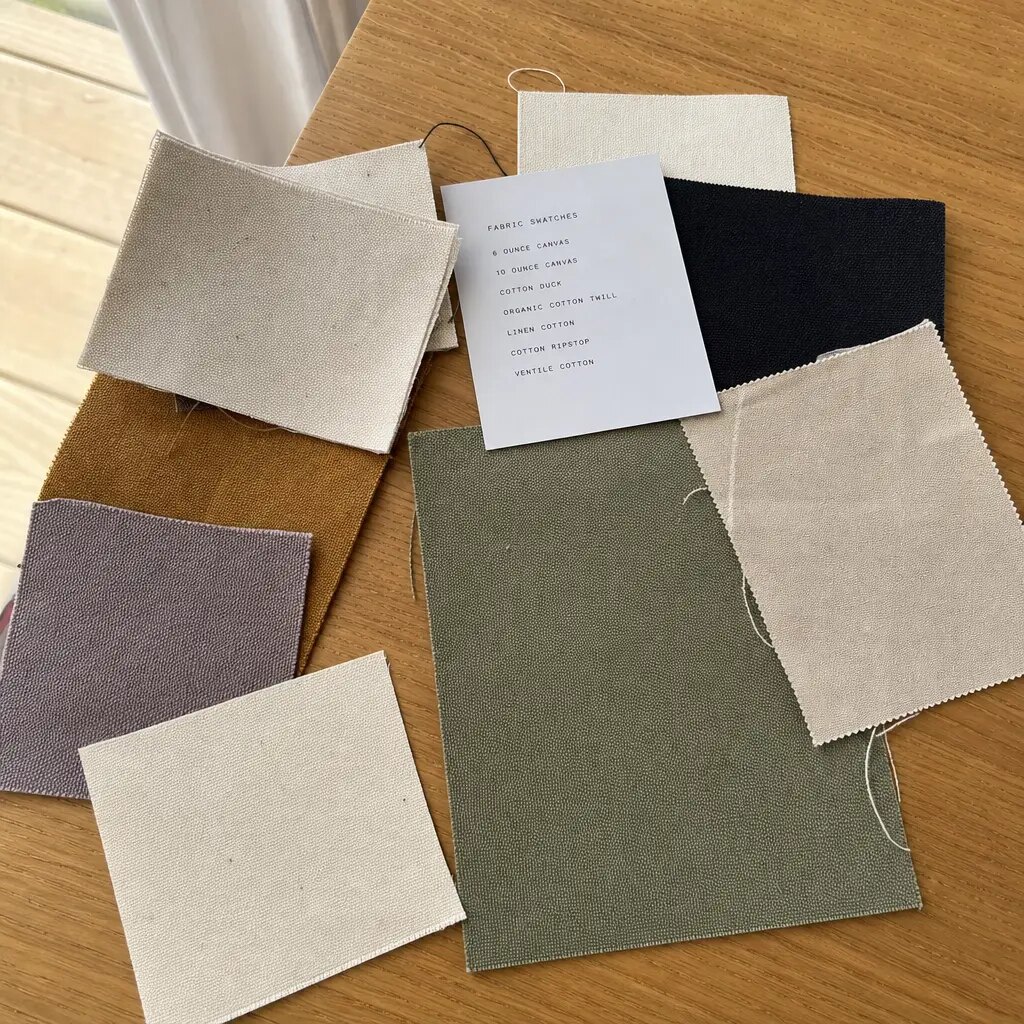
Fabric weight is one of the easiest ways to compare quotes, and one of the easiest places to get misled. A tote described as organic cotton can still arrive too thin to hold shape or too heavy for the price point. For many market programs, 170-200 gsm is the practical middle ground. It gives enough body for a clean print and repeat reuse without pushing the bag into premium territory. If the tote needs a more structured look or extra resistance to stretch, 220-280 gsm canvas is a safer choice, but it changes cost, sewing time, and carton weight.
Ask whether the fabric is prewashed, whether shrinkage has already been accounted for, and whether the mill will run one consistent dye lot or multiple lots. Natural unbleached cotton can vary slightly in tone, which is acceptable if you approve it in advance. If the bag is dyed, that introduces another layer of risk: color consistency, ink adhesion, and possible wash variance. The right answer is not the heaviest fabric possible. It is the lightest fabric that still passes your real load and presentation requirements.
- 170-200 gsm: common choice for daily reusable market totes and modest branding budgets.
- 220-280 gsm: better when the bag must hold shape or carry heavier retail goods.
- Ask for an actual swatch or sample bag made from the same fabric weight named in the quote.
Lock Down Handles, Seams, and Print Before You Talk Price
Handle construction can make a low-cost tote feel cheap even when the fabric is acceptable. For market use, the handle width, length, and attachment method matter more than most buyers expect. A 2.5-3 cm handle is common for comfort and load distribution. If customers are expected to carry the bag on the shoulder, the handle length should be long enough to clear outerwear and not ride high under the arm. Reinforcement is non-negotiable: bartacks, cross stitching, or a boxed attachment point should be specified on the RFQ, not left to the factory's default.
Print method also changes the quote and the user experience. Screen print is usually the best fit for a simple logo on cotton because it is economical and durable when cured correctly. Woven labels or sewn patches work better when the brand wants a quieter retail look. Heat transfer can look sharp at first, but it is easier to damage if the bag is folded hard, washed often, or handled in a warm environment. Put print size, placement distance, color count, and tolerance into the spec so the supplier cannot hide behind a rough interpretation.
- Specify handle width, finished drop, and whether shoulder carry is required.
- Require bartacks or equivalent reinforcement at every major stress point.
- Define print placement in centimeters from the top edge and side seam.
Use MOQ Logic to Separate Real Quotes From Noise
MOQ is not just a factory number. It reflects fabric purchase size, print setup, cutting efficiency, and how many cartons the supplier wants to move in one run. A small program with one logo and one tote color may get a workable MOQ, but the minute you add color variants, custom labels, or special packing, the minimum rises. That is why the RFQ should request pricing at multiple quantities, not a single number. A quote at 1,000 pieces tells you very little unless you can also see the price at 3,000 and 5,000.
Build your RFQ around line items that expose cost drivers. Separate the bag body, print setup, label cost, special packing, and freight assumptions. Ask whether the quoted price includes overs and unders, replacement allowance, and whether samples are free, charged, or credited back on bulk. A supplier who can break the price down cleanly is usually easier to work with than one who gives a vague all-in number and then revises it later when the PO is ready.
- Request quote breaks at multiple volumes so you can see the real price curve.
- Separate unit cost from setup cost so you know what is reusable on reorder.
- Confirm whether custom labels or special folds increase MOQ.
Compare Supplier Quotes on the Same Basis
Two quotes can look similar and still describe different products. One may include the bag, print, and carton, while another excludes packing or assumes a lighter fabric. Before deciding, put every quote into the same frame: same fabric weight, same handle spec, same print method, same carton pack, same incoterm. If a supplier refuses to itemize, that is a risk signal. You cannot manage cost or quality if the quote hides the actual structure of the order.
A buyer should also separate commercial capability from manufacturing capability. Some suppliers are good at sourcing blanks and applying decoration, while others are true cut-and-sew factories that can control the whole build. For a repeat organic cotton tote program, the factory route usually gives better consistency. For a one-off event or a short promotional window, a sourcing route with stock blanks can be faster. The decision is not about who sounds strongest on email. It is about which route matches the program's margin, timing, and quality tolerance.
- Compare quotes only after all factories are pricing the same spec sheet.
- Treat freight, duty, and local handling as part of the real cost, not an afterthought.
- If a quote has no clear assumption about print or packing, ask for a revised version before you compare it.
Approve the Sample Like a Production Part, Not a Display Item
The sample should prove the actual production method, not just the look. For a tote program, the best sample is usually a pre-production sample made from the same fabric, same print screen, and same finishing method the factory plans to use in bulk. A pretty hand sample is not enough if the seam allowance, thread tension, or print curing will change later. Keep the approved sample labeled and archived so there is no dispute when bulk arrives.
Set sample approval criteria before the factory starts cutting bulk. Measure dimensions, inspect handle placement, verify print position, and check that the logo is centered and readable at the intended viewing distance. If the bag will be reused often, add a basic durability check such as a load test or a wash test, depending on your program. If the sample misses the tolerance, do not rely on verbal promises. Ask for a corrected sample or a written deviation before release.
- Approve against exact measurements, not against a vague visual impression.
- Inspect stitching, print cure, label placement, and folded packing on the sample.
- Keep one sealed reference sample for production comparison and dispute resolution.
Specify Packing Early or the Tote Becomes a Warehouse Problem
Packing is often treated as a minor detail, but it affects freight cost, retail readiness, and how clean the bags arrive. A tote packed loose in a master carton is cheap to make but may pick up dust, wrinkles, or uneven folds. A bag packed in a polybag or paper band looks more retail-ready, but it adds labor and materials. If the tote is for direct vendor distribution, a simple folded pack with clear carton marks may be enough. If it is going to a retail channel, barcode labeling and a cleaner presentation may be worth the extra cost.
The packing spec should state folded size, pieces per inner pack if used, cartons per pallet if relevant, and whether cartons need to be moisture-protected. Cotton absorbs moisture, so dry packing conditions matter. A supplier who can tell you the folded dimension and carton count is helping you plan storage and freight. A supplier who ignores packing until the end often creates avoidable labor on your side when the goods land.
- Decide whether the program needs retail-ready packing or simple bulk packing.
- Confirm carton count, carton marks, and whether barcodes are required.
- Ask for carton dimensions and gross weight so freight can be quoted properly.
Build Lead Time Around the Slowest Step, Not the Best Case
Lead time for organic cotton totes is usually driven by fabric availability, print setup, sample approval, and packing capacity. Do not let a supplier quote production time from deposit receipt if the artwork is still unsettled. The schedule should start from a clear trigger, usually approved artwork and signed sample. If fabric is not in stock, the lead time must include fabric booking and any mill turnaround. If the print uses multiple colors or special placement, screen preparation can also become the bottleneck.
A realistic schedule has checkpoints, not just one promised ship date. You want to know when artwork must be frozen, when the sample will be checked, when bulk cutting starts, and when the final packing count is finished. For importers, the factory lead time is only part of the calendar. You still need room for transit, customs, and inland delivery. If the supplier cannot explain the timing of each step, the order is exposed to avoidable rush fees later.
- Ask for the lead time trigger: PO date, deposit, artwork approval, or sample sign-off.
- Separate sample lead time from bulk lead time so delays do not get hidden.
- Build buffer time for freight, customs, and any reprint or rework risk.
Use Landed Cost to Choose the Right Sourcing Route
The cheapest unit price is not always the cheapest program. A stock blank tote with local decoration may look attractive, but the total cost can rise once you add multiple handling steps, extra packing, and split freight. A fully custom factory order may carry a higher factory price but lower handling if it arrives closer to final use. For buyers managing farmers market vendor programs, the right comparison is landed cost per usable tote, not factory price alone.
Landed cost should include the bag, decoration, packing, freight, duty, and the cost of mistakes. If the supplier is far away and the spec is loose, rework can wipe out the savings. If the supplier is nearby but the MOQ is too low, you may end up paying too much per unit to stay stocked. The smarter route is the one that keeps the quote stable across repeat orders and gives you enough control to protect quality without overbuying inventory.
- Compare factory price, packing cost, freight, and duty before you approve the PO.
- Treat rework and replacement as a real cost driver, not an exception.
- Use the same comparison basis for every supplier route, even if the sourcing model is different.
Send a Better RFQ Packet and You Get Better Quotes Back
A strong RFQ packet saves more money than a long negotiation. Send a spec sheet that names the finished size, fabric weight, handle build, print method, packing format, quantity breaks, and target ship date. Include artwork files in vector format and show exactly where the logo should sit. Add one reference sample if you have it, but do not rely on the sample alone. The supplier still needs the written spec to quote consistently and to avoid assumptions.
If a factory cannot answer the quote questions in a straightforward way, that is useful information. You are not just buying a tote. You are buying repeatability, packaging discipline, and a clean handoff into your own supply chain. The RFQ should make it obvious whether the supplier is prepared for a real production program or only wants to sell a rough sample order. The more exact your request, the easier it is to compare suppliers, control corrections, and avoid production surprises.
- Include one spec sheet, one artwork file set, one packing instruction, and one quantity table.
- State the acceptance criteria so the factory knows what counts as pass or fail.
- Ask for a revised quote whenever any assumption changes, especially fabric weight or print method.
Specification comparison for buyers
| Spec decision | Recommended option | When it fits | Buyer risk to check |
|---|---|---|---|
| Sourcing route | Stock blank tote from a factory with in-house print | Short launch calendar, test order, or a low-risk merch program | Confirm the blank is truly organic cotton and that size, color, and stitch quality are stable across lots |
| Sourcing route | Direct cut-and-sew factory with standard screen print | Repeat programs that need better pricing and more control | Make sure the quote includes screens, setup, and print alignment tolerance |
| Sourcing route | Direct factory with custom woven label or side label plus print | Retail or brand use where the tote needs a cleaner identity | Check label placement, sewing method, and whether label lead time affects the bulk schedule |
| Sourcing route | Nearshore small-batch supplier | Smaller importers, faster replenishment, or domestic compliance needs | Unit price can look higher but freight, duty, and rework risk may be lower |
| Fabric weight | 170-200 gsm plain weave | Daily farmers market carry, produce, light retail packs | Watch for softness that hides weak seams or too much stretch after packing |
| Fabric weight | 220-280 gsm canvas | Premium tote, heavier items, repeat reuse, better shelf feel | Higher cost and slower drying after print or wash tests |
| Print method | 1-color or 2-color screen print | Most buyer programs with clear logos and stable artwork | Ask whether the ink is water-based, how curing is handled, and what the wash performance is |
| Print method | Woven label, sewn patch, or minimal branding | Premium minimalist look or when print durability is less important than style | Do not accept vague label specs; confirm size, edge finish, and stitch count |
| Commercial route | Hybrid: imported blank tote plus local decoration | When art changes often or you need split fulfillment | Total landed cost can rise fast once local decorating, rebagging, and handling are added |
Buyer checklist before sampling
- Target use case: produce carry, merchandise bag, or retail resale tote.
- Finished size with usable internal dimensions, not just cut size.
- Fabric target in gsm, weave type, color, and whether it is prewashed.
- Handle length, width, attachment method, and reinforcement points.
- Print artwork in vector format with exact color count and placement file.
- Requested organic cotton evidence for the fabric lot or batch used in production.
- MOQ by size, color, print version, and whether mixed cartons are allowed.
- Packing spec: folded size, polybag or paper band, carton count, and carton marks.
- Sample approval criteria and who signs off on pre-production sample.
- Target ship date, incoterm, and whether freight is included in the quote.
Factory quote questions to send
- What exact fabric weight, weave, and shrinkage allowance are you quoting?
- Can you provide organic cotton documentation tied to the actual fabric lot used for my order?
- What is included in the unit price: bag, print, label, packing, cartons, and factory QC?
- What is the MOQ by colorway, print version, and carton pack?
- What print method are you proposing, and how many setup charges or screen charges apply?
- What are the sample cost, sample lead time, and whether sample fees are deductible on bulk order?
- What is the production lead time after artwork approval, deposit, and pre-production sample sign-off?
- What are the finished dimensions, tolerance, and reinforcement details at the handles and bottom seam?
- What carton pack, carton size, gross weight, and CBM should I use for freight planning?
- What defect standard do you inspect to, and can you share the AQL or internal QC thresholds?
Quality-control points to confirm
- Finished dimensions should stay within the agreed tolerance, typically around plus or minus 1 cm on width and height for standard totes.
- Handle stitching should show even tension, secure bartacks, and no loose thread tails at the stress points.
- Print registration should be centered and consistent, with no cracking, pinholes, or ink bleed after curing.
- Fabric should match the approved hand feel and weight, with no thin spots, slubs, stains, or mixed dye lots unless explicitly approved.
- Seams should be straight and fully caught, with no skipped stitches, open corners, or weak bottom joins.
- Packing count should match carton labels and purchase order quantities, with no mixed sizes unless the PO says so.
- Cartons should be dry, clean, and strong enough for transit, with clear marks for SKU, color, quantity, and carton number.
- If wash testing is part of the program, confirm acceptable shrinkage, color fastness, and print durability before bulk release.