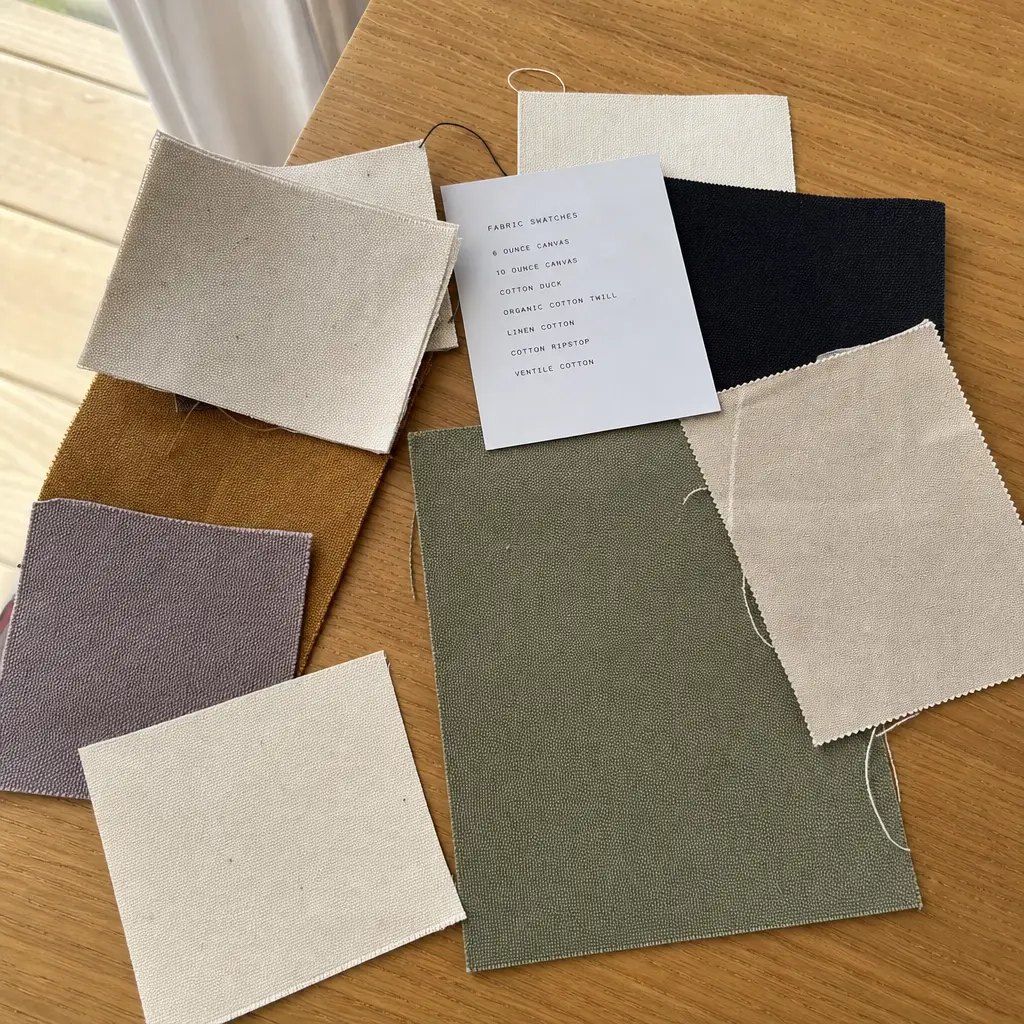
Start with the tote’s job, not the GSM number
Natural grocers often buy several tote types that look similar in a product photo but perform very differently in store. A bag for a wellness fair may only need to hold coupons, a produce guide, and a few light samples. A checkout tote may be filled with jars, cartons, greens, and bottles. A retail merchandise tote needs a better hand-feel and cleaner presentation because customers are paying for it.
This distinction should appear at the top of the RFQ. If the use case is vague, suppliers will quote different assumptions: one may price a lightweight promotional bag, while another prices a reinforced reusable grocery tote. The lowest quote may simply be for a different product.
A useful internal classification is: event handout, everyday checkout tote, premium retail tote, and heavy grocery carryall. Each category points to a different fabric weight band, handle construction, gusset depth, print method, and packing plan. Procurement can then compare like with like instead of debating whether one “organic cotton tote” is cheaper than another.
- Define whether the tote is free, subsidized, or sold at retail.
- Separate promotional handouts from true grocery-load bags.
- List likely contents such as jars, cans, bottles, produce, boxes, or samples.
- Use named internal specs for repeat programs instead of one generic tote description.
- Ask suppliers to quote to the stated use case, not just to a target price.
What GSM does and does not tell you
GSM means grams per square meter. It measures fabric mass over a fixed area. It is important, but it is not a complete performance specification. A 200 GSM tote with weak handle stitching can perform worse than a slightly lighter tote with better reinforcement and a sensible gusset.
Buyers should confirm whether the quoted GSM is for finished fabric or greige fabric before finishing. Finished GSM is usually the more useful basis for comparison because it reflects the material after processing. If one supplier quotes greige GSM and another quotes finished GSM, the two numbers may not be equivalent.
GSM also affects brand presentation and logistics. Lighter cotton packs efficiently and costs less, but may feel thin, crease more, and show contents or print strike-through. Mid-weight cloth usually gives the best balance for checkout programs. Heavier canvas feels more premium, but it increases carton cube, fold bulk, sewing difficulty, and freight impact.
For natural grocers using unbleached cotton, GSM changes the visual result. A 150 GSM unbleached tote can look casual and soft, while a 260 GSM canvas tote looks more structured and retail-ready. Use GSM as a buying filter, then confirm performance through construction details and samples.
- Ask whether GSM is finished or greige.
- Set a tolerance, commonly around ±5% for commercial tote programs unless tighter control is needed.
- Review GSM together with weave, handle reinforcement, gusset, and stitching.
- Check opacity and hand-feel on the actual fabric.
- Do not treat a higher GSM as automatic proof of grocery durability.
Practical fabric weight bands for natural grocers
Procurement teams usually work better with fabric weight bands than with a single ideal GSM. Bands give suppliers enough room to use available fabric while keeping the product within the intended performance and cost range.
The 140-160 GSM range is best for event giveaways and low-load use. It is economical, packs well, and works for simple one-color branding. It should not be positioned as the main reusable grocery carrier unless the bag size is modest and the expected contents are light.
The 180-220 GSM range is the practical center for many reusable checkout totes. With a bottom gusset, double-fold top hem, and reinforced handles, a 200 GSM-style bag can serve many natural grocery programs without becoming too bulky in cartons. This is often the best starting point for regional replenishment.
The 240-280 GSM range moves into premium territory. It suits retail merchandise, member gifts, and seasonal branded totes where feel and shelf presence matter. Above 300 GSM, the bag becomes a heavy carryall and should be specified with stronger sewing details, wider handles, boxed-bottom construction, and a defined load check.
- 140-160 GSM: handouts, samples, light promotions.
- 180-220 GSM: everyday reusable checkout totes.
- 240-280 GSM: paid retail or premium brand programs.
- 300-340 GSM: heavy carryalls only when the use case justifies cost and cube.
- Use the same weight bands in RFQs, samples, and reorder files.
Construction details that decide real grocery performance
Most tote failures happen at stress points, not in the middle of the fabric panel. Handle joins, top hems, side seams, and gusset corners deserve more attention than small GSM differences.
Handle width changes both strength perception and comfort. Narrow handles can twist and dig into the hand when shoppers carry jars or bottles. Wider folded handles usually feel better and spread force more evenly. Handle drop also matters: shoulder-carry totes need enough drop to fit over clothing, while short-handled retail totes may look neat but be less useful for grocery trips.
Reinforcement should be named in the specification. “Reinforced handles” can mean different things. Buyers should state whether they expect box stitch, box-X, bar tack, or another approved pattern, and whether the handles are inserted into seams or attached to the body panel. That detail can affect durability more than moving from 200 to 220 GSM.
Gusset design determines practical capacity. Flat totes are fine for handouts. Bottom gussets help grocery contents sit naturally. Boxed bottoms can improve structure, but corner sewing must be inspected carefully because it becomes a stress point.
- Specify handle width, drop, total length, and construction.
- Name the reinforcement pattern instead of using generic wording.
- Choose gusset depth based on real contents, not only appearance.
- Check top hem neatness and handle alignment on PP samples.
- Inspect gusset corners closely on heavier grocery bags.
Dimensions, tolerances, and a defined load check
Terms such as large, strong, centered, and premium are not enough for production. A tote specification should state finished width x height x gusset depth in centimeters, measured flat by an agreed method. It should also define handle width and drop, print placement, and acceptable tolerances.
For many standard totes, a starting tolerance of about ±1 cm on body dimensions is commercially workable. Handle drop may need tighter control, often around ±0.5-1 cm, because it affects carry comfort and visual consistency. Print position should be measured from fixed references such as the top hem and side seam.
Load expectations should be practical, not vague. For a standard 180-220 GSM checkout tote, buyers can require a PP sample load check at 8 kg for 2 hours. For a heavy 300-340 GSM carryall, 10-12 kg for 2 hours may be more appropriate. Pass/fail criteria should be visible: no handle detachment, no seam opening, no broken reinforcement stitches, no gusset tearing, and no major permanent distortion. If the grocer expects lighter or heavier actual use, adjust the weight accordingly.
This type of check does not replace laboratory testing where required, but it gives procurement, merchandising, and the factory a shared standard for grocery-use suitability.
- Use centimeter dimensions and agreed measuring points.
- Set body, handle, gusset, and print tolerances before production.
- Tie load checks to the tote’s intended program type.
- Record test weight, duration, sample quantity, and pass/fail criteria.
- Keep the approved PP sample as the physical reference for inspection.
Organic cotton claims: GOTS, OCS, and what the claim implies
Natural grocers should treat organic cotton documentation as a procurement requirement, not a late marketing detail. The correct paperwork depends on the claim being made, the buyer’s compliance policy, and whether the claim appears on the bag, hangtag, packaging, invoice, or promotional materials.
GOTS and OCS are often discussed together, but they do not communicate the same thing. GOTS is a broader textile processing standard that can support a certified finished textile route when the supply chain and product meet the standard’s requirements. OCS is a content standard that verifies the presence and chain of custody of organically grown material; it does not, by itself, make the same processing claims as GOTS. Buyers should confirm which claim their legal and compliance teams allow.
A supplier quote that includes a certified route, current scope certificates, and transaction certificates where required is not equivalent to a quote based only on verbal “organic cotton” assurance. If transaction certificates are required, state whether they are needed per shipment, per order, or per buyer policy.
Natural unbleached cotton also needs a visual standard. Organic cotton is not automatically uniform. Shade variation, slubs, seed flecks, and weave character may fit a natural grocery aesthetic, but they should be approved through a shade band or retained reference sample.
- Decide whether the program needs GOTS, OCS, or another approved documentation route.
- Confirm whether the claim is for finished bag certification or organic fiber content.
- Request current scope certificates from relevant supply chain parties.
- State if transaction certificates are required and when they must be issued.
- Approve natural shade and surface character before bulk cutting.
Print method and sample approval sequence
Most natural grocer tote artwork is simple: store logos, produce icons, event marks, co-op branding, or short sustainability messages. For these designs, consistency across runs is usually more important than a complex print effect.
Screen printing is often the most practical choice for one- to three-color designs. It is scalable, repeatable, and well suited to common organic cotton tote fabrics. Buyers should still approve opacity, edge sharpness, ink hand-feel, and color appearance on the exact production fabric.
Digital pigment printing can be useful for many-color artwork or frequent design changes, but it should be chosen for a real artwork reason. Textured canvas may soften fine detail, and large printed areas can affect drape or increase pressure-mark risk when folded and packed.
Approvals should move in sequence. First approve the fabric swatch. Then approve a strike-off on that exact fabric and color. Finally approve a full PP sample with the correct dimensions, handle construction, print placement, labels, and packing fold. Skipping any stage increases the risk of approving a sample that does not represent bulk production.
- Use screen print for most simple grocery logos and repeat programs.
- Use digital pigment when artwork complexity justifies it.
- Approve print on the exact GSM and fabric shade being produced.
- Check dry and damp rub behavior where print durability matters.
- Do not approve bulk cutting before the PP sample is measured and signed off.
MOQ and lead time: practical ranges and decision thresholds
MOQ is usually driven by several variables: fabric availability, dyeing, print setup, trim sourcing, packaging, and order complexity. A standard unbleached fabric in a common GSM band is usually easier to quote at lower quantities than a custom-dyed heavy canvas with woven labels and multiple artwork versions.
As a practical planning guide, simple stocked-fabric, screen-printed totes may become commercially realistic from a few thousand pieces, while custom dye, uncommon heavy canvas, specialty trims, or many artwork splits can push the useful order threshold higher. Very small test orders are possible in some supply chains, but unit cost, sampling cost, and freight per piece can become disproportionate.
Lead time should be quoted by milestone. Ask for estimated timing for fabric swatch, print strike-off, PP sample, bulk material preparation, sewing, printing, final inspection, packing, and ex-factory readiness. Clarify when the production clock starts; some quotes count from deposit, while others count only after PP sample and artwork approval.
For repeat programs, standardization is the best MOQ tool. Keeping one body size, one fabric weight, one handle spec, and one carton plan while changing only print artwork usually improves quote comparability and reduces approval time.
- Ask which MOQ driver is fabric, print, trim, or packaging.
- Use a few thousand pieces as a practical planning threshold for many simple bulk programs, subject to supplier and season.
- Expect higher thresholds for custom dye, heavy canvas, specialty labels, or many artwork splits.
- Break lead time into sample, approval, production, inspection, and ex-factory stages.
- Standardize the base tote for seasonal and replenishment orders.
Packing, carton planning, and freight consequences
Fabric weight affects logistics as much as unit cost. Heavier totes reduce pieces per carton, increase cube, and may raise carton gross weight. This matters for container planning, DC receiving, store allocation, and shelf replenishment.
Carton rules should be set before production. Buyers should review pieces per carton, carton dimensions, gross weight, fold method, bundle count, and moisture protection. If a distribution center has a carton weight cap, tell the supplier before packing materials are ordered.
Print presentation also affects pack-out. Large logos can crease, pressure-mark, or transfer if bags are folded through the print area before ink is fully cured or if cartons are compressed. Approve the fold direction and ask whether inner bundling, interleaving, or reduced-plastic alternatives are suitable.
Low-plastic packaging requests should be engineered carefully. Paper bands or bulk folding may reduce plastic, but the route still needs protection from moisture, dirt, odor, and handling abrasion. A more sustainable packing plan only works if the totes arrive clean, dry, and saleable.
- Compare carton cube and gross weight, not only unit price.
- Approve fold method for printed retail-facing totes.
- Set maximum carton weight if stores or DCs require it.
- Confirm moisture protection when reducing poly use.
- Include packing accuracy in final inspection criteria.
Final QC framework for procurement teams
A strong tote QC plan starts before final inspection. The factory should check bulk fabric GSM and shade, confirm first-piece measurements, verify handle reinforcement, and review print cure and placement before full production is packed.
The PO or quality sheet should list measurable standards: finished GSM tolerance, body dimensions, gusset depth, handle drop, print position, accepted shade range, reinforcement method, carton count, and barcode requirements. If these items are missing, final inspection becomes subjective.
AQL can be useful when it is agreed in advance. Many textile accessory programs use common references such as AQL 2.5 for major defects and 4.0 for minor defects, but the buyer’s own standard should govern. Defect definitions should include open seams, broken stitches, incorrect print placement, stains, odors, wrong shade, incorrect labels, and mispacked cartons.
The retained PP sample should be treated as a technical control sample, not just a visual approval. Inspectors should compare production against it for fabric hand-feel, construction, print appearance, handle placement, and packing fold. For grocery programs, add the defined load check to sample review and, where practical, to production monitoring.
- Check fabric, first pieces, and print before final packing.
- Write measurable tolerances into the PO.
- Use an agreed AQL plan or buyer inspection standard.
- Retain a sealed PP sample for production comparison.
- Release shipment only after product, print, packing, and carton checks pass.
Specification comparison for buyers
| Program type | Useful fabric and construction target | Best fit | MOQ or quantity implication | Carton and freight implication |
|---|---|---|---|---|
| Event or wellness handout tote | 140-160 GSM organic cotton plain weave; flat body or shallow 6-8 cm gusset; basic reinforced handles | Brochures, coupons, produce guides, light samples, opening events | Often the easiest band for lower opening quantities when using stocked natural fabric and 1-color print. Custom dye, woven labels, or multi-artwork assortments can still raise MOQ. | High pieces per carton and efficient cube. Creasing is more visible if bags are loosely packed or folded through a large print area. |
| Standard reusable checkout tote | 180-220 GSM organic cotton plain weave or light canvas; 8-12 cm bottom gusset; double-fold top hem; reinforced handles | Everyday grocery reuse, loyalty programs, store-branded checkout bags | Practical starting band for chain and regional programs. As a planning example, simple screen-printed runs are usually easier to quote from a few thousand pieces than small custom-dyed or multi-trim programs. | Balanced unit cost, carton density, and handling weight. Usually the safest band when replenishment and warehouse efficiency matter. |
| Paid retail or member tote | 240-280 GSM organic cotton canvas; cleaner internal finish; wider handles; more controlled print placement | Retail shelf display, co-op member merchandise, seasonal branded items, gift-with-purchase | Expect more MOQ pressure if the canvas weight is not stocked, if print coverage is large, or if branded trims are added. Better suited to committed programs than one-off small tests. | Fewer pieces per carton and higher cube than 200 GSM. Fold thickness and front-panel presentation should be approved before shipment. |
| Heavy grocery carryall | 300-340 GSM organic cotton canvas; boxed bottom; wider handles; box-X or equivalent reinforcement; higher stitch control | Farmers-market style programs, larger mixed baskets, premium reusable carryalls | Typically needs more committed volume because heavy canvas, sewing time, and carton space all rise. Use only when the program truly needs a heavier bag. | Lower carton counts, higher cube, and greater risk of cartons exceeding warehouse weight limits unless pack-out is engineered early. |
| Natural unbleached look | Unbleached organic cotton with approved shade band, slub and seed-fleck standard, and retained reference sample | Natural grocery branding, low-processing aesthetic, earthy visual identity | Often simpler than custom dye, but the buyer must approve shade range by lot. Do not compare only on Pantone-style color expectations. | Visual variation is more noticeable when many bags are unpacked together. Carton impact depends on GSM, not shade. |
| Simple logo program | 1-3 color screen print on approved fabric; print position measured from top hem and side seam | Store logo, co-op identity, produce icons, short campaign slogans | Usually more MOQ-friendly and repeatable than many-color artwork. Changing artwork by store can create separate setup and minimums. | Large ink areas can increase set-off and pressure-mark risk. Fold direction should avoid damaging the main logo. |
| Multi-store replenishment program | One approved body size, one GSM band, one handle spec, one fold method, fixed carton plan | Regional chains, distributors, annual call-off programs | Standardization improves reorder comparison and may reduce MOQ friction because only artwork or call-off quantity changes. | Best for container planning, DC receiving, and store allocation because carton cube and gross weight stay consistent. |
| Fast repeat approval program | Pre-approved fabric, certification document file, strike-off library, measured PP sample, sealed production reference | Importers and grocers repeating the same base tote with new campaign graphics | Repeat orders can move faster when base cloth and construction are unchanged. New print colors or artwork may still require strike-off approval. | Predictable packing and inspection because body dimensions, fold, bundle count, and carton rules are already set. |
Buyer checklist before sampling
- Define the program type before quoting: event handout, reusable checkout tote, retail merchandise tote, or heavy grocery carryall.
- State organic cotton standard requirements clearly: GOTS certified product route, OCS content claim route, or buyer-approved organic fiber evidence.
- Specify fabric as weave type plus finished GSM target and tolerance. Confirm the target is finished fabric, not greige fabric, unless intentionally stated otherwise.
- Set finished dimensions in centimeters as width x height x gusset depth, measured flat, with tolerances for body, gusset, handle drop, and print position.
- Define handle length, width, drop, folded or self-fabric construction, insertion depth, stitch pattern, and whether the bag is for hand carry, shoulder carry, or both.
- Describe expected contents: produce, jars, cans, boxes, bottles, wellness samples, or mixed pantry goods. Do not use only the word “strong.”
- Match print method to artwork: color count, fine-line limits, print area, opacity target, hand-feel, and rub-resistance expectation on the exact fabric.
- Request fabric swatch, print strike-off on production fabric, and full pre-production sample before bulk cutting.
- Set a grocery-use sample load check: for example, 8 kg for a standard 180-220 GSM checkout tote or 10-12 kg for a heavy carryall, suspended for 2 hours, with no seam opening, handle stitch failure, or permanent distortion beyond the approved limit.
- Confirm carton rules early: fold method, bundle count, inner protection, barcode and carton marks, maximum carton gross weight, and pieces per carton.
Factory quote questions to send
- What exact fabric is included in the price: organic standard claimed, weave, finished GSM target, GSM tolerance, and whether the fabric is stocked or made to order?
- Is the GSM measured on finished fabric after processing or on greige fabric before finishing, and what test method or internal procedure do you use?
- For this order, can you support a GOTS finished-product claim, an OCS content claim, or only organic fiber documentation? Which scope certificates and transaction certificates are available?
- What are the finished bag dimensions measured flat, and what tolerances apply to width, height, gusset depth, handle length, handle drop, handle width, and print position?
- What handle construction is included: folded or flat handle, width, insertion depth, reinforcement pattern, stitch density, thread type, and bar tack or box-X details if used?
- For grocery use, what load check will you perform on PP sample and production samples? Please state test weight, duration, sample quantity, and pass/fail criteria.
- Which print method do you recommend for this artwork, and what are the limits for small text, fine lines, opacity on natural cotton, and color consistency on repeat orders?
- Can you provide a production fabric swatch, strike-off, and PP sample? What is the timeline for each approval stage, and when does the bulk-production clock start?
- What is the MOQ by fabric weight, shade, size, print method, trim, and packaging? Which MOQ driver is fabric sourcing, which is print setup, and which is packaging?
- What pieces per carton, carton dimensions, gross weight, fold method, and moisture protection are planned? Can you quote an alternate pack-out if our DC caps cartons at a specific weight?
Quality-control points to confirm
- Fabric GSM should be checked from bulk finished fabric using an agreed method. A practical commercial tolerance is often ±5% unless the buyer sets a tighter standard in the PO.
- Finished dimensions should be measured flat at agreed points: body width, body height, bottom or side gusset, handle total length, handle drop, and handle width. Many tote programs use about ±1 cm for body dimensions and ±0.5-1 cm for handle measurements, adjusted by size and value tier.
- Handle attachment should be inspected for completed reinforcement, insertion depth, stitch consistency, loose threads, skipped stitches, and symmetry. Handle joins are a primary failure point for grocery use.
- A practical grocery load check should be defined before production. Example: standard 180-220 GSM checkout tote loaded to 8 kg for 2 hours; heavy 300-340 GSM carryall loaded to 10-12 kg for 2 hours. Pass means no handle detachment, seam opening, broken reinforcement stitches, gusset tearing, or major permanent distortion. Buyers can adjust weight to their intended use.
- Top hem should be checked for even folding, seam neatness, handle alignment from side seams, and twisting. Uneven handle placement is highly visible on plain natural totes.
- Print QC should cover appearance against approved strike-off, position tolerance, edge sharpness, opacity, cure, smudging, set-off risk, and dry/damp rub behavior appropriate to the program.
- Natural shade should be checked against an approved shade band or retained sample. Slubs, seed flecks, and weave character should be classified as acceptable or defective before bulk production.
- Seams and gusset corners should be reviewed for open edges, seam grin, skipped stitches, puckering, broken-needle damage, asymmetry, and weak boxed-bottom corners.
- Needle control and metal contamination procedures should be confirmed when the buyer’s retail compliance system requires them.
- Packing inspection should include fold direction, bundle count, carton count, odor, moisture protection, barcode accuracy, carton marks, carton condition, and gross weight compliance.