Start With the Bookstore Program
A university bookstore tote is rarely just a cotton bag with a campus mark. It can be an orientation handout, a paid retail SKU, a textbook carry bag, a department fundraiser item, a staff event kit, a graduation gift, or a gift-with-purchase bundled with apparel. Those programs do not need the same tote. They have different price limits, load expectations, display needs, packing formats, barcode requirements, and documentation standards. That is why a useful organic cotton totes fabric weight guide for university bookstores starts with the program brief, not with a GSM number.
The first procurement question is plain: will the tote be given away, sold, or used to carry heavy course materials? A giveaway tote can be lighter if it only needs to hold brochures, a T-shirt, and a few inserts. A bookstore resale tote must feel like merchandise. It needs clean sewing, consistent folding, reliable print quality, and packing that works at receiving. A textbook tote needs a stronger body, a practical gusset, reinforced handles, and a written load expectation before sampling begins.
Put the intended use directly into the RFQ. If students receive the bag in a high-volume orientation line, bulk packing and fast distribution may matter more than individual polybags. If the tote sits on a retail fixture, fold consistency, tag placement, shade control, and logo appearance become more important. If the tote supports online course-material pickup, carton labels may need to separate SKUs by department, campus location, or purchase order line. Suppliers make better decisions when they know where the tote will actually go.
- Orientation giveaway: prioritize cost control, bulk packing, simple decoration, and acceptable light-use strength.
- Core bookstore resale SKU: prioritize 180-200 GSM fabric, consistent sewing, clean logo print, barcode packing, and repeat-order stability.
- Textbook or course-material tote: prioritize gusset depth, reinforced handles, seam strength, and load testing with realistic campus contents.
- Premium alumni or gift tote: prioritize heavier canvas, refined decoration, retail finishing, and complete organic cotton documentation.
Specify GSM Without Guesswork
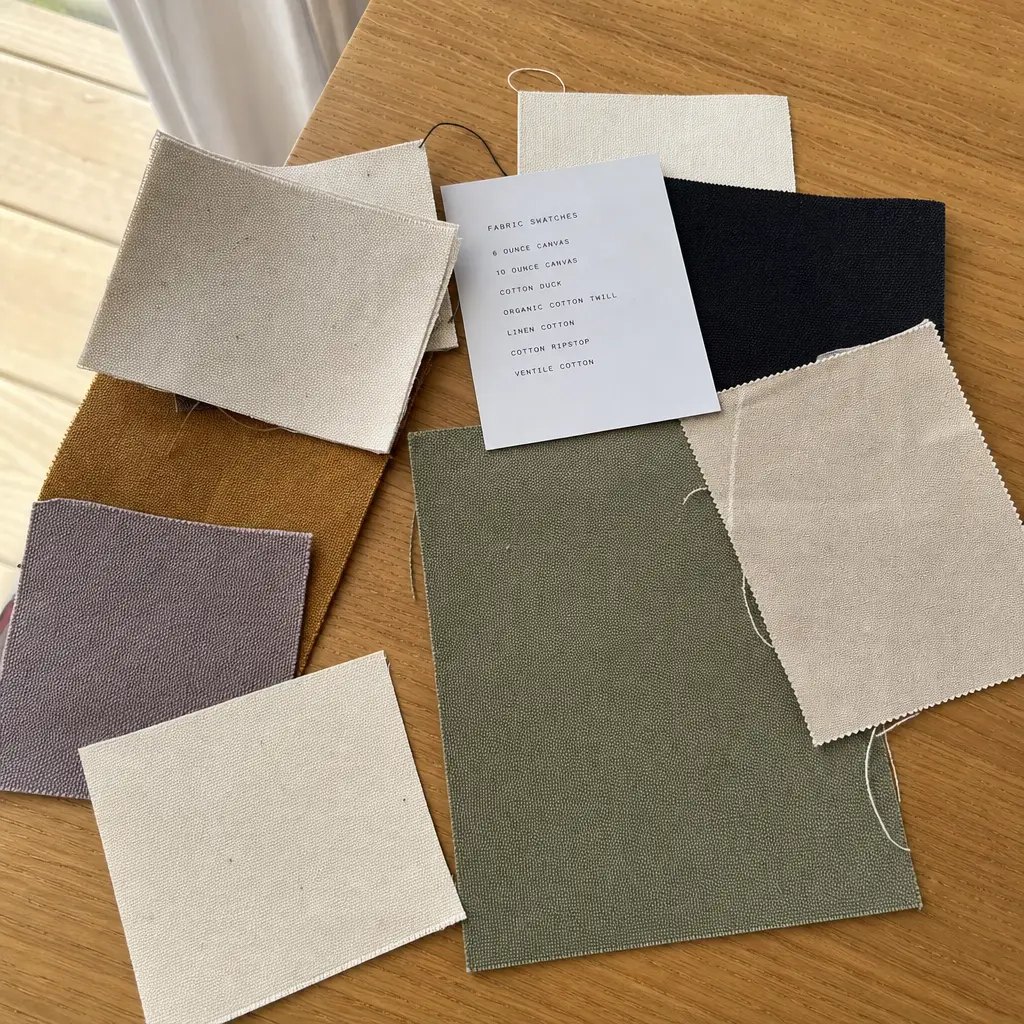
GSM means grams per square meter. It measures fabric mass; it does not, by itself, prove quality. A tight 180 GSM organic cotton canvas can feel sturdier than a loose 220 GSM cloth. A washed 200 GSM fabric may finish softer and slightly different in weight than the same fabric before finishing. Natural unbleached cotton can show more fiber texture than dyed cotton, which may affect both hand feel and logo appearance. Treat GSM as one line in the specification, not the whole specification.
For most university bookstore buying, three practical bands are enough to start. A 140-160 GSM finished fabric is usually better for light event distribution, admissions programs, brochure carry, and short-life promotional use. A 180-200 GSM finished fabric is often the strongest middle range for paid bookstore totes because it balances hand feel, cost, printability, and carton weight. A 220-260 GSM finished canvas moves into a more premium space. It can suit textbook carry or higher-price retail merchandise, but it also increases fabric cost, sewing demands, freight weight, and shrinkage-control work.
Be precise about the measurement stage. Some quotes refer to greige fabric, meaning cloth before dyeing, washing, pressing, or other finishing. Others quote finished fabric, meaning the cloth closer to what will be cut and sewn. For buying decisions, finished GSM is more useful. State the target as finished fabric GSM for the bag body, set a tolerance, and confirm whether the supplier can provide roll-level records. A common tolerance is plus or minus 5%, unless the mill confirms tighter control. If handles use separate webbing, specify that material separately rather than assuming the body fabric spec covers it.
- 140-160 GSM finished fabric: best for light handouts, brochures, orientation inserts, and budget event programs.
- 180-200 GSM finished fabric: strong middle range for paid bookstore merchandise and repeat campus retail totes.
- 220-260 GSM finished canvas: suitable for premium totes, heavier books, alumni gifts, and higher perceived value.
- Quote language to use: finished organic cotton fabric, target GSM, tolerance, weave, finish, body fabric, and separate handle material.
Match Weight to Load and Shape
Students judge a tote when it is full. A sample may look neat on a table, then sag, twist, or pull at the handles once it holds a textbook, a hoodie, a notebook, and a bottle. Fabric weight should therefore be chosen alongside body dimensions, gusset depth, handle drop, and reinforcement. The heaviest fabric is not automatically the best choice, but the chosen fabric must support the expected use without making the bag look tired after normal handling.
Use realistic load testing during approval. For light event totes, fill the sample with brochures, a T-shirt, and small inserts. For a retail tote, test about 5-8 kg using a mix of notebooks, a paperback, a sweatshirt, and a bottle. For a tote promoted for textbooks or course-material kits, test about 10-12 kg if that reflects the intended use. After loading and carrying, inspect handle attachments, bottom corners, seams, fabric distortion, and the way the bag recovers when empty. The load number should be written into the spec because a request for a strong tote is too vague to inspect fairly.
Shape matters as much as GSM. A flat tote is economical, easy to fold, and suitable for many events, but it does not handle square or bulky contents especially well. A bottom gusset or side-and-bottom gusset lets books and apparel sit more naturally, improves shelf presentation, and reduces stress at the opening. For bookstore resale, review the tote full, empty, folded, stacked, and hanging from a fixture. A bag that passes only one of those moments may still create problems in the store.
- For brochure carry, verify that 140-160 GSM does not show excessive logo show-through or seam distortion after folding.
- For paid merchandise, test 180-200 GSM with 5-8 kg and inspect whether the tote still looks sellable after handling.
- For textbook carry, consider 220 GSM or higher plus bartack or box-X handle reinforcement and a written load test.
- For fixture display, check fold method, tag placement, barcode visibility, and how the body recovers after unfolding.
Choose Construction Before Artwork
Lock construction before final artwork approval. The tote body controls the print area, seam positions, fold lines, and how the logo reads when the bag is filled. A flat tote has fewer sewing operations and usually a lower cost. A gusseted tote adds cutting and sewing control, but it often works better for bookstore resale because books, notebooks, apparel, bottles, and tech accessories need volume. Artwork placed for a flat bag may look off-center once a gusset changes the usable face.
Handle construction deserves its own specification line. Self-fabric handles create a clean all-cotton look and are common for organic cotton tote programs. They should have a finished width that feels comfortable, often around 2.5-3.5 cm depending on the bag size, with stitch rows that help prevent twisting. Cotton webbing handles can feel firmer and stronger, but the buyer must confirm whether the webbing is organic cotton if the product claim requires it. A bag with an organic cotton body and conventional cotton webbing may still be usable, but the claim and labeling need to be accurate.
Do not leave reinforcement to factory habit. Light giveaway totes may only need reinforced stitching. Retail totes usually benefit from bartacks or box-X stitching at the handle points. Ask for seam allowance, stitch density, thread color, and inside finishing. A practical stitch-density range may be around 8-10 stitches per inch, although the final standard should match the selected fabric and sealed sample. These details are small on paper and obvious in hand.
- Flat body: lower cost, fast folding, simple event distribution, and lighter goods.
- Gusseted body: better capacity, improved structure, stronger retail presentation, and more inspection points.
- Self-fabric handles: clean organic look, but specify width, fold, stitch rows, handle drop, and reinforcement.
- Webbing handles: stronger feel, but verify fiber content, certification status, shade match, and shrinkage behavior.
- Construction spec: include seam type, seam allowance, stitch density, thread color, bartack or box-X reinforcement, and loose-thread limits.
Make Organic Claims Verifiable
Organic cotton sourcing needs more support than the word organic in a product name. A bookstore buyer should decide what claim will appear on the hangtag, product page, invoice, or internal sustainability report, then request documents that support that exact claim. Suppliers may reference recognized chain-of-custody programs such as GOTS or OCS. A scope certificate shows that a company is certified for certain activities. It does not, by itself, prove that a specific shipment is certified. For order-level verification, a transaction certificate or equivalent document may be required where applicable.
Define which components the claim covers. Does it apply only to the body fabric, or also to handles, labels, thread, and printing inputs? This matters when the handle is webbing, the label is polyester, or the print uses standard inks. Some certification systems also have rules about labeling, logo use, and product composition. Avoid broad language such as 100% organic tote unless the full bill of materials and documentation support it. Cleaner wording prevents receiving disputes and protects the bookstore from overstating the product.
Documentation can affect lead time. Certified fabric may require mill booking, lot tracking, and paperwork after shipment. Dyed, washed, or brushed organic cotton can add processing steps and minimums. If the bookstore needs bags before orientation week or semester start, document timing should be part of the production schedule. Ask which papers can be shared before production, which are issued after shipment, and whose company name appears on each document.
- Ask for current supplier scope certificates and confirm the certified process covers the product being quoted.
- For certified orders, ask whether a transaction certificate or order-level document can be issued and when it will be available.
- Specify whether the organic claim covers body fabric only or also handles, labels, thread, and other components.
- Avoid unsupported wording on hangtags, web listings, and packaging if some components are not certified organic.
- Match purchase order wording, invoice description, packing list, and certification documents to reduce receiving and compliance disputes.
Plan Printing Around the Fabric
Decoration should be selected after the fabric quality is chosen. Organic cotton surfaces vary in lint, absorbency, weave texture, shade, and finish. A crisp bookstore logo that prints well on smooth 180 GSM canvas may lose fine detail on slubbier natural cloth. A university seal with thin rules can fill in if the mesh, ink, pressure, and artwork are not adjusted. Print quality is not separate from fabric choice; it is one of the ways the fabric choice becomes visible.
Screen printing is usually the practical default for bookstore totes with one to three solid colors. It works well for campus logos, department marks, and repeat orders at volume. Digital print or transfer methods can suit short runs or complex artwork, but buyers should test hand feel, edge clarity, wash behavior, and adhesion on the selected fabric. Embroidery, woven labels, and patches can support premium positioning, although they add placement tolerance, backing, puckering, and needle-hole considerations.
Turn artwork into measurable instructions. State final print size, location from the top edge or side seam, Pantone or approved color reference, maximum registration variation, and whether the logo needs to remain centered after folding. A print placement tolerance of plus or minus 0.5-1 cm is often realistic, depending on bag size and production method, but the supplier should confirm what can be held. Do not approve production from a digital mockup alone. The mockup confirms layout; the strike-off confirms fabric, ink, cure, opacity, and detail.
- Use screen print for simple marks, solid colors, repeat bookstore orders, and controlled unit cost.
- Require strike-offs for crests, seals, small type, thin rules, distressed effects, large solid areas, and dark ink on natural cotton.
- Check curing and adhesion with rub or tape testing when the tote will be handled heavily in retail use.
- Define print location by measurement points, not only by a visual mockup.
- Confirm whether screen setup, color matching, strike-off, curing, and reprint charges are included in the quote.
Build Quotes Buyers Can Compare
A low tote price is not helpful if every supplier quoted a different bag. One factory may include print setup, export cartons, barcode labels, and a pre-production sample. Another may quote only cut-and-sew work with bulk packing. One supplier may price a finished 200 GSM organic cotton canvas, while another may use a nominal 200 GSM fabric that finishes lighter after washing. Good quote discipline lets procurement compare like with like.
Ask suppliers to break out the main cost drivers without requiring a full internal cost sheet. Clarify body fabric, handles, cutting and sewing, printing, labels, hangtags, packing, cartons, sampling, inspection support, and freight terms. Also ask what changes move the price. A second print color may require another screen and slower production. A custom woven label can add MOQ and lead time. Individual polybags and barcode stickers may increase labor and carton volume. These details often explain why two quotes that look similar are not actually comparable.
Compare cost per sellable tote, not just the ex-works unit price. Weak packing, mixed SKUs, poor barcode control, or inconsistent folding can create receiving labor and reduce usable inventory. Freight matters too. Heavy canvas totes can raise carton gross weight and shipping cost quickly. Before awarding, ask for units per carton, carton dimensions, gross weight, net weight, and estimated CBM per 1,000 units. Those numbers help the buyer calculate landed cost, storage space, and receiving effort.
- Quote fabric by finished GSM, construction, color, finish, organic documentation, and tolerance.
- Quote construction by body size, gusset, handle material, handle drop, reinforcement, seam details, and inside finishing.
- Quote decoration by print method, color count, setup, strike-off, curing, embroidery, patch, or label cost.
- Quote packing by fold method, polybag, hangtag, barcode, carton count, carton dimensions, gross weight, and carton marks.
- Compare landed cost per sellable unit after freight, inspection, receiving labor, and expected defect risk.
Control MOQ and SKU Complexity
MOQ is shaped by more than the final quantity. Fabric booking, dye lot size, cutting efficiency, print setup, label sourcing, packing format, and SKU count all play a role. A bookstore may think it is placing one tote order, but two sizes, three fabric colors, four artwork versions, custom labels, and two packing methods can turn it into a complicated production plan. Complexity raises cost and increases the risk of shade mixing, wrong labels, incorrect carton marks, or late approvals.
The simplest way to manage MOQ is to standardize the tote body and vary the least disruptive element. A bookstore might choose one 180-200 GSM natural cotton gusseted body, then run separate one-color prints for orientation, alumni weekend, and the campus store. That is usually easier than producing three different bodies. If the store needs both a low-cost event giveaway and a premium retail tote, treat them as separate programs. Trying to make one bag satisfy both goals often weakens the retail item or overbuilds the giveaway.
Ask for MOQ by variable, not only total order quantity. Important variables include fabric color, fabric weight, body size, handle type, print design, print color count, label type, and packing format. If a supplier offers a lower MOQ, ask what changed. The answer may be stock fabric, stock blanks, bulk packing, fewer print colors, or a conventional component. A lower MOQ is useful only when the tradeoff is visible and acceptable.
- Standardize body size, fabric color, handle construction, and packing before multiplying artwork versions.
- Separate premium bookstore resale totes from low-cost event giveaways when use cases conflict.
- Ask whether MOQ changes for dyed fabric, heavier canvas, second print color, woven label, hangtag, barcode, or individual polybag.
- Use one packing format per SKU where possible to reduce receiving errors.
- For reorders, ask whether previous screens, labels, or fabric commitments can reduce setup cost or lead time.
Approve Samples With Measured Criteria
Samples are procurement control points, not courtesy photos. A development sample can align early expectations, but a custom order should have a physical pre-production sample before bulk cutting whenever timing allows. The sample should use actual bulk fabric or an approved equivalent, final dimensions, final handle construction, final print method, and representative packing if packing affects store operations. If anything is substituted, write it down so the exception does not become accidental approval.
Measure the sample against the specification sheet. Check opening width, body height, bottom width, side gusset, bottom gusset, handle width, handle drop, print size, print placement, label placement, and fold size. Record the results next to the target dimensions and tolerances. Then use the sample like a customer. Fill it, carry it by hand, carry it on the shoulder if intended, set it down, fold it, unfold it, and inspect the seams, print, and handles afterward. A tape measure and a simple load test catch issues that photos miss.
The approved sample should become the sealed standard for bulk production and inspection. Keep one signed sample with the buyer or inspection team and confirm that the factory keeps a matching reference. If the sample is approved with comments, require written confirmation before bulk starts. For higher-value retail totes or complex decoration, request a corrected confirmation sample or a final pre-production sample after changes. That extra approval step can prevent a known problem from being repeated across the order.
- Measure all sample dimensions and compare them with written tolerances before approval.
- Approve print from a strike-off on the actual fabric quality and color, not only from a mockup.
- Test the sample full, empty, folded, stacked, and carried with realistic campus contents.
- Document open exceptions such as substitute fabric, pending label, non-final barcode, or approximate packing.
- Keep the sealed sample, strike-off, spec sheet, and approval notes together for final inspection and reorders.
Set QC, Packing, and Reorder Rules
Quality control works best when defects are defined before production. If the purchase order only says organic cotton tote bag, the inspection team has little basis for rejecting weak handles, dirty fabric, poor registration, or incorrect packing. The order should classify critical, major, and minor defects. Critical defects may include wrong logo, unsafe contamination, mold odor, incorrect fiber claim, broken handles, or unreadable required labels. Major defects may include size outside tolerance, weak reinforcement, visible stains, skipped stitches, poor print registration, or wrong packing format.
Use an inspection plan that covers fabric, construction, decoration, labeling, and cartons. Fabric checks should include GSM, shade, odor, stains, holes, excessive slubs, skewing, and moisture risk. Construction checks should include seam allowance, stitch density, skipped stitches, loose threads, handle reinforcement, gusset symmetry, and bottom corners. Decoration checks should include placement, registration, opacity, ink coverage, curing, rub resistance, and adhesion. Label and barcode checks should include spelling, scan readability, SKU accuracy, and placement.
Packing is part of bookstore execution. Decide whether totes arrive bulk packed, folded by unit, individually polybagged, barcode labeled, retail tagged, or separated by location. Ask for carton quantity, carton dimensions, gross weight, net weight, and carton marks before final approval. For reorders, keep the final spec, artwork file, approved sample, packing photo, inspection results, and supplier quote history. Repeat orders are far easier when the factory reproduces a documented product instead of rebuilding the program from memory.
- Suggested measurement tolerance: plus or minus 1 cm for main body dimensions unless the supplier confirms tighter control.
- Suggested print placement tolerance: plus or minus 0.5-1 cm depending on bag size, print method, and fixture requirements.
- Functional checks: load test, handle pull, seam review, rub test, print adhesion check, barcode scan, and carton count verification.
- Packing checks: fold direction, tag placement, polybag requirement, carton count, carton marks, moisture protection, and mixed-SKU separation.
- Reorder file: sealed sample, strike-off, final spec, artwork version, PO terms, carton plan, inspection report, and corrective-action notes.
Specification comparison for buyers
| Spec decision | Recommended option | When it fits | Buyer risk to check |
|---|---|---|---|
| Fabric weight | 140-160 GSM finished organic cotton plain weave | Orientation giveaways, admissions events, brochure carry, light merchandise inserts | Can feel too thin for retail sale; check logo show-through, seam slippage, and whether GSM is finished fabric, not greige fabric |
| Fabric weight | 180-200 GSM finished organic cotton canvas or tight plain weave | Core bookstore resale tote, student merchandise bundle, general campus shopping bag | Confirm fabric width, weave density, shrinkage, and finished dimensions after pressing or washing; test with 5-8 kg load |
| Fabric weight | 220-260 GSM finished organic cotton canvas | Premium bookstore tote, alumni gift, textbook carry, higher-price retail SKU | Higher unit cost, heavier cartons, slower sewing, needle marks, and greater shrinkage control needs; test handle attachment at 10-12 kg if used for books |
| Fabric construction | Plain weave | Budget tote, simple one-color print, fast folding and bulk distribution | Looser plain weave can stretch or distort; inspect yarn slubs, holes, and seam puckering against approved standard |
| Fabric construction | Canvas weave | Retail tote, heavier campus carry, improved structure and hand feel | May increase print texture and carton weight; require strike-off for fine type, seals, and large ink areas |
| Body construction | Flat tote with reinforced handle attachment | Lower-cost SKU, events, folded counter display, light goods | Limited capacity for textbooks and bottles; verify opening width, handle drop, and seam strength |
| Body construction | Bottom and side gusset | Bookstore resale, course-material kits, apparel plus books, stronger shelf presentation | More measurement points and sewing operations; inspect gusset symmetry, corner turns, and bottom seam durability |
| Handle design | Self-fabric handles, folded and stitched | All-cotton appearance, natural branding, standard organic tote programs | Handles can twist or stretch; specify finished width, stitch rows, reinforcement, and load test target |
| Handle design | Organic cotton webbing handles | Higher-strength feel, premium totes, heavier carry use | Confirm webbing certification and color match separately; webbing may shrink or shade differently from bag body |
Buyer checklist before sampling
- Define the program type before choosing GSM: orientation giveaway, paid bookstore merchandise, textbook carry, alumni gift, staff kit, gift-with-purchase, or department fundraiser.
- State target fabric weight as finished fabric GSM for the bag body, not only nominal or greige fabric GSM.
- Set a GSM tolerance, commonly plus or minus 5% unless the mill confirms a tighter range, and require roll-level GSM records for bulk fabric.
- Specify fabric construction: plain weave, canvas, twill, natural unbleached, dyed, washed, brushed, or enzyme-washed finish.
- Confirm the organic claim and documents required for the order, such as supplier scope certificate plus transaction certificate where applicable under GOTS or OCS chain-of-custody rules.
- Lock finished dimensions: opening width, body height, bottom width, side gusset, bottom gusset, handle width, handle drop, and print placement from fixed measurement points.
- Set dimension tolerance, commonly plus or minus 1 cm for body width/height and plus or minus 0.5 cm for handle width or print placement when achievable.
- Define seam type, seam allowance, stitch density, thread color, bartack or box-X reinforcement, inside seam finishing, and loose-thread acceptance.
- Confirm handle material separately from body fabric: self-fabric organic cotton, organic cotton webbing, conventional cotton webbing, or blended material.
- Select print method after fabric is chosen, then approve a strike-off on the same fabric quality and color used for production.
Factory quote questions to send
- What is the quoted finished fabric GSM for the bag body, and what roll-to-roll tolerance do you allow in bulk production?
- Is the GSM measured before or after dyeing, washing, calendaring, pressing, or other finishing?
- What is the fabric construction, yarn count if available, weave type, and fabric width used for this tote?
- Is the cotton organic under a recognized chain-of-custody program such as GOTS or OCS, and which documents can be issued for this specific order?
- Can you provide a current scope certificate and, if applicable, a transaction certificate or equivalent order-level documentation?
- Is the quoted fabric natural unbleached, bleached, dyed, washed, or brushed, and how does that change shrinkage, shade tolerance, MOQ, and lead time?
- Does the quote include fabric, cutting, sewing, printing, curing, labels, hangtags, folding, polybags, barcode stickers, carton marks, export cartons, and inspection preparation?
- Which steps are done in your facility, and which are outsourced to mills, printers, dye houses, laundries, embroidery shops, or packing vendors?
- What is the MOQ by fabric color, bag size, fabric weight, print design, print color count, label type, packing format, and shipping mark?
- What handle material, handle width, handle drop, stitch pattern, reinforcement method, and load test target are included in the price?
Quality-control points to confirm
- Finished fabric GSM should be checked against the signed specification, with sampling method, tolerance, and measurement stage stated before production.
- Bulk fabric rolls should be inspected before cutting for shade variation, stains, oil marks, holes, odor, mildew, excessive slubs, skewing, and uneven finishing.
- Organic cotton documentation should be checked against the purchase order, supplier name, product description, fiber content, quantity, and certification scope.
- Finished dimensions should be measured flat at approved points: opening width, body height, bottom width, side gusset, bottom gusset, handle width, and handle drop.
- Dimension tolerance should be written in the inspection plan, for example plus or minus 1 cm for main body measurements unless the design requires tighter control.
- Seam allowance, stitch density, thread color, skipped stitches, loose threads, seam puckering, and corner turns should match the sealed sample.
- Handle attachment should pass the agreed load or pull test without seam tearing, thread breaks, excessive distortion, or handle detachment.
- Bartacks or box-X reinforcements should be consistently positioned and secure, especially on totes intended for books, laptops, or course-material kits.
- Print placement, registration, opacity, edge sharpness, ink coverage, and curing should be inspected against the approved strike-off.
- Color should be checked under daylight-equivalent lighting and store-like lighting because natural cotton ground shade can change logo appearance.