Price Starts With the Real Spec
A useful bulk pricing plan for organic cotton totes starts with the product the factory will actually make, not the logo mockup. The same 38 x 42 cm tote can be a low-cost event bag, a sturdy retail shopping bag, or a premium reusable accessory depending on fabric weight, handle construction, print method, and packing. If one supplier quotes 180 gsm natural cotton and another quotes 280 gsm certified organic cotton with reinforced handles and retail folding, the unit prices should not be close.
For eco apparel brands, the procurement goal is usually not the lowest tote price. It is a bag that supports the brand promise, passes receiving checks, and can be reordered without reworking every detail. Separate the cost into fabric, cut-and-sew labor, printing, packing, documentation, and freight. That structure makes tradeoffs clearer. If the budget is tight, reducing print complexity may be smarter than dropping fabric weight so far that the bag feels disposable.
- Compare the same GSM, size, handle length, print placement, and packing route across suppliers.
- Ask for setup, screen, sample, documentation, carton, and packing charges as separate lines.
- Treat organic documentation and labeling as part of the spec, not as a note added after pricing.
Set Retail, Promo, or Packaging Use First
The intended use should drive the tote specification. A resale tote in an apparel store needs better structure, cleaner seams, and a more controlled front panel than a giveaway bag for an event. A bag used as packaging for online orders may need barcode consistency and compact folding more than premium handfeel. A gift-with-purchase tote may sit between those extremes: visible enough to protect the brand, but cost-sensitive because it supports another product sale.
As a practical starting point, 240 to 300 gsm works well for many retail apparel totes because the fabric has enough body to hold folded garments without collapsing. Lighter 180 to 220 gsm fabric can work for event or promotional use, especially when budget and quantity matter more than shelf presence. Heavier weights can feel premium, but they increase fabric cost, sewing strain, carton weight, and freight. Procurement teams should decide whether the extra weight improves the customer experience enough to justify the landed cost.
- Retail resale tote: 240 to 300 gsm, reinforced handles, clean front panel, controlled print placement.
- Promo or event tote: 180 to 220 gsm, simple construction, one-color print, bulk packing.
- E-commerce packaging tote: stable folding, barcode accuracy, consistent carton quantity, and moderate fabric weight.
Certification and Claim Control
Organic cotton claims need a document trail. If the bag will be marketed as organic, ask early whether the supplier can support the claim with recognized chain-of-custody documentation. Common documents include a supplier scope certificate, GOTS or OCS certification where applicable, and transaction certificates that connect the certified material to the order. A scope certificate shows what the certified company is approved to handle; a transaction certificate links certified material to a specific shipment or order.
Buyers should also separate certified organic cotton from informal language such as organic-style, eco cotton, or made with organic cotton. Those phrases do not mean the same thing in retail compliance review. If the brand wants to use GOTS labeling, the supplier must confirm that the product, processing, decoration, labeling, and chain of custody support that label. If only the fiber or fabric is certified under a different route, the permitted wording may be narrower. Procurement should ask compliance or legal teams to approve the claim before hangtags, product pages, or carton labels are printed.
- Request the supplier scope certificate and confirm it is current and relevant to the process being quoted.
- Ask whether GOTS, OCS, or another standard applies to the finished product, fabric, or fiber only.
- Request transaction certificates when the order requires traceable certified organic material.
- Do not print organic claims, certification logos, or hangtag language until labeling permission is confirmed.
A Practical Bulk Price Model
Organic cotton tote pricing is easiest to compare when buyers look at cost drivers by share of the unit price. Exact percentages vary by country, spec, and order size, but a common structure is fabric as the largest cost, followed by sewing, printing, packing, overhead, and margin. For a simple natural 260 gsm tote with one-color screen print, fabric may represent roughly 35 to 50 percent of the FOB unit cost. Sewing may represent 18 to 30 percent. Printing and setup allocation may represent 8 to 18 percent, depending on color count and quantity. Packing and cartons may represent 5 to 12 percent before international freight.
Sample quote math makes comparisons sharper. Suppose a 3,000 pc order is quoted at USD 1.85 FOB per piece for a 260 gsm natural organic cotton tote with one-color front print and bulk packing. Screen setup is USD 80, sample fee is USD 60, and documentation support is USD 50. The effective FOB cost for the first order is about USD 1.913 per piece before freight, because setup and sample charges add USD 190 across 3,000 units. At 10,000 pcs, the same fixed charges add only about USD 0.019 per piece. That is why first-order pricing and reorder pricing should be reviewed separately.
- Illustrative 1,000 pcs: higher unit cost because setup, sampling, and line changeover are spread across fewer bags.
- Illustrative 3,000 pcs: often a practical first bulk tier for branded retail programs.
- Illustrative 5,000 to 10,000 pcs: better scale if the spec, print, and packing stay stable.
- Main cost levers: GSM, certification route, dyeing, print colors, retail packing, carton profile, and freight mode.
Supplier Qualification Signals
A low quote is not helpful if the supplier cannot control the spec. For organic cotton totes, stronger supplier signals include recent production of similar bags, export experience to your market, current certification scope where claims are required, and the ability to show sample records, carton labels, and inspection reports. If the supplier has in-house printing, ask how print color, registration, curing, and rub resistance are controlled. If printing is subcontracted, ask who owns the quality issue when bulk output fails the approved sample.
Factory maturity also shows up in practical details. A supplier used to retail packaging should understand barcode placement, carton marks, inner quantities, hangtags, folding consistency, and retailer receiving requirements. Audit history can matter if the bags will be sold through larger retail accounts. Some buyers may also ask about needle detection or metal control policies, especially when sewn accessories move through apparel compliance systems. Tote bags do not always require the same controls as children's apparel, but the supplier should be able to explain its policy clearly.
- Ask for photos or samples of similar organic cotton tote construction, not unrelated promotional bags.
- Confirm whether printing, cutting, sewing, packing, and final inspection are in-house or subcontracted.
- Request current certification scope and audit history when the brand or retailer requires compliance evidence.
- Look for export experience, retail packaging familiarity, and clear responsibility for rework.
Write an RFQ Factories Can Price
A strong RFQ removes guesswork. It should include body dimensions, gusset depth, fabric GSM, fabric color, handle length, reinforcement method, stitch expectations, print artwork, print size, number of colors, packing format, carton labeling, quantity tiers, destination term, and required documents. If the order is a market test, say so. If it is a repeat program expected to run every season, say that too. Factories price development risk and scheduling differently when they can see the commercial path.
The RFQ should ask for a price ladder rather than one number. Use 1,000, 3,000, 5,000, and 10,000 pcs, then request separate lines for sample fees, screen fees, certification documentation, retail packing, and cartons. Ask for carton dimensions and gross weight with each packing option. A quote that is USD 0.05 cheaper per bag can become more expensive if the carton profile is inefficient or if retail-ready packing was excluded. The cleanest comparison is total landed cost by tier, not FOB unit price alone.
- Include artwork files, Pantone references, logo dimensions, and print placement measurements.
- State EXW, FOB, CIF, or DDP clearly, and do not mix terms across suppliers without adjusting landed cost.
- Ask when lead time starts: deposit receipt, artwork approval, sample approval, or material arrival.
- Request quote validity, payment terms, tooling or screen ownership, and reorder pricing assumptions.
Print and Decoration Choices
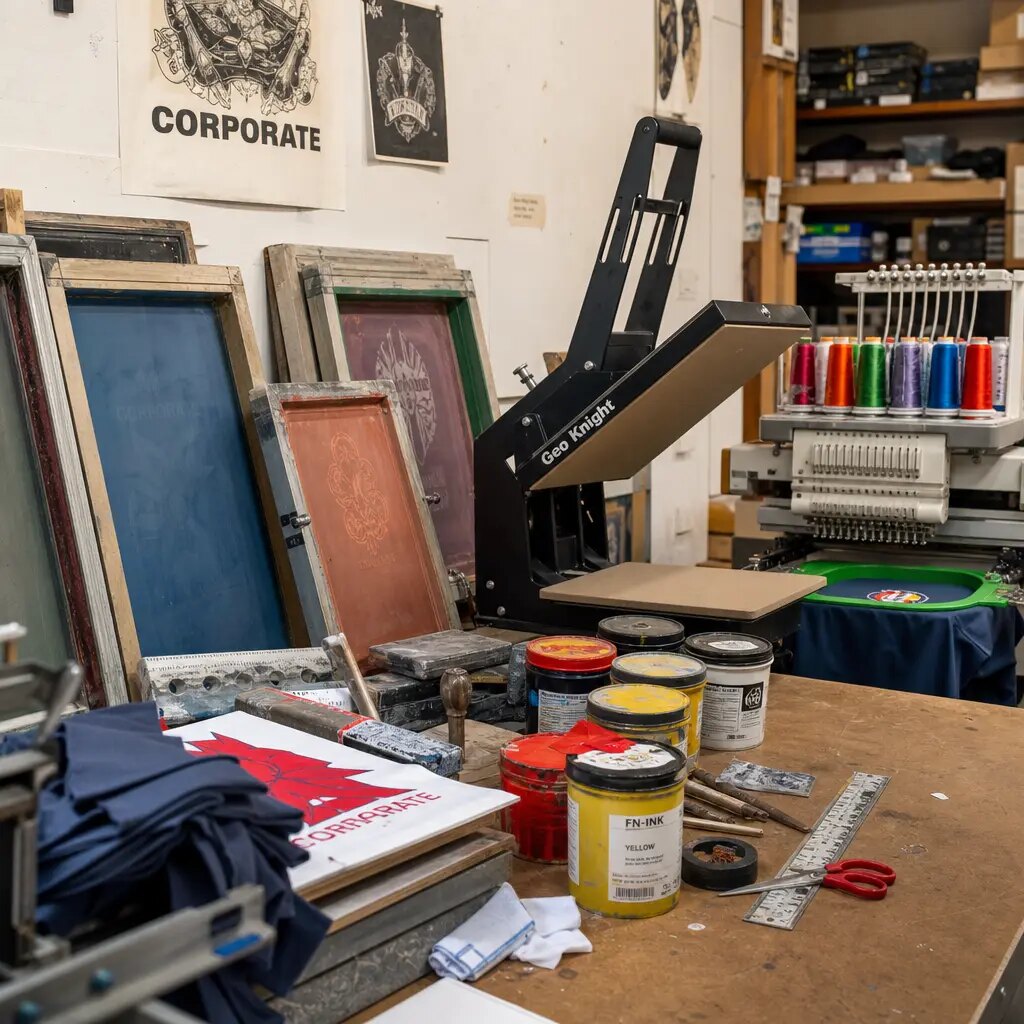
For many eco apparel brands, a one- or two-color water-based screen print is the most reliable decoration route for bulk organic cotton totes. It can look clean on natural cotton, scales well at mid to high quantities, and keeps the handfeel closer to the fabric. The buyer still needs to define ink color, opacity expectations, curing process, print size, and acceptable placement tolerance. Natural cotton is not a perfectly white base, so artwork that relies on bright white or very fine color contrast should be tested before bulk approval.
Other decoration methods can fit specific needs. Heat transfers may suit smaller quantities or detailed graphics, but they can change handfeel and durability. Embroidery can look premium, but it increases needle time and can distort thinner fabric if the backing and stitch density are not controlled. Woven labels or side tabs can support a subtle retail look, but they add component sourcing and placement checks. The buyer should not choose decoration from a mockup alone. Approve the decoration on the actual fabric weight and color that will be used in production.
- Use screen print for simple logos, strong scale economics, and predictable branded bulk programs.
- Use transfers only after checking handfeel, edge durability, wash behavior, and color accuracy.
- Use embroidery on heavier fabric or reinforced areas where distortion can be controlled.
- Keep small reverse type, thin lines, and gradients out of the first bulk run unless the supplier has proven them.
Samples Should Lock the Commercial Bag
Samples are not only for design signoff. They are the procurement control point before money is committed to bulk material, printing, and packing. A development sample can confirm size, handfeel, handle comfort, seam style, and rough print effect. A pre-production sample should represent the commercial version: approved fabric, approved print, approved label, approved folding, and approved carton or inner packing if retail-ready presentation matters.
Measure the sample rather than judging it by appearance alone. Check flat body width and height, gusset depth, handle length, handle attachment, seam allowance, print position, print opacity, and fold consistency. If the tote will be washed, run a simple wash test and record shrinkage, skewing, seam puckering, and print fading. If the bag will carry garments or catalogs, load-test the handles. Keep one signed reference sample with the purchase order file and make it the standard for final inspection. That reference sample prevents arguments when bulk production is close but not identical.
- Approve one signed development sample only after the core spec is stable.
- Approve a pre-production sample before bulk cutting, printing, and packing components are released.
- Record measured dimensions, print position, color notes, shrinkage results, and handle load comments.
- Use the signed sample, spec sheet, and artwork file together as the inspection standard.
QC: Critical, Major, and Minor Defects
Quality control works better when the defect language is commercial, not vague. Critical defects are shipment blockers because they create compliance, brand, or receiving failure. Examples include wrong logo, wrong color, wrong organic claim label, missing barcode, incorrect size class, unsafe contamination, or mixed cartons. These should be zero tolerance. A factory should not ship a tote lot with the wrong artwork and expect the buyer to treat it as a cosmetic issue.
Major defects affect saleability or function. Weak handle stitching, broken side seams, holes, visible stains on the front panel, severe slubs, off-center print, poor ink curing, heavy print cracking, incorrect hangtag placement, or failed load checks belong here. Minor defects are lower-impact issues such as a small loose thread away from stress points, slight natural fiber variation, mild crease marks from folding, or tiny print specks that are not visible at normal viewing distance. AQL 2.5 is a common starting point for major visual defects, but premium retail programs may set stricter rules for front-panel appearance and print placement.
- Critical: zero tolerance for wrong artwork, wrong label claim, wrong color, missing barcode, unsafe contamination, or mixed cartons.
- Major: control through AQL and rework rules for weak seams, stains, holes, off-center print, or failed load checks.
- Minor: track small cosmetic issues, but avoid rejecting acceptable natural cotton character unless it exceeds the agreed standard.
- Inspection focus: front panel, handle anchors, side seams, gusset corners, print position, carton marks, and barcode accuracy.
Packing, Cartons, and Lead Time
Packing can change both cost and delivery performance. Bulk flat packing is usually the lowest-cost route for wholesale buyers that will repack locally. Retail-ready packing can include individual bags, belly bands, hangtags, barcode stickers, fold boards, inserts, recycled polybags, or specific carton marks. Each step adds labor, component sourcing, and inspection points. A buyer comparing organic cotton tote quotes should ask for two packing options when the final retail route is uncertain: bulk flat pack and retail-ready pack.
Lead time depends on order size, sourcing route, documentation, and shipping method. For a first custom order, development and pre-production sampling often need 10 to 20 working days if artwork and specs are ready. Bulk production for 1,000 to 3,000 pcs may take about 15 to 30 working days after approval, while 5,000 to 10,000 pcs may need 25 to 45 working days depending on fabric availability, print capacity, and packing complexity. Air freight may take days once goods are ready, but costs more. Ocean freight can add several weeks, plus booking, consolidation, customs, and local delivery. The purchase plan should include one correction cycle, not just the factory's best-case sewing time.
- Ask for carton quantity, carton dimensions, gross weight, barcode format, and master carton marks with the quote.
- Use bulk packing for lower cost and local repacking; use retail-ready packing when receiving or store presentation requires it.
- Plan 10 to 20 working days for sampling on first custom orders, then add production and freight time.
- Add buffer for custom dye, certification documents, holiday shutdowns, peak season capacity, and retailer label changes.
Specification comparison for buyers
| Spec decision | Recommended option | When it fits | Buyer risk to check |
|---|---|---|---|
| Sourcing route | Direct factory with export history and clear print responsibility | Repeat programs, orders above 1,000 to 3,000 pcs, and branded retail packaging | Trading markups, unclear factory ownership, weak spec control, and no single party accountable for print defects |
| Organic claim route | Certified organic cotton with valid scope and transaction documents where claims are made | Brands that will market the bag as organic or sell it through retailers with compliance review | Non-certified organic wording can create labeling risk; ask what claim is legally supported by documents |
| Fabric weight | 240 to 300 gsm for retail; 180 to 220 gsm for promo or event use | Eco apparel resale, shopping totes, launch kits, or lower-cost giveaways | Too-light fabric looks thin; too-heavy fabric increases unit cost, carton weight, and freight |
| Fabric color | Natural undyed cotton for first runs; dyed fabric only when brand color is critical | Natural bags, lower development risk, and faster approvals | Custom dye adds MOQ, shade-band risk, lab dip time, and possible certification or restricted-substance checks |
| Print method | 1 to 2 color water-based screen print | Most bulk programs that need durable branding and clean unit economics | Fine detail, gradients, or full-color art can add setup cost, higher reject risk, and longer sampling |
| Decoration placement | Front panel only with one logo position | Cost-sensitive bulk orders, market tests, and first supplier runs | Back print, wrap print, or gusset print adds labor, registration risk, and inspection time |
| Handle construction | Long handles with X-box or bar-tack reinforcement | Retail bags carrying apparel, books, catalogs, or small accessories | Weak reinforcement can fail load checks and create customer returns even if the body fabric is acceptable |
| Packing route | Flat bulk pack with size barcode and master carton label | Wholesale import, warehouse intake, and buyers that repack locally | Retail-ready folding, hangtags, stickers, and individual bags add labor and can change carton counts |
| Quote basis | FOB port with separate sample, screen, packing, carton, and documentation lines | Buyers comparing several factories or planning landed cost | Lumped quotes hide setup charges and make reorders hard to benchmark |
Buyer checklist before sampling
- Confirm intended use: resale tote, gift-with-purchase, staff bag, event giveaway, or retail packaging replacement.
- Lock body size, gusset depth, fabric GSM, handle length, seam allowance, reinforcement type, and expected carry load before requesting quotes.
- State whether the bag will be marketed as organic and request the document trail needed for that claim, such as GOTS, OCS, scope certificate, and transaction certificate where applicable.
- Choose the print method, number of colors, logo size, print placement, Pantone targets, and acceptable print handfeel before comparing unit prices.
- Request price bands at 1,000, 3,000, 5,000, and 10,000 pcs so MOQ and scale breaks are visible.
- Ask suppliers to separate fabric, sewing, printing, setup, certification documentation, packing, carton, and sample charges.
- Require carton dimensions, gross weight, carton quantity, barcode position, and master carton marks with the quote.
- Ask whether the supplier has in-house printing, retail packing experience, export experience to your market, and recent audit history.
- Define critical, major, and minor defects in the purchase order, including size tolerance, print position tolerance, seam strength, and zero-tolerance errors.
- Build sample approval time into the calendar before bulk fabric cutting, printing, or retail packaging procurement starts.
Factory quote questions to send
- What exact fabric are you quoting: GSM, yarn count if available, weave, finish, shrinkage target, and natural or dyed color?
- Is the cotton certified organic, and can you provide the relevant scope certificate, transaction certificate, OCS or GOTS documentation, and labeling guidance for the claim we intend to make?
- Is the quote based on pre-shrunk fabric, and what wash shrinkage tolerance do you guarantee before and after printing?
- Do you print in-house or subcontract printing, and who is responsible if bulk print color, position, opacity, or rub resistance fails inspection?
- What print method, number of colors, screen charges, ink type, Pantone matching process, and setup fees are included?
- What is the MOQ for this exact spec, and which changes would move MOQ higher, such as custom dye, heavier GSM, retail packaging, or extra print placements?
- What sample stages are included, how much does each sample cost, and how many working days are needed for development sample and pre-production sample?
- What audit history, export markets, retail packaging experience, and needle detection or metal control policy apply to this product if requested by our compliance team?
- What inner packing, barcode labeling, hangtag application, carton quantity, carton dimensions, and gross weight are included in the unit price?
- Please quote EXW and FOB separately, and provide CIF or DDP only if your logistics team can show freight, duty, and local delivery assumptions clearly.
Quality-control points to confirm
- Critical defects should have zero tolerance: wrong artwork, wrong brand label, wrong organic claim label, wrong fabric color, wrong size class, missing barcode, unsafe contamination, or mixed cartons.
- Major defects should be controlled tightly because they affect saleability: weak handle reinforcement, broken seams, visible stains, holes, severe slubs on the front panel, off-center print, poor ink coverage, incorrect fold, or failed load test.
- Minor defects should be tracked but not treated like shipment failures unless they exceed AQL: small loose threads away from stress points, slight natural fiber variation, tiny print specks, or light creasing from packing.
- Fabric GSM should stay within plus or minus 5 percent of the approved spec unless the purchase order sets a tighter target.
- Body size, gusset, and handle length should usually stay within plus or minus 1 cm; premium retail programs may set tighter tolerances.
- Handle anchors should pass the agreed pull or load check, and X-box or bar-tack stitching should be complete, symmetrical, and free of skipped stitches.
- Print position should stay within 3 mm for premium retail bags and within the approved tolerance for promo programs; registration and opacity should match the signed sample.
- If the tote is washable, post-wash shrinkage should remain below 5 percent unless the buyer approves a different target in writing.
- Carton count, inner quantity, barcode, carton mark, packing list, and purchase order details must match before shipment release.
- Use AQL 2.5 for general major visual defects as a common starting point, with stricter controls for premium retail presentation or retailer compliance programs.