Why Durability Belongs in the RFQ
Tech startups often buy organic cotton totes for launch events, onboarding kits, recruiting campaigns, investor gifts, and merchandise drops. The first sample may look clean on a table, but real use is different. Users add bottles, notebooks, chargers, hoodies, brochures, snacks, and boxed accessories. That is when weak handle roots, loose seams, panel twisting, under-cured print, or over-compressed packing become visible.
A durability checklist turns a subjective request for a strong tote into measurable buying criteria. It helps suppliers quote the same product, helps your team approve the right sample, and gives inspectors a clear basis for pre-shipment decisions. Without this structure, two quotes that both say organic cotton tote may represent very different fabrics, stitches, handles, and packing methods.
The goal is not to over-engineer a simple bag. The goal is to define the few details that determine whether the tote performs in normal use. Fabric weight, handle reinforcement, seam allowance, stitch density, load testing, print curing, and carton packing are the points most likely to affect outcome. Put these into the RFQ before discussing final price.
- Use durability requirements as acceptance criteria, not as general preferences.
- Describe the expected load and contents before asking for the lowest unit price.
- Compare supplier quotes only after fabric, handle, print, test, and packing specs are aligned.
- Keep one approved appearance sample and one tested performance sample for reference.
Start With Use Case and Load
The fastest way to choose the wrong tote is to begin with fabric price instead of the use case. A conference handout bag, a new-hire welcome-kit bag, and a paid merchandise tote can share the same dimensions but require different strength, finish, and consistency. Procurement should begin with a short use statement, such as: employee onboarding tote expected to carry a notebook, charger, bottle, T-shirt, and printed handbook.
Use case affects construction. Event totes face quick loading and immediate carrying. Onboarding totes often carry heavier mixed contents. Retail merchandise requires more consistent appearance because buyers inspect the product more closely. Distributor bundles may need stronger carton labeling and count accuracy. These differences should be visible in the specification sheet.
Define the heaviest normal load, not the average load. If most users carry 4 kg but some kits reach 8 kg, the test benchmark should reflect the heavier realistic scenario. Practical buyer benchmarks such as 8-10 kg static load and 30-50 swing cycles are useful for common startup programs, but they should be tied to your actual contents rather than treated as universal standards.
- Write one sentence describing the tote’s purpose and distribution channel.
- List likely contents and estimate total loaded weight in kilograms.
- Separate event, onboarding, retail, and distributor requirements if one order serves multiple channels.
- Choose the test target from the heaviest normal use case, not the lightest scenario.
Select Fabric Weight With Cost in View
Fabric weight is the most visible durability variable, but it is not the whole specification. Descriptions such as premium cotton or thick canvas are not enough for procurement. State the fabric in both ounces and GSM so suppliers quote on the same basis. For many startup programs, 10 oz / about 340 GSM organic cotton canvas is a practical default because it balances structure, printability, strength, and freight efficiency.
An 8 oz / about 270 GSM tote can be appropriate for light event use or budget-sensitive programs where the contents are mainly brochures and small items. A 12 oz / about 400 GSM tote gives a more substantial handfeel for retail or executive gifting, but it increases fabric cost, carton weight, and sometimes sourcing time. The heavier option is a brand and logistics decision, not simply a quality upgrade.
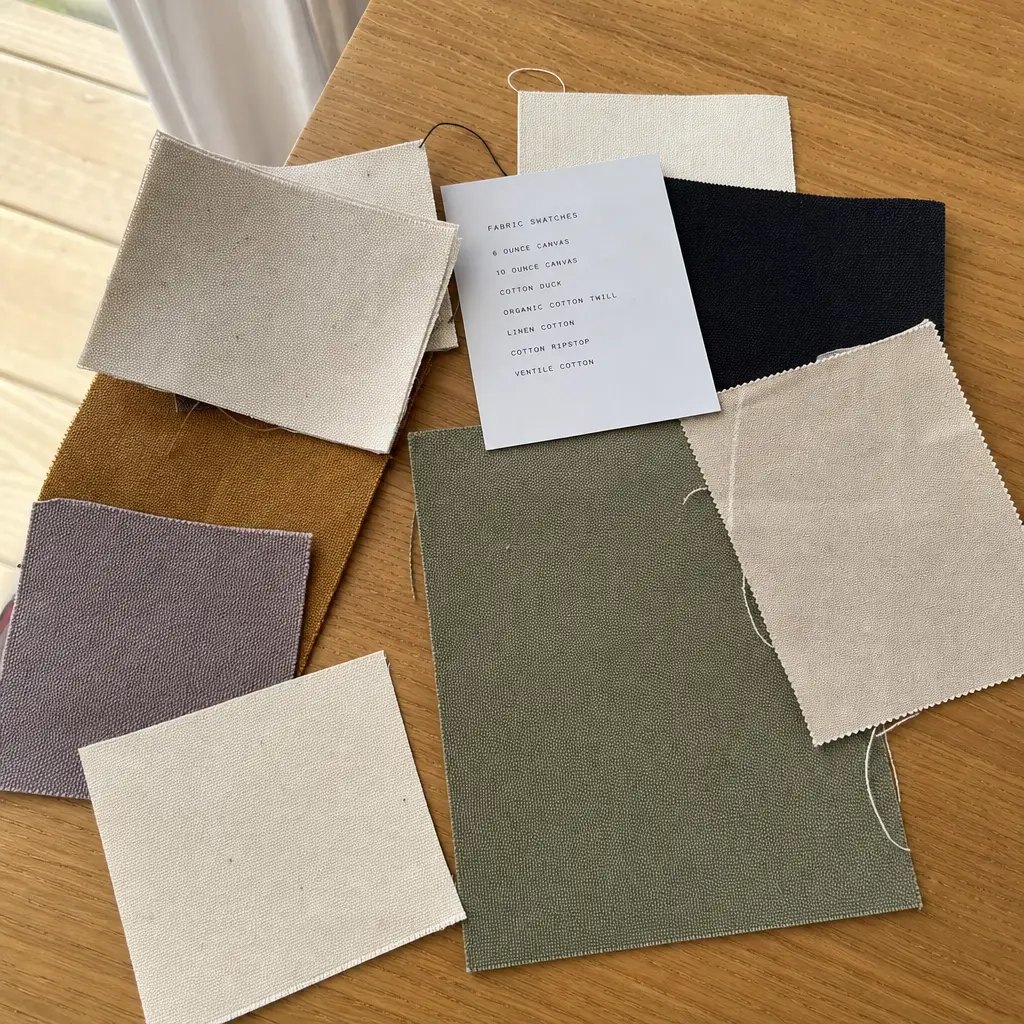
Fabric character also matters. Natural organic cotton can show slubs, tone variation, and surface texture. This may support a sustainability look, but it can reduce edge sharpness on fine-line logos. Dyed fabric adds questions about shrinkage, crocking, colorfastness, and print visibility. Ask for an actual fabric swatch or sample panel when color and print precision matter.
- Use 8 oz / 270 GSM for lighter reusable event programs where load is limited.
- Use 10 oz / 340 GSM as the default RFQ benchmark for broad startup use.
- Use 12 oz / 400 GSM when retail feel or heavier contents justify higher landed cost.
- Request the fabric tolerance between approved sample and bulk production.
- Review surface texture before approving fine-line artwork or small text.
Specify Construction, Handles, and Seams
A tote can fail even when the fabric is strong. Most visible failures happen at handle attachments, side seams, bottom folds, or areas where tension concentrates. The RFQ should therefore specify dimensions, construction type, handle material, handle size, reinforcement method, seam allowance, and stitch density. These are simple details, but they are inspectable and reduce ambiguity.
For many B2B orders, a flat tote with side seams and a bottom fold is the most efficient format. It gives a clean print panel and packs well in export cartons. Add a bottom or side gusset only when the contents are bulky or boxed. Gussets increase material and sewing complexity, and poorly balanced gussets can twist the bag after loading.
Handle design is critical. Shoulder-carry handles around 60-65 cm are common for events and office use. Widths around 2.5-3 cm usually feel more comfortable than narrow straps under load. Self-fabric handles create a consistent look, while cotton webbing may reduce twisting and improve comfort. Whichever option you choose, require bartack or box-X reinforcement at the handle roots and confirm attachment depth.
- State finished width, height, gusset, handle length, handle width, and handle drop.
- Require a named reinforcement method instead of the vague phrase reinforced handles.
- Specify lockstitch, 8-10 stitches per inch, and minimum 1 cm seam allowance where suitable.
- Inspect equal handle placement on both sides of the bag.
- Fail obvious skipped stitches, loose backtacks, seam opening, and raw-edge exposure beyond tolerance.
Define Practical Durability Tests
Many disputes happen because durability is requested but never tested in a repeatable way. A supplier may hang a light weight briefly and call the tote strong, while the buyer expects performance during real walking and event use. A simple test plan avoids this gap. For most startup programs, include one static load test and one movement-based test on the pre-production sample.
A practical static load test uses the agreed weight, often 8 kg for standard reusable use or 10 kg for heavier kits. Load the bag evenly and suspend it by both handles for the agreed time, such as one to two hours for sample validation. Afterward, inspect handle roots, side seams, bottom fold, and any printed areas affected by tension.
Static testing alone is not enough because users walk, swing, lift, and set bags down repeatedly. Add a controlled swing or jerk test of 30-50 cycles to reveal handle slippage, broken threads, seam opening, or panel distortion that may not appear while the bag is stationary. Record dated photos and keep the tested sample for comparison during inspection.
- Set the load in kilograms and link it to the expected contents.
- Define hang time, swing cycles, and inspection points before testing starts.
- Fail handle detachment, broken stitches, visible seam opening, fabric tear, or structural distortion.
- Treat temporary wrinkling differently from structural damage.
- Keep the tested sample as the performance reference for bulk production.
Control Print Method and Cure
For startup buyers, the logo often carries as much importance as the bag. A simple mark on natural canvas may look straightforward, but print durability depends on artwork, fabric texture, ink system, curing, and folding. Water-based screen print is often a strong default for one- to three-color logos on natural organic cotton because it can provide a soft handfeel and clean brand appearance when cured correctly.
Large solid prints create different risks from smaller logos. Heavy ink coverage can stiffen the print zone and make fold-line cracking more likely. Fine lines may lose sharpness on coarse canvas. Dark dyed fabric may require an underbase, which can change handfeel and curing behavior. Ask the factory to explain the recommended print method for your actual artwork rather than accepting a generic print line in the quote.
Curing is a key QC point. A print can look acceptable immediately after production yet rub, transfer, or crack later if curing is incomplete or if goods are packed too quickly. Include dry rub testing in sample approval, and consider a damp cloth rub check when the fabric is dyed or the print is high coverage. Also specify whether the bag may be folded across the logo.
- Provide final artwork size, color count, Pantone or brand color reference, and placement tolerance.
- Confirm the ink system and curing control before bulk printing.
- Check dry rub resistance and, where relevant, damp rub behavior.
- Test fold-line cracking when artwork crosses the packing fold.
- Approve print quality under normal light, not only in edited sample photos.
Approve Samples as Performance Evidence
Photo approval is not enough for a tote order tied to a launch, onboarding program, or resale channel. A physical pre-production sample should use the final fabric, final handle construction, final print method, and final packing fold. If any component is provisional, approval should be conditional and the open item should be documented.
Sample review should be structured. Measure the tote flat for width, height, gusset, handle length, handle drop, and handle width. Inspect symmetry, panel skew, stitch quality, handle alignment, print placement, and surface faults. Then run the agreed load, swing, and print rub checks. Finally, fold the bag as it will be packed and inspect the logo area after unfolding.
Ask whether the sample reflects actual bulk production. A handmade showroom sample can look better than a line-made sample and may not reflect real sewing speed, thread tension, or packing method. For higher-risk orders, keep two references: one sealed approved sample for appearance and one tested sample for performance. These references make production and inspection conversations much clearer.
- Approve final-material samples, not only digital mockups or catalog samples.
- Record measurements and photos during sample review.
- Label any conditional approval items before bulk production starts.
- Keep one clean reference sample and one tested performance sample.
- Do not release production until fabric, handle, print, and packing decisions are closed.
Plan Packing and Freight Early
Packing is part of product quality. Cotton can absorb moisture, show crease memory, and pick up transit marks. A tote that leaves the sewing line in good condition can arrive looking poor if it is folded through the logo, over-compressed in cartons, or shipped without suitable moisture control. Natural cotton makes stains and pressure marks especially visible.
Bulk flat packing is often the best B2B option because it reduces material use, speeds receiving, and supports lower packing cost. It still needs control. Confirm fold direction, pieces per carton, carton dimensions, net weight, gross weight, and stacking guidance. If individual bags are required for retail or distributor handling, specify bag material, barcode placement, warning text if needed, and whether recycled-content packaging is acceptable.
Carton planning also changes landed cost. A move from 8 oz to 12 oz fabric may look modest at unit-price level but increase carton weight enough to affect freight economics. If the shipment will move by ocean freight or during humid seasons, ask about inner liners, carton strength, and moisture-control measures. Packing decisions should be included in quote comparison, not left until the goods are ready.
- Specify fold direction and avoid sharp creases through the logo when possible.
- Request carton quantity, carton dimensions, net weight, and gross weight with the quote.
- Avoid over-compressed cartons that create deep crease memory or handle distortion.
- Use moisture protection appropriate to route, season, and transit time.
- Confirm carton marks, PO numbers, and destination labels before final packing.
Compare Quotes Without Losing Specification Control
MOQ and lead time are rarely driven by only one factor. Organic cotton fabric availability, dyeing, print setup, custom labels, packing requirements, and export markings can all affect the minimum practical order. A supplier with the lowest unit price may have excluded sample cost, testing, stronger packing, or realistic lead-time buffers.
For first-time startup orders, reduce unnecessary customization where possible. Stock natural fabric, a standard tote shape, and a clean one-color print can still create a polished branded product with fewer MOQ and production risks. Custom dyeing, multiple artwork versions, premium labels, and retail packaging can be added once reorder demand is clearer.
Count lead time from final sample approval and deposit, not from the first email. Ask which steps are on the critical path: fabric booking, dyeing, screen preparation, sample shipment, bulk printing, sewing, inspection, packing, or export booking. Then normalize quotes in one comparison sheet. Include GSM, dimensions, handles, reinforcement, print method, sample basis, testing, packing, carton data, MOQ, and lead-time assumptions.
- Ask suppliers to separate MOQ drivers for fabric, dyeing, printing, labels, and packing.
- Compare ex-factory price together with sample, testing, packing, and freight implications.
- Treat last-minute artwork or packing changes as schedule risks.
- Normalize every quote against the same specification before negotiating price.
- Choose the lowest acceptable risk, not only the lowest visible unit cost.
Set a Production QC and AQL Plan
A clear RFQ still needs production control. At minimum, the QC plan should cover incoming fabric verification, inline sewing checks, print checks, measurement checks, packing review, and pre-shipment inspection. The approved sample and tested sample should be available to the factory and inspector as reference points.
Fabric should be checked before cutting because underweight material changes the entire product. During sewing, inspectors should focus on handle placement, reinforcement execution, seam allowance, stitch density, skipped stitches, thread tension, and bag symmetry. During printing, check color, placement, edge sharpness, curing, pinholes, and rub resistance before the full lot is packed.
Before shipment, inspect cartons from different parts of the lot where practical. Confirm count accuracy, folding method, carton condition, labels, and moisture protection. Agree the AQL level or inspection basis before production starts so acceptance decisions are not invented after packing. For startup teams with launch dates, this simple discipline can prevent late rework, shipment holds, and brand-facing defects.
- Verify GSM before cutting and compare against the approved tolerance.
- Use inline checks for handle roots, seams, and symmetry while sewing is active.
- Inspect print cure and placement before approving full packing.
- Review carton packing as part of final QC, not only logistics.
- Define AQL level, major defects, minor defects, and critical failures before production.
Specification comparison for buyers
| Spec decision | Practical buyer benchmark | Best-fit use case | Cost or lead-time impact | Testing implication |
|---|---|---|---|---|
| Fabric weight | 10 oz / 340 GSM organic cotton canvas as the default RFQ benchmark | Employee onboarding kits, conference totes, partner gifts, recruiting packs, and light merchandise | Higher than 8 oz but usually still efficient for carton packing and freight | Verify GSM against approved sample; check panel distortion after load testing |
| Lower-cost fabric option | 8 oz / 270 GSM organic cotton canvas when the load is clearly light | Event handouts, brochure bags, short-use campaigns, and budget-sensitive programs | Lower material and freight cost; easier to pack in higher carton quantities | Do not market as heavy-duty unless it passes the agreed load and swing test |
| Premium fabric option | 12 oz / 400 GSM organic cotton canvas when retail feel matters | Paid merchandise, executive gifts, heavier kits, and brands wanting a structured handfeel | Higher unit cost, heavier cartons, and potentially longer sourcing time | Run print and fold checks because heavier canvas can show crease memory |
| Bag construction | Flat tote with side seams, bottom fold, and reinforced handle attachment | Most startup orders needing clean branding, simple packing, and reliable production | Usually lower complexity than gusseted styles | Inspect side seams, bottom fold, and handle roots after static and movement tests |
| Gusset option | Add bottom or side gusset only when contents are bulky or boxed | Kits with drinkware, boxed accessories, apparel stacks, or multiple inserts | Adds fabric, sewing time, measurement control, and sometimes carton volume | Check balance and twisting after loading; measure gusset tolerance carefully |
| Handle specification | 60-65 cm self-fabric or cotton-webbing handles, 2.5-3 cm wide | Shoulder carry at events, daily office use, and welcome-kit distribution | Wider or webbing handles may raise cost but improve carrying comfort | Inspect attachment depth, reinforcement pattern, equal placement, and post-test distortion |
| Seam specification | Lockstitch, 8-10 stitches per inch, minimum 1 cm seam allowance, balanced tension | Scalable bulk production with clear QC criteria | Small cost effect compared with the cost of failures; mostly a production-control issue | Fail skipped stitches, loose backtacks, seam opening, puckering, or raw-edge exposure beyond tolerance |
| Durability test target | Static load of 8-10 kg plus 30-50 controlled swing cycles on the approval sample | Realistic for notebooks, chargers, bottles, apparel, brochures, and event contents | Minor sample-testing time; prevents costly bulk disputes | Frame as a practical buyer benchmark, not a universal standard; define pass/fail before production |
| Print method | Water-based screen print for simple logos; confirm alternatives for dark fabric or large solids | Natural canvas startup logos, one- to three-color artwork, clean brand marks | Screens and curing time affect setup cost and schedule; underbase adds complexity | Check cure, dry rub, damp rub where relevant, cracking on fold lines, and placement tolerance |
Buyer checklist before sampling
- Define the use case in one sentence: conference giveaway, employee onboarding tote, retail merchandise, investor event pack, recruiting kit, or distributor bundle.
- List likely contents and expected loaded weight in kilograms so the factory understands the real stress level.
- Specify fabric in both oz and GSM and state whether the target feel is promotional, standard reusable, or retail grade.
- Confirm finished width, height, gusset if any, handle length, handle width, handle drop, panel orientation, and measurement tolerance.
- Require written handle reinforcement details, including stitch type, bartack or box-X location, attachment depth, stitch density, and seam allowance.
- State logo size, color count, color reference, print placement tolerance, ink system, curing expectation, and whether the tote will be folded across the print.
- For dyed fabric, request comments on shrinkage, crocking, colorfastness, and print visibility on the selected shade.
- Approve a pre-production sample made with final fabric, final handle construction, final print method, and final packing fold.
- Run static load, swing, and basic print rub checks on the approval sample before authorizing bulk production.
- Inspect the tested sample for seam opening, broken threads, handle twisting, panel skew, logo cracking, and distortion around stress points.
Factory quote questions to send
- What organic cotton fabric weight are you quoting in both oz and GSM, and what tolerance applies between approved sample and bulk production?
- Is the quoted fabric stock natural canvas, stock dyed fabric, or custom-developed fabric, and how does that affect MOQ and lead time?
- What are the finished bag dimensions after sewing and pressing, including width, height, gusset, handle length, handle drop, and tolerance?
- Which handle construction is included in the price: self-fabric or webbing, handle width, attachment depth, and reinforcement method?
- What stitch specification do you use for this tote style, including stitch type, stitches per inch, thread type, seam allowance, and backtack control?
- What load and movement tests can you perform on the pre-production sample, and what result do you classify as a failure?
- Which print method and ink system are included, how is curing controlled, and how do you verify rub resistance before packing?
- Does the quotation include a pre-production sample made with final fabric, final print, final handle construction, and final packing fold?
- What MOQ applies separately to fabric, dyeing, printing, custom labels, and finished bags so we can identify the real MOQ drivers?
- How many pieces per carton, what carton dimensions, what gross weight, and what stacking guidance should we use for freight planning?
Quality-control points to confirm
- Verify fabric GSM against the approved sample and record the agreed tolerance before cutting begins.
- Measure finished totes flat for width, height, gusset if any, handle length, handle width, and handle drop, then compare with approved tolerances.
- Inspect cut panels for fabric faults, weaving inconsistencies, holes, slubs that affect print appearance, and panel skew before sewing.
- Check handle attachment for stitch density, reinforcement pattern, stitch backtack security, alignment, and equal placement on both sides.
- Inspect side seams and bottom fold for skipped stitches, broken threads, puckering, uneven seam allowance, raw-edge exposure, and twisting.
- Perform static load testing using the agreed weight and hold time, then record seam opening, stitch breakage, or handle distortion if present.
- Perform swing or jerk testing to simulate walking and event use, then inspect the bag immediately after movement testing.
- Check print color, placement, edge sharpness, cure, rub resistance, fold-line cracking risk, pinholes, and inconsistent coverage.
- Review final folding and packing to confirm the logo is not sharply creased, cartons are not overloaded, and moisture control is appropriate.
- Agree the inspection plan and AQL level before production starts so shipment decisions follow pre-defined acceptance criteria.