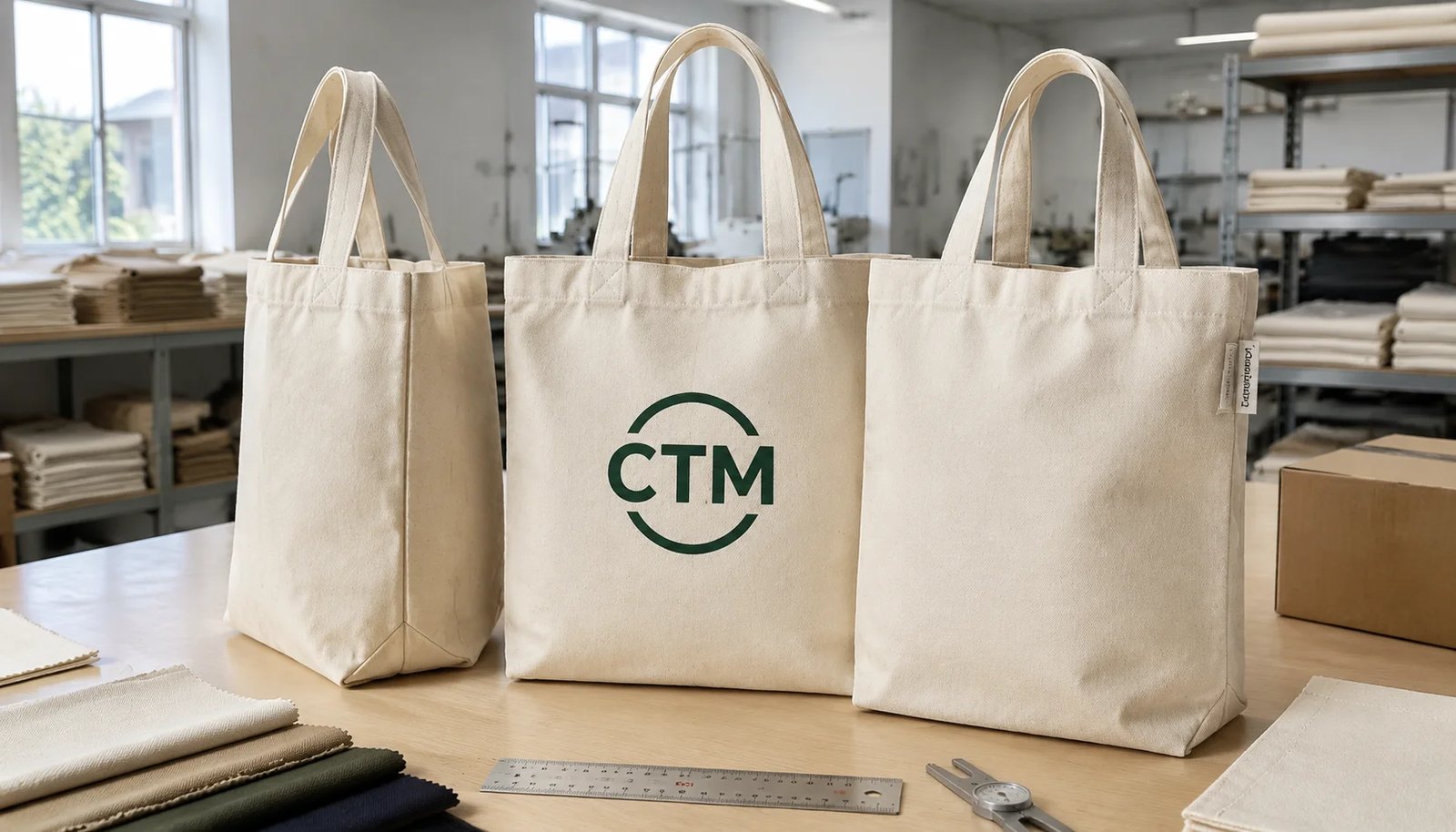
The real durability problem in natural grocery tote programs
For natural grocers, tote failure is rarely about one dramatic break. The bigger issue is repeat-use fatigue: handles twisting after a few shopping trips, side seams opening when jars and produce shift, or fabric going limp so the bag no longer feels worth reusing. If the bag is part of a store loyalty push or sustainability program, poor durability does more than create replacements. It weakens the retailer’s claim that the tote is a practical alternative to disposable bags.
That is why procurement teams should define durability by use case instead of by a generic phrase like heavy duty. A grocery tote used for leafy vegetables and bakery items can work at a lower GSM than one expected to carry bottles, canned goods, and boxed staples every week. When the RFQ does not describe this load profile, factories often quote the lowest acceptable cloth and the simplest handle stitch. The result is a bag that looks fine on a table but fails in daily retail use.
- Typical grocery stress points: handle root, top hem near handle insertion, side seam near lower third, boxed corner seam, and print area if large solid ink is applied
- Common field complaints: bag shape collapse, handle edge curling, seam popping, print abrasion, and unexpected shrinkage after first wash
- Best RFQ wording focuses on use: repeated grocery carrying with mixed food load, not only visual style
Choose fabric by load profile, not by marketing terms
For organic cotton totes, fabric weight is the first durability lever, but buyers should not treat GSM alone as the full answer. A 280 to 340 GSM organic cotton canvas is the normal working range for grocery-use totes because it balances strength, sewing efficiency, and printability. Lighter 180 to 220 GSM options can work for promotional give-away totes, but they are much more likely to distort under heavier loads and may not support a broad gusset cleanly.
Also separate fabric marketing language from actual construction. Some suppliers call many woven cotton fabrics canvas even when the structure is closer to a lighter plain weave. That matters because two bags with similar quoted dimensions can perform very differently if one has a tighter weave and denser finished weight. A better quote request asks for finished GSM, weave description, and whether the weight is before or after washing and finishing.
- Recommended starting range for natural grocery programs: 10 oz to 12 oz canvas, around 280 to 340 GSM
- For premium, long-cycle retail resale bags: consider 12 oz to 14 oz if larger dimensions or bottle-heavy use is expected
- If budget forces lighter fabric, reduce bag width or gusset so seam stress stays more controlled
- Request fabric swatch with hand feel, finished weight, and shade reference before approving print
Bag construction details that change service life
A durable grocery tote depends as much on construction as on cloth weight. The most practical body design for natural grocers is a tote with a bottom gusset and boxed corners. That shape spreads load, lets products sit flatter, and reduces abrupt seam stress compared with a simple flat bag. If the program expects wider products such as cereal boxes, jars, and produce tubs, a 10 to 12 cm gusset is usually more useful than a tall narrow silhouette that looks stylish in a concept drawing but performs poorly at checkout.
Handle construction deserves more quote scrutiny than most buyers give it. Handle width of 2.5 to 3 cm is a practical range for comfort and durability. More important is the attachment method. A box stitch with cross reinforcement is preferable to a single straight line seam. When bags are loaded repeatedly, the stitch pattern at the top panel carries most of the force. Factories trying to save seconds in sewing may simplify that reinforcement unless the approved sample and purchase specification lock it in.
- Useful body dimensions for a grocery tote often fall around 35 to 40 cm width x 35 to 38 cm height x 10 to 12 cm gusset
- Top hem should be stable and even; uneven turnover can weaken handle insertion area
- Long shoulder handles should usually target 25 to 30 cm drop depending on bag depth
- Inner seam finishing should be consistent; loose raw edges can fray faster during repeated use
Durability testing that belongs in the sample stage
Natural grocers do not always need a long laboratory protocol, but they do need a repeatable sample-stage durability routine before PO release. A practical sequence starts with verifying finished GSM and dimensions, then moves to a loaded carry test using realistic grocery weight, followed by seam and handle inspection after the load is removed. This type of test catches weak handle attachment, seam slippage, and shape collapse early enough to correct construction before bulk sewing starts.
Print performance should be included in the same sample review because the wrong print method can reduce customer-perceived durability even when the bag structure is sound. Large solid graphics on textured cotton may abrade or appear patchy after folding and use. For most natural grocer branding, water-based screen print is a practical default because it keeps a softer hand feel and a more natural look. But the print strike-off must be done on the actual fabric quality, not just on a generic cotton scrap from the print room.
- Sample-stage load test example: fill with mixed boxed, jarred, and produce-weight items and carry repeatedly over short distance
- Inspect after test for seam opening, handle stitch distortion, and visible bag shape twisting
- Measure dimensions before and after basic conditioning if washing or humid storage is relevant
- Rub print lightly after cure and folding to detect poor adhesion or surface abrasion
How print choice affects durability, cost, and consistency
On organic cotton totes, print is often treated as a branding decision only, but it influences both quote quality and field performance. Screen printing remains the most stable option for medium to large runs with simple artwork, especially one to three colors. It gives consistent placement, manageable setup cost at scale, and good repeatability across cartons. For natural grocers that prefer a less plastic look, water-based inks are commonly favored, but they require proper curing and strike-off approval because absorbency changes by fabric lot.
Digital printing can look attractive for lower MOQs or artwork with many colors, but it is not automatically the best durability choice for grocery totes. Depending on the printer setup and cloth finish, color saturation may vary and the hand feel can differ from one supplier to another. Heat transfer is usually less suitable for a natural, reusable grocery bag unless the artwork is small and the buyer accepts a less integrated feel. Procurement teams should compare print methods not just by visual sample, but by abrasion resistance, coverage quality on textured fabric, and setup cost impact.
- Best use of screen print: 1 to 3 colors, repeat retail program, moderate to high order quantity
- Digital print makes sense when artwork complexity is high and MOQ is limited, but request wear review on actual canvas
- Large dark flood prints can stiffen the panel and make fold lines more visible
- Print placement tolerance should be specified so suppliers quote the right handling method
MOQ logic and why cheap quotes often hide setup tradeoffs
Many tote quotes look competitive because the supplier assumes shared stock fabric, a simplified stitch program, and broad production tolerance. That may be acceptable for a short promotion, but natural grocer programs usually need repeatability across stores and replenishment cycles. MOQ should be understood at three levels: fabric sourcing MOQ, print setup MOQ, and sewing efficiency MOQ. A factory may quote a low total bag MOQ, but only if all units use one fabric color, one print layout, and one carton pack method.
If you split the order into several logos, sizes, or regions, unit cost rises for reasons beyond material. Print setup, cutting loss, and line changeover all increase. Buyers comparing quotes should ask suppliers to break out MOQ assumptions so there is no surprise later when artwork variants are added. A transparent quote will show where low MOQ causes a cost jump and whether that jump comes from print method, fabric waste, or labor inefficiency.
- Lowest cost usually comes from one fabric, one print, one size, one pack method
- Mixed assortments raise handling cost even when total unit volume looks sufficient
- Shared greige stock can reduce MOQ pressure if the supplier has stable organic fabric sourcing
- Quote comparison should separate sample charge, screen charge, and unit price effect of assortment splits
Sample approval workflow that prevents bulk surprises
A showroom sample is useful for shape and general look, but it is not enough for approving a grocery tote program. The more reliable workflow starts with fabric swatch approval, then a print strike-off, then a pre-production sample made with the intended bulk fabric and construction. This sequence matters because many bulk issues come from substitution: the sample was sewn from nicer cloth, a tighter stitch setting, or a more carefully aligned print than the line will use later at full speed.
For procurement teams working with multiple stakeholders, the sample file should record objective tolerances and not only comments like looks good. Approval notes need to capture GSM target, final dimensions, gusset depth, handle drop, stitch pattern, logo position, color reference, packing fold method, and carton quantity. When the approved sample lacks these details, supplier and buyer can both claim they followed the sample, yet still disagree when bulk arrives.
- Minimum sample set: fabric swatch, print strike-off, pre-production sample, and sealed approval sample
- Retain one approved sample with purchasing and one with QC or warehouse receiving team
- Photograph key details during approval: handle root, inside seams, side label, print texture, fold line, carton arrangement
- If a bag will be sold at retail, verify barcode placement or hangtag attachment on the pre-production sample
Packing details that influence damage rate and landed cost
Tote bags look simple to pack, but packing decisions affect both damage risk and inbound handling cost. Over-compressed cartons can leave severe crease marks on printed areas or distort the bag body so it presents poorly at store level. For natural grocers that value an eco-forward presentation, avoiding unnecessary polybags is often preferred, but the fold method must still protect the print and keep counting easy at the distribution center. In many cases, 50 to 100 pieces per export carton works, provided the gross weight stays practical for warehouse handling.
Carton planning should also be tied to freight efficiency and receiving accuracy. A slightly lower pack count can be better if it reduces carton damage, lowers miscount risk, and stays under a warehouse weight cap. If the retailer requires item labels, carton labels, or assortment markings, those details should be approved before production because relabeling after sewing adds cost and often delays shipment. Packing is not just a logistics afterthought; it changes the delivered condition of the bag and the true landed cost.
- State whether individual polybag is prohibited, optional, or required by destination compliance
- Approve folding method to avoid logo cracking on heavy print coverage
- Set carton gross weight target with the importer’s warehouse handling rules in mind
- Request packing photo approval before bulk closeout if the program is first-time production
Lead time risk points for organic cotton tote production
Lead time on organic cotton totes is often underestimated because buyers see a simple sewn product and assume the process is short. In practice, the schedule depends heavily on raw fabric availability, dyeing if color fabric is needed, print screen preparation, sample approvals, and line booking. The largest avoidable delay usually comes from late artwork finalization or from approving a visual sample before construction details are locked. Once production starts, changing handle length or gusset width creates re-cutting and can stop the line.
For planning purposes, buyers should request a stage-by-stage schedule rather than one promised ex-factory date. This makes it easier to identify where a supplier is buffering risk and where there is no margin. A supplier quoting an unusually short lead time may be assuming stock fabric or may not be accounting for pre-production approval. That can look attractive during sourcing but often creates pressure to cut corners in printing, sewing inspection, or packing.
- Useful schedule breakdown: fabric sourcing, printing prep, pre-production sample, cutting, sewing, finishing, inspection, packing, ex-factory
- Artwork approval delays can be as damaging as raw material delays on simple bag programs
- If multiple SKUs share one vessel booking, ask how the supplier sequences print and sewing by design
- Build buffer for carton marking approval and final inspection booking, especially for first orders
How to compare quotes on landed value, not only unit price
A lower unit price on organic cotton totes is not automatically the better commercial choice for natural grocers. Buyers should compare landed value across at least five factors: fabric weight actually delivered, handle reinforcement quality, print method stability, carton efficiency, and expected replacement or complaint risk. A supplier quoting on lighter fabric with a larger carton count may look cheaper per bag and cheaper per shipment, but if that bag fails sooner in use, the retailer absorbs the hidden cost through reorders, markdowns, or customer dissatisfaction.
The most useful quote comparison sheet includes side-by-side notes on assumptions, not just FOB numbers. Record the fabric GSM, bag dimensions, gusset, stitch method, print process, MOQ by variant, sample charges, packing count, and quoted lead time basis. This lets procurement teams explain internally why one quote is not truly comparable to another. When a buying team makes decisions on a normalized quote sheet instead of raw supplier numbers, they avoid many of the quality gaps that show up only after goods land.
- Normalize quotes to the same GSM, dimensions, handle spec, print size, and pack count before price comparison
- Treat sample and setup charges separately from unit cost to see the real recurring production price
- Include warehouse handling and damage risk when reviewing carton pack options
- Use a sealed sample and quote matrix together when awarding the order
Specification comparison for buyers
| Spec decision | Recommended option | When it fits | Buyer risk to check |
|---|---|---|---|
| Fabric weight | 10 oz to 12 oz organic cotton canvas, about 280 to 340 GSM | Best for grocery loads, repeated weekly use, and lower return risk | Some factories quote lower GSM plain weave while calling it canvas; request finished GSM tolerance and fabric construction |
| Bag body construction | Bottom gusset 10 to 12 cm with boxed corners | Fits produce, jars, cartons, and gives better standing shape at checkout | Flat bags look cheaper in quotes but carry less volume and put more stress on side seams |
| Handle attachment | Cross stitch plus box stitch, with 2.5 to 3 cm handle width | Needed for heavier grocery loads and frequent lifting from car to home | Single line stitch handles are a common failure point; ask for stitch count per inch and reinforcement photo |
| Handle drop | 25 to 30 cm shoulder drop | Works for mixed hand carry and shoulder carry in retail programs | Too short causes customer complaints; too long can drag when bag is half full |
| Print method | Water-based screen print for simple 1 to 3 color artwork | Good for natural grocer branding where soft hand feel and low migration matter | Large solid fills on textured canvas can show pinholes; request strike-off on actual fabric lot |
| Shrinkage control | Pre-washed or tested fabric with clear wash and dimensional stability result | Useful if retailer may wash bags or if humid distribution conditions matter | Uncontrolled shrinkage can distort print registration and alter final dimensions after testing |
| MOQ structure | Shared greige fabric stock with MOQ by color print, not only by total bags | Best for chains testing 2 to 4 store regions or seasonal rollouts | Very low MOQ often raises unit cost sharply or forces digital print on lighter fabric |
| Packing method | Individual fold, no poly unless required, 50 to 100 pcs per export carton with carton weight cap | Fits sustainability goals and easier DC counting for retail replenishment | Overpacked cartons can crush print, distort bags, and exceed warehouse handling limits |
| Sample approval route | Pre-production sample from bulk fabric and print strike-off before mass sewing | Important when quote gap between suppliers is small and durability risk drives decision | Approval based only on a showroom sample can hide weaker bulk material or simplified stitching |
Buyer checklist before sampling
- State target load use in the RFQ, such as mixed grocery load with glass jars, produce, and dry goods, not just bag size.
- Specify finished fabric weight range in GSM and whether the quote is for plain weave or canvas construction.
- Define bag dimensions with tolerance, including gusset width, handle width, and handle drop.
- Require reinforced handle stitching method and request close-up sample photos before sample shipment.
- Name the print method, artwork coverage, ink type preference, and whether print approval must be on bulk fabric.
- List sample sequence: material swatch, print strike-off, pre-production sample, and bulk production sample retention.
- Set acceptance criteria for seam slippage, skipped stitches, fabric flaws, print placement, and carton weight.
- Clarify MOQ by color, print design, and bag size so suppliers do not hide setup costs in the unit price.
- Define packing format, carton dimensions or weight cap, shipping marks, and whether barcodes or carton labels are needed.
- Request lead time split into fabric sourcing, printing, sewing, inspection, and ex-factory date rather than one total number.
Factory quote questions to send
- What is the quoted fabric construction and finished GSM, and what tolerance applies to bulk production?
- Is the quoted organic cotton fabric in stock greige, dyed to order, or purchased after PO confirmation?
- What seam construction is used on side seams, boxed corners, and handle attachments?
- How many stitches per inch or per 3 cm do you use on handles and stress points?
- Is the print method water-based screen print, pigment print, heat transfer, or digital, and why is that method being quoted?
- Can you provide a print strike-off on the same fabric weight and finish as bulk production?
- What is the MOQ by bag size, print colorway, and packaging variation?
- What is included in the sample charge and which sample fees are refundable after order placement?
- What is the carton pack quantity, carton gross weight, and carton size per packing option?
- What in-house or third-party tests can you provide for colorfastness, seam strength, dimensional stability, and needle detection if required?
Quality-control points to confirm
- Finished fabric GSM must stay within approved tolerance and match hand feel of the sealed sample.
- Bag dimensions, including width, height, gusset, and handle drop, must meet agreed tolerances on inspection.
- Handle reinforcement must match approved stitch pattern with no skipped stitches, loose thread tails, or uneven bartack placement.
- Side seams and bottom seams must show no visible seam grin or opening under reasonable hand pull.
- Print position must be centered within agreed tolerance and color should match approved strike-off under standard light.
- Fabric must be free from major slubs, holes, stains, oil marks, weaving bars, and shade panel mismatch on the same bag.
- Cartons must meet pack count, gross weight limit, shipping mark layout, and internal folding method approved before production.
- Random packed samples should be load tested and visually checked after folding to ensure no print cracking or seam distortion.