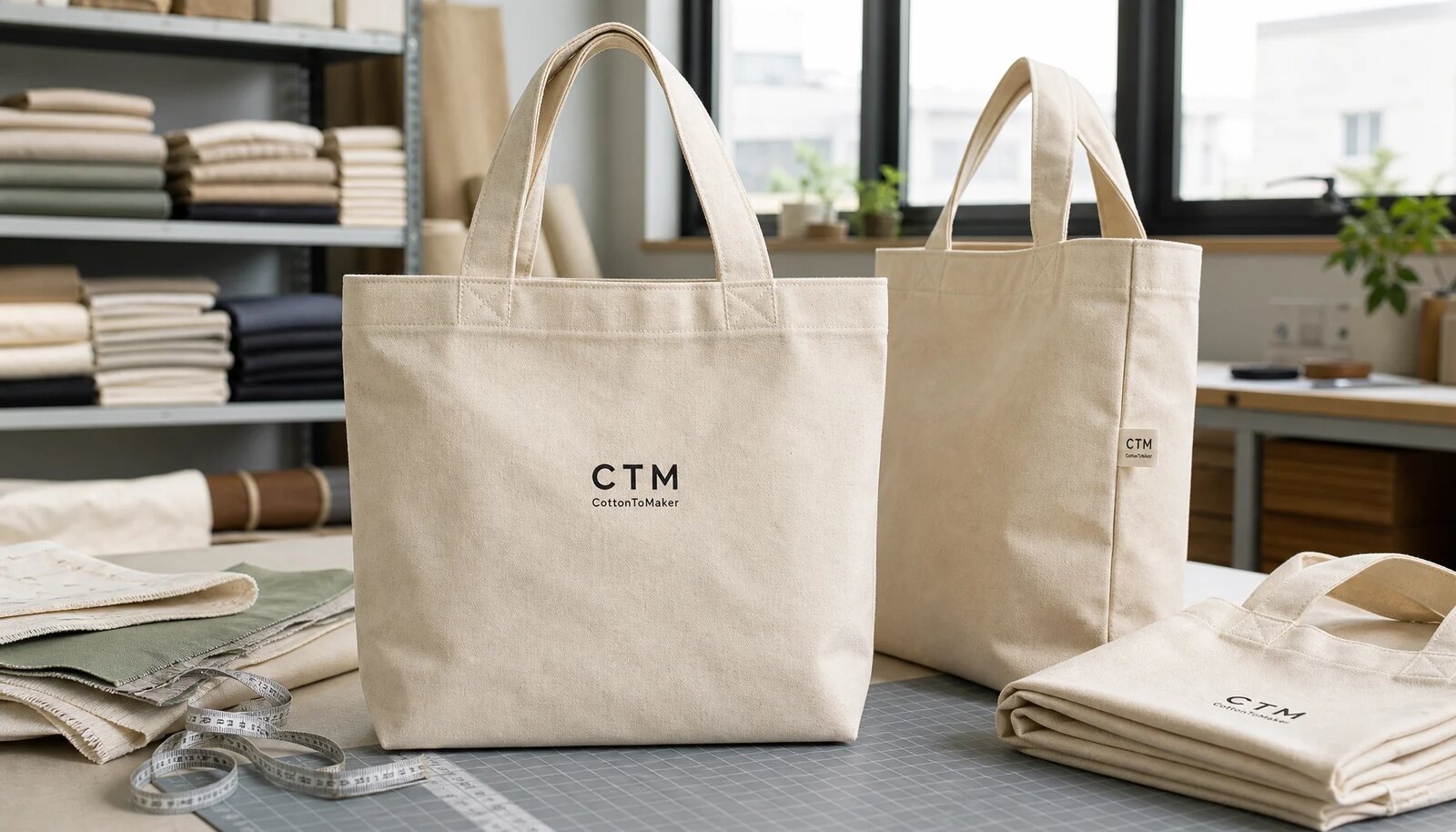
Start with the fair date, not the quote
Organic cotton totes for craft fairs are not open-ended promotional items. The event date is fixed. Exhibitors need bags before setup. Sponsors expect their logos to appear correctly. Warehouses need time to receive, count, and route cartons. That means procurement should build the schedule backward from the latest acceptable in-hand date, not forward from the day the first supplier replies.
A simple natural organic cotton tote with a one-color screen print and standard export cartons may fit a 6-9 week production window after deposit, final artwork, confirmed specifications, and approved physical sample. The important phrase is after approvals. The clock usually does not start from the inquiry, the first price discussion, or a digital mockup. If the order needs dyed fabric, several sponsor versions, retail barcodes, custom labels, finished-goods certification, split delivery, or sea freight, add time before the schedule becomes tight.
Many buyers should begin sourcing 10-12 weeks before the craft fair when importing goods by sea or when internal approvals move slowly. That earlier start gives room for artwork revisions, document checks, sampling, inspection, customs clearance, and local distribution. If the order is already late, the best response is not simply to pressure the factory. Reduce variables first: fewer print versions, standard natural fabric, simpler packing, one destination, or a partial air shipment for the most urgent quantity.
- Count lead time from deposit, final artwork, approved spec, and signed sample, not from the first supplier email.
- Separate the factory ship date from the latest warehouse in-hand date so risk is visible.
- Add buyer-side time for sponsor approvals, barcode data, compliance review, purchase order release, and payment processing.
- Keep at least one buffer week between warehouse receipt and event distribution; use more for multiple cities or booth zones.
- Ask for the last safe date for artwork, fabric, packing, and destination changes before costs or delays apply.
Turn the timeline into approval gates
A workable lead-time plan is built from stages. Fabric swatches confirm shade, texture, fleck level, and GSM direction. A blank sample confirms the tote body, handle drop, seam type, reinforcement, and folding. A printed strike-off checks artwork size, ink color, opacity, curing, and placement. A pre-production sample should bring the approved fabric, construction, print, labels, and packing method together before bulk cutting starts.
Some steps can run in parallel, but not every shortcut is safe. A supplier may reserve fabric while artwork is being finalized. Screens can sometimes be prepared from final vector files before every packing detail is closed. Labels may be ordered while the blank sample is under review. Bulk cutting, however, should wait until dimensions and construction are signed off. Bulk printing should wait until print placement and color are approved on actual fabric.
For craft fair programs with several stakeholders, buyer response time can become the hidden delay. A sample that sits on a desk for five days can damage the schedule as much as a slow sewing line. Assign one decision owner for fabric, one for artwork if needed, and one commercial owner who can approve cost or timing tradeoffs. A 48-hour sample review target is a practical control when the event date cannot move.
- RFQ gate: confirm capacity, MOQ basis, sample route, document scope, production window, and freight assumptions.
- Artwork gate: freeze vector files, Pantone references, print size, placement, QR code dimensions, and sponsor lockups.
- Sample gate: approve fabric, construction, print, labels, and packing, or state clearly which items remain open.
- Production gate: allow no unpriced changes after cutting unless cost, timing, and re-approval impact are documented.
- Shipment gate: release goods after inspection result, carton count, assortment, and export documents match the order.
Choose GSM by real event use
GSM affects far more than unit price. It changes strength, drape, perceived value, sewing speed, folded thickness, carton volume, and freight cost. For light giveaways, welcome bags, and booth handouts, 180-220 GSM organic cotton often gives a practical reusable feel without making cartons too heavy. For paid merchandise, museum shops, sponsor gifts, or fairs where visitors carry ceramics, books, jars, candles, textiles, or several handmade items, 240-280 GSM usually feels more appropriate.
A 300 GSM+ tote can look substantial and premium, but it is not automatically the best choice. The heavier fabric may require more sewing time, stronger needles, different folding, fewer pieces per carton, and higher landed cost. Use it when the commercial goal supports the extra structure, not just because heavier sounds better.
Do not compare quotes that only say organic cotton tote. A 160 GSM flat bag and a 280 GSM gusseted tote can share that description and still be completely different products. The RFQ should state target GSM, acceptable tolerance, finished dimensions, gusset depth, fabric color, weave or texture preference, and whether GSM is measured on greige fabric, finished fabric, or finished panels. A tolerance such as +/-5% is often a practical starting point if the supplier can actually control and verify it.
Natural organic cotton also has a look that must be approved. Seed flecks, slubs, and warm shade variation may be part of the appeal for a maker market. They may be less acceptable for a clean retail program. If the print panel must look especially clean, define what is unacceptable: dark fibers, oil marks, water stains, heavy slubs, or contamination in the logo area.
- 180-220 GSM: light reusable totes, giveaways, booth packaging, and one-color event logos.
- 240-280 GSM: stronger retail-ready totes, heavier handmade goods, sponsor merchandise, and repeat-use positioning.
- 300 GSM+: premium structure and shelf presence, with higher sewing cost, thicker folding, and increased CBM.
- Natural shade: approve a physical swatch because warmth, fleck level, and perceived cleanliness vary by lot.
- GSM control: confirm whether checks happen before finishing, after finishing, or on cut production panels.
Match organic claims to documents
Decide early how the word organic will be used. A tote handed out internally may only require a supplier declaration or fabric-level evidence for procurement records. A tote sold as merchandise, listed online, shipped to retailers, included in sustainability reporting, or labeled as organic on a hangtag, invoice, carton mark, or product page may need stricter documentation.
The RFQ should state the exact document requirement: supplier declaration, material-level proof, transaction certificate, finished-goods certification, or a buyer-specific compliance form. Avoid vague purchasing language such as eco, natural, green, ethical, or sustainable cotton when the requirement is organic cotton. Those terms do not tell the factory what to buy, which mill to use, or what paperwork to prepare.
Document scope affects both price and time. A sewing factory may be able to produce bags from organic fabric but may not be able to issue finished-goods certification under the buyer's required program. Another supplier may offer cotton described as organic but only have limited upstream evidence. Once fabric is purchased, cut, printed, and packed, it is difficult or impossible to rebuild a missing claim trail. Ask for sample documents before deposit, then confirm which final document will be tied to the actual shipped quantity.
- Define every claim location: bag print, hangtag, invoice, carton mark, event page, retailer listing, website, or sustainability report.
- Request sample document copies before deposit if documentation is a condition of purchase.
- Separate organic cotton proof from recycled packaging, low-impact ink, audit status, or carbon-related claims.
- Confirm whether documents cover fabric only, finished totes, or the specific transaction quantity shipped.
- Reject material substitutions unless compliance confirms the approved claim and document trail remain valid.
Specify the tote, not a size name
Craft fair totes work harder than they look in a catalog photo. Visitors carry them for hours. Booth staff stack them under tables. Cartons are opened in temporary venues. Bags may hold uneven handmade goods rather than flat documents. Handle width, handle drop, seam allowance, stitch density, top hem width, corner finishing, and reinforcement method all affect whether the tote feels reusable or disposable.
A practical baseline for many organic cotton fair totes is a flat or gusseted body with reinforced handles, a clean top hem, secure seams, neat corners, and about 8-10 stitches per inch where suitable for the fabric weight. A simple straight reinforcement may be acceptable for very light handouts. Box stitching or cross stitching is safer when the bag may carry books, ceramics, candles, jars, glass items, or multi-item purchases.
Finished dimensions should be written in the specification, not described as small, medium, or large. State width, height, gusset depth, handle drop, handle width, top hem width, seam type, reinforcement style, and tolerance. For many simple totes, +/-1 cm on width and height is a workable starting tolerance, but the right tolerance depends on the bag design and buyer requirements. If the tote must hold catalogs, craft kits, framed cards, boxed candles, or sponsor inserts, test those items with the sample before approving production.
- State finished size as width x height x gusset depth, with tolerance for each dimension.
- Measure handle drop from the top edge of the bag to the top of the handle curve.
- Use box-stitch or cross-stitch reinforcement for heavier contents, paid merchandise, and sponsor programs.
- Control top hem width because an uneven hem can make a centered print look crooked.
- Define seams as turned, overlocked, bound, or otherwise finished for retail-positioned and heavier-GSM totes.
Approve print performance on real fabric
Most organic cotton totes for craft fairs use screen printing because it works well for solid logos, event names, sponsor marks, booth maps, and seasonal artwork. Water-based ink is often preferred when buyers want a softer hand-feel on cotton. Still, it must be tested. Ink opacity, edge sharpness, and perceived color can change on natural cotton, especially when the cloth has slubs, seed flecks, or a warmer base shade.
Heat transfer may be useful for gradients, complex sponsor graphics, small runs, or full-color designs. Digital printing can help with detailed artwork or lower quantities. Embroidery can look premium for small logos but is inefficient for large front-panel graphics and may affect drape. The right method depends on quantity, artwork complexity, print area, budget, approval time, and the hand-feel the buyer is willing to accept.
Artwork packages should be complete before sampling begins. Send vector files, Pantone or approved color references, final print size, print placement measured from a fixed bag edge, number of colors, one-side or two-side print instructions, and notes for QR codes or small type. Thin lines can fill on slub cotton. QR codes should be tested at final size. Large ink coverage can stiffen the panel, slow curing, and transfer to adjacent bags if packed too soon.
- Use one-color screen print for the safest fast-turn, cost-controlled craft fair order.
- Allow extra approval time for two or three colors because registration and color matching matter more.
- Test large ink coverage for stiffness, cure time, and transfer risk during carton transit.
- Check fine lines, small text, and QR codes on actual cotton texture, not only in a digital layout.
- Define placement in centimeters or inches from fixed references such as top hem, side seam, or bottom edge.
Price MOQ around real order splits
MOQ is not one number unless the order is simple. It can be shaped by fabric purchasing, cutting efficiency, sewing setup, screen setup, ink mixing, packing material minimums, inspection time, and export handling. Organic cotton may add another constraint if documented fabric lots must be reserved from a specific source.
Craft fair orders often look simple at first, then become several versions of the same bag: main event logo, sponsor logos, city editions, retailer artwork, VIP gifts, staff bags, or language variants. The key question is whether MOQ applies to the total bag body, each print design, each fabric color, each packing style, each destination, or each delivery schedule. A 5,000-piece quote can change sharply if it becomes ten 500-piece designs with separate screens, strike-offs, carton marks, and packing lists.
The cleanest RFQ includes a split table. If the fabric, size, handle, and construction are identical, the factory may cut and sew one shared lot, then print separate designs. That can help cost and lead time, but it makes print scheduling and packing control more important. If any version needs a different fabric color, hangtag, barcode, destination, or fair date, price that difference from the start.
- Total order MOQ affects fabric purchase, cutting efficiency, sewing setup, and export handling.
- Per-design MOQ affects screens, strike-offs, artwork separation, color matching, and print changeovers.
- Per-color MOQ affects dyed fabric preparation, shade consistency, fabric reservation, and leftover stock risk.
- Per-packing MOQ affects labels, hangtags, barcodes, inserts, inner bundles, and sorting labor.
- Quantity breaks show where a small volume increase reduces unit price or absorbs setup charges.
Use samples as control tools
Samples are not just sales props. They are production controls. A fabric swatch confirms shade, texture, GSM impression, fleck level, and cleanliness. A blank sample confirms dimensions, handle drop, handle width, seam type, stitch density, reinforcement, and folding. A printed strike-off confirms artwork scale, ink color, edge sharpness, opacity, placement, cure, and hand-feel. A pre-production sample should represent the exact fabric, ink, construction, labels, and packing method planned for bulk.
Sample approval should be written and specific. Identify which sample approves fabric, which approves construction, which approves print, and which approves packing. If an early sample uses substitute fabric because the approved organic lot is not ready, mark it as construction-only. It should not approve shade, GSM, print color, or organic claim documentation.
Keep one signed reference sample with the factory and one with the buyer or inspector. Include measurements, photos, comments, approval status, and required corrections. When bulk inspection happens, the inspector should not rely on a digital mockup or memory. The approved physical reference is what makes quality discussions faster and less subjective.
- Measure samples after they are relaxed and flattened, not while distorted from courier packing.
- Load the sample with realistic products to judge handle comfort, seam stress, and bag shape.
- Rub and fold the printed sample after full curing to check ink transfer or cracking risk.
- Keep signed reference samples with both factory and buyer or third-party inspector.
- Record every sample comment with measurements, photos, approval status, and correction deadlines.
Compare quotes by landed cost
The lowest unit price may not be the best quote. For organic cotton totes for craft fairs, the real cost drivers include GSM, certification scope, fabric availability, bag size, gusset, handle construction, reinforcement, print method, number of colors, print area, order splits, packing style, carton volume, documents, and delivery term. If these inputs are not aligned, suppliers are not quoting the same product.
A professional quote should separate unit price from one-time and variable charges. Screen setup, artwork adjustment, sample making, sample courier cost, Pantone matching, documentation fees, hangtags, barcode labels, recycled polybags, inner bundles, carton upgrades, palletization, inspection support, and split packing can all change landed cost. Freight also matters. Request carton dimensions, pieces per carton, net weight, gross weight, total CBM, and estimated pallet count before comparing FOB prices.
Commercial timing belongs in the quote as well. Ask whether lead time is measured in working days or calendar days, what triggers it, how long the quote is valid, which incoterm applies, which port is used, and what payment terms are required. For recurring craft fair programs, ask whether screens, artwork files, and approved specifications can be retained for repeat orders. A documented repeat-order path can shorten the next cycle if fabric and certification routes remain available.
- Request FOB price, carton CBM, gross weight, net weight, and pieces per carton for landed-cost comparison.
- Separate one-time setup charges from repeat-order pricing, per-design print charges, and document fees.
- Ask for quantity breaks so procurement can see where unit price changes meaningfully.
- Require a quote validity date because cotton cost, exchange rate, and freight conditions can shift.
- List exclusions clearly, including courier, inspection, special packing, certification documents, and palletization.
Pack for the distribution team
Packing decisions affect cost, cleanliness, freight volume, receiving speed, and booth setup. Flat packing in clean export cartons is often the most efficient option for craft fair totes. Individual recycled polybags, paper belly bands, hangtags, barcode stickers, retail inserts, or palletization may be necessary for some programs, but they add material, labor, and CBM. Use them only when the distribution model needs them.
Natural organic cotton shows dirt more easily than dark dyed fabric. Cartons should be clean and strong enough for transit, and inner liners or counted bundles may help protect light natural fabric. At the same time, excessive individual packing can slow booth teams and create venue waste. A good packing plan balances protection, counting speed, and unpacking efficiency.
Carton marks should be approved before mass packing starts. If sponsors, booth zones, retailers, cities, or fair dates receive different allocations, the labels and packing list must make those splits obvious. Many expensive problems happen after arrival: cartons are mixed, teams open the wrong design, or a distributor spends extra labor re-sorting goods that could have been packed correctly at origin. Include carton mark examples, bundle quantity, label placement, barcode format, and packing list format in the purchase order.
- Set pieces per carton based on safe handling weight, carton strength, warehouse counting, and freight efficiency.
- Use inner bundles when they help staff count, distribute, or separate sponsor designs faster.
- Protect natural cotton from dirty cartons with clean liners or suitable inner packing.
- Approve carton marks in the purchase order before mass packing starts.
- Confirm whether cartons must be palletized, destination-labeled, or packed in event distribution sequence.
Specification comparison for buyers
| Spec decision | Recommended option | When it fits | Buyer risk to check |
|---|---|---|---|
| Lead time baseline | Plan 6-9 weeks after deposit, final artwork, confirmed spec, and approved sample for a simple natural tote; add 2-4+ weeks for dyed fabric, multiple designs, retail packing, or sea freight buffer | Fixed-date craft fairs, event organizers, distributors, museum shops, and sponsor programs | Lead time does not normally start from the first inquiry; capacity is not protected until commercial terms and technical approvals are closed |
| Fabric weight | 180-220 GSM for light fair totes; 240-280 GSM for stronger retail-grade bags; 300 GSM+ only when premium structure justifies higher CBM and sewing cost | Giveaways, booth packaging, paid merchandise, heavier handmade goods, books, jars, ceramics, textiles, or catalogs | Quotes using different GSM are not comparable; confirm whether GSM is greige, finished fabric, or finished-bag basis and set a practical tolerance such as +/-5% unless otherwise agreed |
| Organic claim scope | State whether the order needs supplier declaration, fabric-level evidence, transaction certificate, or finished-goods certification tied to the shipped quantity | Any order using organic claims on the bag, invoice, hangtag, website, retailer listing, or sustainability report | Uncertified natural cotton or organic-style cotton may be quoted unless document scope is written into the RFQ before deposit |
| Finished dimensions | Specify width, height, gusset depth, handle drop, handle width, seam type, top hem width, and finished-size tolerance, commonly +/-1 cm for simple totes | Bags that must fit catalogs, boxed craft kits, candles, bottles, prints, books, or sponsor inserts | Medium tote is not a specification; supplier defaults can change load capacity, print position, carton count, and buyer acceptance |
| Bag construction | Use reinforced handles, clean top hem, adequate seam allowance, secure corners, and about 8-10 stitches per inch where suitable for the fabric weight | Reusable craft fair totes carried for several hours and opened repeatedly by booth staff | Weak handle attachment, skipped stitches, narrow seam allowance, and needle damage can fail even when fabric GSM is acceptable |
| Print method | Water-based screen print for 1-3 solid colors; heat transfer or digital only when complex artwork requires it and hand-feel expectations are approved | Event logos, sponsor marks, simple seasonal graphics, booth maps, and brand artwork on natural cotton | Fine lines can fill on slub cotton; large ink coverage may stiffen the panel; transfers can crack or feel plasticky if not tested |
| MOQ structure | Confirm MOQ by bag body, fabric color, print design, screen setup, packing style, destination split, and delivery schedule | Orders with several sponsor logos, city editions, retailer allocations, or staggered fair dates | A 5,000-piece quote may become uneconomic if split into ten 500-piece designs with separate screens and carton marks |
| Sampling route | Approve fabric swatch, blank construction sample, printed strike-off, and final pre-production sample where schedule and risk justify it | Fixed event dates, paid merchandise, retailer programs, and orders using organic claims | A digital mockup cannot approve GSM, shade, handle comfort, ink opacity, print curing, seam strength, or packing behavior |
| Packing format | Flat pack in clean export cartons with counted bundles; add paper bands, hangtags, barcode labels, recycled polybags, or palletization only when distribution needs them | Distributors shipping to fair organizers, booth zones, sponsor warehouses, retailers, or multiple cities | Over-packing increases cost and CBM; under-packing can cause dirty natural cotton, creased prints, carton mix-ups, and slow event setup |
Buyer checklist before sampling
- Confirm fair date, exhibitor setup date, latest warehouse in-hand date, shipment mode, destination split, and minimum buffer before requesting prices.
- State whether the order needs supplier declaration, fabric certification evidence, transaction certificate, finished-goods certification, or buyer-specific compliance format.
- Specify finished width, height, gusset, handle drop, handle width, fabric GSM, fabric color, shade tolerance, seam type, top hem width, reinforcement method, and finished-size tolerance.
- Send vector artwork with Pantone or approved color reference, print dimensions, placement from fixed bag edges, number of colors, ink preference, QR code size, and sponsor lockup rules.
- Break quantity by design, bag color, destination, fair date, packing style, carton mark, barcode, and delivery schedule so MOQ and labor are priced correctly.
- Ask each supplier to define when lead time starts: deposit, fabric booking, artwork approval, blank sample approval, printed sample approval, signed pre-production sample, or all approvals together.
- Approve a physical pre-production sample before bulk cutting when the bag is for a fixed fair, retailer delivery, sponsor package, paid merchandise, or documented organic claim.
- Freeze carton quantity, inner bundles, carton marks, label position, barcode format, pallet rules, and packing list format before mass packing begins.
- Require quote data for unit price, MOQ basis, quantity breaks, setup charges, sample cost, sample timing, bulk lead time, document availability, carton CBM, gross weight, net weight, payment terms, and incoterm.
- Set inspection criteria for stains, size tolerance, print registration, print rub, handle pull, seam defects, stitch count, thread trimming, carton count, shortage allowance, and assortment accuracy.
Factory quote questions to send
- Is the quoted cotton certified at yarn, fabric, or finished-bag level, and which document can be supplied before shipment and with the final commercial invoice?
- What GSM is quoted, is it measured on greige fabric or finished fabric, what tolerance applies by roll or lot, and can production roll GSM be checked before cutting?
- What are the finished dimensions, handle drop, handle width, seam type, top hem width, reinforcement stitch, stitch density, and finished-size tolerance included in the price?
- Is the MOQ calculated per total order, bag size, fabric color, print design, screen setup, packing style, shipment destination, or delivery schedule?
- What sample path is recommended for this order: fabric swatch, blank construction sample, printed strike-off, pre-production sample, and how many working days are required for each stage?
- Which print method is included, what is the maximum print area, what ink type is used, what curing process is applied, and are screens, color matching, and artwork adjustment charged separately?
- When does bulk production lead time officially start: deposit receipt, fabric arrival, artwork approval, document approval, signed sample, or completion of all approval items?
- What carton size, pieces per carton, net weight, gross weight, total CBM, carton quantity, and estimated pallet count are used for the quote?
- What in-line and final checks are performed for fabric defects, GSM, shade, handle pull, seam strength, size tolerance, print rub, print placement, stains, carton count, and assortment ratio?
- Can the order be split by sponsor, retailer, destination, or event date, and what extra cost applies for separate screens, carton marks, packing lists, barcodes, labels, or delivery notes?
Quality-control points to confirm
- Fabric GSM should be checked from actual production rolls or cut panels against the approved tolerance, not only from a catalog swatch or supplier description.
- Fabric shade should be compared with the approved swatch or production lot under stable light because natural organic cotton can vary in warmth, seed fleck level, and perceived cleanliness.
- Finished size should be measured after the bag is relaxed and flattened; for simple totes, +/-1 cm is a common working tolerance unless the buyer sets tighter limits.
- Handle drop and handle width should match the approved sample because shoulder comfort changes noticeably when visitors carry purchases for several hours.
- Handle attachment should follow the approved reinforcement method, with no skipped stitches, loose thread ends, seam tearing, or fabric stress after the agreed pull test.
- Seam construction should show consistent seam allowance, secure top hem, clean corners, no open seams, no unraveling, and no needle cuts on visible panels.
- Stitch density should be checked against the approved standard, commonly around 8-10 stitches per inch for many tote constructions, while allowing adjustment for fabric weight and thread.
- Print placement should be measured from bag edges, top hem, side seam, or bottom edge, especially when sponsor logos must align across multiple designs.
- Print color should be checked against Pantone reference or the approved physical sample under stable lighting because natural cotton base color changes perceived ink tone.
- Ink adhesion, cure, and rub resistance should be checked after the ink has fully cured and after folding pressure to reduce logo transfer during carton transit.