Why coffee roasters need a different QC standard for organic cotton totes
Organic cotton totes for coffee roasters look simple, but they fail in predictable ways when buyers use a generic tote spec. Coffee retail has a specific load profile: dense products, repeated handling at point of sale, and branding that sits under strong shop lighting. A tote that works for a fashion giveaway may not hold two 1 kg coffee packs plus a mug without handle strain, panel distortion, or bottom sag. That is why the inspection checklist must start from use case rather than from a stock bag template.
The second difference is brand presentation. Coffee buyers care about natural material stories, but natural cotton also brings shade variation, slubs, seed specks, and print behavior that can create disputes if the approval standard is vague. Procurement teams should separate acceptable natural character from rejectable quality defects. If that line is not written into the PO and sample approval, the supplier will pack what the factory considers normal, while the retail team may reject cartons for appearance.
- Typical retail load to test: two 340 g bean bags, one mug, and one small accessory
- Common failure points: handle join, gusset seam, crooked print, variable fabric shade, carton compression marks
- Main buying problem: the same item is judged by merchandising, sustainability, and logistics teams with different priorities
Set the fabric spec first: GSM, weave, finish, and organic claim scope
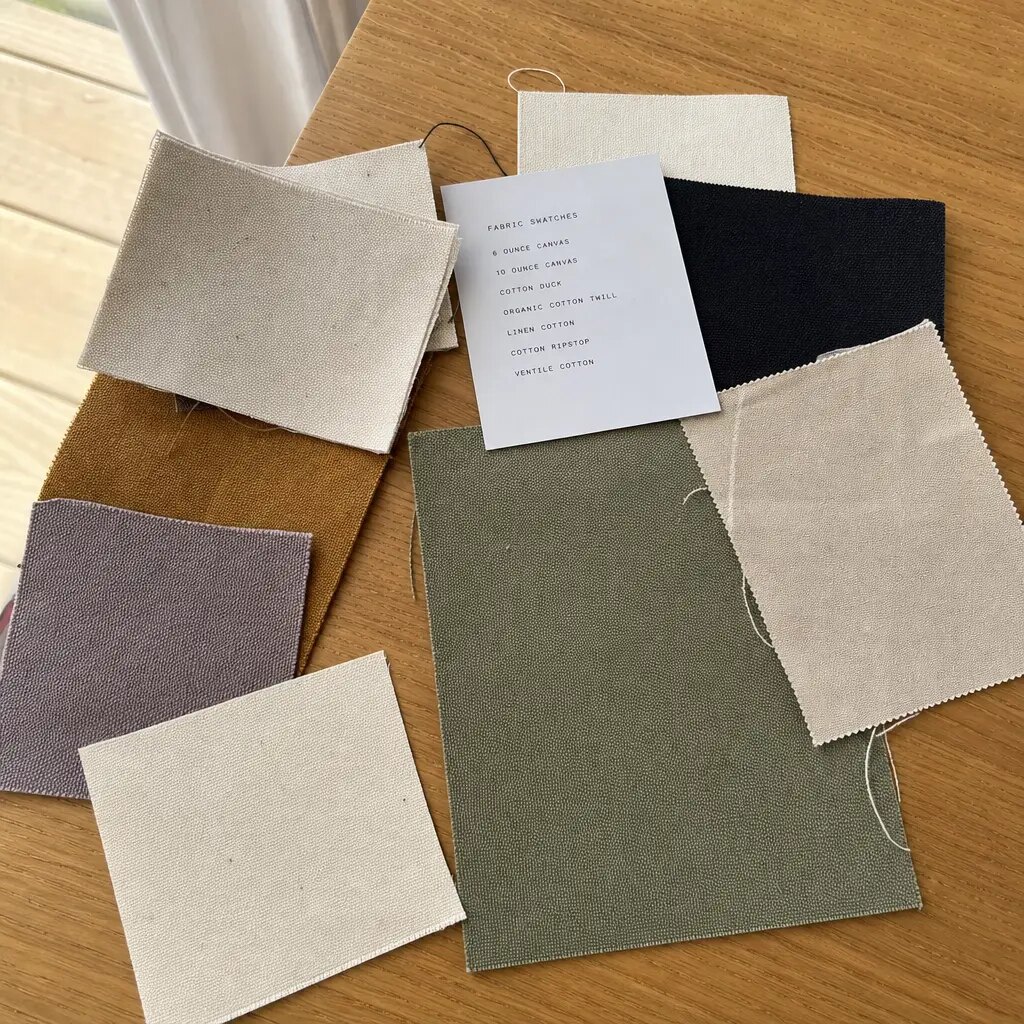
Most quote gaps start with fabric wording. 'Organic cotton tote' is not enough for a commercial RFQ because it does not tell the supplier whether you expect lightweight sheeting, medium cotton, or heavier canvas. For coffee roaster programs, 10 oz to 12 oz canvas, roughly 280 to 340 GSM, is usually the safe working range for retail durability without becoming too stiff for folding and carton efficiency. If the order is for event giveaways with low carry weight, 8 oz to 9 oz can work, but buyers should expect more drape and less structure.
Fabric finish matters as much as weight. Prewashed or enzyme-washed fabric can improve hand feel and reduce later shrinkage, but it may also slightly affect panel dimensions and print crispness. Unwashed natural canvas often gives cleaner screen edges and lower cost, but the hand feel is firmer and shrinkage risk is higher if customers wash the bag. If your brand makes an organic claim, confirm whether you need fabric-level evidence only or order-specific transaction documents tied to the mill lot. Many disputes happen because the factory shows a valid certificate that does not actually cover the supplied fabric batch.
- Recommended retail spec: 280 to 340 GSM organic cotton canvas for repeated use
- Budget promo spec: 225 to 255 GSM when low cost matters more than structure
- Useful RFQ wording: natural organic cotton canvas, target 300 GSM, tolerance plus or minus 5 percent, plain weave, no optical brightener unless approved
- If washability matters, add a shrinkage requirement after one gentle wash based on your test method
Choose bag construction for coffee loads, not just shelf appearance
A flat tote may look cleaner in a line drawing, but many coffee roasters benefit from a bottom gusset of 10 to 12 cm because the bag stands better, carries boxed accessories more easily, and distributes weight across the seam more predictably. Width and height should match your intended retail items, not a generic A4 size. For example, a 38 x 42 cm body with a 10 cm bottom gusset is common, but the right dimensions depend on whether the bag is for two 250 g packs, one 1 kg pack, or mixed merchandise.
Handle construction is where many low quotes hide risk. A self-fabric handle sewn into the side seam without bartacks may pass a quick visual review but fail under repeated use. For coffee retail, cross-stitch reinforcement plus bartack at the stress point is a better baseline. Buyers should also specify handle width and handle drop. A 2.5 cm handle may be acceptable on lighter promotional totes, while 3 cm to 3.5 cm often feels better on heavier retail carry. A handle drop around 28 to 32 cm works for shoulder use, but if the tote is meant for grab-and-go counter sales, a shorter drop may be preferred.
- Write body size and gusset separately; do not bury gusset in a sketch only
- Add handle width, total length, and finished drop to the spec sheet
- Require symmetrical handle placement with a measurable tolerance
- If carrying weight matters, request a simple internal load test standard before shipment
Print method decisions that affect appearance, rub resistance, and quote accuracy
For most coffee roaster logos, water-based screen printing is the practical default. It gives a matte look that fits natural organic cotton, handles 1 to 2 solid colors well, and usually costs less than more complex transfer methods at bulk volume. But buyers should not approve on artwork only. Natural cotton absorbs ink differently across lots, especially on unbleached fabric, so the preproduction sample should show the final line sharpness, ink penetration, and shade contrast against the actual fabric lot or a close production equivalent.
Detailed artwork requires caution. Fine text, thin lines, and halftones may force higher mesh counts, discharge alternatives, or transfer methods. These can improve detail, but they may also introduce a plastic hand feel, edge cracking, or adhesion problems. The key is to connect print method to expected usage. Coffee retail totes are touched often, folded, stacked, and sometimes left in cars or humid shops. A beautiful print that cracks after basic use is not a merchandising win.
- For 1 to 2 color logos, screen printing is usually the most stable bulk option
- Request Pantone references and note that final appearance on natural cotton may vary slightly from coated paper standards
- Add acceptance criteria for print placement, edge sharpness, pinholes, and dry rubbing
- If using transfer methods, ask for flex and adhesion results on the exact fabric weight
Sample approval should cover more than appearance
A common sourcing mistake is approving a tote based on a showroom sample made from stock fabric, then assuming the bulk order will match. For organic cotton totes, the preproduction sample should be treated as a technical approval point. It needs to confirm dimensions after sewing, handle feel, body drape, print registration, and how the bag folds for packing. If the tote includes side labels, inner care labels, or woven branding, those elements should be on the approved sample as well, because trim placement errors are frequent in rush production.
Buyers should also run a short use simulation during sample review. Put the intended coffee products inside, lift by the handles, place the bag on a counter, and inspect bottom shape and seam stress. This is basic, but it catches many issues that a flat visual review misses. If the bag feels too limp, twists under load, or opens unevenly, bulk production will not improve it. Small sample-stage revisions are cheap compared with reworking packed inventory.
- Approve one physical preproduction sample and one sealed reference retained by both sides if possible
- Record final dimensions, fabric GSM result, print placement, and handle drop from the approved sample
- Photograph front, back, gusset, handle joins, inner seams, and carton fold for future dispute reference
- Do a basic load test with actual coffee packs, not only visual tabletop review
Build a QC checklist around measurable defects and realistic tolerances
Inspection works best when defect language is measurable. Terms like 'good stitching' or 'nice print' do not help inspectors, suppliers, or your own receiving team. Define what counts as a major visual defect, a minor natural material variation, and a functional reject. On organic cotton, some slubs or small seed specks may be commercially acceptable if approved in the sample, but oil stains on front panels, twisted handles, major size deviation, or incomplete print cure are not. The point is to prevent end-of-line argument over subjective expectations.
For retail totes, inspection should include both appearance and functionality. Measure dimensions from a laid-flat method that both parties understand. Check print alignment against the approved strike-off. Review handle attachment and seam consistency across a random sample from multiple cartons, not only from top-packed units. If your importer uses AQL inspection, note that the inspection company still needs clear pass-fail rules from the buyer. AQL cannot solve a weak specification.
- Measure width, height, gusset, and handle drop using the same method on sample and bulk
- Classify oil marks, mildew smell, severe puckering, wrong print color, and open seams as major defects
- Treat minor natural cotton specks only as defects if they exceed the approved sample standard
- Inspect from different cartons and carton layers to catch lot inconsistency, not just top presentation
Cost drivers in supplier quotes: what moves price and what only looks cheap
The biggest tote cost drivers are fabric weight, print complexity, sewing construction, and packing style. A quote can look attractive because the supplier quietly reduced fabric from 300 GSM to 230 GSM, removed bartacks, or priced a smaller print area. That is why quote comparison should convert every offer into a like-for-like grid. If one factory uses heavier canvas and stronger handles, its unit price may be higher but the landed value can still be better because the bag survives retail use and reduces complaints.
MOQ logic also matters. Buyers often request several sizes and artworks in the first inquiry, then receive fragmented quotes that are hard to compare. Factories typically price better when body size, fabric color, and handle construction are shared across SKUs, while print changes are limited. If you need multiple roast lines or seasonal graphics, control cost by standardizing the bag body first and varying only the print where possible.
- Fabric weight changes can move price materially even when the bag size stays the same
- Screen count, print colors, and front-back printing all add setup and labor cost
- Bartacks, inner labels, and gussets are low-cost upgrades compared with the expense of retail failures
- Carton quantity and individual polybag packing affect both factory cost and inbound warehouse labor
Packing details that prevent transit stains, count errors, and warehouse friction
Packing is often treated as an afterthought, but it directly affects the delivered condition of natural cotton bags. Organic cotton in natural color can pick up dust, moisture marks, or transfer stains more easily than darker fabrics. Flat packing by dozen with a clean inner barrier is a common solution, but the right method depends on your receiving system. If your warehouse counts by carton and not by inner bundle, carton assortment and bundle quantity must be standardized. Otherwise inbound teams lose time opening cartons to confirm quantities.
Carton specification also matters for freight efficiency and damage control. Overpacked cartons reduce cubic cost on paper but create handle creasing, panel compression, and poor pallet stability. For larger tote sizes, set a carton gross weight limit your warehouse can handle safely. Include outer carton marks, PO number, style code, color, quantity, and carton sequence. If retail stores receive cartons directly, cleaner labeling reduces downstream errors.
- State whether individual polybags are required, optional, or prohibited for sustainability reasons
- Set bundle quantity such as 10 or 12 pieces for easier counting and replenishment
- Limit carton gross weight to a workable range for manual handling where required
- Request carton drop resistance and dry-condition storage before container loading in humid seasons
Lead time risks: fabric booking, print queues, and sample revisions
Tote lead time is rarely delayed by sewing alone. The longer risks usually sit in organic fabric availability, print scheduling, and approval loops. If the supplier does not hold your target fabric weight in stock, the order may wait for weaving or dye-lot planning even for natural fabric. Print queues can also shift when factories batch similar colors or artwork types. Buyers who need a launch tied to a coffee release or seasonal promotion should ask for a stage-by-stage schedule rather than a single total lead time.
Sample revisions are the most preventable delay. One unclear handle drop or one late artwork change can push print screens, sample courier timing, and production booking. To keep control, freeze the commercial spec before sample approval and note exactly which changes remain open, if any. If your order is split across multiple destinations, align carton marks and packing lists before production finishes, not after inspection.
- Request timeline by milestone: sample, approval, fabric allocation, printing, sewing, final inspection, ex-factory
- Ask whether organic fabric is greige stock, booked stock, or make-to-order
- Plan extra buffer if approving natural cotton shade by photo only
- Do not leave carton marks, barcode labels, or assortment changes until post-production
How to compare landed value, not just ex-factory tote price
A lower ex-factory quote can become the more expensive option after inspection failures, repacking, and retail complaints. Coffee roaster buyers should compare landed value using a simple framework: usable fabric weight, expected defect exposure, packing efficiency, and warehouse handling cost. For example, a slightly heavier tote with cleaner packing and better handle reinforcement may reduce returns and preserve brand presentation, which matters more than saving a few cents on paper.
It also helps to quantify rework risk. If a supplier's natural cotton shade varies heavily or print placement drifts beyond your retail standard, your team may spend time sorting inventory or discounting inconsistent stock. That hidden cost should influence supplier selection. The right buying decision is often the quote with the clearest spec alignment and least ambiguity, not the one with the lowest unit rate in the first email.
- Compare quote assumptions line by line: GSM, size, handle length, print area, and packing
- Convert defect risk into internal cost: inspection, sorting, rework, replacement, and missed launch timing
- Review cubic efficiency together with carton damage exposure, not as separate topics
- Favor suppliers that document process evidence clearly over those that only promise flexibility
Specification comparison for buyers
| Spec decision | Recommended option | When it fits | Buyer risk to check |
|---|---|---|---|
| Fabric weight for daily retail tote use | 10 oz to 12 oz organic cotton canvas, about 280 to 340 GSM | Best for coffee bean retail, merchandise counters, and repeat-use brand bags | Some suppliers quote lighter 8 oz fabric but still call it canvas; request tested GSM tolerance and finished bag weight range |
| Fabric choice for budget giveaway runs | 8 oz to 9 oz organic cotton, about 225 to 255 GSM | Works for event promotions and lighter carry loads such as apparel or brochures | May feel too soft for 500 g to 1 kg coffee retail packs; bottom sag and print show-through are common |
| Handle construction | Self-fabric handles with cross stitch plus bartack reinforcement | Suitable for coffee shop retail where customers may carry beans, mugs, and small accessories | Handle seam failure appears first in bulk orders; ask for handle pull test method and reinforcement photos |
| Print method for simple logo | Water-based screen print on prewashed fabric | Best for 1 to 2 color coffee brand marks and matte natural look | Registration shift, color migration, and crocking can happen if fabric finishing is unstable or print curing is weak |
| Print method for detailed artwork | High-mesh screen print or DTF sample only before bulk approval | Useful when roast illustrations or fine typography are critical | DTF can feel plastic and crack after wash; require adhesion and flex test before approving for production |
| Bag shape | Bottom gusset 10 to 12 cm with boxed corners | Better for coffee retail because the bag stands better and fits product packs more predictably | Quoted dimensions often ignore finished tolerance after sewing; request tolerance by width, height, and gusset separately |
| MOQ planning | Start from one body size and one fabric, vary print by colorway only | Reduces setup waste for first orders and gives better cost control across roaster locations | Too many size and print changes trigger hidden sample, screen, and packing labor charges |
| Individual packing | Flat packed in recycled polybag by dozen or no individual poly if retail standard allows | Good balance for importer warehouse efficiency and moisture protection | Loose cartons without inner protection can pick up dust, oil marks, or humidity stains during transit |
| Organic claim support | Transaction certificate aligned to the bulk fabric lot when required by your market | Important for retail programs that make a formal organic material claim | Factory may show a generic certificate not linked to the actual production lot; verify document scope before PO release |
Buyer checklist before sampling
- Define bag use case by carried load: 250 g sample packs, 500 g retail bags, 1 kg coffee beans, mug sets, or mixed merchandise
- Specify fabric as organic cotton with target weight in GSM and tolerance, not only oz wording
- State finished bag size, gusset depth, handle width, handle drop, and dimension tolerance separately
- Name print method, print size, print colors, Pantone references, and acceptable position tolerance
- Require preproduction sample on the actual bulk fabric, not substitute stock fabric
- Approve fabric hand feel, color shade, shrinkage behavior, and print curing before mass production
- Set stitch density, seam construction, bartack locations, and loose thread standard in writing
- Confirm carton quantity, carton size limit, gross weight limit, and whether inner polybags are allowed or prohibited
- Request QC photos for raw fabric, inline sewing, print inspection, carton packing, and final random inspection
- Clarify which documents support the organic claim, and whether they apply to fabric mill, converter, and final bag factory
Factory quote questions to send
- What is the exact fabric composition, weave, and tested GSM of the quoted organic cotton fabric?
- Is the quoted fabric weight before or after washing, printing, or finishing?
- What are your standard size tolerances for width, height, gusset, and handle drop after sewing?
- Which print method is included in the quote, and how many colors, print positions, and screen charges are included?
- Can you share photos or video of bartack reinforcement at the handle join and boxed corner sewing quality?
- What is the MOQ by fabric color, bag size, and print artwork, and what causes MOQ to increase?
- Does the quote include preproduction sample, print strike-off, carton marks, and export packing materials?
- What is the lead time split for sample, fabric booking, printing, sewing, inspection, and vessel handover?
- How do you control shade variation between production lots of natural organic cotton fabric?
- What final inspection level do you use, and what are your pass-fail rules for stains, print defects, and measurement failures?
Quality-control points to confirm
- Fabric GSM must fall within the agreed tolerance, typically plus or minus 5 percent unless another standard is written into the PO
- Natural fabric shade should be commercially uniform within the approved sample; heavy panel-to-panel variation should be rejected
- Finished dimensions should meet agreed tolerances, commonly plus or minus 1 cm for width and height and plus or minus 0.5 to 1 cm for handle drop depending on bag size
- Print position should stay within agreed alignment tolerance, often plus or minus 0.5 cm from approved artwork placement
- Screen print must show full cure with no obvious tackiness, flaking, pinholes, major smudging, or significant rubbing under a dry crock test
- Handles must be attached symmetrically and reinforced with cross stitch, bartack, or both according to approved sample
- No open seams, skipped stitches, broken threads, severe puckering, or raw edge exposure that affects use
- Bag opening, gusset folding, and bottom shape should be consistent so packed retail units stack and count efficiently
- No major stains, oil marks, mildew smell, needle damage, or visible repairs on front-facing panels
- Carton count, carton labeling, and pack assortment must match the packing list exactly before container loading