Why Carton Planning Belongs in the First RFQ
For organic cotton totes, many buying teams spend most of the discussion on fabric, logo, and unit price, then leave carton packing to the supplier's default method. That is risky for tech startup orders because the bags often move through several hands: factory, forwarder, 3PL, event warehouse, office manager, and sometimes retail or employee welcome-kit teams. If the carton plan is not specified early, the landed cost and receiving accuracy are only guesses.
A good carton packing plan links the tote specification to freight, handling, storage, and final presentation. The buyer should know the packed quantity per carton, folded size, gross weight, carton dimensions, labeling system, and whether the goods are packed for bulk distribution or retail-style allocation. This information helps compare supplier quotes fairly because a lower unit price can disappear if the carton is oversized, underfilled, mislabeled, or unsuitable for the distribution route.
- Include carton quantity and dimensions in the quote comparison sheet, not only the EXW or FOB unit price.
- Separate event giveaway packing from retail packing; the labor, labels, and materials are different.
- Define the maximum acceptable carton gross weight before the supplier chooses the carton size.
- Request a packed sample photo or video before bulk packing starts.
Set the Tote Specification Before Calculating Carton Quantity
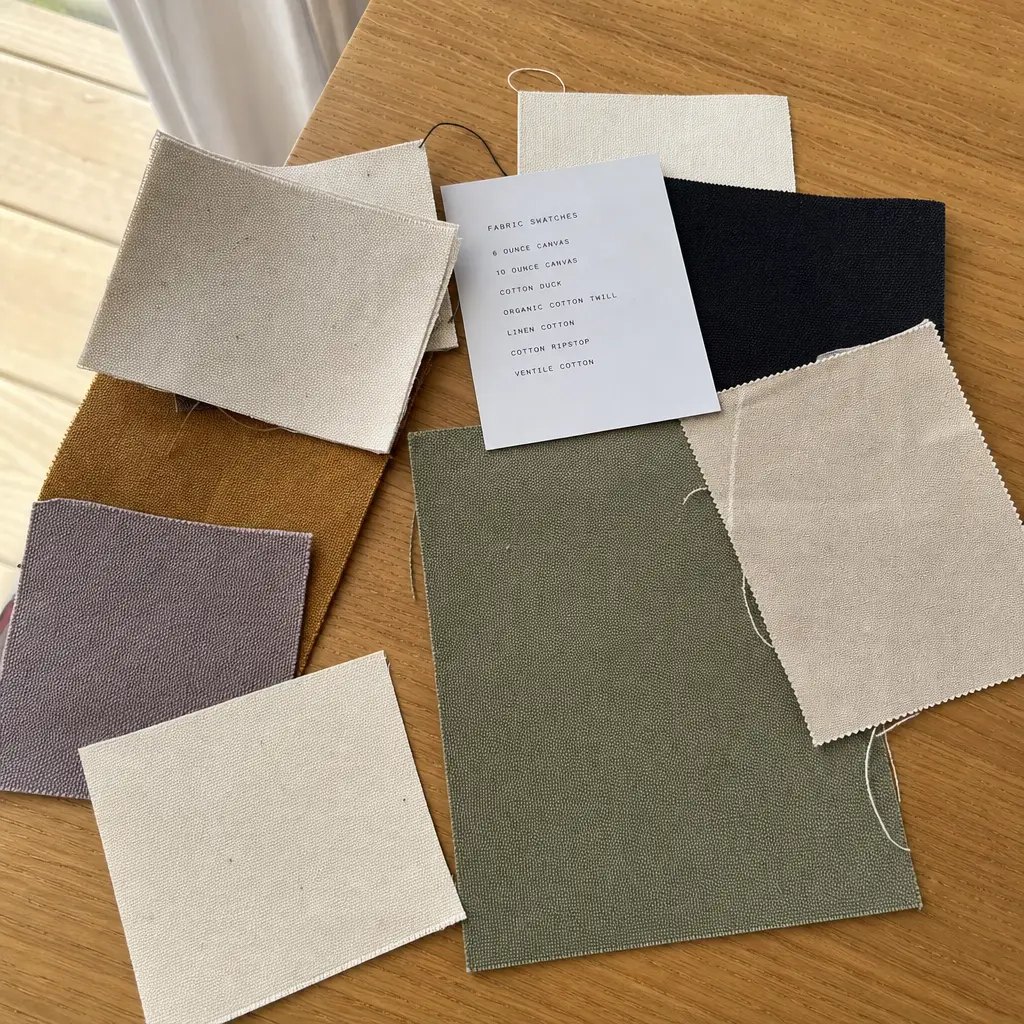
Carton planning starts with the physical tote. A flat 38 x 42 cm organic cotton tote in 8 oz fabric behaves very differently from a 12 oz gusseted tote with long handles and a large print. Fabric GSM, panel size, gusset depth, handle length, seam allowance, and finishing method all affect folded thickness. When these details are missing, suppliers may quote using a convenient packing assumption instead of a production-accurate one.
For tech startup campaigns, 8 oz to 10 oz organic cotton canvas is often the practical range. It has enough body for a premium giveaway while still folding compactly. A lighter 5 oz cotton bag may reduce cost and carton weight, but it can wrinkle heavily and feel too promotional for a brand launch. A heavier 12 oz tote can look excellent, but the cartons fill quickly by volume and freight cost rises before the buyer notices.
- Common flat tote size: 38 x 42 cm for conferences, hiring events, and welcome kits.
- Useful fabric range: 270-340 GSM for a durable organic cotton tote without excessive freight volume.
- Handle length: about 60-70 cm for shoulder carry; shorter handles can improve packing but reduce user comfort.
- Gusset choice: add only when the tote must carry boxed kits, drinkware, or bulky retail items.
Choose Print Method With Folding and Stacking in Mind
The print method affects more than decoration cost. It affects drying time, surface friction, folding marks, carton stacking, and the risk of ink transfer. For most tech startup totes with a simple logo or slogan, water-based screen print is the safest commercial option. It gives a softer hand feel on organic cotton and works well for one to three solid colors. Large flood prints, metallic inks, and high-density effects need more careful testing because they can crack or mark adjacent bags after compression in the carton.
If the artwork uses gradients, many colors, or photographic detail, digital print may be considered, but buyers should not assume it will match the same durability, hand feel, or unit economics as screen print. Embroidery can support a premium look, but it adds thread cost, production time, and extra thickness at the fold point. For a carton packing plan, the approved sample should be folded exactly like bulk goods for at least 24 hours before evaluation.
- Use screen print for solid startup logos, simple icons, and clear brand color control.
- Test large print areas for sticking, scuffing, and pressure marks after stacked packing.
- Avoid placing thick embroidery directly on the main fold line.
- Specify print position tolerance, for example within 1 cm from the approved placement.
MOQ Logic: Why Packing Method Can Change the Real Minimum
MOQ is not only about the number of bags. It can be affected by organic fabric sourcing, dye lot, print setup, carton labeling, hangtags, barcode labels, and custom packing materials. A supplier may accept 500 bags with a standard bulk carton, but require a higher quantity when each bag needs a paper band, printed insert, retail barcode, or separate SKU allocation. Procurement teams should separate the MOQ for the tote body from the MOQ for each decoration and packing component.
For organic cotton, fabric availability is the first MOQ driver. If the supplier has greige or finished organic cotton fabric in stock, a smaller order may be feasible. If fabric must be woven, dyed, or matched to documentation, the MOQ and lead time increase. Print screens also create fixed setup costs, so a 300-piece order with six print colors may be inefficient compared with a 1,000-piece order using one or two colors.
- Ask for MOQ by fabric, color, print version, packing style, and carton label version.
- Avoid splitting a small order into too many office locations or event SKUs unless the budget allows extra handling.
- Use one shared tote body with different carton labels when internal allocation matters more than visual variation.
- Confirm whether sample, screen, and packing setup charges are refundable or absorbed into bulk production.
Build a Carton Plan That Warehouse Teams Can Receive
A workable carton plan gives the receiving team enough information to count and allocate goods without opening every carton. For example, 80 pieces per carton across 25 cartons is much easier to receive than mixed quantities with no carton sequence. If there are multiple print versions, colors, or delivery locations, each carton should carry a clear mark showing PO number, SKU, item description, quantity, carton number, gross weight, net weight, and carton dimensions.
The carton quantity should be based on both weight and volume. Organic cotton totes are not fragile, but they can be crushed, wrinkled, and marked when over-packed. A carton that is too heavy may fail during courier handling or create manual handling problems at a startup's office or event venue. A carton that is too large but underfilled can collapse during stacking and cause count disputes.
- Set a target carton gross weight, commonly under 15-18 kg for easier manual handling.
- Use consistent carton quantities wherever possible; put any short carton at the end and label it clearly.
- Keep single-SKU cartons when the buyer uses 3PL receiving or retail allocation.
- Require carton marks in the same wording as the purchase order and packing list.
Packing Materials: Bulk Folded, Paper Band, or Retail-Ready
Bulk folded packing is usually the most efficient option for event handouts, internal company swag, and distributor stock. The bags are folded consistently and placed in the export carton with inner protection. This keeps labor cost and material waste lower. The tradeoff is that individual bags are not presentation-ready, and warehouse staff may need to count or prepare units before final distribution.
Paper band packing gives a cleaner presentation and supports organic positioning better than individual plastic bags. It can carry a barcode, size, material statement, or simple brand message, but it adds setup, labor, and paper printing cost. Individual polybags protect against moisture and handling marks but may conflict with the buyer's sustainability message. Retail-ready packing should be reserved for orders that truly need shelf or kit presentation because it changes the quote structure.
- Bulk folded: best for lowest packing cost and simple event distribution.
- Paper band: best for welcome kits, retail-style presentation, and plastic reduction.
- Individual polybag: useful for moisture-sensitive routes, but review brand and compliance requirements.
- Hangtag and barcode: useful for retail buyers and 3PL receiving, but should be quoted separately.
Sample Approval Must Include the Folded and Packed Condition
Many tote samples are approved flat on a table, but the customer receives them folded under pressure inside cartons. The sample approval should include the finished tote, print strike-off, folding method, unit packing, carton label, and if possible a mini packing simulation. The buyer should inspect whether the logo is placed away from hard crease lines, whether the fabric wrinkles acceptably, and whether handles sit neatly after unfolding.
A pre-production sample should represent bulk materials and processes, not just a sales sample from similar stock. If the buyer approves a 10 oz sample but the bulk quote uses 8 oz fabric, carton quantity and hand feel will change. If the sample uses air express packing but bulk ships by sea in stacked cartons, pressure marks may appear differently. Written sample comments prevent later disagreement when the factory moves into bulk cutting.
- Approve fabric swatch, print strike-off, finished tote, and packing method as one sample package.
- Measure finished size after folding and unfolding, not only on the freshly pressed sample.
- Photograph the approved fold direction, logo exposure, paper band position, and carton mark.
- Keep one sealed golden sample at the factory and one with the buyer or inspection agent.
Cost Drivers That Should Appear in the Quote
A useful quote for organic cotton totes should show more than a unit price. The buyer needs to see fabric specification, cutting and sewing cost, print method, setup charges, packing materials, carton details, sample cost, inspection assumptions, and delivery term. Without this data, two quotes that look similar may include very different fabric weights, carton quantities, or packing labor.
Carton packing affects landed cost directly. A supplier quoting 100 pieces per carton may look cheaper per piece than one quoting 60 pieces per carton, but the decision depends on fabric weight, carton strength, compression risk, and freight method. For air freight or courier, volumetric weight may dominate. For ocean freight, carton dimensions and palletization can still affect consolidation cost, warehouse handling, and damage risk.
- Quote line items should identify fabric GSM, organic cotton requirement, print colors, and packing style.
- Carton data should include pieces per carton, carton size, gross weight, net weight, and total cartons.
- Setup costs should separate print screen, artwork adjustment, barcode label, hangtag, and custom paper band.
- Freight comparison should use packed carton data, not estimated bag weight alone.
Lead Time Risks From Fabric, Print, and Packing
Lead time for organic cotton totes is often underestimated because buyers count only sewing time. A realistic schedule includes fabric confirmation, sample making, sample shipping, artwork revision, print screen preparation, bulk cutting, sewing, printing or print curing, trimming, packing, inspection, and freight handover. If certification documents are needed, the document process should also be scheduled instead of treated as an afterthought.
Tech startup orders often have fixed dates tied to product launches, recruiting events, investor meetings, or conferences. That means the packing plan must be approved before the factory reaches final finishing. Changing from bulk folded packing to paper band packing after sewing can add label artwork, material sourcing, folding labor, and carton rework. Late carton mark changes can also delay shipment if the warehouse requires exact PO and SKU formats.
- Allow time for one sample revision if print placement or fold marks affect appearance.
- Freeze carton label data before bulk packing starts.
- Book inspection after packing is complete, not while cartons are still open and changing.
- For event deadlines, plan backward from delivery date and include customs and warehouse receiving buffer.
Inspection Criteria for Shipment-Ready Cartons
Final inspection should cover the tote and the carton plan together. The inspector should measure finished bag size, verify fabric hand feel and GSM evidence, inspect stitch strength, compare print color and placement, and review packing accuracy. Cartons should be opened across different carton numbers to confirm count, SKU separation, folding consistency, and whether print surfaces are protected from transfer marks.
For carton integrity, the inspector should examine carton sealing, outer marks, moisture exposure, deformation, and weight consistency. A simple carton drop or handling check can reveal weak cartons before export. The buyer should define acceptable defects clearly: small natural cotton specks may be acceptable on unbleached organic fabric, while oil stains, mildew smell, broken handles, unreadable barcodes, or wrong carton labels should not pass.
- Use AQL sampling for workmanship, but add specific packing checks to the inspection checklist.
- Reject cartons with mixed SKUs unless the purchase order allows mixed cartons and labels them clearly.
- Record gross weight variation by carton to catch count shortages or packing errors.
- Take final photos of open cartons, sealed cartons, carton marks, and loaded pallets if palletized.
Specification comparison for buyers
| Spec decision | Recommended option | When it fits | Buyer risk to check |
|---|---|---|---|
| Fabric weight for startup event totes | 8 oz to 10 oz organic cotton canvas, approximately 270-340 GSM | Works for laptop chargers, brochures, T-shirts, onboarding kits, and conference use without making freight too high | Very light 5 oz fabric may look cheap after folding; very heavy 12 oz fabric increases carton volume and freight |
| Bag size for carton efficiency | 38 x 42 cm flat tote with 2.5 cm tolerance, no gusset unless needed | Fits common swag items and stacks cleanly in export cartons with predictable folded dimensions | Oversized panels or deep gussets can reduce pieces per carton and cause uneven carton bulging |
| Handle construction | Self-fabric handles, 2.5-3 cm width, cross-stitch reinforcement | Best balance for tech startup giveaways where the tote must carry catalogues, devices, or welcome-kit contents | Thin webbing or single-line stitching may fail during load tests even if the fabric is acceptable |
| Print method | Water-based screen print for one to three solid brand colors | Suitable for organic cotton positioning, simple startup logos, QR-style graphics, and repeat orders | Fine gradients, tiny text, or large flood prints may need testing for bleeding, hand feel, and color variation |
| Unit packing | Folded individually in recyclable paper band or bulk folded by carton, depending on retail need | Paper band works for premium welcome kits; bulk folding works for warehouse distribution and event handout | Individual polybags add labor and plastic perception issues; no unit control may cause warehouse counting disputes |
| Carton packing quantity | 50-100 pieces per export carton based on GSM, folded size, and carton burst strength | Keeps carton weight manageable and helps receiving teams count by carton instead of recounting every tote | Packing too many pieces can crush print surfaces, deform handles, and exceed courier or warehouse weight limits |
| Carton labeling | Outer carton mark with PO, SKU, color, quantity, gross weight, net weight, carton size, and carton number | Required for distributors, 3PL warehouses, retail allocation, and multi-location tech events | Missing carton sequence or SKU split details can delay inbound receiving and chargebacks |
| Pre-shipment inspection | AQL inspection with fabric, size, print, stitch, packing, barcode, and carton drop checks | Useful when the order ships directly to an event warehouse or launch campaign deadline | Inspection that excludes packing checks will not catch carton overloading, wrong labels, or mixed SKU cartons |
Buyer checklist before sampling
- Define tote size, fabric GSM, handle length, gusset requirement, print size, print position, and finished tolerance in the RFQ.
- State whether the cotton must be organic certified material and whether certification documents are needed before bulk cutting.
- Confirm whether packing should be bulk folded, paper-banded, individually packed, or retail-ready with hangtag and barcode.
- Set maximum gross weight per carton, target carton quantity, and whether the carton must suit courier, pallet, or container loading.
- Approve one golden sample that includes fabric hand feel, print color, stitch reinforcement, folding method, and carton label format.
- Require a packing list that separates SKU, color, print version, carton number, net weight, gross weight, and carton dimensions.
- Add acceptance criteria for stains, broken stitches, print registration, color variation, carton deformation, and count shortage.
- Reserve time for fabric sourcing, sample revision, print strike-off, bulk production, final inspection, and freight booking.
Factory quote questions to send
- What organic cotton fabric weight, yarn construction, and shrinkage range are included in this quotation?
- Is the quoted fabric stock available, or does it require weaving, dyeing, washing, or certification document matching?
- What is the MOQ by fabric type, bag size, print color, and packing method?
- What print method is included, and what are the screen, setup, color matching, and repeat-order charges?
- How many pieces are packed per carton, and what are the estimated carton dimensions, gross weight, and net weight?
- Can you provide a pre-production sample packed exactly as bulk goods will be packed?
- What carton strength, inner protection, moisture control, and label format are included?
- What lead time applies after artwork approval, deposit, fabric confirmation, and sample sign-off?
- What inspection standard is used for fabric defects, stitching, print defects, and packing errors?
- Which quote items are excluded, such as certification transaction documents, hangtags, barcode labels, pallets, or local delivery?
Quality-control points to confirm
- Fabric GSM tolerance should be agreed before cutting, commonly within plus or minus 5 percent unless the buyer specifies a tighter range.
- Finished bag size should be measured after sewing and pressing, not only by cut panel size.
- Handle attachment should pass a practical load test using the buyer's expected contents plus safety margin.
- Print color should be compared against an approved Pantone reference or signed strike-off under consistent lighting.
- Print surface should be checked for cracking, smudging, registration shift, and transfer marks after folding.
- Carton count should be verified by carton number and SKU, not only by total order quantity.
- Outer cartons should be checked for burst strength, sealing method, moisture exposure, and deformation after stacking.
- Packing photos should show folded size, carton layout, carton marks, inner protection, and final sealed carton.