1) Start with the real buying problem: tote quality is not the only issue
For boutique wineries, the tote itself is only half the job. The other half is how it is packed, counted, shipped, and presented when it reaches a tasting room, retail shelf, or seasonal promo program. A tote that looks fine in a sample photo can still become a problem if the carton is too large, the bags are packed too tightly, or the print rubs during transit. The right carton packing plan keeps the product sale-ready and the freight bill predictable.
Buyers usually get into trouble when the RFQ focuses on bag price only. The quote looks competitive until the supplier adds separate charges for folding, bundle ties, cartons, inner polybags, or extra packing labor. For a winery program, those extras matter because the order often ships in a short retail window and may need clean presentation straight out of the carton. The better approach is to define the tote, the packing method, and the carton dimensions as one commercial package.
- If the tote is for tasting-room retail, presentation and shape retention matter as much as unit price.
- If the shipment is airfreight-heavy, carton cube and gross weight can matter more than a few cents on the bag.
- If the order is seasonal, re-order speed and packing consistency matter more than a one-time sample price.
2) Choose the fabric spec before you talk carton count
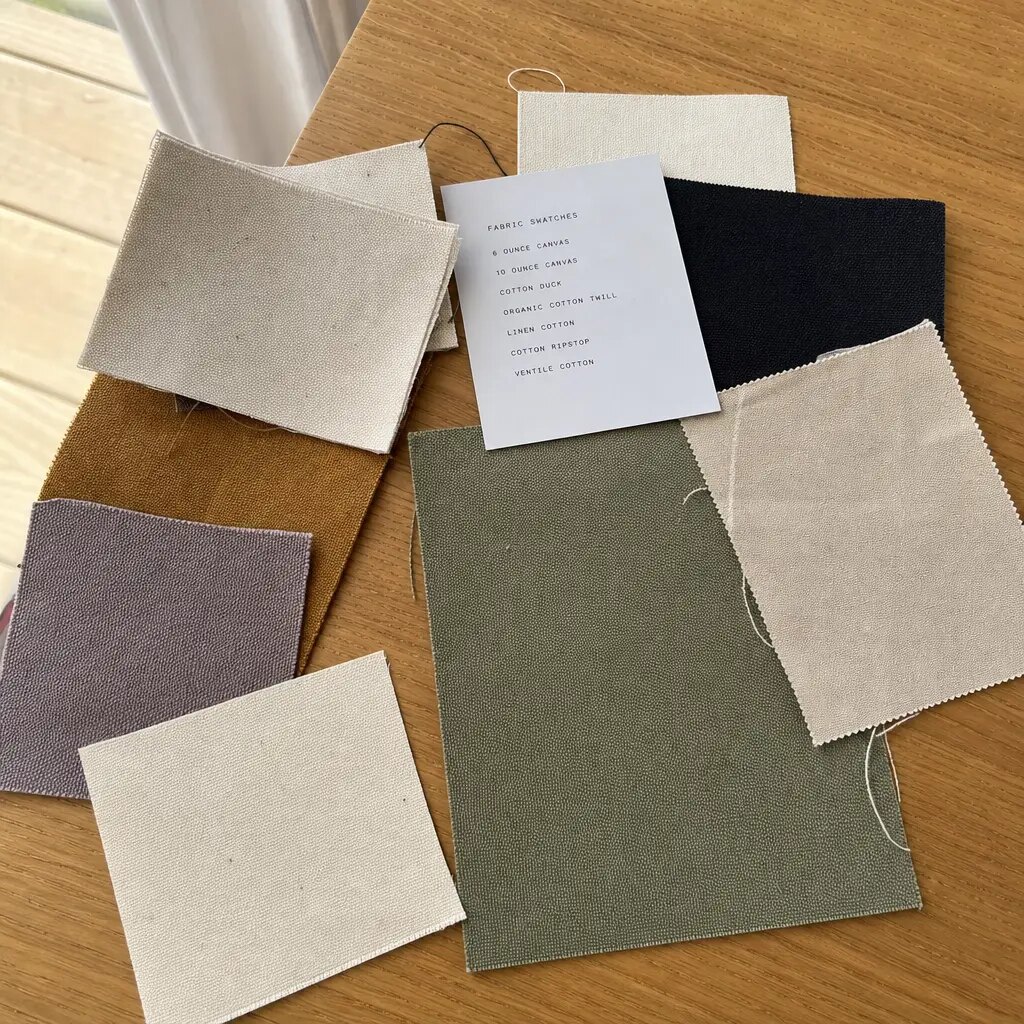
For organic cotton totes, the practical buyer range is usually 180-220 GSM for a premium retail bag, with 140-180 GSM reserved for light promotional use. Boutique wineries typically need a tote that feels substantial in the hand, holds a bottle or two plus small merchandise, and does not turn limp on the shelf. If the bag is too light, the carton may look full but the retail impression is weak. If it is too heavy, freight and carton weight rise quickly.
The weave and finishing matter as much as the GSM number. A 180 GSM plain weave can feel more structured than a lower GSM twill if the yarn quality and finishing are better. Ask for finished size, shrinkage allowance, and whether the fabric is pre-shrunk or bio-washed. That information affects how the tote sits after folding and whether the packed carton will stay neat after long transit.
- 180-220 GSM: good balance for premium winery retail totes.
- 140-160 GSM: acceptable for event giveaways or low-cost seasonal use.
- Pre-shrunk or controlled shrinkage: important when the tote must fold to a fixed carton pack.
3) Print method changes both appearance and packing stability
Most boutique winery tote orders work best with one or two-color screen print. It gives clean logo edges, good opacity on natural cotton, and predictable repeatability across a run. If the artwork is detailed, gradient-heavy, or includes fine text, a transfer method may be easier for the supplier, but the buyer should treat that as a different product class. On textured organic cotton, small type can fill in or distort if the screen mesh, ink viscosity, or curing is not controlled.
The print method also affects carton packing. Thick ink layers can crack if the tote is folded hard into a tight bundle, especially near the center crease. A buyer who wants a crisp retail presentation should specify the fold line, the print-safe area, and whether the print is allowed to touch the fold. If the artwork is centered too low, the bottom fold may damage the image in transit.
- Use vector artwork and specify PMS or closest-match target where possible.
- Keep fine text larger than the supplier’s practical minimum for the chosen fabric and method.
- Require a folded sample photo before approving carton pack style.
4) Compare sourcing routes before you compare price
The cheapest quote is often the one with the least defined packing. A direct factory quote usually gives the best control over fabric, print, and carton spec, but only if the buyer writes a clear RFQ. Trading companies may offer easier communication and smaller-order flexibility, yet the packing details can be less transparent unless the order is tightly managed. For winery buyers, the right route depends on whether the program is a repeat item, a private-label launch, or a one-off event order.
Use the comparison below to decide which route fits your program. The key point is not whether the supplier is a factory or intermediary; it is whether the quote tells you how the tote will be made, packed, and shipped. Without that, landed cost comparisons are unreliable.
5) Sourcing route comparison for winery tote programs
The sample record for organic cotton totes carton packing plan for boutique wineries should include front, back, side, seam, logo, label, inside, and packed-carton photos. For important programs, keep one signed physical sample and record the sample version in the approval file.
Approval should include the known deviations. A small accepted deviation is manageable when written down; an unwritten deviation becomes a dispute during final inspection.
- Write decisions in measurable language, not only descriptive wording.
- Ask for sample photos plus one physical approval sample for important orders.
- Keep quotation, sample approval, and inspection notes tied to the same spec version.
6) Write the RFQ around the carton pack, not just the bag
A strong RFQ for organic cotton totes should describe the finished tote and the packing target together. Include size, fabric GSM, handle dimensions, print method, print area, fold direction, pack count per bundle, and master carton target. If the buyer wants 50 pcs per carton, that should be stated clearly, but it should also say whether the supplier may adjust the inner bundle count to improve carton fit. That avoids the common problem where the tote price is right but the packed cartons are awkward, oversized, or expensive to ship.
The RFQ should also separate cost items. Ask for bag unit price, print setup, sampling charge, packing labor if any, carton cost, and any special marking fee. A supplier quote becomes useful only when you can see what is driving the price. That is especially important for wineries, where artwork revisions and seasonal rush orders can change the true cost of the same tote design.
- State the finished size in centimeters and inches if your team works across markets.
- Specify whether the tote should be folded flat, half-folded, or rolled for carton packing.
- Ask for a carton dimension recommendation instead of giving only a bag count target.
7) Sample checks that prevent production mistakes
Do not approve a tote sample based on appearance alone. For winery programs, the sample should be checked for size accuracy, handle symmetry, seam finish, print placement, color tone, and the final fold shape. A tote that looks neat on the table can still bunch awkwardly in cartons, which makes warehouse counting slower and increases creasing. The sample stage should include at least one preproduction sample packed exactly the way bulk goods will be packed.
A practical sample approval process is simple: compare the sample against the RFQ, measure finished dimensions after pressing flat, test the handle pull feel, and fold it into the agreed carton pattern. If the logo lands too close to the crease, revise the artwork position before bulk release. If the carton pack looks loose, tighten the bundle count or change the carton size instead of letting the factory improvise later.
- Measure finished width, height, and gusset after production finishing.
- Check print registration against the centerline and top edge.
- Test one tote with a realistic insert load, such as bottle-shaped weight or retail filler.
8) Carton packing plan: protect presentation without paying for air
The main carton packing goal is simple: deliver clean, flat, countable totes without unnecessary cube. Most boutique winery orders work well with 10-25 pcs per inner bundle or bundle tie, then master cartons sized to stay within manageable freight dimensions. The exact count depends on fabric GSM, whether the tote has a gusset, and how much folding pressure the print can tolerate. Heavier fabrics often need fewer pieces per bundle to avoid permanent crease lines.
If the tote is retail-facing, insist on a fold that preserves the front panel and leaves the handle aligned. A good packing plan usually includes a standard folding sequence, an inner bundle count, a master carton count, and a carton mark that identifies style, color, and quantity clearly. If your warehouse receives mixed SKUs, carton labeling matters as much as the packing density because it cuts receiving errors and delays.
- Use a packing sequence that avoids folding across the logo whenever possible.
- Keep carton dimensions aligned with your freight mode; air shipments punish oversized cubes.
- If cartons are double-wall, confirm whether the extra board strength is actually needed or just adding weight.
9) Lead time, MOQ logic, and why low MOQ can still be expensive
MOQ for organic cotton totes is not only about the number of bags. It is often set by fabric dye lot, print screen count, artwork version, and carton configuration. A supplier may accept a small bag quantity but still charge a setup fee that makes the order inefficient. For wineries ordering seasonal promotions, it is smarter to understand the MOQ logic than to chase the lowest bag count. A slightly larger run can sometimes reduce total landed cost if it avoids repeated setup and re-carton changes.
Plan the schedule backwards from the date the totes must arrive in your distribution center. A normal custom run may need 4-6 weeks after sample approval, and longer if the fabric is custom dyed, the artwork is complex, or the carton marking is new. Add time for artwork revision, preproduction sample approval, and any third-party inspection. When buyers compress the timeline too hard, the first place quality slips is usually packing consistency.
- Low MOQ can hide high setup fees per print color or per carton format.
- Ask whether the MOQ changes if the tote color stays natural and only the print changes.
- Reserve a time buffer for sample correction before bulk cutting starts.
10) Landed-cost comparison and common quote traps
A quote comparison is only useful when every supplier is quoting the same commercial content. One factory may include inner polybags, another may charge separately for carton packing, and a third may quote a low ex-factory price but use a heavier carton that increases freight. For boutique wineries, those differences can erase the apparent saving very quickly. The best comparison is landed cost per sellable tote, not unit price at the factory gate.
To compare quotes properly, line up bag price, print charge, packing labor, carton cost, sample cost, and estimated freight cube. Then ask what happens if the final packed count per carton changes. If the supplier cannot show the effect of a carton count change, the quote is not yet decision-ready. In practice, the cleaner quote is often the one with fewer surprises, even if the headline unit price is slightly higher.
- Watch for a low bag price paired with expensive packing or carton add-ons.
- Compare gross weight and carton dimensions, not only bag dimensions.
- Ask for a revised quote if artwork color count or pack count changes after sampling.
Specification comparison for buyers
| Spec decision | Recommended option | When it fits | Buyer risk to check |
|---|---|---|---|
| Fabric weight | 180-220 GSM organic cotton canvas or heavy twill | Boutique retail gifting, tasting room resale, and higher perceived value | Too light and the bag collapses; too heavy increases cost and carton cube |
| Handle style | Self-fabric handles or 25-30 mm cotton webbing handles | Self-fabric for soft premium look; webbing for better shoulder carry and load strength | Handle stitch count and seam allowance must support real bottle-and-merchandise loads |
| Print method | 1-2 color screen print or low-coverage heat transfer for short runs | Screen print for repeatable logos and clean lines; transfer for detailed artwork or small quantities | Fine details may fill in on textured fabric; PMS matching is less stable on some transfer films |
| Closure or structure | Open top with optional bottom gusset or cardboard insert | Tasting-room giveaway, retail carrier, and event tote use | No insert can make the tote look flat and cheap; too much structure raises carton weight |
| Packing per polybag | 10-25 pcs per inner polybag or bundle tie, then master carton | Best for warehouse counting, print protection, and mixed-size orders | Over-packed bundles crease print and slow QC counting |
| Master carton size | Keep carton within freight-friendly cube and under practical hand-carry limits | Airfreight-sensitive programs and multi-SKU consolidated shipments | Oversized cartons raise volumetric charges and can crush tote corners |
| Supplier route | Direct factory with packing spec and pre-shipment inspection | Repeat orders, custom artwork, and buyer-controlled quality | Needs clearer communication and stronger sample approval discipline |
| MOQ approach | MOQ by fabric color, print color, and carton configuration | Seasonal winery promotions and multi-SKU launches | A low bag MOQ can hide a high carton or print setup charge |
| Lead time planning | 4-6 weeks production after approval, longer for custom fabric or special packing | Normal boutique winery replenishment cycles | Artwork revisions and carton artwork changes often add one extra week |
Buyer checklist before sampling
- Confirm fabric GSM, weave type, shrink allowance, and whether the cotton is organic-certified or only organic-content claimed.
- Lock the tote size, handle length, handle stitch method, and bottom gusset before asking for quotes.
- Specify print artwork in vector form, color count, print placement, and acceptable color tolerance.
- State the carton pack count, inner packing method, outer carton dimensions, and whether carton marking is required.
- Request sample photos and one production-like preproduction sample before bulk approval.
- Ask for estimated gross weight, carton cube, and loading plan if the order ships by air or mixed LCL.
- Define inspection criteria for seams, print registration, odor, stains, and dimensions.
- Separate the quote into bag price, print charge, packing charge, carton charge, and sample charge.
Factory quote questions to send
- What exact fabric GSM and weave do you quote, and is the GSM tolerance controlled by lot?
- How many print colors are included, and what is the setup charge per color or per screen?
- What is your MOQ by color, artwork version, and carton configuration?
- Can you quote the same tote in open-top, bottom-gusset, and lined versions for comparison?
- What is the standard pack count per inner bundle and per master carton, and can we change it without extra loss?
- What carton size do you recommend for this tote, and what is the estimated gross weight per carton?
- What sample stages do you provide before bulk production, and what needs written approval?
- What is your normal production lead time after sample approval, and what delays usually add time?
- Which inspection documents or photos can you share before shipment?
- Can you separate FOB price from packing and carton costs so we can compare landed cost fairly?
Quality-control points to confirm
- Finished fabric GSM matches the approved range and is consistent across the run.
- Organic cotton claim is supported by the supplier’s documentation for the ordered material.
- Finished tote dimensions are within the agreed tolerance after folding and pressing flat.
- Print placement, print opacity, and registration match the signed sample.
- Handles are symmetrical, securely stitched, and free from loose threads or broken bartacks.
- Carton count, inner bundle count, and outer carton mark match the packing list.
- No heavy creasing, print cracking, odor, stain, or loose lint is visible on unpacking.
- Carton size and gross weight stay within the freight plan agreed at quotation stage.