Start With the Event Job, Not the Cheapest Tote
A trade show tote has to do more than hold a logo. It carries registration materials, booth samples, catalogs, giveaways, sponsor inserts, and sometimes the first physical impression of the brand. That is why the best organic cotton totes bulk pricing plan for trade show exhibitors starts with the bag's job. A lightweight handout tote, a conference kit, and a premium sponsor bag may all look similar in a spreadsheet, but they should not be sourced as the same product.
Procurement can keep the project grounded by describing how the tote will be used. Will attendees pick it up at registration and carry it all day? Will sales staff hand it out only to qualified leads? Will it hold a water bottle, product samples, binders, or folded apparel? The answer affects fabric weight, handle drop, reinforcement, print method, carton packing, and delivery routing. It also tells the supplier where cost reductions are acceptable and where they would create visible risk.
The hidden danger is quiet specification drift. A factory can lower the quoted price by reducing bag size, switching from 10 oz to 8 oz fabric, narrowing the handles, removing reinforcement, shrinking the print, or changing from certified organic material to a looser claim. Those changes may save money on paper. In the exhibition hall, they can turn into broken handles, hard-to-read logos, uncomfortable shoulder carry, or a sustainability claim that compliance cannot support.
- Use a flat tote around 38 x 42 cm for light booth literature and simple giveaways.
- Use a gusseted tote, such as 40 x 38 x 10 cm, when the kit includes boxes, bottles, folded apparel, or thicker catalogs.
- Confirm handle drop for the intended carry style; total handle length alone is not enough.
- Protect handle strength and fabric suitability before trimming decoration or packing cost.
- Write the intended use into the RFQ so all suppliers quote the same performance target.
Make the RFQ Comparable Before Negotiating
Wide price gaps usually come from unclear specifications. One supplier may quote a natural 7 oz tote with a small one-color print and bulk packing. Another may quote 10 oz organic cotton canvas, a larger print area, stronger handle reinforcement, export cartons, and documentation support. Both emails may say organic cotton tote bag, but they are not pricing the same item.
A procurement-ready RFQ gives the factory the same details you will later inspect. Include finished size, gusset, fabric construction, oz and GSM, color, organic documentation requirement, print method, print size, number of colors, handle construction, packing method, delivery term, target quantities, and the receiving deadline. If a detail is open, ask suppliers to quote clearly labeled options rather than letting assumptions disappear into one blended unit price.
Delivery terms deserve special attention for trade show orders. EXW, FOB, CIF, DDP, and domestic delivered pricing are different commercial offers. A lower factory price can vanish once export handling, freight, duties, customs clearance, domestic trucking, warehouse receiving, and show-site handling are included. Ask for carton dimensions, gross weight, net weight, and CBM with the quote so landed cost can be estimated before the purchase order is released.
- Use one master RFQ sheet for every supplier and lock the same size, fabric, print, packing, and delivery term.
- Ask suppliers to mark substitutions instead of silently quoting a cheaper alternate.
- Show setup, sampling, courier, inspection, banking, and freight charges separately from the unit price.
- Include the required receiving date, not only the first day of the show.
- Keep a revision log for artwork, quantity, delivery term, and packing changes so old quotes are not reused by mistake.
Use Quantity Breaks That Reflect Real Cost Drivers
Organic cotton tote pricing rarely falls in a neat straight line. Unit cost changes when the factory can buy fabric more efficiently, cut larger lays, keep screen-print setup running longer, and pack cartons with fewer interruptions. MOQ also changes when the buyer needs custom dyed fabric, unusual GSM, multiple artwork versions, special labels, separate event allocations, or stronger organic documentation.
For most exhibitor programs, ask for 1,000, 2,500, 5,000, and 10,000 pieces on one fixed specification. At 1,000 pieces, setup, sampling, and artwork handling carry more weight. From 2,500 to 5,000 pieces, the buyer often sees a better balance between price and inventory risk. At 10,000 pieces, the unit price may improve again, but storage, event allocation, warehouse labor, and future artwork changes need to be considered.
The important phrase is same specification. A price break is useful only if fabric, finished size, gusset, print method, print area, packing, delivery term, and documentation level stay the same. Five artwork versions of 1,000 pieces do not cost the same as one 5,000-piece run. A 5,000-piece quote that quietly drops from 10 oz to 8 oz is not a volume saving; it is a different bag.
- Use 1,000 pieces for pilot events, regional shows, sponsor approval, or first-time artwork testing.
- Use 2,500 to 5,000 pieces when setup efficiency and inventory control both matter.
- Use 10,000 pieces when several shows, distributors, or internal teams can share one approved design.
- Ask whether a reorder price can be held for a defined period if fabric, artwork, and packing stay unchanged.
- Separate each artwork version, destination, and packing route in the quote instead of treating them as one clean run.
Specify Fabric in Terms the Factory Can Build
Fabric is often the largest cost driver in an organic cotton tote, and it is also the easiest place for vague language to create mistakes. Canvas, twill, plain weave, and drill have different surface textures and behavior. Ounces and GSM are both common in the market, but the relationship can vary by construction and width. A strong quote states the target oz, target GSM, weave or construction, color, and tolerance.
As a practical range, 7 oz to 8 oz organic cotton canvas, roughly 240-270 GSM depending on weave, is common for cost-sensitive giveaways. A 10 oz canvas, often around 340 GSM, gives a stronger hand and is a safer choice for attendee kits. A 12 oz fabric, often near 400 GSM or more, can work for premium merchandise, but it raises material cost, carton weight, and freight volume. Do not choose fabric only from the quoted unit price. Match it to load, brand position, and logistics.
Natural organic cotton may schedule faster than dyed fabric if the supplier has stock material available, but natural does not mean perfectly uniform. Shade can vary by lot. Dyed organic cotton adds lab dips, shade approval, dye lot control, and sometimes higher MOQ. The purchase order should allow reasonable textile variation while rejecting obvious panel mismatch, shade bands, mixed lots in one carton, or color that fails the approved lab dip standard.
- State the construction as organic cotton canvas, twill, plain weave, drill, or another specific fabric.
- List both oz and GSM, and define how fabric weight will be checked during QC.
- Use 7 oz to 8 oz for light giveaways, 10 oz for stronger event kits, and 12 oz for premium programs.
- Agree on GSM tolerance, often around +/-5 percent unless another standard is specified.
- Require a revised quote and new sample before accepting any fabric substitution.
- For dyed fabric, approve lab dips under a defined light source or color standard.
Do Not Let Handles Be an Afterthought
Handle failure is highly visible. Attendees do not care that the body fabric passed inspection if the handle tears during the afternoon rush. Buyers often spend time on GSM and artwork, then leave handle width, handle drop, stitch density, seam allowance, and reinforcement pattern to the factory's default. That is risky on any tote meant to carry catalogs, bottles, samples, or registration kits.
The RFQ should name the handle material and dimensions. Self-fabric handles give a consistent cotton look and are common for organic cotton totes. Cotton webbing can be efficient and strong, but its width, thickness, color, and handfeel should be approved. For shoulder carry, ask for handle drop measured from the top edge of the bag to the inside top of the handle while the bag is laid flat. For hand-carry, shorter handles may be acceptable, but they should still feel balanced when loaded.
Reinforcement should be visible, measurable, and consistent with the approved sample. A box-X, cross-stitch, or bar-tack at the stress points is stronger than a simple straight stitch. Stitch density should be even. Thread should not break, skip, or pull out under normal load. For heavier kits, request a practical load test using the expected contents or an agreed weight for a defined time. It does not need to be elaborate. It needs to reflect how the tote will actually be used.
- Specify handle width, total handle length, handle drop, and handle material.
- Use reinforced stitching at every handle attachment point, not only decorative top stitching.
- Check that handle placement is symmetrical and does not distort the printed front panel when carried.
- Reject skipped stitches, broken threads, loose reinforcement, seam slippage, and uneven handle length.
- For heavier kits, approve the sample only after a practical load test using expected contents or agreed weight.
Choose Decoration for the Artwork, Not the Mockup
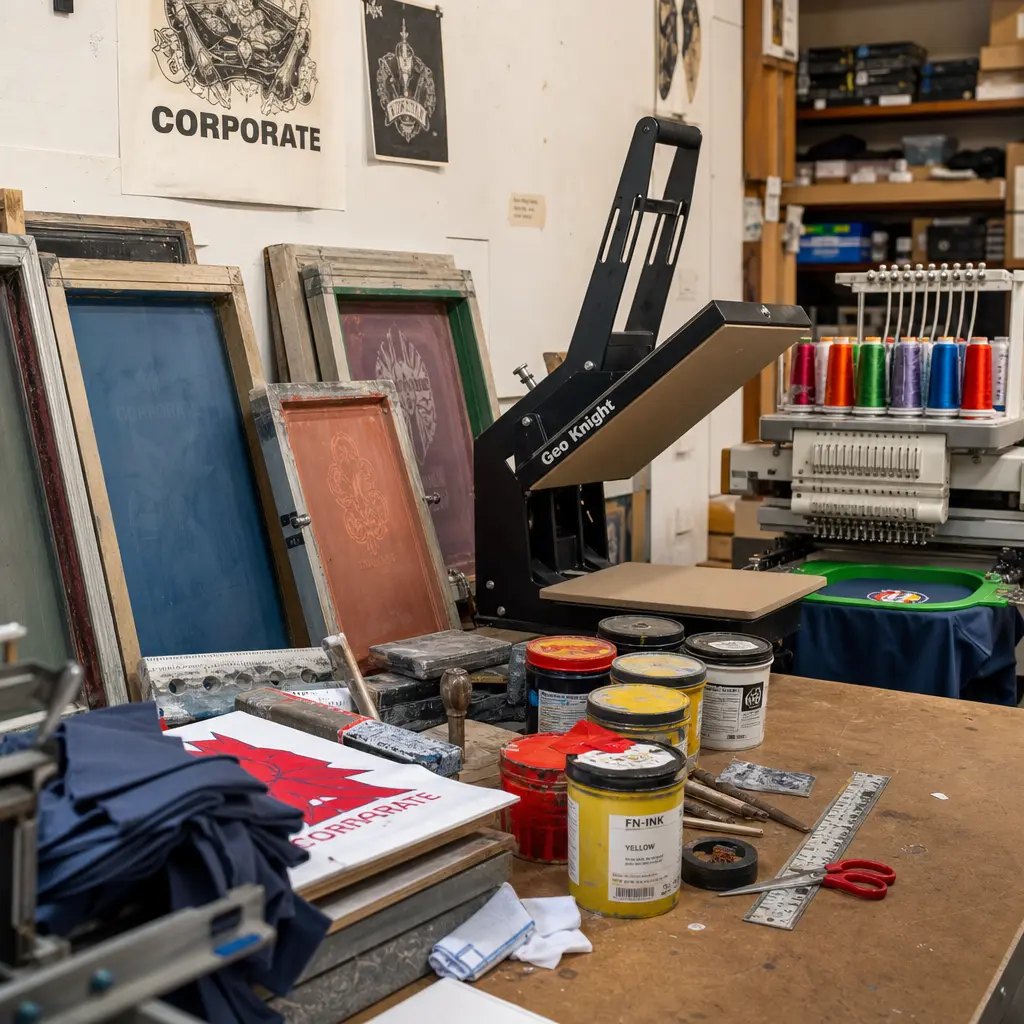
Digital mockups make every logo look crisp. Production fabric is less forgiving. On organic cotton canvas, the weave texture can soften fine type, small sponsor marks, tight registration, and thin lines. For most bulk trade show totes, water-based screen printing is a practical option for one to three solid colors. It usually gives a softer handfeel than heavier plastisol-style prints and is well suited to clean logos, event marks, and simple sponsor panels.
Complex artwork needs a more deliberate decision. Heat transfer, DTF, or digital printing may be appropriate for gradients, photos, sponsor collages, many colors, or short runs with several versions. These methods can produce detail that screen printing cannot, but they may affect handfeel, odor, surface appearance, edge durability, and washing expectations. If the tote is meant for reuse after the show, test the decoration instead of assuming the method is acceptable.
Print size and placement also change cost and defect risk. Large prints need more ink control, drying capacity, and careful handling. Artwork placed too close to seams, folds, or gussets may distort. Small sponsor text may fail even when the file is technically correct. Freeze artwork before screens or transfers are made because late sponsor edits can add setup charges and cost the production schedule several days.
- Use water-based screen print for simple logos, solid colors, and repeatable bulk programs.
- Use heat transfer, DTF, or digital print only when artwork complexity justifies the added checks.
- Set Pantone references, print size, print position, and placement tolerance in the artwork file.
- Require a strike-off on production fabric before approving mass printing.
- Check dry rub, light wet rub, cracking, edge lift, odor, and smudging before shipment release.
- Avoid very small sponsor text on heavy canvas unless the physical strike-off proves readability.
Verify Organic Claims Before Artwork Approval
Organic cotton is not just a product description; it is a claim that has to be supported. Some suppliers can provide evidence related to organic fiber or yarn. Others can document certified fabric input. Some programs may support finished-product chain-of-custody claims under recognized standards. These are not the same thing, and they can carry different costs, lead times, wording limits, and authorization rules.
The early question is simple: what will the brand say in public? If the tote, hangtag, event page, sponsor deck, or retail listing says made with organic cotton, the order file should contain documentation that supports that exact wording. If a certification logo is requested, confirm scope, licensing, and permission before artwork approval. A logo on an old supplier sample does not automatically mean it can be printed on this order.
Documentation should be checked before deposit when the organic claim is central to the purchase decision. Depending on the program, the package may include supplier certificates, transaction documents where applicable, material invoices, fabric lot references, order-linked declarations, or finished-product certification support. The goal is traceability: the buyer should be able to connect the claim, supplier, material, quantity, production order, and shipped goods without relying on a loose email that says organic is available.
- Define whether the claim is organic fiber content, certified material input, certified fabric, or certified finished product.
- Request documents before sample approval if the claim will appear in public marketing or on the bag.
- Match supplier name, material description, validity dates, quantity, and order reference wherever possible.
- Do not print certification logos unless scope and authorization are confirmed for this product and order.
- Keep the organic document package with the PO, approved artwork, sealed sample, and inspection report.
- Have legal or compliance review public sustainability wording before mass printing.
Approve Samples That Represent Production
A polished sample can still be misleading if it was made from substitute fabric, a different print method, or hand-finished construction that will not be used in bulk. For trade show totes, the approved sample should represent the production route: same fabric weight, same weave, same color, same handle construction, same thread, same reinforcement, same print method, and the same folding or packing if presentation matters.
A practical approval sequence reduces surprises. First approve fabric swatches or lab dips. Then approve artwork size and placement. Next approve the strike-off or pre-production sample. Finally, seal the approved sample and sign the specification sheet so the supplier, buyer, and inspector work from the same reference. Photo approval can help with speed, but it should not replace physical approval when handfeel, print shade, and handle strength are important.
Measure the sample instead of judging by eye. Record body width, body height, gusset, handle width, handle drop, print size, and print placement. Check the fabric weight against the quoted GSM or oz. Rub the print with a dry white cloth and then a lightly damp cloth to catch early crocking or adhesion problems. For repeat orders, compare with the previous approved sample, but still re-check fabric lot and print color because natural cotton and water-based inks can vary.
- Approve production fabric or a production-equivalent swatch before mass cutting.
- Measure the sample flat and record actual dimensions beside the allowed tolerance.
- Check handle reinforcement pattern, stitch density, thread color, and loose thread control.
- Approve a physical print strike-off for color, coverage, edge sharpness, and handfeel.
- Seal and label the final approved sample with PO number, item code, date, and buyer approval.
- Require a new sample if fabric weight, print method, handle construction, or packing method changes.
Plan Cartons, Freight, and Event Receiving Early
Packing is not a footnote. It affects cost, cleanliness, carton count, freight, warehouse labor, and the speed of event distribution. Bulk packing is usually the lowest-cost route for exhibitor totes, often 50 pieces per carton for heavier canvas or 100 pieces for lighter totes. Inner bundles of 10, 25, or 50 can make counting faster for registration teams, 3PL kitting lines, or booth staff without adding the waste and labor of individual polybags.
Carton weight and CBM need attention before the order is approved. Heavy 12 oz totes packed 100 per carton may be awkward to move and could create receiving problems. Oversized cartons can crush, split, or be refused by a warehouse with strict handling rules. Ask for carton dimensions, gross weight, net weight, and total CBM at the quote stage. With those numbers, procurement can compare freight, palletization, storage, and domestic delivery instead of discovering the real logistics cost after production.
Trade show delivery has narrow windows. Convention centers, decorators, advance warehouses, and third-party logistics providers may require special labels, appointment rules, pallet standards, routing instructions, or receiving deadlines. These instructions belong in the production file before packing starts. Re-labeling hundreds of cartons after export wastes time, adds cost, and increases the chance that the wrong cartons arrive at the wrong dock.
- Use 50 pieces per carton for heavy canvas or when manual handling limits matter.
- Use 100 pieces per carton for lighter totes only if gross weight remains practical.
- Add inner bundles when staff need quick counting, kitting, or booth allocation.
- Avoid individual polybags unless cleanliness, retail presentation, or kitting workflow requires them.
- Confirm carton marks, routing labels, pallet needs, and destination rules before cartons are printed.
- Add receiving buffer days for customs clearance, domestic trucking, warehouse check-in, and show-site delays.
Set Lead-Time Gates and QC Rules in the PO
A quote that says 25 days usually means 25 days after final artwork approval, sample approval, deposit, material confirmation, and production slot allocation. That distinction matters because the show date will not move. Build the schedule backward from the required receiving date, not the opening morning of the event. Include RFQ clarification, sample making, sample courier time, buyer review, production, final inspection, export handling, freight, customs, domestic delivery, and warehouse receiving.
Peak exhibition seasons can tighten sewing and printing capacity. Custom dyed organic cotton, unusual GSM, multiple sponsor artworks, documentation review, and late design edits all add time. Air freight may rescue a late order, but it can erase the savings gained from bulk pricing. The cleaner approach is to freeze the specification early and treat artwork approval as a production gate, not a casual checkpoint.
Quality rules should be written into the PO before production begins. Define critical, major, and minor defects. Wrong fabric, unauthorized non-organic substitution, incorrect artwork, weak handles, oil stains, mold odor, damp cartons, severe print defects, and wrong carton labels should block shipment. Loose threads that can be trimmed may be minor if the quantity is limited. Many buyers use final random inspection with an agreed AQL level, but the exact plan should match order size, customer risk, and event deadline. The point is to catch problems while repair or replacement is still possible.
- Count production lead time from final approval, not from the first inquiry or verbal quote.
- Reserve inspection time before shipment booking and final payment release.
- Define dimensional, print, stitching, cleanliness, packing, carton-count, and labeling criteria.
- Classify wrong material, weak handles, stains, odor, and incorrect logo as major or critical defects.
- Require re-inspection after rework instead of accepting repaired goods by photo only.
- Keep the signed spec sheet, sealed sample, inspection report, carton list, and organic documents together for receiving.
Specification comparison for buyers
| Spec decision | Recommended option | When it fits | Buyer risk to check |
|---|---|---|---|
| Standard booth giveaway fabric | 7 oz to 8 oz organic cotton canvas, roughly 240-270 GSM depending on weave | Brochures, badge inserts, light catalogs, pens, coupons, and small samples where carton efficiency and unit cost matter | Do not approve from GSM alone; confirm finished size, seam type, handle attachment, print area, and a practical load test |
| Premium attendee kit fabric | 10 oz to 12 oz organic cotton canvas, roughly 340-410 GSM depending on weave | VIP kits, sponsor bags, paid conference merchandise, retail counters, or programs where the tote should feel reusable after the show | Higher material cost, carton weight, and CBM; verify the quote has not moved to conventional cotton, recycled cotton, or a lighter blend |
| Lowest-risk logo method | Water-based screen print for 1-3 solid colors on natural or dyed cotton | Most exhibitor logos, sponsor marks, booth giveaway panels, and simple event graphics | Require a strike-off on the actual production fabric; coarse canvas can soften edges and reduce small-text legibility |
| Complex artwork route | Heat transfer, DTF, or digital print only when gradients, photos, small runs, or many logo colors are required | Sponsor collages, regional artwork versions, short runs, or event graphics that cannot be separated cleanly for screens | Check handfeel, edge lift, wash expectations, PVC or phthalate restrictions, odor, and dry or wet rub resistance before approval |
| Handle construction | Self-fabric or cotton webbing handles with box-X, cross-stitch, or bar-tack reinforcement at stress points | Most trade show tote programs, especially when attendees carry catalogs, bottles, samples, or registration kits across the hall | Weak thread, low stitch density, narrow reinforcement, or uneven handle length can fail even when the body fabric is acceptable |
| Finished dimensions | Quote a fixed finished size such as 38 x 42 cm, 40 x 38 x 10 cm gusseted, or buyer-specified dimensions | Allows equal supplier comparison and prevents hidden fabric savings through smaller panels or shallow gussets | Confirm whether tolerance is measured flat before or after pressing; common tolerance is +/-0.5 cm to +/-1 cm for simple totes |
| MOQ and price ladder | Ask for 1,000, 2,500, 5,000, and 10,000 pieces using the same approved specification | Shows how fabric purchase, cutting, print setup, and packing labor improve with scale | Reject quote ladders that change GSM, print area, packing, delivery term, artwork version count, or organic documentation between quantities |
| Packing plan | Bulk pack 50 pieces per carton for heavy canvas or 100 pieces for lighter totes, with inner bundles if counting speed matters | Convention centers, 3PL kitting, distributor warehouses, and direct-to-show shipments where low waste and fast counting matter | Request carton dimensions, gross weight, net weight, and CBM before PO approval; carton weight can become a handling and freight problem |
| Organic documentation | Define whether the claim is organic fiber, organic fabric, certified material input, or finished-product chain-of-custody claim | Needed when the tote, event page, sponsor copy, hangtag, or retail listing will mention organic cotton | Do not print certification marks or strong sustainability claims unless scope, authorization, and transaction documents support the wording |
Buyer checklist before sampling
- Define the tote's job: light booth giveaway, attendee kit, sponsor premium, staff bag, retail merchandise, or post-event reuse item.
- Lock the finished size, gusset, handle drop, handle width, fabric construction, oz, GSM, color, print method, print size, and print colors before comparing prices.
- State the organic claim you plan to make and request documentation that supports that exact claim before deposit or sample approval.
- Quote at 1,000, 2,500, 5,000, and 10,000 pieces using the same specification, packing method, delivery term, and artwork version count.
- Separate recurring unit price from screens, artwork separation, strike-off, sample cost, courier cost, mold or tooling charges, banking charges, inspection, and freight.
- Approve a pre-production sample or strike-off made with production fabric, production thread, production print method, and the correct handle construction.
- Measure sample size flat and record tolerance for body width, body height, gusset, handle width, handle drop, and print placement.
- Check seam strength, handle reinforcement, stitch density, loose threads, needle damage, print adhesion, crocking, shade lot consistency, and odor before mass production.
- Confirm carton quantity, carton dimensions, gross weight, net weight, CBM, pallet plan, carton marks, routing labels, and convention-center receiving rules.
- Build lead time from artwork and sample approval, not from the inquiry date; include inspection, export handling, customs, domestic delivery, and receiving buffer days.
Factory quote questions to send
- What fabric construction is quoted: canvas, twill, plain weave, or drill, and what are the exact oz and GSM targets with tolerance?
- Is the cotton organic at fiber, yarn, fabric, or finished-product level, and what documents can be supplied for this order and this supplier name?
- Is the fabric natural, bleached, piece dyed, yarn dyed, or custom dyed, and what color tolerance or lab dip process applies?
- What is the exact finished bag size, gusset size if any, handle width, handle length, handle drop, seam allowance, and dimensional tolerance?
- What thread type, stitch density, and handle reinforcement pattern are included in the price?
- Which print method is quoted, how many colors are included, what ink or transfer type is used, and what is the maximum print area?
- Are Pantone matching, artwork separation, screen setup, strike-off, pre-production sample, courier, banking, inspection, and freight charges included or separate?
- What price breaks are available at 1,000, 2,500, 5,000, and 10,000 pieces with no changes to fabric, size, print, packing, documentation, or delivery term?
- What is the sample lead time, production lead time after approval, and latest inspection date that still protects the event delivery deadline?
- How many pieces are packed per carton, what are the carton dimensions, gross weight, net weight, and total CBM for each quoted quantity?
Quality-control points to confirm
- Fabric weight should be checked by GSM test, cutting-weight calculation, or mill certificate cross-check against the approved specification and agreed tolerance.
- Finished body size should remain within the agreed tolerance, commonly +/-0.5 cm to +/-1 cm for simple flat totes and wider only if construction justifies it.
- Handle drop, handle width, and handle placement should be measured because small deviations affect shoulder comfort and visible symmetry.
- Handle attachment should use the approved reinforcement pattern, consistent stitch density, no skipped stitches, no broken thread, and no seam slippage under normal loading.
- Print position should match the approved sample within the agreed placement tolerance, commonly +/-3 mm to +/-5 mm for bulk tote production.
- Print color should be judged against Pantone references or an approved physical strike-off under consistent light, not from phone photos or mixed factory lighting.
- Ink adhesion and crocking should be checked with dry rub and light wet rub before cartons are released, especially for dark prints on natural cotton and large ink areas.
- Natural cotton shade variation should be controlled by fabric lot; obvious panel mismatch, shade bands, or mixed lots in one carton should be rejected or segregated.
- Oil marks, rust marks, needle damage, mold odor, damp cartons, insect contamination, and foreign objects should be treated as shipment-stopping issues.
- Carton labels should match PO number, item code, color, size, quantity, gross weight, net weight, destination, and routing instructions.