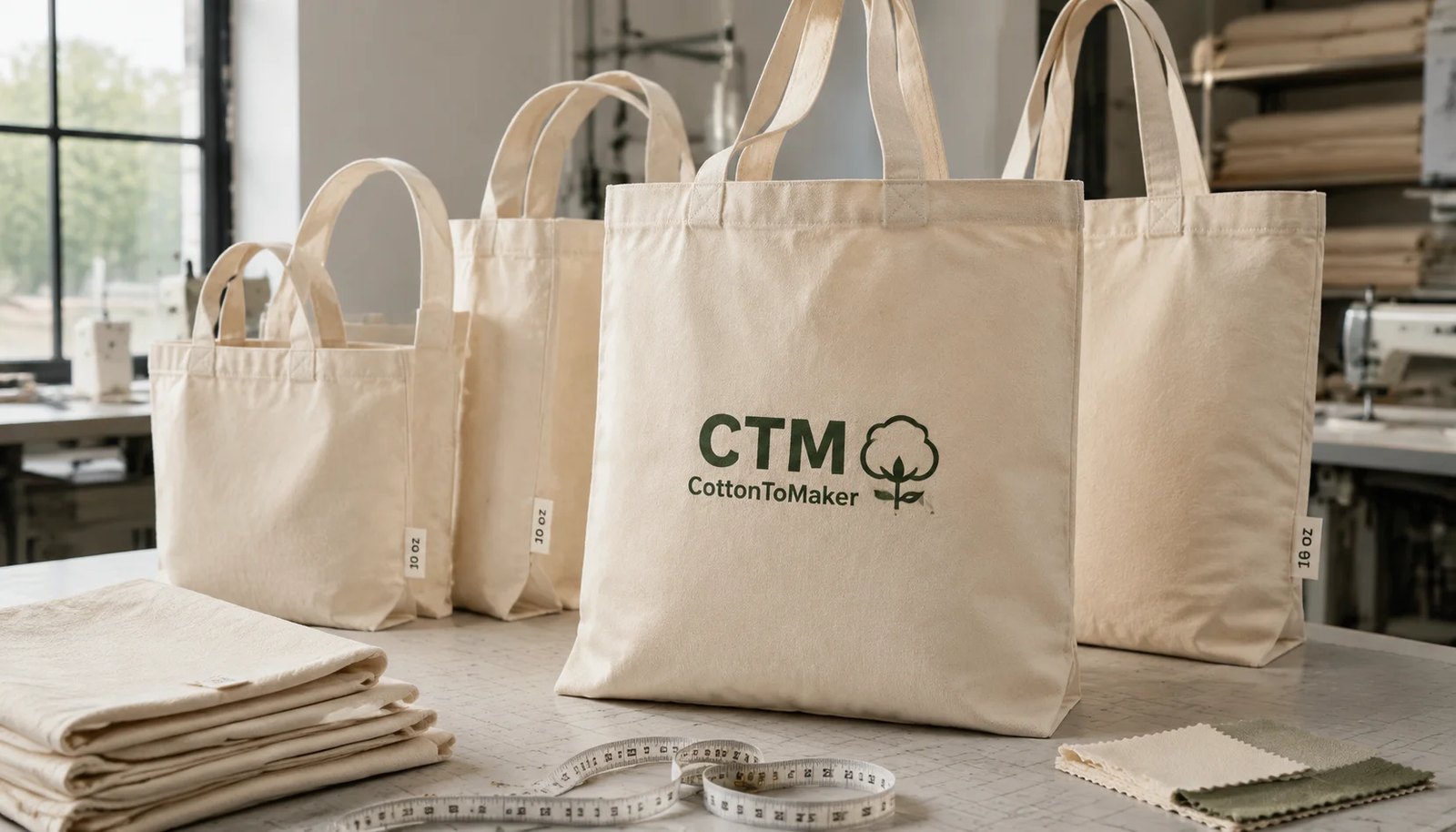
Start the pricing plan with the grocery use case, not the lowest tote quote
For natural grocers, an organic cotton tote is usually more than a simple giveaway bag. It may sit near the checkout as a paid reusable bag, support a private label launch, carry produce subscriptions, or replace a plastic bag program. Each use changes the correct fabric weight, handle length, print method, packing method, and acceptable unit cost. A bulk pricing plan should therefore begin with the shopping load and retail presentation, not with a generic request for cotton totes.
The common buying mistake is comparing three supplier quotes that do not describe the same bag. One factory quotes 8 oz cotton sheeting, another quotes 12 oz canvas, and a third includes individual retail packing and certification paperwork. The spreadsheet shows a large price gap, but the buyer is not comparing equal specifications. For an importer or retail buyer, the first job is to lock the specification so that volume discounts are visible without hiding quality changes.
- Paid retail tote: use stronger fabric, cleaner print, better folding, and stricter appearance inspection.
- Giveaway or event tote: fabric can be lighter, but logo legibility and delivery date become more important.
- Checkout replacement tote: handle strength, carton packing, and repeat reorder consistency matter more than decorative trims.
- Private label grocery tote: organic claim evidence, barcode placement, hangtag options, and store shelf presentation must be included in the RFQ.
Fabric weight and construction are the biggest visible cost drivers
Organic cotton totes for grocery use commonly sit between 8 oz and 12 oz, with heavier styles sometimes moving to 14 oz for premium retail. In metric terms, many grocery buyers work around 270 GSM for lighter totes, 340 GSM for solid mid-weight canvas, and 400 GSM or above for a firmer paid tote. The difference is not only material cost. Heavier fabric affects cutting, sewing speed, carton weight, freight volume, and the way the bag stands or folds at retail.
A natural grocer should be careful with the word “organic” in the RFQ. Organic cotton can refer to the fiber, the yarn, the fabric, or a certified finished product supply chain. The quote should explain what level of evidence is available. If the brand will print an organic material claim on the bag, hangtag, website, or shelf signage, the compliance team must review the documentation before production. A lower-priced bag with unclear material evidence can become unsellable if the claim cannot be supported.
- 8 oz / about 270 GSM: suitable for lightweight promotions, not ideal for repeated heavy grocery loads.
- 10 oz / about 340 GSM: balanced option for natural grocery programs that need a durable feel without premium cost.
- 12 oz / about 400 GSM: stronger paid retail tote, better structure, higher material and shipping cost.
- 14 oz and above: premium reusable bag, but verify needle size, seam bulk, folding method, and carton weight.
- Natural unbleached fabric: good fit for organic positioning, but expect cotton seed specks and slight shade variation unless limits are defined.
MOQ logic: price tiers should test scale, not change the product
A useful bulk pricing plan normally includes several volume breaks for the exact same specification. For example, the buyer may request 1,000, 3,000, 5,000, and 10,000 pieces using the same fabric, same dimensions, same handle, same print, and same packing. This structure shows whether the factory’s main savings come from fabric purchasing, cutting efficiency, print setup, or carton handling. It also prevents a supplier from quietly reducing fabric weight at the lower or higher tier.
MOQ depends on the bottleneck. Natural color organic cotton fabric may have a lower MOQ if the mill or factory holds regular stock. Custom dyed fabric can push MOQ higher because dye lots and lab dips must be controlled. Printing MOQ is usually affected by screen setup and color count. Packing MOQ changes when the buyer needs store-level assortments, barcode labels, retail belly bands, or multiple artworks in one shipment. Each MOQ reason should be visible in the quote.
- Request one table showing unit price at each quantity using identical specifications.
- Separate fabric MOQ, print MOQ, and packing MOQ when the supplier explains a minimum.
- For annual programs, ask for a production lot price and a call-off plan instead of one large shipment if storage is expensive.
- Avoid approving a price tier where the supplier changes from canvas to sheeting or reduces handle width without showing it.
- If artwork differs by store group, count how many screens and setup changes are required before assuming one bulk price.
Print method selection affects both price and brand fit
Most organic cotton grocery totes use screen printing because it is reliable, cost-effective at bulk quantities, and works well for clean logos. Water-based ink is usually a better match for natural grocery positioning than a heavy plastic-feeling print. It gives a softer hand, especially on unbleached cotton, but the factory must control ink penetration and drying. Light ink on natural cotton needs a strike-off because the background color can reduce contrast.
Digital print or pigment print can be useful for complex artwork, gradients, or small mixed designs, but it should not be selected only because it sounds modern. It may increase unit cost, slow production, and require different color approval standards. Embroidery is less common for grocery totes because it adds cost and can distort lighter fabric, though it may work for premium staff bags or small side labels. The RFQ should identify print size, placement, color count, ink type, and acceptable color tolerance.
- One-color screen print: lowest setup complexity, suitable for many grocery logos and sustainability messages.
- Two- to three-color screen print: still practical, but registration tolerance must be discussed for fine lettering.
- Large solid print areas: require ink hand-feel approval and rub testing to avoid tacky or cracked results.
- Fine organic certification marks or small text: need minimum line width and artwork proof review before screen making.
- Print placement: define distance from top seam and side edges, not simply “center front.”
Compare supplier options by total sourcing risk, not only unit price
Natural grocers and distributors usually have three practical sourcing routes: direct factory, trading company, or domestic distributor with available stock or semi-custom production. A direct factory can be the best route for stable seasonal or annual programs because the buyer can control fabric, pattern, artwork, packing, and replenishment. It also requires a more complete RFQ and stronger internal approval process. If the buyer cannot provide clear specs, the factory may quote assumptions that later become cost changes.
A distributor may be useful for urgent top-up quantities, mixed SKUs, or very small replenishment orders. The tradeoff is weaker control over organic documentation, fabric consistency, and exact bag construction. A trading company can help coordinate multiple items, but the buyer should still require factory-level details such as GSM, stitching method, carton packing, and sample approval. The cheapest route is not always the lowest landed cost if rework, claim risk, delayed delivery, or unapproved material claims are included.
- Direct factory route: best for repeat orders, custom GSM, custom print, and controlled packing.
- Trading company route: useful when consolidating several bag categories, but insist on factory sample and inspection access.
- Domestic distributor route: practical for urgent replenishment, but verify whether the tote is truly organic and whether documentation supports retail claims.
- Hybrid route: develop the main program direct with the factory and keep a small emergency stock through a distributor if store launches cannot slip.
- For any route, compare carton dimensions, defect allowance, sample path, and document quality along with the unit price.
Quote data must be specific enough to build landed cost
A factory quote for organic cotton totes should provide more than FOB unit price. Procurement teams need enough data to estimate duty, freight, warehouse handling, store distribution, and retail margin. The quote should show fabric weight, finished size, handle material, print method, packing method, pieces per carton, carton size, gross weight, sample charges, screen charges, and lead time. Without carton data, the buyer cannot compare sea freight or courier cost accurately.
The unit price can also be distorted by packing choices. Bulk packing 100 pieces per carton may be efficient for store backrooms or warehouse replenishment, while individual retail packing with paper band, barcode label, and carton separation by artwork can increase labor and material cost. Natural grocers often avoid unnecessary plastic, so polybag assumptions must be controlled. If the supplier automatically quotes individual OPP bags, the price may be higher and the packaging may conflict with store policy.
- Request FOB price and, if needed, EXW and DDP examples as separate lines rather than mixed assumptions.
- Require carton measurements in centimeters and gross weight in kilograms for each packing option.
- List setup costs separately: screen, artwork adjustment, lab dip, barcode label, hangtag, and inspection support if applicable.
- Show the incoterm, port, quote validity, payment terms, and production lead time in the same quote sheet.
- For distributors, request landed unit cost with freight and handling broken out so it can be compared with factory FOB plus logistics.
Sample approval should prove fabric, sewing, and print before bulk cutting
A strong sample process reduces the most expensive tote bag disputes: wrong fabric weight, weak handles, poor print color, and unacceptable natural fabric appearance. A blank fabric swatch is useful at the quotation stage, but it does not replace a pre-production sample made with the correct canvas, actual handle, final stitching, and production print ink. For a paid retail tote, the buyer should approve a complete sample and keep it as the golden sample for inspection.
Natural cotton fabric has normal variation. Seed specks, small slubs, and shade differences can be acceptable if the brand wants a natural look. Oil stains, mildew odor, large weaving faults, and dirty handling marks are not acceptable. The sample approval should define which natural characteristics are acceptable and which are defects. This prevents a final inspection argument where the factory says the marks are normal and the buyer says the goods cannot go to store.
- Approve fabric weight by measured GSM or ounce weight, not by photo.
- Record finished size, handle drop, gusset depth, and seam construction on the approved sample sheet.
- Keep one approved sample at the factory, one with the buyer, and one with any third-party inspector for important orders.
- Use a print strike-off for logo color, edge sharpness, ink hand feel, and wash or rub behavior.
- Do not approve bulk cutting until fabric lot, artwork, packing, and carton marking are all confirmed.
QC thresholds need numbers, not general quality language
“Good quality” does not help an inspector decide whether to accept or reject a carton. For organic cotton totes, measurable QC points should include finished dimensions, fabric weight, handle attachment, stitch density, print placement, print color, stains, odor, and packing accuracy. Dimension tolerance is often set around plus or minus 1 cm for simple totes, though the buyer can tighten or loosen this depending on the style. Handle length should be controlled because it directly affects user comfort.
Stitching matters more for grocery loads than for a document tote. Reinforced X-stitch, bar tack, or other agreed reinforcement should be visible at the handle connection. Loose threads should be trimmed, but a buyer should define the acceptable length and frequency. Print defects should be judged by distance and severity: smudges, missing ink, wrong color, skewed placement, and ink transfer are different problems. The inspection checklist should separate critical, major, and minor defects so the factory understands the risk before shipping.
- Fabric weight: verify against approved GSM range using a measured cut sample method.
- Finished size: measure width, height, gusset, and handle drop against the approved drawing.
- Handle strength: inspect reinforcement and perform a practical load check aligned with intended grocery use.
- Stitch quality: no skipped seams, open seams, broken thread, or untrimmed thread beyond agreed tolerance.
- Print placement: measure from top seam and side seam, with skew tolerance defined in millimeters or centimeters.
- Appearance: no oil stains, mildew smell, severe creases, dirty hand marks, or foreign fibers visible at retail distance.
Packing decisions change cost, freight, and store handling
Packing is often treated as an afterthought, but for natural grocers it can change both cost and operational efficiency. Bulk folded totes in export cartons are usually the most efficient option for warehouse distribution or checkout counter bins. Retail-ready packing may include a paper belly band, hangtag, barcode label, or shelf-ready inner carton. These details add labor and material cost, but they may reduce store labor if the bags are sold individually.
Carton quantity should be selected based on bag weight, carton handling, and store receiving practice. Very heavy cartons may reduce carton count but increase damage risk and worker handling complaints. Light cartons are easier to handle but may increase freight volume and warehouse touches. If the buyer ships to multiple distribution centers, carton marks and packing lists must match the routing plan. For store-level allocation, mixed cartons should be avoided unless the warehouse system can receive them correctly.
- Bulk pack: lowest material use, best for backroom or checkout bin replenishment.
- Paper band or belly band: useful for retail sale without adding plastic, but it needs print and barcode approval.
- Individual polybag: protects clean appearance, but conflicts with many low-plastic store standards and adds disposal burden.
- Carton marks: include PO number, SKU, artwork code, quantity, color, gross weight, and destination if required.
- Palletization: useful for domestic distribution, but confirm pallet height, carton strength, and whether fumigation documentation is needed for wooden pallets.
Lead time risk usually sits in fabric booking, artwork approval, and holiday capacity
Organic cotton tote lead time is not only sewing time. Fabric availability, dyeing if needed, print screen preparation, sample approval, and packing material production can all affect the schedule. Natural unbleached fabric may be faster if the factory carries stock, while custom dyed organic cotton can extend the timeline because lab dips and bulk shade approval are required. If the launch date is fixed, the RFQ should identify the required ship date and the last acceptable delivery date.
Seasonal retail windows create extra risk. Grocery campaigns tied to Earth Month, store openings, harvest promotions, or holiday gift bundles often have no room for late delivery. The buyer should approve artwork quickly, avoid changing bag dimensions after sampling, and place fabric booking early. A factory can sometimes rush printing or sewing, but it cannot always rush certified fabric availability or ocean freight schedules. A realistic schedule is part of the pricing plan because air freight on bulky cotton totes can erase the savings from offshore production.
- Typical sequence: RFQ clarification, fabric swatch, artwork proof, strike-off, pre-production sample, deposit, fabric booking, bulk production, inspection, shipment.
- Main delay triggers: unclear organic documentation requirement, late artwork files, revised dimensions, custom dyed fabric, and unapproved packing materials.
- For fixed launches, build a decision calendar with dates for sample approval, deposit, bulk start, inspection, vessel booking, and warehouse receipt.
- If replenishment is expected, discuss fabric reservation or repeat-order MOQ before the first shipment leaves.
- Do not base launch planning on the fastest verbal estimate; use the lead time written in the signed quote or proforma invoice.
Specification comparison for buyers
| Spec decision | Recommended option | When it fits | Buyer risk to check |
|---|---|---|---|
| Fabric weight for grocery use | 10 oz to 12 oz organic cotton canvas, roughly 340 to 400 GSM | Reusable grocery program, paid retail tote, produce and dry goods carry | Quotes using 6 oz or 8 oz may look cheaper but can sag, twist, or feel too promotional for grocery buyers |
| Construction style | Boxed bottom with side gusset or flat tote with reinforced cross-stitch handles | Boxed bottom fits jars, cartons, and packaged foods; flat tote fits lower-cost checkout display | Suppliers may quote flat construction while buyer assumes a grocery base; drawings must show gusset depth |
| Handle size | 60 to 70 cm shoulder handles in same organic cotton webbing or self-fabric | Natural grocers where customers carry heavier baskets from store to car | Short handles reduce fabric cost but increase complaints when the bag cannot go over a coat or shoulder |
| Printing method | Water-based screen print for 1 to 3 solid colors; pigment digital print only for complex artwork | Clean organic positioning, durable branding, larger logo coverage | Low-cost plastisol-like ink can feel heavy and conflict with natural product positioning |
| MOQ planning | Quote 1,000, 3,000, and 5,000 pieces with same spec and packing | Allows the buyer to see real scale benefit without changing the bag | A lower unit price may be caused by weaker fabric, fewer stitches, or thinner packing rather than order volume |
| Certification evidence | Organic fabric transaction certificate or supplier declaration aligned to the buyer’s compliance requirement | Retail programs making organic material claims on hangtags, websites, or shelf signage | A finished tote is not automatically certified just because the mill sells organic cotton fabric |
| Packing format | Individual fold only if needed for retail; otherwise bulk pack by color and artwork | Bulk store replenishment, warehouse distribution, or checkout counter bins | Individual polybags add cost and may conflict with low-plastic store policy |
| Sampling route | Pre-production sample using production fabric, actual handle, and final print ink | Any branded retail tote or repeated seasonal reorder | Approval on a substitute fabric sample causes shade, shrinkage, and hand-feel disputes later |
| Sourcing route | Direct factory quote for stable repeat orders; distributor route for small mixed replenishment | Direct factory fits planned launches; distributor fits emergency or multi-SKU small drops | Distributor stock may not match organic claim, exact GSM, or store-specific packing requirements |
Buyer checklist before sampling
- Define the selling or giveaway purpose first: paid retail tote, loyalty gift, checkout replacement bag, or staff use.
- State the required fabric clearly: organic cotton, woven canvas or sheeting, target ounce weight and GSM tolerance.
- Specify finished dimensions including width, height, gusset, handle length, and acceptable finished tolerance.
- Separate print specifications by location, size, color count, ink type, and artwork file format.
- Request tiered pricing at the same specification for 1,000, 3,000, 5,000, and any annual call-off volume.
- Identify packing rules: bulk pack, retail band, individual paper sleeve, carton quantity, carton mark, and pallet requirement.
- Define the approval sample path: blank fabric swatch, strike-off, pre-production sample, and retained golden sample.
- List required compliance documents before quotation, not after production starts.
- Require quote validity, lead time from deposit and artwork approval, and separate tooling or screen charges.
- Set inspection thresholds for dimensions, stitch strength, print position, stains, odor, and mixed cartons.
Factory quote questions to send
- What is the exact fabric construction, ounce weight, GSM range, and expected shrinkage after normal finishing?
- Is the quoted fabric organic cotton from yarn, fabric, or finished goods level, and what evidence can be provided?
- Are handles made from the same organic cotton material, cotton webbing, or another blend?
- What is the MOQ for natural color only, dyed color, and custom PMS-dyed fabric?
- Are printing charges included in the unit price, or quoted separately by screen, color, and position?
- What ink system is used for the logo, and is a wash or rub test available on the printed sample?
- What finished size tolerance do you use for tote bags after sewing and pressing?
- How many pieces per export carton, what is the carton size, and what is the estimated gross weight?
- Can the factory pack by store, by distributor SKU, or by mixed artwork if a carton-level packing list is provided?
- What lead time applies after sample approval, and what materials must be booked before the order is considered firm?
Quality-control points to confirm
- Fabric weight should be verified by cutting and weighing a measured fabric piece, not judged only by hand feel.
- Finished tote dimensions should be measured flat, including gusset depth if specified, with a clear tolerance such as plus or minus 1 cm.
- Handle attachment should use reinforced X-stitch or bar tack, with no loose thread ends longer than the buyer’s accepted limit.
- Print position should be measured from top seam and side edges, not approved visually carton by carton.
- Printed ink should pass a basic dry rub and tape pull check before bulk packing.
- Natural cotton fabric must be screened for dark seed specks, weaving slubs, oil stains, mildew odor, and inconsistent bleaching.
- Cartons should be checked for correct SKU, artwork, quantity, carton mark, and packing method before sealing.
- One approved golden sample should remain at the factory and one with the buyer or inspection company for final comparison.