Start With the Bakery Use Case, Not the Cheapest Tote
An organic cotton totes bulk pricing plan for artisan bakeries should start with the job the bag has to do. A counter tote sold as paid merchandise needs a different cost target from a farmers market giveaway. A holiday hamper carrier may need a gusset, stronger handle reinforcement, and a cleaner retail fold. A distributor resale SKU may need barcode labels, carton sequence marks, and inspection records. Those details shape the specification before unit price means anything.
The fastest way to get misleading quotes is to compare bags that only look similar. One supplier may price an 8 oz natural canvas flat tote with short handles and loose bulk packing. Another may include 10 oz organic cotton canvas, long shoulder handles, reinforced stitching, screen setup, counted inner bundles, carton marks, and certificate support. The second quote may look expensive at first glance, yet it may be the only offer that matches the bakery’s retail plan.
For B2B procurement, the goal is not a lucky one-time price. It is a repeatable cost model that can survive reorders, seasonal artwork, and multi-store allocation. Fabric weight, dimensions, handle construction, print method, documentation, inspection, carton volume, and delivery timing all affect margin. Once a tote becomes a core bakery SKU, even a small change in GSM, handle drop, or packing count can change freight cost, display quality, and customer satisfaction.
- Define one primary use: paid retail tote, gift hamper carrier, loyalty reward, farmers market promotion, or distributor resale SKU.
- Lock the baseline specification before collecting quotes so suppliers price the same bag, not similar-looking bags.
- Separate the base tote price from optional surcharges for gusset, extra print color, labels, polybags, barcodes, and store allocation.
- Use landed cost, not only FOB unit price, when carton volume, inspection, documents, freight, or warehouse handling are material.
- Treat repeatability as a buying requirement if the bakery expects seasonal reorders or multiple store launches.
Set a Measurable Base Specification
A practical base specification for bakery merchandise is a natural organic cotton canvas tote around 38 x 42 cm, with 60-65 cm handles and reinforced stitching. That size can handle a sourdough loaf, pastry box, coffee pack, preserve jar, or small retail bundle without feeling oversized. A flat tote is usually efficient to cut, sew, fold, and pack. For hampers or heavier gift sets, an 8-10 cm gusset improves usable volume, but it also increases fabric consumption, sewing operations, and carton space.
Fabric weight should follow the sales purpose. A 7-8 oz canvas can work for light promotions, bread-only purchases, or event giveaways. A 10 oz canvas, roughly 340 gsm depending on mill conversion, is often the safer choice for paid retail totes because it feels more substantial and supports mixed bakery items better. A 12 oz canvas can work for premium gift sets, but buyers should review thick-seam sewing quality and freight impact before signing off.
Construction details need numbers, not adjectives. Instead of asking for “strong handles,” specify handle width, handle length, usable drop, reinforcement pattern, seam allowance, and top hem construction. If the bag includes a woven side label, care label, hangtag, or barcode sticker, include its size and placement. Print position also needs measurement from the top and side edges; a logo placed too close to the hem can look uneven if sewing varies slightly.
- Promotional tote: 7-8 oz canvas, flat body, one-color print, simple counted bundle packing, basic carton mark.
- Core retail tote: 10 oz canvas, reinforced shoulder handles, medium front print, clean hem, repeatable production specification.
- Premium hamper tote: 12 oz canvas, boxed bottom, stronger seam reinforcement, lower carton count, higher freight allowance.
- Common body size: about 38 x 42 cm, adjusted after testing the bakery’s actual bread box, pastry box, or gift insert.
- Core handle spec: 2.5-3.0 cm width and 60-65 cm length, with usable drop confirmed on the pre-production sample.
- Quote by written spec sheet, not photo reference alone. Photos help style review but do not control tolerances.
Match Organic Claims to Documents
The organic claim is a sourcing and compliance decision, not a decorative phrase. A supplier may have organic cotton yarn, certified fabric, certified processing, or finished-goods certification. These scopes are not interchangeable. If the bakery wants to say the tote is made with organic cotton, a material document trail may be enough for the intended sales channel. If the hangtag, product page, or retailer listing implies a certified finished bag, the chain-of-custody requirement may be stricter.
Before sending the RFQ, procurement, marketing, and compliance should agree on the exact wording that will appear on labels, product pages, invoices, cartons, and distributor submissions. “Organic cotton tote,” “certified organic cotton fabric,” and “certified finished organic cotton bag” can trigger different evidence requirements. If printing, sewing, labeling, or trading sits outside the scope needed for the claim, the wording may need to be narrowed.
Review documentation before sample approval, not after production starts. Ask for the certificate scope, certificate holder name, expiry date, covered processes, and whether transaction documentation can be issued when required. If the order will move through wholesale distributors or marketplaces, confirm their document rules early. A tote that is physically correct can still create launch delays if the paperwork does not support the selling claim.
- Define the claim level first: organic cotton material, certified organic fabric, or certified finished bag.
- Request certificate scope, holder name, expiry date, covered process, and whether transaction documentation can be issued.
- Check whether dyeing, printing, washing, sewing, labeling, and trading are covered when the claim requires chain-of-custody control.
- Do not approve hangtags, woven labels, product pages, or carton claims until wording matches available documents.
- Store certificate copies and transaction documents with the purchase order so repeat orders do not restart the review.
Build the Bulk Pricing Ladder Correctly
MOQ usually reflects fabric purchasing, cutting efficiency, print setup, labor planning, certification administration, and packing control. A factory may accept 500 pieces if natural organic cotton canvas is already available and the artwork is a simple one-color print. The same factory may ask for more if the order needs dyed fabric, custom GSM, several location logos, or lot-specific certification paperwork. Ask what drives the MOQ instead of treating it as a fixed rule.
A useful bulk pricing plan asks for 500, 1,000, 2,000, 5,000, and 10,000 pieces using the same size, fabric color, print design, print size, and packing method. This shows where the real savings appear. Some savings come from spreading screen setup over more units. Some come from fabric buying and cutting efficiency. At higher volumes, savings can flatten because fabric and labor dominate the cost. The ladder helps bakery buyers decide whether to buy for one campaign or consolidate an annual program.
Artwork splits need their own cost line. Ten bakery branches may want the same tote body with different neighborhood names, but the factory may treat those as separate print lots. Each version can need its own screen, strike-off, sorting process, carton mark, and warehouse allocation. Ask for one master design price first, then a surcharge table for two, five, or ten artwork versions.
- Quote one design first so the baseline price is not distorted by seasonal or store-specific artwork.
- Separate MOQ per fabric color from MOQ per print design because each can trigger a different setup rule.
- Ask whether split designs share the same fabric booking, cutting batch, sewing line, and inspection lot.
- Use annual forecast volume for negotiation, but issue purchase orders by confirmed SKU, artwork, and ship date.
- Request a surcharge table for extra screens, extra strike-offs, special labels, barcodes, and smaller packed lots.
- Confirm whether approved leftover fabric can be reserved for reorders and for how long.
Control the Cost Drivers Behind Unit Price
Fabric consumption is usually the largest cost driver. It is shaped by GSM or ounce weight, body dimensions, gusset depth, handle length, shrinkage allowance, cutting efficiency, and waste. A taller flat tote with long shoulder handles can use more fabric than a smaller boxed-bottom tote, even if the two photos look equally simple. Natural undyed canvas is often the most straightforward option because dyeing adds process cost, shade approval, possible higher MOQ, and extra lead time.
Printing changes both price and risk. A one-color water-based screen print on natural canvas works well for many bakery logos. Cost rises when the print is large, multi-color, double-sided, close to seams, or built from delicate linework. Dark fabric may need higher-opacity inks, extra passes, or a different ink system. Screen charges, artwork separation, strike-offs, and rejected print panels should be visible, otherwise supplier comparisons become guesswork.
Packing and QC can also move the final number. Individual polybags, recycled polybags, paper belly bands, hangtags, barcode stickers, retail labels, store allocation cartons, and pallet rules all add labor and materials. Inspection may be internal, third-party, or buyer-arranged, but the method and cost should be clear. A few cents saved by removing packing controls can disappear quickly if the warehouse receives mixed SKUs, wrong counts, or cartons that need rework.
- Fabric weight: moving from 8 oz to 10 oz raises material use, carton weight, and sometimes sewing difficulty.
- Bag shape: boxed bottoms improve capacity but add cutting, seam work, and packing volume.
- Handle design: longer, wider, or contrasting handles use more fabric and require stronger attachment control.
- Print complexity: extra colors, large coverage, small text, and tight registration increase setup and rejection risk.
- Documentation: certified supply chains may require approved sources, traceability paperwork, and longer booking time.
- Packing: polybags, paper bands, barcode labels, and store allocations should be quoted as separate line items.
Choose Print Methods for Bakery Artwork
Most artisan bakery tote artwork is built from a few familiar elements: the bakery name, a wheat icon, a sourdough illustration, a neighborhood sketch, or a seasonal phrase. Water-based screen print is often the best fit for one to three solid colors because it gives a softer hand feel on cotton canvas and works well for repeat orders. It still needs technical review. Canvas texture can close fine lines, blur tiny type, and soften distressed details.
Digital printing can help when artwork includes many colors, gradients, or illustration detail that would be inefficient to separate into screens. It may be less attractive for larger bulk orders if unit price is higher or the surface feel does not suit the natural canvas story. Heat transfer can reproduce detail sharply, but buyers should check edge appearance, hand feel, wash or rub durability, and whether the finish looks right for bakery retail merchandise.
Approval should happen on fabric, not only on a PDF proof. Natural cotton shade changes perceived ink color, and woven texture changes line sharpness. A strike-off should use the intended bulk fabric, actual print size, chosen ink system, and agreed placement. If the bakery has strict brand colors, specify a Pantone or approved physical reference, then define an acceptable tolerance because fabric absorbency rarely behaves like coated paper.
- Use water-based screen print for bold bakery logos, one to three solid colors, and repeat merchandise programs.
- Consider digital print only when artwork complexity justifies cost and the hand feel is acceptable.
- Avoid approving fine lines below about 0.5 mm, tiny store names, or distressed textures without a strike-off.
- Set print size and placement in centimeters from top edge and side edge, not only on a mockup.
- Confirm whether panels are printed before sewing or finished bags are printed after sewing because placement control can differ.
- Include dry rub and wet rub checks when totes are sold as durable merchandise or may contact light clothing.
Use Sampling as a Production Gate
A pre-production sample is the physical standard for the bulk order. It should confirm fabric weight, hand feel, finished dimensions, handle drop, seam construction, label placement, print color, print hand feel, folding method, and packed appearance. A sales sample is not enough if it uses a different canvas, handle reinforcement, or print method from the production route. The approved sample should represent the intended bulk order as closely as practical.
Bakery buyers should test the sample with real products, not empty air. Load it with a bread loaf, pastry box, coffee pack, jar, or gift insert that represents the heaviest expected use. Check whether the bottom distorts, whether the handles feel comfortable on the shoulder, and whether the logo still appears centered when the bag is filled. If the tote will be stacked or hung in a retail corner, fold it the way the factory will pack it and check whether creases cross the printed logo.
Sample approval should be documented in measurable terms. Record body size, gusset depth, handle width, handle length, handle drop, print size, and print position. Photograph handle stitching, seam finish, label location, print close-ups, fold lines, and bundle mockups when available. If a deviation is accepted, write whether it is approved for bulk or must be corrected before production.
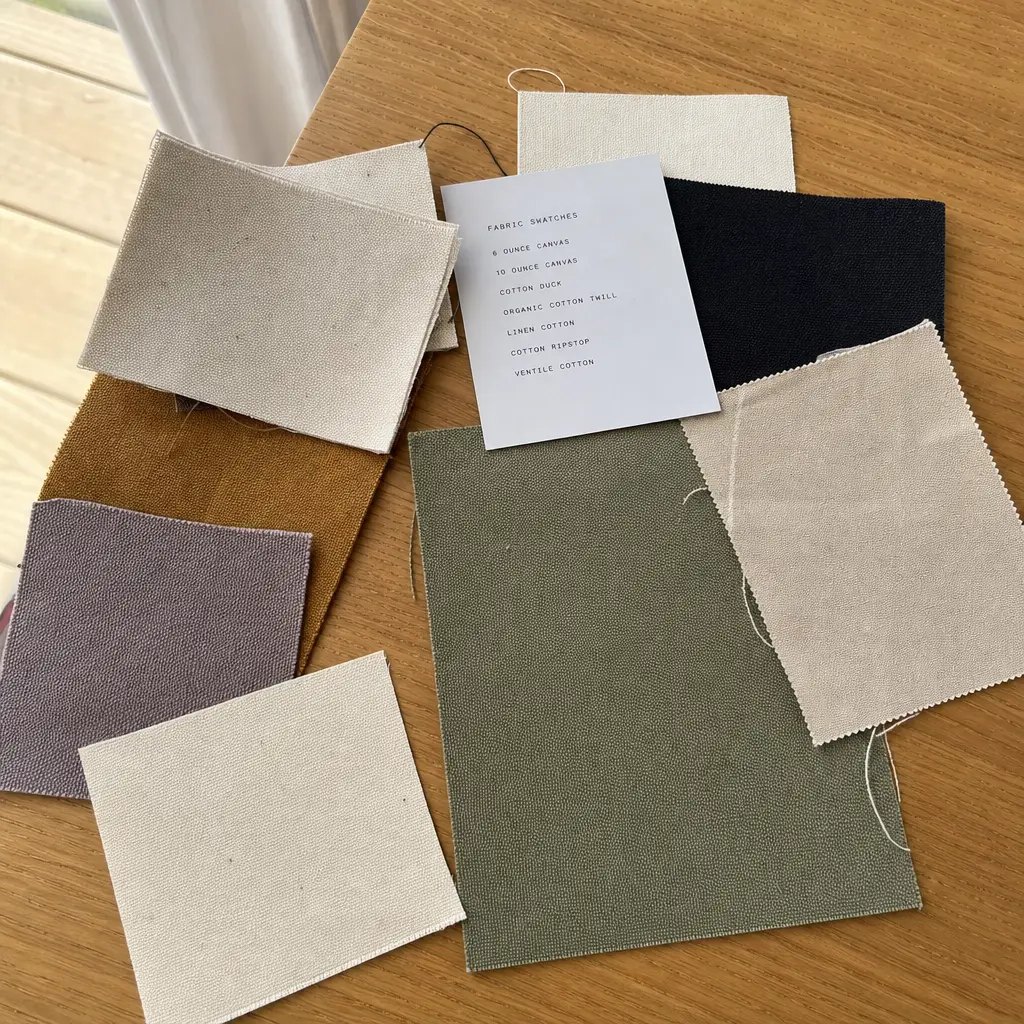
- Approve a fabric swatch or reference sample before approving the full tote sample.
- Measure body width, body height, gusset, handle width, handle length, handle drop, print size, and print placement.
- Compare print color to the strike-off or Pantone reference under consistent lighting.
- Load the sample with expected bakery goods and check comfort, seam stress, and shape retention.
- Review folded packing to ensure creases do not damage the logo or retail presentation.
- Keep one approved sample with the buyer, one with the supplier, and one available for inspection reference when possible.
Write Tolerances and AQL Into the Purchase Order
Quality expectations need numbers. For standard cotton totes, a common finished body tolerance is about +/-1 cm for width and height unless the bag must fit a retail insert or display fixture. Print placement may be held to +/-0.5 cm to +/-1 cm depending on artwork size, construction, and supplier capability. Fabric weight tolerance should be stated as a percentage or GSM range. Without written tolerances, visible variation can be treated as normal commercial variation.
AQL should be agreed before production begins. Many consumer-goods inspections use separate limits for critical, major, and minor defects, but the exact levels should match buyer risk and order value. Critical defects may include contamination, unsafe sharp objects, mold, or an unsupported material claim. Major defects may include wrong size outside tolerance, weak handle attachment, wrong print color, severe misprint, incorrect SKU packing, or stains visible at retail distance. Minor defects may include small loose threads or slight cosmetic issues inside the accepted standard.
The inspection checklist should reference the approved sample and include measurement points, defect examples, carton checks, and packing-list verification. For multi-SKU bakery campaigns, inspection should confirm that artwork versions are not mixed inside inner bundles unless the warehouse has specifically requested that format. If the lot fails, the PO should state whether the factory sorts, repairs, replaces, discounts, holds shipment, or pays for reinspection.
- Set finished body tolerance, handle tolerance, print-position tolerance, fabric-weight tolerance, and color-approval method in writing.
- Classify defects before inspection so loose threads, stains, weak handles, and print misregistration are not debated after production.
- Use the approved sample as the workmanship standard, but back it with measurable checks.
- Require carton count, inner bundle count, SKU label, barcode, carton mark, and gross-weight checks during final inspection.
- Define the remedy for failed inspection: factory sorting, repair, replacement, reinspection, discount, or shipment hold.
- Do not release final balance or shipment approval until inspection status and packing data are clear.
Plan Packing for Warehouse Receiving
Packing affects unit cost, cleanliness, carton count, freight volume, warehouse labor, and retail presentation. Many bakery brands prefer low-waste packaging, so individual polybags can clash with the product story. Completely loose packing, however, can create dust exposure, moisture risk, count errors, and messy receiving. A practical middle ground is flat packing in counted inner bundles of 25 or 50 pieces, then placing those bundles into export cartons sized to avoid hard compression.
Carton planning belongs in the RFQ. A flat 8 oz tote can pack at a higher carton count than a 10 oz boxed-bottom tote. A 12 oz tote with hangtag, belly band, or individual wrap may need fewer pieces per carton and more warehouse space. Over-compressed cartons can create sharp fold lines across the logo. Under-packed cartons increase freight volume and handling. Ask for estimated carton dimensions, gross weight, net weight, pieces per carton, and carton mark layout before issuing the PO.
Receiving rules matter when goods move through a distributor, fulfillment center, or bakery chain warehouse. Specify SKU labels, barcode type, purchase order number, carton sequence, artwork name, store allocation mark, and whether mixed cartons are allowed. For multi-location bakery artwork, prohibit mixed designs in the same inner bundle unless the receiving team has approved that process.
- Use counted inner bundles of 25 or 50 pieces to simplify receiving, cycle counting, and store allocation.
- Specify whether individual polybags, recycled polybags, paper bands, belly bands, hangtags, or no unit packaging is required.
- Request carton dimensions, gross weight, net weight, carton quantity, inner bundle count, and carton mark artwork in the quote.
- Avoid excessive compression that creates permanent creases, especially through the printed logo area.
- Require SKU labels, barcode stickers, store allocation marks, and PO labels before production if the warehouse needs them.
- Confirm moisture protection and carton strength when goods ship during wet season or store before a holiday launch.
Protect the Timeline and Reorder Program
A realistic tote schedule includes artwork confirmation, document review, material booking, strike-off, pre-production sample, approval, cutting, printing, sewing, trimming, inspection, packing, export documentation, and freight handover. Buyers often lose more time during artwork revisions and sample approval than during sewing. If the tote supports a bakery opening, holiday hamper program, market season, or wholesale launch, approval deadlines should be fixed before the purchase order is issued.
Organic cotton can add timing risk when the required fabric is not in stock or when specific documentation is needed. Natural canvas in a common weight may move quickly. Dyed organic fabric, unusual GSM, or finished-goods certification requirements can add booking and review time. A delayed strike-off can push bulk printing into a later production slot, especially before holiday merchandise peaks.
The pricing plan should include contingency choices. If the launch date is fixed, decide in advance whether partial shipment, air freight for urgent cartons, or split delivery is acceptable. If only the core tote must arrive first, prioritize that SKU and delay seasonal variants. For reorders, keep the same approved spec sheet, sample photos, artwork files, color references, and packing rules so the next PO does not restart sourcing from zero.
- Allow 7-12 days for strike-off or pre-production sample after final artwork approval, depending on supplier workload.
- Allow 25-40 days for bulk production after sample approval when fabric and capacity are available.
- Freeze artwork, print size, placement, color references, labels, and packing before cutting or printing starts.
- Build review time for organic documentation when retailer, distributor, or marketplace compliance depends on it.
- Set decision dates for sea freight, air freight, partial shipment, or split delivery if the launch date is fixed.
- Keep the core tote body unchanged for reorders whenever possible, and update only artwork or carton allocation.
Specification comparison for buyers
| Spec decision | Recommended option | When it fits | Buyer risk to check |
|---|---|---|---|
| Organic claim route | GOTS or OCS material documentation; finished-goods certification only if the final claim requires it | Bakery retail totes, loyalty bags, gift hampers, distributor resale, and marketplace listings using organic wording | Certificate scope must match the wording. A fabric certificate alone may not support a certified finished-bag claim. |
| Fabric weight | 8 oz for promotions, 10 oz for paid retail totes, 12 oz for premium hampers | 10 oz is the useful middle ground for bread, coffee packs, jars, pastry boxes, and reusable customer bags | Ask for the GSM equivalent and tolerance. Typical canvas may vary about +/-5% unless tighter control is agreed. |
| Base dimensions | Flat tote around 38 x 42 cm; optional 8-10 cm gusset; 60-65 cm handles | Fits sourdough loaves, boxed pastries, coffee bags, small gift bundles, and counter merchandise displays | Short handles reduce shoulder carry. Gussets improve capacity but add fabric, sewing time, and carton volume. |
| Handle construction | 2.5-3.0 cm wide self-fabric handles with box-X, cross-stitch, or bar tack reinforcement | Recommended for paid merchandise and bakery gift sets carrying mixed items | Require an agreed pull-load check. Weak handle attachment is one of the most visible end-use failures. |
| Print method | Water-based screen print for 1-3 solid colors; digital only when artwork complexity justifies it | Best for natural canvas bakery logos, line drawings, wheat icons, neighborhood illustrations, and seasonal slogans | Fine lines below about 0.5 mm, tiny text, and distressed textures can fill in on canvas. Approve a strike-off. |
| MOQ structure | Quote 500, 1,000, 2,000, 5,000, and 10,000 pieces per size, color, and design | Supports bakery chains, regional groups, wholesale gift programs, and first retail merchandise tests | Different store names or seasonal artworks may require separate screens, strike-offs, packing, and inspection lots. |
| Packing plan | Counted inner bundles of 25 or 50; usually 100-200 pieces per export carton depending on weight and style | Keeps receiving simple for bakery warehouses, distributors, store allocation, and retail backrooms | Over-compression causes hard creases across logos. Individual polybags add labor, plastic, volume, and disposal work. |
| Lead time | 7-12 days for strike-off or pre-production sample; 25-40 days bulk after approval when materials are available | Realistic for artwork review, fabric booking, cutting, printing, sewing, trimming, inspection, and export packing | Dyed fabric, certificate paperwork, artwork revisions, holiday capacity, and freight space can extend the schedule. |
| Inspection standard | Final random inspection using agreed AQL, dimensions, fabric weight, print, stitching, cleanliness, count, and carton checks | Important for paid retail totes, distributor programs, multi-location campaigns, and repeat bakery SKUs | If tolerances are not written into the PO, suppliers may treat crooked print, shade variation, or loose threads as commercial variation. |
Buyer checklist before sampling
- Define the exact retail claim before quoting: organic cotton material, certified organic fabric, or certified finished organic cotton bag.
- Create one locked spec sheet covering body size, gusset depth, handle length, handle width, fabric weight, seam type, print size, ink type, label placement, and packing method.
- Ask every supplier to quote the same ladder: 500, 1,000, 2,000, 5,000, and 10,000 pieces for one design, one size, one fabric color, and one packing method.
- Request separate cost lines for screen setup, artwork separation, sampling, strike-offs, certification documentation, third-party testing if required, inspection, inland freight, export cartons, barcode labels, and special packing.
- Specify fabric weight in oz and GSM, plus tolerance; for example, 10 oz canvas is approximately 340 gsm, with the agreed tolerance stated in the purchase order.
- Require a print strike-off on intended bulk fabric when artwork includes small bakery names, thin line drawings, low-contrast colors, distressed texture, halftones, or multiple colors.
- Approve the pre-production sample only after checking body dimensions, handle drop, handle pull, seam allowance, fabric hand feel, print placement, print color, folded packing, and carton mark format.
- Write tolerances into the PO: finished size, handle drop, handle width, print position, print color, fabric shade, fabric weight, stitch defects, contamination, and carton quantity variance.
- Confirm the final inspection method before production: inspection level, AQL, sample size, measurement points, approved sample reference, defect classification, and who pays for reinspection if the lot fails.
- Plan warehouse receiving before production starts: carton count, carton dimensions, gross weight, inner bundle count, SKU label, barcode format, PO number, carton sequence, and store allocation rule.
Factory quote questions to send
- Is the quoted material GOTS, OCS, or another documented organic cotton route, and what exact certificate scope supports the claim we plan to make?
- Who is the certificate holder, what is the certificate expiry date, and can transaction documentation be supplied if our retailer, distributor, or marketplace requires it?
- What fabric weight is quoted in oz and GSM, what tolerance applies, and is the weight measured before or after finishing, printing, or washing?
- Is the fabric natural, bleached, dyed, or custom colored, and what MOQ and shade tolerance apply for each fabric color?
- What is the MOQ per size, fabric color, and print design, and how do prices change at 500, 1,000, 2,000, 5,000, and 10,000 pieces?
- Which print method is included, how many colors are included, what is the maximum print area, and are screens, setup, artwork separation, or strike-offs charged separately?
- Can you make a strike-off on actual bulk fabric before the full pre-production sample, and how many revisions are included before extra charges apply?
- What handle width, handle length, stitch pattern, seam allowance, thread type, bottom construction, label placement, and trimming standard are included in the quote?
- What pull-load check do you use for handles, how long is the load held, and can the test be photographed or included in inspection criteria?
- How many pieces are packed per inner bundle and export carton, what are the carton dimensions and gross weight, and are paper bands, polybags, barcode labels, or hangtags included?
Quality-control points to confirm
- Fabric weight should be checked against the approved specification using cut panels or finished bags where practical, not only from a mill invoice or supplier statement.
- A 10 oz canvas should be cross-referenced to its GSM equivalent in the PO, and the accepted tolerance should be written clearly, commonly around +/-5% unless tighter control is agreed.
- Finished bag width and height should normally hold within +/-1 cm for a standard tote unless retail packaging or insert fit requires a tighter tolerance.
- Gusset depth, boxed-bottom shape, and corner turning should match the approved sample because small differences can affect capacity, folding, and carton volume.
- Handle width, handle length, and usable shoulder drop must match the approved sample within the written tolerance because customer comfort changes quickly when the drop is too short.
- Handle attachment should use the approved reinforcement pattern, with no skipped stitches, broken thread, loose thread nests, fabric tearing, or visibly uneven stitch boxes.
- Handle pull should be checked on samples and during inspection using an agreed load and hold time that reflects intended bakery use, especially for jars, coffee, preserves, or gift bundles.
- Seam allowance should be consistent, backstitching should be secure, and raw edges should not be exposed unless intentionally specified and approved.
- Print color should be compared with the approved strike-off or Pantone reference under consistent light, with an agreed tolerance instead of subjective color comments.
- Print defects should be classified before inspection, including bleeding, pinholes, smudges, heavy ink hand, cracking, poor opacity, misregistration, and ink transfer.