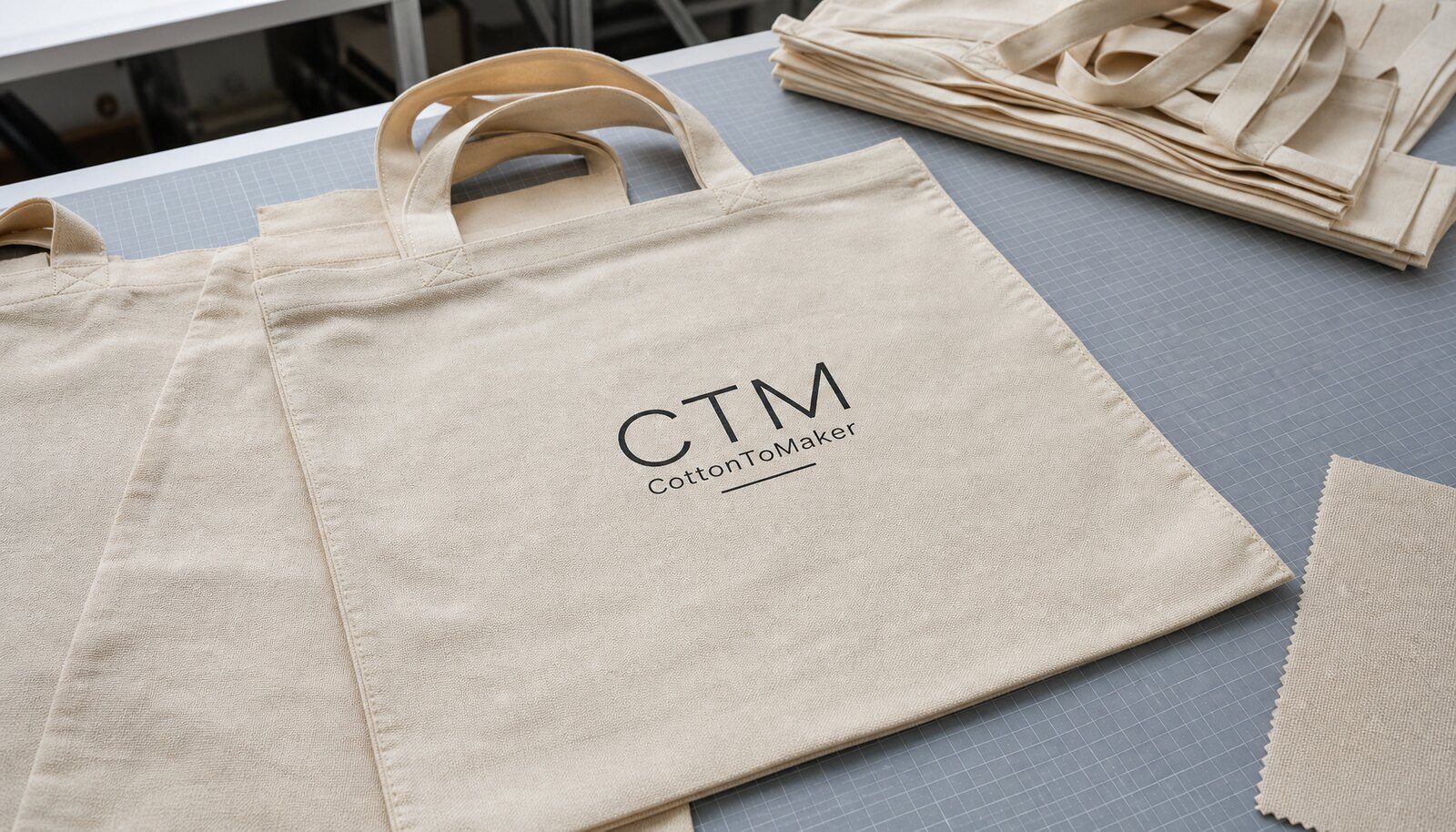
Start With the Use Case, Not the Logo
For boutique wineries, the tote is usually doing one of four jobs: giveaway, retail merchandise, bottle carry, or packaging for an event kit. Those jobs are not interchangeable. A tasting-room handout can tolerate a lighter fabric and simpler sewing if the brand moment is short and the bag is free. A retail tote has to justify shelf space, feel substantial in the hand, and keep its print looking intentional after repeated folding. A bottle-carry bag has to survive the real load, not just a photo shoot.
Define the tote's job before you ask for art placement. If the bag must carry a bottle plus tasting notes, the handle construction and seam strength matter more than a slightly bigger logo. If the bag will be resold in a gift shop, buyers will notice hand feel, seam finishing, and whether the print sits straight on the fabric. The print proof should reflect the channel, not a generic reusable-bag template. That is the difference between a bag that looks acceptable in a PDF and a bag that works in the winery's actual sales channel.
- Name the primary use in the RFQ: giveaway, retail, bottle carry, or event packaging.
- State whether the tote needs to stand upright, fold flat, or fit inside another gift set.
- Define the brand moment: tasting-room counter handoff, shelf display, or order fulfillment.
Write the Tote Spec Before Anyone Touches Artwork
The fastest way to lose control of a tote program is to approve graphics before the bag spec is locked. Write down fabric composition, weave, GSM, dimensions, gusset depth, handle length, seam type, and whether the cotton is dyed, bleached, or left undyed. For organic cotton totes, the common buyer mistake is assuming that 'organic cotton' already tells the factory enough. It does not. A 5-6 oz tote, roughly 170-200 GSM, behaves very differently from an 8 oz tote around 270 GSM, especially once a bottle, brochure, or retail item is inside.
The spec also has to describe the physical shape. A shallow, unstructured tote can be fine for event handouts, but it will not look like a premium retail bag after a few uses unless the handles, side seams, and base are reinforced. If the bag is meant to carry bottles, the base panel and seam stress points need to be described in the RFQ. Buyers often save more by tightening the spec than by squeezing a unit-price reduction out of an underdefined quote.
Do not leave shrinkage assumptions unstated. Ask whether the fabric is pre-washed, raw, or likely to relax after steaming or pressing. If the supplier cannot tell you the expected dimensional behavior, your proofing standard is incomplete. Print placement depends on the bag's finished shape, not on the cut panel alone. That is why a spec sheet should treat the bag as a finished object, not just a piece of fabric with handles attached.
- Write fabric weight in both GSM and oz so there is no room for interpretation.
- Specify handle length for hand-carry or shoulder carry, and do not assume both are included.
- Fix the gusset, side panel, and base style before logo placement is approved.
Choose the Print Method for Natural Cotton
On organic cotton totes, screen print remains the default for most winery programs because it gives the most predictable result on a natural weave. If the artwork is simple, one or two colors are usually enough to create a premium look without overcomplicating the process. Screen print also makes it easier to control opacity on undyed cotton, where a weak ink deposit can make the logo look washed out or uneven. For a crest, wordmark, or short slogan, the proof is usually a faithful preview of the bulk run.
Transfer methods, digital transfer, and direct-to-garment can be useful when the art has many colors or the order is too small to justify screens. That said, they deserve stricter proofing because the same file can look fine on screen and still fail on texture, hand feel, or abrasion once it is folded and handled. For winery totes, the key question is not whether the method sounds modern. It is whether the print will still look controlled after the bag is packed, shipped, and used in the field. Coarse weave and small text are the usual failure points.
If the logo includes very thin lines, tiny type, or fine detail, simplify it before production. Buyers often blame the factory for missing lines that were never robust enough for cotton in the first place. The best proofing move is to scale the art to the actual print area and ask whether the legibility still holds at arm's length. If the answer is no, the artwork needs revision before the order goes live.
- Use screen print for simple logos, low color count, and repeat orders.
- Use transfer methods only when art complexity or small quantity justifies the extra cost and risk.
- Avoid tiny type and hairline strokes on coarse organic cotton unless the supplier has already proven that level of detail.
Build a Proof Package the Factory Can Actually Follow
A proof should be a control document, not a visual suggestion. Send vector artwork and specify the finished print size in millimeters or centimeters. If the logo sits 70 mm below the top hem, write that down. If the back side is blank, state it explicitly. If the tote needs a centered front print plus a side label, put both placements in the same approval file so the factory cannot treat them as separate assumptions. The more the proof depends on interpretation, the more likely the bulk order will drift.
Color also needs to be defined in production language. A monitor preview is not a color standard. Use one real-world target and make the choice explicit: a Pantone reference, a fabric swatch, or an approved branded sample. Then tell the supplier what matters most. For some wineries, color match is the priority. For others, opacity on natural cotton matters more than a strict brand color because the tote is a low-cost accessory rather than a packaging extension. You cannot optimize both without saying so.
If the supplier cannot produce a strike-off or preproduction sample, that is a real risk signal. A digital proof can be useful for layout, but it does not tell you how the ink will sit on the weave, whether the cotton will distort the image, or whether the line weight survives at actual size. A sewn preproduction sample is the safer approval point when the order will be seen by retail buyers or used in customer-facing channels.
- Provide vector art and specify the finished print size in millimeters or centimeters.
- State the print position from a seam, hem, or top edge so placement is measurable.
- Use one approved color target per ink and do not mix screen previews with production standards.
- Ask for a strike-off or sewn sample before the bulk order is released.
Read MOQ and Unit Pricing as a Production Structure, Not a Single Number
MOQ is not just a factory gate number. It is usually the point at which the supplier can justify cutting, sewing, screen setup, print labor, and packing. If a buyer asks for a tiny seasonal run, the real cost is often hidden in setup, revisions, and repacking rather than in the blank tote itself. That is why a clean RFQ should separate bag cost from print cost, packing cost, document cost, and any setup fee. Without that split, the supplier quote looks simple but cannot be compared fairly.
For boutique wineries, the commercial question is often whether to buy fewer premium bags or more low-cost bags. A slightly heavier tote can look more expensive on paper and still be the smarter buy if it reduces defects, improves shelf appeal, and avoids returns or replacements. The same logic applies to print colors. A second color can be worth it for brand presence, but it should be priced as a deliberate upgrade, not hidden in an all-in quote. If the unit price shifts sharply with a small spec change, that tells you where the factory's real cost drivers are.
Treat sample cost the same way. Some suppliers make samples look cheap and recover the effort in bulk pricing. Others price samples realistically but keep the production quote clean. Either approach is fine as long as you know what you are comparing. The practical buyer move is to ask for a spec-based quote sheet and then compare the same tote, same print method, same packing, and same document burden across suppliers.
- Request tiered pricing by quantity break instead of one all-in number.
- Ask what happens to unit price if you add a second print color or a side label.
- Separate packaging cost from bag cost so retail-ready options can be compared fairly.
- Ask the supplier to show any setup or sampling fee that will not be visible in the unit price.
Verify Organic-Cotton Claims Before the Bag Is Branded
Organic cotton is a sourcing claim, not a design style. If you plan to say 'organic cotton' in the consumer-facing copy, or especially if you want to reference a certification mark, the factory must be able to support the claim with documents that match the actual batch. The exact paperwork depends on the standard used, but the safe approach is the same: ask for the scope certificate for the facility, a transaction certificate or shipment-level proof for the order, and invoice or packing references that clearly tie the finished tote to the certified material stream. If the supplier cannot link those pieces together, do not use organic language casually in marketing.
GOTS is the strongest common reference point for processed organic textiles because it covers both fiber content and processing requirements. If the supplier offers only a traceability standard such as OCS or another equivalent chain-of-custody program, use only the claim that standard supports. Do not stretch that paperwork into a broader environmental promise. A buyer should also confirm whether the print process and auxiliaries are allowed under the relevant standard if the finished tote itself is meant to carry a certification label or claim. The decoration is part of the production story, not a separate afterthought.
This is where unsupported organic marketing claims usually happen. A salesperson may say the cotton is organic, but the plant may not have the right scope certificate, or the shipment may lack a transaction certificate, or the final wording may overstate what the documents actually support. If you are building a premium winery product, that mismatch is not a small paperwork issue. It is a label and compliance risk. Keep the claim language as narrow as the evidence allows.
- Ask for the facility scope certificate, shipment-level transaction certificate, and batch-linked invoice trail if you need a certified claim.
- If you only have fiber traceability, use only the claim that the standard actually supports.
- Do not use the word 'organic' on the tote, hangtag, or sales copy unless the documents support the final wording.
- Confirm that inks, finishing, and any labels are compatible with the chosen certification path before approval.
Set QC Tolerances Before Bulk Starts
A tote order fails most often because the tolerance standard was never written down. The factory needs to know exactly what counts as acceptable print shift, seam irregularity, color variation, and packing error. For printed organic cotton totes, a good control sheet should define both visual and functional limits. That way the buyer can tell the difference between a minor cosmetic issue and a genuine defect that affects brand presentation or bag performance. A vague 'please keep quality good' instruction will not protect the order once the run starts.
A practical print rule is to set placement tolerance in millimeters before production. For a centered logo on a flat tote, plus or minus 5 mm is a workable buyer standard in many programs, while tighter crest-style artwork may need a narrower band. For multi-color work, keep the registration limit around 1.5-2 mm unless the design is forgiving. Stitch quality should also be measurable. A common sewing check is 7-9 stitches per 25 mm on the main seams with bartacks at stress points, because that gives the factory a real target instead of a subjective one.
Use a sampling rule such as AQL 2.5 for major defects and 4.0 for minor defects, or your internal house standard if it is stricter. Pull samples from the first cartons, middle cartons, and last cartons so drift is not missed. Then run a few simple tests that match actual use: load, lift, rub, and, if relevant, wash. The point is not to create lab theater. It is to catch the kinds of failures that matter when the tote is in a tasting room or a retail channel.
- Define acceptable placement shift in millimeters and keep it consistent across the order.
- Reject print bleed, broken lines, or ink coverage that changes noticeably between cartons.
- Set separate rules for cosmetic defects and functional defects so the factory knows what cannot pass.
- Apply an AQL or house sampling standard consistently across the run, not only on the first cartons.
Approve the Sample Like a Production Release, Not a Souvenir
A sample should be treated as a release candidate. Inspect it under the light that matches the real selling environment. If the tote will sit in a tasting room or retail shelf, use neutral white light or daylight, not a warm showroom lamp that flatters the print. Check the bag after it has been pressed or folded the way the final pack-out will be done, because a logo that looks centered on a loose sample can drift once the fabric is finished. The physical sample is the closest thing to the final object you will see before the order is cut.
Then do one use test that mirrors actual behavior. Load the bag with the weight you expect it to carry, lift it repeatedly from the handle, and check whether the print shifts, the seam distorts, or the handle anchor starts to open. If the tote is meant to carry wine bottles, brochure inserts, or both, use those actual items instead of a generic guessed load. A bag that survives a light tug may still fail after a few retail handoffs. The sample tells you whether the structure is honest.
If the sample is close but not right, ask for a controlled revision rather than approving with a verbal note. Buyer-side ambiguity is expensive because factories often interpret 'looks fine' as permission to proceed. Make the sample sign-off a formal step with a named approver, a dated approval file, and a clear revision list if changes are needed. That simple discipline reduces a lot of avoidable rework.
- Measure actual tote dimensions after pressing, not only from the cut spec.
- Reject crooked print placement, visible smudging, or uneven handle length.
- Test the sample with the real product load, not a random estimate.
- Record the final approval date and the exact sample version that was signed off.
Pack for Tasting Rooms, Retail Shelves, and Freight
Packing choices change both the landed cost and the customer's first impression. A tote folded flat in bulk saves carton volume, but if the logo arrives creased or distorted, the retail impression drops fast. Some boutique wineries need individual polybags or belly bands because the tote is going straight to the gift shelf. Others only need bulk pack with clear carton marks because the bags go to back-room inventory or event distribution. The right answer depends on the channel, not on habit. Packing should be approved along with the bag and the print.
If the tote is part of a retail set, the fold direction matters. The approved fold should keep the logo visible and the handles aligned so the bag looks orderly when unpacked. Ask for carton count, inner pack count, polybag type if used, carton dimensions, gross weight target, and outer label format. Those details matter because they affect freight, warehouse handling, and how easily a store team can receive the product. A poorly defined pack plan can add cost after the bags leave the factory, where fixing the presentation is much more expensive.
For direct-to-consumer or gift-set programs, align the tote pack with the rest of the bundle. If the bag is shipped alongside bottles, inserts, or a branded note, the carton and fold standard should support that bundle rather than fight it. The proof should include packing photos or at least a packing sketch if the supplier is experienced. That reduces the chance that the bag arrives with a good print and the wrong presentation.
- State whether each tote needs an individual polybag, a belly band, or bulk packing only.
- Specify carton count and carton mark format before production starts.
- Use the same fold standard for sample approval and bulk packing.
- Ask for pack photos if the tote will be sold in retail or gift channels.
Lock the Timeline and the Final Sign-Off Path
The schedule risk on tote orders usually comes from proof churn, not sewing time. If art keeps changing after the supplier has already quoted, setup gets reset and the order slips. That is why the buyer needs one named approver and one final approval file. Every revision should be dated and visible. If the supplier is quoting from a moving target, even a fast factory can miss the launch window. Boutique wineries often have fixed event dates, seasonal releases, or trade-show deadlines, so the schedule should be managed backward from the actual use date, not from the inquiry date.
A realistic timeline includes artwork prep, proof output, sample transit, one revision cycle if needed, bulk production, inspection, packing, and shipping. Each stage can be short, but the total still adds up. A buyer who plans around the shortest possible sample path usually ends up paying for expedited freight or emergency revisions. Build buffer where the risk lives: printing, sample approval, and shipping. If the tote is tied to a harvest campaign or new release, that buffer matters more than a small per-piece savings.
It also helps to ask whether the factory can reserve production time before the sample is fully approved. Some can, some should not. If they do reserve time, make sure the approval deadline is real and tied to a named person. The best schedule is the one everyone can execute without guessing who has sign-off authority.
- Measure lead time from final art approval, not from the first inquiry.
- Build buffer for sample transit and at least one revision cycle.
- Name one person who can approve artwork and sample changes.
- Ask whether the factory can reserve line time before the sample is fully approved.
Specification comparison for buyers
| Spec decision | Recommended option | When it fits | Buyer risk to check |
|---|---|---|---|
| Direct factory with in-house print | MOQ is often 500-2,000 pcs; sample lead time is commonly 5-10 business days; best when one team owns sewing, printing, and packing | You want one proof chain, fewer handoffs, and tighter control over artwork placement and final carton spec | Confirm the print is truly in-house and not subcontracted after approval; otherwise your proof chain breaks |
| Factory plus outside print house | MOQ is often 300-1,000 pcs; sample lead time is commonly 7-14 business days; landed cost is usually close to direct factory pricing but with more process friction | The bag factory is strong on sewing and cutting, but the print finish needs a specialist | Watch for color drift, slower approvals, and blame shifting between vendors if the strike-off is off-spec |
| Trading company managing multiple factories | MOQ is often 500-3,000 pcs depending on the factory behind the quote; sample lead time is commonly 7-15 business days; landed cost often rises about 5-12% from margin layering | You want sourcing flexibility across tote styles and do not want to manage multiple factory contacts | Ask who owns QC, who signs the proof, and which facility issues the compliance paperwork |
| Domestic decorator on imported blanks | MOQ can be as low as 50-250 pcs; sample lead time is often 2-7 business days; landed cost is commonly 20-40% higher than offshore direct sourcing | You need a rush launch, a short event run, or fast replenishment for a tasting room | Unit price is usually higher, fabric lot control is weaker, and blank quality can vary by shipment |
| 5-6 oz organic cotton tote | Typical landed cost baseline for a light giveaway tote; lighter freight profile but less structure | The tote is for event handouts, inserts, or low-load retail use | Check handle stretch, seam pull, and whether the bag still feels presentable once folded and refolded |
| 8 oz organic cotton tote | Usually adds about 8-18% to fabric and sewing cost versus 5-6 oz, but improves hand feel and retail perception | The tote is sold in a gift shop or expected to carry bottles and merch repeatedly | Confirm that the sewing spec, thread, and bartack length are appropriate for the heavier fabric |
| One-color screen print | Lowest setup risk and usually the cleanest result on natural cotton | The artwork is a wordmark, crest, monogram, or short slogan | Thin lines and tiny text can fill in on coarse weave if the mesh, ink, and artwork scale are not matched |
| Two-color screen print | Often adds 10-25% to print setup and print labor versus a one-color run | You need a richer brand look, label-style art, or seasonal graphics | Set registration tolerance in writing or the second color may sit visibly off-center |
Buyer checklist before sampling
- Lock the tote use case first: tasting-room giveaway, retail purchase, bottle carry, or event packaging.
- Specify fabric composition, weave, and GSM on the RFQ, not just 'organic cotton'.
- Set tote dimensions, gusset depth, handle length, and whether the bag must stand upright before artwork placement is approved.
- State the print method, number of colors, print area, and whether the back side is blank.
- Send vector artwork and one approved color reference, not only a screenshot or low-resolution PDF.
- Request a digital proof plus a sewn preproduction sample or strike-off before bulk cutting or bulk printing starts.
- Ask for the supplier's organic-cotton document set if you need a claim on the final product.
- Confirm carton pack, polybag requirement, carton marks, and shipping method in the quote.
- Agree on acceptable print shift, stitching defects, color variation, and packing errors before mass production.
- Ask how many cartons will be inspected against the approved sample, and whether the factory follows AQL or a house inspection standard.
Factory quote questions to send
- What exact fabric weight, weave, finished dimensions, and handle construction are included in the quoted price?
- Is the price based on one print location, one color, and one side, or does it include both sides?
- Will you send a digital proof, a printed strike-off, or a sewn preproduction sample before bulk?
- What is the MOQ per color and per artwork version, and does a size or color change create a new MOQ?
- What carton pack, inner packing, and outer carton size are included in the quote?
- What is the lead time measured from final art approval, not from the PO date?
- What print tolerance do you allow for placement, registration, and ink coverage?
- What is your standard inspection rule, and do you inspect by AQL 2.5 major / 4.0 minor or another standard?
- Can you support an organic claim with the needed scope, transaction, and shipment documents if required?
- If you cannot issue GOTS paperwork, what exact traceability document do you provide instead, and what claim does it support?
Quality-control points to confirm
- Fabric weight should match the approved target within about plus or minus 5 percent, unless your house standard is tighter.
- Bag dimensions should stay within 10 mm of the approved spec after sewing and pressing, and the two sides should not visibly skew.
- Handle length should be matched side to side within 5 mm, with no visible twist and no loose top stitching at the anchor points.
- Set print placement tolerance in millimeters before production: a common target is plus or minus 5 mm on centered logos and tighter for crest-style art.
- For multi-color artwork, register the colors within 1.5-2 mm and reject any image where the second color reads as shadowed or doubled.
- Ink should sit cleanly on the fabric with no bleeding, cracking, patchiness, or paste-through that weakens small type.
- Fine text, borders, and crest details should remain readable at arm's length; if not, the art needs to be simplified before the run.
- Use stitch-density checks on seams and handles, such as 7-9 stitches per 25 mm on the main seams, plus secure bartacks at stress points.
- Seams should be clean, with no skipped stitches, open ends, loose knots, or weak handle anchors.
- Run a practical load test tied to the real use case: a giveaway tote should survive at least 5 kg, while a bottle-retail tote should be tested at 8 kg or more, with repeated lifts and no seam opening or handle failure.