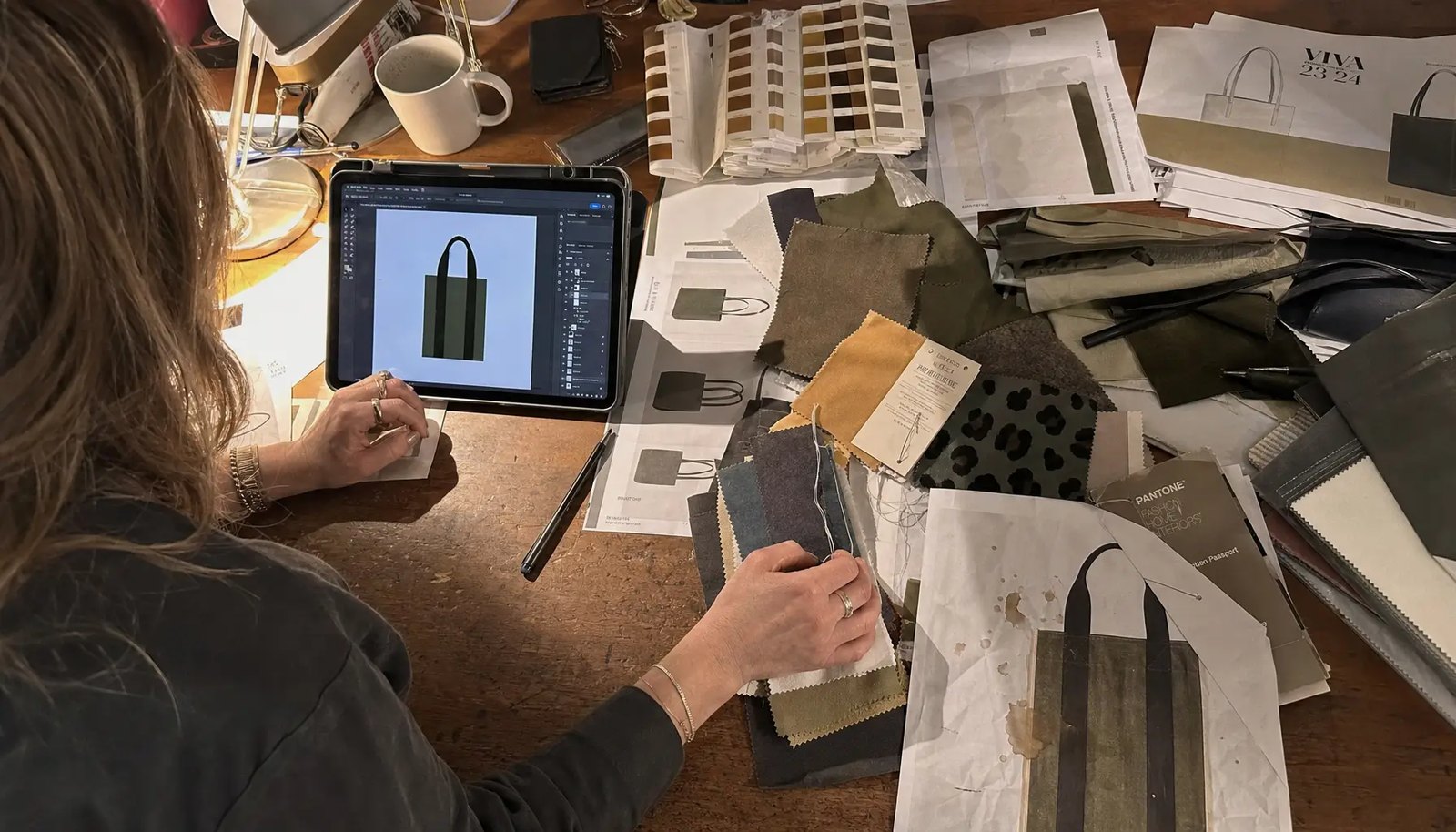
Start With the Real Buying Risk
Organic cotton totes for artisan bakeries sound easy to buy until the first bulk cartons arrive. The design brief is usually simple: natural cotton, a warm brand color, a clean bakery logo, and enough structure for sourdough, pastry boxes, coffee bags, jam jars, or seasonal gift sets. The problem is that tote bags are not flat printed packaging. They are cut, sewn, handled, folded, packed, and shipped. Cotton has texture. It absorbs ink. Panels move during sewing. Handles can pull the front panel out of shape. A print that looked perfect in a PDF can land slightly low, too dark, too heavy, or creased across the logo.
For B2B procurement teams, the goal is not to buy the cheapest generic tote. The goal is to make the bulk order predictable enough to sell, distribute, inspect, and reorder. A strong organic cotton totes for artisan bakeries print proofing checklist protects both sides: the buyer knows what has been approved, and the factory knows what must be repeated. It also prevents quote comparisons from turning into guesswork. If one supplier prices a 6 oz promotional bag and another prices a 12 oz gusseted retail tote with strike-off approval, the unit prices are not comparable.
Most failures begin with a vague RFQ. “Natural organic cotton tote with logo” leaves too much for the supplier to assume: GSM, handle drop, stitch reinforcement, print size, curing method, packing style, acceptable fabric marks, and inspection tolerance. A better RFQ states the intended bakery use, finished measurements, fabric range, artwork file type, proofing route, packing plan, and inspection standard before sampling starts.
- Use the proof to approve a production standard, not just a design direction.
- Define the selling channel: giveaway, paid retail, gift packaging, or distributor stock.
- Approve print on the same fabric quality, weight, and color planned for bulk.
- Measure print position, print size, handle drop, gusset depth, and finished dimensions.
- Keep signed sealed samples for buyer, factory, and inspection reference.
Choose Fabric Before Artwork Approval
Fabric is the base of the whole project, so approve it before locking artwork. For many bakery retail programs, 10 oz to 12 oz organic cotton canvas, typically about 270 to 340 GSM before agreed production tolerance, gives a practical balance of hand feel, print stability, and load performance. It feels more substantial than a giveaway tote and can support paid retail positioning. Lighter 5 oz to 7 oz cotton may work for short-term promotional use, but it often wrinkles more, shows contents, and can make a large logo look uneven. Heavier 14 oz canvas can feel premium, yet it increases unit cost, carton volume, sewing stress, and sometimes visible needle marks.
Natural unbleached organic cotton is popular for artisan bakery branding because it has warmth and visible cotton character. That same warmth changes ink appearance. Olive green, cocoa brown, brick red, cream, charcoal, and navy will not read exactly as they do on coated paper, a menu board, or a phone screen. Seed flecks may be acceptable, even desirable, if the brand wants a rustic look. They are not acceptable if the buyer expected a smooth bleached base. The decision must be made before print color is judged.
The RFQ should also define what “organic cotton” needs to support. Some buyers need certification references, transaction documentation, or material declarations for internal sustainability claims, retailer files, marketplace listings, or customer compliance. Others need organic cotton for product positioning but will not make a formal certified claim to consumers. Ask early what documentation is available, what is included in the price, and when files can be shared. Low-price offers do not always include the same paperwork.
- 5 oz to 7 oz: budget promotional use, usually weak for premium bakery retail totes.
- 8 oz to 10 oz: workable for lighter market-day merchandise or occasional giveaways.
- 10 oz to 12 oz: practical for paid retail totes, bread carriers, and gift bundles.
- 14 oz and above: stronger structure with higher cost, freight volume, and seam demands.
- Natural cotton: strong craft look, with more base-color influence on final ink shade.
Build the Tote Around Bakery Loads
A bakery tote may carry a crusty loaf one day and a pastry box, glass jar, coffee bag, flour packet, cookbook, or holiday gift set the next. The construction should reflect that reality. Flat totes are economical, pack tightly, and work well for bread, lightweight counter merchandise, and market-day use. A gusseted or boxed-bottom tote costs more and takes more carton space, but it stands better, holds pastry boxes more cleanly, and feels more intentional as retail packaging.
Construction changes the print area. A boxed bottom, side gusset, or seam allowance can reduce the flat front panel and shift how centered artwork appears when the bag is filled. Handle length also changes presentation. Short hand-carry handles leave more clear logo space when the tote hangs flat. Longer shoulder handles are easier for customers walking from a bakery or farmers market, but they may overlap the logo on a display hook or retail shelf. Handle width affects comfort, especially when the load includes jars or multiple dense items.
Finished dimensions should be quoted after sewing, not as cut-panel size. A few centimeters lost to seams, shrinkage, or gusset formation can determine whether a pastry box fits. If the tote is designed around a specific bakery box, bread sleeve, or gift pack, provide that size to the supplier and ask for a fit check during sampling. This is especially important for multi-location bakery groups and distributors, where one tote may need to work across several product combinations and store displays.
- Specify finished width, height, gusset or boxed-bottom depth, handle width, handle length, and handle drop.
- State whether front print is centered on the flat panel or adjusted for gusseted construction.
- Use reinforced handle stitching for dense bakery items and gift sets.
- Define seam type: turned seam, overlocked seam, bound seam, or French seam.
- Request sample photos with the intended bakery box or load when fit matters.
Match Print Method to the Artwork
Most artisan bakery artwork is well suited to screen printing. Wordmarks, wheat icons, oven marks, simple line drawings, and one to three spot colors usually print cleanly with water-based screen print. The hand feel is generally softer than heavier plastic-feeling prints, which supports the natural positioning of organic cotton. Still, screen printing is not automatic. The buyer should provide vector artwork, Pantone references, final print dimensions, and measured placement from fixed bag edges.
Digital printing can help when the bakery artwork includes gradients, watercolor effects, or many colors. It is not automatically better on textured organic cotton canvas. Fine details can break up on slubs or open weave. Large print areas can behave differently by fabric weight and surface finish. Heat transfer can look sharp but may create a different hand feel from the rest of the bag. Embroidery can look premium on some merchandise, yet on tote canvas it adds stitch tension, reverse-side threads, cost, and puckering risk. The method should follow the artwork, fabric, quantity, durability expectation, and target retail feel.
Be careful with details copied from packaging or menus. Fine lines, small reversed-out text, QR codes, store lists, ingredient statements, and large solid ink blocks all need physical testing. A bakery logo that feels elegant on a business card may be too delicate on canvas. A dark solid circle may show uneven coverage if the fabric has slubs. A QR code may scan in a PDF but fail after printing, folding, and slight ink gain. Test the actual size, not an enlarged proof.
- Use water-based screen print for solid logos, limited colors, and soft hand feel.
- Use digital print only when artwork complexity justifies testing and cost.
- Do not approve fine lines, reversed text, or QR codes without a real strike-off.
- Confirm curing requirements so print does not block, tack, or transfer in cartons.
- Keep print away from thick seams, hard folds, and handle reinforcement unless tested.
Use a Proofing Route Buyers Can Audit
A clean proofing route has three parts: digital proof, fabric strike-off, and finished pre-production sample. Each one answers a different question. The digital proof confirms spelling, artwork version, orientation, print size, Pantone reference, and no-print zones. The fabric strike-off shows how ink behaves on the chosen organic cotton fabric. The pre-production sample confirms the full tote: fabric, print, handles, seams, label, fold, and carton approach.
Skipping from PDF approval to bulk production saves a little time at the start and creates risk at the end. The logo may be the correct file, but the color may look dull on natural cotton. The print could sit too low after sewing. The ink could feel heavy, cure poorly, or transfer when stacked. The fold line may run through the main wordmark. None of those issues can be solved by a digital proof alone.
Approval comments should be precise. “Move logo up” is weak. “Print centerline 95 mm below top edge, tolerance plus or minus 5 mm” is useful. “Green approved” is weak. “Approved against dated strike-off under consistent daylight or D65-style viewing” is stronger. For repeat orders, these notes become the product memory. They help new buyers, factory operators, and inspectors make the same decision later, even if staff changes.
- Digital proof: approve spelling, orientation, print size, placement, and no-print zones.
- Fabric strike-off: approve ink color, coverage, edge sharpness, opacity, and hand feel.
- Pre-production sample: approve construction, print placement, label, fold, and packing.
- Multi-artwork proof: check each branch logo, language version, and seasonal graphic.
- Sealed sample: sign and date buyer, factory, and inspector reference samples.
Set Tolerances Before the Purchase Order
Textile products need tolerances. The question is whether the buyer and supplier define them before production or argue about them after inspection. A paid retail tote for an artisan bakery should not be judged like a disposable event bag. Before releasing the purchase order, define acceptable variation for finished width, height, gusset, handle drop, GSM, print size, print position, fabric appearance, stitch quality, and color shade.
A practical starting discussion for many cotton tote orders is finished-size tolerance around plus or minus 1 cm for width and height, handle-drop tolerance around plus or minus 1 cm, print-placement tolerance around plus or minus 3 mm to 5 mm for simple flat-panel prints where the factory can hold it, and GSM tolerance around plus or minus 5%. These are not universal rules. Bag size, fabric weight, washing, print method, sewing method, and factory capability can all change what is realistic. The important step is to agree in writing.
Color tolerance deserves special care. Compare bulk print against an approved fabric strike-off or sealed sample, not a phone photo or uncalibrated screen. Natural cotton base color, ink absorption, drying, and lighting can all change perception. If brand color is strict, ask for the closest achievable match on the selected fabric and define the approval method. If natural variation is acceptable, say so. That avoids over-rejection while still protecting the bakery from obvious mismatch.
- Discuss finished width and height tolerance before production, commonly around plus or minus 1 cm for many tote sizes.
- Set handle-drop tolerance separately because uneven handles are visible and affect carrying comfort.
- Measure print placement from fixed edges, commonly around plus or minus 3 mm to 5 mm when practical.
- Set GSM tolerance in writing, often around plus or minus 5% unless a tighter commercial limit is agreed.
- Treat logo-area defects as major when they make a retail tote unsellable.
Quote MOQ by SKU, Not Just Total Pieces
MOQ for organic cotton totes is rarely just a total quantity. It can change by fabric color, fabric weight, bag size, print method, number of print colors, artwork version, label, packing format, and whether the order uses stock natural fabric or specially prepared organic cotton. A supplier may offer a low MOQ for a standard natural tote but require higher minimums for custom dyed fabric, woven labels, belly bands, barcode stickers, or multiple branch logos.
Procurement buyers should separate the order into the way the factory will actually produce it. One bag size with one logo is simple. One bag size with ten bakery locations is not. Each artwork may need separate screens, strike-offs, packing labels, carton marks, and inspection checks. Seasonal artwork, private-label bakery customers, bilingual versions, or distributor SKUs can create setup charges even when the physical tote is the same.
Unit price is only one part of quote comparison. A heavier canvas may cost more but support retail pricing and reduce complaints. A gusseted bottom may add cost while making the bag more useful for pastry boxes. Individual retail packing may increase labor and CBM while reducing store-level repacking. Screen charges may be acceptable for a repeat program but painful for many small artwork splits. Ask for line-item pricing so the buyer can see what is driving cost.
- Main cost drivers: GSM, fabric color, dyeing, bag size, gusset, handle length, print colors, print area, labels, and packing.
- Quote each artwork version separately for branch logos, seasonal campaigns, or private-label bakery customers.
- Request setup, sample, screen, color-matching, and repeat-order charges as separate lines.
- Compare CBM and carton count because freight can erase a small unit-price saving.
- Confirm whether MOQ applies to the whole order, each fabric color, each bag size, or each artwork.
Inspect Fabric, Sewing, and Print Together
Quality control should treat the tote as one product, not four separate checkboxes. Organic cotton has natural variation, so the inspection standard must distinguish acceptable character from defects. Small seed flecks on natural fabric may be acceptable if they match the approved sample. Oil stains, dark marks, mildew, holes, dirty fold lines, unpleasant odor, and heavy slubs across the logo area should not be accepted for a premium bakery retail tote.
Print inspection needs measurable thresholds. A logo that is 8 mm off center may look careless on a compact tote, while 2 mm may be commercially acceptable depending on artwork and construction. Pinholes, smudges, blurred edges, color mismatch, under-cured tackiness, and print transfer should be classified as minor, major, or critical according to the selling channel. A free event bag and a paid retail item should not carry the same defect limits.
Sewing checks should cover more than whether the bag is closed. Inspect handle length consistency, reinforcement placement, stitch density, seam capture, skipped stitches, loose threads, open seams, needle holes, uneven top stitching, and seam slippage around load-bearing areas. Finished dimensions should be measured flat after sewing. If an AQL inspection is used, the defect list must match how the buyer will judge the tote at retail. Also define the remedy if inspection fails: trimming, rework, sorting, reinspection, replacement, discount, or shipment hold.
- Set size tolerance separately for width, height, gusset, handle length, and handle drop.
- Classify front-panel stains, logo-area slubs, obvious smudges, and print transfer as major defects.
- Check handle reinforcement using a realistic load expectation for the intended bakery use.
- Record photos of accepted and rejected defects to support repeat-order consistency.
- Confirm carton quantity and artwork version during inspection, not only at warehouse receiving.
Pack So the Print Survives Transit
Packing is part of print proofing because damage can happen after the tote is made correctly. If bags are folded too soon after printing, ink can block, tack, or transfer. If cartons are overfilled, fabric ridges can press into the logo. If a hard fold crosses a large solid print area, the crease may remain visible at retail. Natural cotton can also absorb moisture or odor if goods are packed in the wrong environment.
The pre-production sample should show the approved fold. For bakery retail, folding with the print visible helps store teams identify the SKU quickly, but it can expose the logo to rubbing. Folding with the print inside protects the print, but then the buyer may need a belly band, hang tag, barcode sticker, or outer carton label for identification. Distributor orders may use inner packs of 25 or 50 pieces, yet mixed artwork versions must be avoided unless the receiving plan is clearly documented.
Packing also changes landed cost. A flat tote packs tighter than a boxed-bottom tote. A 12 oz tote uses more carton space than a 6 oz promotional tote. Individual polybags, recycled polybags, paper wraps, or retail sleeves add presentation value but increase handling and sometimes CBM. Request carton dimensions, pieces per carton, gross weight, net weight, carton marks, and estimated CBM before comparing freight. Without this data, a cheap unit price may not stay cheap after shipping and warehousing.
- Approve whether totes are flat packed, folded once, folded twice, banded, sleeved, or bulk packed.
- Avoid hard creases directly across large solid print areas or fine logo details.
- Request carton dimensions, pieces per carton, gross weight, net weight, and estimated CBM.
- Use clear SKU, artwork-version, quantity, and carton-count labels for multi-location programs.
- Confirm cartons are not packed before ink curing and loose-thread cleaning are complete.
Control Lead Time and Landed Cost
Lead time begins before bulk sewing. Organic cotton fabric may need booking, incoming inspection, relaxing, washing, dyeing, or shade approval. Screens need preparation and print testing. Labels, belly bands, barcode stickers, and export cartons may have their own production schedules. A sample room can often produce a nice tote quickly while the bulk line is still waiting for fabric, screens, or packing materials.
Approval speed matters. If the buyer takes a week to review each proof, the factory may move capacity to another order. For holiday bakery gift sets, farmers market launches, new store openings, or seasonal retail packaging, late approvals can force expensive freight decisions. Build the calendar backward from the required warehouse arrival date. Add buffer for courier transit, internal brand review, artwork revision, document preparation, inspection booking, and export handover.
Two quotes can look close at FOB level and behave very differently after shipment. Heavier fabric may reduce pieces per carton and increase CBM. A boxed-bottom tote may be better for pastry boxes but less efficient to pack. Retail bands may add cost while reducing store labor. A lower unit price may come with looser tolerances, no true strike-off, unclear organic documentation, or weak packing. The strongest quote is the one that makes the tote predictable, inspectable, compliant with the buyer’s claims, and suitable for the bakery channel.
- Build the schedule from required warehouse arrival, not from factory production days only.
- Do not start bulk cutting or printing until the finished pre-production sample is signed off.
- Add time for custom dyeing, multiple artwork versions, retail packing, and compliance documents.
- Compare unit price with carton CBM, pieces per carton, weight, packing format, and freight mode.
- Keep the quote sheet, strike-off, sealed sample, packing photo, and inspection report for repeat orders.
Specification comparison for buyers
| Spec decision | Recommended option | When it fits | Buyer risk to check |
|---|---|---|---|
| Fabric weight | 10 oz to 12 oz organic cotton canvas, typically about 270-340 GSM before normal production tolerance | Paid bakery retail totes, bread carriers, pastry-box bags, coffee-and-jam bundles, and reusable counter merchandise | Very light 5 oz to 7 oz cotton may reduce unit price but can wrinkle heavily, feel promotional, show contents, distort print edges, and fail the perceived-value test for artisan bakery retail |
| Fabric color | Natural unbleached organic cotton for rustic positioning; bleached, piece-dyed, or custom-dyed cotton only when brand color control requires it | Bakeries that want a warm natural base, visible cotton character, and craft retail presentation | Natural cotton shifts ink appearance and may show seed flecks; dyed lots require lab dip approval, shade-lot tolerance, higher MOQ, and extra lead time |
| Finished size | Specify finished width, height, gusset or boxed bottom, handle width, handle length, and handle drop after sewing | Orders designed around specific loaf sizes, pastry boxes, gift sets, retail hooks, or shelf bins | Quoting from cut-panel size or a vague standard tote size can create fit problems after seam allowance, shrinkage, and gusset formation |
| Bag construction | Flat tote for simple bread or market use; gusseted or boxed-bottom tote with reinforced handle stitching for boxed pastries and gift sets | Flat totes suit lower carton volume; boxed bottoms suit premium packaging, standing presentation, and wider bakery boxes | Handle drop, gusset depth, seam allowance, reinforcement shape, stitch density, and load-bearing areas must be visible on the pre-production sample |
| Print method | Water-based screen print for solid bakery logos, wordmarks, line art, and one to three spot colors | Organic positioning where soft hand feel and low plastic feel matter more than photographic detail | Digital, pigment, discharge, plastisol-style, transfer, and embroidery options behave differently on cotton canvas; approve the method on the actual bulk fabric |
| Logo color control | Pantone reference plus approved fabric strike-off under consistent daylight or D65-style viewing conditions | Brands using controlled identity colors such as olive green, cocoa brown, brick red, cream, charcoal, or navy | A PDF proof cannot predict how ink reads on warm natural cotton; define acceptable visual delta before bulk printing |
| MOQ logic | Confirm MOQ by fabric color, bag size, print color count, packing style, label, and artwork version | Multi-location bakeries, distributors, seasonal gift programs, and private-label bakery customers | A supplier may quote one attractive total MOQ but apply separate setup charges or higher minimums for each branch logo, fabric color, or SKU |
| Sampling route | Digital proof, fabric print strike-off, then full pre-production sample made with confirmed fabric, handles, ink, label, fold, and carton plan | Orders where the tote is sold, used as premium packaging, or repeated as a replenishment SKU | Generic showroom samples are useful for hand feel only; they do not approve shrinkage, logo position, ink curing, or export packing volume |
| Packing plan | Approved fold method, optional belly band or barcode, inner packs by SKU, moisture protection, and export cartons labeled by artwork version | Retail buyers needing clean shelf presentation and distributors needing accurate receiving | Tight folds can crease printed panels, under-cured ink can transfer, and mixed artwork cartons can cause branch-level receiving errors |
Buyer checklist before sampling
- Write the tote use case into the RFQ: giveaway, paid retail item, bread carrier, pastry-box bag, gift packaging, staff merchandise, or distributor promotional stock.
- Specify organic cotton fabric weight in oz and approximate GSM, plus whether the fabric must be natural, bleached, piece dyed, yarn dyed, custom dyed, washed, or unwashed.
- Confirm whether organic cotton certification, transaction documentation, scope certificate references, or material declarations are required for internal claims, retail compliance, or marketplace listing.
- Lock finished bag width, height, gusset or boxed-bottom depth, handle length, handle drop, handle width, seam type, reinforcement stitch shape, stitch color, and label position.
- Provide vector artwork with Pantone references, exact print dimensions, print position from fixed bag edges, approved orientation, minimum line weight concerns, and no-print zones near seams or handles.
- Require a print strike-off on the same fabric quality, weight, and color planned for bulk production before approving the finished pre-production sample.
- Set measurable tolerances for finished size, handle drop, print placement, print color, GSM, visible fabric flaws, stains, skipped stitches, loose threads, odor, and carton quantity.
- Decide whether the tote needs flat packing, retail folding, belly band, barcode sticker, recycled polybag, paper wrap, inner pack, desiccant, moisture protection, or bulk carton packing.
- Clarify whether the order quantity is one artwork or multiple bakery branches, seasonal designs, language versions, or distributor SKUs, because MOQ and setup costs may change.
- Request carton dimensions, gross weight, net weight, pieces per carton, carton marks, estimated CBM, packing photos, and loading-ready carton count for freight and warehouse comparison.
Factory quote questions to send
- What exact organic cotton fabric are you quoting: weight in oz, GSM range, weave, yarn count if available, fabric color, finishing process, and expected shrinkage after normal handling?
- What organic cotton documentation can be provided, when can it be shared, and does the quoted price include the documentation our compliance or retail customer may require?
- Is the quoted MOQ based on one bag size, one fabric color, one print method, one packing style, and one artwork, or can it be split across multiple bakery logos or locations?
- Which print method is included, how many colors are included, what is the maximum print area, and what screen, setup, color-matching, or artwork-separation charges apply?
- Will the proofing route include a digital proof, paper proof, fabric strike-off, full tote sample, and pre-production sample made on bulk material and production-style equipment?
- What tolerances do you propose for finished width, height, gusset, handle drop, print placement, print size, GSM, color shade, and visible defects on the front panel?
- What is the normal lead time for artwork proof, strike-off, pre-production sample, bulk production, inspection, and export handover after each approval step?
- Which steps can extend lead time, such as fabric booking, dyeing, washing, print curing, label production, retail bands, barcode stickers, carton procurement, or document preparation?
- What are the quoted packing details: folding method, inner pack quantity, pieces per carton, carton dimensions, gross weight, net weight, carton marks, and estimated CBM?
- Which quality checks are performed before shipment for fabric flaws, stitching, handle strength, print cure, odor, moisture risk, stains, carton count, and artwork separation?
Quality-control points to confirm
- Fabric weight should match the approved sample within the agreed commercial tolerance, commonly around plus or minus 5% unless the buyer sets a tighter limit in the purchase order.
- Finished bag size should be measured flat after sewing, with separate tolerances for width, height, gusset or boxed bottom, handle length, and handle drop.
- Print placement should be measured from fixed reference points such as top edge, side seam, gusset fold, or handle centerline, not judged by eye only.
- Print size should be checked against the approved artwork dimension, especially when suppliers scale artwork to fit a standard screen or avoid seams.
- Ink coverage should be even, with no major pinholes, smears, heavy bleeding, cracked logo edges, under-cured tackiness, or print transfer after normal handling.
- Print color should be compared against the approved fabric strike-off or sealed sample under consistent light, not against a phone photo or uncalibrated screen.
- Handles should be checked for length consistency, stitch density, reinforcement position, seam capture, and pull strength suitable for the intended bakery load.
- Seams should be inspected for skipped stitches, loose threads, open seams, needle holes, uneven top stitching, and seam slippage around load-bearing areas.
- Natural cotton defects should be classified in advance because small seed flecks may be acceptable while oil marks, mildew, dark stains, holes, and dirty fold lines should not be.
- Logo-area fabric should receive stricter inspection than hidden inner seams because a small flaw on the front panel can make a retail tote unsellable.