Start With the MOQ Constraint, Not the Bag Photo
An artisan bakery tote is rarely just a bag. It might sit beside the register as paid merchandise, move through a bread subscription program, carry farmers market purchases, hold holiday hampers, or go to wholesale customers as a reusable brand item. The sourcing problem starts there: the same buyer often wants a premium feel, several artwork versions, and a modest first order.
MOQ negotiation works better when procurement asks what the supplier is trying to protect. A factory may accept a few hundred pieces for a stock natural cotton tote with a one-color logo. The same factory may need a higher minimum for custom organic cotton fabric, dyed fabric, heavier canvas, a special gusset, several print designs, retail packing, or certified chain-of-custody paperwork. A lower MOQ is not only a favor. Usually it means the buyer has simplified the run or agreed to pay fixed charges the factory cannot absorb.
Separate the tote body from the artwork as early as possible. If every branch can use one size, one fabric weight, one handle construction, and one packing method, the supplier can cut and sew one efficient batch. The logo or seasonal artwork can then be treated as a print split rather than a new product each time. That matters when a bakery group needs 150-250 pieces per location but can consolidate 800-1,500 pieces of the same body.
Before asking for prices, send a sourcing brief with target quantity, quantity by artwork, expected repeat orders, use case, delivery market, certification requirement, launch date, and preferred incoterm. If the first order is 500 pieces but the bakery expects quarterly replenishment, say so. If it is a one-time holiday promotion, say that too. Suppliers price risk differently when they can see the real buying pattern.
- Use one standard tote body across locations, then negotiate print splits by artwork or bakery branch.
- Keep natural organic cotton unless a dyed shade is essential, because dyeing can add mill minimums and shade-control risk.
- Limit the first order to one GSM, one gusset, one handle type, one label position, and one packing method.
- Ask the supplier to identify whether MOQ is driven by fabric, cutting, sewing, printing, packing, or certification.
- Offer standardization, faster approvals, flexible shipping date, or paid setup charges instead of only demanding a lower MOQ.
- Share credible replenishment plans, but do not overstate future orders that procurement cannot commit to.
Translate Bakery Use Into Measurable Specs
The best specification starts with what staff will actually put in the tote. Bakery orders can include round loaves, baguettes, pastry cartons, coffee bags, jars, granola pouches, flour packs, and seasonal gift boxes. Each item stresses the bag in a different way. A flat tote may be fine for wrapped bread and poor for square pastry boxes. A narrow handle may look neat when empty and feel uncomfortable once coffee and jars are inside.
Define three use cases: light, normal, and maximum. Light use might be one loaf and a small pastry bag. Normal use could be two loaves plus one coffee bag. Maximum use might be a pastry carton, two coffee bags, and one jar or pantry item. Convert those examples into approximate weight and dimensions, then give the factory the load requirement. For many bakery retail programs, a practical maximum load may sit around 3-5 kg, but the right number depends on the bakery's own products.
The load requirement should become a test, not a vague statement. A buyer might require the tote to hold 1.5 times the intended maximum load for an agreed duration with no handle tearing, no seam opening, and no major distortion. Agree the multiplier, hold time, and failure criteria before sampling. Do not wait until inspection to decide what strong enough means.
This approach also sharpens negotiation. A light event giveaway can often use lighter fabric, a flat body, and a simpler print. A paid retail tote has a different risk profile: customers expect reuse, stores dislike complaints, and weak fabric can damage brand perception. The goal is not the cheapest possible organic cotton tote. It is the lowest landed cost that still performs for the bakery's real handling conditions.
- List the actual items the tote must carry, including the largest pastry box or gift pack dimensions.
- Convert real contents into target load, test load, hold time, and pass or fail criteria.
- State whether the bag must stand with boxy goods, fold flat in store, or hang neatly on a peg display.
- Treat paid merchandise, subscription bags, and loyalty totes as higher-risk than short-term giveaways.
- Check customer comfort as well as strength, especially handle width and handle drop under load.
Choose Organic Cotton Fabric Without Guesswork
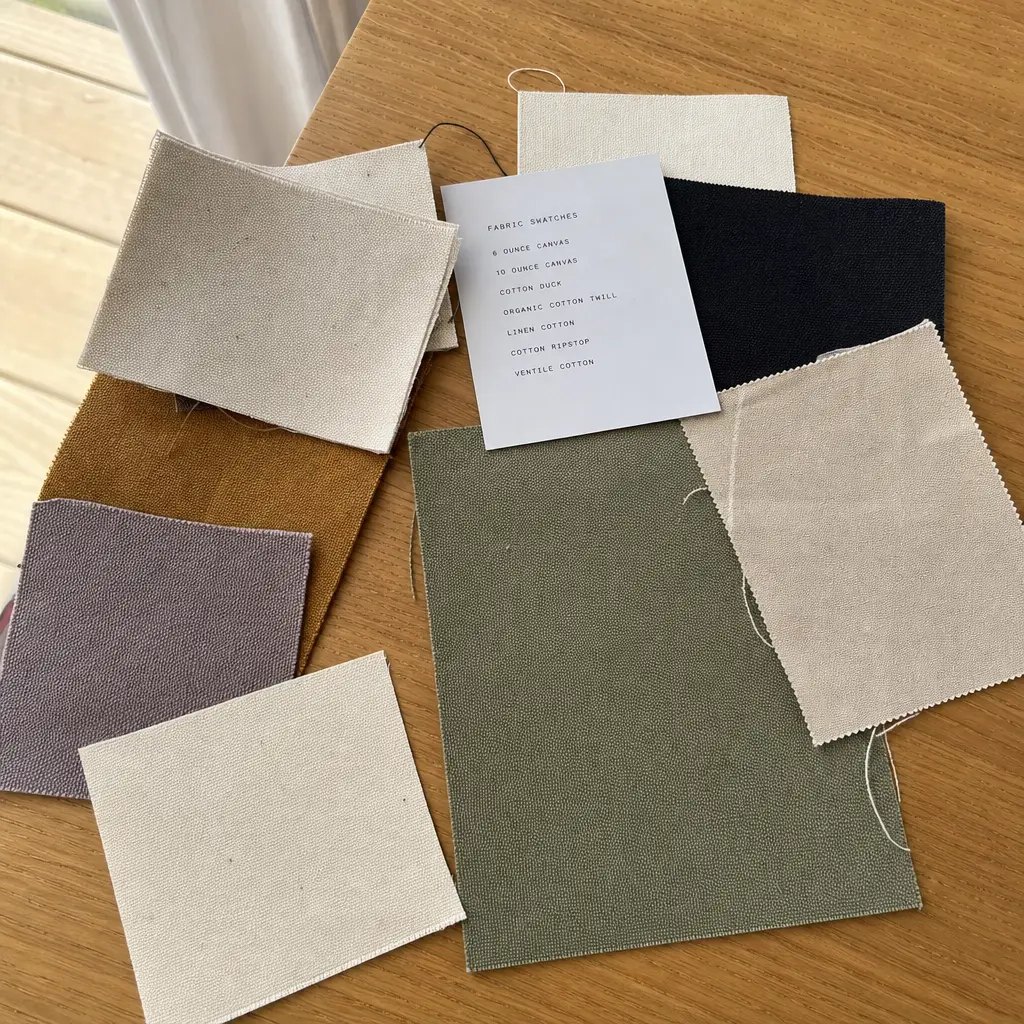
Fabric terms in tote quotes can be messy. One supplier quotes by ounce, another by GSM, another by sample reference. Ask for the nominal ounce and the actual GSM. As a working guide, 8 oz cotton canvas is commonly around 270 GSM and 10 oz around 340 GSM, but this varies with weave, yarn, finishing, and test method. A tight 8 oz cloth may feel more stable than a loose 10 oz cloth, so buyers should judge opacity, hand feel, surface texture, and seam behavior, not the ounce number alone.
For artisan bakery totes, 8 oz to 10 oz organic cotton canvas or twill is often the practical range. A 5 oz or 6 oz cotton tote can work for lightweight giveaways or insert bags, but it may look thin for a paid retail item and can show contents through the fabric. A 12 oz tote gives more structure and a more substantial hand, but it also raises fabric cost, sewing effort, carton weight, and sometimes MOQ pressure.
Organic cotton claims need careful wording. Some buyers need certified organic cotton because the product will be sold or promoted with a certified claim. In that case, confirm the relevant documentation before PO, including supplier and processor scope coverage and transaction documentation where applicable. Other buyers only want cotton sourced as organic material and do not intend to make a certified product claim. Those are different compliance paths. Marketing copy should never promise more than the paperwork supports.
Natural unbleached organic cotton suits many bakery brands because the warm base color fits bread, flour, and craft positioning. It may also show seed flecks, shade variation, slubs, and minor yarn irregularities. Those features are not automatically defects. Still, define the line clearly: oil stains, mildew odor, dirty crease marks, holes, black streaks, and foreign fibers should not be accepted as natural character.
- 5-6 oz cotton is usually best reserved for light giveaways, inserts, or very budget-sensitive campaigns.
- 8 oz organic cotton can work for bread, light pastry boxes, farmers markets, and softer folded storage.
- 10 oz organic cotton is safer for paid retail, gift bundles, coffee bags, jars, and subscription programs.
- 12 oz organic cotton gives more structure but raises unit cost, freight weight, sewing difficulty, and MOQ pressure.
- Ask for actual GSM and agree a tolerance, commonly plus or minus 5% unless a stricter range is needed.
- Define acceptable seed flecks, slubs, and shade variation before approving production fabric.
Control Size, Gusset, and Pattern Details
Many quote differences come from pattern choices, not supplier margin. A flat tote is cheaper than a gusseted bakery carry bag because it uses less fabric, sews faster, and packs more compactly. For bakery retail, a finished size around 38 x 42 cm is a common starting point. The gusset, however, may matter more than the front panel. An 8-10 cm bottom or side gusset helps pastry cartons, jars, and gift sets sit naturally.
The RFQ should state finished dimensions after sewing and pressing, not cut-panel dimensions. Cotton relaxes, shrinks, stretches, and shifts during production. Specify width, height, gusset depth, handle drop, handle width, seam style, stitch color, label position, and measurement tolerance. For many tote programs, plus or minus 1 cm on width and height is a realistic commercial tolerance. Smaller details, such as handle width or label placement, may need tighter control.
Pattern simplicity is one of the strongest MOQ levers. An open tote with reinforced handles and a clean print is easier to quote, produce, and inspect than a lined bag with a zipper, internal pocket, piping, special binding, and multiple labels. Add construction details only when they support the sales channel or customer use. Otherwise, a manageable tote order can become a small custom-bag project with higher minimums.
For multi-location bakery groups, avoid changing dimensions by shop unless there is a real operational reason. Keep one master pattern and vary artwork, carton marks, or hangtags if needed. Standard pattern control reduces cutting waste, limits operator setup changes, and makes inspection more objective across every design.
- Specify finished width, height, gusset, handle drop, handle width, seam type, stitch color, and measurement tolerance.
- Test the sample with the largest pastry box, bread bundle, or gift set staff will actually pack.
- Use an 8-10 cm gusset when boxy bakery products or holiday hampers are common.
- Avoid unnecessary pockets, zippers, linings, and trims unless they improve the commercial use case.
- Reject samples where the gusset pulls the logo badly off shape when filled with realistic contents.
- Ask for loaded sample photos using dummy cartons with dimensions supplied by the buyer.
Engineer Handles for Reuse and Comfort
Handles look like a small detail until they fail. Bakery customers may carry the tote by hand, over the forearm, or on the shoulder while holding coffee or another shopping bag. A handle that seems fine on an empty sample can feel sharp or unstable with jars, coffee bags, or flour inside. Handle width, drop, reinforcement, and stitch quality belong in the RFQ, not in a late-stage comment on the sample.
For reusable bakery totes, self-fabric handles around 2.5-3 cm wide are a practical starting point. Narrow tape handles can reduce cost, but they may feel less comfortable under load and can look less premium. Define handle drop separately from total handle length. A short drop supports hand carry and fast counter packing. A longer drop supports shoulder carry but changes the look of the bag and may make it hang differently on a display fixture.
The attachment method should be visible and consistent. Box stitching, cross stitching, or bar tack reinforcement should be secure at all four stress points. Check stitch density, skipped stitches, broken threads, loose thread nests, and tearing around the reinforcement. Handle failure should be a major or critical defect because it affects safety and basic function.
Small artwork lots become harder to negotiate when each version also changes handle color, handle length, tape material, or reinforcement. If the buyer wants several bakery designs, keep the handle spec identical. Suppliers are often more flexible with print splits than with repeated sewing changes.
- Define handle drop, total handle length, handle width, handle material, reinforcement style, and stitch color.
- Use the same handle spec across artwork versions to protect cutting and sewing efficiency.
- Check both handles for length consistency and equal placement from side seams.
- Classify loose reinforcement, skipped stitches, and handle tearing as major or critical defects.
- Ask whether handles are cut from the same organic cotton lot or supplied as separate tape with different composition.
- Test loaded carry comfort, not only static strength.
Match Print Method to Bakery Artwork
Most artisan bakery graphics suit water-based screen printing. Logos, wordmarks, line drawings, wheat motifs, bread illustrations, and market-style graphics often use one to three solid colors. At several hundred pieces per artwork, screen printing can give stable unit economics. When cured correctly, water-based ink also keeps a softer hand feel than many heavier print options.
Natural organic cotton is not a bright white paper base. Colors can look warmer, softer, or slightly textured because the fabric is beige and fibrous. Approve color on the final production fabric or an agreed equivalent, not only on a Pantone book, monitor proof, or supplier photo. A strike-off is worth the time when the logo color affects store presentation or brand consistency.
Digital printing can help with complex illustrations, gradients, many colors, or low-volume seasonal artwork. It is not automatically the better MOQ solution. On textured cotton, fine lettering, pale colors, and gradients may lose clarity. Digital printing can also have a different hand feel and durability profile. For bakeries with both evergreen and seasonal designs, a mixed approach often makes sense: screen print the core program and use digital only when artwork complexity justifies it.
Print MOQ may be separate from bag MOQ. A factory may cut and sew 1,000 identical bodies, then split them into five artwork versions of 200 pieces if each version covers its own screen and setup charges. Ask for the minimum per print design, screen cost, color count effect, print position charges, and whether print sequencing affects lead time.
- Supply vector artwork with outlined fonts, clean line weights, and maximum print width and height.
- Approve print color on final fabric because natural cotton shifts the visual shade.
- Set print placement tolerance, commonly around plus or minus 5 mm for simple centered front prints.
- Define unacceptable defects: ink transfer, cracking, dusting, heavy pinholes, misregistration, and poor coverage.
- Confirm curing conditions because under-cured ink can offset onto tissue, pastry boxes, shelves, or adjacent totes.
- Separate costs by artwork, color, screen, print position, and strike-off before negotiating MOQ.
Break Down MOQ Drivers Before Negotiating
A factory MOQ is usually a bundle of smaller minimums. Fabric mills may have minimums for weaving, finishing, dyeing, fabric width, shade lots, or certified material handling. Cutting rooms need enough pieces to spread fabric efficiently. Sewing lines need enough volume to justify setup, operator instructions, and inline checks. Print workshops need enough units to cover screens, ink preparation, color matching, registration, and curing. Packing teams need consistent carton formats and labeling rules.
If the supplier already holds suitable natural organic cotton fabric, a lower MOQ may be possible. If the order needs custom woven fabric, dyed cotton, nonstandard GSM, a special wash, or certified documentation, the fabric step may set the first hard minimum. Ask which step creates the MOQ. The answer tells you what to change. If fabric is the barrier, standardize weight and shade. If print is the barrier, reduce artwork versions or color count. If packing is the barrier, simplify carton assortments and avoid unnecessary individual polybags.
Frame negotiation as a trade. Instead of asking for 300 pieces against a 1,000-piece MOQ with no adjustment, offer something that lowers supplier risk: one shared body, natural fabric, flexible production timing, fast artwork approval, paid sample and screen charges, simple packing, or an annual forecast with a firm first order. The supplier can then decide whether a smaller launch run is operationally reasonable.
For bakery groups, consolidated body volume is often the strongest lever. Five shops may each need 200 pieces, but a shared 1,000-piece body order gives the factory a better run. Still, calculate the full cost of artwork splits, carton separation, labels, inspection time, and warehouse receiving. Consolidation works only when operational complexity stays under control.
- Fabric MOQ is affected by mill minimum, GSM, fabric width, color, finishing, stock availability, and certification handling.
- Cutting MOQ improves when all designs share size, gusset, panel layout, seam type, and fabric width.
- Sewing MOQ is affected by handle type, reinforcement, labels, pockets, closures, and operator setup time.
- Print MOQ depends on artwork versions, screen count, color count, print position, registration, and curing capacity.
- Packing MOQ is affected by individual bags, barcodes, mixed cartons, retail labels, carton marks, and pallet rules.
- Stronger MOQ terms usually come from simplification, not from pressure alone.
Compare Quotes on Total Landed Cost
A unit price is only one line in the buying decision. A quote may exclude sample charges, screen charges, certification document fees, carton data, inspection support, inland transport, export handling, or courier costs. EXW may look lower than FOB because it leaves more work for the buyer. A heavier 12 oz tote may add only a small amount at factory level but increase freight through carton weight and volume.
A useful quote sheet includes finished size, GSM, fabric type, fabric color, gusset, handle spec, label, print method, print area, color count, artwork count, packing method, carton dimensions, gross weight, net weight, pieces per carton, sample terms, setup fees, inspection terms, lead time, payment terms, quote validity, and incoterm. If those fields are missing, the quote is not ready for supplier comparison.
Ask for price breaks at realistic quantities such as 300, 500, 1,000, 2,000, and 3,000 pieces. The supplier should explain what changes at each break. Sometimes the unit price drops because fabric is used more efficiently. Sometimes it drops because fixed setup charges are spread across more pieces. For small bakery launches, these fixed charges can make the all-in cost per piece much higher than the headline production unit price.
Risk has a cost too. A supplier with a realistic lead time, clear sample process, proper carton data, and documented QC may be a better choice than a vague low quote. Seasonal bakery campaigns have tight retail windows. Paid merchandise leaves less room for dirty packing, poor printing, or weak construction.
- Compare suppliers only when the physical tote, print spec, packing, certification requirement, and incoterm are the same.
- Separate unit price from sample fee, screen fee, artwork fee, document fee, courier, inspection, and logistics charges.
- Request FOB port or another clear incoterm, not a price with unclear export responsibility.
- Model carton volume and weight because totes can be bulky even when unit weight is low.
- Ask for quote validity, since cotton price, exchange rate, capacity, and freight assumptions can change.
- Reject comparisons between a 6 oz flat tote and a 10 oz gusseted tote unless the specification difference is intentional.
Use Sampling to Prove Production Conditions
Sampling should reduce uncertainty, not create false confidence. A neat sample made from substitute fabric is useful as a shape prototype only. The pre-production sample should use the final organic cotton fabric or a formally approved equivalent, final handle drop, final reinforcement, final label position, actual print method, actual ink, and intended packing fold. If bulk fabric has not been booked yet, split approval into prototype approval and pre-production approval after fabric arrival.
Review the sample as staff and customers will use it. Load it with real products or dummy cartons matching the bakery's packaging. Check whether the gusset supports boxy goods, whether the print distorts, whether handles feel comfortable, and whether seams strain. Fold the bag the way it will be packed and see whether the fold crosses a large logo or creates a visible retail crease.
Record approval in measurable terms. Measure width, height, gusset, handle drop, handle width, print placement, label position, seam appearance, thread color, and fabric shade. Photograph the front, back, inside seams, handles, print close-up, labels, and packing fold. Buyer and factory should each keep a signed, sealed, or tagged reference sample so final inspection is not based on memory or phone photos.
For multi-design programs, approve one master body sample and separate print strike-offs for each artwork if the body is unchanged. This controls color and print quality without remaking a full tote for every design. Any change after approval should trigger written confirmation of cost, MOQ, lead time, and QC impact.
- Approve a prototype for shape, then a pre-production sample for final material and production method.
- Measure the sample and record all tolerances before authorizing bulk cutting or printing.
- Run a practical load check with bakery-equivalent contents before approving a retail tote.
- Use a dry white cloth rub check after curing to screen for ink transfer or dusting.
- Keep buyer and factory reference samples, ideally sealed, signed, or tagged with date and PO number.
- Freeze changes after approval unless price, lead time, MOQ, and QC criteria are updated in writing.
Write the QC Plan Before Bulk Production
Quality control should be agreed before production starts. For organic cotton bakery totes, the plan should cover fabric, measurements, sewing, handles, print, labels, odor, cleanliness, packing, and carton marks. If the buyer uses AQL inspection, define the inspection level and acceptable quality limits. If the buyer uses a custom sampling plan, state how many pieces will be checked and what counts as minor, major, or critical.
Measurement checks must be repeatable. Inspectors should measure finished dimensions after sewing and normal pressing, using the same reference points each time. Handle drop should be measured from the bag mouth to the handle apex. Print placement should be measured from fixed seams or edges, not judged by eye. For a simple centered logo, plus or minus 5 mm is often workable; tighter placement should be confirmed with the printer before PO.
Defect classification prevents arguments. Small seed flecks may be acceptable on natural cotton. Oil stains, mildew odor, holes, heavy shade mismatch, ink transfer, open seams, broken handle reinforcement, and incorrect artwork should not be treated as normal variation. State which defects are minor, major, and critical, and whether any critical defect triggers shipment hold.
QC evidence matters after the cartons leave the factory. The final inspection record should include approved sample comparison photos, a measurement table, defect list, load-test result, print rub result, carton condition, packing list verification, and carton mark check. That record helps with supplier correction, internal receiving, and any remake or credit discussion.
- Set inspection method, sample size, defect classification, and acceptance limit before production starts.
- Measure GSM, finished size, gusset, handle drop, handle width, and print placement against agreed tolerances.
- Classify handle failure, open seams, incorrect artwork, severe stains, mildew odor, and ink transfer as serious defects.
- Check print rub, curing, registration, coverage, pinholes, cracking, and offset risk before shipment.
- Verify carton labels against PO, SKU, artwork version, bakery location, quantity, and carton number.
- Require inspection photos and measurement records so disputes are based on evidence, not opinion.
Specification comparison for buyers
| Procurement decision | Factory-ready specification | Typical tolerance or checkpoint | MOQ and cost risk to verify |
|---|---|---|---|
| Fabric weight | 8 oz to 10 oz organic cotton canvas or twill; ask supplier to state actual GSM, weave, yarn count if available, and finish | Nominal 8 oz is commonly around 270 GSM and 10 oz around 340 GSM, but approve measured production fabric within an agreed GSM tolerance, often plus or minus 5% | A quote using lighter 5 oz or 6 oz cotton may look attractive but can reduce opacity, load performance, retail value, and repeat-use perception |
| Finished size | Common bakery tote size: about 38 x 42 cm, with 8-10 cm bottom or side gusset if pastry boxes or gift packs are common | Measure finished dimensions after sewing and pressing; agree tolerance such as plus or minus 1 cm for width and height and plus or minus 0.5 cm for handle width | Flat tote pricing cannot be compared with gusseted tote pricing; gussets increase fabric consumption, sewing time, and carton volume |
| Handle construction | Self-fabric handles 2.5-3 cm wide, reinforced with box stitch, cross stitch, or bar tack at each attachment point | Measure handle drop from bag mouth to handle apex; check both handles for length consistency, reinforcement placement, and secure stitching | Changing handle length, tape type, color, or reinforcement across small artwork lots can raise MOQ or setup cost |
| Load requirement | Define normal and maximum bakery load, such as 3-5 kg depending on contents; test with dummy cartons, bread, jars, coffee bags, or calibrated weight | A practical buyer test is 1.5 times the intended maximum load for a set hold time, with no seam opening, handle tearing, or major elongation | Generic supplier claims such as strong or heavy duty are not enough; the test must match bakery contents and failure criteria |
| Print method | Water-based screen print for one to three solid colors; digital print or transfer only for complex artwork, gradients, or low artwork quantities | Approve strike-off on final fabric; set print placement tolerance, commonly plus or minus 5 mm for simple front prints and tighter only if realistic | Each artwork, color, screen, and print position may carry setup charges, so many small seasonal graphics can raise the true landed cost |
| Organic claim | Define whether buyer needs certified organic cotton documentation or only organic cotton material sourcing with supplier declaration | For certified claims, confirm scope certificate coverage, transaction certificate availability where applicable, and chain-of-custody responsibilities before PO | Certification document fees, minimum certified fabric lots, or factory certification gaps can change MOQ after the buyer has already approved a design |
| Sample approval | Prototype for shape and function, then pre-production sample using final fabric, final print method, final handle, label, and packing fold | Record measurements, print color, fabric hand feel, defect limits, and load-test result; buyer and factory should each keep a sealed or signed reference sample | Approving a substitute-fabric sample can lead to bulk differences in shade, shrinkage, print color, stiffness, and handle strength |
| Packing format | Bulk inner polybag of 25 or 50 pieces per carton for wholesale; individual polybag only when retail barcode or store handling requires it | Confirm carton size, gross weight, net weight, pieces per carton, carton marks, moisture control, and whether fold line crosses the logo | Over-compression can crease prints; unclear carton labels create receiving errors for multi-location bakery groups |
| Quote structure | Request unit price by quantity break, setup charges, sample fees, document fees, carton data, lead time, inspection terms, payment terms, and incoterm | Compare quotes only when GSM, finished size, gusset, handle, print area, color count, packing, certification, and incoterm match | A low unit price may exclude screens, courier, inland freight, export handling, inspection support, or certification paperwork |
Buyer checklist before sampling
- Define the tote's commercial job: paid retail merchandise, bread subscription bag, farmers market carry bag, holiday hamper packaging, wholesale customer gift, loyalty reward, staff item, or event giveaway.
- Set target quantities by artwork and by shared tote body volume, for example 200 pieces per location but 1,000 pieces in one fabric and sewing run.
- Decide whether your sales claim requires certified organic cotton documentation, such as a valid scope certificate and transaction certificate where applicable, or whether an organic cotton supplier declaration is sufficient for the intended wording.
- Lock the fabric spec: organic cotton type, canvas or twill weave, nominal ounce and actual GSM, natural or dyed shade, finishing process, shrinkage expectation, and acceptable seed flecks or slubs.
- Specify finished measurements after sewing: width, height, bottom or side gusset, handle drop, handle width, seam construction, stitch color, label position, and dimensional tolerance.
- Define load performance using real bakery contents and weight, then state a pass condition such as no handle tear, no open seam, no critical distortion, and no major stitch failure after the agreed test.
- Provide vector artwork with outlined fonts, Pantone or brand color references, print width and height, placement from fixed seams or bag edges, color count, and whether color shift on natural cotton is acceptable.
- Ask whether multiple bakery designs can share one bulk fabric lot, one tote body, one handle construction, and one sewing run while paying separate print setup charges by artwork.
- Require a prototype sample for new patterns and a pre-production sample made with final fabric, final print, final handle drop, final label position, and final packing fold before mass cutting or printing.
- Request an inspection plan with AQL level or agreed sampling method, defect classification, measurement checks, load test, print rub test, carton inspection, and photo record requirements.
Factory quote questions to send
- What is the MOQ for this exact organic cotton fabric weight, weave, color, and finish, and is the minimum driven by mill fabric MOQ, dyeing or finishing, cutting efficiency, sewing setup, printing setup, packing, or certification handling?
- Do you have suitable organic cotton fabric in stock, and if yes, can you provide current GSM, fabric width, available meters, shade lot, and whether the stock can support repeat orders?
- Can several bakery artwork versions share the same bulk fabric lot and sewing run if the tote body, fabric color, GSM, gusset, handle, and packing method remain identical?
- What are your price breaks at 300, 500, 1,000, 2,000, and 3,000 pieces, and which cost elements change at each break: fabric, sewing, printing, setup, packing, inspection, or logistics?
- What is the price difference between 8 oz, 10 oz, and 12 oz organic cotton canvas for the same finished dimensions, gusset, handle, print area, color count, label, and packing method?
- Is the quoted cotton certified organic or only described as organic cotton material, and which scope certificate, transaction certificate, supplier declaration, or other document can be supplied for our intended claim?
- Is your factory or subcontracted processor certified for the processing step if certified product claims are required, and are document fees included in the quote or charged separately?
- Which print method do you recommend for unbleached organic cotton, and what should we expect for color tolerance, ink hand feel, curing time, dry rub performance, and edge sharpness?
- How do you charge for screen setup, artwork separation, print strike-offs, color matching, sample making, courier, bank fees, inspection support, and certification documents?
- What is the sample lead time for a shape prototype and for a pre-production sample using final fabric, final handle drop, final print placement, final label, and final packing fold?
Quality-control points to confirm
- Fabric GSM should be verified from production fabric by supplier report or by cutting and weighing a known area; agree a tolerance such as plus or minus 5% unless the buyer has a stricter requirement.
- Finished dimensions should be measured after sewing, pressing, and normal relaxation; record width, height, gusset, handle width, and handle drop against agreed tolerances.
- Handle attachments should be inspected from the outside and inside of the bag, checking box stitch, cross stitch, bar tack, stitch density, back-tacking, skipped stitches, loose threads, and fabric tearing around stress points.
- Load testing should reflect the bakery's intended maximum contents, not a vague heavy-duty claim; check seam opening, handle elongation, fabric distortion, and comfort after the agreed load and hold time.
- Print placement should be measured from fixed points such as side seam, bottom seam, bag mouth, or gusset edge; visual centering alone is not enough when panels shift after folding.
- Print quality should be checked for coverage, registration, pinholes, ink buildup, cracking, dusting, dry rub transfer, and curing; ink must not transfer onto pastry boxes, tissue, shelves, or adjacent totes.
- Natural cotton defects should be pre-classified: small seed flecks and minor slubs may be acceptable, while oil stains, mildew odor, dirty fold lines, dark streaks, holes, and foreign fibers should be major or critical depending on severity.
- Seams should be checked for skipped stitches, broken stitches, open corners, seam puckering, uneven topstitching, raw edges, fraying at the mouth, twisted handles, and inconsistent thread color.
- Labels and branding should match the approved sample for position, orientation, spelling, material, stitch method, and regulatory wording if any fiber-content or origin label is required.
- Packing should protect against humidity, carton dust, print offset, excessive compression, mixed artwork errors, barcode mistakes, and unclear carton labels for SKU, artwork version, quantity, carton number, and PO number.