Start With the Launch Date, Not the Bag
Organic cotton totes for artisan bakeries usually look simple, but the schedule is rarely just cut, sew, print, and ship. A bakery program may involve a store opening, seasonal bread launch, holiday hamper, loyalty gift, or wholesale distributor campaign. Those dates are fixed by marketing and retail operations, while the bag timeline depends on artwork approval, organic fabric availability, sampling, printing, inspection, and freight booking.
For procurement teams, the safest way to plan is to work backward from the in-store date. Add time for warehouse receiving, store allocation, and any rework buffer before calculating the ex-factory deadline. A supplier's quoted production time only matters after the specification is frozen, deposit is received, artwork is usable, and the approved sample is signed off.
- Set the required in-store date and the warehouse arrival date separately.
- Reserve time for retail allocation if the bags ship to multiple bakery locations or distributors.
- Treat artwork approval, fabric approval, and sample approval as schedule gates.
- Do not compare lead times unless suppliers quote from the same starting point.
Choose Fabric Weight by Use, Not Habit
The most common mistake in bakery tote sourcing is choosing a fabric weight because it sounds premium. A 5 oz cotton tote can work for a low-cost handout, but it may feel weak when carrying sourdough loaves, jam jars, coffee bags, or packaged pastries. For paid retail merchandise or bakery gift sets, 8 oz and 10 oz organic cotton canvas are more practical starting points. Heavier 12 oz canvas gives a stronger hand feel but increases material cost, sewing time, carton weight, and freight volume.
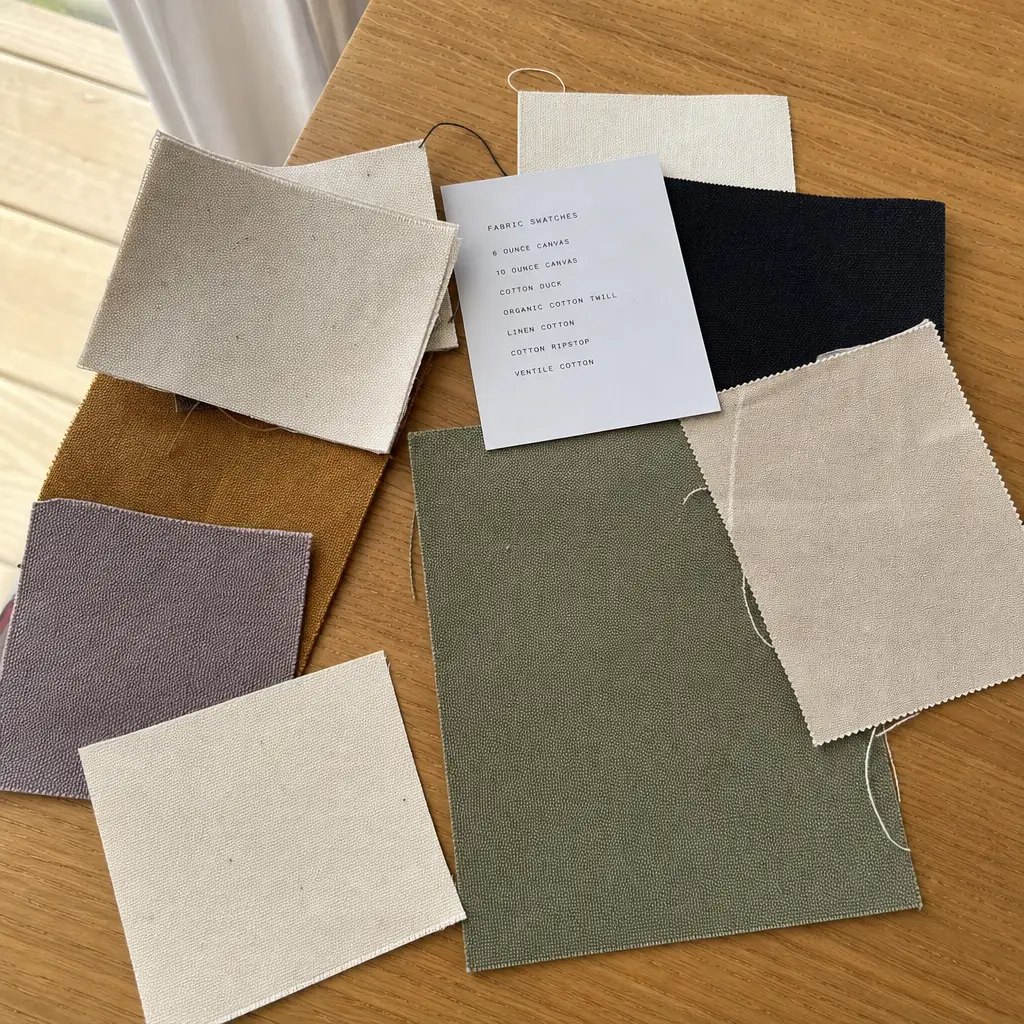
Ask suppliers to quote fabric weight clearly in oz and GSM because different factories describe cotton canvas differently. A practical comparison is 8 oz at roughly 270 GSM, 10 oz at roughly 340 GSM, and 12 oz at roughly 400 GSM, but the actual value depends on weave and finishing. The PO should state whether the weight is before washing, after finishing, or based on finished fabric. Natural unbleached organic cotton may also show seed flecks and shade variation, which can be acceptable if approved in advance.
- 5-6 oz: low-cost giveaway, light bakery flyer bag, limited load expectation.
- 8 oz: balanced choice for folded checkout tote and moderate retail use.
- 10 oz: strong retail feel for bread, coffee, jars, and bakery merchandise.
- 12 oz: premium structure, higher cost, more carton volume, slower sewing speed.
Define the Bag Body Before Artwork
A bakery tote has to carry products that are bulky but not always heavy. Long baguettes, round loaves, pastry boxes, and coffee packs all behave differently inside a flat bag. If the tote is too narrow, bread packaging corners push against the seams. If the handle drop is too short, customers cannot carry the bag comfortably over a coat. If the gusset is missing, the bag may look flat on a product page but fail at the counter.
A reliable bakery tote specification should include finished width, height, bottom gusset, side gusset if any, handle width, handle length, handle drop, seam allowance, and reinforcement method. For many artisan bakery programs, a size around 38 x 42 cm with an 8-10 cm bottom gusset works better than a plain flat tote. Handle drop often sits around 25-30 cm for shoulder carry, but a shorter hand-carry style may suit gift packaging.
- Use a bottom gusset when the tote needs to stand with bread or packaged food inside.
- Specify cross-stitch or bar tack reinforcement for handles, not just 'strong handles'.
- Keep print artwork away from folded bottom panels and heavy seam zones.
- Test one sample with the actual bakery box, loaf bag, coffee pack, or jar set.
Match Print Method to Bakery Artwork
Most bakery brands use simple logos, line drawings, store names, flour motifs, or seasonal messages. Water-based screen printing is usually the right commercial choice for organic cotton totes when the artwork uses one to three solid colors. It gives a softer hand feel than heavy plastisol, works well on natural cotton, and is cost-efficient once the screen is made. For photographic bread imagery or many colors, heat transfer or digital printing may be considered, but the hand feel, wash behavior, and unit cost need closer review.
Print risk increases when the artwork has large solid ink blocks, fine serif lettering, small QR codes, or very tight registration between colors. Natural cotton canvas has texture, so ink coverage will not look like a coated paper label. Buyers should approve a print strike-off on the intended fabric, not only a PDF layout. The strike-off should show actual ink color, opacity, edge sharpness, and how the print behaves after folding.
- Use vector artwork for clean logo edges and stable print sizing.
- State Pantone references but approve physical strike-offs because cotton absorbs ink differently.
- Avoid very small text below practical screen-print limits on coarse canvas.
- Define acceptable print position tolerance, such as plus or minus 5 mm, before production.
Build MOQ Around Fabric and Print Setups
MOQ is not only a supplier policy. It comes from fabric purchasing, cutting efficiency, sewing line setup, print screen setup, and packing labor. An organic cotton tote may have one MOQ for the bag body and a different MOQ for each logo or print color. If a bakery group needs five store logos at 300 pieces each, the total 1,500 pieces may look efficient, but the factory still has five artwork setups and higher packing separation work.
A better approach is to standardize the bag body and limit the number of artwork variations in the first order. For example, use one natural 10 oz organic cotton tote body across all locations, then manage logo versions only where volume supports screen setup. If the buyer wants seasonal messages, a shared back print or hangtag may be cheaper than a separate full front print for every small batch.
- Separate MOQ for fabric, sewing, print setup, label setup, and packing version.
- Combine locations under one body spec to improve cutting and sewing efficiency.
- Use the same ink color across designs when possible to reduce setup waste.
- Review whether low-volume store versions are better handled with labels, tags, or later replenishment.
Plan Samples as a Decision Process
Sampling should not be treated as a formality. For bakery totes, the sample process protects the buyer from fabric surprise, handle discomfort, weak gussets, wrong logo scale, and packing mistakes. A practical sequence is digital layout, fabric swatch, print strike-off, then pre-production sample. If the schedule is tight, the swatch and digital layout can move in parallel, but bulk production should not start until the production sample reflects the approved materials and construction.
The approved sample becomes the standard for the factory floor and the inspection team. Buyers should mark the sample clearly with fabric weight, size, print position, handle length, stitch reinforcement, label placement, and packing format. If the sample uses substitute fabric only to save time, that exception must be written clearly; otherwise, a supplier may assume the buyer approved the hand feel and shade.
- Approve fabric hand feel and shade before approving artwork color.
- Review print strike-off on actual or equivalent canvas, not paper.
- Load-test the sample with real bakery products, not empty display photos.
- Keep one signed sample with the buyer and one with the factory before bulk cutting.
Use Lead Time Milestones Instead of One Date
A quote that says production takes 30 days is not enough for launch planning. Organic cotton fabric may need booking, dyeing, finishing, inspection, cutting, sewing, printing, packing, and export documentation. If the artwork changes after sampling, the clock resets for screen output and strike-off. If the buyer delays barcode data or carton marks, finished bags can sit unpacked while the shipment date slips.
For many import programs, a realistic planning window from specification freeze to export-ready goods is 45-75 days, depending on order quantity, fabric availability, design count, and factory season. This does not include ocean freight, customs clearance, domestic trucking, or retailer distribution. Air freight can rescue a launch but may destroy the margin on a bulky cotton tote, so it should not be the default backup plan.
- Day 0: deposit, confirmed PO, usable artwork, and written specification.
- Day 7-15: fabric swatch, strike-off, or sample approval depending on complexity.
- Day 20-45: bulk fabric, cutting, sewing, and printing after approval.
- Day 45-75: final packing, inspection, export booking, and document release.
Compare Quotes With the Same Cost Base
Two organic cotton tote quotes can look different because the suppliers are not quoting the same thing. One price may include 10 oz certified organic canvas, water-based screen print, reinforced handles, export carton, and carton marks. Another may use lighter cotton, no certification documents, basic stitching, and bulk packing only. The lowest unit price is not useful if it creates rework, rejected claims, or late delivery.
Procurement teams should request quote data in a structured format: fabric weight, finished size, print method, number of colors, artwork setup charges, sample charge, MOQ, packing method, carton quantity, carton dimensions, gross weight, Incoterm, payment terms, lead time, and quote validity. For landed cost comparison, carton volume matters because totes are bulky. Individual polybags, hangtags, and retail labels may also increase both labor and freight volume.
- Compare EXW, FOB, CIF, and DDP quotes only after normalizing freight and customs assumptions.
- Request carton CBM and gross weight early for freight estimation.
- Separate one-time screen charges from repeat-order unit prices.
- Confirm whether certification paperwork, labels, and inspection support are included.
Set Packing Rules Before Production Ends
Packing is often decided too late, but it affects cost, lead time, and warehouse receiving. Bakery tote orders may need flat bulk packing for distributor warehouses, individual paper bands for retail shelves, barcode stickers for chain stores, or assorted cartons by location. Each version adds labor and increases the chance of count errors. If packing rules arrive after sewing is complete, the factory may need to reopen cartons and repack, which can delay shipment.
For most B2B bakery programs, bulk flat packing in export cartons is the most efficient. If the bags are sold as retail merchandise, individual paper bands or hangtags may be better than polybags for brand positioning, but the buyer should check local retail and warehouse requirements. Maximum carton weight should be stated because 10 oz and 12 oz totes can become heavy when packed tightly.
- State pieces per inner pack, pieces per carton, and whether assortments are allowed.
- Provide carton marks, PO number, SKU, barcode, destination, and country-of-origin wording early.
- Define maximum carton gross weight for warehouse handling.
- Use moisture protection for export cartons, especially for natural cotton in humid seasons.
Prevent the Common Bakery Tote Failures
The most expensive failures are usually predictable. Print color can look too dull on natural cotton. Handles can be too short for shoulder carry. A tote can be too flat for bread and retail goods. Organic cotton claims can be written broadly without documents to support them. Cartons can arrive with mixed store logos because each design looked similar on the packing table.
Avoiding these problems requires measurable acceptance criteria, not long emails. The PO should define physical tolerances, approved sample status, artwork files, label wording, packing method, inspection level, and document requirements. A bakery buyer does not need to over-engineer a simple tote, but the factory needs enough information to repeat the same standard across cutting, printing, sewing, trimming, and packing.
- Wrong fabric: lock swatch, GSM or oz, shade, and organic claim scope.
- Wrong logo: approve strike-off, print size, Pantone target, and placement tolerance.
- Weak carry performance: test handle drop, gusset depth, seam strength, and loaded use.
- Packing errors: separate SKU codes, carton labels, and packing list by design or location.
Specification comparison for buyers
| Spec decision | Recommended option | When it fits | Buyer risk to check |
|---|---|---|---|
| Fabric weight | 8 oz or 10 oz organic cotton canvas for most bakery retail totes | 8 oz works for folded giveaway bags; 10 oz feels more retail-ready for bread, jars, and small grocery loads | Quotes using only GSM without oz conversion can hide lighter fabric; request finished fabric GSM and tolerance |
| Cotton construction | Organic cotton canvas or twill with documented yarn and fabric source | Best when brand messaging depends on natural fiber and a softer bakery-market look | Do not accept vague 'eco cotton' wording; require organic cotton claim wording, certification scope, and whether it covers fabric or finished bag |
| Bag shape | Flat tote with 8-10 cm bottom gusset and reinforced cross-stitch handles | Useful for bread loaves, packaged cookies, coffee bags, and retail counter displays | A thin non-gusset tote may photograph well but collapse under bakery goods; approve a loaded sample |
| Print method | Water-based screen print for 1-3 color bakery logos and seasonal artwork | Good balance of hand feel, durability, and unit cost for natural cotton bags | Large solid ink areas can stiffen the panel or show uneven coverage on slub fabric; review strike-off before bulk |
| Artwork placement | Centered front print with 2-3 cm safe margin from seams and bottom fold | Works for POS display, gift kits, and retail merchandise walls | Print too close to seams can distort after stitching; request print position tolerance in millimeters |
| MOQ planning | Group bakery locations or seasonal SKUs by same bag body, then change print color or logo if needed | Helps reach fabric dyeing, cutting, and print setup efficiency without overbuying every design | Too many small logo versions increase screen charges, packing complexity, and carton label errors |
| Packing format | Bulk packed flat in export cartons with inner polybag or paper band only if required | Best for warehouse intake, bakery store replenishment, and distributor handling | Individual bagging may add labor, plastic, volume, and longer packing time; define packing before quote comparison |
| Sampling route | Digital layout first, then print strike-off, then pre-production sample using approved fabric | Reduces schedule risk when launch artwork, handle length, and fabric hand feel all matter | Skipping the strike-off can cause wrong ink tone, poor opacity, or registration issues discovered too late |
| Lead time buffer | Plan 45-75 days from approved sample to export-ready goods, depending on fabric availability and order size | Realistic for importers planning holiday bakery campaigns or new store openings | Supplier lead time starts only after deposit, artwork approval, sample approval, and material confirmation |
Buyer checklist before sampling
- Define the tote use case: retail merchandise, bread purchase bag, loyalty gift, catering kit, or seasonal hamper packaging.
- Specify fabric as organic cotton canvas or twill with target oz/GSM, color, shrinkage expectation, and acceptable weight tolerance.
- Lock finished size, gusset size, handle length, handle width, seam construction, and reinforcement before requesting bulk pricing.
- Provide vector artwork, Pantone references, print size in centimeters, print position, and whether water-based or plastisol ink is acceptable.
- Separate required certification documents from marketing preference documents so suppliers quote the correct compliance scope.
- Request sample cost, sample timing, strike-off process, and whether the approved sample will be treated as the production standard.
- List carton packing, inner packing, carton marks, barcode needs, pallet restrictions, and maximum carton weight.
- Compare quotes using the same Incoterm, currency, payment terms, production lead time, sample lead time, and validity period.
- Build launch planning around approval milestones, not only the supplier's stated production days.
- Reserve extra time for artwork changes, organic fabric booking, public holidays, inspection, and vessel or courier booking.
Factory quote questions to send
- What exact organic cotton fabric will be used: canvas or twill, oz or GSM, yarn count if available, and finished fabric tolerance?
- Is the quoted material in stock, greige fabric ready for dyeing, or made to order after deposit?
- What certification documents can be supplied, and do they apply to fiber, fabric, dyeing, printing, or finished bag manufacturing?
- What is the MOQ for the bag body, and what is the MOQ or surcharge for each print design or colorway?
- Which print method is included in the quote, and what are the setup costs for screens, ink matching, and strike-offs?
- What are the sample lead time, production lead time after approval, and final inspection window before shipment?
- What is the allowed tolerance for finished size, fabric weight, handle length, print position, and print color?
- How many pieces fit per export carton, what is the estimated carton size and gross weight, and can the carton meet our warehouse limit?
- Are individual polybags, paper bands, hangtags, care labels, barcode stickers, or retail labels included or charged separately?
- What quote validity period applies, and which cost items may change if cotton price, exchange rate, or shipping schedule changes?
Quality-control points to confirm
- Fabric weight should be checked against the approved swatch with an agreed tolerance, commonly within plus or minus 5 percent unless otherwise specified.
- Finished bag dimensions should be measured flat, including width, height, gusset, handle drop, and handle width, with tolerances written into the PO.
- Handle attachment should use reinforced stitching, with no skipped stitches, loose threads, open seams, or visibly unbalanced bar tack placement.
- Print color should be compared against approved strike-off or Pantone target under consistent lighting, not only by phone photos.
- Print adhesion should survive a basic rub test and normal folding without cracking, excessive ink dust, or strong odor.
- Natural cotton shade should be controlled by approved bulk fabric, because unbleached organic cotton can vary between lots.
- Cartons should be clean, dry, strong enough for export handling, and marked according to buyer warehouse and PO requirements.
- Random inspection should include workmanship, print position, packing count, carton marks, barcode readability, and contamination check.