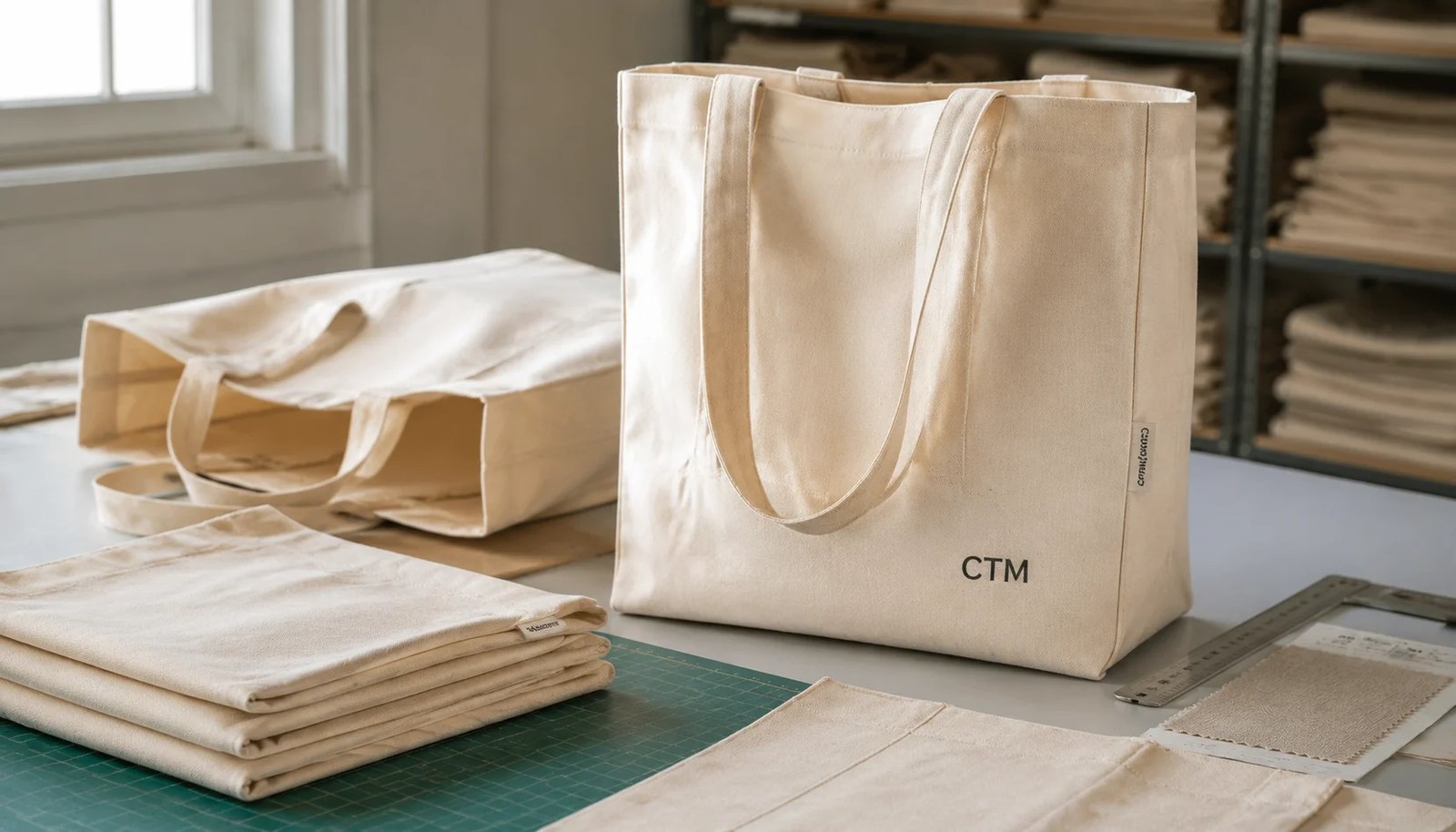
Buying Problem
Organic cotton totes for artisan bakeries look simple until the first bulk shipment arrives with thin fabric, uneven print, weak handles, or cartons that do not fit the distributor's receiving rules. The buying problem is not just choosing a tote bag. It is translating a bakery's brand use into measurable production terms that a factory, trading company, and inspection team can all follow.
For bakery buyers, the bag often sits between packaging and merchandise. It may carry bread and jars, work as a reusable shopping bag, or sell at the counter as a branded item. Each use pushes the specification in a different direction. A giveaway tote can tolerate lighter fabric and simpler packing. A paid retail tote needs better fabric body, cleaner print, stronger handles, and more consistent folding.
- For bread-only use, confirm length and gusset before discussing artwork.
- For paid retail use, treat the tote like a product, not a disposable packaging item.
- For distributor programs, include carton data and barcode requirements in the RFQ.
- For organic claims, align fabric documents and label wording before sampling.
Fabric Weight
Fabric weight is the first quote comparison point because it changes cost, hand feel, print result, carton volume, and perceived retail value. Many suppliers quote cotton totes in ounces while inspection teams may measure GSM. For organic cotton canvas, 8 oz is commonly used for lighter promotional totes, 10 oz to 12 oz is a practical bakery retail range, and 14 oz gives a heavier merchandise feel but increases cost and shipping volume.
Do not accept a quote that only says cotton canvas. A 260 GSM fabric and a 340 GSM fabric can both be described as canvas, but they will not carry the same weight or sit the same on a retail shelf. Natural organic cotton also has more visible specks and shade variation than bleached cotton. That is not automatically a defect, but it must be approved on the swatch and kept within a reasonable lot range.
- Event giveaway: 7-8 oz, roughly 200-230 GSM, only for light contents.
- Bakery retail counter tote: 10-12 oz, roughly 280-340 GSM, better fabric body.
- Premium merchandise tote: 12-14 oz, roughly 340-400 GSM, higher cost and CBM.
- Require the supplier to state whether GSM is before or after washing, finishing, or coating.
- Keep an approved fabric swatch sealed with date, supplier name, and purchase order reference.
Size And Load
Bakery totes fail when size is copied from a generic grocery bag without considering bread length, pastry box width, and the customer's hand carry position. A tall narrow tote may photograph well, but a baguette sleeve, sourdough loaf, and small jar can make it unstable. A bottom gusset helps the bag stand and increases useful capacity, but it also changes print placement and folding.
Handle drop is just as important as bag height. A short handle works for hand carry at the bakery counter. A longer handle allows shoulder carry but can drag when the tote is loaded with long bread products. For most bakery retail bags, buyers should approve handle width, handle drop, reinforcement style, and load test together, rather than treating handles as a standard accessory.
- Common finished size range: about 35-40 cm wide by 38-42 cm high for general bakery retail.
- Useful gusset range: about 8-12 cm for loaf and pastry box carry.
- Handle drop: about 22-28 cm for shoulder-friendly use, shorter if the bag must not hang too low.
- Load test: define a realistic weight such as 5 kg or 8 kg based on the bakery use case.
- Size tolerance: agree plus or minus 0.5-1.0 cm depending on construction and fabric weight.
Print Method
Most artisan bakery graphics are best handled with water-based screen printing if the artwork is solid, simple, and limited to a few colors. It gives a softer hand than heavy plastisol and suits the natural cotton look. The limitation is that natural cotton absorbs ink differently from white cotton, and fine lines can close up if the screen, ink, or fabric texture is not controlled.
Digital printing can help with short runs or detailed artwork, but it may not give the same opacity on unbleached canvas, especially for pale colors. Heat transfer can produce sharp graphics, but the hand feel and durability may not match a bakery's reusable positioning. The safest buying process is to approve a print strike-off on the actual fabric, then approve a full pre-production sample after sewing.
- Use vector artwork for logos, line drawings, and typography.
- Set Pantone references, but judge final approval against a physical strike-off.
- Avoid very small reversed text on coarse canvas.
- Keep print away from gusset folds unless distortion is intentionally accepted.
- For food-adjacent retail environments, review ink odor before bulk packing.
Organic Claims
The word organic creates documentation work. Buyers should separate the material claim from any certification logo claim. A factory may be able to purchase organic cotton fabric and provide a fabric certificate copy, but that does not automatically allow the buyer to use a certification mark on the bag or hangtag. Chain-of-custody requirements depend on the certification scope and the buyer's market.
The RFQ should state the exact claim that will appear on the product, label, hangtag, website, or retailer listing. If the bakery only needs a simple material statement, the required evidence may be different from a retailer requesting formal transaction certificates or audited supply chain documents. Lock this before print approval, because changing label wording after bulk sewing can cause rework.
- Separate fabric composition, organic cotton claim, and certification logo permission.
- Do not place certification marks in artwork unless document scope is confirmed.
- Request certificate copies early, not after production is complete.
- Make label wording part of sample approval.
- If selling through retailers, align claims with their compliance team before purchase order release.
MOQ And Cost
MOQ for organic cotton bakery totes is driven by fabric availability, printing setup, sewing line efficiency, label requirements, and packing. A supplier may accept 300 pieces if using available fabric and a one-color print, but the unit cost will usually include setup spread over a small quantity. At 1000 or 3000 pieces, fabric purchasing and production efficiency improve, but only if the specification remains stable.
The cheapest quote is often cheaper because a key element is different. Common differences include lower GSM, narrower handles, no gusset, fewer print colors, stock cotton instead of organic cotton, thin export cartons, or bulk packing instead of retail sleeves. Procurement teams should compare quotes line by line before pushing for a lower price, because an unclear price target can accidentally remove the features the bakery actually needs.
- Request tier pricing at 500, 1000, 3000, and 5000 pieces using the same specification.
- Separate unit price, screen charge, sample charge, label charge, and packing charge.
- Ask whether fabric is stock, reserved, or purchased after deposit.
- Compare CBM as well as unit price because heavier totes can change freight cost.
- Avoid changing print size or packing after price approval unless the supplier requotes.
Sample Approval
A proper pre-production sample should represent the approved bulk bag, not just show approximate artwork. It needs final fabric weight, final construction, final handle, final print method, final label, and the intended packing fold. If the supplier uses substitute fabric for a quick sample, mark it clearly as a fit or artwork sample only and do not approve it for bulk production.
Sample comments should be measurable. Instead of saying the print is too low, state the required distance from top edge or bottom seam. Instead of saying fabric feels thin, compare it to the approved GSM or swatch. The sample approval record should include photos, measured dimensions, fabric reference, print color decision, and a clear release statement for bulk production.
- Approve fabric swatch before approving the finished sample.
- Measure width, height, gusset, handle drop, and handle width on the sample.
- Photograph print close-up, inside seam, handle reinforcement, label, and packed fold.
- Keep one approved sample with the buyer and one with the factory production team.
- If changes are made after sample approval, issue a revised approval note rather than relying on chat messages.
Inspection Criteria
Quality inspection must define what is acceptable before the inspector opens cartons. For bakery totes, critical defects include wrong material claim, unsafe sharp contamination, severe mold or odor, missing required label, and completely wrong artwork. Major defects include open seams, weak handles, large stains, visibly crooked print, wrong size outside tolerance, and wrong packing. Minor defects include small loose threads, slight natural cotton specks within approved range, or small shade differences that do not affect saleability.
Use AQL or another agreed sampling plan, but do not rely on the sampling plan alone. The inspection checklist should include fabric weight verification, measurement, load test, print rub test, seam check, count check, carton condition, and moisture review. Bakeries and retailers are sensitive to smell and cleanliness, so odor, dust, and dirty packing materials deserve explicit attention.
- Measure at least several pieces across different cartons, not only top samples.
- Test handle strength using the approved load and duration.
- Rub the print with dry and slightly damp white cloth to screen for poor curing.
- Reject cartons with water damage, mold smell, or broken export edges.
- Record defect photos with carton number and piece number where possible.
Packing And Logistics
Packing decisions affect both presentation and landed cost. Bulk packing is efficient for bakery back-room replenishment, but individual sleeves or paper bands may be needed for retail display, subscription boxes, or ecommerce fulfillment. Each added packing step increases labor, material, carton volume, and inspection time. The buyer should decide this before the quote is finalized.
For importers and distributors, carton data is not an afterthought. Pieces per carton, gross weight, net weight, carton dimensions, and total CBM determine freight estimates and warehouse handling. Natural cotton also needs clean, dry storage. If the route includes long ocean transit or humid storage, lined cartons and moisture control should be considered, especially for heavier canvas that holds moisture longer.
- Define fold style so the front logo is protected and wrinkles are controlled.
- Use clean inner poly liner or approved paper lining inside export cartons.
- Specify carton marks, PO number, SKU, color, quantity, and destination if needed.
- Request carton drop suitability if the goods will move through retail distribution.
- Confirm pallet height, carton orientation, and barcode placement for warehouse receiving.
Schedule Risk
Lead time for organic cotton totes is usually split into material preparation, sample approval, bulk cutting and sewing, printing, finishing, packing, inspection, and shipment booking. The risky part is not always sewing. Delays often come from fabric sourcing, artwork revisions, certification document review, strike-off approval, or packing label changes. A buyer who only asks for production days may miss the real schedule.
Build the timeline backward from the bakery launch, seasonal campaign, or retailer delivery window. Artisan bakeries often order around openings, holidays, market events, and packaging refreshes. If the bag is needed for a fixed date, freeze artwork and packing early. A small late artwork change can restart print screens, delay strike-off approval, and push the shipment into a more expensive freight option.
- Typical sample development may take 5-10 working days after artwork and fabric are confirmed.
- Bulk production timing depends on quantity, fabric status, print complexity, and factory capacity.
- Inspection should be booked before the final packing date, not after cartons are already sealed and rushed.
- Holiday periods and cotton fabric supply changes should be built into the purchase schedule.
- For fixed launch dates, keep an air freight fallback cost visible before confirming the order.
Specification comparison for buyers
| Spec decision | Recommended option | When it fits | Buyer risk to check |
|---|---|---|---|
| Fabric weight for bread, pastry, and retail counter use | 10 oz to 12 oz organic cotton canvas, roughly 280-340 GSM before washing | Best balance for daily bakery retail bags, loyalty gifts, and paid merchandise with moderate load | Quotes may compare 8 oz against 12 oz without saying GSM; require fabric weight, weave, and finished size tolerance |
| Budget event tote versus retail merchandise tote | 8 oz organic cotton for giveaways; 12 oz or 14 oz for paid retail items | Use lighter fabric for opening events or catering inserts, heavier fabric for shop shelves and distributors | Low unit price may come from thin fabric, narrow handles, or no bottom gusset rather than better factory pricing |
| Handle construction for bakery carry weight | Self-fabric handles, 2.5-3.0 cm finished width, cross-stitch reinforcement | Suitable for baguettes, boxed pastries, jam jars, and mixed grocery add-ons | Handles that look acceptable in photos can fail after load testing if stitch density or reinforcement is weak |
| Print method for bakery branding on natural cotton | Water-based screen print for 1-3 solid colors; discharge or pigment ink only after strike-off approval | Works for flour bag style logos, simple bakery marks, and organic retail positioning | Natural cotton color varies by lot and affects ink shade; require print strike-off on actual fabric |
| Logo placement and print size | Front center print with 2-3 cm margin tolerance from seams and gusset folds | Keeps bakery logo readable when bag is loaded and displayed on retail hooks | Large artwork crossing side gussets may distort when sewn; approve a flat panel proof and finished bag sample |
| Organic claim handling | Use certified organic cotton fabric documentation and label wording approved by the buyer | Needed for retailers, brand owners, and distributors making organic material claims | Do not let supplier print certification logos unless chain-of-custody scope and permission are confirmed |
| MOQ logic for custom bakery totes | Practical MOQ often depends on fabric sourcing, dyeing or natural stock, print color count, and packing style | Useful when testing 500-1000 pieces first, then scaling to bakery chains or distributor programs | A very low MOQ can mean stock cotton substituted for organic cotton or higher hidden setup cost |
| Packing method for clean bakery retail presentation | Bulk packed in lined export cartons, or individual recycled poly/paper sleeves if retail shelf presentation needs it | Bulk packing fits back-of-house bakery replenishment; individual packing fits retail, gift sets, or ecommerce | Individual packing adds labor, material cost, volume, and inspection time; specify folding method and barcode needs |
| Inspection level before shipment | AQL inspection with defined critical, major, and minor defects plus carton drop and moisture checks | Appropriate for importers, retailers, and bakery groups that cannot rework bags after arrival | Without written tolerances, supplier may treat stains, skewed print, odor, or size variation as acceptable |
Buyer checklist before sampling
- Define finished tote size, gusset depth, handle length, and whether measurements are before or after washing or pressing.
- Specify organic cotton fabric weight in oz and GSM, plus weave type, color, shrinkage allowance, and acceptable shade variation.
- State the real use case: bread carry bag, counter merchandise, gift-with-purchase, catering insert, or retail resale item.
- Provide artwork as vector files with Pantone references, print dimensions, placement from seams, and maximum color count.
- Require a print strike-off on the actual organic cotton fabric before bulk production starts.
- Approve one pre-production sample with final fabric, final handle construction, final label, and final packing method.
- Set acceptable finished size tolerance, common range plus or minus 0.5-1.0 cm depending on bag construction.
- Define print acceptance criteria for color, registration, opacity, edge sharpness, hand feel, and wash or rub resistance.
- List sewing defect limits for loose threads, skipped stitches, open seams, crooked handles, puckering, and weak bartacks.
- Confirm packing: folding method, carton quantity, inner liner, carton marks, barcode labels, desiccants if needed, and pallet rules.
Factory quote questions to send
- What exact organic cotton fabric are you quoting: oz, GSM, weave, yarn count if available, natural or bleached, and certification document type?
- Is the quoted fabric from current stock or will it be woven or purchased after order confirmation?
- What is the MOQ at this fabric weight and print method, and what changes if we order 500, 1000, 3000, or 5000 pieces?
- Which print method are you quoting, how many colors are included, and what is the setup charge per color or screen?
- Can you provide a strike-off on actual organic cotton canvas before the pre-production sample?
- What finished size tolerance, handle length tolerance, and print placement tolerance can you hold in bulk production?
- Which defects are considered critical, major, and minor in your final inspection report?
- How many days are needed for material preparation, sampling, bulk sewing, printing, packing, and final inspection?
- What are the carton quantity, carton size, gross weight, net weight, and total CBM for the quoted order quantity?
- Does the quote include labels, hangtags, barcodes, individual sleeves, export cartons, moisture protection, and palletization if required?
Quality-control points to confirm
- Fabric weight verified against approved swatch, with GSM variation controlled within the agreed tolerance.
- Natural cotton shade compared under consistent light because unbleached organic cotton can vary between lots.
- Finished bag size checked at width, height, gusset, and handle drop after pressing and normal relaxation.
- Print color matched to approved strike-off, not only to a digital proof.
- Print adhesion, rubbing, odor, and cracking checked before packing, especially for water-based inks on canvas.
- Handle attachment inspected with cross-stitch or bartack reinforcement and a simple load test matched to expected bakery use.
- Seams checked for skipped stitches, open ends, puckering, loose threads, and inconsistent stitch density.
- Logo placement measured from top edge, side seam, and bottom seam to prevent visible bulk variation.
- Cartons inspected for correct count, clean inner liner, moisture control, carton marks, and scannable barcode labels when required.
- Final inspection photos include front, back, inside seam, handle attachment, label, print close-up, packed carton, and carton marks.