Start With the Studio Use Case, Not a Generic Tote
A yoga studio tote has to do more than hold a logo. Members may use it for a towel, stainless bottle, grip socks, strap, change of clothing, notebook, or small props. If the bag is sold at reception, it also needs to look tidy on a shelf and feel worth the retail price. Those real-use details change the specification: shoulder comfort, handle pull strength, bottom shape, print durability, and clean folding all become important.
Before requesting prices, decide what the bag is meant to do commercially. A welcome-kit tote can be lighter and simpler. A retail tote should have more body, neater finishing, and consistent presentation. A mat-and-prop carry bag needs longer handles, stronger attachment points, and usually more capacity. When a buyer sends only a logo and asks for an 'organic cotton tote quote,' suppliers often fill in the missing information with their cheapest standard construction. The quotes then look comparable on price but are not comparable in product quality.
A good RFQ gives the supplier the intended use, order quantity, delivery country, artwork, certification requirement, and packing standard. It also states the tolerances you expect. This makes the supplier's job easier and protects the buyer from late-stage add-ons. In yoga studio programs, the most common avoidable disappointments are fabric that feels too flimsy, handles that are too short for shoulder carry, and logo placement that does not match the approved mockup.
- Classify the product first: giveaway, welcome-kit bag, retail tote, or mat-and-prop carry bag.
- Avoid quoting from photos only; request pricing against a written spec sheet and artwork file.
- State whether organic certification documentation is needed for marketing, retail compliance, or internal ESG records.
- For retail sale, specify folding, hangtag, barcode, SKU separation, and carton marks.
- For repeat programs, keep a gold sample and version-controlled spec sheet so the next order does not drift.
Organic Cotton Claims: What to Ask for Before You Print Anything
The word 'organic' is used loosely in parts of the promotional-products market. Procurement buyers need to separate three things: the fiber claim, the certified production scope, and the transaction paperwork for the actual order. GOTS is a broader textile standard covering organic fiber content and processing requirements, including chemical restrictions and social criteria. OCS focuses on verifying the presence and chain of custody of organically grown material. The right route depends on how the studio plans to describe the tote and what the end customer, retailer, or internal policy requires.
Do not stop at a logo on a PDF. Check that the certificate is current and that the certificate holder matches the company performing the certified process. Review the certificate holder name, license or certificate number, product categories, processing scope, and validity date. If a trading company sends a mill certificate, ask how the certified material moves through cutting, sewing, printing, packing, and shipment without breaking chain-of-custody requirements. For stronger records, ask whether a transaction certificate or equivalent order-level document can be issued for your shipment.
Also be careful with certification marks on the bag or hangtag. Not every tote made with organic cotton can legally carry a GOTS label. Certification logos are controlled and usually require the correct certified supply chain and labeling approval. If you only need evidence that the fabric is organic cotton, say that plainly. If you intend to print a certification logo or make a specific certified-product claim, confirm the labeling rules before approving the sample, not after production is finished.
- Request a current GOTS or OCS scope certificate if certified organic cotton is part of the claim.
- Check certificate holder, validity date, product category, and processing scope, not just the logo.
- Ask whether a transaction certificate is available for the order if chain-of-custody proof is required.
- Do not print certification marks unless the supplier confirms the labeling rules and approval process.
- Write the exact supported claim into the PO, for example 'made with certified organic cotton fabric' only when documentation supports it.
Fabric Specification: Weight, Weave, Shrinkage, and Feel
Fabric weight shapes the tote's cost, durability, print result, and freight weight. Suppliers may quote in ounces per square yard or GSM. As a practical guide, 6 oz canvas is roughly 200 g/m², 8 oz is roughly 270 g/m², 10 oz is roughly 340 g/m², and 12 oz is roughly 400 g/m². The exact value can vary by construction, so use a target GSM and tolerance in your spec rather than relying on vague descriptions such as 'heavy canvas' or 'premium cotton.'
For many yoga studio retail totes, 8 oz organic cotton canvas is a sensible starting point. It has more body than a thin giveaway bag but is not as bulky or costly as 10-12 oz canvas. A simple event giveaway may work at 5-6 oz if it will not carry heavy props. A premium merchandise tote, especially one with a boxed gusset, pocket, or heavier trim, may justify 10 oz or higher. Ask whether the fabric is natural, greige, bleached, dyed, washed, or pre-shrunk. Each option affects shade, hand feel, shrinkage, and print behavior.
Shrinkage deserves attention because cotton canvas can move after washing. If the studio expects customers to launder the bag, request the supplier's expected dimensional change after washing, commonly tested using ISO 6330 or an equivalent internal wash test. Shrinkage of several percent can be normal for untreated cotton canvas, but it must be disclosed and considered when setting finished dimensions, care labels, and print placement. If wash performance matters, approve a washed sample as well as an unwashed one.
- Light giveaway: 5-6 oz, approximately 170-200 g/m², lower cost but less structure.
- Standard studio retail tote: 8 oz, approximately 270 g/m², a practical balance of feel, durability, and printability.
- Premium tote: 10-12 oz, approximately 340-400 g/m², stronger hand feel but higher unit and freight cost.
- Set GSM tolerance, commonly ±5%, and verify by fabric test, mill report, or incoming sample check.
- Ask for shrinkage data and the recommended care label before approving final dimensions.
- Natural cotton shade varies by lot; approve a physical fabric swatch instead of relying on a screen image.
Construction Details: Dimensions, Gusset, Handles, and Reinforcement
The right tote size depends on what students actually carry. A common retail tote may be around 38 x 40 cm, but that can be too shallow for a towel, bottle, and folded apparel. For yoga-related merchandise, buyers often review sizes around 38-42 cm wide by 40-45 cm high, with a 10-12 cm gusset when more volume is needed. If a rolled mat must fit inside, or partly inside, prototype the load first. Mat lengths and diameters vary enough that a guess can lead to an awkward bag.
Gusset construction changes both look and cost. A simple side or bottom gusset folds neatly and can be economical. It may bulge when loaded, though. A boxed gusset gives the tote a more stable base and a cleaner retail shape, but it uses more fabric and requires more careful sewing. For studio shops, a 10-12 cm boxed or full gusset is often practical. For welcome kits, a flat tote with no gusset may be fine if the goal is low cost and easy storage.
Handles are where many tote failures begin. Specify finished handle drop, not just total handle length, because drop is what determines comfort. For shoulder carry, a finished drop around 25-30 cm is usually more comfortable than short hand-carry handles. Width matters too; 2.5 cm is common, while wider handles spread weight better. Reinforcement should be named clearly as bar-tack, box-X, or another approved stitch pattern, with photos or a physical sample showing exactly what the bulk order should match.
- Define finished size as width x height x gusset, and state whether dimensions are measured laid flat or expanded.
- Use practical finished-size tolerances, such as ±1 cm to ±1.5 cm for sewn canvas totes, depending on bag size and buyer standard.
- Specify handle drop separately from handle tape length; shoulder carry usually needs a longer drop than hand-carry totes.
- Require reinforced handle attachments: bar-tack, box-X, or an approved double-stitch pattern, not a single weak seam.
- Confirm seam allowance and stress-point construction on the sample; the phrase 'strong stitching' is not enough.
- If adding an inner pocket, specify pocket size, placement, closure, and whether it changes packing or folding.
Logo Application: Match the Method to the Artwork and the Quantity
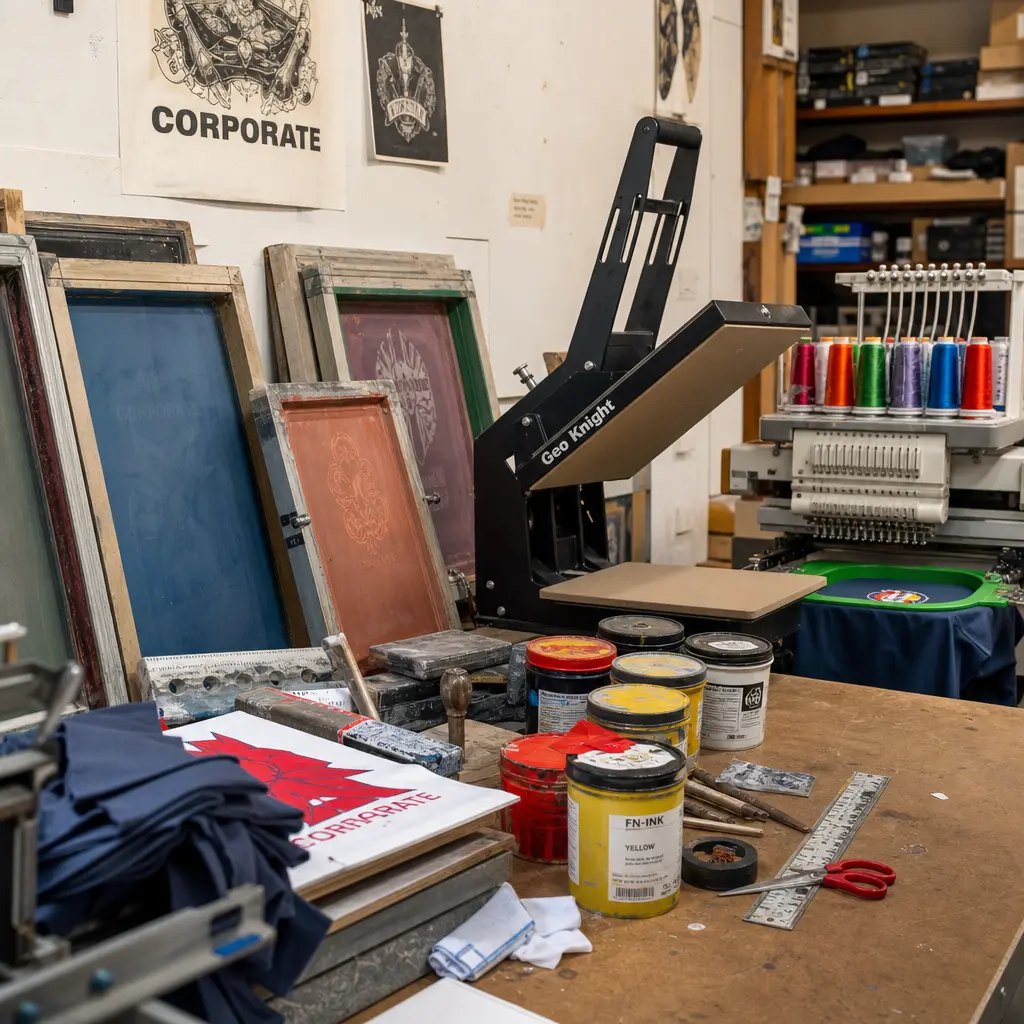
For many organic cotton yoga totes, water-based screen printing is the best starting point when the artwork uses one to three solid colors. It has a soft hand, works well on canvas, and fits the quiet, natural look many studios prefer. Results still depend on fabric shade, ink opacity, mesh choice, curing, and operator control. Approve a strike-off or pre-production sample on the actual fabric, especially if the design includes fine lines, small text, or light ink on natural cotton.
Heat transfer can solve certain problems: very small batches, full-color art, fast sampling, or artwork that is not suitable for basic screen printing. It may, however, feel like a film on canvas and may not match the sustainability story the studio wants to tell. Low-quality transfer material or poor pressing conditions can also lead to cracking or peeling. Embroidery gives a premium look for small marks, but dense embroidery can pucker lighter canvas and becomes expensive as stitch count increases. Woven labels are a good minimalist choice for side seams, repeat programs, or multi-color logos that would be costly to print.
Keep artwork costs visible in the quote. Ask for screen charges per color and print location, embroidery digitizing, woven label setup, label MOQ, hangtag setup, and any repeat-order charges. Then lock the placement standard. A logo that is only several millimeters off can look obviously wrong on a clean, centered tote. For yoga studios, where visual calm and brand consistency matter, a physical strike-off is usually worth the extra step.
- Best default for simple logos: water-based screen print on approved fabric with proper curing.
- Best for a premium small mark: embroidery or woven label, depending on fabric weight and brand style.
- Best for very low quantity or complex color: heat transfer or digital method, but approve hand feel and durability first.
- Ask for print size in cm, placement from top and side seam, number of colors, ink type, and curing method.
- Set print placement tolerance, commonly ±3 mm to ±5 mm depending on artwork size and production method.
- For Pantone matching on natural cotton, approve a physical ink strike-off because fabric color changes the perceived result.
MOQ and Pricing: Compare Quotes Without Buying the Wrong Bag
MOQ is rarely one simple number. A supplier may have one MOQ for custom-dyed fabric, another for natural stock fabric, another for woven labels, and another for screen printing. A stock organic cotton tote with a one-color logo may be available at a few hundred pieces. A fully custom size with dyed fabric, a special label, and retail packing may require a higher quantity. Ask the supplier to break MOQ down by component so you can decide which features are worth customizing.
For yoga studios ordering 300-1,000 pieces, the best value often comes from using an existing fabric quality and customizing the parts customers will notice: dimensions, print, label, and presentation. If several branches, retreats, or teacher-training events need different artwork, ask whether one bag body can be produced in a shared run and printed in separate versions. This can improve buying power, although each artwork version may still require its own screen, setup, or print approval.
Compare the full quote, not just the first unit price. A low number may exclude sample revisions, screen fees, organic documentation, individual packing, carton marks, inspection support, or inland delivery to port. A slightly higher quote from a supplier that includes stronger sewing, accurate packing, and reliable paperwork can be cheaper once receiving, sorting, and complaint handling are included. B2B procurement is not about finding the lowest first offer; it is about securing the lowest controlled landed cost for the required quality level.
- Ask for MOQ by fabric, bag color, size, print design, label, and packing format.
- Request tiered prices at realistic quantities, for example 300, 500, 1,000, and 2,000 pieces.
- Separate one-time setup charges from repeat-order unit prices.
- Confirm whether the sample fee is refundable, credited, or separate from the bulk order.
- Use one shared base bag for multiple studio designs where possible to improve buying power.
- Do not compare a stock tote quote with a custom cut-and-sew quote unless the construction differences are clear.
Sampling and Approval: Create a Gate Before Bulk Production
A digital mockup is useful, but it is not an approval sample. It cannot prove fabric weight, handle comfort, print opacity, shrinkage, stitch quality, or packing presentation. For a custom organic cotton tote, a safer sequence is fabric swatch, print strike-off if required, then a pre-production sample made with the intended fabric, construction, label, artwork, and fold. That pre-production sample becomes the gold sample for bulk production and inspection.
When the sample arrives, measure it rather than judging by eye. Check width, height, gusset, handle drop, handle width, logo position, label position, pocket size, and fold method. Load the bag with a realistic studio weight and inspect the handle attachments and bottom seams. If the bag will be washed, wash one sample according to the proposed care label, dry it, then record shrinkage and print change. Small issues at sample stage are easier to fix than explain later.
Make approval conditional and written. Instead of saying 'sample approved' when changes remain, use 'approved with changes' and list them clearly, such as handle drop plus 2 cm or logo 1 cm lower. Send annotated photos and update the spec sheet. If a supplier resists written corrections before cutting, treat that as a warning sign. Clear approvals reduce disputes because both buyer and factory know what the bulk goods will be judged against.
- Approve physical materials and construction, not only artwork mockups.
- Use a written sample checklist with measurements and pass/fail notes.
- Keep one signed gold sample with the buyer and one with the factory if possible.
- For any correction, update the spec sheet and request written supplier confirmation before bulk cutting.
- If wash performance matters, test shrinkage and print after laundering before final approval.
- Do not release bulk production until certification documents, artwork, packing, and tolerances are also confirmed.
Quality Control Plan: Define Defects, AQL, and Practical Checks
Quality control should be agreed before production starts, not negotiated after a failed shipment. For sewn bags, critical defects may include unsafe contamination, mold, wrong product, or illegal labeling. Major defects include open seams, broken handles, wrong fabric, wrong print color, severe stains, incorrect dimensions outside tolerance, missing labels, or cartons packed with the wrong quantity. Minor defects include small loose threads, slight removable marks, or small cosmetic issues that do not affect saleability. Put these categories in the inspection brief so the supplier cannot downgrade every problem to 'minor.'
Many buyers use ANSI/ASQ Z1.4 or ISO 2859-style AQL sampling for final random inspection. A typical consumer-goods approach may use General Inspection Level II with AQL 0 for critical defects, 2.5 for major defects, and 4.0 for minor defects, but the exact plan should match your risk level, brand positioning, and order size. Premium retail programs may need tighter limits or 100% checks for specific items such as barcode accuracy, visible logo defects, or destination packing.
A useful inspection goes beyond appearance. Measure a sample of bags, verify print placement, review stitching, check GSM records or incoming fabric test results, perform the defined load test, count cartons, and compare packing against the packing list. If using a third-party inspector, give them the gold sample, tech pack, approved artwork, carton mark, and defect classification. Without those references, the inspection can become a generic visual check that misses the details your buyer will notice.
- Set defect categories: critical, major, and minor before production.
- Use a recognized sampling plan where appropriate, such as ANSI/ASQ Z1.4 or ISO 2859, and state AQL levels in the PO.
- Include functional checks: handle pull/load test, seam inspection, measurement, and print adhesion or rub check if relevant.
- Inspect cartons and packing, not only the bags: count, SKU separation, carton marks, moisture, and damage.
- Define failed-inspection rules: rework, sorting, remake, discount, or reinspection at supplier cost if agreed.
- Keep inspection photos and retained samples for repeat-order comparison.
Packing, Cartons, and Logistics: Protect the Product Without Overpacking
Packing is both a cost decision and a sustainability decision. Bulk packing reduces plastic and labor, but bags still need to be folded consistently and protected from moisture and carton abrasion. Individual polybags protect retail presentation and keep hangtags clean, but they add material, labor, and volume. If plastic reduction is part of the studio's brief, ask about recycled-content polybags, paper bands, glassine-style sleeves, or bulk inner liners. Then test whether the alternative actually keeps the tote clean through transit.
Carton details affect freight, receiving, and storage. Request the number of bags per inner pack and master carton, carton dimensions, gross weight, net weight, and carton mark layout before shipment. A small studio may prefer lower carton quantities because cartons are easier to move and store. A warehouse may prefer standardized carton counts for faster receiving. If goods ship to several branches, ask the supplier to pack by destination and mark cartons clearly. Split packing may cost extra, but it can save hours of sorting after arrival.
Moisture control matters for cotton goods. Cartons should be dry, clean, and strong enough for export handling. If goods ship by ocean, ask whether desiccants, container moisture precautions, or pallet wrapping are recommended for the route and season. Do not let packaging reduction remove basic protection. A moldy, stained, or odor-affected organic cotton tote is wasteful no matter how little packaging was used.
- Choose packing by channel: bulk pack for internal use, retail pack for merchandise, destination pack for multi-location delivery.
- Confirm carton quantity, carton size, gross weight, net weight, and carton mark before freight booking.
- Ask for recycled or reduced-plastic options, but still require cleanliness and moisture protection.
- For retail, verify hangtag, barcode, folding direction, and visible logo orientation in the carton.
- For multi-branch studios, request carton marks by destination and a packing list showing carton-level quantities.
- Inspect for damp odor, mold, crushed cartons, and count mismatch before accepting goods into inventory.
Lead Time, Incoterms, and Landed Cost: Plan the Real Procurement Timeline
A realistic timeline includes artwork review, certification document review, sampling, sample revision, bulk material procurement, cutting, sewing, printing, finishing, inspection, packing, export handling, freight, customs clearance, and inland delivery. A simple stock tote with a one-color logo can move quickly. A custom organic cotton tote with certified fabric, special labels, and retail packing takes longer, especially if the sample needs revision. Ask for a step-by-step production calendar rather than accepting one vague lead-time number.
International freight timing changes with origin, destination, season, vessel availability, port congestion, and customs conditions. Sea freight is often economical but slower and less predictable. Air freight is faster, yet it can make a low-cost tote uneconomic. For launch dates, teacher-training kits, retreats, or holiday retail, build in buffer time and avoid approving samples at the last possible moment. A late approval can force expensive freight choices.
Use landed cost for procurement comparison. Landed cost includes product price, setup fees, sample fees, inspection, export charges depending on Incoterms, freight, insurance, duty and tariff based on the correct classification, customs brokerage, inland delivery, and receiving labor. Do not rely on a generic duty percentage from a supplier. Confirm the HS/HTS classification and duty treatment with a customs broker or freight forwarder for the destination market. A DDP offer may simplify buying, but you should still know what is included and who acts as importer of record.
- Request a production calendar with dates for sample, bulk material, cutting, sewing, printing, inspection, and shipment readiness.
- Clarify Incoterms: EXW, FOB, FCA, CIF, DAP, and DDP allocate cost and risk differently.
- Confirm the named port, airport, or delivery address attached to the Incoterm.
- Check duty and tariff using the correct HS/HTS code with a qualified broker or forwarder.
- Compare landed cost including setup, freight, inspection, brokerage, and inland delivery, not FOB price alone.
- For event deadlines, set the latest acceptable inspection date and ship date in the purchase order.
Specification comparison for buyers
| Supplier option | What to verify | Commercial advantage | Buyer risk to control |
|---|---|---|---|
| Direct sewing factory | fabric batch documents, dye-lot photos, approved sample archive, and final QC record | Better sample-to-bulk control and faster production feedback | May be weaker on export paperwork or branded packing unless checked early |
| Trading company | Factory name, production photos, trim-source proof, and who owns QC decisions | Can coordinate small mixed orders and extra services | Markup can hide real factory capability and slow defect decisions |
| Specialized bag workshop | seam allowance, handle reinforcement, label attachment, fabric pre-shrink note, and batch shade control | More practical for detailed construction, trims, and repeat programs | Capacity may be limited during peak seasons |
| Low-price general supplier | organic cotton canvas, batch documentation where available, undyed or low-impact dyed fabric, and shrinkage control | Useful for simple promotional runs with loose specs | Material downgrades, weak packing, and vague inspection scope can erase savings |
| Retail-ready supplier | plastic-reduction request, recycled carton note, bundle count, carton mark, and moisture protection without overpacking | Can handle labels, SKU separation, carton marks, and receiving rules | Higher unit cost must be compared against reduced warehouse work |
| Compliance-focused supplier | Fabric records, labeling review, test plan, and production traceability | Safer for retail programs and repeat brand orders | Documentation claims need evidence, not only sales language |
| Local sample room plus bulk factory | Signed sample, bulk factory handoff, first-piece photos, and deviation owner | Good for complex branding before large production | Sample room quality may not match bulk line unless handoff is controlled |
Buyer checklist before sampling
- Define the bag use before requesting quotes: giveaway tote, retail merchandise, welcome-kit bag, or mat-and-prop carry bag. The use case determines fabric weight, handle length, gusset, and inspection level.
- Specify fabric in both oz/yd² and GSM, for example 8 oz canvas at approximately 270 g/m², with an agreed GSM tolerance such as ±5% unless your buyer standard is stricter.
- If you will claim certified organic cotton, request the supplier's current GOTS or OCS scope certificate and confirm whether a transaction certificate can be provided for your order. A general claim is not enough for B2B records.
- Ask whether the fabric is greige, bleached, dyed, or washed. Confirm shrinkage control and request expected dimensional change after washing, commonly tested using ISO 6330 or an equivalent internal wash test.
- Confirm handle specification: finished handle drop, handle width, fabric tape weight, attachment method, bar-tack or box-X reinforcement, stitch density, and minimum static load test.
- Request a physical pre-production sample made with intended fabric, print method, label, handle length, gusset, and packing fold before bulk production starts.
- Provide vector artwork and Pantone references. Confirm print size, placement from bag edges, ink type, number of colors, curing method, and acceptable placement tolerance, such as ±3 mm to ±5 mm depending on print size.
- Clarify acceptable finished-size tolerances in the purchase order, for example width/height ±1 cm for smaller totes or ±1.5 cm for larger sewn canvas bags, unless otherwise agreed.
- Confirm packing method: bulk pack or individual bag, recycled-content polybag if needed, carton quantity, carton dimensions, gross weight, carton drop resistance expectation, and moisture protection.
- Compare landed cost, not only FOB unit price. Include sample charges, screen charges, label mold fees, inspection, freight, duty/tariff based on the correct HS/HTS code, customs brokerage, and inland delivery.
Factory quote questions to send
- Is the quoted cotton certified organic under GOTS, OCS, or another standard? Please share the current scope certificate and state whether a transaction certificate can be issued for this order.
- What is the exact fabric construction: oz/yd², GSM, weave type, yarn count if available, dyed or natural, pre-shrunk or not, and expected shrinkage after one home-laundry cycle?
- Is the quoted price based on custom cut-and-sew production or a stock tote printed with our logo? If stock, what dimensions and fabric are already fixed?
- What are the finished dimensions, gusset type, handle width, handle drop, seam allowance, and reinforcement method included in the quote?
- What size tolerance, print placement tolerance, and GSM tolerance do you normally accept for bulk production? Can these be written into the proforma invoice or purchase order?
- Which print methods do you offer on organic cotton canvas: water-based screen print, pigment print, discharge print, digital direct-to-garment, heat transfer, embroidery, or woven label? Which do you recommend for our logo and order quantity?
- What are the setup charges: screen fee per color and location, embroidery digitizing fee, woven label setup, hangtag setup, and carton mark or barcode label charge?
- What is the MOQ per fabric color, bag size, print design, and label type? Can multiple studio locations or artwork versions share the same fabric run?
- How many business days are needed for sample, pre-production sample revision, bulk cutting, sewing, printing, finishing, inspection, and packing? Which step is the current bottleneck?
- Do you perform in-line inspection and final random inspection? What AQL standard and defect categories do you use for retail bag orders?
Quality-control points to confirm
- Verify certification paperwork before production if organic claims will be used: current scope certificate, product category coverage, supplier name match, and transaction certificate availability where required.
- Check incoming fabric weight with a GSM cutter and calibrated scale, or request a mill test report and verify samples. Use the agreed tolerance, commonly ±5% for canvas unless otherwise specified.
- Measure finished bag width, height, gusset, handle drop, and handle width using a consistent method. Record measurements against the tolerance sheet instead of relying on visual approval.
- Inspect sewing quality: no skipped stitches, loose threads, needle cuts, open seams, twisting handles, uneven top hem, or seam slippage. Typical canvas tote stitch density is often around 7-10 stitches per inch, but the agreed factory standard should be documented.
- Confirm reinforcement at handle stress points. Bar-tack, box-X, or reinforced cross stitching should be clean, centered, and free of broken threads. Test several pieces, not only the top sample.
- Run a static load test based on intended use. For studio merchandise, a common internal check is 8-12 kg for 30-60 seconds, followed by inspection for seam opening, handle tearing, or stitch popping. Set the exact load in the PO.
- Check print color against approved strike-off, Pantone target, or physical standard under consistent light. On cotton canvas, agree practical color tolerance in advance; fabric texture and natural cotton shade affect perceived color.
- Check print placement and registration. Measure from fixed bag edges, not from a folded or distorted reference point. Define tolerance such as ±3 mm for small logos or ±5 mm for larger front prints.
- Perform simple wash or rub checks if wash resistance matters: inspect for cracking, excessive fading, ink tackiness, or transfer after the supplier's recommended curing time.
- Review label and legal content: fiber composition, country of origin, care instructions, brand label, hangtag claims, barcode readability, and any required importer or distributor information.