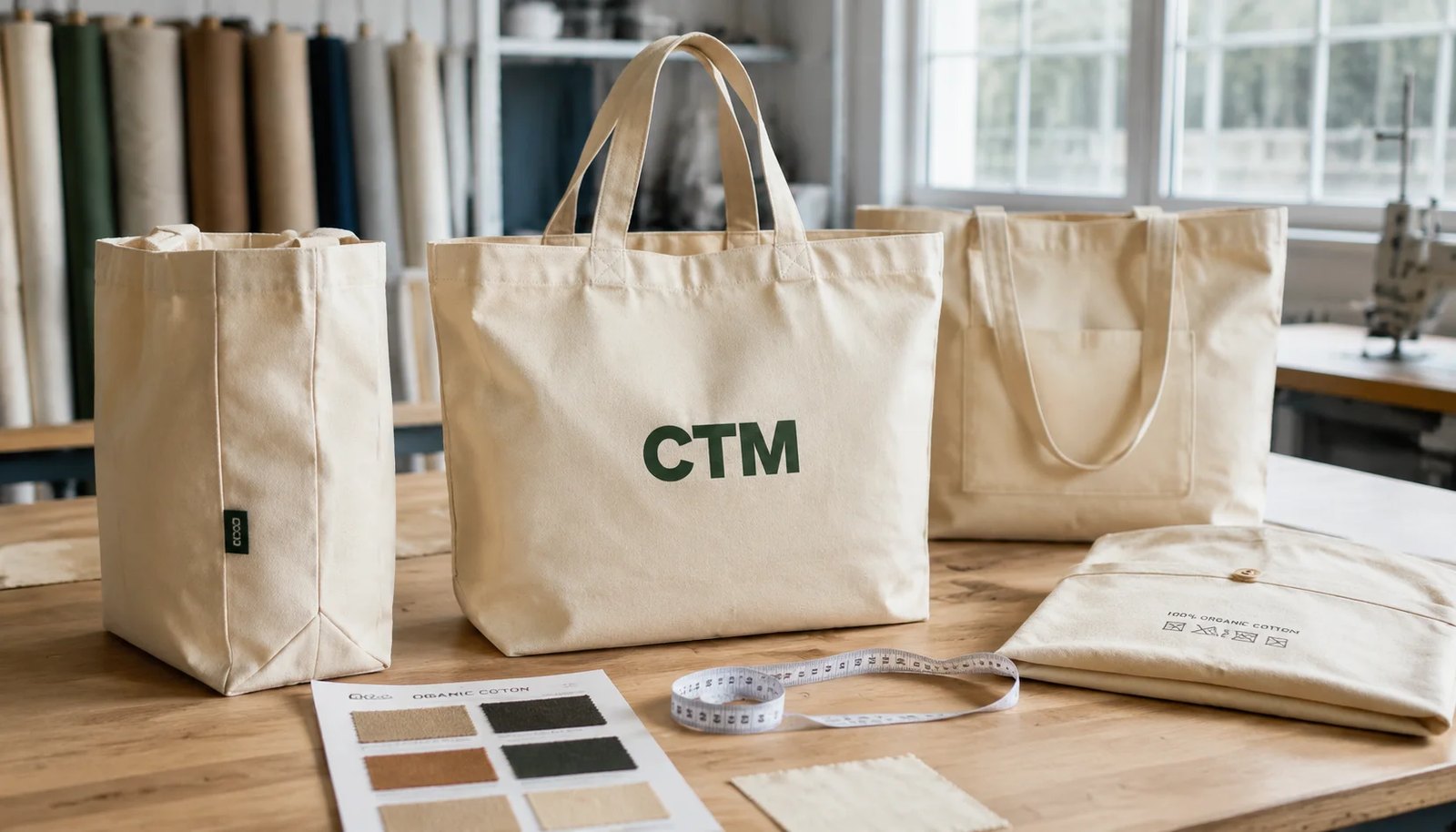
Why liquor retail totes need a stricter supplier compliance screen
A custom organic cotton tote for liquor retail is not just a logo bag. It often carries glass bottles, boxed sets, or mixed gift items, which means the bag sits in a higher-risk zone than lightweight giveaway totes. Procurement teams usually focus first on organic claims and price, but the bigger commercial issue is whether the supplier can produce a bag that meets your compliance file, survives in-store handling, and stays consistent across replenishment orders.
The common sourcing mistake is treating all cotton bag suppliers as interchangeable. A supplier that can make a 140 GSM promotional tote for an event may not be able to control seam performance, print consistency, or traceable organic documentation on a heavier retail program. For liquor retail, the right compliance checklist should combine material traceability, product safety paperwork, production capability, and packing discipline. That is how you reduce approval delays and avoid getting stuck between merchandising, legal, and warehouse teams.
- Bottle weight changes the spec: seam strength and handle reinforcement matter more than for general promo bags.
- Retail use changes the paperwork: importer and distributor onboarding often needs more than a simple factory self-declaration.
- Reorders expose weak suppliers: if the first order was made from convenient stock fabric, later lot matching may fail.
Define the bag use case before comparing supplier quotes
Many quote comparisons fail because buyers request 'organic cotton tote' without tying the spec to a real load case. A liquor retailer may use the tote for a single premium bottle, a two-bottle purchase, a seasonal gift set, or general branded checkout use. Those are different products even if the outside dimensions look similar. Fabric weight, gusset depth, and handle length should be decided from the intended carry use first, then you can compare suppliers on equal terms.
For most liquor retail applications, 280-340 GSM canvas is the practical range. Around 280 GSM can work for light one-bottle or general retail use if the construction is good. Around 300-340 GSM is safer for broader retail programs where customers may carry two bottles or mixed items. If you go below this range to save cost, the bag may collapse, print can look weaker on a looser fabric face, and seams are more likely to distort under load.
- Single bottle gift use: 280-300 GSM with bottom gusset can be enough if handles are reinforced.
- Two-bottle or mixed basket carry: 300-340 GSM with side-and-bottom gusset is usually safer.
- Typical handle webbing is not required for all programs; self-fabric handles can work if width and reinforcement are properly specified.
- Common bag size starting point: about 13-15 inch width, 14-16 inch height, 4-6 inch gusset depending on bottle format.
What supplier compliance should actually mean for organic cotton totes
Compliance for this product should be broken into four layers. First is material claim support: what evidence stands behind 'organic cotton' in your documents and product communications. Second is chemical and product-safety support: inks, dyes, and accessory components should align with your market requirements and any restricted-substance expectations. Third is factory process control: can the supplier link your PO to the fabric lot, print run, and packed shipment. Fourth is social and operational compliance: can your importer or retail customer onboard the supplier without chasing basic factory records after the PO is already urgent.
Buyers often overestimate the value of generic certificates shown in sales decks. A useful compliance file is order-linked and current. If your internal team may use the organic claim in hangtags, e-commerce listings, or retailer submissions, the supplier needs to explain what wording is supportable and what document trail exists. If the supplier cannot answer that precisely, legal review and marketing approval can stall the order long after sampling is complete.
- Material layer: fabric composition, organic claim support, lot traceability, transaction documents if needed.
- Chemical layer: ink and dye declarations, available test reports, accessory declarations for labels or trims.
- Process layer: PO-linked production records, subcontractor list, in-process inspection, final packing records.
- Operational layer: audit evidence, factory profile, origin information, shipment labeling capability.
Spec choices that affect both compliance and commercial performance
Natural organic cotton is the easiest route if you want fewer dye-related variables and a cleaner quote. It also reduces shade-control issues compared with dyed fabric. However, natural fabric is not visually uniform like bleached synthetics. Small neps, seed specks, and tone variation can be commercially acceptable if they are agreed before approval. Buyers who expect a perfectly flat white print surface need to write that expectation clearly, because organic natural canvas will still show natural-fiber character.
Print method should fit both the logo and the order economics. Water-based screen print is usually the best fit for liquor retail branding because many programs use one or two spot colors and medium-to-large volume. It gives stable unit pricing after screen setup and generally sits well on canvas. Digital printing is useful for low MOQ multicolor art or photographic retail graphics, but on natural cotton it can show shade variation and the per-unit cost can rise fast. Heat transfer can solve short-run branding, but it is usually a weaker choice for a reusable premium-feel retail tote.
- Natural fabric lowers complexity but requires acceptance of mild fiber variation.
- Bleached or dyed organic fabric adds processing cost and can extend lead time.
- Screen print is usually the strongest value route for 1-2 color retail logos.
- For dark logos on natural canvas, request a strike-off because the fabric base tone affects perceived color.
- If adding woven labels or inside care labels, include those as separate line items in quote comparison.
MOQ logic: where low quotes hide the real minimums
A common trap in tote sourcing is a low stated MOQ that only applies to sewing, not to the full product configuration. A supplier may quote 500 bags, but the custom dyed fabric minimum is 1,500 meters, the woven label minimum is 3,000 pieces, and the screen setup cost makes the low quantity commercially poor. Procurement teams should separate MOQ by component so they can compare real order-entry thresholds instead of headline bag quantities.
For organic cotton totes in liquor retail, the most cost-efficient route is often one stock-like natural fabric across several SKUs or store programs, with logo changes managed through screen print. This reduces fabric MOQ exposure and shortens replenishment risk. If each retail banner wants a different dyed body color, you lose that advantage and the quote should be reviewed more like an apparel sourcing project, with color lab dips, dye lot control, and larger minimums.
- Break MOQ into fabric, printing, labels, packaging, and total sewing quantity.
- Shared natural fabric across programs often gives better leverage than splitting color by retailer.
- A higher MOQ can still be cheaper landed if it avoids dyeing and complex packing adders.
- If the quote includes stock fabric, ask how often that fabric basis changes between lots.
How to evaluate samples so approval protects the bulk order
Samples should be used to lock down risk, not just to get a visual sign-off. A stock sample helps evaluate shape and approximate workmanship, but it does not validate your exact fabric lot, print, or reinforcement method. For a commercial liquor retail order, the more useful path is a staged approval: shape sample if needed, print strike-off on actual or equivalent fabric, then a pre-production sample with full construction and packing details. If the order is large or tied to a retail launch, seal one approved sample and reference it in the PO.
A strong sample review should include measured dimensions, actual fabric weight, print appearance on the real base cloth, and a simple load test. Buyers frequently approve a photo of a neat-looking tote and then discover that the bulk order uses lighter fabric, shorter handles, or a different seam finish. The sample approval form should state these measurable points so that the factory cannot substitute quietly during production.
- Measure width, height, gusset, and handle drop using one written method only.
- Weigh fabric or request a panel test record; do not rely on supplier description like '10 oz class'.
- Review print edge sharpness, opacity, and shade on natural fabric under normal daylight conditions.
- Check inside seam finish and handle attachment from the reverse side, not only from front-facing photos.
- For bottle-carry use, do a practical load test with filled bottles or equivalent weight.
QC thresholds that matter more than perfect appearance
Liquor retail totes are often judged first on logo appearance, but the real field failures usually come from construction issues. Handle reinforcement, seam allowance consistency, and balanced gusset assembly matter more than tiny print variation if the bag will carry glass. A slightly natural-looking fabric face can still be saleable. A handle box stitch that is too narrow or a side seam with skipped stitches is a warranty problem waiting to happen.
Your QC standard should focus on use-related tolerances. That means setting acceptable size variation, seam security, print placement tolerance, and carton-level packing accuracy. If the bag is intended to communicate a premium eco message, add appearance criteria for stains, severe slub concentration, or logo smudging, but do not let cosmetic debates distract from load-bearing performance. A good factory will understand this if the acceptance criteria are written clearly.
- Dimension tolerance example: often around plus or minus 0.5 inch may be acceptable, but write your own tolerance by size.
- Print placement tolerance should be written from a fixed edge or centerline, not 'visually centered'.
- Loose threads at handle joins should be trimmed and secured, not burned roughly.
- Carton count errors cause retail receiving problems; include them in final inspection scope.
- If using side labels or origin labels, verify orientation and legibility across random cartons.
Packing decisions that change freight, warehouse handling, and retail readiness
Packing is where many tote bag quotes become misleading. The unit price may look competitive, then freight cost rises because the supplier packed too conservatively or used oversized cartons. Organic cotton totes usually ship best flat-packed. For many liquor retail bulk programs, a simple master-carton format with controlled pack count is enough. Inner poly should only be added when you need moisture protection, barcode segregation, or retailer-specific handling requirements. Otherwise it adds material cost and labor without much value.
Carton design should match your inbound handling. A warehouse that cross-docks store replenishment may prefer fixed inner bundle counts, while an importer loading by container may focus on CBM efficiency and stack stability. If hangtags, barcode stickers, or retailer inserts are needed, define when they are applied and how they are protected during packing. These are small steps operationally, but they regularly cause pack-out delays when left vague.
- Set pieces per carton and target carton dimensions before final quote approval.
- Avoid excessively compressed packing if it causes print set-off or strap creasing.
- State whether polybags are banned, optional, or required by destination or retail customer.
- Request carton drop/stack practicality if bags are packed for long export transit.
- If using assortment labels, make sure outer carton marks match warehouse receiving format exactly.
Lead time risk: what actually moves the shipment date
Lead time on custom organic cotton totes is not only sewing time. The critical path usually starts with fabric availability and artwork approval, then moves through printing, sewing, inspection, and export packing. If the factory is quoting from ready natural fabric, production may move relatively quickly once the sample is approved. If the fabric must be woven, dyed, washed, or specially finished, your timeline can expand sharply before cutting even begins.
The biggest avoidable delay is incomplete approval sequencing. If merchandising signs off on appearance but compliance has not approved claim language, labels, or documents, production can pause after material booking. Another common issue is late confirmation of carton marks or barcode formats. Those details seem minor, but they often stop packing at the final stage. A practical sourcing schedule should show not only production days, but also approval dependencies.
- Typical risk points: fabric booking, strike-off approval, label approval, carton marking approval, booking vessel space.
- Natural stock-like fabric reduces timing risk compared with custom dyed fabric.
- Multi-color prints add screen prep and approval time even if sewing is simple.
- Sampling courier time can become critical on short seasonal launches; include it in your schedule.
How to compare landed cost instead of chasing the cheapest ex-factory quote
An ex-factory bag price is useful, but it does not tell the full buying story. A slightly higher unit price can be the better commercial choice if the supplier uses a denser fabric that reduces claims, packs more efficiently per carton, and handles retailer labeling in-house. On the other hand, a low quote can become expensive after adding print screens, sample charges, woven labels, polybags, carton mark changes, and higher freight from poor carton efficiency.
To compare suppliers fairly, convert the quote into a landed-cost worksheet. Separate bag body cost, print cost, accessories, packing cost, sample cost, document cost if any, and estimated freight based on carton volume. Then factor in hidden operational costs such as extra QA visits, rework risk, and compliance chasing. Procurement teams that do this usually stop overvaluing the lowest headline price and start selecting suppliers that are easier to scale.
- Compare cost per usable delivered bag, not just quoted ex-works or FOB unit price.
- Include screen/setup charges amortized over your real order volume.
- Estimate freight using actual carton dimensions, not supplier guesswork.
- Account for warehouse relabeling or repacking if the supplier cannot meet retail pack instructions.
- Higher initial sample cost may be justified if it prevents bulk-order spec drift.
Specification comparison for buyers
| Supplier option | What to verify | Commercial advantage | Buyer risk to control |
|---|---|---|---|
| Direct sewing factory | fabric batch documents, dye-lot photos, approved sample archive, and final QC record | Better sample-to-bulk control and faster production feedback | May be weaker on export paperwork or branded packing unless checked early |
| Trading company | Factory name, production photos, trim-source proof, and who owns QC decisions | Can coordinate small mixed orders and extra services | Markup can hide real factory capability and slow defect decisions |
| Specialized bag workshop | seam allowance, handle reinforcement, label attachment, fabric pre-shrink note, and batch shade control | More practical for detailed construction, trims, and repeat programs | Capacity may be limited during peak seasons |
| Low-price general supplier | organic cotton canvas, batch documentation where available, undyed or low-impact dyed fabric, and shrinkage control | Useful for simple promotional runs with loose specs | Material downgrades, weak packing, and vague inspection scope can erase savings |
| Retail-ready supplier | plastic-reduction request, recycled carton note, bundle count, carton mark, and moisture protection without overpacking | Can handle labels, SKU separation, carton marks, and receiving rules | Higher unit cost must be compared against reduced warehouse work |
| Compliance-focused supplier | Fabric records, labeling review, test plan, and production traceability | Safer for retail programs and repeat brand orders | Documentation claims need evidence, not only sales language |
| Local sample room plus bulk factory | Signed sample, bulk factory handoff, first-piece photos, and deviation owner | Good for complex branding before large production | Sample room quality may not match bulk line unless handoff is controlled |
Buyer checklist before sampling
- Match the tote use case to actual bottle count and target load before approving fabric GSM or handle length.
- State whether the organic claim must be marketing-facing, import-document-facing, or internal-only; document needs differ.
- Specify fabric construction clearly: canvas or plain weave, natural or dyed, target GSM tolerance, and whether pre-wash is required.
- Define tote dimensions with measurement method, including width, height, gusset depth, and handle drop tolerance.
- List print method preference, max print area, artwork colors, and whether Pantone shade matching on natural fabric is required.
- Confirm if the supplier uses in-house sewing, in-house printing, or outsourced steps that affect traceability and lead time.
- Request sample hierarchy: stock sample, pre-production sample, print strike-off, and sealed production sample if the order value justifies it.
- Set seam, handle, and appearance acceptance criteria for bottle-carry use instead of approving by photo only.
- Clarify packing units per carton, carton size limit, labeling format, barcode placement, and whether retail insertion or hangtagging is needed.
- Ask for a quote split by bag cost, print cost, label cost, packing adders, sampling charges, and freight assumptions to avoid false quote comparisons.
Factory quote questions to send
- What exact fabric composition, weave, and finished GSM are you quoting, and what tolerance do you allow by production lot?
- Is the quoted organic cotton claim supported by transaction documents or only by a fabric supplier declaration?
- Which processes are in-house and which are subcontracted: fabric sourcing, cutting, sewing, printing, washing, labeling, and packing?
- What is the MOQ by fabric color, print color count, size, and packaging format, not just per total bag quantity?
- What print method is included in the quote, and what artwork limitations apply on natural organic cotton fabric?
- What sample stages are included and charged separately: blank sample, digital proof, strike-off, pre-production sample, and shipping?
- What seam construction, handle reinforcement, and needle/stitch specification do you normally use for 280-340 GSM bottle-carry totes?
- What carton pack count and carton dimensions are assumed in the quote, and how will that affect container loading or courier cost?
- What lead time is based on material ready stock versus fresh fabric weaving or dyeing, and what steps are on the critical path?
- What compliance documents can you provide before PO and again against shipment lot: test reports, declarations, factory audit evidence, and packing records?
Quality-control points to confirm
- Fabric GSM within agreed tolerance, with random roll or panel verification before cutting.
- Bag dimensions measured flat to approved method, including width, height, gusset, and handle drop.
- Print position centered to approved tolerance and color visually matched against approved artwork standard under normal light.
- No obvious slub concentration, oil marks, needle damage, panel skew, or shade mismatch beyond agreed commercial tolerance.
- Handle attachment box stitch or cross stitch completed cleanly with no skipped stitches, loose thread tails, or uneven reinforcement.
- Side seams and bottom seams secure and symmetrical, especially on gusseted bottle-carry styles.
- Logo side label, care label, or origin label attached in correct location and orientation where required.
- Carton count, inner pack count, carton markings, and barcode labels verified against shipping marks and PO packing instructions.
- Needle control and metal contamination procedures documented if required by the buyer’s retail compliance system.
- Random load test performed on production bags using a weight aligned with intended bottle-carry use, with no seam cracking or handle distortion.