Define the Bag's Job in the Winery
A boutique winery tote fails most often when the buyer starts with artwork instead of use case. The same bag does not need to do the same job in every channel. A tasting-room retail tote that carries a bottle, a brochure, and a corkscrew needs more structure and better handle reinforcement than a low-cost event giveaway. If you do not define the bag's job first, every quote will look different and none of them will be directly comparable.
For organic cotton totes for boutique wineries supplier compliance checklist work, the commercial question is usually not just price. It is whether the bag feels premium enough for retail, survives repeated use, and has documentation that can stand up to procurement review. Before you ask for quotes, state the end use, the load expectation, the target retail position, and whether this is a seasonal promo item or a repeat stock keeping unit.
- State the channel: retail, tasting room, event, or gift-with-purchase.
- Define the expected load: one bottle, two bottles, merchandise, or flat collateral.
- Describe the brand role: premium resale item or simple traffic driver.
- Note any display requirement that affects fold, top edge, or handle drop.
Turn the Product Into a Measurable Spec
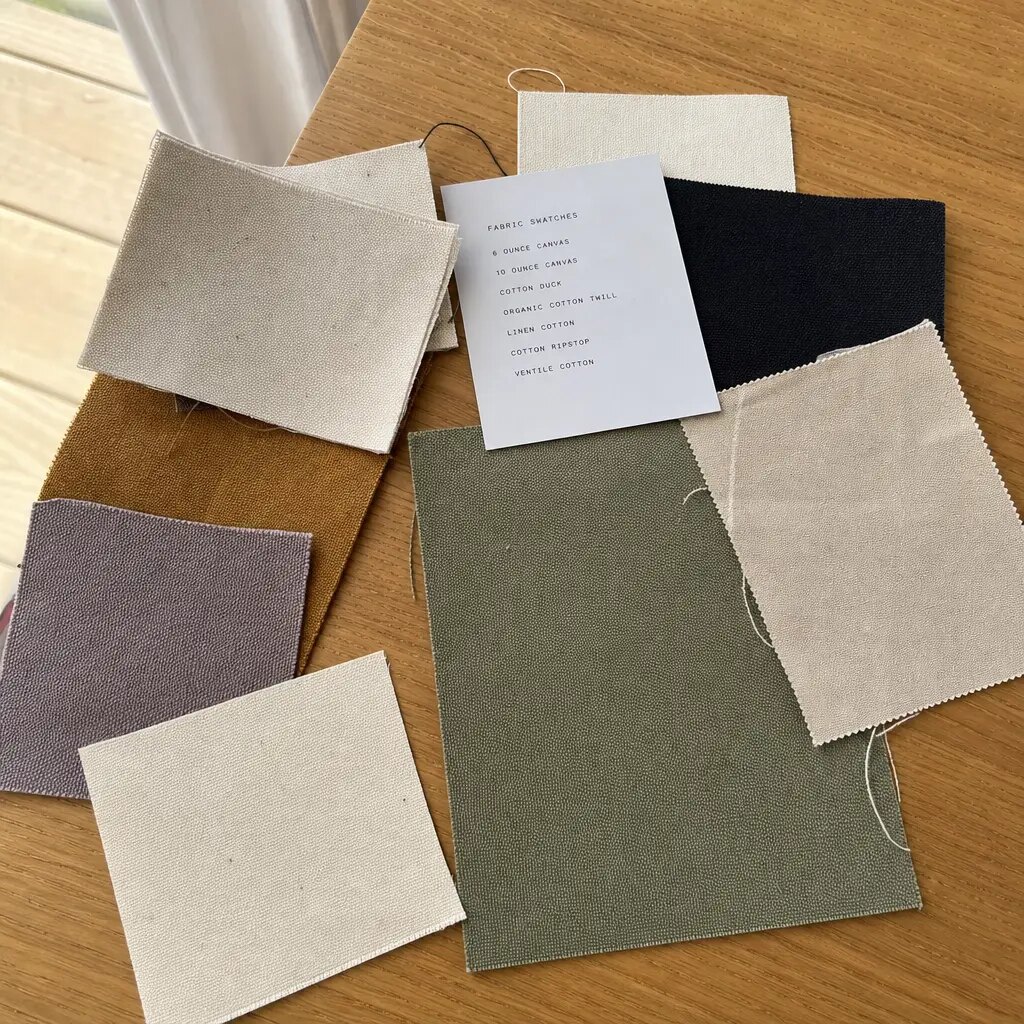
The tote spec should read like a production document, not a mood board. For premium winery use, a practical starting point is often 140-160 gsm organic cotton twill or canvas, but the right number depends on the load, the hand-feel, and whether the bag must stand upright on a shelf. If the tote will hold a bottle or a heavier accessory set, ask for reinforced handles and a more structured build. If it is mainly a light retail carrier, you can keep the bag softer and avoid paying for unnecessary stiffness.
Put the critical measurements in writing before you request pricing. Use finished dimensions rather than cut size, because shrinkage and seam allowance change the real bag size. Specify handle width, handle drop, top hem construction, bottom construction, and whether the bag uses self-fabric handles or webbing. The more precise the spec, the less likely the supplier is to quote a cheaper but weaker version that cannot meet your retail standard.
- Use finished dimensions, not cut dimensions, in the RFQ.
- Lock the fabric band, weave, and hand-feel before decoration is discussed.
- State whether the tote must stand upright, fold flat, or hang on a display hook.
- Specify handle reinforcement if the bag may carry bottles or heavier merchandise.
Compliance Proof: Documents, Traceability, Labels
This is where many procurement pages stay vague and lose value. If you want to sell or market the tote as organic, ask for the actual documents, not a general promise. The most useful starting point is the current Scope Certificate for the entity that will make the goods, plus a Transaction Certificate when the certification system and market require shipment-level proof. Ask for the certificate number, issue date, expiry date, certified address, and the exact product category listed on the certificate. If the supplier cannot provide those details before sample approval, treat that as a sourcing risk, not a paperwork delay.
Traceability needs a hard rule. A buyer-friendly threshold is simple: every finished carton should map back to a named fabric lot or approved lot combination, and the supplier should be able to show the lot map from fabric to cut bundle to packed cartons. For labeling, the claim language on the bag, hangtag, or carton must stay inside the certificate scope. Do not accept vague words like eco, green, or organic material available. Ask for a pre-press proof of any claim statement, and if your market requires it, add restricted-substance or durability test reports to the file.
- Request Scope Certificate, Transaction Certificate if applicable, and the certificate holder's legal name.
- Confirm that the certificate covers the actual factory or converter that will make your order.
- Ask for a lot map that ties finished cartons back to fabric rolls or approved fabric batches.
- Require artwork approval before any certification mark, claim wording, or origin language is printed.
- Set a labeling rule: no claim should exceed the documentation the supplier can prove in writing.
Compare Supplier Models Before Comparing Unit Price
A low quote from the wrong supplier type is not a bargain. A direct sewing factory usually gives the best visibility into fabric, stitching, and final packing, which matters when the tote is a retail item and not just a giveaway. A trading company can help coordinate multiple products and simplify communication, but the buyer must still verify who actually owns the factory decision-making, QC approvals, and correction cycle. If the quote hides the real manufacturer, it is harder to control defects or document problems later.
Specialized bag workshops usually perform better on structure, handle reinforcement, and repeatability than generalist promotional suppliers. On the other hand, a general supplier may quote quickly and cheaply on stock goods but struggle when you need tighter stitching, cleaner finishing, or certification-backed labeling. The right choice depends on how much risk you are willing to carry in exchange for faster or cheaper sourcing. Use the table to compare supplier models on document control, MOQ pressure, and lead-time tradeoffs, not just on the line-item price.
- Use a direct factory when you need stronger document control and repeatability.
- Use a trading company only if the real factory and QC owner are named in writing.
- Use a specialized bag workshop when construction quality matters more than the absolute lowest price.
- Use a general supplier only for simple, low-risk promotional runs with limited compliance exposure.
Write the RFQ So Quotes Are Comparable
A quote should reveal the true cost drivers, not hide them in a single number. Ask suppliers to split fabric, cutting, sewing, decoration, label attachment, packing, testing, and export paperwork. If those items are bundled together, you cannot tell whether one supplier is cheaper because it uses better sourcing, or because it is quietly omitting a step you will have to pay for later. This matters even more for organic cotton tote programs, where label approval, traceability checks, and carton details can be part of the real workload.
MOQ needs the same treatment. A supplier may quote a minimum by color, by artwork version, by fabric batch, or by total order value, and those are not the same constraint. For winery programs with several SKUs, ask whether the MOQ can be shared across styles or sizes, and whether a repeat order of the same bag changes the minimum. If the quote does not explain the MOQ logic, you are not comparing like with like.
- Ask for separate pricing lines for fabric, sewing, print or label work, packing, testing, and export docs.
- Request MOQ by color, artwork, and repeat order, not only by piece count.
- Confirm whether labels, hangtags, barcode stickers, or inserts are included in the unit price.
- Insist that cartons and outer marks are included in the commercial quote if they matter to receiving.
QC Rules That Catch Real Defects
Generic QC language is not enough for a procurement file. You need measurable rules that a factory can actually inspect against. For medium-weight cotton tote bags, a practical buyer baseline is to specify stitch density, seam allowance, handle reinforcement, shrinkage limit, and print placement tolerance before bulk production starts. If those points are only discussed verbally, the first bulk run often drifts from the approved sample because the factory is filling in missing details with its own house standard.
A useful inspection method is AQL-based final inspection, with AQL 2.5 for major defects and 4.0 for minor defects as a common default for retail bags. That should be backed by a defect list. Major defects include broken seams, wrong dimensions, failed organic claim language, or severe print misplacement. Minor defects include light thread trimming issues or very small packaging marks that do not affect use. If your winery brand is positioned as premium, tighten the tolerance, especially for print placement, handle symmetry, and shade variation.
- Write seam allowance into the spec, and make sure it stays consistent at stress points.
- Set stitch density in the RFQ, typically 7-9 stitches per inch for medium-weight cotton unless the construction needs otherwise.
- Use a reinforcement rule for handle attachments, such as box-X stitching or dense bar-tacks.
- Set a shrinkage ceiling, typically 5% or less unless the product is intentionally pre-shrunk to a different standard.
- Use a written color tolerance based on the approved shade sample rather than subjective acceptance at packing.
Samples, Pre-Production, and AQL Checks
A sample is not approved because it looks fine in a photo. It is approved when the bag has passed the buyer's measurement, construction, and labeling checks. Ask for at least one physical gold sample, one pre-production sample if the order is custom, and a retained sample at the factory. When the sample arrives, measure body width, height, depth, and handle drop; inspect seam quality; verify the print; and compare the label or carton language against the approved artwork file. If the bag is meant to carry a bottle or boxed accessory, test it with that real item before you sign off.
Pre-production approval should be tied to the exact materials and methods that will be used in bulk. If the sample was made with a different fabric roll, a different print curing process, or a different label supplier, it is not the same production standard. For larger orders, ask the factory to send first-piece photos from the actual line and confirm the measurement sheet before the rest of the lot is released. That prevents the common problem where the sample is good but the bulk run follows a looser house standard.
- Keep one signed gold sample with the buyer and one with the factory.
- Measure finished dimensions against the approved sample, not against a rough drawing.
- Require first-piece photos and a measurement sheet before bulk release.
- Do not approve bulk from images alone if the tote has any compliance claim or premium retail requirement.
Packing and Cartons That Reduce Receiving Friction
Packing changes freight cost and warehouse labor, so it is not a minor detail. Ask the supplier to quote the bag as bulk packed or retail packed, and specify pieces per inner pack, pieces per carton, carton dimensions, and gross weight. If the tote is going to a winery warehouse or retail store, a compact bulk pack is usually better than unnecessary individual polybags. If the bag is going directly into retail sale or e-commerce fulfillment, you may need cleaner folding, better protection, or labeled inner packs to reduce downstream labor.
Set a receiving standard before production. A practical carton rule is one SKU per carton whenever possible, with carton marks showing PO, style, color, quantity, carton number, gross weight, and origin. Keep carton weight within a manual-handling range if the receiving team will move boxes by hand. If the packaging spec is not written early, the factory may choose a format that looks efficient on its side but creates labor cost and counting problems on your side.
- Lock inner pack and carton count in the quote.
- Request carton dimensions and gross weight before freight booking.
- Specify carton marks and SKU labels before bulk packing starts.
- Use protective packing only where it prevents scuffing, dirt, odor transfer, or print damage.
Build the Schedule Around Peak Winery Demand
Lead time should be broken into stages, not given as a single number. Ask for separate timing on material reservation, sample approval, production, packing, inspection, and shipment booking. A supplier that only gives one total lead time can still miss your launch if the delay happens in the approval step or the export booking step. That is especially relevant for boutique wineries, where the selling window may be tied to harvest events, tasting-room campaigns, holiday gift sets, or seasonal foot traffic.
The safest planning method is to work backward from the launch date and add buffer time for artwork changes, document review, and freight disruption. If the order depends on fabric reservation or certification review, build even more time into the front end. A cheap quote is not useful if the tote arrives after the event or after the retail season has moved on. For repeat programs, compare actual elapsed time from approved sample to received goods, not just the factory promise made before the order was awarded.
- Ask for a lead-time schedule by stage: materials, sample, production, packing, and dispatch.
- Add buffer time for artwork revisions and compliance approval.
- Plan earlier for harvest season, holiday retail, and any launch tied to a fixed event date.
- Treat stock fabric as a lead-time advantage only if the shade and hand-feel are acceptable.
Award Only After the Risk Questions Are Answered
The cleanest award decision is a simple one: does the supplier match the approved sample, provide the required document set, show a believable QC method, and fit the delivery window? If any of those are missing, the quote is not really comparable to the others. The lowest unit price is often the weakest signal in a custom tote program because it ignores testing, packing, documentation, and the labor cost of sorting problems later.
If you are sourcing organic cotton totes for boutique wineries, the final shortlist should be based on total fit, not on price alone. That means the supplier must prove the organic claim path, show the bulk production plan, accept the QC rules, and confirm the carton format. When those points are clear, the award decision becomes much simpler and the receiving team gets a cleaner shipment.
- Award only when the sample, documents, QC plan, and packing plan all match the spec.
- Do not compare a complete quote against a partial quote.
- Require a named production site and a named contact responsible for change control.
- Use landed cost, not unit price, as the final comparison number.
Specification comparison for buyers
| Supplier option | What to verify | Commercial advantage | Buyer risk to control |
|---|---|---|---|
| Direct sewing factory | fabric batch documents, dye-lot photos, approved sample archive, and final QC record | Better sample-to-bulk control and faster production feedback | May be weaker on export paperwork or branded packing unless checked early |
| Trading company | Factory name, production photos, trim-source proof, and who owns QC decisions | Can coordinate small mixed orders and extra services | Markup can hide real factory capability and slow defect decisions |
| Specialized bag workshop | seam allowance, handle reinforcement, label attachment, fabric pre-shrink note, and batch shade control | More practical for detailed construction, trims, and repeat programs | Capacity may be limited during peak seasons |
| Low-price general supplier | organic cotton canvas, batch documentation where available, undyed or low-impact dyed fabric, and shrinkage control | Useful for simple promotional runs with loose specs | Material downgrades, weak packing, and vague inspection scope can erase savings |
| Retail-ready supplier | plastic-reduction request, recycled carton note, bundle count, carton mark, and moisture protection without overpacking | Can handle labels, SKU separation, carton marks, and receiving rules | Higher unit cost must be compared against reduced warehouse work |
| Compliance-focused supplier | Fabric records, labeling review, test plan, and production traceability | Safer for retail programs and repeat brand orders | Documentation claims need evidence, not only sales language |
| Local sample room plus bulk factory | Signed sample, bulk factory handoff, first-piece photos, and deviation owner | Good for complex branding before large production | Sample room quality may not match bulk line unless handoff is controlled |
Buyer checklist before sampling
- Define the tote's job first: retail sale, tasting-room carrier, gift-with-purchase, event giveaway, or accessory bag for wine merch.
- Write the bag spec in measurable terms: finished dimensions, fabric weight, weave, color, handle length, handle width, and whether the bag should be soft or structured.
- If you want to use an organic claim, ask for the current Scope Certificate, Transaction Certificate if applicable, certificate holder name, expiry date, and certified site address.
- Set a traceability rule before ordering: each finished lot must map back to one named fabric lot or approved lot combination, and cartons must carry that mapping.
- Approve a physical sample, not just photos. Check measurements, stitch quality, print placement, label text, and the actual hand-feel under normal lighting.
- State QC thresholds in the RFQ: seam allowance, stitch density, bar-tack spec, handle reinforcement, shrinkage limit, and allowed color variation.
- Ask the supplier to state the inspection method, ideally AQL 2.5 for major defects and 4.0 for minor defects, or tighter if your retail channel requires it.
- Require a quote split by fabric, sewing, decoration, labels, packing, testing, and export documents so you can compare suppliers on the same basis.
- Lock carton rules before production: pieces per inner pack, pieces per carton, carton dimensions, gross weight, and outer carton marking format.
- Plan the schedule backward from the launch date and include buffer time for artwork review, compliance approval, inspection, and freight booking.
Factory quote questions to send
- Which certificate applies to this exact factory and style: GOTS, OCS, or no certified claim?
- Please share the certificate number, scope holder name, expiry date, and certified factory address for the entity that will produce the order.
- What finished fabric GSM are you quoting, what tolerance do you hold after cutting and sewing, and what shrinkage limit do you expect after testing?
- What is the seam allowance you will use on the body, what stitch density do you target, and what is your handle reinforcement spec?
- Are handle attachments finished with box-X stitching or dense bar-tacks, and what is the exact bar-tack length or reinforcement pattern?
- Which decoration method are you quoting, what is the placement tolerance, and what curing, heat-setting, or wash-durability step do you use?
- What are the MOQ rules by color, by artwork version, and for repeat orders of the same style?
- What sample stages are included before bulk, and what changes are still possible after pre-production approval?
- What inspection method do you use before shipment, and which defects are treated as major, minor, or critical?
- How do you pack the bags, how many pieces per carton, what are the carton dimensions, and what gross weight should we expect?
Quality-control points to confirm
- Fabric GSM should match the approved spec within the agreed tolerance, and the supplier should be able to show how the weight was measured.
- Finished bag dimensions should match the approved sample within a written tolerance, typically tighter for width and height than for handle drop.
- Seam allowance should stay consistent, with no narrowing at stress points and no exposed raw edges where the bag is meant to be reinforced.
- Stitch density should be written into the spec, with a practical buyer target of 7-9 stitches per inch on medium-weight cotton unless the construction needs otherwise.
- Handle attachments should use a visible reinforcement method, such as box-X stitching or dense bar-tacks, with no puckering, broken thread tails, or skipped reinforcement lines.
- Bar-tacks should be centered and dense enough to capture the load point fully, not just decorative enough to pass a quick visual check.
- Shrinkage should be tested against the approved cleaning or steam method, with a typical buyer ceiling of 5% or less unless the product is intentionally pre-shrunk to a different standard.
- Color variation should be controlled against a signed shade sample, with no visible mismatch within the same carton and no unapproved shade drift across cartons.
- Print placement should be centered within the written tolerance, often within +/- 5 mm for logo placement, with registration held tighter for simple art and looser only if the artwork justifies it.
- AQL inspection should be defined before production, with a practical default of AQL 2.5 for major defects and 4.0 for minor defects, and critical defects set to zero tolerance.