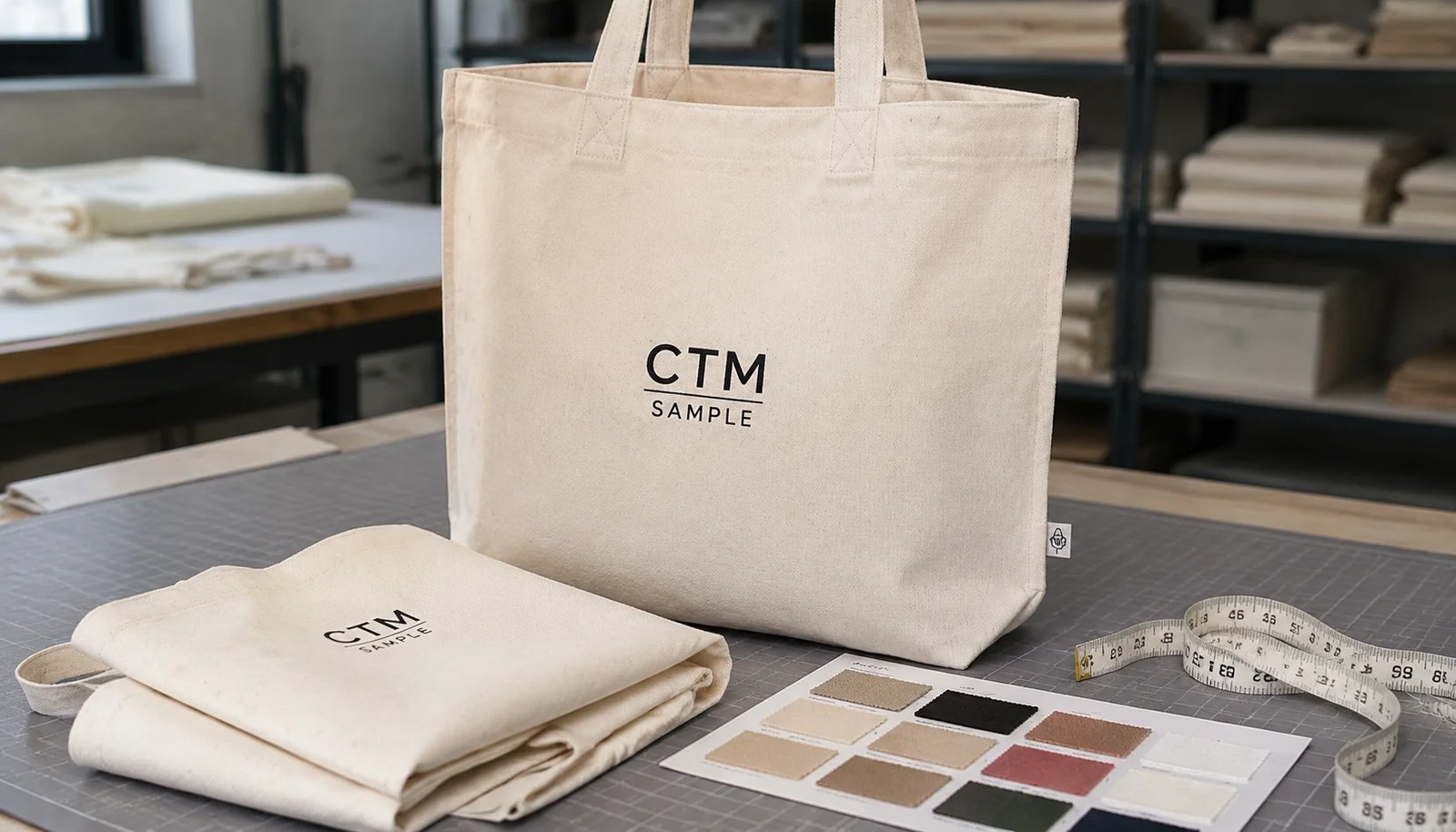
Why spa retailers need a stricter sample approval process
Organic cotton totes used by spa retailers are not simple giveaway bags. They often sit next to premium skincare, robe sets, candles, essential oils, or treatment gift vouchers. If the tote feels thin, the handles twist, or the print looks cheap, it weakens the retail offer even when the products inside are strong. Sample approval is the point where the buyer turns a design idea into a factory-controlled production standard.
The most common mistake is approving a sample only by appearance. A tote may look acceptable in a photo but still fail in bulk because the GSM was not measured, the handle reinforcement was not defined, the print color was not locked, or the carton packing created creases. For spa retail programs, approval should cover touch, structure, compliance wording, display appearance, and warehouse handling.
- A spa tote sample should be evaluated as merchandise, not only packaging.
- Natural cotton variation is normal, but uncontrolled variation is not acceptable.
- Every approval comment must convert into a measurable bulk production requirement.
- The approved sample should become the physical reference for inspection, dispute resolution, and repeat orders.
Set the tote specification before requesting a sample
A factory can make a better sample when the RFQ defines the selling use. A tote for a resort spa welcome kit has different requirements from a boutique retail bag sold at checkout. If the sample request says only organic cotton tote with logo, the factory will choose a safe internal default, which may not match the buyer's cost, strength, or display expectations.
For most spa retailers, a practical starting specification is 10 oz organic cotton canvas, approximately 300-340 GSM, with a finished size around 38 x 42 cm or with a small gusset when carrying boxed products. For heavier towel sets or robe bundles, 12 oz canvas around 360-400 GSM may be justified. For light gift-with-purchase programs, 8 oz around 240-280 GSM can work, but it may feel less premium in a spa retail environment.
- Define finished size: width, height, gusset, and handle drop.
- Define fabric: organic cotton canvas, GSM or oz, natural, bleached, or dyed.
- Define handle: same fabric or webbing, width, length, and reinforcement.
- Define print: method, size, position, color count, and artwork file format.
- Define label: content label, brand label, side tab, hangtag, or barcode sticker.
- Define packing: flat, folded, individual bag, paper band, carton quantity, and carton marks.
Fabric GSM, hand feel, and organic cotton documentation
Fabric weight is one of the largest cost and performance drivers. A lower GSM reduces material cost and carton weight, but it may show product corners, wrinkle easily, and lack the dense hand feel expected by spa customers. A higher GSM improves structure but increases unit cost, printing pressure requirements, sewing difficulty, and freight volume. Buyers should approve the actual fabric swatch, not only the written GSM.
Organic cotton claims also need discipline. If the tote is sold as organic cotton merchandise, procurement should clarify what documentation is required for the market and sales channel. Some buyers need transaction certificates or chain-of-custody documents; others need supplier declarations only. The factory should not print or sew claim labels until the wording and document requirements are agreed.
- 8 oz / 240-280 GSM: suitable for light promotional or low-load retail use.
- 10 oz / 300-340 GSM: common choice for spa retail totes with better perceived value.
- 12 oz / 360-400 GSM: stronger and more structured, useful for towels, robes, and boxed sets.
- Natural cotton shade may vary between lots; approve an acceptable range if exact whiteness is not required.
- If fabric is dyed, request lab dip approval and colorfastness expectations before sample cutting.
Print approval for soft spa branding
Spa branding often uses muted colors, thin serif lettering, botanical line art, or low-contrast logos. These designs look elegant on a screen but can lose definition on coarse cotton canvas. A buyer should approve a print strike-off or final sample under realistic lighting before bulk printing. The approval should include ink type, Pantone or brand color reference, print size, print position, and acceptable edge sharpness.
Water-based screen printing is usually the best option for simple spa logos because it has a softer hand feel than heavy plastisol and aligns well with natural product positioning. Heat transfer can reproduce fine details but may feel less integrated with the fabric. Embroidery can look premium but adds cost, changes drape, and may pucker on lighter GSM fabric. The right choice depends on artwork complexity, order volume, and retail price point.
- Use water-based screen print for one to three solid logo colors on canvas.
- Use print strike-off approval when the logo includes fine lines, gradients, or pale tones.
- Keep small text large enough to survive the fabric texture; very fine letters may fill in.
- Set print placement tolerance, commonly plus or minus 5 mm for centered front prints.
- Specify whether the print should have a soft hand feel, strong opacity, or vintage washed effect.
Handle and seam construction that survives retail use
Many tote failures happen at the handles, not in the fabric body. Spa customers may carry glass bottles, ceramic candles, wet towels, magazines, and boxed skincare in the same bag. A visually attractive sample with weak handle stitching is not ready for approval. The buyer should turn the expected carrying load into a simple factory test and inspection requirement.
For standard spa retail use, self-fabric handles around 2.5-3 cm wide with X-box stitching are a practical choice. A longer handle drop improves shoulder carrying but changes how the bag hangs on retail hooks. Short handles look neat at checkout but are less convenient for guests leaving a resort or clinic. The approved sample should show the exact handle drop, alignment, and reinforcement method.
- Measure handle drop from the top edge of the tote to the top inside curve of the handle.
- Use X-box or bar tack reinforcement for heavier applications.
- Avoid handles that twist because of uneven folding or poor sewing tension.
- Check stitch density and skipped stitches on both front and back attachment points.
- Run a simple load test using the planned retail contents plus a safety margin.
MOQ logic and how sample choices affect the final quote
MOQ is not only a factory preference. It is affected by fabric procurement, cutting efficiency, print setup, label production, packing materials, and color management. A single natural organic cotton tote with one-color print may be practical at 300-500 pieces, depending on factory capacity and current fabric stock. A dyed fabric, custom woven label, multiple print colorways, or special paper packaging may push the practical MOQ higher.
Buyers often create cost problems by approving too many versions at sample stage. For example, three spa locations each requesting a different logo color, hangtag, and carton mark may look like one project internally but behave like three production runs at the factory. Consolidating fabric, size, and handle construction while varying only the print can reduce setup waste and improve color consistency.
- One size plus one fabric color plus one print version is the cleanest MOQ structure.
- Changing the print color may create a separate screen wash and setup cost.
- Custom dyed fabric usually needs higher MOQ than natural or stock organic cotton.
- Custom labels can create their own MOQ independent of tote quantity.
- Small repeat orders are easier when the first approval file is complete and fabric is standard.
Sample stages: what to approve and what not to approve too early
Not every sample has the same purpose. A proto sample proves size, structure, and sewing. A print strike-off proves ink color, opacity, and line quality. A pre-production sample proves all final components together before cutting bulk fabric. A packing sample proves folding, bagging, carton count, carton weight, and presentation. Approving the wrong stage as final can create expensive corrections.
For a spa retailer with a visible brand standard, the pre-production sample is the most important approval sample. It should use the final fabric, final print method, final logo size, final label, final handle construction, and final packing method. If the factory uses substitute fabric or digital print only for speed, the sample must be labeled as reference only, not approved for bulk.
- Proto sample: approve dimensions, shape, gusset, handle drop, and sewing logic.
- Fabric swatch: approve GSM, weave, shade, shrinkage, and hand feel.
- Print strike-off: approve color, opacity, edge sharpness, and ink hand feel.
- Pre-production sample: approve the complete final tote before bulk cutting.
- Packing sample: approve folding, individual packaging, carton marks, and carton protection.
Acceptance criteria for sample approval
A sample approval should read like an inspection standard. Comments such as looks good, make stronger, or color should be warmer are not enough for bulk production. The approval record should state measurements, tolerances, material references, print references, and construction details. If the buyer wants a softer cotton feel or a more premium handle, that requirement must be translated into GSM, weave, handle width, or sewing detail.
Photos are useful, but they cannot replace physical reference. Natural cotton color, fabric stiffness, and print hand feel are difficult to judge accurately on a screen. The best practice is to sign and seal one approved sample for the factory and keep one duplicate sample with the buyer or importer. Both samples should include an approval tag showing style number, date, version, and approved comments.
- Finished width and height tolerance: commonly plus or minus 0.5 cm for standard totes.
- Gusset tolerance: define separately because folding and sewing can shift this area.
- Print position tolerance: define from top edge and side seams, not by eye only.
- Color approval: refer to Pantone, lab dip, strike-off, or approved physical sample.
- Stitching: define reinforcement method and minimum acceptable cleanliness.
- Defects: reject oil stains, strong odor, broken stitches, heavy slubs, print smears, and visible dirt.
Packing approval for spa retail presentation and clean receiving
Organic cotton totes are sensitive to packing decisions. Natural fabric can absorb odor from damp cartons, show dust, and retain hard fold lines. For a spa retailer, this matters because the bag may be displayed openly or assembled into gift sets. The packing sample should show exactly how the tote will arrive at the warehouse or store.
Flat packing reduces creases but increases carton size. Folding saves space but can create a center crease through the logo. Individual recycled polybags protect against dust and moisture, while paper bands reduce plastic but offer less protection. The correct answer depends on the retail handling route. A distributor delivering to multiple spa doors may need stronger individual identification than a single warehouse building gift kits.
- Define fold line so it does not cut across the main printed logo when avoidable.
- Specify individual bag, paper band, tissue wrap, or bulk packing based on retail handling.
- Confirm carton quantity and gross weight; avoid cartons too heavy for manual handling.
- Use moisture control when shipping natural cotton in humid seasons or long ocean routes.
- Approve carton marks, SKU labels, barcode stickers, and mixed-carton rules before packing.
Lead time risks between sample approval and shipment
Lead time starts after the factory has all approvals, not after the first inquiry. Missing artwork, unapproved labels, unclear organic documentation, or late packing instructions can hold production even if the deposit is paid. For organic cotton totes, fabric availability is the main schedule risk. Natural stock fabric may be faster; dyed organic cotton, custom GSM, or special finishing can add time.
A practical timeline includes RFQ clarification, sample production, buyer review, revision if needed, pre-production approval, bulk fabric preparation, cutting, printing, sewing, trimming, inspection, packing, and booking. Retail buyers should build in review time on their side, especially when spa brand, legal, sustainability, and warehouse teams all need to approve parts of the same tote.
- Fastest route: standard natural organic cotton fabric, simple one-color print, standard label, standard packing.
- Higher-risk route: custom dyed fabric, multiple locations, detailed artwork, special labels, and retail-ready packaging.
- Do not book promotional launch dates based on unapproved sample photos.
- Freeze artwork and labels before bulk fabric is cut and printed.
- Keep one decision owner for sample comments to avoid contradictory revisions.
Specification comparison for buyers
| Spec decision | Recommended option | When it fits | Buyer risk to check |
|---|---|---|---|
| Fabric weight for spa retail tote | 10 oz organic cotton canvas, about 300-340 GSM | Best balance for retail gift sets, towels, robes, skincare bundles, and daily reuse | Below 280 GSM may feel promotional; above 380 GSM raises freight and may look too rigid for wellness retail |
| Fabric construction | Plain-weave organic cotton canvas with pre-shrunk or controlled-shrinkage finish | Suitable for clean natural appearance and stable dimensions after light handling | Uncontrolled shrinkage can change finished size and distort print position after steaming or wash testing |
| Handle structure | Self-fabric handles, 2.5-3 cm width, X-box or reinforced cross stitching | Works for spa stores selling multi-item kits or heavier retail purchases | Narrow handles may dig into the hand; single-line stitching may fail under load even if the fabric is acceptable |
| Print method | Water-based screen print for one to three solid colors | Good for spa logos, simple botanical artwork, and soft hand feel on natural cotton | Fine lines under 0.3 mm and pale ink on natural cotton can lose sharpness without strike-off approval |
| Logo placement | Centered front print with approved tolerance of plus or minus 5 mm | Appropriate for boutique retail display and guest gift programs | A sample approved without placement measurements leaves room for crooked bulk printing disputes |
| Inside label | Organic cotton content label plus brand care label sewn into side seam | Needed when the tote is sold as merchandise or included in a retail pack | Label wording, origin marking, and claim language must be cleared before bulk cutting, not after packing |
| MOQ logic | 300-500 pcs per size/color/print for practical custom production; higher if dyed color or special labels are used | Fits spa chains, resort shops, distributors, and seasonal wellness campaigns | Splitting too many artwork versions below MOQ increases setup cost and color inconsistency |
| Packing format | Individually folded in recycled polybag or paper band, then export carton with moisture control | Useful for retail stockrooms, gift assembly, and distributor receiving | Unprotected natural cotton can absorb odor or carton dust; over-tight packing creates hard creases on display totes |
Buyer checklist before sampling
- Approve one sealed reference sample showing final fabric GSM, size, handle length, stitching, print, label, and packing fold.
- Record measured finished size tolerance, not only nominal size, for width, height, gusset, and handle drop.
- Keep a fabric swatch with weight, color, weave, and shrinkage result attached to the approval file.
- Approve print color under the same light source used for retail visual review, especially for cream, sage, terracotta, and soft spa tones.
- Perform a basic load test using the heaviest planned retail use, such as two towels plus bottled products.
- Review label wording for organic cotton claim, country of origin, care instructions, and any retailer compliance language.
- Confirm carton quantity, carton dimensions, gross weight, inner packing, and barcode or carton mark requirements before final quote sign-off.
- Lock artwork version, Pantone references, ink type, and print size in the purchase order to prevent silent substitutions.
- Keep pre-production sample, approved artwork, and signed packing method as the three control documents for bulk inspection.
- Do not release deposit for bulk production until sample comments are closed with photos or a revised physical sample.
Factory quote questions to send
- What is the actual fabric GSM after finishing, and what GSM tolerance will be used for bulk production?
- Is the cotton certified organic under a recognized chain-of-custody program, and which documents can be supplied for our order scope?
- Will the bulk fabric be natural, bleached, or dyed, and what color tolerance standard will apply?
- What is the minimum order quantity per size, fabric color, print colorway, and label version?
- Which print method is quoted, how many print positions are included, and are screen charges or setup fees separate?
- Can you provide a print strike-off before the full sample if the logo color or fine artwork is high risk?
- What stitching method will be used for the handle attachment, and what load test does the factory recommend?
- What sample stages are included: proto sample, print strike-off, pre-production sample, and final packing sample?
- What is the quoted production lead time after sample approval and deposit, and what may extend it?
- What packing method, carton size, carton weight, and palletization data are included in the quote?
Quality-control points to confirm
- Fabric weight within the agreed tolerance, commonly plus or minus 5 percent unless otherwise stated.
- Finished tote size within agreed tolerance, typically plus or minus 0.5 cm for width and height on standard sizes.
- Handle drop consistent within tolerance and both handles aligned with no visible twisting.
- Handle attachment secured with X-box, bar tack, or agreed reinforcement and no skipped stitches.
- Print position centered within agreed tolerance, with no ghosting, pinholes, smearing, cracking, or heavy ink bleeding.
- Print color matched to approved strike-off under agreed lighting, allowing realistic variation on natural cotton base.
- Side seams and bottom seams straight, with seam allowance not exposed or fraying.
- Inside labels sewn cleanly in the approved position and not upside down or hidden in the seam.
- Bags free from oil marks, machine dirt, strong odor, moisture, loose threads, and insect contamination.
- Cartons dry, not over-packed, marked correctly, and within acceptable gross weight for warehouse handling.