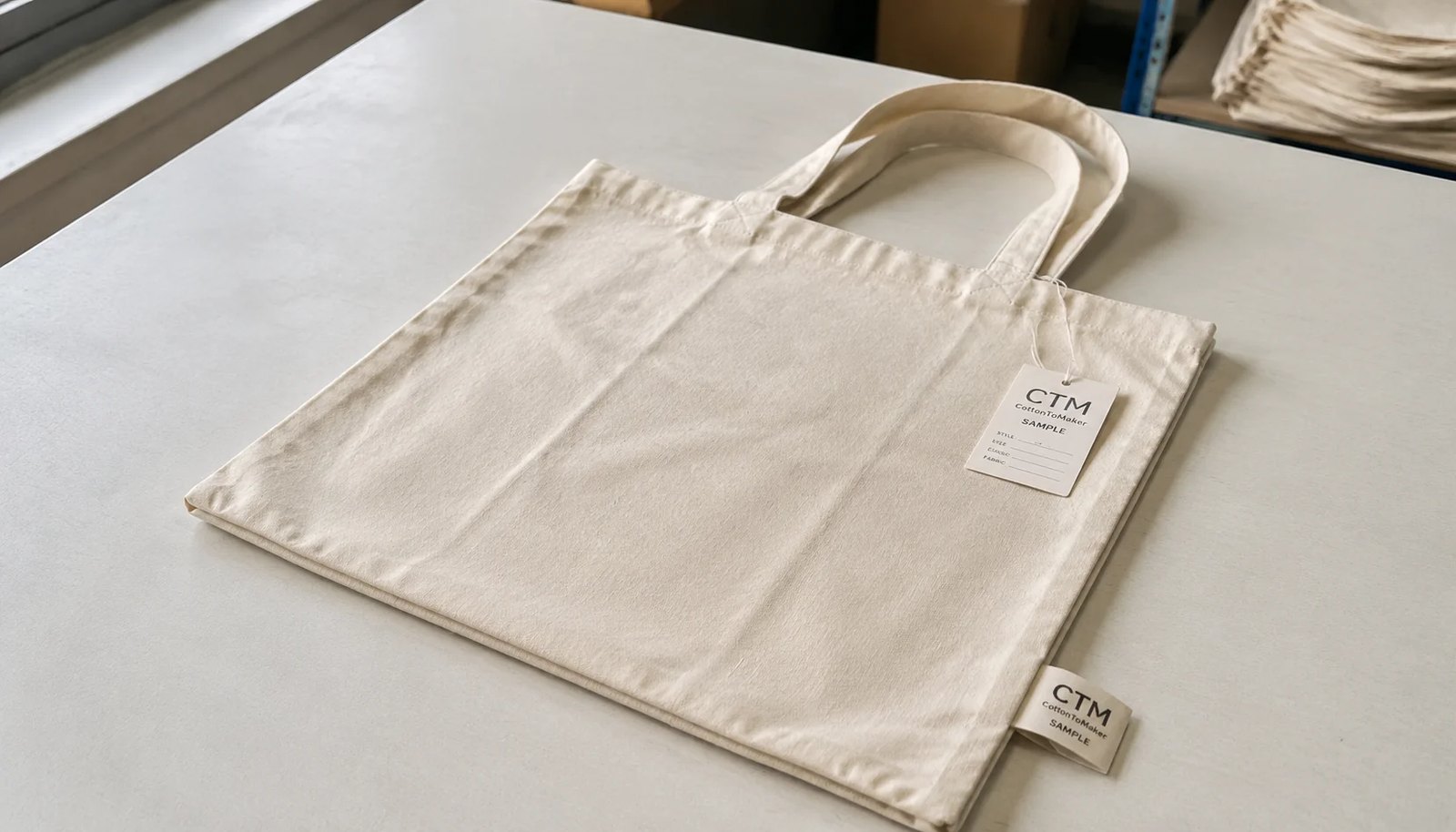
What sample approval has to prove for a museum shop tote
For museum shops, sample approval is a commercial control step, not a design-only step. The bag has to work as a retail product, a brand carrier, and a predictable reorder item. That means the sample must prove four things at the same time: the tote looks right for the museum brand, carries the expected merchandise safely, can be packed and shipped efficiently, and can be repeated in bulk without hidden substitutions.
This matters more for museum retail than for many giveaway programs because the tote often sits beside books, stationery, exhibition merchandise, and premium gift items. A bag that feels thin, prints poorly, or distorts when filled can weaken perceived product value at the register. A museum buyer is not simply approving a logo on cotton; they are approving a resale item that has to justify shelf space and margin.
The most common approval error is treating the sample as a visual reference only. A tote can photograph well on a table while still failing basic procurement expectations. Handles may be attached too narrowly for book weight. Fabric may be seller-stock rather than bulk-stock. Print may be centered on the sample but drift in production because the factory never agreed on placement tolerance. Packing may remain undefined until after the order is released, when freight and warehouse teams discover the cartons are oversized or overcompressed.
A stronger approval process starts by defining what the sample must represent. For museum shops, that usually includes final bag dimensions, target fabric weight, weave type, print method, print size, handle construction, labels, care information, and carton pack method. If any of these points are still provisional, the buyer should mark the sample as conditional rather than fully approved.
A practical rule is simple: if a detail could affect landed cost, retail presentation, durability, or reorder consistency, it belongs in sample approval. That turns the approved sample into an operational benchmark instead of a vague design sign-off.
- Approve the tote as a resale product, not just as artwork on fabric.
- Use the sample to confirm function, construction, and packing terms together.
- Mark any non-final details clearly so they do not become accidental production assumptions.
Start with the fabric specification before reviewing artwork
Fabric is the base decision that drives nearly every later outcome: perceived value, print performance, handle stress, unit cost, freight weight, and even how neatly the bag folds in a carton. For an organic cotton tote sample approval guide for museum shops, this is the first place buyers should slow down. The right artwork on the wrong fabric still produces the wrong product.
In museum retail, the practical fabric range is often 5 oz to 10 oz, but that spread covers very different use cases. A lighter 5 oz to 7 oz fabric can work for event-linked programs, foldable member gifts, and lower-ticket impulse items. An 8 oz to 10 oz fabric usually suits museum shops better when the tote is expected to carry exhibition catalogs, hardbacks, boxed gifts, or multiple merchandise items without feeling insubstantial. The heavier option is not automatically better, but it often aligns better with premium retail expectations.
Buyers should also separate weight from weave. Two fabrics may share a similar ounce weight yet behave differently because one is tighter and smoother while the other is more open or textured. Tighter constructions generally print more cleanly and hold shape better. More open fabrics may feel softer but can show greater ink spread, seam distortion, and surface irregularity. If the museum brand depends on crisp typography or refined linework, weave consistency matters almost as much as weight.
Natural organic cotton also introduces a sourcing reality that procurement teams should acknowledge early: slight fiber and shade variation is normal. The key question is not whether every bag is perfectly identical, but whether the variation stays within an agreed lot range that still looks coherent on shelf. That is why a fabric swatch, weight declaration, or sample meter from the intended bulk fabric is more useful than a generic promise of 'organic canvas.'
Do not approve a tote sample made from substitute stock unless the supplier states that clearly and the buyer treats it as a concept sample only. Substitute stock often behaves differently in printing, shrinks differently after finishing, and may not match the surface hand expected in bulk production. A pre-production sample should identify the actual fabric weight, color, and weave planned for the order.
When comparing suppliers, request the same information from each: fabric composition, weight, weave, dye status if applicable, and whether the fabric is already available or needs to be sourced against the order. That set of questions gives procurement teams a stronger basis for comparing tote samples than artwork alone.
- Confirm both fabric weight and weave, since they affect feel, print, and shape differently.
- Use actual bulk-fabric samples for approval whenever the tote is a retail SKU.
- Accept normal cotton variation only within a defined and visibly consistent lot range.
Choose a printing method that matches museum artwork and reorder needs
Museum shop artwork often looks simple on paper, but tote printing still needs disciplined review. Many museum designs rely on clean typography, fine linework, solid blocks of color, or exhibition branding that must look intentional rather than promotional. The print method chosen for the sample should therefore be evaluated not only for appearance, but also for repeatability, hand feel, and suitability for future reorders.
Water-based screen printing is often the most practical production route for museum totes with one-color or two-color artwork. It tends to keep a more natural fabric hand than heavy ink deposits and is usually easier to repeat on a stable base bag. For buyers planning a core museum logo tote or a recurring exhibition shop item, this is often the benchmark method to compare against. It is also easier to price transparently because color count, print area, and setup are easier to define.
Heat transfer or other short-run methods can be useful during design development, especially if artwork is changing or the design contains effects that are difficult to simulate quickly with screen setup. The problem comes when buyers approve the visual result of one method while assuming the durability and texture of another. If the sample uses transfer but bulk production will use screen print, the buyer should treat the sample as an artwork approval only unless the supplier provides a second, production-method sample.
Museum buyers should ask a few specific questions during print review. Are fine details still readable at the intended print size? Does the ink sit too heavily on the selected cotton weight? Is the print placement centered relative to the sewn body, not just the cut panel? Will the print area become stiff when the bag is folded for packing? These issues matter because a tote often spends time folded in cartons, stacked on shelves, and handled repeatedly by staff and visitors.
Color control also needs realism. If the museum identity depends on a specific brand color, the approval should reference a color standard such as a Pantone number and confirm whether the supplier is matching that tone as closely as practical on natural cotton. Cotton substrates absorb color differently than coated paper or digital screens, so exact visual matches may require tolerance language rather than absolute expectations.
Finally, link the print method to volume and reorder logic. A one-off event tote may tolerate a more flexible print route. A core museum shop item should be approved with the same process intended for future replenishment, because the cost of inconsistency across reorders is often higher than the cost of a more careful first sample.
- Approve the print method itself, not just the image outcome.
- Check readability, color density, hand feel, and fold behavior on the printed area.
- Use a production-method sample for repeat SKUs and reorder programs.
Use MOQ logic and quote structure to compare suppliers correctly
Minimum order quantity for custom organic cotton totes is rarely a single clean number. For museum buyers, the more useful question is what exactly that MOQ covers. Does it assume one bag size, one fabric, one handle length, one print color count, one carton format, and one artwork? Or does it hide setup conditions that will change once the museum asks for branch-specific graphics, exhibition dates, barcode labels, or multiple assortments?
A supplier can appear cheaper simply because the quote is built on narrower assumptions. That is why quote comparison should begin with a standard base specification. Keep the same tote size, fabric weight, print method, handle style, and packing format across all supplier requests. Then ask each supplier to separate base bag cost from setup items such as screens, labels, barcodes, inner bundling, and carton changes. This makes the quote more useful for procurement decisions and avoids later scope drift.
Museum organizations often benefit from a 'one base bag, multiple artwork versions' strategy. If the same construction works across permanent collection branding, temporary exhibition graphics, and satellite store programs, the buyer can hold material quality constant while changing only the design layer. This approach usually reduces fabric sourcing complexity and makes reorders easier. It also improves QC because the factory repeats a known construction instead of juggling several similar but different bags.
However, buyers should still ask how the factory handles variants. Are multiple artwork versions treated as separate SKUs with separate setups? Can they be packed by assortment in defined carton ratios? Is the MOQ per artwork or per total order? These details matter when a museum wants one premium tote body but several exhibition graphics at lower individual volumes.
Quote transparency also improves internal approval. Procurement teams often need to explain to retail managers or finance teams why one quote is not directly comparable to another. A structured quote showing unit price, setup charges, sample fees, packaging cost, and any variance triggers is easier to defend than a single blended price.
The practical goal is not to push every supplier into the same pricing model. It is to make sure the museum is comparing like for like. Once base assumptions are aligned, MOQ becomes a planning tool rather than a source of surprises.
- Compare quotes on one matched base specification before reviewing variants.
- Ask suppliers to separate unit price from setup, labeling, and packing charges.
- Confirm whether MOQ applies per order, per artwork, or per SKU.
Build a formal sample approval standard that prevents production disputes
A strong sample approval process turns subjective comments into measurable acceptance points. This matters because tote production disputes usually arise from unspoken assumptions: the print looked centered enough to one reviewer, the handles looked long enough to another, and the factory interpreted both comments differently. A formal approval standard gives both sides the same reference before bulk production starts.
For museum shop totes, the approval record should cover more than appearance. At minimum, it should state finished width, finished height, gusset if any, handle length, handle width, print size, print placement, and packing method. It should also note any agreed tolerances. Procurement buyers do not need to overengineer this, but they do need to write down what counts as acceptable variation and what does not.
Measurement method deserves attention because tote dimensions can vary depending on whether the bag is measured flat, lightly shaped, or filled. If the museum expects a bag to hold a standard-size catalog comfortably, test and document that use case directly. A tote that measures correctly on paper can still perform poorly if the opening is too narrow or the handle drop is awkward for carrying heavier items.
Visual review should happen under realistic lighting rather than only at a desk. Natural cotton, ink density, and even seam shadows can look different under daylight, warm retail spots, or bright LED store lighting. If the museum has a strong visual merchandising standard, take approval photos in the intended environment or at least under neutral light with clear notes.
Approval comments should also distinguish between acceptable natural variation and defects. Slight cotton flecking or small shade differences may be normal. Crooked logos, uneven handles, open seams, or trim substitutions are not. Procurement teams save time later when they define this difference during sample review instead of negotiating it after goods are packed.
The final discipline is document control. Record the artwork version, approval date, reviewer name, and whether the sample is fully approved or approved with comments. Then require the supplier to confirm that bulk production will follow that exact reference. This simple step is often what turns a sample into an enforceable production benchmark.
- State measurable approval points for size, handles, print, and packing.
- Use realistic lighting and functional testing, not table-top appearance alone.
- Keep a dated approval record tied to the final artwork version and factory confirmation.
Compare sourcing routes based on buying pattern, not just headline price
Museum shop buyers do not all purchase in the same way, so the right sourcing route depends on demand pattern, internal resources, and the role of the tote in the retail assortment. A museum with stable annual demand for a core logo tote may benefit from a direct-factory structure and a locked specification. A distributor or buying office supporting several museums may need more flexibility around artwork changes, assortment packing, and split deliveries. A one-off exhibition program may prioritize speed and lower commitment over long-run standardization.
The risk appears when buyers compare these routes only on unit cost. Direct-factory routes often expose the real drivers more clearly: material selection, print setup, labor, and packaging. Trading or managed-service routes may bundle project handling, artwork coordination, and inspection support into the price. Neither route is automatically better, but they are not directly comparable unless the museum understands what service layer is included.
For a procurement buyer, the useful question is operational fit. Does the supplier understand retail resale expectations rather than promotional giveaway standards? Can they support repeat orders against a signed sample? Are they able to manage multiple artwork versions on one construction without creating packing errors? Can they provide practical inspection data before shipment? These considerations often outweigh a small unit-price difference, especially for museum shops where product consistency affects customer perception.
A buyer with a steady museum logo tote program may want a supplier willing to reserve or regularly source the same fabric quality and maintain the same print setup. A buyer managing seasonal exhibitions may care more about sample responsiveness, artwork revision handling, and accurate deadline communication tied to opening dates. The sourcing route should reflect those priorities rather than forcing every order into the same procurement model.
It is also worth considering who will own final QC and communication. If the museum team has the capacity to manage detailed approvals directly, a closer factory relationship may work well. If internal capacity is limited, a sourcing partner that can translate approvals into production checkpoints may reduce risk. The key is to ask for enough line-item clarity that route choice remains a deliberate business decision rather than a blind trust exercise.
The cheapest route is often only obviously cheapest before problems happen. Once reprints, late arrivals, or packaging corrections enter the picture, service structure becomes part of the total cost.
- Choose the sourcing route that matches demand stability, variant complexity, and internal bandwidth.
- Compare service scope as well as unit price when reviewing supplier options.
- Prioritize reorder consistency and QC visibility for retail tote programs.
Packing decisions affect freight cost, shelf readiness, and damage risk
Packing is one of the most overlooked parts of tote sample approval, yet it changes landed cost and retail handling more than many buyers expect. Museum shops should decide early whether the bags are intended for backroom bulk replenishment, direct shelf display, membership distribution, or e-commerce fulfillment. Each route creates different packing requirements, and vague instructions at the sample stage often produce avoidable cost later.
Flat bulk packing is usually the most economical option for standard museum shop replenishment. It reduces material use and often keeps freight volume lower than individually wrapped presentation packs. This can work well when store staff will unfold and merchandise the totes in-house. However, bulk packing still needs clear definition: pieces per inner bundle if used, pieces per carton, fold direction, and whether the bag opening or print face should be visible for easier receiving.
Individual polybag packing can be justified when the tote needs a cleaner shelf presentation, when dust protection matters, or when the goods will move through channels that benefit from individual handling. But it should not be chosen by habit. Additional packing can increase cubic volume, add material cost, slow unpacking, and sometimes trap the bag in a compressed shape that creates visible fold marks.
The sample should therefore include or clearly describe the exact fold and packing format. If the tote is printed heavily, the buyer should check whether the fold line runs across the main graphic and whether ink-on-ink contact could transfer in warm conditions. If the cotton is soft and natural-colored, check whether compression could create lasting creases that make the retail presentation look tired on arrival.
Carton specification also belongs in the approval discussion. Pieces per carton, carton dimensions, gross weight, and outer marks all affect warehouse planning and freight quotation. A museum with limited stockroom space may prefer smaller cartons even if the unit packing cost is slightly higher. A multi-branch program may need defined carton ratios by artwork or SKU to avoid time-consuming resorting at destination.
In practical terms, packing should be approved as part of the product, not as an afterthought after printing is finished. The museum is buying an item that has to arrive retail-ready, and the approved sample should reflect that end requirement.
- Select packing based on the final distribution channel, not on default factory habit.
- Approve fold direction, carton count, and carton size before production release.
- Check whether compression, ink contact, or poor bundling could damage shelf presentation.
Lead-time control starts before production begins
Lead time for organic cotton totes is often quoted as if it begins the moment a purchase order is issued. In practice, museum buyers know that the real clock depends on several prior actions: final artwork release, sample approval, raw material confirmation, and sometimes carton or labeling approval. If these steps remain vague, the quoted ship date is only partially meaningful.
A simple museum-logo tote with standard materials may move from sample to production relatively quickly, often within a 7 to 14 day sample window and a 25 to 40 day production window after approval. But those figures assume that artwork is final, fabric is available or easily sourced, and there are no unresolved comments about labels, print size, or pack ratios. Exhibition-linked programs are more exposed because opening dates do not move even when approvals do.
The safest way to manage timing is to separate milestones clearly. Sample submission date, sample feedback date, final approval date, raw material booking date, production start date, and shipment date should each be visible in the supplier communication. Procurement teams can then identify where the risk actually sits. In many projects, it is not sewing capacity that causes delay, but artwork revision cycles or late packaging decisions.
Fabric booking deserves specific attention. If the selected organic cotton must be sourced against order, a supplier may need confirmation before full production approval to avoid timeline compression. Buyers should decide deliberately whether to authorize early material booking based on a stable base spec, even if final graphic details are still being finalized. That decision can reduce schedule risk, but it should be made knowingly and recorded clearly.
Museum buyers should also clarify what happens when the approved sample changes. A revised logo size, extra print color, new barcode label, or altered carton count can all affect production planning. The supplier should state whether such changes restart lead time fully or only partially. Without that agreement, internal teams may assume an exhibition launch date is protected when it is not.
The most practical procurement discipline is to ask one simple question on every quote: what exact event starts the lead-time clock? Once that answer is in writing, schedule discussions become more realistic and easier to manage internally.
- Break lead time into approval, material, production, and shipment milestones.
- Confirm what event starts the quoted production timeline.
- Treat artwork and packing changes as schedule risks, not minor admin updates.
Evaluate quality control points that matter in real museum shop use
Quality control for museum shop totes should focus on the points that affect customer experience, resale value, and claims risk. A tote is a simple sewn item, but its failures are highly visible. Uneven handles, drifting print, weak corner stitching, and inconsistent dimensions are easy for store staff and shoppers to notice. That visibility is why sample approval should connect directly to pre-shipment QC expectations.
Fabric consistency is the first checkpoint. The bulk run should match the approved sample closely enough in weight, texture, and visual density that the bag still fits the intended price point. A lighter or looser fabric may reduce cost but can make the finished tote feel like a different product. Buyers do not need lab-level complexity for every order, but they do need a repeatable way to compare sample and bulk feel, appearance, and basic measurement.
Measurement control matters because even small size shifts affect functionality. A slightly smaller width or reduced handle drop can change how comfortably a catalog or boxed gift fits inside the bag. QC should therefore check finished dimensions against the same flat-measure method used during sample approval. If a gusset is included, it should be inspected for symmetry and proper formation rather than assumed from the pattern.
Handle strength deserves more attention than it often receives. Museum shop totes are frequently purchased as practical carry items, not just souvenirs. The stress point where handles meet the body should be checked for reinforcement consistency, stitch security, and placement symmetry. An approval note that simply says 'handles okay' is not enough; the buyer should define the reinforcement style and inspect it in production samples or shipment photos.
Print quality should be reviewed at both close range and normal shopping distance. At close range, look for registration issues, edge bleeding, pinholes, patchy ink, or poor opacity. At shelf distance, ask a simpler question: does the logo still read as intentional and balanced on the bag? A print can pass a technical checklist while still looking visually off-center in use.
Finally, QC should include packing checks because even well-made bags can arrive looking poor if the fold method, bundle tension, or carton cleanliness is wrong. Clean cartons, accurate counts, correct assortment by SKU, and no dirt transfer onto light cotton are all practical requirements. For museum retail, product quality ends at shelf presentation, not at the sewing line.
- Tie bulk QC checkpoints directly to the approved sample and measurement method.
- Inspect handle reinforcement and print placement as functional risk points, not cosmetic extras.
- Include packing cleanliness, carton accuracy, and fold condition in the QC scope.
Compare landed cost instead of reacting to the lowest unit price
A museum shop tote program should be evaluated on landed cost and usable retail outcome, not just the factory unit price. Tote bags are simple enough that buyers sometimes compare quotes too quickly. The lower price can come from lighter fabric, smaller print area, looser tolerances, fewer reinforcement stitches, less careful packing, or omitted setup charges. Unless those assumptions are surfaced, the comparison does not support a good procurement decision.
Start by aligning the quote basis. Every supplier should be quoting the same bag size, fabric weight, weave type, print method, number of print colors, handle construction, label requirement, and packing format. Once the base specification matches, add the less visible cost layers: sample charges, print setup, inner packing, carton count, and freight effect from carton dimensions. Only then does the price reflect what the museum is actually buying.
This is particularly important for museum shops because the tote often has a dual role: it is both merchandise and packaging. A bag that saves a small amount on unit cost but feels too thin, prints poorly, or arrives badly creased can weaken full-price sell-through or create rework for store staff. A slightly higher cost bag may be commercially better if it supports the intended retail positioning and reduces avoidable complaints.
Procurement teams should also think in reorder terms. If the first run uses a nonstandard fabric or an unstable print process simply to shave cost, the museum may face inconsistency when replenishing the item later. That inconsistency has a cost, even if it does not appear on the first purchase order. Sample approval should therefore support a specification the buyer would be comfortable repeating, not just accepting once.
A practical internal review model is to ask four questions together: What is the real per-piece landed cost? What quality level is being purchased at that cost? What operational risk sits behind the quote? And can the product be repeated reliably if the SKU succeeds? Those questions usually produce better decisions than unit price alone.
In procurement terms, the approved sample protects margin after purchase. It prevents the supplier from optimizing quality invisibly and gives the museum a clearer basis for accepting or rejecting bulk goods. That is why detailed sample approval is part of cost control, not separate from it.
- Normalize all quote assumptions before comparing supplier pricing.
- Add setup, packing, and freight effects to get a true landed-cost view.
- Use the approved sample to protect reorder consistency and margin, not just first-run appearance.
Specification comparison for buyers
| Spec decision | Recommended option | When it fits | Buyer risk to check |
|---|---|---|---|
| Fabric weight | 5 oz to 7 oz organic cotton for value-oriented gift-shop totes; 8 oz to 10 oz for museum shops selling books, catalogs, and heavier merchandise | Use lighter fabric for foldable event bags, member giveaways, or low-price add-on sales; use heavier fabric when the bag must feel substantial at the register and hold dense items without collapsing | A visually acceptable sample may still be too light once printed, stitched, folded, and loaded with books; confirm actual weight and hand feel from bulk fabric |
| Weave type | Plain weave for cleaner logo detail and more even printing; canvas weave for a firmer body and stronger premium perception | Plain weave suits graphic logos, exhibition titles, and simple text-driven designs; canvas suits a higher-value souvenir tote where structure matters on shelf and in hand | Loose or irregular weave can cause ink spread, seam distortion, and visible slub variation that was not obvious in a studio photo |
| Print method | Water-based screen print for standard museum logos; discharge or pigment only when specifically tested; heat transfer mainly for short runs or artwork review | Screen print fits repeat museum SKUs with stable art and predictable color count; transfer can help when artwork changes are still under review or image detail is complex | Sample method and bulk method often get mixed; if the sample is transfer but production is screen print, the approved look may not match durability, texture, or color saturation |
| Handle construction | Cross-box or reinforced stitch with 2.5 cm handles and stress-point reinforcement; match handle length to carrying use | Best for bags expected to carry exhibition catalogs, hardbacks, ceramics, or multiple boxed souvenirs during a full museum visit | Weak handle anchoring rarely shows in a flat approval photo; failures usually appear only after load testing or after shoppers carry weight for a longer period |
| Sample route | Pre-production sample made from actual planned fabric, print process, thread, and label set | Use when the tote is a branded retail item, tied to an exhibition launch, or expected to be reordered from the same approved standard | Sales samples made from substitute stock can hide shrinkage, shade shift, seam stiffness, print absorbency, and trim substitutions |
| MOQ logic | Quote one base bag specification first, then add artwork or label variants as separate line items | Best for museum groups, multiple branches, traveling exhibitions, or programs sharing one tote construction with changing graphics | Mixed variants can make a quote look competitive until setup, plate, label, and packing charges are added later |
| Packing format | Flat bulk packing with defined carton count; individual polybag only if shelf presentation, protection, or e-commerce picking requires it | Flat packing reduces unit freight cost and warehouse handling time; individual bagging is more appropriate when clean presentation and dust protection matter | Overpacking raises cubic volume, can trap moisture, and can press visible fold lines into natural cotton surfaces |
| QC threshold | Accept minor natural cotton variation within the approved lot range; reject visible logo misalignment, undersized bags, weak stitching, and unapproved trim changes | Works for natural-fiber products where tiny fiber and shade variation is normal but museum branding still requires consistency | A perfect-looking top sample may still fail if seam allowance is too narrow, handle spacing drifts, or inside finishing differs from the approved reference |
| Lead time | Sample approval 7 to 14 days; production 25 to 40 days after final approval, artwork release, and raw material confirmation | Fits planned exhibition retail launches, annual shop resets, and replenishment windows with finalized graphics | Lead time often excludes art revisions, fabric booking, lab-dip or print strike-off confirmation, and carton approval unless those steps are written into the quote |
Buyer checklist before sampling
- Confirm finished bag width, height, gusset, handle drop, and handle width in writing before sample approval.
- Require the pre-production sample to use the same organic cotton fabric, thread count direction, label, print process, and packing method planned for bulk.
- Load-test the sample with actual museum shop items such as catalogs, hardbacks, boxed gifts, or bundled merchandise rather than handling it empty.
- Review print placement, logo registration, fabric shade, seam finish, and stitch density under daylight and the museum store's typical retail lighting.
- Check whether the sample includes final labels, care marks, barcode placement, hangtag hole position, and any retailer-required price-ticketing detail.
- Approve the exact fold method, inner packing, pieces per carton, and carton dimensions before the factory starts production.
- Lock the artwork file version, Pantone references, print size, and print side count so the purchase order matches the signed sample.
- Ask the supplier to state acceptable tolerance for size, handle placement, print placement, and shade variation on the quote or approval sheet.
- Verify whether the quoted lead time starts from deposit date, artwork approval date, or full sample sign-off date.
- Keep a dated approval record with photos, measurements, comments, and the supplier's confirmation that the bulk order will follow that reference.
Factory quote questions to send
- Is this sample made from the exact organic cotton fabric, weave, weight, thread, label, and print method that will be used for bulk production?
- What is the unit price at 1,000, 3,000, and 5,000 pieces for this exact specification, and which setup, screen, sampling, or packing charges are separate?
- How many print colors, print sides, and print area dimensions are included, and what cost changes apply if artwork size or color count changes?
- What are the agreed tolerances for bag size, handle length, handle spacing, print placement, fabric weight variation, and stitching quality?
- How will the goods be packed for shipment, how many pieces per carton, what are the carton dimensions and gross weight, and is inner bundling included?
- What is the sample lead time, what is the production lead time after approval, and what milestone must be completed for the lead-time clock to start?
- Can you provide a pre-production sample from bulk materials and a clear note if any trim, label, or printing detail differs from the final planned run?
- What quality-control checks are performed in line and before packing, especially for handle strength, logo registration, measurement tolerance, and carton count accuracy?
- If the museum needs multiple artwork versions on one base tote, how are MOQ, setup cost, and assortment packing handled by SKU?
- What happens if approved artwork, carton pack, or labeling changes after sample sign-off, and how will that affect cost and ship date?
Quality-control points to confirm
- Fabric weight and hand feel match the approved sample and the agreed spec range; the bulk fabric should not feel noticeably thinner, looser, or harsher.
- Bag dimensions remain within agreed tolerance for width, height, gusset, and handle drop when measured flat using the same method each time.
- Handles are even in length and placement, securely stitched, and reinforced at stress points with no skipped stitches or visibly weak attachment areas.
- Print is centered according to the agreed placement, with sharp edges, consistent color density, and no major ghosting, bleeding, pinholes, or misregistration.
- Seams are straight, corners are properly closed, seam allowance is sufficient, and there are no loose threads, holes, puckering, or twisted side panels.
- Inside finishing, labels, and care marks match the approved construction and do not substitute unapproved trims or omit required information.
- Shade variation remains acceptable within the production lot and does not create visibly different bag tones between cartons intended for the same retail program.
- Fold, inner bundling, carton count, and outer carton markings match the approved packing method and do not cause dirt transfer, moisture risk, or severe crease damage.