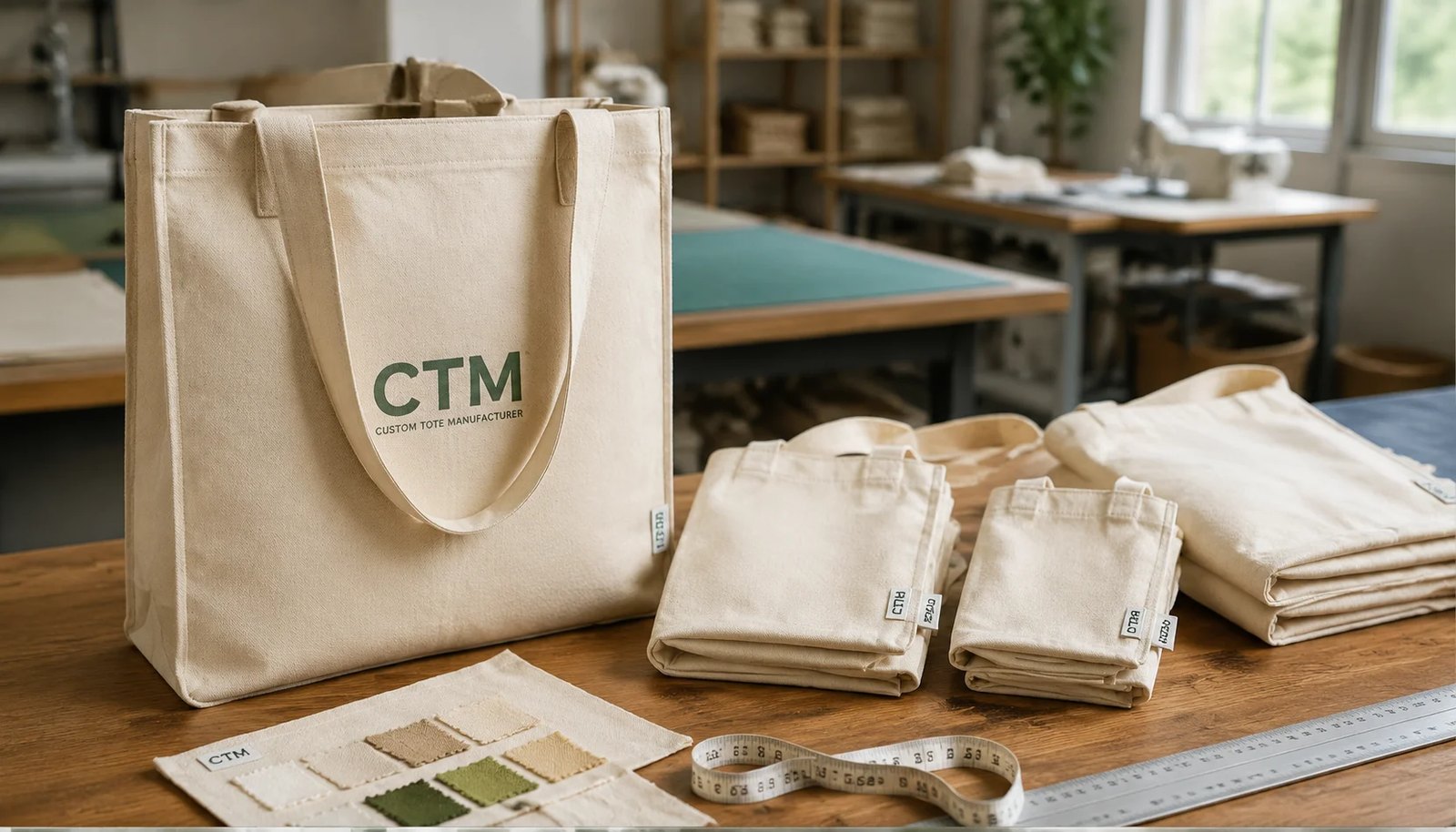
Why natural grocers need a tighter tote RFQ than a standard promo bag brief
Organic cotton totes sold through natural grocers sit in an awkward middle zone between packaging, reusable shopping gear, and branded retail merchandise. That means the usual promotional-bag RFQ is often too loose. A generic request for 'organic cotton tote, custom logo' leaves too many cost and quality variables open: actual fabric weight, whether the cotton claim can be documented, how well the print holds on unbleached fabric, and whether the handles are built for jars, produce, and boxed items rather than brochures.
Buyers usually run into trouble when they compare quotes that are not built on the same assumptions. One supplier prices 180 GSM flat bags with short handles, another prices 300 GSM gusseted bags with reinforced stitching, and both appear under the same item description. The result is not a true quote comparison. For natural grocery programs, the RFQ should force alignment on load use, organic claim route, print method, and packing logic before price is treated as meaningful.
- Promotional tote spec and grocery-use tote spec are not interchangeable.
- Natural fabric appearance needs approval: clean natural, flecked natural, or bleached organic.
- Organic claim wording should match what the supplier can document at shipment lot level.
- Retail and distributor receiving needs should shape packing from the start, not after bulk approval.
Start with the use case: checkout tote, membership bag, or retail merchandise
The single most important RFQ improvement is to define how the tote will actually be used. A checkout replacement tote needs stronger handles, wider gussets, and a fabric weight that can hold repeated loads. A membership or event bag may prioritize softer hand feel and lower unit cost. A retail merchandise tote sold near checkout often needs cleaner print, tighter fold presentation, and more consistent shade across deliveries because shoppers compare bags side by side on shelf.
When buyers skip the use case, suppliers fill in the blanks with whatever keeps the quote competitive. That usually means lighter fabric, narrow handles, and construction that passes visual inspection but not real-use loading. For natural grocers, it is better to state expected load profile in plain language. If the bag should carry glass bottles, canned goods, or heavy produce, say so in the RFQ. This gives the factory reason to price the correct seam strength and fabric weight rather than a best-case version.
- Checkout reuse: target stronger body fabric and gusseted construction.
- Membership giveaway: lower GSM may work if the bag is not intended for heavy repeat use.
- Retail merchandise: cleaner print and folding presentation often matter more than lowest unit price.
- State expected product mix inside the bag: produce, jars, cartons, bottles, or mixed grocery load.
Choose the right fabric weight and finish before discussing price
For most natural grocer tote programs, the practical starting range is about 270-340 GSM, often described commercially as 8 oz to 10 oz canvas depending on local quoting habits. This range gives enough body for repeat grocery use, supports water-based screen printing better than thin sheeting, and generally handles gusset construction without feeling flimsy. If the bag is mainly a light branded giveaway, lighter options around 180-220 GSM may still be suitable, but they should not be quoted as if they are equivalent to grocery-duty bags.
Fabric finish matters almost as much as weight. Natural unbleached organic cotton supports the eco story but introduces visual variation. Seed flecks, shade warmth, and occasional small tone differences between lots are normal unless additional processing is used. Buyers should decide whether they want a rustic natural look or a cleaner premium look. That choice affects print clarity, cost, and lot-to-lot consistency. If a PMS-sensitive logo is involved, natural base cloth will shift the appearance compared with a white-coated reference proof.
- 180-220 GSM: lower cost, softer hand, weaker structure for heavy grocery loads.
- 270-340 GSM: common working range for reusable grocery totes.
- Above 340 GSM: premium feel and stronger body, but higher material cost and higher freight weight.
- Natural unbleached cotton can vary in tone; write acceptable appearance into the approval standard.
- Request GSM tolerance in the quote, not just a nominal weight label.
Bag construction details that change performance more than buyers expect
Two bags made from the same fabric can behave very differently in use because of construction choices. A flat bag without gusset is easier to cut and cheaper to sew, but it carries boxed groceries poorly and twists under uneven load. A bottom gusset or side-and-bottom gusset improves capacity and sits better during packing. Handle reinforcement is another hidden divider between a low quote and a durable bag. For grocery use, simple single-line handle attachment is often not enough. Cross stitch or box stitch reinforcement should be standard if the bag is expected to carry heavier items repeatedly.
Handle dimensions also deserve more attention in the RFQ. Shoulder-carry bags usually need around 65-70 cm total handle length, but the right number depends on bag height and whether winter clothing is common in the target market. Handle width affects comfort under load. Narrow handles can bite into the shoulder and create a cheap feel even if the body fabric is fine. If comfort is part of the retail value, wider self-fabric handles or cotton webbing options may be worth the extra cost.
- Flat bag: lowest sewing cost, weakest grocery-loading behavior.
- Bottom gusset: improves volume without too much complexity.
- Side-and-bottom gusset: best for shelf merchandise and real grocery loading.
- Cross stitch or box stitch handle reinforcement is preferable for repeat-use grocery bags.
- State handle width and total length separately; many RFQs mention only 'long handle'.
Print method selection: where quote gaps and approval disputes usually start
For organic cotton totes in natural grocery channels, one-color or two-color water-based screen printing is often the most practical choice. It keeps per-unit cost controlled at volume, gives decent hand feel, and fits the understated visual style many natural brands want. Pigment screen print can increase opacity on darker cloth but may feel heavier. Digital printing can work for small runs or artwork with many tones, yet buyers should expect higher unit cost, more visible color variation on natural fabric, and different expectations for exact PMS matching.
Print discussions become expensive when the quote does not define artwork complexity. 'One logo print' is not enough. The factory needs print size, number of colors, front-only or double-side layout, and whether fine lines or halftones are included. Natural unbleached fabric can soften fine detail and shift color warmth. A pre-production print sample on the exact approved base fabric is the only safe approval route for critical branding. PDF proofs alone do not solve cloth and ink behavior.
- Water-based screen print: common for eco-positioned totes and good value at medium to high volume.
- Pigment print: stronger opacity but heavier hand feel.
- Digital print: useful for low MOQ or multi-color artwork, usually with higher unit cost.
- Print quote should state artwork size, color count, side count, and placement tolerance.
- Approve print on actual fabric, not only on coated paper or digital mock artwork.
MOQ logic for grocer programs: combine volume intelligently instead of fragmenting SKUs
Natural grocer buying programs often involve regional logos, seasonal campaigns, or several store groups under one distributor. The mistake is to split the order into too many small SKUs, each with different sizes, handle lengths, and print layouts. Factories do not only count finished units; they count setup interruptions. Every print change, label change, and packing change adds handling cost and raises error risk. The best MOQ strategy is to standardize the bag body first, then vary only the artwork where the print process allows it economically.
If several variants are necessary, ask suppliers to quote MOQs at three levels: per total order, per artwork, and per carton pack configuration. This gives a much clearer view of the real commercial breakpoints. A factory may accept a lower MOQ when all variants use the same fabric and dimensions because cutting and sewing remain efficient. But if each region wants different bag sizes and handle colors, the hidden cost appears in setup, not just materials.
- Standardize body fabric and dimensions across regions when possible.
- Minimize changes in labels, hangtags, and carton assortment inside one PO.
- Request MOQ by total volume and by artwork variation to avoid misleading unit prices.
- Small SKU splits often raise error rates in final packing more than buyers expect.
Sample approval workflow that prevents the most expensive production mistakes
A single generic sample is not enough for this product type. Buyers should separate at least three approval moments: a fit or construction sample, a print sample on the correct fabric, and a final pre-production sample that reflects the approved bag exactly. The fit sample confirms dimensions, gusset shape, and handle proportion. The print sample validates artwork behavior on natural organic fabric. The pre-production sample is the control standard for bulk sewing, trim placement, folding, and packing. Skipping one of these stages may save days early but usually costs weeks later.
Sample comments should be written as acceptance criteria, not just preference notes. For example, 'handle appears too short' is vague. A usable instruction is 'increase total handle length from 60 cm to 68 cm ±0.5 cm.' The same applies to print position, gusset depth, fold direction, and side label placement. Natural grocer programs often reorder the same tote. Clean approval records make repeat buys faster and reduce the risk that a future production run drifts from the original standard.
- Construction sample: validates size, gusset, stitching method, and handle proportion.
- Print strike-off or printed sample: validates ink coverage and color on actual cloth.
- Pre-production sample: final control standard before bulk cutting and sewing.
- Approve by measurable tolerance where possible, not by informal design comments only.
Packing and carton planning: small details that affect receiving cost and freight efficiency
Tote bags are simple products, but packing mistakes create avoidable downstream cost for importers and distributors. If bags are sold in store, folded presentation and bundle count matter. If they are allocated through a warehouse network, carton consistency matters even more. Buyers should specify whether bags are to be packed in fixed bundles such as 25 or 50 pieces, whether inner labels are needed for quick identification, and whether individual polybags are prohibited for sustainability reasons. Leaving this open invites whatever packing method the supplier uses for export convenience, not your receiving process.
Carton dimensions and gross weight caps should be written into the RFQ when destination handling is tight. Oversized cartons may lower the carton count but cause receiving problems, pallet instability, or extra domestic relabeling work. Organic cotton bags also pick up moisture and warehouse odor if packed in poor conditions. Clean dry packing and clear outer carton markings reduce claims that are hard to prove after arrival. In many imports, the bag quality itself is acceptable but the receiving labor cost erodes the margin because packing was not engineered.
- Define bundle count and whether bundles must stay size- and artwork-specific.
- State if individual polybags are banned, optional, or required for shelf presentation.
- Set maximum carton gross weight suitable for destination warehouse handling.
- Specify carton markings: PO, SKU, colorway, quantity, made-in label, and carton sequence.
- Request clean, dry, odor-controlled packing conditions for natural cotton items.
Lead time planning: where tote programs slip and how to build a safer schedule
Buyers often treat tote bags as simple sewing goods with short lead times, but custom organic cotton programs have several schedule pinch points. Fabric availability is the first one. If the supplier does not hold the requested organic canvas weight in stock, weaving or sourcing time can quickly become the longest step. Custom dyeing is not always relevant for natural cloth, but washing, shrink control, and print testing can still add days. Printing setup, especially for multiple artworks, creates another bottleneck if artwork files arrive late or sample approvals move slowly.
A stronger buying schedule separates calendar assumptions into approval days and factory days. For example, a quote may state a production lead time after deposit and sample approval, but if internal artwork review takes a week and final barcode confirmation takes another week, the practical delivery slips before sewing even starts. Ask for the supplier's critical path with real dependencies: fabric ready date, sample dispatch date, artwork signoff deadline, bulk cutting start, final inspection window, and cargo handover cutoff.
- Organic fabric readiness can be the real lead-time driver, not sewing capacity.
- Multiple regional artworks extend print setup and packing complexity.
- Internal buyer approval delays should be counted separately from factory production time.
- Request milestone dates, not only a single 'bulk lead time' number.
How to compare supplier quotes on landed value instead of unit price only
The cheapest ex-works quote is often not the lowest landed-cost option. Heavier fabric raises unit price and freight, but it may reduce return risk and increase reorder confidence. A supplier offering a lower unit price may exclude print screens, labels, testing, carton upgrades, or pre-production samples. Another may quote a slightly higher price but include stronger handle stitching, better pack discipline, and traceability support for the organic claim. Procurement teams need a quote comparison sheet that isolates these differences so commercial decisions are not made on incomplete totals.
A practical way to compare is to break the quote into five buckets: material, printing, sewing, packing, and compliance or documentation extras. Then compare non-price risk factors: proven experience with reusable retail totes, sample quality consistency, response speed on technical comments, and transparency on MOQ and tolerances. For natural grocer programs, evidence quality matters. A supplier that can provide clear photos of seam construction, fabric weight verification, print samples on natural cloth, and packing examples is usually easier to manage than one sending only a headline FOB price.
- Separate one-time costs such as screens or sample charges from recurring unit cost.
- Compare quote inclusions line by line: labels, cartons, packing style, and documentation support.
- Add likely receiving labor or repacking cost if packing is not warehouse-friendly.
- Treat traceability and technical response quality as commercial value, not soft extras.
Specification comparison for buyers
| Spec decision | Recommended option | When it fits | Buyer risk to check |
|---|---|---|---|
| Fabric weight | 8 oz to 10 oz organic cotton canvas, about 270-340 GSM | Best balance for everyday grocery carry, print stability, and repeat orders | Lightweights under about 220 GSM can distort under heavy produce loads and show print strike-through |
| Fabric appearance | Natural unbleached organic cotton with visible seed flecks only if brand accepts rustic look | Works for natural grocery positioning and reduced processing story | Shade variation between lots must be approved; flecks can reduce fine print clarity |
| Bag construction | Bottom gusset or side-and-bottom gusset with reinforced cross stitch on handles | Needed for boxed groceries, jars, and heavier basket replacement use | Flat bags look cheaper in quotes but often fail real loading tests or stack badly in stores |
| Handle length | 65-70 cm total length for shoulder carry, 2.5-3 cm width | Most grocery shoppers want shoulder use with coats and layered clothing | Short handles create retail complaints; extra-long handles can drag on smaller bag sizes |
| Print method | Water-based screen print for solid logos; digital only for short runs or multi-color artwork | Screen print gives stronger opacity and lower unit cost at volume | Digital print on natural fabric may shift tones; quote should state print size, color count, and placement tolerance |
| Organic claim route | Request transaction certificate support or clear organic material declaration tied to PO lot | Important when the bag itself is part of the product story, not just generic packaging | Suppliers may quote organic yarn but not provide lot-level traceability for finished bags |
| MOQ structure | One body fabric and one print setup across several colorways where possible | Helps grocer groups and regional distributors combine volume without fragmenting production | Too many SKUs in one PO increase setup cost, packing errors, and delayed exits from sewing line |
| Retail packing | Bulk pack by store-ready bundle count, for example 25 or 50 pieces per inner with size label | Useful for distributor receiving and faster allocation to store network | Loose mixed cartons create receiving disputes and hidden relabeling labor after import |
Buyer checklist before sampling
- State bag finished size with tolerance, including gusset depth and handle drop, not only flat width and height.
- Specify fabric as organic cotton with target GSM range and whether natural seed flecks are acceptable.
- Define intended load use such as light promotional carry or grocery basket replacement; this changes GSM and handle reinforcement.
- List print method, print size, artwork colors, placement, and whether PMS match is critical on natural fabric.
- Include construction details: seam allowance, handle width, cross stitch or box stitch, overlock inside, and gusset style.
- Request pre-production sample approval against exact fabric and print method, not only a stock fabric mock sample.
- Define packing by unit bundle, polybag policy if any, carton dimensions, gross weight cap, and carton markings.
- Ask supplier to separate sample lead time, bulk lead time, and booking cutoff assumptions in the quote.
- Request quote validity period and what moves cost: cotton market swings, print color count, carton changes, or audit requirements.
- Tie organic claim documents, testing needs, and barcode or label details to the PO before deposit.
Factory quote questions to send
- What exact fabric construction are you quoting: yarn count, weave type, and finished GSM tolerance?
- Is the quoted fabric certified organic at finished bag level, fabric level, or yarn level, and what document can support the shipment lot?
- What bag dimensions are included in the quote, and are they measured before or after sewing and washing?
- What handle attachment method is included: cross stitch, box stitch, bartack, or double reinforcement?
- How many print colors, what print size, and what print method are included in the quoted unit price?
- What is the setup charge or screen cost per artwork and when is it waived at volume?
- Does the MOQ apply per size, per color, per print design, or combined across one fabric body?
- What sample stages are available: blank fit sample, printed pre-production sample, and shipment sample pulled from bulk?
- What is the standard AQL or in-house inspection method, and what defects are classed as major for print and sewing?
- How are pieces packed per inner and per export carton, and what carton gross weight are you targeting?
Quality-control points to confirm
- Finished size tolerance should be stated, commonly around plus or minus 1 cm for width and height and plus or minus 0.5-1 cm for handle length depending on bag size.
- Fabric GSM should be checked on incoming fabric and finished cut panels; approved tolerance should be written into the PO.
- Handle attachment must survive practical load testing based on intended use; define sample load test weight and duration before bulk production.
- Print registration, opacity, and placement tolerance should be approved on natural fabric because color can read warmer than on bleached cloth.
- Seams should be even, with no skipped stitches, raw edge exposure beyond agreed construction, or twisted handles.
- Carton count accuracy matters for distributor replenishment; random carton recount should be part of final inspection.
- Needle control, metal contamination control, and clean packing are important if bags are sold in food-adjacent retail environments.
- Moisture and odor should be checked before packing; natural cotton stored poorly can arrive with mildew risk even if sewing quality is fine.