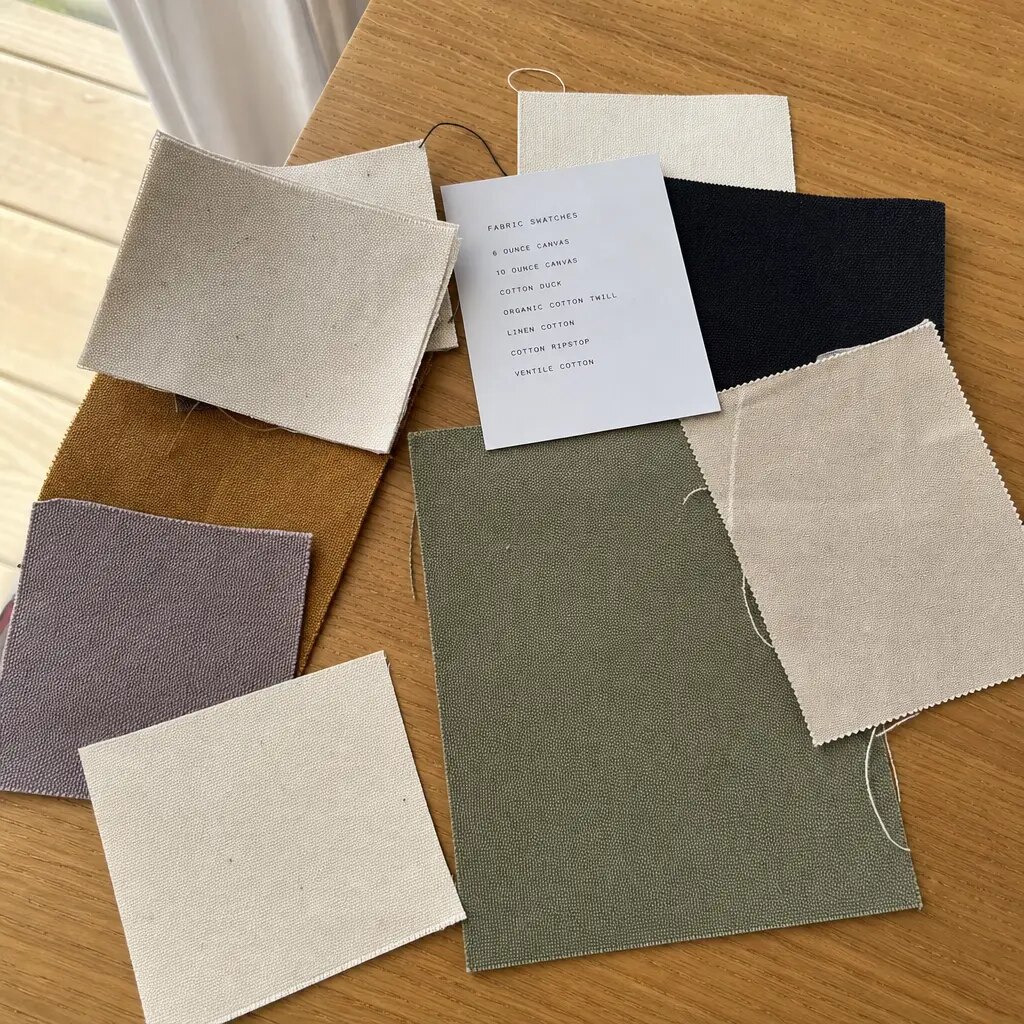
Start with the hotel retail job
Begin with the selling situation, not the tote template. A spa shop, resort boutique, lobby market, conference store, and in-room upgrade program can all ask for organic cotton totes, yet each one needs a slightly different product. The job controls the fabric weight, handle drop, logo size, print durability, barcode placement, folding method, and packing cost.
For procurement teams, the RFQ should describe how the guest will meet the bag. Will it hang near apparel? Sit folded beside candles? Carry spa products back to a room? Ship as part of a gift set? A boutique retail tote usually needs cleaner structure and tighter print placement than a giveaway. A conference retail tote may be cost-sensitive, but the logo still has to look controlled because it carries the property’s brand in public.
This decision also changes inspection severity. A small natural slub in cotton canvas can be acceptable if it matches the approved fabric swatch. A dirty fold line, crooked logo, wrong hangtag, or ink transfer mark is different. If the guest pays for the bag, classify it as retail merchandise and inspect it against a retail standard, not a basic promotional-bag standard.
- Gift shop resale: prioritize shelf appearance, barcode accuracy, clean print edges, and consistent folding.
- Spa retail: prioritize soft handfeel, low odor, calm natural shade, and unobtrusive ink surface.
- Resort souvenir: prioritize reusable structure, clear destination artwork, and reinforced handles.
- Conference retail: prioritize repeatable print quality, carton efficiency, and logo-version accuracy.
- Multi-property program: standardize the body and vary only print, hangtag, barcode, or carton mark where possible.
Define the organic cotton claim
Organic cotton is a sourcing and documentation claim, not just an aesthetic. Natural unbleached cotton may look responsible because it has seed flecks and a raw shade, but that appearance does not prove the fiber is organic. If the tote, hangtag, website listing, invoice, or hotel sustainability copy uses the phrase organic cotton, the required evidence should be written into the RFQ before prices are compared.
Buyers usually choose one of three routes. The first is certified organic cotton with the documents required by the buyer’s compliance team. The second is an organic cotton supplier declaration, which some buyers allow for internal or lower-risk programs. The third is a natural cotton look with no organic claim. These routes are not interchangeable. They affect cost, lead time, supplier eligibility, and the wording allowed on guest-facing materials.
Match the documents to the copy. A tote can create risk when the hangtag promises more than the paperwork supports. Review the material claim, hangtag language, carton description, invoice description, and e-commerce product copy as one approval package. This matters even more for hotel groups, retail distributors, and properties selling across multiple markets.
- Write the claim as certified organic cotton, organic cotton supplier declaration, or natural cotton look only.
- Ask which documents are included in the quoted price and which require added cost, MOQ, or lead time.
- Confirm whether documentation covers fiber, fabric, finished bag production, or transaction records.
- Avoid organic wording on hangtags or product pages unless the available documents support it.
- Keep approved claim wording with the artwork approval sheet and sealed sample.
Specify fabric by performance
Fabric weight belongs in the RFQ, but weight alone is not a specification. A useful hotel retail brief should include oz weight, approximate GSM, weave, yarn appearance, handfeel, finishing, color base, shrinkage expectation, and tolerance. For many paid hotel retail totes, 10 oz to 12 oz canvas, roughly 340-410 GSM, is the practical middle ground. It has enough body for a reusable retail position without making cartons unnecessarily bulky.
Lighter bags can still be the right choice. A 6 oz to 8 oz cotton tote may work for a low-load amenity kit, event insert, or budget welcome program. It often feels too promotional, though, when sold beside apparel, candles, robes, or resort merchandise. Heavier 14 oz and above canvas can feel premium, but the buyer should price the trade-off: more CBM, higher freight weight, thicker seams, needle stress, and harder folds through the printed face.
Approve the fabric in hand. Two 12 oz canvases can behave differently because yarn size, weave tightness, washing, calendaring, and shrinkage control are different. A tight canvas may print sharper. A softened canvas may feel better in a spa setting but move more during sewing. For natural unbleached cotton, record the approved seed fleck level, slub character, and shade range so inspection can separate acceptable natural variation from stains or contamination.
- 6-8 oz: suitable for light amenity or event use, usually not premium enough for paid retail.
- 10-12 oz: balanced specification for most hotel gift shop, resort, and spa retail totes.
- 14 oz and above: premium handfeel with higher freight, packing, sewing, and folding complexity.
- Natural unbleached: approve seed fleck level, shade range, slubs, and contamination limits.
- Dyed cotton: require lab dip approval before print strike-off and consider colorfastness needs.
Control dimensions and construction
A tote proof is not complete until the finished bag is measured after sewing. Cut-panel dimensions, digital drawings, and flat mockups do not show how gussets, seams, shrinkage, folding, and handle attachment affect the final product. The RFQ should state finished width, height, bottom gusset, side gusset if any, handle drop, handle width, seam finish, and measurement tolerance.
A common tolerance for many sewn cotton totes is around plus or minus 1 cm on main body measurements, although the supplier should confirm what is realistic for the chosen style. Handle width may be controlled more tightly, such as plus or minus 0.5 cm, depending on tape construction and sewing method. Overly tight tolerances can add cost or trigger unnecessary inspection failures. Vague tolerances create disputes later, usually when the shipment is already packed.
Construction also changes how the print looks. A logo may be centered on the flat panel but appear shifted after the side seams and gussets form the bag. Handles can cover artwork when the tote is folded. A long handle drop may hang across the front graphic in a retail display. Review the sample flat, filled, folded, and hanging if those conditions will occur in-store.
- Measure finished width, height, gusset, handle drop, and handle width after sewing.
- Define whether logo placement is centered on the flat panel or the visible front face.
- Specify inner seam finish, thread color, stitch density, reinforcement, and loose-thread standard.
- Approve whether the tote must fold flat, stand upright, hang on a peg, or fit a gift set.
- Ask for handle pull or seam-strength checks when the tote is sold as reusable merchandise.
Choose print method by artwork
The print method should follow the artwork, fabric, color base, quantity, and durability expectation. Screen printing is often the most practical route for hotel retail organic cotton totes because it handles solid property logos, destination icons, typography, and one-to-four-color graphics with predictable setup and repeatability. It is also relatively straightforward to inspect in bulk.
Water-based ink can be a good choice when the buyer wants softer handfeel and a less raised surface. It is not automatically better. On coarse canvas, dark dyed cotton, or artwork that needs strong opacity, it may sink into the weave or look weaker than expected. Higher-opacity ink systems can improve coverage, but they may feel heavier on the surface. Heat transfer and digital print can support gradients, smaller runs, or complex artwork, yet they need proofing for edge feel, adhesion, cracking, wash observation, and handfeel.
A digital mockup is not a print proof. Ask for a strike-off on the approved fabric whenever possible. The strike-off should include the actual print size, Pantone targets, all fine lines, small text, and the largest solid ink area. If the factory must use substitute fabric at strike-off stage, the substitute should be named and the expected difference in color and opacity should be explained before approval.
- Screen print: best for solid logos, typography, destination icons, and repeat programs.
- Water-based ink: useful for soft handfeel, but check opacity and fabric absorption.
- High-opacity systems: useful on dark bases, but approve surface feel, odor, and curing.
- Heat transfer: use only after checking edge feel, adhesion, cracking, and wash behavior.
- Digital print: proof color shift, texture interaction, and durability on the actual canvas.
Build measurable proof files
Hotel retail artwork should be proofed in a way the factory and inspector can measure. A visual mockup helps merchandising teams discuss the look, but production needs vector files, final print size, placement measurements, Pantone references, logo version codes, and trim instructions. The file package should also state whether fonts are outlined, whether linked images are embedded, and whether artwork is scaled at 100 percent.
Placement needs fixed reference points. Instead of saying centered on front, specify the distance from the top opening to the top of the print, the distance from side seam to print edge, or the relationship between logo centerline and handle centerline. For gusseted totes, clarify whether the print is centered before or after the gusset fold. This makes print jigs easier to set and makes inspection less subjective.
Version control is where many hotel programs get messy. Each property logo should have its own artwork code, quantity, Pantone references, hangtag rule, barcode rule, packing list, and carton mark. Do not rely on one generic mockup for a multi-property order. Treat proof files as controlled production documents, not design inspiration.
- Supply editable vector artwork with fonts outlined and final print size in centimeters.
- List Pantone references and note that cotton fabric may not visually match paper chips exactly.
- Define placement from top edge, side seam, handle centerline, or gusset edge.
- Set minimum line thickness and smallest readable text size based on the supplier strike-off.
- Use one approval sheet per logo version, barcode, hangtag, belly band, and carton mark.
Use staged sample approval
A staged sample route prevents small approval gaps from becoming bulk-production problems. For organic cotton totes, the normal sequence should be fabric swatch, lab dip if dyed, print strike-off, pre-production sample, and sealed approval sample. Each stage answers a different question. The swatch confirms weight, shade, weave, seed flecks, and handfeel. The lab dip confirms dyed base color. The strike-off proves print color, opacity, edge quality, and curing. The pre-production sample confirms construction, labels, packing, and retail presentation.
Photos can help move the project along, but they should not replace physical approval for a paid retail product. Photos rarely show ink tackiness, odor, rub-off, true opacity, base-fabric shade, or folding behavior. If the launch date is tight, approve rough layout by photo while still requiring a couriered strike-off before bulk printing. This is especially important for natural cotton, where the base shade changes how the logo color appears.
Seal the final approved sample and label it clearly. Include sample date, item code, fabric weight, fabric color, logo version, print method, print size, packing method, and approval signature. Keep one sample with the factory and one with the buyer, inspection company, or receiving warehouse. Final inspection should compare production against this physical standard, not only against a screen image.
- Approve fabric before print because shade and weave affect logo appearance.
- Approve lab dip before strike-off when the tote fabric is dyed.
- Approve strike-off before bulk panel printing or finished-bag printing.
- Approve pre-production sample for finished dimensions, handles, labels, and packing.
- Seal and label approval samples for factory, buyer, and inspection reference.
Set print tolerances and defects
Print quality has to be translated into measurable acceptance criteria. A purchase order that says good print leaves too much room for interpretation. Hotel retail buyers should define acceptable limits for color, position, skew, registration, opacity, edge sharpness, curing, rub resistance, handfeel, odor, and contamination. Agree on these limits when the strike-off is approved, not when final inspection starts.
Textile tolerances must stay realistic. Cotton fabric moves, panels stretch, and sewn bags are not printed paper. For many tote styles, print placement tolerance around plus or minus 1 cm may be practical, but the factory should confirm this based on construction and print jig control. Skew should be measured against the agreed construction line, not judged only by eye. If a premium boutique program needs tighter alignment, sample it, price it, and write it into the inspection standard.
Classify defects before shipment. Wrong logo, wrong color, severe skew, tacky ink, smears, visible transfer, illegible brand text, and mixed hotel property prints are major or critical issues. Minor natural fiber flecks may be acceptable if they match the approved swatch. Stains, oil marks, dirty fold lines, and needle marks are not natural cotton character; they are retail-facing defects.
- Color: compare to approved strike-off under consistent lighting.
- Position: measure vertical shift, horizontal shift, and skew from agreed points.
- Opacity: check solid logo areas for unintended fabric show-through.
- Registration: inspect multi-color prints for gaps, overlaps, or color drift.
- Curing: reject tackiness, blocking, transfer, strong odor, and smudging.
- Contamination: classify stains, oil, dirt, and ink smears as major retail defects.
Quote MOQ and landed cost correctly
MOQ for organic cotton totes is rarely one simple number. The supplier may have one minimum for fabric purchasing, another for dyeing, another for blank bag sewing, another for each print version, and separate minimums for hangtags, belly bands, barcode labels, polybags, and carton marks. A low unit price can become expensive once screen charges, split fees, sample costs, document fees, and small trim surcharges are added.
Hotel groups can often buy more efficiently by standardizing the blank tote body. Several properties may use the same 12 oz natural organic cotton body while splitting only the front logo, hangtag, barcode, or carton mark. That reduces fabric complexity and sewing variation while keeping property-specific retail identity. The RFQ should show total quantity and quantity per logo version so the factory can plan screens, printing order, packing, and inspection.
Ask for a quote grid, not a single line price. The grid should show quantity tiers, logo splits, print color counts, packing options, sample charges, screen charges, documentation costs, carton CBM, and estimated gross weight. Landed cost depends on carton size and packing method as much as unit price. A folded tote may reduce CBM but crease the logo; a flat-packed retail tote may look better but cost more to ship.
- Separate MOQ for fabric, dyed color, blank bag body, logo version, print color count, and trims.
- Clarify whether screen charges are per color, per logo, per size, or reusable for repeats.
- Ask for quantity tiers such as 500, 1,000, 3,000, and 5,000 pieces where applicable.
- Quote packing alternatives with carton quantity, carton size, gross weight, and CBM.
- Compare documentation, sampling, inspection, and freight impact before choosing the lowest unit price.
Inspect packing before shipment
Packing decides whether proofed totes arrive looking sellable. Natural organic cotton shows dust, moisture marks, carton abrasion, dirty handling, and hard folds easily. Packing should be approved at sample stage, not improvised after production. Specify flat pack, fold method, belly band, hangtag, barcode label, polybag, inner carton, export carton, and whether printed faces may touch each other.
Flat packing usually protects the print and creates a cleaner shelf presentation, but it increases carton volume. Folding reduces CBM, but the fold line may run straight through the logo. Individual polybags protect against dust and moisture, while also adding a packaging choice the hotel may not want for sustainability positioning. Paper belly bands can look retail-ready, but band tightness, paper scuffing, barcode position, and adhesive transfer need to be checked on the actual tote.
Packing is also version control. If one order includes several properties, cartons should identify item code, logo version, quantity, PO number, destination, and barcode if needed. Mixed cartons should be used only when the buyer requests them and the assortment is documented. Otherwise, warehouse sorting errors can wipe out the savings from faster factory packing.
- Approve fold lines on the pre-production sample if bags ship folded.
- Avoid print-face contact unless blocking and transfer risk has been checked.
- Use carton liners, moisture-resistant cartons, or silica gel when shipping conditions require them.
- Keep one logo version per carton unless documented assortments are required.
- Verify carton marks, barcode labels, hangtags, belly bands, counts, and destination splits.
Specification comparison for buyers
| Spec decision | Recommended B2B specification | When it fits | Buyer risk to check |
|---|---|---|---|
| Retail use case definition | Name one primary use case in the RFQ: gift shop resale, spa retail, welcome amenity upgrade, conference retail kit, loyalty gift, or destination souvenir | Sets the right canvas weight, handle drop, print durability target, barcode need, folding method, and carton plan | A vague brief often gets quoted as a light promotional cotton bag instead of a sellable hotel retail tote |
| Organic cotton claim | Specify certified organic cotton with required documents when any guest-facing copy says organic; use supplier declaration only if your compliance team accepts it | Important for hotel groups, retail distributors, resort boutiques, and e-commerce listings that publish fiber or sustainability claims | Natural unbleached cotton is not automatically organic; document scope, transaction wording, and added cost must be confirmed before sampling |
| Fabric weight | Target 10 oz to 12 oz canvas, approximately 340-410 GSM, with an agreed finished-fabric tolerance such as +/-5% when the mill can support it | Balanced for hotel boutiques, spa shops, souvenir retail, and reusable guest merchandise | Below 8 oz can feel promotional; above 14 oz increases CBM, freight weight, seam bulk, needle stress, and folding difficulty |
| Finished dimensions | State finished width, height, gusset, handle drop, and handle width with tolerances, commonly +/-1 cm for the main body and +/-0.5 cm for handle width where construction allows | Useful when totes must fit shelves, gift sets, retail fixtures, barcodes, or master cartons | Panel dimensions before sewing are not finished dimensions; gussets, shrinkage, seams, and folding change the visible print area |
| Fabric color base | Approve a natural unbleached swatch or dyed lab dip before print strike-off; record acceptable seed flecks, slubs, and shade range | Natural suits wellness and resort retail; dyed cotton supports brand-color storytelling | Natural cotton shade varies by lot; dyed cotton needs lab dip approval, colorfastness review, and extra lead time before print proofing |
| Print method | Use screen print for solid logos and destination artwork; water-based ink for softer handfeel; transfer or digital print only after durability proofing on the final fabric | Screen print is usually predictable for one-to-four-color hotel retail graphics at bulk quantity | Ink opacity, edge sharpness, registration, curing, cracking, rub-off, and blocking must be approved physically, not from a digital mockup |
| Artwork proof | Provide vector artwork, Pantone references, print size in cm, placement from construction points, logo version code, and one approval sheet per property logo | Essential for multi-property hotel groups using one tote body with different front marks | Low-resolution artwork and visual-only mockups cause soft edges, wrong scale, placement drift, and mixed-logo packing errors |
| Sample route | Approve fabric swatch, lab dip if dyed, print strike-off, pre-production sample, and sealed approval sample before bulk printing | Best for paid retail products where shelf appearance, fabric handfeel, print clarity, and barcode presentation affect guest acceptance | Approving only photos hides ink feel, tackiness, odor, fabric shade, handle proportion, fold marks, and carton presentation |
| MOQ structure | Request MOQ by fabric color, blank bag body, logo version, print color count, label, hangtag, belly band, barcode, polybag, and carton mark | Helps consolidate body production while splitting prints by hotel property or retail collection | One headline MOQ can hide screen charges, small logo split fees, trim minimums, carton mark fees, and sampling surcharges |
Buyer checklist before sampling
- Define the commercial use case, selling channel, expected load, display method, target shelf presentation, and whether the tote is resale merchandise or an amenity.
- State the organic cotton claim precisely: certified organic cotton, organic cotton content declaration, or natural unbleached cotton look only; list required documents before quoting.
- Specify fabric weight by oz and GSM, weave, yarn appearance, finishing, shrinkage target, acceptable seed flecks, and whether fabric is greige, washed, dyed, or pre-shrunk.
- Confirm finished measurements after sewing: width, height, bottom gusset, side gusset if any, handle drop, handle width, seam finish, and dimensional tolerance.
- Provide vector artwork with fonts outlined, Pantone references, final print size in cm, placement from top edge or seam, minimum line thickness, and logo version codes.
- Separate approval assets for front print, side label, woven label, hangtag, belly band, barcode label, inner packing, export carton mark, and e-commerce product copy.
- Set proofing sequence: fabric swatch, lab dip if dyed, print strike-off on approved fabric, pre-production sample, sealed approval sample, and bulk-production reference sample.
- Define print acceptance limits for color deviation versus approved strike-off, position tolerance, skew, registration, opacity, edge sharpness, ink handfeel, curing, rub resistance, and blocking.
- Confirm load expectation, handle reinforcement method, stitch density, bartack or box-stitch requirement, stress-point inspection, and whether a pull test will be performed.
- Quote MOQ and pricing by bag body, fabric color, logo version, print color count, hangtag, belly band, barcode, polybag, carton mark, and destination split.
Factory quote questions to send
- What organic cotton canvas options do you regularly source for totes, and what GSM, oz weight, weave, yarn appearance, finishing, shrinkage, and color data can you provide?
- Is the quoted material certified organic cotton, organic cotton by supplier declaration, or natural cotton without certification? Which documents are included in the unit price and which are extra?
- Can you quote the same tote in 8 oz, 10 oz, 12 oz, and 14 oz organic cotton canvas so we can compare handfeel, CBM, and landed cost?
- For our artwork size, line weight, Pantone colors, and print area, which print method do you recommend on this exact fabric, and what limitations should we approve by strike-off?
- Can you produce a physical print strike-off on the approved fabric before pre-production sampling? If substitute fabric is used, what difference should we expect in opacity and color?
- What are your normal production tolerances for finished bag width, height, gusset, handle drop, handle width, print placement, print skew, fabric shade, and carton quantity?
- How many pieces are required per logo version, fabric color, print color count, hangtag, belly band, barcode label, polybag, and carton mark before surcharges apply?
- Are screen charges, sample charges, lab dip charges, courier costs, barcode label costs, hangtag tooling, packing material costs, and carton mark changes included or separate?
- Which buyer approvals must be completed before fabric cutting, panel printing, sewing, label attachment, packing material printing, and export carton booking?
- What in-house print checks can you perform: dry rub, wet rub, wash observation, adhesion, curing, blocking, odor review, and color comparison against the approved strike-off?
Quality-control points to confirm
- Confirm fabric weight from random cut pieces or finished bags using a documented GSM method; compare results with the approved tolerance rather than relying on quotation data only.
- Compare natural fabric shade against the approved swatch under consistent lighting; separate acceptable seed flecks and slubs from stains, oil marks, dirt, and dye variation.
- Verify finished dimensions after sewing and finishing, including width, height, gusset, handle drop, handle width, and tolerance; do not inspect only flat cut panels.
- Compare print color against the approved strike-off or sealed sample, not against a monitor rendering; record the base fabric shade when judging color difference.
- Measure print placement from fixed construction points such as top opening, side seam, handle centerline, or gusset edge; record vertical shift, horizontal shift, and skew.
- Check print opacity on solid logo areas and dark or dyed fabric; reject fabric show-through unless a vintage, distressed, or low-opacity look was approved.
- Inspect edge sharpness, registration, and small-text readability at normal viewing distance; multi-color prints should not show obvious gaps, overlaps, or color drift beyond tolerance.
- Test ink curing before packing by checking tackiness, odor, blocking, transfer to adjacent fabric, and smudging after reasonable handling.
- Perform dry and wet rub checks when the tote may contact hotel linens, spa uniforms, guest clothing, light-colored retail items, or in-room textiles.
- Inspect handle attachment and stress points for skipped stitches, loose thread ends, weak bartacks, uneven box stitching, puckering, and reinforcement failures.